“`html

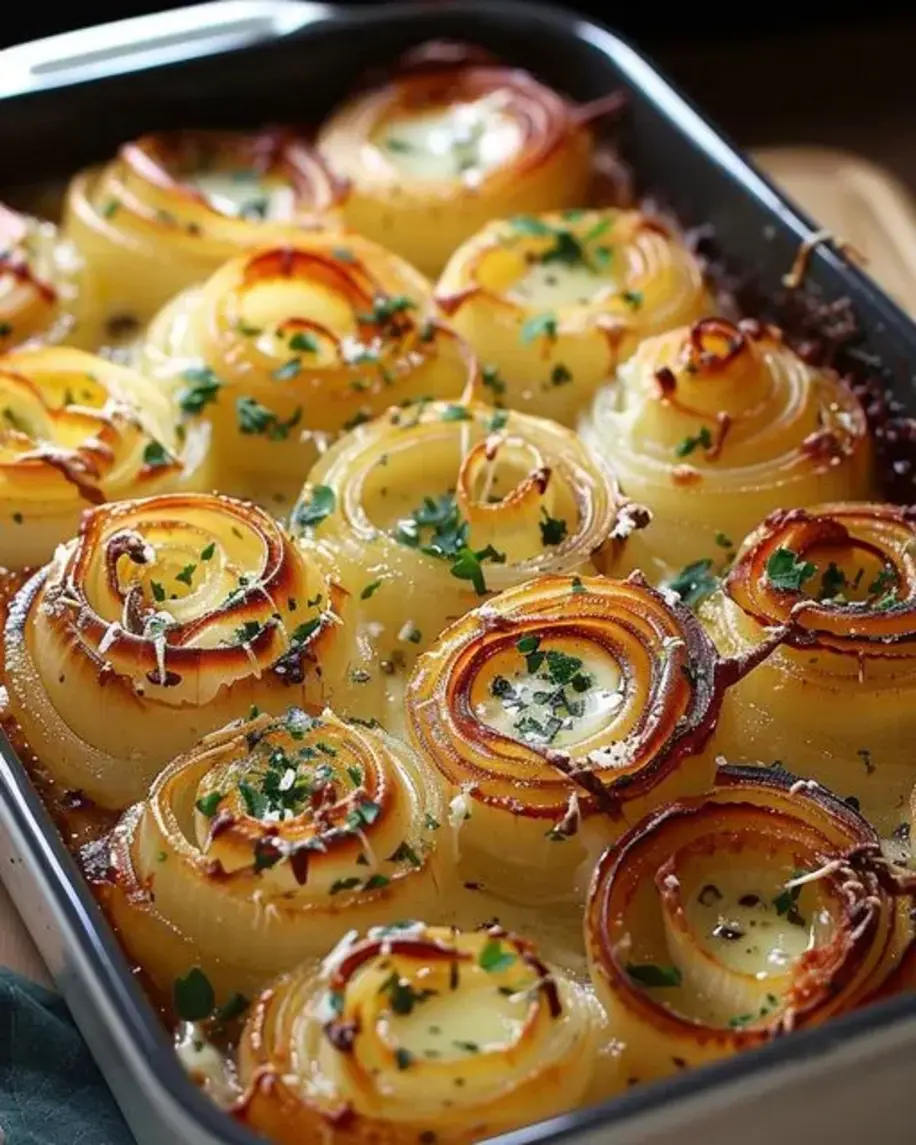
Cheesy Vidalia Onion Delight Recipe – A Rich, Golden Casserole with Caramelized Sweet Onions

⚖️
Difficulty
Easy
⏲️
Prep Time
10 mins
🕒
Cook Time
40 mins
⏱️
Total Time
50 mins
🍽️
Servings
6 servings

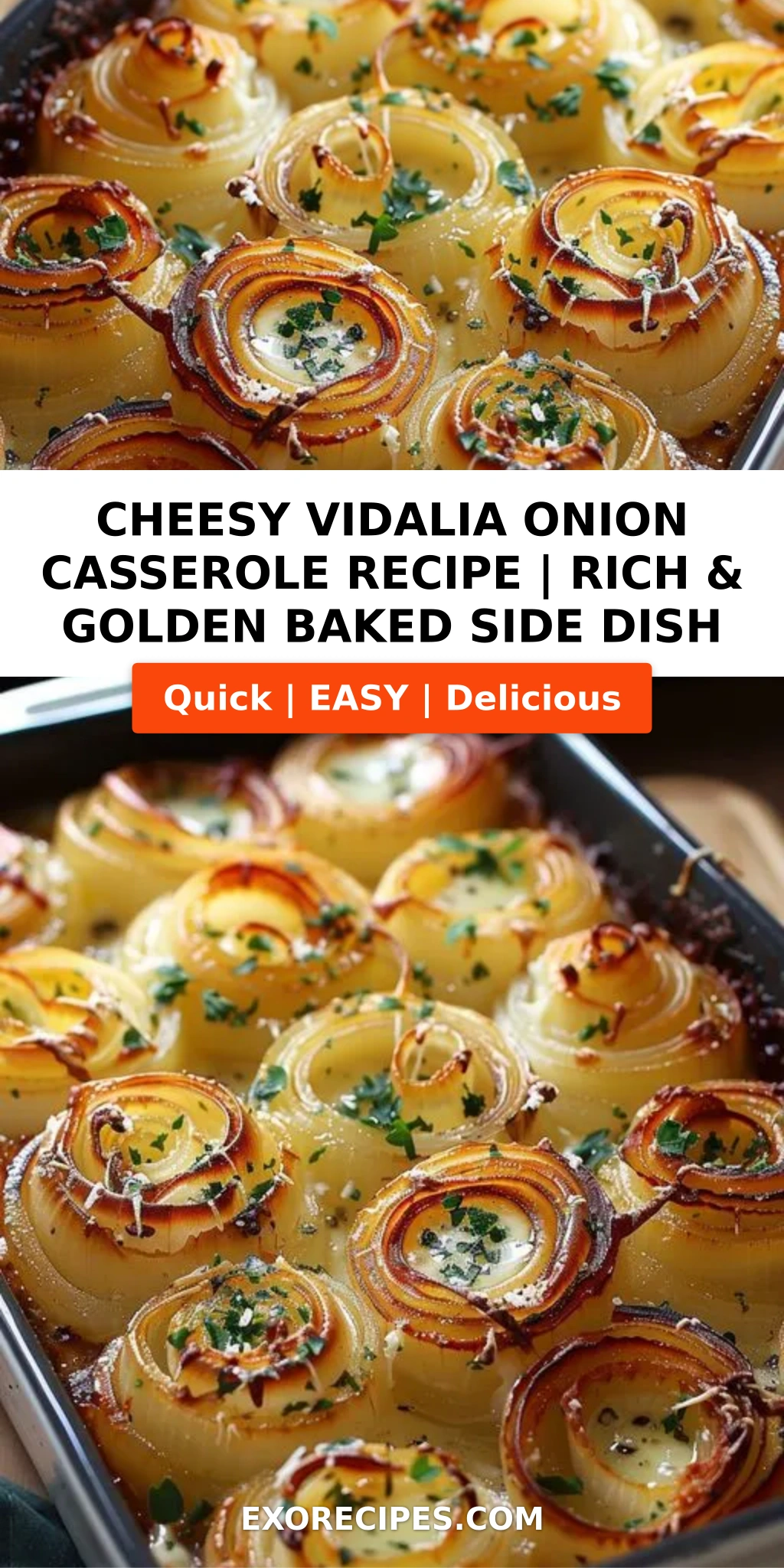
Every time I walk through the Union Square Greenmarket in early spring and see those flat, golden-brown Vidalia onions piled high, I’m transported straight back to my mother’s kitchen in Morocco. She would caramelize onions slowly, patiently, until they were jammy and sweet, then spoon them over everything from lamb tagine to simple flatbreads. This Cheesy Vidalia Onion Delight recipe is my love letter to that memory — except now I’ve layered in the French training I received in Paris, where I learned that a little bit of patience (and the right cheese blend) can turn humble onions into something truly spectacular. The key? Caramelizing the Vidalia onions first to unlock their natural sugars, then baking them in a luscious cream-and-cheese sauce until bubbly and golden. It’s the kind of Vidalia onion casserole that steals the show at any holiday table or weeknight dinner.

Imagine this: fork-tender, sweet onion ribbons swimming in a rich, velvety sauce made from heavy cream, sharp cheddar, and nutty Parmesan. The top bakes into a crispy, golden-brown crust that gives way to a silky, luscious center beneath. The aroma alone — butter, caramelized onions, and melted cheese — will have everyone wandering into the kitchen asking, “What’s for dinner?” The sweetness of the Vidalias is key here; they’re famously mild and sugary, which means they caramelize beautifully without turning bitter. A pinch of paprika adds just a whisper of warmth and a beautiful blush of color. This baked Vidalia onions dish is comfort food at its finest, but with a chef’s touch that makes it feel special enough for company.

I’ve tested this one-pan wonder at least a dozen times in my tiny NYC kitchen, and I’m thrilled to share my perfected version with you. The secret? A quick stovetop caramelization before the oven — that extra step is what transforms this from a good easy onion side dish into a great one. In this post, I’ll walk you through every detail: how to slice the onions for the best texture, which cheese blend gives the creamiest melt, and one common mistake that can make your casserole watery (and exactly how to avoid it). Plus, I’m sharing three easy variations including a dairy-free option and a Moroccan-spiced twist. Let’s make some magic with those gorgeous Vidalia onions!

Why This Cheesy Vidalia Onion Delight Recipe Is the Best

The Flavor Secret — Most onion casseroles skip the caramelization step, but that’s where all the magic happens. By taking 15 minutes to slowly cook the sliced Vidalias in butter, you’re coaxing out their natural sweetness and building a deep, savory foundation that no amount of cheese can fake. I learned this technique during my pastry training in Paris, of all places — caramelizing onions for a savory tarte Tatin. That same patience transforms this Vidalia onion casserole into something truly memorable. The duo of cheddar and Parmesan adds sharpness and umami that balances the sweetness perfectly.

Perfected Texture — Nobody wants a soggy, watery casserole. My method calls for cooking the onions just until they’re softened and lightly caramelized — not stewed. Then the cream-and-cheese mixture pours over the top and bakes into a luscious, custard-like sauce. The cheese on top forms a golden, crispy crust that contrasts beautifully with the tender onions underneath. Every forkful gives you that satisfying crunch-then-melt experience that keeps you going back for more.

Foolproof & Fast — Despite the chef-level results, this recipe is genuinely approachable for any home cook. You don’t need any special equipment (a skillet and a baking dish are all you need), and the steps are straightforward. I’ve designed this easy onion side dish to be forgiving: slightly thicker onion slices? No problem. Want to prep it a day ahead? Absolutely. Whether you’re a seasoned cook or just starting out, this recipe will make you look like a pro.

Cheesy Vidalia Onion Delight Recipe Ingredients

I picked up these Vidalia onions at the Grand Army Plaza Greenmarket in Brooklyn last weekend — they’re in peak season from April through June, and their sweetness is unmatched. When I was training in Paris, my chef always said, “The quality of your ingredients is the only non-negotiable,” and that’s never been truer than with this dish. Here’s everything you’ll need for the best Cheesy Vidalia Onion Delight recipe.

Ingredients List

  • 4 large Vidalia onions, sliced (about ¼-inch thick)
  • 2 tablespoons butter (salted or unsalted both work)
  • 1 cup shredded cheddar cheese (sharp or medium — I prefer sharp for more flavor)
  • ½ cup grated Parmesan cheese (freshly grated is best)
  • 1 cup heavy cream
  • ½ teaspoon salt
  • ¼ teaspoon black pepper (freshly ground)
  • ¼ teaspoon paprika (smoked or sweet — both work beautifully)

Ingredient Spotlight

Vidalia Onions — These are the star of the show. Vidalias are a type of sweet onion grown in specific counties in Georgia, and they’re prized for their low sulfur content, which makes them mild and sweet even when raw. When cooked, they become jammy and almost candy-like without any bitterness. If you can’t find Vidalias, look for another sweet onion variety like Walla Walla or Maui. You want onions that feel heavy for their size with crisp, tight skins — avoid any that feel soft or have green sprouts.

Cheddar Cheese — I use sharp cheddar because it stands up to the sweetness of the onions and adds a tangy depth. For the best melt, buy a block and shred it yourself at home — pre-shredded cheese contains anti-caking agents that can make the sauce grainy. Medium cheddar works too, but you’ll lose a bit of that punch. For a more adult flavor, try a well-aged white cheddar.

Parmesan Cheese — This is my secret weapon for the golden top. Parmesan adds a salty, nutty note that cheddar alone can’t provide, and it helps create that irresistible crispy crust. Always use real Parmigiano-Reggiano if your budget allows — it melts differently than the stuff in the green can. I buy a wedge every week at Eataly in the Flatiron district and grate it fresh as needed.

Heavy Cream — The cream creates a rich, velvety sauce that binds everything together. Don’t substitute with milk or half-and-half here, or the sauce will be thin and won’t set properly. If you need a lighter option, you can use a combination of ½ cup heavy cream and ½ cup whole milk — but the texture won’t be quite as luxurious.

Original IngredientBest SubstitutionFlavor / Texture Impact
Vidalia onionsWalla Walla or Maui sweet onionsSimilar sweetness; slightly less tender but still excellent
Sharp cheddarGruyère or GoudaGruyère adds nutty depth; Gouda gives a creamier, milder melt
ParmesanPecorino Romano or AsiagoPecorino is saltier and sharper; Asiago is milder and creamier
Heavy cream½ cup heavy cream + ½ cup whole milkLighter texture, slightly less rich, still creamy

How to Make Cheesy Vidalia Onion Delight — Step-by-Step

Trust me when I say this is one of those recipes that looks and tastes far more complicated than it actually is. Here’s exactly how to make this Cheesy Vidalia Onion Delight recipe, with all my chef-tested tips along the way.

Step 1: Preheat and Prep

Preheat your oven to 375°F (190°C). Grease a 9×13-inch baking dish with a little butter or non-stick spray. Set it aside while you work on the onions.

💡 mia’s Pro Tip: Place your baking dish on a sheet pan before pouring in the cream mixture — this catches any accidental spills and makes transferring to the oven much easier.

Step 2: Caramelize the Onions

In a large skillet, melt 2 tablespoons of butter over medium heat. Add the sliced Vidalia onions and cook, stirring occasionally, for about 15 minutes, until they are softened, translucent, and just starting to turn golden at the edges. You’re not looking for deep brown caramelization here — just a gentle softening and light color.

⚠️ Common Mistake to Avoid: Don’t rush this step with high heat! Medium heat is essential. If you cook the onions too fast, they’ll brown on the outside but stay crunchy inside, and you’ll lose that silky texture.

Step 3: Layer the Onions

Spread the caramelized onions evenly in the prepared baking dish. Use a spatula to create an even layer — this ensures every bite gets the same amount of cheesy goodness.

💡 mia’s Pro Tip: If you want extra depth, deglaze the skillet with a splash of dry white wine (about ¼ cup) after removing the onions, let it reduce for 30 seconds, then pour that over the onions before adding the cheese mixture. It’s optional but absolutely delicious.

Step 4: Mix the Cheese Sauce

In a small bowl, whisk together the shredded cheddar, grated Parmesan, heavy cream, salt, pepper, and paprika. Pour this mixture evenly over the onions, making sure to cover as much surface area as possible.

⚠️ Common Mistake to Avoid: Don’t skip the paprika! It’s not just for color — it adds a subtle warmth that brightens the whole dish. Use smoked paprika for a deeper, almost bacon-like note.

Step 5: Bake to Golden Perfection

Bake for 20-25 minutes, until the sauce is bubbly and the top is golden brown and slightly crispy. The cheese should be melted and starting to brown in spots.

💡 mia’s Pro Tip: For an extra-crispy top, switch the oven to broil for the last 2-3 minutes. Watch it carefully — it can go from golden to burnt very quickly!

Step 6: Rest and Serve

Let the casserole cool for at least 5 minutes before serving. This allows the sauce to set slightly so it doesn’t run all over the plate. Serve warm and watch it disappear.

⚠️ Common Mistake to Avoid: Don’t skip the resting time! If you serve it straight from the oven, the sauce will be too runny. Those 5 minutes make all the difference.

StepActionDurationKey Visual Cue
1Preheat oven and prep dish5 minutesOven at 375°F, dish greased
2Caramelize onions in butter15 minutesOnions softened, translucent, slightly golden
3Spread onions in dish2 minutesEven layer in 9×13 dish
4Mix and pour cheese sauce3 minutesSauce covers onions evenly
5Bake20-25 minutesBubbly, golden top, cheese melted
6Rest and serve5 minutesSauce slightly set, not runny

Serving & Presentation

This baked Vidalia onions dish is beautiful right out of the oven — all bubbly and golden on top. I like to serve it family-style, straight from the baking dish, with a large spoon so everyone can scoop up some of that cheesy goodness. For individual portions, use a wide spatula to lift each serving carefully, keeping the golden crust intact on top. A sprinkle of fresh thyme or chives adds a lovely pop of green and a fresh note that cuts through the richness.

In my NYC kitchen, I pair this with a simple roasted chicken or pan-seared pork chops when I want a hearty dinner. It also makes a killer side for holiday meals — think Thanksgiving or Easter — because it can be prepped ahead and baked just before serving. For a vegetarian main, serve it alongside a crisp green salad dressed with lemon vinaigrette and some crusty bread to soak up every last drop of sauce.

💡 mia’s Pro Tip: For an elegant brunch side, serve this along with a frittata or quiche and a glass of crisp Sauvignon Blanc. The acidity in the wine cuts through the richness of the cheese and cream beautifully.

Pairing TypeSuggestionsWhy It Works
Main DishRoasted chicken, grilled pork chops, pan-seared steakRich, savory meats balance the sweet, creamy casserole
Side DishSimple green salad, roasted asparagus, steamed green beansFresh, bright vegetables contrast the richness
BeverageSauvignon Blanc, Chardonnay, dry Riesling, light lagerAcidity and bubbles cut through the creamy cheese
GarnishFresh thyme, chives, parsley, or a pinch of flaky sea saltAdds freshness, color, and a pop of flavor

Make-Ahead, Storage & Reheating

As a busy cook in New York City, I rely on make-ahead dishes that save me time without sacrificing flavor. This easy onion side dish is one of my favorites to prep on a Sunday and enjoy throughout the week. The flavors actually deepen overnight as the onions soak up the cheesy sauce, so leftovers are often even better the next day.

MethodContainerDurationReheating Tip
RefrigeratorAirtight container or covered baking dishUp to 4 daysReheat at 350°F for 15 minutes, or in microwave in 30-second bursts
FreezerFreezer-safe container or tightly wrapped dishUp to 2 monthsThaw overnight in fridge, then reheat at 350°F for 20 minutes
Make-AheadAssemble in baking dish, cover, refrigerateUp to 24 hours in advanceAdd 5-10 minutes to baking time if baking from cold

To reheat from the refrigerator, I prefer using the oven because it helps re-crisp that golden top. Just pop the dish into a 350°F oven for about 15 minutes, or until bubbly and hot throughout. If you’re in a hurry, the microwave works too — just know the top won’t be as crispy. For frozen casserole, thaw it overnight in the refrigerator first, then reheat as directed. I don’t recommend freezing the unbaked casserole because the cream sauce can separate during thawing.

⚠️ Common Mistake to Avoid: When reheating, don’t use high heat! Gentle, even reheating prevents the cream sauce from breaking and keeps the texture silky. If the top starts browning too quickly, tent the dish loosely with foil.

Variations & Easy Swaps

VariationKey ChangeBest ForDifficulty Impact
Moroccan Spiced TwistAdd 1 tsp cumin, ½ tsp cinnamon, and ¼ tsp cayenneAdventurous palates, special dinnersEasy (just add spices)
Gluten-Free / Dairy-FreeUse dairy-free butter, coconut cream, and vegan cheeseDietary restrictions, allergy-friendlyEasy (swap ingredients)
Herb & Garlic LoversAdd 3 minced garlic cloves and 2 tbsp mixed fresh herbs (thyme, rosemary, sage)Garlic lovers, holiday mealsEasy (add with onions)

Moroccan Spiced Twist

This is my favorite variation — a nod to my childhood in Morocco. While the onions are caramelizing, add 1 teaspoon of ground cumin, ½ teaspoon of cinnamon, and ¼ teaspoon of cayenne pepper. The cumin adds an earthy warmth, the cinnamon brings out the natural sweetness of the Vidalias, and the cayenne gives a gentle kick. Finish with a handful of toasted slivered almonds and a sprinkle of fresh cilantro before serving. It’s the kind of Vidalia onion casserole that would make my mother proud.

Gluten-Free / Dairy-Free Option

This recipe is naturally gluten-free, so that part is easy. For a dairy-free version, substitute the butter with a high-quality vegan butter (I like Miyoko’s), use full-fat coconut cream instead of heavy cream, and pick a vegan cheddar-style shred that melts well (Violife or Follow Your Heart work great). The texture will be slightly less rich, but still creamy and delicious. Add an extra pinch of salt and a squeeze of lemon juice to brighten the flavors — the acidity helps balance the coconut.

Herb & Garlic Lovers

For a more savory, aromatic version, add 3 finely minced garlic cloves to the skillet along with the onions for the last 5 minutes of caramelization. Then stir in 2 tablespoons of mixed fresh herbs — thyme, rosemary, and sage are my favorites. The garlic becomes sweet and mellow as it cooks, while the herbs add a fragrant, woodsy note that pairs beautifully with the cheese. This version is especially lovely at Thanksgiving alongside roasted turkey.

What is the best way to slice Vidalia onions for Cheesy Vidalia Onion Delight?

For this Cheesy Vidalia Onion Delight recipe, I recommend slicing the onions about ¼-inch thick — not too thin and not too thick. If you slice them too thin (less than ⅛ inch), they’ll dissolve into the sauce and lose their texture. If you slice them too thick (over ½ inch), they won’t soften enough during the caramelization and baking time, and you’ll end up with crunchy onions instead of tender ones. Use a sharp chef’s knife and slice through the root end last to hold the onion together. You want even, uniform slices so they cook at the same rate. A mandoline slicer set to ¼ inch works great if you have one, but a steady hand and a good knife are all you really need.

Can I use a different type of onion if I don’t have Vidalia onions?

Absolutely! While Vidalia onions are ideal because of their low sulfur content and high sugar content, you can substitute other sweet onion varieties like Walla Walla or Maui onions with excellent results. If you can’t find sweet onions at all, you can use yellow onions — but add a teaspoon of sugar to the skillet when caramelizing to compensate for the lower natural sweetness. Red onions will work too, but they’ll turn the sauce a slightly pinkish color and have a milder flavor. I don’t recommend white onions for this recipe, as they tend to be sharper and more pungent, which can overpower the delicate cheese sauce.

How long should I bake Cheesy Vidalia Onion Delight for the perfect golden top?

Bake this Cheesy Vidalia Onion Delight recipe at 375°F for 20-25 minutes, or until the sauce is bubbly around the edges and the top is golden brown. Every oven is a little different, so start checking at 20 minutes. You’re looking for the cheese to be fully melted and starting to brown in spots, with the cream sauce visibly bubbling along the sides of the dish. For an extra-crispy, deep golden crust, switch the oven to broil for the final 2-3 minutes — but keep a close eye on it, because the top can go from perfectly golden to burnt in seconds. If the top is browning too quickly but the center isn’t bubbly yet, tent the dish loosely with foil and continue baking.

What cheeses work best in Cheesy Vidalia Onion Delight besides cheddar?

Great question! While sharp cheddar is my go-to for this Vidalia onion casserole, there are several other cheeses that work beautifully. Gruyère is my top substitute — it melts like a dream and adds a nutty, slightly sweet flavor that pairs wonderfully with caramelized onions. Gouda (especially smoked Gouda) adds a creamy, rich texture and a subtle smokiness. Fontina is another excellent choice for its superb melting qualities and mild, buttery flavor. For a more adventurous blend, try a combination of half Gouda and half Parmesan. Avoid using only mozzarella, as it can become stringy and lacks the sharpness that balances the sweetness of the onions. Whichever cheese you choose, always grate it fresh from a block for the best melt.

Can I prep Cheesy Vidalia Onion Delight the night before?

Yes, this is one of my favorite make-ahead tricks! You can assemble the entire Cheesy Vidalia Onion Delight recipe up to 24 hours in advance. Simply caramelize the onions, spread them in the baking dish, pour the cheese sauce over the top, cover tightly with plastic wrap or foil, and refrigerate. When you’re ready to bake, remove it from the fridge while the oven preheats (about 20 minutes), then bake as directed, adding 5-10 minutes to the baking time since you’re starting from cold. The flavors actually meld and deepen overnight, making this a fantastic option for holiday entertaining. I wouldn’t recommend freezing the unbaked casserole, though — the cream sauce can separate during thawing.

How do I prevent my Cheesy Vidalia Onion Delight from being watery?

A watery casserole is usually the result of not caramelizing the onions long enough or using too much cream. Here are my tips: First, cook the onions over medium heat for the full 15 minutes until they’ve released most of their moisture and are starting to lightly caramelize. If you skip this step, the onions will release water into the dish during baking and make the sauce thin. Second, use full-fat heavy cream — lighter alternatives like milk or half-and-half have more water content and won’t thicken properly. Third, let the baked casserole rest for 5 minutes before serving — this allows the sauce to set slightly. Finally, make sure your cheese is freshly grated; pre-shredded cheese contains anti-caking agents that can interfere with the sauce’s texture.

Can I add protein to make this a main dish?

Absolutely! This baked Vidalia onions dish can easily become a hearty main course. I love adding cooked, crumbled bacon or pancetta — just cook it first, set it aside, and use a tablespoon of the rendered fat in place of some of the butter for extra flavor. Stir the cooked meat into the onions before adding the cheese sauce. Diced cooked ham or shredded rotisserie chicken also work wonderfully. For a vegetarian protein boost, add a can of drained and rinsed chickpeas or some cooked white beans along with the onions. If you’re adding protein, you may want to increase the seasoning slightly — an extra pinch of salt and pepper helps everything come together. Serve with a side salad and crusty bread for a complete meal.

What can I serve with Cheesy Vidalia Onion Delight for a complete meal?

This Cheesy Vidalia Onion Delight recipe is versatile enough to pair with many dishes. For a simple weeknight dinner, I serve it alongside roasted chicken thighs or pan-seared pork chops with a side of steamed green beans or a simple arugula salad with lemon vinaigrette. For holidays, it’s a beautiful side to roast turkey, prime rib, or baked ham. If you’re serving it as a vegetarian main, pair it with a hearty lentil salad or roasted vegetables and some crusty bread to soak up the sauce. Wine-wise, a crisp Sauvignon Blanc or an unoaked Chardonnay cuts through the richness beautifully. For beer lovers, a light lager or pilsner is a refreshing counterpoint.

Share Your Version!

I’d love to see how this Cheesy Vidalia Onion Delight recipe turns out in your kitchen! Did you try one of the variations — maybe the Moroccan spiced twist with cumin and cinnamon, or the herb and garlic version? Or did you create your own spin with a different cheese blend or add a protein? Drop a star rating and a comment below to tell me about it. Your feedback helps other readers know what to expect and inspires me to keep developing new recipes for you!

Snap a photo of your golden, bubbly casserole and share it on Instagram or Pinterest with the hashtag #CheesyVidaliaOnionDelight — and make sure to tag me @exorecipes so I can see your creation! I personally love resharing reader versions on my stories. And here’s a question I’d love your answer to: What’s your go-to holiday side dish — is it a classic green bean casserole, or does this cheesy onion bake just become your new tradition?

From my NYC kitchen to yours — I hope this recipe brings as much warmth to your table as it does to mine. — mia 🧡

📌

Love This Recipe? Save It to Pinterest!

If you enjoyed this Cheesy Vidalia Onion Delight recipe, don’t let it get lost in your browser tabs! 😄 Pin it now so you can find it again anytime — and explore hundreds more tried-and-tested recipes waiting for you on my Pinterest boards.

👉 Follow mia on Pinterest @exorecipe

📌 Pin this recipe · 🔁 Re-pin your favorites · 💬 Tag me when you make it — I love seeing your creations!

“`

Print
clock clock iconcutlery cutlery iconflag flag iconfolder folder iconinstagram instagram iconpinterest pinterest iconfacebook facebook iconprint print iconsquares squares iconheart heart iconheart solid heart solid icon

Cheesy Vidalia Onion Delight

  • Author: Chef Mia
  • Prep Time: 10 minutes
  • Cook Time: 40 minutes
  • Total Time: 50 minutes
  • Yield: 6 servings 1x
  • Method: Side Dish
  • Cuisine: American

Description

A rich, cheesy casserole featuring sweet Vidalia onions, baked to golden perfection.


Ingredients

Scale
  • 4 large Vidalia onions, sliced
  • 2 tablespoons butter
  • 1 cup shredded cheddar cheese
  • 1/2 cup grated Parmesan cheese
  • 1 cup heavy cream
  • 1/2 teaspoon salt
  • 1/4 teaspoon black pepper
  • 1/4 teaspoon paprika

Instructions

  1. Preheat oven to 375°F (190°C).
  2. In a large skillet, melt butter over medium heat. Add sliced onions and cook until softened and lightly caramelized, about 15 minutes.
  3. Spread the caramelized onions evenly in a greased 9×13-inch baking dish.
  4. In a small bowl, mix cheddar cheese, Parmesan cheese, heavy cream, salt, pepper, and paprika. Pour over the onions.
  5. Bake for 20-25 minutes, until bubbly and golden on top.
  6. Let cool for 5 minutes before serving.


Nutrition

  • Calories: 340
  • Sugar: 6g
  • Fat: 28g
  • Carbohydrates: 12g
  • Protein: 10g


Cheesy Vidalia Onion Delight

“`html

Cheesy Veggie Egg Muffins Healthy Make-Ahead Breakfast Bites – The Ultimate Grab-and-Go Morning Meal

⚖️
Difficulty
Easy
⏲️
Prep Time
10 mins
🕒
Cook Time
18 mins
⏱️
Total Time
28 mins
🍽️
Servings
12 muffins

I still remember the first time I made these cheesy veggie egg muffins — it was a chaotic Tuesday morning in my tiny New York City apartment, and I was desperately searching for a breakfast that wouldn’t slow me down. Growing up in Morocco, my mother always taught me that the morning meal should be both nourishing and efficient, a philosophy I carried with me to culinary school in Paris and now to my bustling life in NYC. These healthy make-ahead breakfast muffins are exactly that: a protein-packed, veggie-loaded bite that comes together in under 30 minutes and makes your entire week smoother. The combination of fluffy eggs, melty cheddar, and tender vegetables creates a breakfast that feels indulgent but is actually wholesome and balanced.

Imagine pulling a warm, golden egg muffin from your fridge, popping it into the microwave, and within seconds you have a breakfast that tastes like you just pulled it from the oven. The aroma of eggs and cheddar fills your kitchen — that familiar, comforting scent that promises a good start to the day. Each bite offers a soft, custardy texture from the eggs, punctuated by the slight crunch of bell pepper and the earthiness of spinach. The cheese melts into every crevice, binding the vegetables into a cohesive, satisfying morsel. It’s the kind of breakfast that makes you feel organized and cared for, even on the busiest mornings.

What sets my version apart is a little technique I picked up in Paris: whisking the eggs and milk until they are truly frothy before adding any other ingredients. This incorporates air into the mixture, giving the muffins a lighter, more tender crumb — not dense or rubbery like some egg bites can be. I’ve tested this recipe dozens of times to ensure it’s foolproof for home cooks of any skill level. One common mistake people make is overfilling the muffin cups, which leads to overflowing and uneven cooking. My pro tip will show you exactly how to portion the mixture for perfect, uniform muffins every single time.

Why This Cheesy Veggie Egg Muffins Recipe Is the Best

The Flavor Secret: This isn’t just a random mix of vegetables and eggs. I draw on my Moroccan roots by adding a pinch of something unexpected — a tiny bit of smoked paprika or cumin can elevate the entire flavor profile. The cheddar cheese provides a creamy, sharp contrast to the fresh veggies, and the eggs tie everything together into a cohesive, savory bite. It’s a breakfast that feels familiar but has a subtle depth that keeps you coming back.

Perfected Texture: The key to a great egg muffin is a texture that is fluffy, not rubbery. My Parisian training taught me the importance of emulsification — whisking the eggs and milk until frothy creates a stable structure that holds air during baking. This results in muffins that are light, tender, and almost cloud-like. I also pre-sauté the onions and bell peppers briefly to remove excess moisture, preventing soggy spots and ensuring every bite is perfectly textured.

Foolproof & Fast: With just 10 minutes of prep and 18 minutes of baking, this recipe is designed for real life. Whether you’re a seasoned cook or someone who rarely steps into the kitchen, these healthy make-ahead breakfast muffins come out perfectly every time. The instructions are straightforward, the ingredients are easy to find at any US grocery store, and the results are consistently delicious. Plus, they’re naturally low carb and gluten-free, making them a versatile option for a wide range of dietary needs.

Healthy Make-Ahead Breakfast Muffins Ingredients

I source my eggs from the Union Square Greenmarket in NYC whenever I can — there’s something special about farm-fresh eggs that makes these muffins sing. The cheddar comes from a small artisan cheese shop in my neighborhood, but any good block of sharp cheddar will work beautifully. The vegetables are whatever looks best at the market, but I have my favorites that I’ll share with you.

Ingredients List

  • 6 large eggs
  • 1/4 cup milk (whole or 2% recommended)
  • 1/2 cup shredded cheddar cheese
  • 1/4 cup diced bell pepper (any color)
  • 1/4 cup diced onion
  • 1/2 cup chopped spinach
  • 1/4 teaspoon salt
  • 1/8 teaspoon black pepper

Ingredient Spotlight

Eggs: The backbone of this recipe. Look for large eggs with bright, firm yolks. For the fluffiest texture, let your eggs come to room temperature for 10 minutes before whisking. If you need an egg-free version, you can try a commercial egg replacer, but the texture will be denser.

Cheddar Cheese: I recommend sharp cheddar for maximum flavor — it melts beautifully and adds a creamy richness. Pre-shredded cheese works in a pinch, but freshly shredded melts more evenly. For a dairy-free option, use a plant-based cheddar-style shreds; they won’t be as creamy but will still taste great.

Spinach: Fresh spinach gives a tender, mild flavor. You can use frozen spinach, but make sure to thaw and squeeze it completely dry, then chop it finely. Overly wet spinach will make the muffins soggy.

Original IngredientBest SubstitutionFlavor / Texture Impact
Eggs (6 large)6 egg whites + 2 tbsp flax meal + 6 tbsp waterLower fat, slightly denser, less rich
Cheddar cheeseMonterey Jack, mozzarella, or dairy-free shredsMilder flavor, similar melt quality
Bell pepperDiced zucchini (squeeze out moisture)Milder flavor, softer texture
SpinachKale (finely chopped, massaged)Heartier texture, slightly bitter
MilkUnsweetened almond milk or oat milkSlightly thinner, less creamy

How to Make Cheesy Veggie Egg Muffins — Step-by-Step

Trust me, this is one of the easiest recipes you’ll ever make. Just follow these simple steps, and you’ll have a week’s worth of delicious, healthy make-ahead breakfast muffins ready in no time.

Step 1: Prep the Oven and Pan

Preheat your oven to 350°F (175°C). Generously grease a 12-cup muffin tin with nonstick spray — I prefer a spray with a touch of flour for extra insurance. You can also use paper liners, but the muffins may stick slightly more.

⚠️ Common Mistake to Avoid: Don’t skip greasing the pan, even if it’s nonstick. Egg has a tendency to cling, and you want these beauties to pop right out.

Step 2: Whisk the Eggs and Milk

In a large bowl, crack the eggs and add the milk. Whisk vigorously for about 30 seconds until the mixture is frothy and well-combined. This aeration is what gives the muffins their light texture.

💡 mia’s Pro Tip: Use a fork or a whisk and whisk in a figure-eight motion to incorporate the maximum amount of air. The frothier the mixture, the fluffier the muffins.

Step 3: Add the Veggies and Cheese

Stir in the shredded cheddar, diced bell pepper, diced onion, chopped spinach, salt, and black pepper. Mix until everything is evenly distributed. The mixture will look colorful and chunky — that’s perfect.

⚠️ Common Mistake to Avoid: Don’t overmix or the cheese will clump. Gently fold until just combined.

Step 4: Fill the Muffin Cups

Pour the egg mixture evenly into the 12 prepared muffin cups, filling each about 3/4 full. Use a ladle or a measuring cup with a spout for easy pouring. If you have extra mixture, distribute it evenly among the cups.

💡 mia’s Pro Tip: For perfectly even portions, use a 1/4-cup measure to scoop the mixture into each cup. This ensures all muffins are the same size and cook evenly.

Step 5: Bake to Perfection

Bake for 15-18 minutes, until the muffins are set and lightly golden on top. The centers should be firm to the touch and a toothpick inserted in the middle should come out clean. The edges will pull slightly away from the pan.

⚠️ Common Mistake to Avoid: Overbaking is the #1 culprit for rubbery egg muffins. Start checking at 15 minutes — every oven varies, and you want them just set, not brown.

Step 6: Cool and Remove

Allow the muffins to cool in the pan for 5 minutes. Then run a knife around the edge of each muffin to loosen it, and gently lift them out. Place them on a wire rack to cool completely if storing.

💡 mia’s Pro Tip: Cooling in the pan for exactly 5 minutes is crucial — too short and they fall apart, too long and they stick. Set a timer!

StepActionDurationKey Visual Cue
1Prep oven and pan5 minPan is evenly greased
2Whisk eggs and milk30 secFrothy and light
3Add veggies and cheese1 minEvenly distributed
4Fill muffin cups2 min3/4 full
5Bake15-18 minGolden top, set center
6Cool and remove5 minEasy release from pan

Serving & Presentation

These egg muffins are incredibly versatile when it comes to serving. I love arranging them on a platter with a side of fresh fruit and a small bowl of Greek yogurt for a balanced breakfast. For a heartier meal, serve them alongside whole-wheat toast or a light arugula salad dressed with lemon vinaigrette. In my NYC kitchen, I often grab two muffins and a piece of fruit on my way out the door — they’re the ultimate grab-and-go companion.

For a pretty presentation, sprinkle a few extra shreds of cheddar on top before baking, and garnish with a tiny sprig of fresh parsley or chives after they come out of the oven. This adds a pop of color and a fresh herbaceous note that brightens the entire dish. If you’re serving them for brunch, arrange them on a wooden board with small bowls of hot sauce, salsa, and sour cream so everyone can customize their bite.

Pairing TypeSuggestionsWhy It Works
Side DishFresh fruit salad, roasted sweet potatoesAdds natural sweetness and fiber
Sauce / DipSalsa, Greek yogurt dip, hot sauceAdds moisture and a flavor kick
BeverageFresh orange juice, iced coffee, green smoothieRefreshing contrast to savory eggs
GarnishFresh parsley, chives, microgreensAdds color and freshness

Make-Ahead, Storage & Reheating

As a busy New York City food blogger, I rely on these healthy make-ahead breakfast muffins to keep me going through packed days. I usually make a batch on Sunday evening, and they’re the first thing I reach for when I’m running from the subway to a meeting. Proper storage is key to maintaining their texture and flavor throughout the week.

MethodContainerDurationReheating Tip
RefrigeratorAirtight container, layered with paper towelsUp to 5 daysMicrowave 30-45 sec on high
FreezerFreezer-safe bag or container, separated by wax paperUp to 3 monthsMicrowave from frozen 60-90 sec
Make-AheadBatter can be refrigerated in a covered bowlUp to 24 hours in advanceStir before filling cups; add 1-2 min bake time

When reheating, I recommend wrapping the muffin in a damp paper towel before microwaving — this creates a little steam that keeps the eggs from drying out. For frozen muffins, let them thaw in the refrigerator overnight if you have time, or microwave directly from frozen for about 90 seconds, flipping halfway through. If you have a toaster oven, 5 minutes at 325°F gives the muffins a slightly crisper exterior.

I’ve tested these storage methods extensively, and I can confidently say that muffins stored properly in the fridge taste just as good on day 5 as they did on day 1. The key is to let them cool completely before storing to prevent condensation, which can make them soggy.

Variations & Easy Swaps

VariationKey ChangeBest ForDifficulty Impact
Mediterranean Feta & HerbReplace cheddar with feta, add oregano and sun-dried tomatoesA tangy, briny twistEasy
Southwest Black Bean & CornAdd black beans, corn, cumin, and pepper jackA heartier, Tex-Mex optionEasy
Dairy-Free & Vegan-ishUse just egg whites, omit cheese, add nutritional yeastLower fat, dairy-freeMedium

Mediterranean Feta & Herb

This variation takes me back to the flavors of the Mediterranean — salty feta, bright sun-dried tomatoes, and aromatic oregano. Replace the cheddar with 1/2 cup crumbled feta, add 1/4 cup chopped sun-dried tomatoes (drained and patted dry), and 1 teaspoon dried oregano. The feta adds a tangy creaminess that pairs beautifully with the spinach and bell pepper. This version is excellent served with a side of hummus and warm pita bread for a complete meal.

Southwest Black Bean & Corn

Inspired by the vibrant flavors of the American Southwest, this version is heartier and more substantial. Add 1/4 cup canned black beans (rinsed and drained), 1/4 cup frozen corn (thawed), and 1/2 teaspoon ground cumin. Replace the cheddar with pepper jack cheese for a subtle kick. These muffins are amazing with a dollop of sour cream and a spoonful of salsa on the side. They’re practically a meal in themselves!

Dairy-Free & Vegan-ish

For those who are dairy-free or watching their fat intake, this version uses just egg whites and skips the cheese. Replace the whole eggs with 6 egg whites (about 3/4 cup), and omit the cheese entirely. Add 2 tablespoons of nutritional yeast for a cheesy, savory flavor, and increase the salt slightly. The texture is a bit lighter and fluffier, but still satisfying. This variation is perfect for anyone following a low-fat or dairy-free diet without sacrificing flavor.

Can you freeze cheesy veggie egg muffins for meal prep?

Absolutely! These egg muffins freeze beautifully for up to 3 months. The key is to let them cool completely after baking, then wrap each muffin individually in plastic wrap or place them in a single layer in a freezer-safe bag with a piece of wax paper between layers. This prevents them from sticking together. To reheat, simply microwave from frozen for 60-90 seconds, or thaw overnight in the refrigerator and microwave for 30 seconds. I recommend reheating with a damp paper towel to keep them moist.

What vegetables work best in healthy make-ahead egg muffins?

The best vegetables for egg muffins are those with low moisture content that hold up well during baking. Bell peppers, onions, spinach, kale, mushrooms (pre-sautéed), and zucchini (squeeze out the water) are all excellent choices. I recommend dicing them small so they distribute evenly. Avoid watery vegetables like raw tomatoes or cucumbers, as they’ll release too much moisture and make the muffins soggy. If you want to use tomatoes, stick with sun-dried or roasted varieties.

How long do cheesy veggie egg muffins last in the fridge?

Properly stored in an airtight container in the refrigerator, these egg muffins will stay fresh for up to 5 days. I like to place a paper towel at the bottom of the container to absorb any excess moisture, and another paper towel on top before sealing the lid. This helps maintain the perfect texture. Make sure the muffins are completely cool before storing to prevent condensation. If you notice any off smells or visible mold, discard them immediately.

What can I use instead of cheese to keep these egg muffins healthy?

You can easily make these egg muffins without cheese while still keeping them delicious and healthy. Nutritional yeast is my top recommendation — it adds a cheesy, savory flavor with just 20 calories per tablespoon and plenty of B vitamins. Another great option is a dollop of cottage cheese or Greek yogurt mixed into the eggs for creaminess and protein. You can also simply omit the cheese and add extra herbs and spices like smoked paprika, garlic powder, or fresh chives for flavor.

Are these egg muffins low carb and keto-friendly?

Yes! These cheesy veggie egg muffins are naturally low in carbohydrates, with only 2g of carbs per muffin. With 6g of protein and 5g of fat per serving, they fit well within a keto or low-carb lifestyle. The vegetables add minimal carbs while providing essential vitamins and fiber. For an even lower-carb version, you can reduce the onion and bell pepper slightly and add more spinach or kale. They’re a great option for anyone watching their carb intake.

Can I use a silicone muffin pan instead of metal?

Absolutely! Silicone muffin pans work wonderfully for these egg muffins. They’re naturally nonstick, making cleanup even easier. However, you may need to adjust the baking time slightly — silicone pans tend to bake a little slower than metal ones, so add 1-2 minutes to the baking time and check for doneness with a toothpick. Place the silicone pan on a baking sheet for stability when transferring to and from the oven. I’ve used both types and love the results from silicone pans.

How can I prevent my egg muffins from sticking to the pan?

Sticking is one of the most common issues with egg muffins, but it’s easily preventable. First, grease the pan generously with nonstick spray — I prefer one that contains a little flour, like Baker’s Joy. Even if your pan claims to be nonstick, don’t skip this step. Second, let the muffins cool in the pan for exactly 5 minutes before removing them. If they still stick, run a thin silicone spatula or butter knife gently around the edge to loosen them. For extra insurance, use paper liners lightly sprayed with oil.

What is the best way to reheat frozen egg muffins without drying them out?

The best method to reheat frozen egg muffins without drying them out is to wrap them in a damp paper towel and microwave on high for 60-90 seconds. The moisture from the paper towel creates steam that gently reheats the muffin and keeps it tender. If you have more time, let the muffin thaw in the refrigerator overnight, then microwave for 30 seconds. For a slightly crisper exterior, reheat in a toaster oven at 325°F for 5-7 minutes after thawing. Avoid high-power microwaving without the damp towel.

Can I add meat like bacon or sausage to these egg muffins?

Absolutely! Cooked, crumbled bacon or breakfast sausage makes a fantastic addition to these egg muffins. I recommend cooking the meat fully before adding it to the egg mixture — raw meat will not cook properly in the short baking time. Drain off excess fat to keep the muffins from becoming greasy. Try 1/4 cup of cooked crumbled bacon or 1/2 cup of cooked sausage crumbles. You can also add diced ham or turkey for a leaner option. Reduce the salt slightly if using cured meats.

Why did my egg muffins turn out rubbery or tough?

Rubbery or tough egg muffins are usually the result of overbaking or cooking at too high a temperature. Eggs are delicate and continue to cook even after you remove them from the oven due to residual heat. Bake at 350°F and start checking at 15 minutes — they’re done when the center is just set but still slightly jiggly. Another common cause is not adding enough liquid. The milk in this recipe helps keep the eggs tender. Finally, avoid overmixing the eggs, as this can incorporate too much air and lead to a spongy texture.

Share Your Version!

I absolutely love hearing how you make this recipe your own! Did you try the Mediterranean variation with feta and sun-dried tomatoes? Or maybe you added a Southwestern spin with black beans and cumin? Whatever you did, I want to know! Leave a star rating and a comment below telling me about your experience — your feedback helps other readers discover new ways to enjoy these healthy make-ahead breakfast muffins.

Don’t forget to snap a photo of your creation and share it on Instagram or Pinterest. Tag me @exorecipes so I can see your beautiful muffins and share them with our community. I especially love seeing creative twists and substitutions — it inspires me and everyone else who visits this page. Let’s build a breakfast revolution together, one cheesy veggie egg muffin at a time!

From my NYC kitchen to yours — I hope this recipe brings as much warmth to your table as it does to mine. — mia 🧡

📌

Love This Recipe? Save It to Pinterest!

If you enjoyed this Cheesy Veggie Egg Muffins Healthy Make-Ahead Breakfast Bites recipe, don’t let it get lost in your browser tabs! 😄 Pin it now so you can find it again anytime — and explore hundreds more tried-and-tested recipes waiting for you on my Pinterest boards.

👉 Follow mia on Pinterest @exorecipe

📌 Pin this recipe · 🔁 Re-pin your favorites · 💬 Tag me when you make it — I love seeing your creations!

“`

Print

clock clock iconcutlery cutlery iconflag flag iconfolder folder iconinstagram instagram iconpinterest pinterest iconfacebook facebook iconprint print iconsquares squares iconheart heart iconheart solid heart solid icon

Cheesy Veggie Egg Muffins Healthy Make-Ahead Breakfast Bites

  • Author: Chef Mia
  • Prep Time: 10 minutes
  • Cook Time: 18 minutes
  • Total Time: 28 minutes
  • Yield: 12 muffins 1x
  • Method: Breakfast
  • Cuisine: American

Description

These cheesy veggie egg muffins are a healthy, make-ahead breakfast option packed with protein and vegetables. Perfect for busy mornings.


Ingredients

Scale
  • 6 large eggs
  • 1/4 cup milk
  • 1/2 cup shredded cheddar cheese
  • 1/4 cup diced bell pepper
  • 1/4 cup diced onion
  • 1/2 cup chopped spinach
  • 1/4 teaspoon salt
  • 1/8 teaspoon black pepper

Instructions

  1. Preheat oven to 350°F (175°C). Grease a 12-cup muffin tin with nonstick spray.
  2. In a large bowl, whisk eggs and milk together until frothy.
  3. Stir in shredded cheese, bell pepper, onion, spinach, salt, and black pepper.
  4. Pour the egg mixture evenly into the prepared muffin cups, filling each about 3/4 full.
  5. Bake for 15-18 minutes, until the muffins are set and lightly golden on top.
  6. Allow to cool for 5 minutes, then remove from tin. Serve warm or store in refrigerator for up to 5 days.

Notes

These egg muffins can be frozen for up to 3 months. To reheat, microwave for 30-60 seconds.


Nutrition

  • Calories: 80
  • Sugar: 1g
  • Fat: 5g
  • Carbohydrates: 2g
  • Protein: 6g


Cheesy Veggie Egg Muffins Healthy Make-Ahead Breakfast Bites

Cheesy Tuna-Stuffed Onion Rings – Crispy, Creamy, Crunchy Bites

⚖️
Difficulty
Easy
⏲️
Prep Time
15 mins
🕒
Cook Time
10 mins
⏱️
Total Time
25 mins
🍽️
Servings
4

Growing up in Morocco, my mother would make tuna-stuffed vegetables that filled our kitchen with the warm aroma of cumin and parsley. When I moved to New York after my Paris culinary training, I started dreaming up ways to turn those familiar flavors into something everyone could grab with their hands. That’s how this Cheesy Tuna-Stuffed Onion Rings recipe was born — a fun, crowd-pleasing appetizer that takes the classic tuna melt and stuffs it right inside a crispy onion ring. The first time I tested it for a Super Bowl party, the tray vanished in minutes. People kept asking, “Wait, that’s tuna?” Yes, it is — and it’s glorious.

Imagine biting through a shatteringly crisp panko crust, then hitting a tender ring of sweet onion, and finally sinking into a creamy, cheesy tuna filling with pockets of melted cheddar. The sweetness of the onion plays beautifully against the rich, briny tuna, while the parsley adds a fresh lift. A touch of mayonnaise keeps the filling luscious, and the double breading — flour, egg, panko — locks everything in so you get zero leakage during frying. It’s the kind of appetizer that makes you close your eyes and go “mm” before reaching for another.

I’ve made these Cheesy Tuna-Stuffed Onion Rings at least three dozen times in my Chelsea kitchen, and I’ve perfected the technique to ensure they hold together perfectly every time. The trick? Using only the largest onion rings for stuffing and pressing the filling gently but firmly so it molds to the ring. Plus, a cold-water rinse on the onion rings before stuffing helps reduce sulfurous bite and makes them more flexible. In today’s post, I’ll share my tested method to keep the cheese from leaking, the best way to cut the onions, and how to bake or air-fry them if you prefer a lighter version. Let’s dive in.

Why This Cheesy Tuna-Stuffed Onion Rings Recipe Is the Best

The Flavor Secret: Unlike standard tuna melts that can get soggy, this recipe uses the onion ring as a natural edible cup. The sweetness of a large Vidalia or yellow onion softens as it fries, creating a contrast with the savory tuna and sharp cheddar. I add a pinch of smoked paprika from my spice rack (a nod to my North African roots) to deepen the flavor without overwhelming the dish. The result is a balanced bite that’s as sophisticated as it is fun.

Perfected Texture: From my years in French kitchens, I learned the importance of a proper breading station. Here, the flour creates a dry base, the egg wash acts as glue, and the panko gives maximum crunch. I also let the breaded rings rest for 5 minutes before frying — that small step ensures the coating adheres and doesn’t fall off in the oil. The interior stays creamy, the outside stays shatter-crisp, and every ring is a tiny masterpiece of textures.

Foolproof & Fast: This recipe is beginner-friendly because the filling is simple to mix, and the onion rings serve as a natural mold — no forming patties or risking filling falling apart. Total time is just 25 minutes from start to finish, and most of that is hands-on. Plus, you can make the filling and cut the onions a day ahead; just bread and fry when your guests arrive. It’s the kind of recipe that makes you look like a seasoned host without the stress.

Cheesy Tuna-Stuffed Onion Rings Ingredients

I love sourcing my ingredients from the Union Square Greenmarket in the summer, especially the sweet onions from local farms. For the tuna, I always keep a few cans in my pantry — an NYC apartment essential. My Paris-trained palate demands good-quality mayonnaise (Duke’s or Hellmann’s, never the sweet kind), and I love using fresh parsley from my windowsill herb pots. Here’s everything you need:

Ingredients List

  • 1 large sweet onion (Vidalia or Walla Walla), cut into 1/2-inch rings
  • 2 (5 oz) cans tuna, drained and flaked (packed in water or oil — your choice)
  • 1/2 cup shredded sharp cheddar cheese
  • 1/4 cup mayonnaise
  • 2 tablespoons chopped fresh parsley
  • 1/4 teaspoon salt
  • 1/8 teaspoon black pepper
  • 1/2 cup all-purpose flour
  • 2 large eggs, beaten
  • 1 cup panko breadcrumbs
  • Vegetable oil, for frying (or baking/air-frying alternative)

Ingredient Spotlight

Sweet Onion: The star structural component. A large sweet onion (like Vidalia) provides wide rings that hold the filling without breaking. Look for onions that feel heavy for their size and have no soft spots. The natural sugars caramelize slightly during frying, balancing the savory tuna. Substitution: If sweet onions aren’t available, use a large yellow onion and soak the rings in cold water for 10 minutes to mellow the bite.

Tuna: Canned tuna in water or oil both work. Oil-packed tuna adds more moisture and richness; water-packed is leaner but can be drier, so you might want to add an extra teaspoon of mayo. I prefer chunk light tuna for its milder flavor, but solid white albacore is fine too (just flake it well). Drain thoroughly — excess liquid will make the filling soggy and cause the coating to fall off.

Sharp Cheddar: Melts beautifully and adds tang that cuts through the richness. Pre-shredded cheese often contains anti-caking agents that prevent smooth melting, so I buy a block and grate it myself — it takes 30 seconds and makes a difference. For a funkier flavor, swap half the cheddar with Gruyère or smoked Gouda.

Panko Breadcrumbs: These Japanese-style crumbs give a much crunchier crust than regular breadcrumbs. They stay crisp even after the rings rest. If you need a gluten-free alternative, use crushed pork rinds or gluten-free panko — both work well, though the texture will be slightly different.

Original IngredientBest SubstitutionFlavor / Texture Impact
Sweet onionYellow onion (soaked)Milder after soak; still works
Sharp cheddarMozzarella + ParmesanLess tang, more stretchy
Panko breadcrumbsGluten-free panko or pork rindsLess crisp with GF; extra crunch with pork rinds
MayonnaiseGreek yogurt + olive oil (2:1)Tangier, less rich

How to Make Cheesy Tuna-Stuffed Onion Rings — Step-by-Step

These Cheesy Tuna-Stuffed Onion Rings come together quickly once your station is set. Follow these steps and you’ll have a platter of golden, irresistible rings in no time.

Step 1: Prepare the Onion Rings

Slice off the top and bottom of the onion, then peel away the skin. Cut the onion crosswise into 1/2-inch-thick rounds. Separate the rings gently — you want the largest 6–8 rings for stuffing (about 3–4 inches across). Reserve the smaller inner rings for another use (like salads or soups). Rinse the large rings in cold water to remove any sulfurous compounds and pat them very dry with paper towels.

💡 mia’s Pro Tip: To keep the rings from cracking, soak them in ice water for 5 minutes. This makes them flexible and reduces tearing when you stuff them.

Step 2: Make the Tuna Filling

In a medium bowl, combine the drained and flaked tuna, shredded cheddar, mayonnaise, fresh parsley, salt, and pepper. Mix well with a fork until everything is evenly incorporated. The mixture should be cohesive but not pasty — if it seems dry, add a teaspoon more of mayo. Taste and adjust seasoning, remembering that the cheeses and breading will add some salt later.

⚠️ Common Mistake to Avoid: Don’t overmix the tuna — you want some flaky texture left, not a paste. Overmixing can also make the filling dense.

Step 3: Stuff the Rings

Lay the dried onion rings on a baking sheet lined with parchment. Using a small spoon or your fingers, fill each ring with the tuna mixture, pressing gently so it fills the entire circle and is flush with the surface. Don’t overstuff — you want a smooth, even layer about 1/2-inch thick. If any filling spills out, just wipe the inner edge with a finger.

💡 mia’s Pro Tip: For extra stability, freeze the stuffed rings for 15 minutes before breading. This firms up the filling and helps it stay inside during dredging.

Step 4: Set Up the Breading Station

Place three shallow bowls in a row: one with flour, one with beaten eggs, and one with panko breadcrumbs. Season the flour with a pinch of salt and pepper. One at a time, take a stuffed ring and carefully dredge it in the flour, shaking off excess. Then dip it into the egg, letting excess drip off. Finally, place it in the panko, pressing the crumbs onto both sides to coat evenly. Set the breaded rings on a wire rack.

⚠️ Common Mistake to Avoid: Using wet hands during breading will cause clumps. Use one dry hand for flour and panko, and the other (lightly wet) for the egg dip to keep your fingers from getting sticky.

Step 5: Fry to Perfection

Heat about 1 inch of vegetable oil in a deep skillet or Dutch oven to 350°F (175°C). Use a thermometer for accuracy. Working in batches of 3–4 rings (don’t overcrowd), gently lower the breaded rings into the hot oil. Fry for 2–3 minutes per side, until deep golden brown and puffed. Use a slotted spoon to transfer to a paper towel-lined plate. Let the oil come back to temperature between batches.

💡 mia’s Pro Tip: To keep the cheese from leaking out, make sure the filling is fully sealed by the breading. The flour-egg-panko triple layer acts as a barrier. Also, avoid piercing the ring with your tongs — handle gently.

Step 6: Drain and Serve

Let the fried rings rest on paper towels for 1–2 minutes to absorb excess oil. Serve warm, garnished with extra fresh parsley or a sprinkle of flaky sea salt. They’re best within 15 minutes of frying, but you can keep them warm in a 200°F oven on a wire rack for up to 30 minutes.

StepActionDurationKey Visual Cue
1Prepare onion rings5 minRings clean, dry, pliable
2Make filling3 minUniformly mixed, not wet
3Stuff rings5 minFilling flush with ring edges
4Bread rings8 minEven coating, no bald spots
5Fry rings2-3 min/sideGolden brown, panko crispy
6Drain and serve2 minNo oil pools on paper towel

Serving & Presentation

These Cheesy Tuna-Stuffed Onion Rings are a showstopper on any appetizer spread. I love to serve them on a large wooden board lined with parchment, nestled next to a bowl of creamy lemon-dill dipping sauce (sour cream, lemon juice, fresh dill, and a pinch of garlic powder). For a Moroccan twist, offer a side of harissa-spiked mayo — the heat pairs wonderfully with the sweet onion and rich tuna. A sprinkle of fresh parsley or chives adds a pop of green, and a tiny pinch of smoked paprika on top brings a beautiful color and subtle warmth.

These rings are perfect for game day, cocktail parties, or even as a fun weeknight dinner alongside a simple green salad. In my NYC apartment, they’ve become a regular feature at my book club meetings — people can’t resist grabbing one after another. If you’re hosting, double the recipe; I promise they’ll disappear fast.

Pairing TypeSuggestionsWhy It Works
Side DishSimple green salad, roasted asparagus, coleslawFresh, crisp sides balance the richness
Sauce / DipLemon-dill sauce, chipotle mayo, marinaraAdds acidity or heat to cut through the cheese
BeverageCrisp lager, dry white wine (Sauvignon Blanc), sparkling water with limeRefreshing drinks cleanse the palate
GarnishFresh parsley, chives, flaky sea salt, smoked paprikaEnhances visual appeal and adds final flavor layer

Make-Ahead, Storage & Reheating

Living in New York means I’m always planning ahead for busy weeknights or impromptu get-togethers. These Cheesy Tuna-Stuffed Onion Rings are incredibly make-ahead friendly. You can prepare the filling and cut the onion rings up to 2 days in advance; store them separately in airtight containers in the fridge. When you’re ready to cook, simply stuff the rings and bread them — then fry fresh. For fully cooked leftovers, here’s how to store and reheat them so they stay crispy:

MethodContainerDurationReheating Tip
RefrigeratorAirtight container (single layer)Up to 3 daysReheat in a 375°F oven or air fryer at 350°F for 5–7 minutes until hot and crisp
FreezerFlash freeze on baking sheet, then transfer to ziplock bagUp to 2 monthsBake from frozen at 375°F for 12–15 minutes (no thawing)
Make-Ahead (unfried)Breaded rings on a tray, covered with plastic wrapUp to 1 dayFry directly from fridge; add 1 minute per side to cooking time

To reheat, avoid the microwave at all costs — it will turn the coating soggy. Instead, use the oven or air fryer. For oven reheating, place the rings on a wire rack over a baking sheet (so air circulates underneath) and heat at 375°F for about 5 minutes, flipping halfway. In the air fryer, 350°F for 4–5 minutes does the trick perfectly. The filling stays creamy and the breading regains its crunch.

Variations & Easy Swaps

One of the things I love most about this recipe is how customizable it is. Whether you’re avoiding gluten, craving a flavor twist, or looking for a lighter option, these Cheesy Tuna-Stuffed Onion Rings can adapt beautifully. I’ve tested each of these variations in my own kitchen, so you can swap with confidence.

VariationKey ChangeBest ForDifficulty Impact
Baked / Air-FriedSkip deep-frying; brush with oil and bake or air-fryHealthier, less oilySame — easier cleanup
Mediterranean TwistAdd chopped kalamata olives, sun-dried tomatoes, oreganoBold, briny flavor boostEasy — just mix in extra ingredients
Spicy SouthwestAdd diced jalapeño, pepper jack cheese, cumin, chili powderKick of heat and smoky flavorEasy — adjust heat to taste

Baked / Air-Fried Version

To make this a lighter appetizer, preheat your oven to 400°F (200°C). Place the breaded rings on a wire rack set over a baking sheet and spray them generously with cooking spray (or brush with olive oil). Bake for 12–15 minutes, flipping halfway, until golden and crisp. In an air fryer, cook at 375°F for 8–10 minutes, shaking the basket halfway. The coating won’t be quite as shatter-crisp as deep-fried, but it’s still wonderfully crunchy and the filling stays perfectly melty. This method came from my Paris pastry days, where we would “bake-fry” certain items for a lighter finish.

Gluten-Free / Dairy-Free Variation

For gluten-free, swap the all-purpose flour with a 1:1 gluten-free flour blend (like Bob’s Red Mill) and use gluten-free panko (or fine cornflakes crushed into crumbs). For dairy-free, replace the cheddar with a plant-based shreds blend (I like Miyoko’s) or nutritional yeast mixed into the tuna for cheesy flavor. The texture will be slightly less stretchy, but the flavor holds up beautifully. My dairy-intolerant friend raves about this version, and I’ve tested it with both oat milk-based cheese and cashew-based options — the key is to not overbake or the dairy-free cheese can turn rubbery.

Moroccan Spice Variation

This variation is a loving nod to my mother’s kitchen. Add 1/2 teaspoon of ground cumin, 1/4 teaspoon of turmeric, and a pinch of cinnamon to the tuna filling. Swap the parsley for fresh cilantro. The warm spices elevate the tuna in a completely new direction — serve with a side of harissa yogurt (plain Greek yogurt + harissa paste + lemon juice). I first made these for a Ramadan gathering in my Brooklyn apartment, and they were gone before the main course even came out. The cinnamon is subtle but adds a mysterious warmth that keeps people guessing.

How do you keep the cheese from leaking out of tuna-stuffed onion rings while frying?

The best way to prevent cheese leakage is to ensure the filling is fully encased in the breading. First, make sure your onion rings are large and intact — if the ring has any tears, the filling will escape. Second, seal the filling by pressing it firmly into the ring so it’s flush with the edges. Third, the breading process is key: flour, egg, then panko. The flour sticks to the moist tuna mixture and the egg binds the panko, creating a barrier. I also recommend a 5-minute rest after breading (or 15 minutes in the fridge) so the coating sets. Fry at a steady 350°F — if the oil is too low, the rings absorb oil and the coating can separate; if too high, the breading burns before the cheese melts. Use a thermometer!

Can you use canned tuna in water instead of oil for cheesy tuna-stuffed onion rings?

Absolutely! Canned tuna in water works perfectly. The key is to drain it very well — press it in a fine-mesh strainer or squeeze it with paper towels to remove as much liquid as possible. Tuna in water is leaner than oil-packed, so you may want to add an extra teaspoon or two of mayonnaise to keep the filling moist and flavorful. I often use chunk light tuna in water because it’s milder and flakes nicely. Solid white albacore in water also works, but it can be a bit drier, so adjust accordingly. Either way, your Cheesy Tuna-Stuffed Onion Rings will be delicious.

What is the best way to cut the onions so they hold the tuna and cheese filling?

For perfectly structured rings, start with a large sweet onion (Vidalia or Walla Walla). Trim off just the top and bottom — don’t cut too much off the root end, as that helps the rings hold together. Slice the onion crosswise into 1/2-inch-thick rounds. Gently separate the rings, using only the largest, most uniform rings (about 3–4 inches in diameter). Smaller inner rings are too fragile and will break when stuffed. If a ring has a natural crack, use it for the inner side of a double-layer ring (place a smaller ring inside a larger one for extra stability). For best results, soak the rings in ice water for 5 minutes to make them pliable and less likely to tear during stuffing.

How long should you bake cheesy tuna-stuffed onion rings instead of deep-frying them?

If you prefer baking over deep-frying, preheat your oven to 400°F (200°C). Place the breaded rings on a wire rack set over a baking sheet (this ensures air circulates and they get crispy on all sides). Lightly spray or brush the rings with oil. Bake for 12–15 minutes, flipping halfway through, until golden brown and the filling is hot. For an air fryer, cook at 375°F for 8–10 minutes, shaking the basket halfway. The internal temperature should reach about 165°F. Baked rings are slightly less crunchy than fried but still wonderfully crispy, and they’re a great option if you’re looking to cut down on oil. I often double the batch and bake half while frying the other half for variety.

Can I prepare these cheesy tuna-stuffed onion rings ahead of time for a party?

Yes, and I do this all the time for my NYC gatherings! You have a few options. The easiest: prepare the tuna filling and cut the onion rings up to 2 days in advance; store them separately in the fridge. Stuff and bread the rings no more than a few hours before frying — keep them on a tray in the fridge, uncovered, to prevent the coating from getting soggy. Alternatively, you can fully cook the rings, let them cool, then refrigerate in an airtight container for up to 3 days. Reheat them in a 375°F oven or air fryer for 5–7 minutes to restore the crunch. Avoid freezing after frying, as the texture degrades. For a truly stress-free party, I recommend the make-ahead unfried method.

What kind of onion works best for stuffed onion rings?

The best onion for this recipe is a large sweet onion, like Vidalia (when in season) or Walla Walla. Sweet onions have a higher sugar content and lower sulfur content, which means they caramelize beautifully during frying without becoming overly pungent. They’re also larger, giving you wide, sturdy rings that can hold plenty of filling. If sweet onions aren’t available, a large yellow onion is a good substitute — just soak the rings in cold water for 10 minutes to mellow the bite. Avoid red or white onions for this recipe: red onions can turn an unappealing color during frying, and white onions are too sharp. The goal is a mild, sweet base that complements the cheesy tuna filling.

Can I use other types of cheese besides cheddar?

Absolutely! Cheddar is a classic for its sharpness and melt, but you can easily switch it up. For a stretchier, gooier center, use shredded mozzarella or provolone. For a bolder flavor, try Gruyère, smoked Gouda, or pepper jack (adds spice). A combination of cheeses works wonderfully — for instance, half cheddar and half mozzarella gives you both flavor and stretch. If you want a dairy-free version, use a plant-based shreds blend that melts well, like Miyoko’s or Violife. Just keep in mind that the texture will be slightly different, and the filling may be less rich. I’ve tested all of these, and they all deliver delicious results.

What dipping sauces go well with cheesy tuna-stuffed onion rings?

These rings are delicious on their own, but a good dip takes them to the next level. My top recommendation is a lemon-dill sauce: mix 1/2 cup sour cream (or Greek yogurt) with 2 tablespoons mayo, juice of half a lemon, 1 tablespoon chopped fresh dill, and a pinch of salt and garlic powder. The acidity cuts through the richness. For a spicy kick, try chipotle mayo (mayo + chipotle peppers in adobo blended smooth). Marinara or a simple ranch dressing also work well. If you want a Moroccan-inspired dip, whisk together Greek yogurt with a spoonful of harissa paste and a squeeze of lemon. Each dip brings out different flavors in the rings, so feel free to offer a small variety at your party.

How do I get the panko coating to stay on without falling off during frying?

The key to a panko coating that stays put is the three-step breading process: flour, egg, panko. The flour creates a dry surface for the egg to cling to, and the egg acts as glue for the panko. Here’s the trick: after applying the panko, gently press the crumbs onto the ring with your hands, then let the breaded rings rest on a wire rack for 5–10 minutes (or up to 30 minutes in the fridge). This resting time allows the egg to set and the coating to adhere firmly. Also, make sure the onion rings are very dry before you start — any moisture from the onion can create steam and cause the breading to slide off. Finally, fry at a consistent 350°F and don’t overcrowd the pan, which can lower the oil temperature and lead to soggy, loose coatings.

Can I make cheesy tuna-stuffed onion rings in an air fryer?

Yes, and they turn out wonderfully! To air fry, preheat your air fryer to 375°F (190°C). Place the breaded rings in a single layer in the basket — you may need to work in batches depending on your air fryer size. Lightly spray the rings with cooking oil (olive oil or avocado oil spray works well). Air fry for 8–10 minutes, flipping halfway through, until golden brown and crispy. Air-fried rings are slightly lighter than deep-fried but still have a satisfying crunch. I recommend not overcrowding the basket so the hot air circulates evenly. Serve immediately for the best texture. The air fryer is my go-to method when I’m making a smaller batch for a weeknight snack.

Share Your Version!

I hope you love these Cheesy Tuna-Stuffed Onion Rings as much as I do. They’re the kind of recipe that sparks conversation — people can’t believe something so delicious is made from pantry staples. If you try them, please leave a star rating and a comment below telling me how they turned out! Did you add a twist? Did you bake or fry? I genuinely read every comment and love hearing your kitchen stories.

And don’t forget to snap a photo of your creation and share it on Instagram or Pinterest — tag @exorecipes so I can see your beautiful plates. I’ll be cheering you on from my tiny NYC kitchen! If you have any questions about the technique or variations, drop them in the comments and I’ll answer as soon as I can.

From my NYC kitchen to yours — I hope this recipe brings as much warmth to your table as it does to mine. — mia 🧡

📌

Love This Recipe? Save It to Pinterest!

If you enjoyed this Cheesy Tuna-Stuffed Onion Rings recipe, don’t let it get lost in your browser tabs! 😄 Pin it now so you can find it again anytime — and explore hundreds more tried-and-tested recipes waiting for you on my Pinterest boards.

👉 Follow mia on Pinterest @exorecipe

📌 Pin this recipe · 🔁 Re-pin your favorites · 💬 Tag me when you make it — I love seeing your creations!

Print

clock clock iconcutlery cutlery iconflag flag iconfolder folder iconinstagram instagram iconpinterest pinterest iconfacebook facebook iconprint print iconsquares squares iconheart heart iconheart solid heart solid icon

Cheesy Tuna-Stuffed Onion Rings

  • Author: Chef Mia
  • Prep Time: 15 minutes
  • Cook Time: 10 minutes
  • Total Time: 25 minutes
  • Yield: 4 1x
  • Method: Appetizer
  • Cuisine: American

Description

A fun and cheesy twist on tuna salad, served inside crispy onion rings.


Ingredients

Scale
  • 1 large sweet onion, cut into 1/2-inch rings
  • 2 (5 oz) cans tuna, drained and flaked
  • 1/2 cup shredded cheddar cheese
  • 1/4 cup mayonnaise
  • 2 tablespoons chopped fresh parsley
  • 1/4 teaspoon salt
  • 1/8 teaspoon black pepper
  • 1/2 cup all-purpose flour
  • 2 large eggs, beaten
  • 1 cup panko breadcrumbs
  • Vegetable oil, for frying

Instructions

  1. Separate onion rings. Use only the largest rings for stuffing; reserve smaller rings for another use.
  2. In a bowl, combine tuna, cheddar cheese, mayonnaise, parsley, salt, and pepper. Mix well.
  3. Stuff each onion ring with the tuna mixture, pressing gently to fill.
  4. Place flour, eggs, and panko in separate shallow bowls.
  5. Dredge each stuffed ring in flour, then dip in egg, then coat with panko.
  6. Heat 1 inch of oil in a deep skillet to 350°F (175°C).
  7. Fry rings in batches until golden brown, about 2-3 minutes per side.
  8. Drain on paper towels and serve warm.


Nutrition

  • Calories: 380
  • Sugar: 4g
  • Fat: 22g
  • Carbohydrates: 28g
  • Protein: 22g


Cheesy Tuna-Stuffed Onion Rings

k">

Tried This Recipe? Leave a Comment!

Did you make this recipe? I’d love to hear how it turned out! Please leave a comment and a rating below. Your feedback helps other home cooks and supports cheerychop.com!

For more delicious inspiration, follow me on Pinterest!

“`html

Cheesy Tuna Pasta Bake with Sweet Corn and Peas – A Comforting Family Favorite

⚖️
Difficulty
Easy
⏲️
Prep Time
10 mins
🕒
Cook Time
30 mins
⏱️
Total Time
40 mins
🍽️
Servings
6

This cheesy tuna pasta bake with sweet corn and peas is the kind of meal that brings everyone around the table with zero fuss. I still remember the first time I made it in my tiny Manhattan apartment — the smell of melted cheddar and tuna filling every corner, my neighbor knocking to ask what I was cooking. Growing up in Morocco, my mother made a similar baked pasta with whatever protein was on hand, and she taught me that comfort food doesn’t need to be complicated. This easy tuna pasta bake recipe is exactly that: simple, deeply satisfying, and made with pantry staples you probably already have. The sweet corn and peas add pops of color and sweetness that balance the rich, cheesy sauce perfectly — it’s family comfort food pasta bake at its finest.

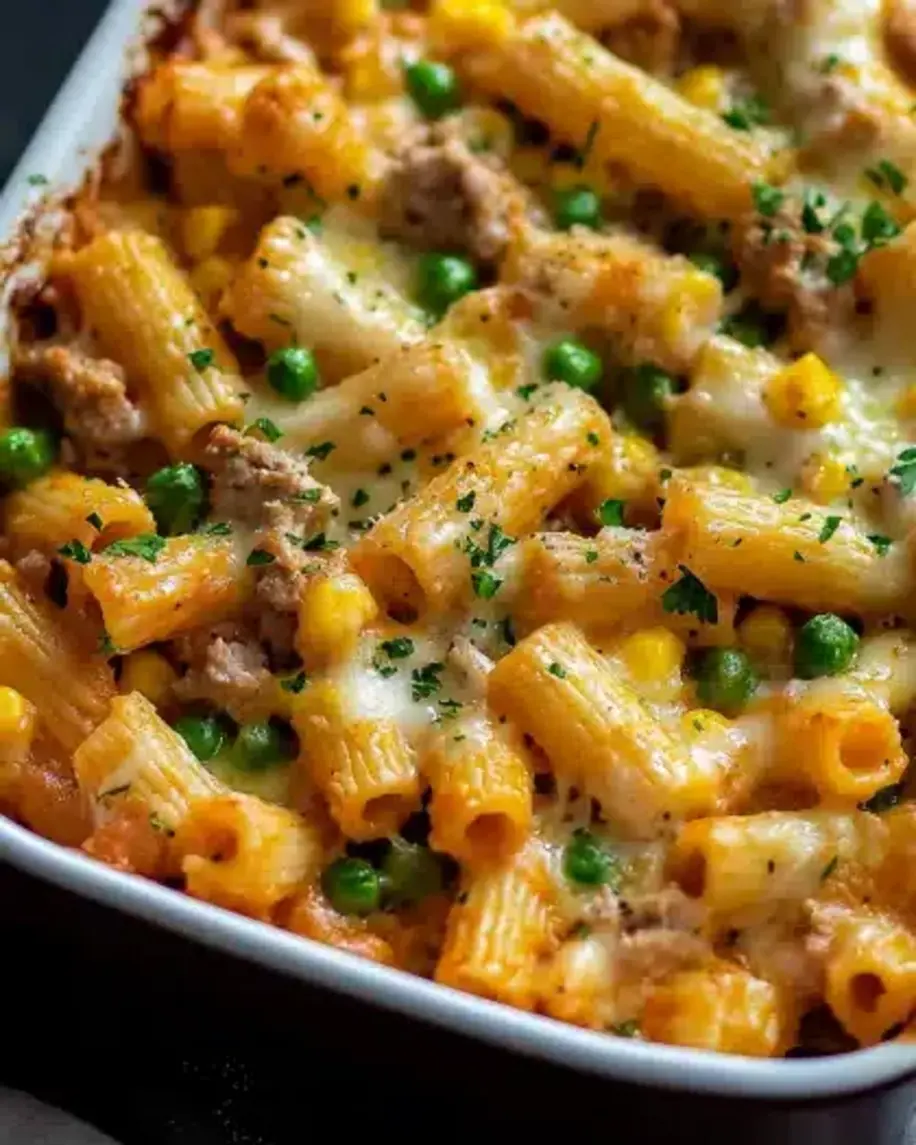
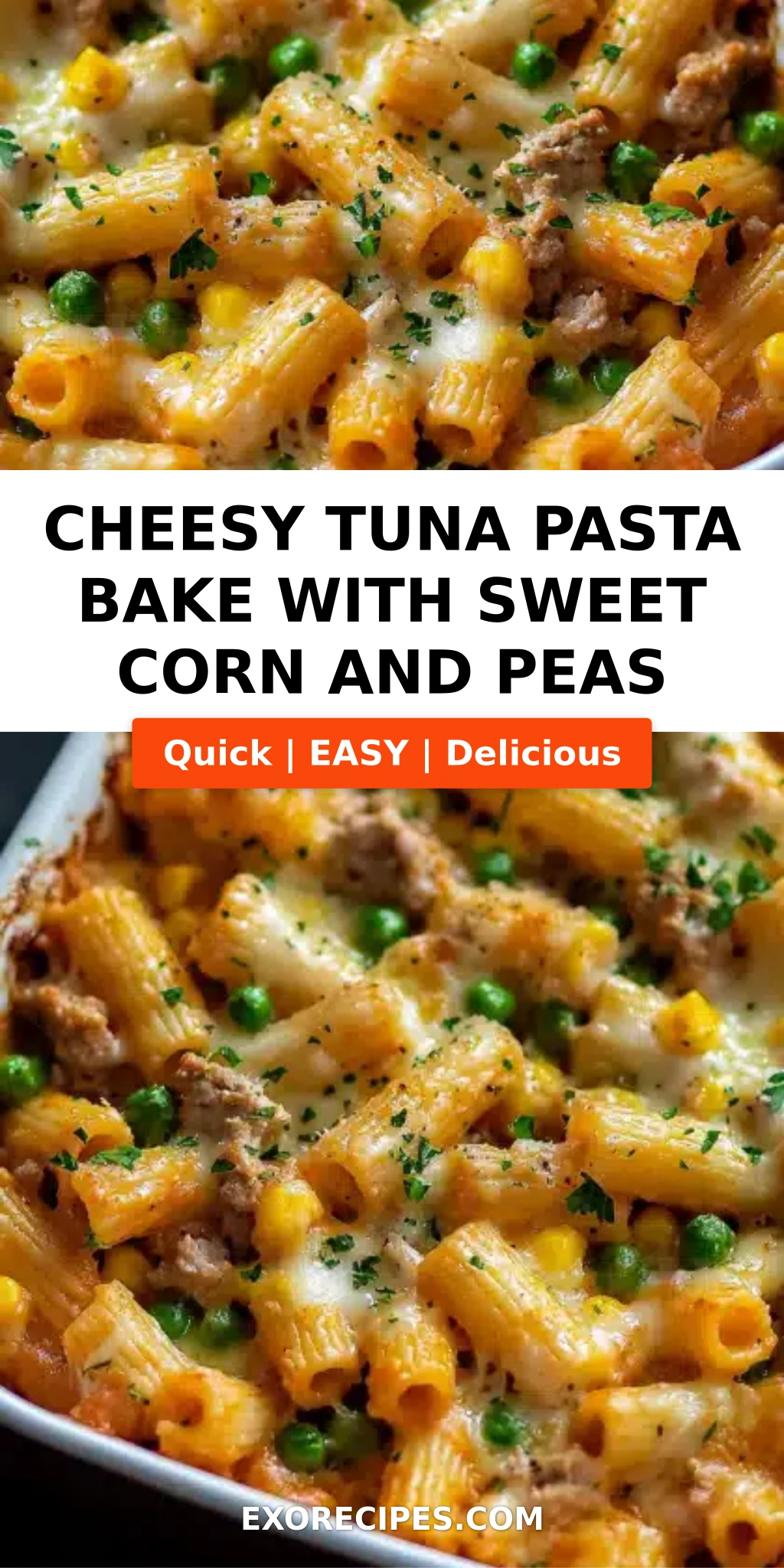
The first time you pull this dish from the oven, you’ll see exactly what I mean. The top is golden and bubbly, with the breadcrumbs (if you use them) adding a light crunch that gives way to a creamy, luscious interior. Tuna, sweet corn, and tender peas are suspended in a velvety sauce made with cream of mushroom soup, milk, and two types of cheese. Every forkful delivers a bit of sweetness from the corn, a pop of green from the peas, and that unmistakable savory depth from the tuna and Parmesan. It’s the kind of meal that feels like a hug in a baking dish. My training in Paris taught me the importance of building layers of flavor even in simple dishes — and here, the sautéed onion and garlic, the splash of milk, and the blend of cheeses do exactly that.

What sets my version apart is the balance — I use just enough cheese to feel indulgent but not heavy, and the sweet corn and peas bring a freshness that makes this cheesy tuna casserole feel lighter than it is. I also add a touch of Parmesan alongside the cheddar for a deeper, nuttier note. One mistake I see home cooks make is overcooking the pasta before baking — remember, it will continue cooking in the oven, so cook it just to al dente. 💡 mia’s Pro Tip: Reserve a little pasta water before draining — if your sauce seems too thick when you combine everything, a splash of that starchy water will loosen it beautifully without diluting the flavor.

Why This Cheesy Tuna Pasta Bake Recipe Is the Best

The Flavor Secret. This isn’t just any tuna pasta bake — it’s one where every ingredient pulls its weight. The sweet corn and peas aren’t just filler; they add bursts of sweetness and color that make each bite more interesting. I learned in Paris that even the simplest dish benefits from contrast — and here, the sweet pop of corn against the savory tuna and creamy cheese sauce creates exactly that. A pinch of smoked paprika or fresh parsley (both optional but encouraged) takes it even further without any extra effort.

Perfected Texture. The secret to a great pasta bake is a sauce that’s creamy but not gluey, a topping that’s golden but not burnt, and pasta that’s tender but not mushy. I cook the pasta one minute less than the package directs — it finishes cooking in the oven and stays perfectly al dente. The breadcrumb topping is optional, but if you use it, toss the breadcrumbs with a tiny drizzle of olive oil first for even browning. That crispy top against the creamy interior is pure magic.

Foolproof & Fast. From prep to table in 40 minutes, this is a weeknight winner that even beginner cooks can nail on the first try. There’s no complicated technique — just sauté, stir, layer, and bake. The cream of mushroom soup does double duty as both a flavor base and a thickening agent, which means you don’t need to make a roux or worry about lumps. It’s forgiving, adaptable, and exactly the kind of recipe you’ll turn to again and again.

Cheesy Tuna Pasta Bake Ingredients

I buy most of my pantry staples at the Fairway on the Upper West Side, but this recipe works with whatever you have on hand. The ingredients are simple, and that’s the point. Here’s what you’ll need — with a few notes from my kitchen to yours.

Ingredients List

  • 12 oz (340 g) pasta (penne, fusilli, or macaroni work great)
  • 2 tbsp (30 ml) olive oil
  • 1 medium onion, chopped
  • 2 cloves garlic, minced
  • 1 can (10.75 oz / 305 g) condensed cream of mushroom soup
  • 1 cup (240 ml) milk (whole or 2%)
  • 1 cup (120 g) frozen peas
  • 1 cup (150 g) sweet corn kernels (canned, drained, or frozen)
  • 2 cans (5 oz / 140 g each) tuna, drained
  • 2 cups (200 g) shredded cheddar cheese, divided
  • 1/2 cup (50 g) grated Parmesan cheese
  • 1/2 tsp salt
  • 1/4 tsp black pepper
  • 1/2 cup (20 g) breadcrumbs (optional, for topping)

Ingredient Spotlight

Tuna: I use canned chunk light or solid white tuna packed in water — both work beautifully. Solid white tuna has a firmer texture and milder flavor, while chunk light is more economical and blends into the sauce nicely. Drain it well before adding; you don’t want extra liquid diluting the sauce. If you’re looking for a substitute, canned salmon is a lovely alternative with a richer taste.

Cheese: Sharp cheddar is my go-to for that classic cheesy flavor and beautiful golden top. I always shred it myself — pre-shredded cheese has anti-caking agents that prevent it from melting as smoothly. The Parmesan adds a salty, nutty depth that rounds out the sauce. For a different twist, try half cheddar and half Monterey Jack for a milder, creamier melt.

Sweet Corn and Peas: This duo is the heart of what makes this bake special. Frozen peas and corn can go straight into the sauce without thawing — they’ll cook perfectly in the oven. Canned corn works too; just drain it well. The sweetness of the corn balances the savory tuna and cheese, while the peas add a fresh, green pop that keeps every bite interesting.

Original IngredientBest SubstitutionFlavor / Texture Impact
Canned tunaCanned salmon or shredded cooked chickenSalmon is richer; chicken is milder and heartier
Cream of mushroom soupCream of chicken or celery soupChicken adds a different savory note; celery is lighter
Cheddar cheeseMonterey Jack or GoudaJack is milder and creamier; Gouda adds smoky depth
Frozen peasChopped green beans or broccoli floretsBeans add crunch; broccoli adds more veggie presence
Sweet cornDiced bell pepper or carrotsPepper adds sweetness with a slight bite; carrots are earthier

How to Make Cheesy Tuna Pasta Bake — Step-by-Step

Making this easy tuna pasta bake recipe is as straightforward as it gets. Follow these steps and you’ll have a golden, bubbling dish that the whole family will love.

Step 1: Preheat and Prepare

Preheat your oven to 375°F (190°C). Grease a 9×13-inch baking dish with a little olive oil or non-stick spray. This ensures nothing sticks and makes cleanup a breeze.

⚠️ Common Mistake to Avoid: Forgetting to grease the dish — even if it’s non-stick, the cheese can still cling. A light grease guarantees easy serving and washing.

Step 2: Cook the Pasta

Bring a large pot of salted water to a boil. Add your pasta and cook according to package directions until al dente — usually about 8–10 minutes depending on the shape. Drain well and set aside. Remember, the pasta will cook more in the oven, so stop a minute short of fully tender.

💡 mia’s Pro Tip: Reserve 1/2 cup of pasta water before draining. If your sauce seems tight when you combine everything, a splash will loosen it perfectly without diluting the flavor.

Step 3: Sauté Aromatics

In a large saucepan, heat the olive oil over medium heat. Add the chopped onion and cook for 3–4 minutes until softened and translucent. Add the minced garlic and cook for 30 seconds more until fragrant. This builds the savory foundation of your sauce.

⚠️ Common Mistake to Avoid: Burning the garlic — it goes from fragrant to bitter in seconds. Keep stirring and remove from heat if needed.

Step 4: Build the Sauce

Stir in the cream of mushroom soup, milk, frozen peas, sweet corn, and drained tuna. Bring the mixture to a gentle simmer — you’ll see small bubbles around the edges. Add 1 cup of the shredded cheddar cheese, the Parmesan, salt, and pepper. Stir until the cheese is fully melted and the sauce is smooth and creamy.

💡 mia’s Pro Tip: Add the cheese off the heat once the sauce is simmering — this prevents it from separating and keeps the sauce silky.

Step 5: Combine Pasta and Sauce

Add the cooked pasta to the sauce and stir until every piece is evenly coated. Transfer the mixture to your prepared baking dish and spread it into an even layer.

⚠️ Common Mistake to Avoid: Over-stirring the pasta into the sauce — you want to coat it evenly, not break up the pasta. Use a gentle folding motion.

Step 6: Top and Bake

Sprinkle the remaining 1 cup of cheddar cheese evenly over the top. If using breadcrumbs, sprinkle them over the cheese. Bake for 20–25 minutes, until the sauce is bubbly around the edges and the top is golden and slightly crisp. Let the dish stand for 5 minutes before serving — this allows the sauce to set slightly for cleaner portions.

💡 mia’s Pro Tip: For an extra-golden top, switch the oven to broil for the last 2 minutes. Watch it closely so the breadcrumbs don’t burn.

StepActionDurationKey Visual Cue
1Preheat & grease dish5 minOven at 375°F, dish lightly coated
2Cook pasta al dente8–10 minPasta tender but firm at center
3Sauté onion & garlic3–4 minOnion translucent, garlic fragrant
4Build sauce with soup, milk, veggies, tuna, cheese5–7 minSauce smooth, cheese melted, gentle simmer
5Combine pasta & sauce2 minPasta evenly coated, mixture in dish
6Top with cheese & breadcrumbs, bake20–25 minBubbly edges, golden top, let rest 5 min

Serving & Presentation

This cheesy tuna pasta bake is a meal in itself, but the way you serve it can elevate the whole experience. I like to scoop generous portions onto warm plates and finish with a sprinkle of fresh parsley or a pinch of smoked paprika for color. A side of simple green salad with a lemon vinaigrette cuts through the richness beautifully — it’s how we often served baked dishes in my mother’s kitchen in Morocco, where a fresh salad was never optional.

For a heartier spread, serve it alongside roasted broccoli or garlic bread. In my NYC apartment, I’ll often pair it with a crisp glass of Sauvignon Blanc or a cold lager — both stand up to the creamy cheese sauce without overpowering it. The dish is satisfying enough for a weeknight dinner but also special enough for a casual family gathering. Leftovers (if there are any) are just as good the next day.

Pairing TypeSuggestionsWhy It Works
Side DishGreen salad with lemon vinaigrette, roasted asparagus, garlic breadFreshness and crunch balance the creamy, cheesy bake
Sauce / DipHot sauce, sriracha mayo, extra grated ParmesanAdds heat or extra savory depth for customizing
BeverageSauvignon Blanc, light lager, sparkling water with lemonCrisp acidity or bubbles cut through the richness
GarnishFresh parsley, smoked paprika, lemon zest, chivesAdds color, freshness, and a subtle flavor lift

Make-Ahead, Storage & Reheating

This tuna pasta bake with sweet corn is a dream for meal prep. I often assemble it on Sunday evening, pop it in the fridge, and bake it Monday night after a long day at the restaurant. It also freezes beautifully, which is a lifesaver for busy NYC weeks. Here’s everything you need to know to store, reheat, and enjoy it at its best.

MethodContainerDurationReheating Tip
RefrigeratorAirtight container or covered baking dish3–4 daysReheat in a 350°F oven for 15–20 min, or microwave in 30-sec bursts. Add a splash of milk if dry.
FreezerFreezer-safe dish or individual portions in zip-top bags2–3 monthsThaw overnight in the fridge, then reheat at 350°F until bubbly. Cover with foil to prevent over-browning.
Make-AheadAssemble in baking dish, cover, refrigerateUp to 24 hours in advanceAdd 5–10 min to baking time if going from fridge to oven. Let it sit on the counter while the oven preheats.

The best way to prevent this cheesy tuna casserole from drying out when reheating is to add a small splash of milk or cream before warming it up — this restores the sauce’s creamy texture. If reheating in the oven, cover the dish with foil for the first half of the reheating time, then remove the foil for the last few minutes to re-crisp the topping. From my experience, the microwave works in a pinch, but the oven gives you back that lovely golden crust.

Variations & Easy Swaps

This easy tuna pasta bake recipe is endlessly adaptable. Whether you’re feeding a crowd, catering to dietary needs, or just craving something different, here are three of my favorite variations.

VariationKey ChangeBest ForDifficulty Impact
MediterraneanAdd sun-dried tomatoes, olives, and oregano; swap cheddar for fetaBold flavor loversEasy
Gluten-Free & Dairy-FreeUse gluten-free pasta and dairy-free cheese/milkDietary restrictionsEasy
Spicy SouthwestAdd cumin, chili powder, black beans, and pepper jack cheeseKick of heatEasy

Mediterranean Tuna Pasta Bake

This version takes me back to the sunny flavors of the Mediterranean — a nod to the French Riviera markets I visited during my culinary training. Swap the cheddar for crumbled feta and add 1/2 cup each of chopped sun-dried tomatoes and Kalamata olives. Stir in a teaspoon of dried oregano with the garlic. The feta doesn’t melt the same way, so you’ll get little salty, tangy pockets throughout — absolutely delicious. Finish with a handful of fresh parsley or basil on top.

Gluten-Free & Dairy-Free Version

I’ve tested this for friends with dietary restrictions, and it works beautifully. Use your favorite gluten-free pasta — I like brown rice or chickpea pasta for the best texture. For the sauce, substitute the cream of mushroom soup with a gluten-free cream of mushroom soup (many brands offer it), and use unsweetened oat milk or almond milk. Replace the cheddar with a good dairy-free shreddable cheese — I’ve had great results with brands like Violife or Miyoko’s. The texture will be slightly less gooey, but the flavor is still deeply satisfying.

Spicy Southwest Tuna Pasta Bake

For those who like a kick, this twist is a winner. Add 1 teaspoon of cumin and 1/2 teaspoon of chili powder to the sauce along with the garlic. Swap the cheddar for pepper jack cheese, and stir in a drained can of black beans along with the corn. The pepper jack brings heat and creamy meltiness, while the cumin and chili powder give it a warm, smoky depth. Top with sliced jalapeños before baking if you’re feeling brave. This version reminds me of the bold flavors I’ve come to love in NYC’s Tex-Mex spots.

Can I use frozen sweet corn and frozen peas directly in the tuna pasta bake without thawing them first?

Absolutely — and I actually prefer it that way. Frozen sweet corn and frozen peas can go straight from the freezer into the sauce without any thawing. They’ll cook perfectly in the time it takes the sauce to simmer and the dish to bake. This also helps them retain their bright color and slight snap. If you thaw them first, they can become mushy and release extra water into the sauce, so keeping them frozen is a smart shortcut. Just give them a quick stir into the sauce directly from the bag — it’s one less step and the texture stays much better.

What is the best type of cheese to use for a creamy tuna pasta bake topping?

Sharp cheddar is my top choice for the topping — it has the perfect balance of meltability, flavor depth, and browning. I recommend shredding it yourself from a block, as pre-shredded cheese contains anti-caking agents that can make the topping less creamy and more prone to drying out. For the sauce itself, I use a mix of cheddar and Parmesan — the Parmesan adds a nutty, salty note that enhances the overall flavor. If you want to experiment, Monterey Jack melts beautifully and has a milder, creamier finish, while Gouda adds a subtle smoky sweetness. A mix of cheddar and Monterey Jack is a wonderful all-purpose blend.

How do I prevent the pasta bake from drying out when reheating leftovers?

The key is adding moisture before reheating. When I reheat this cheesy tuna pasta bake, I sprinkle a tablespoon or two of milk (or cream, if I’m feeling indulgent) over the top before warming it up. This restores the sauce’s creamy texture and prevents it from becoming dry. If using the oven, cover the dish with foil for the first half of reheating at 350°F, then uncover for the last few minutes to re-crisp the top. In the microwave, heat in 30-second bursts and stir halfway through. Adding a splash of milk before each reheating session makes a noticeable difference — the pasta absorbs moisture and the sauce becomes luscious again.

Can I substitute canned tuna with fresh tuna or another protein in this recipe?

Yes, and I’ve done it many times. If you want to use fresh tuna, sear a 6–8 oz fillet in a hot pan with a little olive oil for about 2 minutes per side, then flake it into the sauce. The texture will be firmer and the flavor milder and more delicate. Canned salmon is another excellent substitute — it’s richer and has a lovely color. For a non-fish option, try shredded rotisserie chicken or even cooked chickpeas for a vegetarian twist. Just make sure whatever protein you use is fully cooked before adding it to the sauce, since it won’t cook much more during baking. The rest of the recipe stays exactly the same.

Can I make this tuna pasta bake ahead of time and refrigerate before baking?

Definitely — this is one of the best make-ahead meals in my rotation. Assemble the entire dish right up to the baking step, cover it tightly with foil or plastic wrap, and refrigerate for up to 24 hours. When you’re ready to bake, let it sit on the counter while the oven preheats (about 15–20 minutes) to take the chill off, then bake as directed, adding 5–10 minutes to the baking time since you’re starting from cold. The texture and flavor are just as good as freshly made — actually, the flavors have even more time to meld, so some might argue it’s even better the next day.

What can I use instead of cream of mushroom soup in this recipe?

If you don’t have cream of mushroom soup on hand or prefer something different, you have several great options. Cream of chicken soup is the most straightforward swap — it has a similar consistency and mild savory flavor. Cream of celery soup works well too and adds a subtle herbal note. For a homemade alternative, make a quick roux with 2 tablespoons butter, 2 tablespoons flour, and 1 cup of milk, then season with salt, pepper, and a pinch of garlic powder. This homemade version will be less thick than the canned soup, so you may want to let it simmer for an extra minute or two to reduce. Any of these will give you a creamy, cohesive sauce.

Is it better to use chunk light or solid white tuna for this bake?

Both work beautifully, but they give slightly different results. Solid white tuna (albacore) has a firmer texture and a milder, cleaner flavor — it flakes into nice chunks that hold their shape in the sauce. Chunk light tuna is more economical, has a stronger tuna flavor, and breaks down more easily, blending more thoroughly into the sauce. For this cheesy tuna pasta bake, I actually prefer chunk light because it distributes more evenly throughout the dish, so every forkful gets a bit of tuna. Either way, make sure to drain the cans thoroughly before adding — too much packing liquid can thin out your sauce. Both are excellent choices depending on your preference.

What pasta shape works best for a tuna pasta bake?

Short, sturdy pasta shapes with ridges or curves are ideal because they hold onto the creamy sauce and distribute the tuna, corn, and peas evenly. Penne is my top pick — the diagonal cuts and hollow center capture the sauce beautifully. Fusilli and rotini are excellent too, as their spirals grab every bit of cheesy goodness. Macaroni is a classic choice that works perfectly and feels especially comforting. I’d avoid long pasta like spaghetti or linguine, as it can clump together and doesn’t distribute the mix-ins as well. Whatever shape you choose, cook it to al dente — it will continue cooking in the oven and absorb some sauce, so you want it firm enough to hold its shape.

Can I add vegetables other than corn and peas to this pasta bake?

Absolutely — this recipe is very flexible and welcomes extra vegetables. Diced bell peppers (red or yellow) add sweetness and a slight crunch. Finely chopped broccoli florets steam beautifully in the sauce and add a nice earthy note. Sautéed mushrooms would be a natural fit given the cream of mushroom soup base. For a leafy addition, stir in a handful of fresh spinach at the end of the sauce-making step — it will wilt right into the sauce. Just keep the total vegetable add-ins to about 1 to 1½ cups so the sauce-to-solid ratio stays balanced. If adding heartier vegetables like broccoli or bell peppers, sauté them briefly with the onion to soften them before adding the other ingredients.

How do I get a golden, crispy topping without burning the cheese?

This is a question I get all the time, and the trick is simple: layer your topping strategically and watch your oven temperature. First, make sure the top layer of cheese is evenly spread — clumps can burn while thin spots don’t brown enough. If using breadcrumbs, toss them with a tiny drizzle of olive oil before sprinkling; this helps them toast evenly. Bake at 375°F for 20 minutes, then switch the oven to broil for the last 2–3 minutes. Watch it like a hawk during broiling — cheese can go from golden to burnt in seconds. If the top is browning too quickly but the center isn’t bubbly yet, tent the dish with foil and continue baking until the sauce is bubbling around the edges.

📌

Love This Recipe? Save It to Pinterest!

If you enjoyed this Cheesy Tuna Pasta Bake with Sweet Corn and Peas recipe, don’t let it get lost in your browser tabs! 😄 Pin it now so you can find it again anytime — and explore hundreds more tried-and-tested recipes waiting for you on my Pinterest boards.

👉 Follow mia on Pinterest @exorecipe

📌 Pin this recipe · 🔁 Re-pin your favorites · 💬 Tag me when you make it — I love seeing your creations!

“`

Print

clock clock iconcutlery cutlery iconflag flag iconfolder folder iconinstagram instagram iconpinterest pinterest iconfacebook facebook iconprint print iconsquares squares iconheart heart iconheart solid heart solid icon

Cheesy Tuna Pasta Bake with Sweet Corn and Peas A Comforting Family Favorite

  • Author: Chef Mia
  • Prep Time: 10 minutes
  • Cook Time: 30 minutes
  • Total Time: 40 minutes
  • Yield: 6 servings 1x
  • Method: Main Course
  • Cuisine: American

Description

A comforting and easy cheesy tuna pasta bake with sweet corn and peas, perfect for a family dinner.


Ingredients

Scale
  • 12 oz (340 g) pasta (e.g., penne, fusilli, or macaroni)
  • 2 tbsp (30 ml) olive oil
  • 1 medium onion, chopped
  • 2 cloves garlic, minced
  • 1 can (10.75 oz / 305 g) condensed cream of mushroom soup
  • 1 cup (240 ml) milk
  • 1 cup (120 g) frozen peas
  • 1 cup (150 g) sweet corn kernels (canned, drained, or frozen)
  • 2 cans (5 oz / 140 g each) tuna, drained
  • 2 cups (200 g) shredded cheddar cheese, divided
  • 1/2 cup (50 g) grated Parmesan cheese
  • 1/2 tsp salt
  • 1/4 tsp black pepper
  • 1/2 cup (20 g) breadcrumbs (optional, for topping)

Instructions

  1. Preheat the oven to 375°F (190°C). Grease a 9×13-inch baking dish.
  2. Cook the pasta according to package directions until al dente. Drain and set aside.
  3. In a large saucepan, heat the olive oil over medium heat. Add onion and garlic, cook until softened, about 3-4 minutes.
  4. Stir in the cream of mushroom soup, milk, peas, corn, and drained tuna. Bring to a gentle simmer.
  5. Add 1 cup of the shredded cheddar cheese, Parmesan, salt, and pepper. Stir until the cheese is melted and the sauce is smooth.
  6. Add the cooked pasta to the sauce, stirring to coat evenly. Transfer to the prepared baking dish.
  7. Sprinkle the remaining 1 cup of cheddar cheese over the top. If using, sprinkle the breadcrumbs evenly over the cheese.
  8. Bake for 20-25 minutes, until bubbly and golden on top. Let stand for 5 minutes before serving.

Notes

For a lighter version, use evaporated milk instead of whole milk. You can also add a pinch of smoked paprika or fresh herbs like parsley for extra flavor.


Nutrition

  • Calories: 450 kcal
  • Sugar: 6 g
  • Fat: 18 g
  • Carbohydrates: 45 g
  • Protein: 30 g


Cheesy Tuna Pasta Bake with Sweet Corn and Peas A Comforting Family Favorite

k">

Tried This Recipe? Leave a Comment!

Did you make this recipe? I’d love to hear how it turned out! Please leave a comment and a rating below. Your feedback helps other home cooks and supports cheerychop.com!

For more delicious inspiration, follow me on Pinterest!

Cheesy Tater Tot Breakfast Casserole with Sausage Gravy – The Ultimate Comfort Breakfast

⚖️
Difficulty
Easy
⏲️
Prep Time
15 mins
🕒
Cook Time
45 mins
⏱️
Total Time
60 mins
🍽️
Servings
8

Growing up in Morocco, my mother’s kitchen was a symphony of slow-cooked tagines, fragrant spices, and warm, communal meals shared around a low table. On chilly mornings, she would prepare a simple egg dish with potatoes and preserved butter that always filled our home with a deep, savory comfort. Now, living in New York City and running my own kitchen, I’ve taken that same spirit of hearty, soul-warming breakfast food and given it an American classic makeover. This Cheesy Tater Tot Breakfast Casserole with Sausage Gravy is everything I love about a cozy Sunday brunch — it’s rich, indulgent, and loaded with crispy tater tots, a luscious homemade sausage gravy, and a blanket of melted cheddar and mozzarella that pulls into glorious golden strands with every serving.

Imagine cutting into a square of this casserole: the top is bubbly and bronzed, with cheese stretching as you lift your fork. Beneath that cheesy crust, you find a bed of tender-yet-crispy tater tots that have absorbed just enough of the savory gravy to stay moist without turning soggy. The sausage gravy itself is a masterclass in texture — rich and velvety from the roux, with crumbles of perfectly seasoned pork that add bite after bite of meaty goodness. The egg mixture, lightly spiced with garlic and onion powder, binds everything together into a custard-like layer that cradles the tots and cheese. It’s the kind of breakfast that makes you want to linger at the table with a hot cup of coffee and the Sunday paper, letting the warmth settle into your bones.

I’ve tested this recipe dozens of times in my NYC kitchen, tweaking the ratios until every element works in harmony. The secret to my version lies in two simple techniques: baking the tater tots until they’re just golden before adding any liquid, which ensures they stay crispy even after baking, and building the gravy right in the pan with the sausage drippings for maximum flavor. No flourishes, no fuss — just honest, bold ingredients handled with intention. Whether you’re feeding a hungry family on Thanksgiving morning or hosting a brunch for friends, this Breakfast Casserole with Tater Tots delivers every single time. And I promise, if you follow my pro tips along the way, you’ll avoid the common mistake of ending up with a watery, soggy casserole. Let’s get started.

Why This Cheesy Tater Tot Breakfast Casserole with Sausage Gravy Recipe Is the Best

The Flavor Secret. Most breakfast casseroles rely on a mix of eggs and cheese alone, but I elevate this one with a fully developed sausage gravy that starts with a proper roux. I learned the importance of a well-cooked roux during my time in Paris, where even the simplest sauce demands patience and precision. By cooking the flour into the sausage drippings before adding milk, you eliminate any raw flour taste and create a gravy that’s nutty, silky, and deeply savory. The cayenne pepper is optional, but I love how it adds a whisper of heat that cuts through the richness — a small nod to the North African spices I grew up with, like harissa and ras el hanout.

Perfected Texture. The biggest challenge in any Tater Tot Breakfast Casserole is keeping the tots crisp after being submerged in eggs and gravy. My fix is a quick pre-bake: I spread the frozen tater tots in a single layer and bake them for 20 minutes at 375°F before adding anything else. This step ensures the exterior sets and forms a barrier that resists sogginess. I also let the casserole rest for 5 minutes after it comes out of the oven — this allows the eggs to finish setting gently and the layers to settle into clean, sliceable squares.

Foolproof & Fast. This recipe uses everyday ingredients you can find at any US grocery store, and the steps are designed to flow naturally from one to the next. While the tater tots bake, you cook the sausage and build the gravy. While the gravy comes together, you whisk the egg mixture. Then it’s simply a matter of layering everything into the dish and letting the oven do the work. Even if you’ve never made a homemade gravy before, I’ll walk you through each visual cue — from the moment the roux turns light brown to the instant the gravy thickens enough to coat the back of a spoon. This is a Sausage Gravy Casserole that builds confidence as much as flavor.

Cheesy Tater Tot Breakfast Casserole with Sausage Gravy Ingredients

I love sourcing my ingredients from the Union Square Greenmarket on a Saturday morning, but this recipe works beautifully with what you already have in your freezer and pantry. The beauty of this dish is that it’s built on humble, accessible staples — frozen tater tots, bulk pork sausage, block cheese you shred yourself — that come together to create something far greater than the sum of their parts. Whenever I prepare this casserole in my NYC kitchen, I’m reminded of the Moroccan principle of niya — cooking with honest intention using what’s available, and letting the flavors speak for themselves.

Ingredients List

  • 1 (32 oz) bag frozen tater tots
  • 1 lb bulk pork sausage
  • 1/4 cup all-purpose flour
  • 2 cups whole milk
  • 1/2 teaspoon salt
  • 1/2 teaspoon black pepper
  • 1/4 teaspoon cayenne pepper (optional)
  • 2 cups shredded cheddar cheese
  • 1/2 cup shredded mozzarella cheese
  • 6 large eggs
  • 1/2 cup milk (for egg mixture)
  • 1/4 teaspoon garlic powder
  • 1/4 teaspoon onion powder
  • Fresh chives for garnish (optional)

Ingredient Spotlight

Frozen Tater Tots. These are the backbone of the casserole. Look for a brand that uses simple ingredients — potatoes, oil, salt — without too many additives. I prefer Ore-Ida for their consistent size and crispiness. Do not thaw them before baking; the frozen exterior helps them hold their shape during the pre-bake. For a lighter option, you can swap with sweet potato tots, which add a subtle sweetness that plays beautifully against the savory gravy.

Bulk Pork Sausage. The sausage is the flavor anchor for the gravy. I use bulk pork sausage (not links or patties) so it crumbles easily and releases its fat into the pan. Jimmy Dean or a local butcher’s breakfast sausage both work well. If you prefer a leaner option, turkey sausage is an excellent substitute — just add 1 tablespoon of olive oil to compensate for the lower fat content, which helps build the roux.

Cheddar and Mozzarella Cheese. I strongly recommend shredding your own cheese from a block. Pre-shredded cheese contains anti-caking agents that prevent it from melting smoothly, which can result in a grainy texture. Sharp cheddar provides bold, tangy flavor, while mozzarella adds that stretchy, gooey pull that makes every serving feel indulgent. You can also substitute Monterey Jack for mozzarella if you want an even creamier melt.

Whole Milk. Whole milk is essential for a luscious gravy and a tender egg custard. Lower-fat milks will work in a pinch, but the gravy won’t be as rich, and the eggs may turn out slightly firmer. For a dairy-free version, unsweetened oat milk or full-fat canned coconut milk (thinned with water) are the best alternatives I’ve tested — oat milk keeps the gravy creamy, while coconut milk adds a subtle sweetness that pairs well with the cayenne.

Original IngredientBest SubstitutionFlavor / Texture Impact
Frozen Tater TotsSweet Potato TotsSweeter, slightly softer; pairs well with spicy gravy
Bulk Pork SausageTurkey Sausage + 1 tbsp olive oilLeaner, less rich; oil helps roux form properly
Whole MilkUnsweetened Oat MilkCreamy, neutral flavor; best dairy-free option
Cheddar CheesePepper JackAdds heat and creamy melt; skip cayenne if using
Mozzarella CheeseMonterey JackEven creamier, slightly more buttery melt

How to Make Cheesy Tater Tot Breakfast Casserole with Sausage Gravy — Step-by-Step

Trust me when I say this — you can absolutely nail this recipe on your first try. I’ve broken down every stage into clear, repeatable steps with visual cues so you always know exactly what to look for.

Step 1: Preheat and Prep

Preheat your oven to 375°F (190°C) and generously grease a 9×13-inch baking dish with butter or nonstick spray. I like to use a glass or ceramic dish for even heat distribution — metal pans can sometimes over-brown the edges before the center sets. While the oven comes to temperature, take your frozen tater tots out of the freezer so they’re ready to go.

💡 mia’s Pro Tip: Grease the dish all the way up the sides — the egg mixture will rise slightly as it bakes, and you don’t want any sticky spots that make cleanup harder.

Step 2: Bake the Tater Tots

Spread the frozen tater tots in a single, even layer in the prepared dish. Bake for 20 minutes, just until they turn lightly golden on the edges. They should still be tender inside, but the exterior should have a bit of crunch. This step is non-negotiable for achieving that signature crispy texture in the finished casserole — skipping it leads to soggy tots every time.

⚠️ Common Mistake to Avoid: Don’t crowd the tater tots into a thick pile. Spread them in a single layer so they crisp evenly. If you have extra, it’s better to bake them on a separate sheet pan and add them later.

Step 3: Cook the Sausage

While the tater tots bake, heat a large skillet over medium heat. Add the bulk pork sausage and cook, breaking it into small crumbles with a wooden spoon, until deeply browned — about 5–7 minutes. Do not drain the fat. The rendered drippings are essential for building the roux and infusing the gravy with rich, meaty flavor.

💡 mia’s Pro Tip: Let the sausage brown undisturbed for the first 2 minutes before breaking it up. A proper sear creates more flavor than constant stirring ever will.

Step 4: Build the Gravy

Sprinkle the flour evenly over the cooked sausage and stir continuously for 1 minute. The flour will absorb the fat and form a thick paste — that’s your roux. Slowly whisk in the 2 cups of milk, salt, black pepper, and cayenne if using. Keep stirring as the mixture comes to a gentle simmer. After about 3–4 minutes, the gravy will thicken enough to coat the back of a spoon. Remove from heat immediately.

⚠️ Common Mistake to Avoid: Adding the milk all at once can create lumps. Pour it in a slow, steady stream while whisking constantly. If lumps do form, a quick whisk with a fork will smooth them right out.

Step 5: Prepare the Egg Mixture

In a medium bowl, whisk together the 6 eggs, 1/2 cup milk, garlic powder, and onion powder until completely smooth and slightly frothy on top. This only takes about 30 seconds. The garlic and onion powders are my secret weapons — they add depth without overwhelming the delicate egg custard.

💡 mia’s Pro Tip: Whisk the eggs just until uniform — over-whisking incorporates too much air, which can cause the custard to puff up and then deflate unevenly as it cools.

Step 6: Layer the Casserole

Remove the tater tots from the oven. Pour the egg mixture evenly over the entire surface — tilt the dish gently to help it settle into all the crevices between the tots. Sprinkle 1 cup of the shredded cheddar cheese and all of the mozzarella over the top. Then pour the sausage gravy in an even layer over the cheese. Finally, sprinkle the remaining 1 cup of cheddar cheese over the gravy.

⚠️ Common Mistake to Avoid: Don’t skip the middle cheese layer — it acts as a barrier that prevents the gravy from soaking completely into the tater tots, helping maintain that desirable crisp texture.

Step 7: Bake and Rest

Bake the casserole for 25–30 minutes, until the eggs are fully set (the center should feel firm when gently jiggled) and the cheese on top is bubbly and golden brown in spots. If you prefer a deeper golden crust, switch the oven to broil for the final 1–2 minutes — but watch it carefully to prevent burning. Let the casserole rest for exactly 5 minutes before cutting. This resting period allows the eggs to finish setting and the layers to hold together cleanly when sliced.

💡 mia’s Pro Tip: Insert a knife into the center — if it comes out clean or with just a few moist crumbs, the casserole is done. If you see raw egg, give it 5 more minutes and check again.

StepActionDurationKey Visual Cue
1Preheat & Grease5 minOven at 375°F, dish fully coated
2Bake Tater Tots20 minLight golden edges, still tender inside
3Cook Sausage5–7 minDeeply browned crumbles, rendered fat
4Build Gravy4–5 minThickened, coats spoon, no raw flour smell
5Whisk Egg Mixture30 secSmooth, uniform, slightly frothy
6Layer & Assemble5 minEven layers: eggs, cheese, gravy, cheese
7Bake & Rest25–30 min + 5 min restSet center, bubbly golden cheese, knife clean

Serving & Presentation

This casserole is a showstopper right out of the dish. I like to let it rest for the full 5 minutes, then cut it into 8 hearty squares using a sharp chef’s knife — wiping the blade clean between cuts for the neatest edges. Serve each square on a warm plate with a generous sprinkle of fresh chives for color and a light oniony bite. The chives aren’t just garnish; they add a fresh, herbaceous note that cuts through the richness of the cheese and gravy.

Growing up in Morocco, we often served egg dishes with a side of crusty bread for scooping up every last bit of sauce. Here in New York, I reach for a toasted everything bagel or a warm buttermilk biscuit to do the same job. A small dish of hot sauce on the table — like a smoky chipotle or a bright Louisiana-style — lets guests customize the heat to their liking. For a complete brunch spread, pair this casserole with a simple arugula salad dressed with lemon and olive oil, and a pitcher of fresh-squeezed orange juice or a bubbly mimosa.

Pairing TypeSuggestionsWhy It Works
Side DishArugula salad, roasted tomatoes, fresh fruit bowlBright acidity and freshness balance the rich, cheesy casserole
Sauce / DipHot sauce, sriracha mayo, sour creamAdds heat, tang, or cool creaminess to complement the savory gravy
BeverageFresh orange juice, mimosa, black coffee, iced teaCitrus cuts fat, coffee enhances savory notes, mimosas feel celebratory
GarnishFresh chives, parsley, scallion greens, crushed red pepperAdds color, freshness, and a pop of brightness to each serving

Make-Ahead, Storage & Reheating

As a busy NYC food blogger with a schedule that rarely slows down, I rely on make-ahead breakfasts that don’t sacrifice quality. This casserole is one of my favorite meal-prep recipes because it can be assembled the night before and baked fresh in the morning — or fully cooked and reheated throughout the week without losing its soul.

MethodContainerDurationReheating Tip
RefrigeratorAirtight container or covered baking dishUp to 3 daysReheat in a 350°F oven for 10–12 min, or microwave in 30-sec bursts
FreezerWrap individual slices in plastic wrap, then foilUp to 2 monthsThaw overnight in fridge, then bake at 350°F for 15 min
Make-AheadAssemble in dish, cover, refrigerate unbakedUp to 24 hours in advanceAdd 5–8 min to bake time if starting from cold; let sit at room temp 15 min before baking

For make-ahead assembly, prepare the recipe through Step 6 (layering everything in the dish), then cover tightly with foil and refrigerate overnight. In the morning, let the dish sit on the counter for 15 minutes while the oven preheats to take the chill off, then bake as directed, adding 5–8 extra minutes. The result is just as bubbly and golden as if you baked it immediately — perfect for holiday mornings when you want to enjoy coffee with your guests instead of working in the kitchen.

When reheating leftovers, the oven is always my first choice. The microwave works in a pinch, but it softens the tater tots considerably. For individual portions, I recommend a toaster oven at 350°F for about 8 minutes — the direct heat helps restore some of that exterior crispness. If you’re reheating from frozen, thaw the slice overnight in the refrigerator first, then follow the oven method for the best texture.

Variations & Easy Swaps

VariationKey ChangeBest ForDifficulty Impact
Spicy SouthwestAdd green chiles, pepper jack, cuminThose who love heat and Southwestern flavorsEasy
Vegetarian Mushroom GravyReplace sausage with mushrooms, use veg stockMeatless Monday or vegetarian guestsEasy
Loaded Bacon & CheddarAdd cooked bacon, extra cheddar, no mozzarellaUltra-indulgent, smoky flavor loversEasy

Spicy Southwest Variation

For a version with a kick, add a 4-ounce can of diced green chiles (drained) to the egg mixture and swap the mozzarella for pepper jack cheese. Add 1 teaspoon ground cumin and 1/2 teaspoon smoked paprika to the gravy along with the other spices. The result is a casserole that sings with Southwestern warmth — the cumin and green chiles remind me of the spice markets in Marrakech, where similar blends are used to wake up the palate in the morning. Serve with fresh pico de gallo and a dollop of sour cream.

Vegetarian Mushroom Gravy Variation

Skip the pork sausage and build the gravy with 8 ounces of finely chopped cremini mushrooms, 2 tablespoons of olive oil, and the same flour-and-milk roux technique. Add 1 teaspoon of soy sauce or tamari and 1/2 teaspoon of dried thyme to deepen the umami. The mushrooms provide a meaty texture that absorbs the gravy beautifully, and the soy sauce adds the savory depth you’d normally get from the sausage. This version is a hit with my vegetarian friends in NYC, and honestly, I make it for myself on weeknights when I want the comfort without the heaviness.

Loaded Bacon & Cheddar Variation

For an extra-decadent twist, cook 8 slices of thick-cut bacon until crispy, crumble them, and layer half into the casserole with the egg mixture and half on top with the final cheese layer. Use sharp white cheddar instead of the cheddar-mozzarella blend for a bolder, tangier flavor profile. The smokiness of the bacon cuts through the richness of the gravy in a way that’s pure comfort food magic. I like to finish this version with a sprinkle of flaky sea salt right before serving — it’s a trick I picked up in a Parisian brasserie for making baked dishes taste even more vibrant.

Can I make cheesy tater tot breakfast casserole with sausage gravy the night before?

Yes, absolutely! This casserole is an excellent make-ahead breakfast option. Simply assemble the entire casserole through Step 6 — layering the par-baked tater tots, egg mixture, cheese, and sausage gravy — then cover the dish tightly with foil or plastic wrap and refrigerate for up to 24 hours. In the morning, let the dish sit at room temperature for about 15 minutes while the oven preheats to 375°F. Then bake as directed, adding 5 to 8 extra minutes to account for the cold start. You may also want to tent the casserole with foil for the first 15 minutes of baking to prevent the top from over-browning before the center sets. The texture remains just as creamy, cheesy, and satisfying as a freshly assembled version — perfect for holiday mornings or when you’re hosting brunch and want to enjoy time with your guests.

What can I use instead of sausage for the gravy in this tater tot casserole?

If you want to skip the pork sausage, you have several delicious options. For a meat-based substitute, use bulk turkey sausage (add 1 tablespoon of olive oil to compensate for the lower fat), or crumbled cooked bacon and diced ham. For a vegetarian version, finely chop 8 ounces of cremini mushrooms and sauté them in olive oil until deeply browned and all their moisture has evaporated — then proceed with the roux as directed. Adding 1 teaspoon of soy sauce or tamari to the gravy will boost the savory umami that the mushrooms provide. Each substitute creates a slightly different flavor profile but still results in a rich, satisfying gravy that works beautifully with the tater tots and cheese.

How long should I bake a tater tot breakfast casserole with sausage gravy?

Bake the assembled casserole at 375°F (190°C) for 25 to 30 minutes. The casserole is done when the center feels firm to a gentle touch (no longer jiggly), the cheese on top is bubbly and golden brown, and a knife inserted into the center comes out clean or with just a few moist crumbs. If you assembled the casserole the night before and it’s still cold from the refrigerator, add 5 to 8 minutes to the bake time. Every oven runs slightly differently, so I recommend checking at the 25-minute mark. For a deeper golden crust, you can switch the oven to broil for the final 1 to 2 minutes — but watch it carefully to avoid burning. Always let the casserole rest for 5 minutes after baking before cutting into it.

Can I freeze cheesy tater tot breakfast casserole with sausage gravy for later?

Yes, this casserole freezes beautifully. Allow the fully baked casserole to cool completely, then cut it into individual slices. Wrap each slice tightly in plastic wrap, followed by a layer of aluminum foil to prevent freezer burn. Place the wrapped slices in a freezer-safe bag or airtight container and freeze for up to 2 months. When you’re ready to eat, thaw the desired number of slices in the refrigerator overnight. Reheat in a 350°F oven for about 15 minutes, or in a toaster oven for 8 to 10 minutes, until warmed through and the cheese is bubbly again. I do not recommend microwaving from frozen, as it can make the tater tots soggy and the eggs rubbery. For best results, thaw first and use dry heat to restore the texture.

Can I use frozen sausage instead of fresh for this breakfast casserole?

Yes, you can use frozen bulk pork sausage, but you need to thaw it completely in the refrigerator before cooking. Do not cook it from frozen — the outside will brown before the interior is cooked through, and you’ll lose the even crumble texture needed for the gravy. Once thawed, cook the sausage exactly as directed in the recipe. If your frozen sausage releases more liquid than fresh sausage during cooking, simply let the liquid cook off before adding the flour for the roux. The final flavor and texture will be the same as using fresh sausage, so it’s a perfectly fine substitute when you’re working with what you have on hand.

What’s the best cheese to use for a tater tot breakfast casserole?

I recommend a combination of sharp cheddar and mozzarella for the best balance of flavor and texture. Sharp cheddar provides a bold, tangy taste that cuts through the richness of the gravy, while mozzarella gives you that irresistible stretchy, gooey pull. Always shred your own cheese from a block — pre-shredded cheese is coated with anti-caking agents that prevent smooth melting and can result in a grainy texture. Other excellent options include Monterey Jack for extra creaminess, pepper jack if you want heat, or smoked gouda for a deeper, smoky flavor. You can use any combination totaling 2.5 cups, but I don’t recommend using only one type — the blend produces the best melt and the most complex cheesy flavor.

How do I keep the tater tots crispy in a breakfast casserole?

The key to crispy tater tots in a casserole is a two-step approach. First, bake the frozen tater tots in a single layer at 375°F for 20 minutes before adding any liquid ingredients — this sets the exterior and creates a barrier that resists moisture. Second, layer the casserole strategically: pour the egg mixture over the tots first, then add a layer of cheese, then the sausage gravy, and finally another layer of cheese on top. The middle cheese layer acts as a buffer that prevents the gravy from fully saturating the tots. Finally, let the casserole rest for 5 minutes after baking — this allows the eggs to finish setting and the structure to stabilize, so the tots retain their texture rather than turning mushy as the casserole sits.

Can I add vegetables like bell peppers or onions to this casserole?

Absolutely! Sautéed vegetables add great flavor and texture. Dice 1/2 cup each of bell pepper and onion, and cook them in the skillet after the sausage is done, using the remaining drippings. Cook for 3 to 4 minutes until softened, then set them aside and add them to the casserole with the egg mixture. You can also add sautéed spinach, mushrooms, or roasted green chiles. Just make sure any vegetable you add is cooked and has had excess moisture removed — raw or watery vegetables can release liquid during baking and make the casserole runny. If you’re adding spinach, squeeze it dry after cooking. This is a wonderful way to customize the casserole to your taste or use up odds and ends from your fridge.

Can I make this casserole gluten-free?

Yes, this casserole can easily be made gluten-free. The main source of gluten is the all-purpose flour used to thicken the sausage gravy. Substitute it with a gluten-free all-purpose flour blend that contains xanthan gum (like Bob’s Red Mill 1-to-1 Baking Flour) or use cornstarch. For a cornstarch slurry, mix 2 tablespoons of cornstarch with 3 tablespoons of cold milk until smooth, then whisk it into the gravy after the milk has come to a simmer — cook for an additional 2 minutes until thickened. Also check that your frozen tater tots are labeled gluten-free (most major brands are, but it’s worth verifying). The rest of the ingredients — eggs, cheese, milk, sausage — are naturally gluten-free, so you’re just two swaps away from a celiac-safe breakfast.

What’s the best way to reheat leftover tater tot breakfast casserole without losing texture?

The oven or a toaster oven is far superior to a microwave for reheating this casserole. Preheat to 350°F. Place individual slices on a baking sheet or in a small oven-safe dish and heat for 10 to 12 minutes (oven) or 6 to 8 minutes (toaster oven). The dry heat helps re-crisp the tater tots on the exterior while gently warming the eggs and melting the cheese. If you’re in a hurry, the microwave works in 30-second bursts, but the tots will soften considerably. For the best of both worlds, microwave for 1 minute to take the chill off, then finish in a toaster oven for 4 to 5 minutes. Always cover the casserole loosely with foil if you notice the top browning too quickly before the center is hot.

Share Your Version!

There’s something truly special about a breakfast that brings people together — and I love hearing how this casserole shows up in your kitchen. Did you add a smoky twist with chipotle? Did you go all-in on the mushrooms for a vegetarian feast? Or maybe you kept it classic and let the tater tots and gravy shine? Whatever you do, I’d love to know. Leave a star rating and a comment below to tell me how it turned out, and don’t forget to share a photo of your creation on Instagram or Pinterest. Tag me @exorecipes so I can see your beautiful breakfast — I personally reply to every single tag, and your photo might even get featured in my weekly roundup!

I also want to know: what’s one ingredient you always add to your breakfast casserole that makes it feel like home? For me, it’s a pinch of cayenne — a tiny nod to the warm spices of my Moroccan childhood that reminds me every meal is an invitation to be present, generous, and joyful. Drop your answer in the comments — I’m genuinely curious and always looking for new ideas to test in my NYC kitchen.

From my NYC kitchen to yours — I hope this recipe brings as much warmth to your table as it does to mine. — mia 🧡

📌

Love This Recipe? Save It to Pinterest!

If you enjoyed this Cheesy Tater Tot Breakfast Casserole with Sausage Gravy recipe, don’t let it get lost in your browser tabs! 😄 Pin it now so you can find it again anytime — and explore hundreds more tried-and-tested recipes waiting for you on my Pinterest boards.

👉 Follow mia on Pinterest @exorecipe

📌 Pin this recipe · 🔁 Re-pin your favorites · 💬 Tag me when you make it — I love seeing your creations!

Print

clock clock iconcutlery cutlery iconflag flag iconfolder folder iconinstagram instagram iconpinterest pinterest iconfacebook facebook iconprint print iconsquares squares iconheart heart iconheart solid heart solid icon

Cheesy Tater Tot Breakfast Casserole with Sausage Gravy

  • Author: Chef Mia
  • Prep Time: 15 minutes
  • Cook Time: 45 minutes
  • Total Time: 1 hour
  • Yield: 8 1x
  • Method: Breakfast
  • Cuisine: American

Description

A hearty breakfast casserole loaded with crispy tater tots, savory sausage gravy, and melted cheese. Perfect for a filling morning meal or brunch.


Ingredients

Scale
  • 1 (32 oz) bag frozen tater tots
  • 1 lb bulk pork sausage
  • 1/4 cup all-purpose flour
  • 2 cups whole milk
  • 1/2 teaspoon salt
  • 1/2 teaspoon black pepper
  • 1/4 teaspoon cayenne pepper (optional)
  • 2 cups shredded cheddar cheese
  • 1/2 cup shredded mozzarella cheese
  • 6 large eggs
  • 1/2 cup milk (for egg mixture)
  • 1/4 teaspoon garlic powder
  • 1/4 teaspoon onion powder
  • Fresh chives for garnish (optional)

Instructions

  1. Preheat oven to 375°F (190°C). Grease a 9×13-inch baking dish.
  2. Spread tater tots evenly in the prepared baking dish. Bake for 20 minutes, until lightly golden.
  3. While tater tots bake, cook sausage in a large skillet over medium heat, breaking into crumbles, until browned. Do not drain.
  4. Sprinkle flour over the sausage and stir, cooking for 1 minute.
  5. Slowly whisk in 2 cups milk, salt, pepper, and cayenne (if using). Cook, stirring constantly, until thickened, about 3-4 minutes. Remove from heat.
  6. In a medium bowl, whisk together eggs, 1/2 cup milk, garlic powder, and onion powder.
  7. Remove tater tots from oven. Pour egg mixture evenly over the tots. Sprinkle with 1 cup cheddar cheese and all mozzarella.
  8. Pour sausage gravy over the top, then sprinkle with remaining 1 cup cheddar cheese.
  9. Bake for 25-30 minutes, until eggs are set and cheese is bubbly and golden.
  10. Let rest for 5 minutes. Garnish with chives if desired. Serve warm.

Notes

For a spicier version, add 1/2 teaspoon red pepper flakes to the sausage gravy. You can also substitute turkey sausage for a lighter option. Leftovers can be refrigerated for up to 3 days.


Nutrition

  • Calories: 485
  • Sugar: 5g
  • Fat: 32g
  • Carbohydrates: 32g
  • Protein: 18g


Cheesy Tater Tot Breakfast Casserole with Sausage Gravy