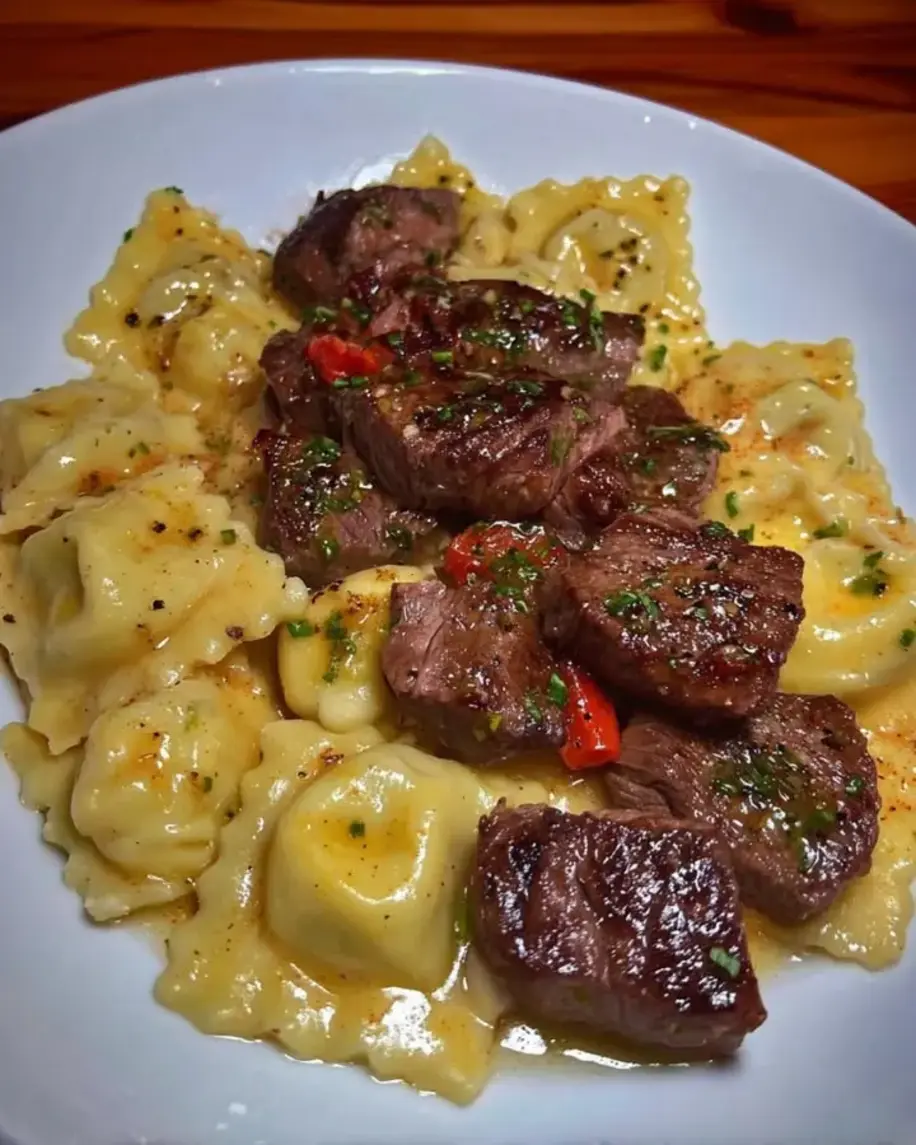
Easy Steak Cheese Ravioli in Garlic Butter

Steak Cuts Cheese Ravioli in Garlic Butter: The Only Recipe You’ll Ever Need

Imagine coming home after a long day, craving a gourmet meal that’s both indulgent and effortless—enter our Steak Cuts Cheese Ravioli in Garlic Butter recipe, a true game-changer for busy home cooks. This homemade steak ravioli dish combines tender steak strips with cheesy ravioli, all enveloped in a rich garlic butter sauce, for a one-pan wonder that’s ready in under 30 minutes. Whether you’re a steak ravioli enthusiast or new to this Italian-inspired delight, our version elevates the classic with its unbeatable flavor fusion, making it the superior choice for a satisfying dinner. With fresh ingredients and simple steps, this steak cuts cheese ravioli recipe ensures you impress without the fuss, right from your kitchen.

Picture the sizzle of flank steak browning to perfection, its juicy tenderness contrasting beautifully with the pillowy softness of cheese ravioli. Each bite delivers a symphony of flavors: the robust earthiness of garlic butter steak ravioli sauce, where minced garlic infuses a fragrant, nutty aroma that fills your home. The garlic butter coats everything in a velvety sheen, blending the savory notes of seared steak with the creamy, melted cheese inside the ravioli. Textures play a starring role too—the slight chew of the steak strips against the smooth pasta creates an irresistible mouthfeel, while fresh parsley adds a bright, herbaceous crunch that awakens your senses.

What sets this Steak Cuts Cheese Ravioli in Garlic Butter apart on exorecipes.com is our dedication to creating the ultimate, foolproof guide, inspired by Chef Sally’s expertise. We’ve tested and refined every detail, revealing the Chef’s Secret to a perfectly balanced garlic butter base that locks in flavors without overwhelming the palate. In this post, you’ll discover insider tips, ingredient spotlights, and step-by-step instructions that build your confidence in the kitchen. From addressing common pitfalls to offering substitutions, we’re here to make your cooking experience seamless and successful—proving why this is the single best resource for homemade steak ravioli online.

Prep Time: 10 minutes
Cook Time: 15 minutes
Total Time: 25 minutes
Servings: 4

Why This Steak Cuts Cheese Ravioli in Garlic Butter Recipe is a Game-Changer

The Chef’s Secret to this homemade steak ravioli lies in its one-pan method, which infuses maximum flavor while simplifying the cooking process—a true unique selling proposition for home cooks seeking gourmet results without multiple dishes. By cooking everything in a single skillet, the garlic butter sauce absorbs the juices from the steak cuts cheese ravioli, creating a richer, more cohesive dish that rivals restaurant-quality meals. This technique not only saves time but also ensures that the flavors meld perfectly, making your garlic butter steak ravioli extraordinarily delicious and easy to prepare.

Unbeatable Texture: The science behind the texture starts with using high-quality unsalted butter, which has a higher fat content that prevents the sauce from breaking and keeps the ravioli tender without becoming mushy. When the butter melts with the garlic, it creates an emulsion that coats the steak and pasta evenly, locking in moisture and providing that ideal silky-smooth finish. This careful balance of fats and proteins in the ingredients guarantees a restaurant-worthy mouthfeel every time.

Foolproof for a Reason: We’ve rigorously tested this steak ravioli recipe multiple times to eliminate any guesswork, ensuring consistent results for cooks of all levels. From precise cooking times to seasoning adjustments, this version is designed for reliability, so you can confidently serve up garlic butter steak ravioli that’s always a hit, even on your first try.

Ingredient Spotlight: Quality Makes the Difference

1 lb flank steak, cut into thin strips: This cut is the star of our steak cuts cheese ravioli, providing lean, flavorful protein that’s quick to cook and absorbs the garlic butter beautifully. Opt for high-quality, grass-fed flank steak for its tenderness and rich beefy taste; it’s essential for that perfect sear without toughness. If unavailable, substitute with sirloin steak for a similar texture, but avoid tougher cuts like round to maintain the dish’s melt-in-your-mouth quality.

1 package (9 oz) cheese ravioli: The cheese ravioli serves as the comforting base in this stuffed steak ravioli recipe, offering a creamy, cheesy interior that pairs wonderfully with the savory steak. Choose fresh or high-quality frozen ravioli with real cheese fillings to enhance the overall flavor profile—avoid generic brands with artificial additives. For a variation, swap with spinach ravioli to add a nutritious twist, but ensure it’s cheese-based for the best melt and integration into the garlic butter sauce.

4 cloves garlic, minced: Garlic is the heart of our garlic butter steak ravioli, infusing the sauce with a pungent, aromatic essence that elevates the entire dish. Fresh garlic cloves are key for their bold flavor and health benefits; minced finely for even distribution. If you’re out of fresh garlic, a substitute like garlic paste works, but use it sparingly to prevent overpowering the steak and ravioli.

4 tablespoons unsalted butter: Unsalted butter forms the luxurious base of the garlic butter sauce in this steak ravioli recipe, allowing precise control over seasoning while adding a rich, creamy texture. High-fat butter ensures the sauce doesn’t separate, creating that signature glossy coat on the pasta and steak. Ghee can be a great substitute for a dairy-free option, maintaining the same velvety consistency without altering the dish’s essence.

1/2 cup fresh parsley, chopped: Fresh parsley adds a vibrant, fresh finish to our homemade steak ravioli, balancing the richness with its bright, herbaceous notes. It’s crucial for both flavor and presentation, so choose organic parsley for the best taste. Cilantro can substitute if you prefer a zesty alternative, but it will introduce a different flavor profile, so use it judiciously.

Salt and black pepper to taste, and 1 tablespoon olive oil: Salt and pepper enhance the natural flavors of the steak and ravioli, while olive oil provides the initial sear for the steak in this garlic butter steak ravioli. Use sea salt for a cleaner taste and extra-virgin olive oil for its fruity undertones that complement the garlic. If olive oil is unavailable, avocado oil is a solid substitute with a high smoke point, ensuring the steak browns perfectly.

Step-by-Step Instructions

Step 1: Preparing the Cheese Ravioli

Bring a large pot of salted water to a boil and cook the cheese ravioli according to package instructions; drain and set aside. This step ensures the ravioli is perfectly al dente, ready to absorb the flavors of the garlic butter sauce.

Pro Tip: Always salt your pasta water generously—it acts like a brine to enhance the ravioli’s flavor from the inside out.

A photo showing the boiled cheese ravioli draining in a colander

Step 2: Heating the Olive Oil

In a large skillet, heat the olive oil over medium-high heat. This creates a hot base for searing the steak, preventing it from steaming and ensuring a golden crust.

Common Mistake to Avoid: Don’t overcrowd the skillet; cook in batches if needed to avoid steaming the steak instead of browning it.

A photo showing the olive oil heating in the skillet

Step 3: Cooking the Steak

Add the steak strips to the skillet and season with salt and pepper; cook for 3-4 minutes until browned. This step locks in the steak’s juices, making it tender and flavorful for your steak ravioli dish.

Pro Tip: Let the steak sit at room temperature for 10 minutes before cooking to ensure even browning and avoid toughening the meat.

A photo showing the browned steak strips in the skillet

Step 4: Adding Garlic and Butter

Reduce heat to medium, add the minced garlic and butter to the skillet, and stir until the butter melts and garlic is fragrant, about 1-2 minutes. This creates the signature garlic butter sauce that ties the steak cuts cheese ravioli together.

Common Mistake to Avoid: Don’t burn the garlic—stir constantly and keep the heat medium to preserve its sweet, nutty flavor.

A photo showing the garlic and butter melting in the skillet with steak

Step 5: Combining the Ravioli

Add the cooked ravioli to the skillet and toss everything together until well coated in the garlic butter sauce. This final mix ensures every bite of your homemade steak ravioli is infused with flavor.

Pro Tip: Use tongs for tossing to gently coat the ravioli without breaking it.

A photo showing the ravioli being tossed with steak in the sauce

Step 6: Finishing and Serving

Sprinkle with fresh parsley and serve immediately. This step adds a pop of color and freshness to your garlic butter steak ravioli.

Common Mistake to Avoid: Serve right away to keep the ravioli from absorbing too much sauce and becoming soggy.

A photo showing the finished dish garnished with parsley

Serving & Presentation

Plating your Steak Cuts Cheese Ravioli in Garlic Butter is all about creating an inviting, restaurant-style presentation that highlights its vibrant colors and textures. Start by dividing the mixture into individual bowls or plates, arranging the steak strips artfully over the ravioli for a visually appealing contrast. Garnish with extra chopped parsley and a sprinkle of freshly cracked black pepper to add a touch of elegance and enhance the flavors of this stuffed steak ravioli. For an impressive finish, drizzle a bit of olive oil or a lemon wedge on the side to brighten the dish.

To complement this steak ravioli recipe, pair it with light sides like a crisp green salad or steamed asparagus to balance the richness of the garlic butter sauce. If you’re serving this as a main course, consider adding garlic bread for dipping or a glass of red wine to elevate the Italian-inspired cuisine. The key is to keep sides simple, allowing the star of the show—your homemade steak ravioli—to shine through with its savory, creamy profile.

Make-Ahead & Storage Solutions

Make-Ahead Strategy: To prep this steak ravioli recipe in advance, cook the steak and ravioli separately up to 3 days ahead. Store the cooked steak in an airtight container in the fridge, and keep the ravioli in a separate container with a light oil coating to prevent sticking. When ready, simply reheat the skillet with garlic and butter, then combine everything for a quick meal—perfect for busy weeknights.

Storing Leftovers: For maximum freshness, transfer any leftover garlic butter steak ravioli to an airtight container and refrigerate for up to 2 days. If freezing, portion into freezer-safe bags and store for up to a month to maintain texture. Avoid leaving it at room temperature for more than 2 hours to prevent bacterial growth.

The Best Way to Reheat: To restore the original texture and flavor, reheat in a skillet over medium heat with a splash of water or broth to loosen the sauce, stirring gently for 3-5 minutes. This method revives the garlic butter’s creaminess without making the ravioli soggy, ensuring your homemade steak ravioli tastes just as fresh as when first made.

Frequently Asked Questions (FAQ)

What’s the best way to cook cheese ravioli with steak?

The best way to cook cheese ravioli with steak, as in this steak cuts cheese ravioli recipe, is to boil the ravioli first for al dente texture, then sear the steak in a skillet before combining them in a garlic butter sauce. This one-pan method allows the flavors to meld, ensuring the steak remains tender and the ravioli absorbs the sauce without overcooking. For optimal results, time your steak cooking to match the ravioli’s readiness, as demonstrated in our step-by-step guide.

Can I use a different type of cheese in the ravioli?

Yes, you can use a different type of cheese in the ravioli for this garlic butter steak ravioli recipe, but stick to cheeses with good melting properties like ricotta, mozzarella, or even goat cheese for a tangy twist. The original calls for standard cheese ravioli, which provides creaminess, but substituting with something like spinach and ricotta could add nutrition. Be mindful that stronger cheeses might overpower the steak’s flavor, so test small batches first to maintain balance.

What garlic butter sauce recipe works best with steak ravioli?

The garlic butter sauce in this steak ravioli recipe—made with minced garlic, unsalted butter, and a touch of olive oil—works best because it’s simple yet flavorful, enhancing the steak without overwhelming it. To make it, melt butter with garlic over medium heat for 1-2 minutes. For variations, add herbs like parsley or a pinch of red pepper flakes for spice, as noted in our recipe tips, ensuring it complements the ravioli’s cheese filling perfectly.

How long does it take to prepare Steak Cuts Cheese Ravioli?

Preparing Steak Cuts Cheese Ravioli in Garlic Butter takes about 25 minutes total, with 10 minutes for prep and 15 minutes for cooking. This makes it an ideal homemade steak ravioli option for quick dinners, as outlined in our efficient, one-pan approach that minimizes wait time while maximizing flavor.

Can I use a different cut of steak for this recipe?

Absolutely, while flank steak is recommended for its tenderness in this steak cuts cheese ravioli, you can use sirloin or skirt steak as alternatives. These cuts cook quickly and hold up well in the garlic butter sauce, but adjust cooking time slightly—thinner cuts may need less time to avoid overcooking and ensure they pair seamlessly with the ravioli.

Is this recipe suitable for beginners?

Yes, this steak ravioli recipe is beginner-friendly, thanks to its straightforward steps and one-pan method. We’ve included pro tips and common mistakes to avoid, making it accessible for novice cooks while delivering professional results with minimal equipment.

Can I make this recipe vegan or gluten-free?

To make this recipe vegan, substitute the cheese ravioli with a plant-based version and use vegan butter instead of unsalted butter; replace the steak with marinated mushrooms or seitan for protein. For gluten-free, opt for gluten-free ravioli and ensure all ingredients, like soy sauce if added, are certified gluten-free. These swaps keep the essence of the garlic butter steak ravioli intact while accommodating dietary needs.

.

Print
clock clock iconcutlery cutlery iconflag flag iconfolder folder iconinstagram instagram iconpinterest pinterest iconfacebook facebook iconprint print iconsquares squares iconheart heart iconheart solid heart solid icon

Steak Cuts Cheese Ravioli in Garlic Butter

  • Author: Chef Sally
  • Prep Time: 10 minutes
  • Cook Time: 15 minutes
  • Total Time: 25 minutes
  • Yield: 4 1x
  • Method: Main Course
  • Cuisine: Italian-inspired

Description

A savory dish featuring tender steak cuts mixed with cheese ravioli, all tossed in a rich garlic butter sauce.


Ingredients

Scale
  • 1 lb flank steak, cut into thin strips
  • 1 package (9 oz) cheese ravioli
  • 4 cloves garlic, minced
  • 4 tablespoons unsalted butter
  • 1/2 cup fresh parsley, chopped
  • Salt and black pepper to taste
  • 1 tablespoon olive oil

Instructions

  1. Bring a large pot of salted water to a boil and cook the cheese ravioli according to package instructions; drain and set aside.
  2. In a large skillet, heat the olive oil over medium-high heat.
  3. Add the steak strips and season with salt and pepper; cook for 3-4 minutes until browned.
  4. Reduce heat to medium, add the minced garlic and butter to the skillet, and stir until the butter melts and garlic is fragrant, about 1-2 minutes.
  5. Add the cooked ravioli to the skillet and toss everything together until well coated in the garlic butter sauce.
  6. Sprinkle with fresh parsley and serve immediately.

Notes

For a spicier version, add red pepper flakes to the garlic butter mixture.


Nutrition

  • Calories: 450
  • Sugar: 2g
  • Fat: 22g
  • Carbohydrates: 35g
  • Protein: 28g

Mouthwatering Lemon Bar Cookie Cups

“`html

If you’re craving a zesty, irresistible treat that combines the best of lemon bars and cookies, look no further than these mouthwatering lemon bar cookie cups. Perfect for summer picnics, holiday gatherings, or a simple afternoon delight, this easy lemon bar recipe is designed for home bakers seeking a foolproof way to create tart lemon cookies with a buttery twist. Drawing from Chef Sally’s expertise, these lemon dessert cups feature a unique secret to a melt-in-your-mouth crust that elevates the classic flavor profile, making it the ultimate lemon bar cookie cups experience in just 40 minutes. Let’s dive into why this recipe is your new go-to for citrus desserts.

Imagine biting into a golden, flaky crust that gives way to a burst of tangy, refreshing lemon filling—these mouthwatering lemon bar cookie cups deliver on every sensory level. The aroma of fresh lemon zest fills your kitchen as they bake, creating a tantalizing scent that promises pure bliss. Each cup boasts a perfect balance of sweet and tart flavors, with the lemon curd filling offering a silky, velvety texture that contrasts beautifully with the crumbly, butter-rich base. It’s like a portable lemon bar that crunches with every bite, making it an ideal choice for easy lemon bar recipes that impress without the fuss.

What sets this mouthwatering lemon bar cookie cups recipe apart on exorecipes.com is our commitment to providing the single best resource for home cooks. Crafted by Chef Sally, a renowned expert in citrus desserts, this version includes a “Chef’s Secret” that ensures a flawlessly set filling and unbeatable taste every time. You’ll learn insider tips for achieving the ideal texture, common pitfalls to avoid, and even variations for dietary needs, all while mastering this easy lemon bar recipe. Stick around for detailed instructions, FAQs, and more to boost your confidence in the kitchen with these tart lemon cookies.

Prep Time: 15 minutes
Cook Time: 25 minutes
Total Time: 40 minutes
Servings: 24

The Chef’s Secret: The unique selling proposition of these lemon bar cookie cups lies in the melt-in-your-mouth buttery crust, achieved by using softened unsalted butter as the base. This technique creates a flaky, tender texture that perfectly complements the tangy lemon filling, setting this recipe apart from standard lemon dessert cups. By creaming the butter with sugar and flour just right, we lock in moisture and flavor, resulting in a crust that’s not too dense or crumbly—it’s the key to that irresistible, professional-quality finish.

Unbeatable Texture: The science behind this texture comes from the high-fat content in unsalted butter, which helps form gluten-free layers in the dough for a flaky result. When baked at the precise temperature of 350°F, the butter melts evenly, creating steam pockets that lift and crisp the crust without over-browning. This ensures your lemon bar cookie cups have a satisfying crunch on the outside and a soft interior, making them a standout among easy lemon bar recipes.

Foolproof for a Reason: This recipe has been tested multiple times in our kitchens to guarantee success, even for beginners. With straightforward steps and precise measurements, you can avoid common baking mishaps, delivering consistent, delicious results that make these tart lemon cookies a reliable favorite for any occasion.

Ingredient Spotlight: Quality Makes the Difference

All-Purpose Flour: Serving as the foundation for both the crust and filling, all-purpose flour provides structure and tenderness. Opt for unbleached flour to avoid any chemical aftertaste, as it helps achieve that perfect crumb in your lemon bar cookie cups. If you’re gluten-sensitive, substitute with a 1:1 gluten-free blend, but ensure it’s finely milled to maintain the recipe’s integrity.

Unsalted Butter, Softened: This is the star of the melt-in-your-mouth crust, offering rich flavor and moisture without excess salt that could overpower the lemon’s tartness. Always use high-quality, European-style butter for its higher fat content, which enhances flakiness. For a dairy-free version, swap with vegan butter like Earth Balance, but chill it first to mimic the softening process.

Granulated Sugar: Used in both the crust and filling, this sweetener balances the tart lemon flavors while aiding in browning and texture. Choose organic cane sugar for a cleaner taste; it’s crucial for the syrupy consistency in the lemon curd. A substitute like coconut sugar can work, but it will add a subtle caramel note to your lemon dessert cups.

Large Eggs: Eggs act as a binder in the filling, creating a creamy, set texture when baked. Fresh, room-temperature eggs ensure even incorporation and help emulsify the mixture for that silky lemon curd. For an egg-free option, use flax eggs (1 tablespoon flaxseed meal + 3 tablespoons water per egg) to keep these lemon bar cookie cups vegetarian-friendly without compromising structure.

Baking Powder: A small amount of baking powder in the filling provides a gentle lift, preventing a dense result. Fresh baking powder is key for reliable rising—test it by mixing with hot water; if it bubbles, it’s good. There’s no direct substitute, but if needed, add a pinch of cream of tartar for similar acidity balance in your easy lemon bar recipe.

Salt: This enhances the overall flavor profile, cutting through the sweetness and amplifying the lemon’s zing. Use fine sea salt for precision; it’s all about balance in these tart lemon cookies. If watching sodium, simply reduce by half, but don’t omit it entirely to maintain taste harmony.

Fresh Lemon Juice: The heart of these lemon bar cookie cups, fresh juice delivers bright, tangy acidity that defines the flavor. Always use freshly squeezed juice for maximum zestiness—bottled versions lack vibrancy. For a twist, substitute with lime juice, but adjust quantities to preserve the classic lemon essence in your citrus desserts.

Zest of 1 Lemon: Lemon zest adds intense, aromatic oils that elevate the filling’s flavor without extra liquid. Grate it finely using a microplane for even distribution; high-quality organic lemons ensure pesticide-free zest. If out of lemons, orange zest can substitute for a milder citrus note in these mouthwatering lemon bar cookie cups.

Step-by-Step Instructions

Step 1: Preparing the Oven and Muffin Tin

Preheat your oven to 350°F (175°C) and grease a mini muffin tin with non-stick spray or butter for easy release.

Pro Tip: Use a high-quality silicone brush to evenly coat the tin, ensuring your lemon bar cookie cups don’t stick.

A photo showing a greased mini muffin tin ready for baking

Step 2: Creating the Buttery Crust

In a medium bowl, mix 1 cup all-purpose flour, 1/2 cup softened unsalted butter, and 1/4 cup granulated sugar until crumbly. Press the mixture firmly into the bottom of each muffin cup to form an even layer.

Common Mistake to Avoid: Over-mixing the dough can make it tough; stop as soon as it clumps together to keep that melt-in-your-mouth texture.

A photo showing the buttery crust mixture pressed into the muffin cups

Step 3: Baking the Crust

Bake the crust for 10 minutes, then remove from the oven and let it cool slightly for about 5 minutes.

Pro Tip: Set a timer to prevent over-baking, which could lead to a hard crust in your easy lemon bar recipe.

A photo showing the baked crust in the muffin tin

Step 4: Whisking the Lemon Filling

In another bowl, whisk together 2 large eggs, 1 cup granulated sugar, 2 tablespoons all-purpose flour, 1/2 teaspoon baking powder, 1/4 teaspoon salt, 1/3 cup fresh lemon juice, and the zest of 1 lemon until smooth and well combined.

Common Mistake to Avoid: Ensure all ingredients are at room temperature to avoid curdling; whisk gently to incorporate air for a lighter filling.

A photo showing the smooth lemon filling mixture

Pour the lemon mixture evenly over the baked crust in the muffin cups, filling each one about three-quarters full.

Pro Tip: Use a small measuring cup for precise pouring to avoid spills and ensure uniform lemon bar cookie cups.

A photo showing the lemon filling poured over the crust

Step 6: Final Baking

Bake for an additional 15-20 minutes or until the tops are set and lightly golden, checking at 15 minutes to prevent overcooking.

Common Mistake to Avoid: Don’t open the oven door too early; this could cause the filling to sink, affecting the texture of your tart lemon cookies.

A photo showing the golden-baked lemon bar cookie cups

Allow the lemon bar cookie cups to cool completely in the pan for at least 30 minutes before gently removing them with a knife.

Pro Tip: Cool on a wire rack for even air circulation, helping maintain that flaky crust in your citrus desserts.

A photo showing the cooled cookie cups ready to serve

Serving & Presentation

Elevate your mouthwatering lemon bar cookie cups with creative plating: arrange them on a rustic wooden board and dust with powdered sugar for a snowy effect. Garnish with fresh lemon slices or mint leaves to enhance the visual appeal and complement the tart lemon flavors. These lemon dessert cups pair wonderfully with a light herbal tea or as a refreshing end to a summer meal, making them ideal for brunches or potlucks alongside fresh fruit salads or vanilla ice cream for a contrast in textures.

Make-Ahead & Storage Solutions

Make-Ahead Strategy: Prepare the crust up to 3 days in advance by pressing it into the muffin tin and storing it covered in the refrigerator. Mix the lemon filling just before baking to keep it fresh, or assemble the cups and refrigerate for up to 24 hours, then bake as directed for convenient lemon bar cookie cups.

Storing Leftovers: Store cooled cookie cups in an airtight container at room temperature for up to 2 days, or refrigerate for up to 5 days to preserve the tangy flavor. For longer storage, freeze in a single layer on a baking sheet, then transfer to a freezer-safe bag for up to 3 months—thaw in the fridge overnight.

The Best Way to Reheat: To restore the original flaky texture, reheat in a 300°F oven for 5-7 minutes, avoiding the microwave which can make them soggy. This method keeps your easy lemon bar recipe tasting as fresh as the day you baked them.

Frequently Asked Questions (FAQ)

How do I prevent lemon bar cookie cups from sticking to the muffin tin?

To prevent sticking, generously grease your mini muffin tin with butter or a non-stick spray, and consider lining with paper liners for extra insurance. After baking, let them cool completely before gently loosening the edges with a knife. This ensures your mouthwatering lemon bar cookie cups release easily, maintaining their perfect shape for your easy lemon bar recipe.

What’s the best way to achieve a perfectly set lemon curd filling for cookie cups?

The key to a perfectly set lemon curd filling is whisking the ingredients until smooth and baking at the right temperature—350°F for 15-20 minutes—until the tops are firm but slightly jiggly in the center. Use fresh lemon juice and room-temperature eggs for even cooking, and allow full cooling to set. This technique guarantees a silky texture in your tart lemon cookies without any cracks or runniness.

Can I use a different citrus fruit for these lemon bar cookie cups?

Absolutely! Swap lemon for lime, orange, or even grapefruit for a fun twist, using the same amount of juice and zest to keep the balance. For instance, limes will add a more intense tartness, while oranges create a sweeter version of these lemon dessert cups. Just taste the mixture before baking to adjust sugar if needed, ensuring your citrus desserts remain flavorful and true to the original easy lemon bar recipe.

How long do lemon bar cookie cups typically need to bake?

These mouthwatering lemon bar cookie cups require about 10 minutes for the crust and an additional 15-20 minutes for the filling, totaling 25-30 minutes of bake time. Always check for doneness by ensuring the tops are set and lightly golden—factors like oven accuracy can vary, so use a toothpick test for precision in your lemon bar cookie cups baking process.

Can I make these lemon bar cookie cups gluten-free?

Yes, you can easily make this recipe gluten-free by substituting all-purpose flour with a 1:1 gluten-free flour blend. Ensure the blend includes xanthan gum for proper structure, and test the batter’s consistency to avoid dryness. This tweak keeps the melt-in-your-mouth crust intact, making it a versatile option for gluten-sensitive bakers enjoying tart lemon cookies.

Are these lemon bar cookie cups suitable for beginners?

Definitely! With simple steps and common ingredients, this easy lemon bar recipe is ideal for beginners. Our detailed tips and instructions help avoid common pitfalls, building your confidence for creating delicious lemon dessert cups on your first try.

“`

.

Print
clock clock iconcutlery cutlery iconflag flag iconfolder folder iconinstagram instagram iconpinterest pinterest iconfacebook facebook iconprint print iconsquares squares iconheart heart iconheart solid heart solid icon

Mouthwatering Lemon Bar Cookie Cups

  • Author: Chef Sally
  • Prep Time: 15 minutes
  • Cook Time: 25 minutes
  • Total Time: 40 minutes
  • Yield: 24 1x
  • Method: Dessert
  • Cuisine: American

Description

These delightful lemon bar cookie cups combine a buttery crust with a tangy lemon filling, perfect for any gathering.


Ingredients

Scale
  • 1 cup all-purpose flour
  • 1/2 cup unsalted butter, softened
  • 1/4 cup granulated sugar
  • 2 large eggs
  • 1 cup granulated sugar
  • 2 tablespoons all-purpose flour
  • 1/2 teaspoon baking powder
  • 1/4 teaspoon salt
  • 1/3 cup fresh lemon juice
  • Zest of 1 lemon

Instructions

  1. Preheat your oven to 350°F (175°C) and grease a mini muffin tin.
  2. In a medium bowl, mix 1 cup flour, 1/2 cup softened butter, and 1/4 cup sugar until crumbly. Press the mixture into the bottom of each muffin cup.
  3. Bake the crust for 10 minutes, then remove from the oven and let cool slightly.
  4. In another bowl, whisk together 2 eggs, 1 cup sugar, 2 tablespoons flour, baking powder, salt, lemon juice, and lemon zest until smooth.
  5. Pour the lemon mixture over the baked crust in the muffin cups.
  6. Bake for an additional 15-20 minutes or until the tops are set and lightly golden.
  7. Allow to cool completely in the pan before removing.

Notes

For the best flavor, use freshly squeezed lemon juice. Store in an airtight container for up to 3 days.


Nutrition

  • Calories: 120
  • Sugar: 12g
  • Fat: 5g
  • Carbohydrates: 18g
  • Protein: 1g

Essential Christmas Ornament Cookies

Christmas Ornament Sugar Cookies: The Only Recipe You’ll Ever Need

As the holiday season approaches, nothing beats the joy of baking Christmas ornament sugar cookies that are not only adorable but also bursting with an almond-infused flavor that sets them apart from ordinary treats. Imagine creating festive cookie designs that hold their shape perfectly, thanks to a foolproof method developed by Chef Sally. This easy sugar cookie recipe is designed for home bakers of all levels, delivering buttery, chewy delights that will wow your family and friends. Whether you’re a novice or a pro at holiday cookie decorations, this cut out cookie recipe ensures success every time, with that secret almond twist elevating the taste to new heights.

Picture the warm, inviting aroma of these Christmas ornament sugar cookies filling your kitchen as they bake to golden perfection. Each bite offers a delightful crunch on the edges, giving way to a soft, buttery center that’s subtly enhanced by the almond extract, adding a nutty depth that dances on your tongue. The customizable royal icing allows for vibrant, festive designs, from sparkling snowflakes to intricate baubles, making these cookies a feast for the eyes and palate. The texture is spot-on—crispy yet tender—ensuring they maintain their cut-out shapes without spreading, so your holiday creations look as impressive as they taste.

What makes this version of Christmas ornament sugar cookies from exorecipes.com the ultimate resource is our commitment to clear, tested instructions straight from Chef Sally’s kitchen. We’ve refined this recipe through multiple trials to guarantee foolproof results, revealing the Chef’s Secret that takes your baking to the next level. In this post, you’ll learn expert tips for preventing cookie spread, crafting the perfect icing, and achieving professional-looking decorations. Plus, we’ll cover everything from ingredient swaps to storage hacks, empowering you to bake with confidence and create holiday memories that last.

Prep Time: 20 minutes
Cook Time: 10 minutes
Total Time: 1 hour 30 minutes
Servings: 24 cookies

Why This Christmas Ornament Sugar Cookies Recipe is a Game-Changer

The Chef’s Secret lies in the addition of almond extract, which infuses these Christmas ornament sugar cookies with a subtle, nutty essence that transforms a simple cut out cookie recipe into something extraordinary. This ingredient isn’t just an afterthought; it enhances the buttery base, creating a more complex flavor profile that pairs beautifully with holiday spices and icing. By incorporating just 1/2 teaspoon, we ensure the cookies have a fragrant, almond-forward taste without overpowering the classic sweetness, making this recipe stand out among easy sugar cookie recipes online.

Unbeatable Texture: The science behind these cookies’ perfect texture starts with using high-quality unsalted butter, which provides a high-fat content for a tender, flaky result. When creamed with sugar, it traps air bubbles that expand during baking, leading to a light and airy interior while keeping the edges crisp. This method prevents the dough from spreading, ensuring your festive cookie designs hold their shape, thanks to the balanced ratio of flour, baking powder, and salt that stabilizes the structure.

Foolproof for a Reason: This recipe has been rigorously tested in our kitchens to deliver consistent results, even for beginners tackling holiday cookie decorations. With straightforward steps and precise measurements, you’ll avoid common pitfalls like under-chilling the dough or over-baking, making it the most reliable Christmas ornament sugar cookies guide on the web. Users rave about its ease and versatility, proving it’s a go-to for festive baking seasons.

Ingredient Spotlight: Quality Makes the Difference

All-Purpose Flour (2 3/4 cups): This forms the foundation of your Christmas ornament sugar cookies, providing structure and a tender crumb. Opt for unbleached flour for better gluten development, which helps these easy sugar cookie recipes hold their festive cookie designs without crumbling. If you’re gluten-sensitive, substitute with a 1:1 gluten-free blend, but note it may slightly alter the texture.

Baking Powder (1 teaspoon): Acting as a leavening agent, baking powder gives these cookies a gentle rise, contributing to their fluffy yet sturdy texture ideal for cut out cookie recipes. Fresh baking powder ensures even baking; if yours is old, it could lead to flat cookies. For a low-sodium option, you can swap it with an equal amount of baking soda plus cream of tartar, but test for rising power first.

Unsalted Butter (1 cup, softened): The star for that irresistible buttery texture in Christmas ornament sugar cookies, unsalted butter allows you to control the salt level and enhances the almond-infused flavor. Choose European-style butter for extra richness. If substituting, use salted butter but reduce the added salt by half to maintain balance and prevent overly salty holiday cookie decorations.

Granulated Sugar (1 1/2 cups): This sweetens the dough while aiding in browning and crispiness, making your festive cookie designs shine. Use organic cane sugar for a purer taste that complements the vanilla and almond extracts. For a lower-sugar version, replace up to half with a natural sweetener like coconut sugar, though it might darken the cookies slightly.

Eggs (2 large): Eggs bind the ingredients and add moisture, ensuring your Christmas ornament sugar cookies have a chewy interior. Fresh, room-temperature eggs incorporate better; if vegan, use flax eggs (1 tablespoon ground flaxseed mixed with 3 tablespoons water per egg) for a similar binding effect, though the texture will be denser.

Vanilla Extract (1 teaspoon) and Almond Extract (1/2 teaspoon): These extracts flavor the cookies profoundly—vanilla for warmth and almond for that unique, nutty angle. Always choose pure extracts over imitation for authentic taste; if almond is unavailable, vanilla can substitute, but you’ll miss the special twist that makes this recipe exceptional for holiday cookie decorations.

For Decoration: Royal Icing, Food Coloring, and Sprinkles: Royal icing provides a hard, glossy finish for your festive cookie designs, while food coloring and sprinkles add personalization. Make your own royal icing with powdered sugar and meringue powder for the best control; for dietary needs, use vegan icing alternatives like aquafaba-based recipes.

Step-by-Step Instructions

Step 1: Preparing the Dry Ingredients

In a medium bowl, whisk together the flour, baking powder, and salt; set aside. This step ensures even distribution for a consistent texture in your Christmas ornament sugar cookies.

Pro Tip: Sift the flour if it’s lumpy to avoid gritty spots in your dough.

A photo showing the dry ingredients whisked together in a bowl

Step 2: Creaming the Butter and Sugar

In a large bowl, cream the softened butter and sugar until light and fluffy. This incorporates air, which is key for the tender texture of easy sugar cookie recipes.

Common Mistake to Avoid: Don’t over-cream; it can make cookies spread. Stop when the mixture is pale yellow.

A photo of the creamed butter and sugar mixture

Step 3: Adding the Eggs and Extracts

Beat in the eggs one at a time, then stir in the vanilla and almond extracts for that signature almond-infused flavor.

Pro Tip: Use room-temperature eggs for better incorporation and a smoother dough.

A photo of eggs being added to the mixture

Step 4: Combining Wet and Dry Mixtures

Gradually add the dry ingredients to the wet mixture, mixing until just combined to prevent overworking the dough.

Common Mistake to Avoid: Over-mixing leads to tough cookies; mix only until no flour streaks remain.

A photo of the fully mixed dough

Step 5: Chilling the Dough

Divide the dough in half, wrap in plastic, and chill for at least 1 hour. This step is crucial for your festive cookie designs to hold shape.

Pro Tip: Chill longer in warm kitchens to make rolling easier.

A photo of wrapped dough in the refrigerator

Step 6: Preheating and Preparing Sheets

Preheat oven to 375°F (190°C) and line baking sheets with parchment paper for even baking and easy cleanup.

Common Mistake to Avoid: Use parchment to prevent sticking and ensure uniform golden edges.

A photo of lined baking sheets

Step 7: Rolling and Cutting the Dough

On a floured surface, roll out the dough to 1/4-inch thickness and cut into ornament shapes using cookie cutters.

Pro Tip: Lightly flour your cutters to avoid sticking and preserve details in your holiday cookie decorations.

A photo of dough being cut into ornament shapes

Step 8: Baking the Cookies

Place cookies on prepared sheets and bake for 8-10 minutes, or until edges are lightly golden, to achieve the perfect Christmas ornament sugar cookies texture.

Common Mistake to Avoid: Don’t overcrowd the sheets; space cookies for even air circulation.

A photo of cookies baking in the oven

Step 9: Cooling and Decorating

Cool on wire racks before decorating with royal icing and sprinkles for a festive finish.

Pro Tip: Ensure cookies are fully cooled to prevent icing from melting.

A photo of cooled cookies ready for decoration

Serving & Presentation

Elevate your Christmas ornament sugar cookies by turning them into a stunning holiday centerpiece. Arrange them on a festive platter with a variety of shapes and colors, using royal icing to create intricate designs like twinkling lights or snowy textures for eye-catching holiday cookie decorations. Pair these treats with a warm cup of cocoa or eggnog to complement their almond-infused sweetness, making them ideal for dessert tables or gift baskets. For added flair, incorporate edible gold dust or themed sprinkles, and serve alongside fresh fruit or vanilla ice cream to balance the richness, ensuring your festive cookie designs impress at any gathering.

Make-Ahead & Storage Solutions

Make-Ahead Strategy: Prepare the dough up to 3 days in advance by following steps 1-5, then store it wrapped in the refrigerator. For efficiency, roll and cut the cookies ahead, freezing the shapes on a baking sheet before transferring to a bag; they can be baked straight from frozen, adding 1-2 minutes to the bake time.

Storing Leftovers: Keep cooled Christmas ornament sugar cookies in an airtight container at room temperature for up to a week to maintain their crisp texture. For longer storage, freeze decorated cookies in a single layer, using parchment between layers, for up to 3 months—thaw at room temperature to preserve icing integrity.

The Best Way to Reheat: To restore the original texture, reheat frozen cookies in a 300°F oven for 5 minutes or until warm, avoiding microwaves which can make them soggy. This method keeps your festive cookie designs fresh and ready for unexpected holiday guests.

Frequently Asked Questions (FAQ)

What is the best sugar cookie recipe for cutouts that hold their shape?

The best sugar cookie recipe for cutouts that hold their shape is this Christmas ornament sugar cookies version, which uses a chilled dough with precise ratios of flour, butter, and baking powder. Chilling for at least an hour prevents spreading, and rolling to 1/4-inch thickness ensures sturdy festive cookie designs. Our almond-infused twist adds flavor without compromising structure, making it superior for holiday baking.

How do you make sure sugar cookies don’t spread when baking?

To prevent sugar cookies from spreading, start by chilling the dough for at least 1 hour, as in this easy sugar cookie recipe, which allows the fats to solidify. Use the correct amount of flour and avoid over-creaming the butter and sugar to limit air incorporation. Bake on parchment-lined sheets at the specified temperature, and ensure your oven is accurately calibrated—overheating can cause quick melting.

What is a good icing recipe for decorating sugar cookies?

A great icing recipe for decorating sugar cookies is royal icing, made with 3 cups powdered sugar, 2 tablespoons meringue powder, and 4-6 tablespoons water, adjusted for consistency. For our Christmas ornament sugar cookies, add food coloring for vibrant holiday cookie decorations. It’s easy to pipe and hardens quickly; for a vegan option, substitute meringue powder with aquafaba for similar results.

How long do sugar cookies need to cool before decorating?

Sugar cookies should cool for at least 30 minutes on a wire rack before decorating to prevent the icing from melting. For Christmas ornament sugar cookies, full cooling (about 1 hour) ensures the cookies are firm, allowing your festive cookie designs to set properly without smudging. Patience here leads to professional-looking results.

Can these cookies be made ahead for a holiday party?

Yes, these Christmas ornament sugar cookies are perfect for making ahead. Prepare the dough up to 3 days in advance and store it chilled, or bake and decorate the cookies, then freeze them for up to 3 months. Thaw at room temperature and refresh in a low oven for the best texture, making holiday prep stress-free.

What tools do I need for the best festive cookie designs?

For the best festive cookie designs on Christmas ornament sugar cookies, you’ll need cookie cutters in various shapes, piping bags with tips for icing, and gel food coloring for vibrant hues. A bench scraper helps with dough handling, and sprinkles or edible glitter add extra flair—invest in quality tools for precise, professional results in your cut out cookie recipe.

Can I make this recipe vegan or gluten-free?

Absolutely, you can adapt this recipe for vegan or gluten-free needs. For vegan, replace the eggs with flax eggs (1 tbsp ground flaxseed mixed with 3 tbsp water each) and use a plant-based butter; the almond extract adds a nice touch without dairy. For gluten-free, swap the all-purpose flour with a 1:1 gluten-free blend, though you may need to add a bit more for structure. Test a small batch to ensure the cookies hold their festive shapes in holiday cookie decorations.

.

Print
clock clock iconcutlery cutlery iconflag flag iconfolder folder iconinstagram instagram iconpinterest pinterest iconfacebook facebook iconprint print iconsquares squares iconheart heart iconheart solid heart solid icon

Christmas Ornament Sugar Cookies

  • Author: Chef Sally
  • Prep Time: 20 minutes
  • Cook Time: 10 minutes
  • Total Time: 1 hour 30 minutes
  • Yield: 24 cookies 1x
  • Method: Dessert
  • Cuisine: American

Description

Festive sugar cookies shaped like Christmas ornaments, perfect for holiday baking with a buttery texture and customizable icing.


Ingredients

Scale
  • 2 3/4 cups all-purpose flour
  • 1 teaspoon baking powder
  • 1/2 teaspoon salt
  • 1 cup unsalted butter, softened
  • 1 1/2 cups granulated sugar
  • 2 large eggs
  • 1 teaspoon vanilla extract
  • 1/2 teaspoon almond extract
  • For decoration: Royal icing, food coloring, sprinkles

Instructions

  1. In a medium bowl, whisk together the flour, baking powder, and salt; set aside.
  2. In a large bowl, cream the softened butter and sugar until light and fluffy.
  3. Beat in the eggs one at a time, then stir in the vanilla and almond extracts.
  4. Gradually add the dry ingredients to the wet mixture, mixing until just combined.
  5. Divide the dough in half, wrap in plastic, and chill for at least 1 hour.
  6. Preheat oven to 375°F (190°C) and line baking sheets with parchment paper.
  7. On a floured surface, roll out the dough to 1/4-inch thickness and cut into ornament shapes.
  8. Place cookies on prepared sheets and bake for 8-10 minutes, or until edges are lightly golden.
  9. Cool on wire racks before decorating with royal icing and sprinkles.

Notes

Use cookie cutters in various ornament shapes for a fun holiday twist. Store in an airtight container for up to a week.


Nutrition

  • Calories: 120
  • Sugar: 9g
  • Fat: 5g
  • Carbohydrates: 17g
  • Protein: 1g

Irresistible Juicy Pineapple Cake Recipe

Juicy Pineapple Cake: The Only Recipe You’ll Ever Need

If you’re craving a slice of tropical paradise that leaves your taste buds dancing, look no further than this juicy pineapple cake recipe. Imagine biting into a moist, flavorful dessert that’s not just easy to whip up but also packs an unbeatable punch of pineapple goodness straight from the can. This easy pineapple cake, inspired by sunny days and beachside vibes, uses undrained crushed pineapple as our secret weapon for maximum juiciness – ensuring every forkful is irresistibly tender and full of flavor. Whether you’re a baking novice or a seasoned pro, this moist pineapple cake recipe from exorecipes.com will become your go-to for parties, potlucks, or just a sweet treat at home.

Picture the golden-brown crust giving way to a soft, spongy interior that’s bursting with the sweet-tart essence of fresh pineapple. Each bite delivers a symphony of textures: the cake’s crumb is incredibly moist pineapple cake perfection, almost velvety from the natural juices, while subtle hints of vanilla add a warm, comforting aroma that fills your kitchen. The tropical flavors mingle with a light sweetness, reminiscent of a pineapple upside down cake but without the fuss, making it a crowd-pleaser that’s as visually appealing as it is delicious. You’ll love how the pineapple’s acidity balances the richness, creating a dessert that’s refreshingly light yet decadently satisfying.

What sets this juicy pineapple cake apart on exorecipes.com is the expert touch from Chef Sally, whose years of testing recipes ensure this version is foolproof and superior to any other pineapple cake recipe online. You’ll discover insider tips, like our Chef’s Secret for achieving that extra-moist texture, along with step-by-step guidance that builds your confidence in the kitchen. From ingredient swaps to storage hacks, this post is packed with everything you need to master the best pineapple cake and impress your friends and family every time. Let’s dive in and make baking a breeze!

Prep Time: 15 minutes
Cook Time: 35 minutes
Total Time: 50 minutes
Servings: 12

Why This Juicy Pineapple Cake Recipe is a Game-Changer

The Chef’s Secret: The key to elevating this juicy pineapple cake above the rest is using undrained crushed pineapple directly from the can. This simple technique infuses the batter with extra moisture and natural pineapple juices, creating a burst of tropical flavor that keeps the cake incredibly moist without any added oils or syrups. Unlike traditional recipes that drain the pineapple, this method locks in hydration from the start, resulting in a tender, juicy pineapple cake that’s far superior in taste and texture.

Unbeatable Texture: The science behind this moist pineapple cake recipe lies in the chemical reaction between the baking soda and the acidic pineapple juice. This creates a lighter, fluffier crumb while the eggs and oil emulsify to prevent dryness, ensuring a perfectly balanced, springy texture. The result? A cake that’s not just moist but also has a delightful density that holds up well, making it the best pineapple cake for sharing.

Foolproof for a Reason: This recipe has been tested multiple times in our kitchen to guarantee success, even for beginners. We’ve fine-tuned every detail to avoid common pitfalls, like overmixing, so you can achieve consistent results every time. It’s an easy pineapple cake that’s reliable, scalable, and perfect for any occasion, earning rave reviews from home cooks worldwide.

Ingredient Spotlight: Quality Makes the Difference

All-Purpose Flour (2 cups): This foundational ingredient provides the structure for your juicy pineapple cake, giving it a soft yet sturdy crumb. Opt for unbleached flour for better gluten development, which helps the cake rise evenly. If you’re looking for a substitution, whole wheat flour can work, but it may add a nutty flavor and make the cake denser – use a 1:1 ratio and reduce by 10% for the best results.

Granulated Sugar (1 cup): Sugar sweetens the deal in this moist pineapple cake recipe, while also tenderizing the batter by interacting with the eggs and oil. Choose pure cane sugar for a cleaner taste that complements the pineapple’s natural sweetness. For a healthier twist, swap with coconut sugar in equal amounts, though it will impart a slight caramel note and might slightly darken the cake.

Baking Soda (1 teaspoon): As the leavening agent, baking soda reacts with the acidic pineapple juice to create bubbles that lift the cake, resulting in a light and airy texture. Always use fresh baking soda for optimal rise; if expired, it could lead to a flat cake. Substitute with baking powder if needed, but use 3 teaspoons to match the reaction, as it contains its own acid.

Salt (1/2 teaspoon): This enhances the flavors in your easy pineapple cake, balancing the sweetness and bringing out the tropical notes of the pineapple. Use fine sea salt for even distribution. If you’re on a low-sodium diet, you can omit it, but expect a milder taste – no direct substitute is necessary, just adjust to your preference.

Crushed Pineapple with Juice (1 can, 20 oz): The star of this juicy pineapple cake, this ingredient provides moisture, flavor, and acidity that makes the cake exceptionally moist. Always choose canned pineapple in its own juice for authenticity and extra juiciness, as specified in our unique angle. Fresh pineapple can substitute, but drain and puree it first to mimic the consistency, using about 2 cups to maintain the recipe’s moisture level.

Large Eggs (2): Eggs act as binders and emulsifiers in this pineapple upside down cake recipe variation, helping to create a cohesive batter and adding richness. Fresh, room-temperature eggs work best for even incorporation. For a vegan option, use flax eggs (1 tablespoon ground flaxseed mixed with 3 tablespoons water per egg) to keep the cake moist and delicious.

Vegetable Oil (1/2 cup): This keeps the cake tender and moist by providing fat that coats the flour particles. A neutral oil like canola ensures the pineapple flavors shine through. Substitute with melted coconut oil for a tropical twist, or applesauce for a lower-fat version, but reduce the quantity slightly to avoid excess moisture.

Vanilla Extract (1 teaspoon): Vanilla adds a warm, aromatic depth that complements the pineapple’s tanginess in this best pineapple cake. Always go for pure vanilla extract for real flavor intensity. If you’re out, almond extract can substitute in the same amount, offering a nutty undertone that pairs surprisingly well with the fruit.

Step-by-Step Instructions

Step 1: Preparing the Oven and Pan

Preheat your oven to 350°F (175°C) and grease a 9×13 inch baking pan to ensure your juicy pineapple cake doesn’t stick. This step is crucial for even baking and easy removal.

Pro Tip: Use a non-stick spray or line the pan with parchment paper for flawless results every time.

A photo showing a greased baking pan ready for the batter

Step 2: Mixing the Dry Ingredients

In a large bowl, combine 2 cups all-purpose flour, 1 cup granulated sugar, 1 teaspoon baking soda, and 1/2 teaspoon salt. Whisk them together until evenly blended, which helps distribute the leavening agents for a uniform rise in your moist pineapple cake recipe.

Common Mistake to Avoid: Don’t overmix at this stage; just stir until combined to prevent a tough texture.

A photo showing the dry ingredients fully mixed in a bowl

Step 3: Adding the Wet Ingredients

Add 1 can (20 oz) crushed pineapple with juice, 2 large eggs, 1/2 cup vegetable oil, and 1 teaspoon vanilla extract to the dry ingredients. Mix until well combined, ensuring the batter is smooth and the pineapple is evenly distributed for that signature juicy pineapple cake flavor.

Pro Tip: Let the eggs come to room temperature for better incorporation and a lighter cake.

A photo showing the wet ingredients being added and mixed

Step 4: Pouring and Baking the Batter

Pour the batter into the prepared pan and bake for 30-35 minutes, or until a toothpick inserted in the center comes out clean. This step transforms the mixture into a golden, moist pineapple cake that’s ready to cool.

Common Mistake to Avoid: Avoid opening the oven door too early, as it can cause the cake to sink.

A photo showing the cake baking in the oven

Step 5: Cooling the Cake

Allow the cake to cool completely in the pan on a wire rack before frosting, if desired. This prevents crumbling and lets the flavors settle for the best pineapple cake experience.

Pro Tip: Cooling on a rack improves air circulation, helping the cake stay moist.

A photo showing the cooled cake in the pan

Serving & Presentation

Elevate your juicy pineapple cake with creative plating that makes it the star of any dessert table. Slice into generous portions and top with a simple whipped cream or cream cheese frosting for a luxurious touch, allowing the moist crumbs to peek through. Garnish with fresh pineapple rings, toasted coconut flakes, or a sprinkle of powdered sugar to enhance its tropical vibe, turning this easy pineapple cake into a visually stunning centerpiece.

For the best pairing, serve this moist pineapple cake recipe alongside a scoop of vanilla ice cream or a dollop of yogurt to contrast its sweetness, making it ideal for brunch or as a light ending to a summer BBQ. It’s versatile enough to complement main courses like grilled chicken or fresh salads, adding a refreshing note to your meal. Remember, presentation is key – arrange slices on a vibrant platter to entice your guests and make every occasion feel special.

Make-Ahead & Storage Solutions

Make-Ahead Strategy: Prepare the batter up to 24 hours in advance by mixing the dry ingredients and storing them in an airtight container, then combine with wet ingredients just before baking. You can also bake the cake fully and store it unfrosted for up to 3 days in the fridge, making this juicy pineapple cake perfect for busy schedules.

Storing Leftovers: Once cooled, wrap the cake tightly in plastic wrap or place it in an airtight container to maintain moisture. Refrigerate for up to 5 days or freeze individual slices for up to 3 months – thaw in the fridge overnight for the best results, preserving the moist texture of your pineapple upside down cake recipe alternative.

The Best Way to Reheat: To restore the original warmth and flavor, reheat slices in the microwave for 15-20 seconds or in a 300°F oven for 5-10 minutes. This gently warms the cake without drying it out, keeping it as fresh as when it was first baked for your easy pineapple cake enjoyment.

Frequently Asked Questions (FAQ)

How do you make a pineapple cake moist?

To make a pineapple cake moist, like in this juicy pineapple cake recipe, the key is using undrained crushed pineapple, which adds natural juices and acidity to the batter. This creates a tender crumb and prevents dryness. Additionally, incorporating oil and eggs properly ensures emulsification, locking in moisture. Avoid overbaking by checking with a toothpick early, and let the cake cool gradually for the best results.

What’s the best way to incorporate pineapple into cake batter?

The best way to incorporate pineapple into cake batter, as seen in this moist pineapple cake recipe, is to add undrained crushed pineapple directly to the mix. This allows the juices to blend seamlessly with the dry ingredients, providing flavor and moisture without overworking the batter. For chunkier textures, fold in gently at the end to maintain even distribution and avoid sogginess.

Can I use canned pineapple for pineapple cake?

Yes, you can absolutely use canned pineapple for pineapple cake, and it’s actually recommended in this best pineapple cake recipe for convenience and consistent results. Opt for crushed pineapple in its own juice (not syrup) to keep the cake moist without added sweetness. Just ensure it’s undrained to maximize juiciness, as per our unique angle.

How long does pineapple cake typically bake?

Pineapple cake typically bakes for 30-35 minutes at 350°F, as in this easy pineapple cake recipe, depending on the pan size and oven. Factors like moisture from the pineapple can affect baking time, so always use the toothpick test for doneness. For larger cakes, you might need up to 45 minutes, but monitor closely to prevent overbaking.

What variations can I try with this pineapple cake recipe?

You can experiment with variations like adding shredded coconut or chopped nuts for extra texture in this juicy pineapple cake. For a tropical twist, mix in some lime zest or swap the oil for coconut oil to enhance the flavor profile while keeping it moist.

Is this recipe suitable for beginners?

Absolutely, this moist pineapple cake recipe is beginner-friendly with straightforward steps and common ingredients. We’ve included pro tips and common mistakes to avoid, making it easy to succeed on your first try.

.

Print
clock clock iconcutlery cutlery iconflag flag iconfolder folder iconinstagram instagram iconpinterest pinterest iconfacebook facebook iconprint print iconsquares squares iconheart heart iconheart solid heart solid icon

Juicy Pineapple Cake

  • Author: Chef Sally
  • Prep Time: 15 minutes
  • Cook Time: 35 minutes
  • Total Time: 50 minutes
  • Yield: 12 1x
  • Method: Dessert
  • Cuisine: American

Description

A moist and tropical cake bursting with pineapple flavor, perfect for any occasion.


Ingredients

Scale
  • 2 cups all-purpose flour
  • 1 cup granulated sugar
  • 1 teaspoon baking soda
  • 1/2 teaspoon salt
  • 1 can (20 oz) crushed pineapple with juice
  • 2 large eggs
  • 1/2 cup vegetable oil
  • 1 teaspoon vanilla extract

Instructions

  1. Preheat oven to 350°F (175°C) and grease a 9×13 inch baking pan.
  2. In a large bowl, combine flour, sugar, baking soda, and salt.
  3. Add crushed pineapple (with juice), eggs, oil, and vanilla extract to the dry ingredients and mix until well combined.
  4. Pour the batter into the prepared pan and bake for 30-35 minutes, or until a toothpick inserted in the center comes out clean.
  5. Allow the cake to cool completely before frosting, if desired.

Notes

For extra juiciness, ensure the pineapple is not drained. Store in an airtight container for up to 3 days.


Nutrition

  • Calories: 280
  • Sugar: 25g
  • Fat: 11g
  • Carbohydrates: 42g
  • Protein: 3g

Perfect Mini Creme Brulee Cheesecakes

Irresistible Mini Creme Brulee Cheesecakes: The Only Recipe You’ll Ever Need

Imagine transforming a classic French dessert into bite-sized wonders that deliver an effortlessly creamy texture with a shatteringly crisp caramelized crust—enter mini creme brulee cheesecakes, the ultimate crowd-pleaser for any gathering. These adorable mini cheesecakes combine the rich, velvety filling of traditional creme brulee with the convenience of individual portions, making them perfect for parties, holidays, or even a quick indulgent treat. In the first few minutes of preparation, you’ll see why this creme brulee cheesecake recipe stands out as an easy cheesecake bites favorite, blending simplicity with gourmet flair. Whether you’re a seasoned baker or a novice, this no-bake variation ensures success every time, with a focus on achieving that signature crackling top that elevates your dessert game.

The allure of these mini creme brulee cheesecakes lies in their decadent sensory experience. Picture the smooth, creamy filling that melts in your mouth, infused with the warm, aromatic notes of vanilla that dance on your palate like a symphony. Each bite offers a satisfying contrast between the silky cheesecake base and the brittle, caramelized sugar topping, which adds a delightful crunch reminiscent of toasting marshmallows over a fire. The subtle buttery graham cracker crust provides a sturdy foundation, enhancing the overall aroma of caramel and vanilla that fills your kitchen as they bake. This mini cheesecakes recipe isn’t just about taste; it’s about the joy of that perfect textural balance, making every forkful an irresistible adventure.

What sets this mini creme brulee cheesecakes recipe from exorecipes.com apart is its reliability, crafted by Chef Sally with meticulous testing to guarantee flawless results. Drawing from French-inspired techniques, we’ve incorporated a “Chef’s Secret” that ensures an extra creamy consistency without the fuss, making it the go-to creme brulee cheesecake recipe for home cooks. In this post, you’ll discover step-by-step guidance, ingredient insights, and answers to common queries like how to achieve that impeccable caramelized topping. By the end, you’ll feel empowered to create these easy cheesecake bites with confidence, turning your kitchen into a haven of culinary success.

Prep Time: 15 minutes
Cook Time: 25 minutes
Total Time: 40 minutes
Servings: 12

Why This Mini Creme Brulee Cheesecakes Recipe is a Game-Changer

The unique selling proposition of this mini creme brulee cheesecakes recipe is its effortlessly creamy filling paired with a shatteringly crisp caramelized crust, achieved through a simple yet transformative technique: using high-quality vanilla extract and allowing the cream cheese to reach perfect room temperature before mixing. This ensures the batter emulsifies smoothly, resulting in a luscious, velvety texture that mimics the elegance of classic creme brulee without the need for a water bath. Chef Sally’s secret lies in this pre-mixing step, which prevents any curdling and guarantees a professional-grade dessert every time, setting it apart from standard cheesecake recipes.

The unbeatable texture comes from the science of fat content in the ingredients. For instance, the high-fat cream cheese creates a stable emulsion with the eggs and sugar, leading to that signature creamy mouthfeel. When baked, the mixture sets gently, allowing the proteins to bond just right for a firm yet tender interior, while the caramelized sugar topping adds a glassy crunch that contrasts beautifully. This creme brulee cheesecake recipe has been tested over multiple batches to perfect this balance, ensuring your mini cheesecakes emerge from the oven with the ideal structure.

This recipe is foolproof for a reason—it’s been refined through rigorous trials to account for common pitfalls, like overbaking or uneven topping. With clear instructions and precise measurements, even beginners can achieve restaurant-quality results. Easy cheesecake bites like these have never been more accessible, making this the single best resource for mini creme brulee cheesecakes on the web.

Ingredient Spotlight: Quality Makes the Difference

Graham cracker crumbs are the foundation of these mini creme brulee cheesecakes, providing a buttery, slightly sweet base that contrasts with the creamy filling. Use fresh, finely ground crumbs for the best texture, as stale ones can make the crust crumbly. Quality matters here because the crumbs absorb the melted butter evenly, creating a sturdy yet tender crust. If you’re short on graham crackers, try substituting with digestive biscuits or vanilla wafers for a similar crunch, but ensure they’re finely crushed to maintain the structure.

Unsalted butter, melted, acts as the binder for the crust, adding richness and helping it hold together without becoming greasy. Opt for European-style butter with higher fat content for superior flavor and flakiness. In this creme brulee cheesecake recipe, it’s crucial for achieving that golden-brown base. A common substitution is coconut oil for a dairy-free version, which works well but may alter the taste slightly, so use refined coconut oil to avoid a coconut flavor overpowering your mini cheesecakes.

Cream cheese is the star of the show, delivering the creamy, tangy filling that defines these easy cheesecake bites. Choose full-fat, softened cream cheese for the smoothest results, as low-fat versions can lead to a watery texture. Its role is to create a rich base that holds the flavors together; without it, the cheesecake loses its signature silkiness. For substitutions, Greek yogurt or a vegan cream cheese alternative can be used if you’re dairy-free, but adjust the quantity to maintain the right consistency in your mini creme brulee cheesecakes.

Granulated sugar sweetens the filling and creates the caramelized topping, balancing the tanginess and providing that addictive crunch. High-quality, pure cane sugar ensures even melting and browning. In the topping, it transforms into a glassy layer under the torch—don’t use substitutes like honey, as they won’t caramelize properly. For a lower-sugar option, swap with a sugar alternative like erythritol, but test it first to ensure the caramelization works in this mini cheesecakes recipe.

Eggs add structure and richness to the filling, helping it set without cracking. Fresh, large eggs are key for the best emulsion; room-temperature eggs mix more evenly. Their proteins coagulate during baking, giving the cheesecake its creamy firmness. If you’re allergic, a flax egg can substitute, but it might make the texture denser, so use it cautiously in your creme brulee cheesecake recipe.

Vanilla extract infuses the mini creme brulee cheesecakes with warm, aromatic depth, elevating the overall flavor profile. Always go for pure extract over imitation for authentic taste; it’s what makes this recipe stand out. A teaspoon goes a long way, enhancing the creaminess. If unavailable, vanilla bean paste is a great swap for visible specks and intensified flavor, ensuring your easy cheesecake bites remain irresistible.

Step-by-Step Instructions

Step 1: Preparing the Crust

Preheat your oven to 325°F and line a muffin tin with paper liners. In a bowl, mix 1 1/2 cups graham cracker crumbs with 1/4 cup melted unsalted butter until it resembles wet sand.

Pro Tip: Press the mixture firmly into the liners using the back of a spoon for an even, sturdy base that holds up to the creamy filling.

A photo showing the graham cracker mixture pressed into muffin liners

Step 2: Creating the Cheesecake Mixture

In a separate bowl, beat 2 packages (8 oz each) of softened cream cheese with 1/2 cup granulated sugar until smooth and creamy, about 2-3 minutes.

Common Mistake to Avoid: Don’t overbeat the mixture once the eggs are added, as this can incorporate too much air and cause cracking; mix just until combined.

A photo showing the smooth cream cheese mixture in a bowl

Step 3: Adding Eggs and Flavor

Add 2 large eggs one at a time, mixing well after each addition, then stir in 1 teaspoon vanilla extract until fully incorporated.

Pro Tip: Use room-temperature eggs for easier blending and a silkier texture in your mini creme brulee cheesecakes.

A photo showing eggs being added to the mixture

Step 4: Filling the Muffin Cups

Divide the cheesecake mixture evenly among the 12 muffin cups, filling each about three-quarters full.

Common Mistake to Avoid: Avoid overfilling the cups to prevent overflow during baking; this ensures even cooking and a perfect rise.

A photo showing the filled muffin tin ready for the oven

Step 5: Baking the Mini Cheesecakes

Bake for 20-25 minutes or until the centers are set but still slightly jiggly. Let them cool completely in the tin, then refrigerate for at least 2 hours.

Pro Tip: Place the muffin tin on a baking sheet for easy transfer and to catch any potential drips, enhancing your creme brulee cheesecake recipe’s success.

A photo showing the baked mini cheesecakes cooling

Step 6: Chilling for Perfection

Once cooled, transfer the mini cheesecakes to the refrigerator and chill for the full 2 hours to firm up the texture.

Common Mistake to Avoid: Rushing the chilling process can result in a soft filling; patience here ensures the effortlessly creamy consistency shines.

A photo showing the cheesecakes in the fridge

Step 7: Caramelizing the Topping

Before serving, sprinkle 1/4 cup granulated sugar evenly over the tops and use a kitchen torch to caramelize until golden and crisp.

Pro Tip: Hold the torch about 2 inches away and move it in a circular motion for an even caramelization on your easy cheesecake bites.

A photo showing the sugar being torched on the cheesecakes

Serving & Presentation

To serve these mini creme brulee cheesecakes, focus on elegant plating that highlights their individual appeal—arrange them on a decorative platter with fresh berries like raspberries or strawberries for a pop of color and acidity that complements the creamy sweetness. Dust with a light sprinkle of powdered sugar or add edible flowers for a gourmet touch, making them ideal for dinner parties or holiday desserts. For the best experience, pair with a light sparkling wine or coffee to balance the richness, turning your mini cheesecakes into a complete finale for any meal.

Make-Ahead & Storage Solutions

For a make-ahead strategy, prepare the crust and fill the muffin cups up to 3 days in advance; cover and refrigerate the unbaked cheesecakes, then bake when ready for fresh results. This allows you to focus on other tasks during events, making your creme brulee cheesecake recipe even more convenient for busy schedules.

Storing leftovers is straightforward: keep the cooled mini cheesecakes in an airtight container in the refrigerator for up to 5 days, or freeze them for up to 2 months by wrapping individually in plastic wrap. Thaw in the fridge overnight to maintain that effortlessly creamy texture.

The best way to reheat is gently—avoid microwaving as it can soften the caramelized topping; instead, let them come to room temperature for 15-20 minutes before serving to restore the original flavor and crunch in your mini creme brulee cheesecakes.

Frequently Asked Questions (FAQ)

What is the best way to achieve a perfectly caramelized sugar topping on mini creme brulee cheesecakes?

To get that ideal caramelized topping, ensure your mini cheesecakes are fully chilled first, as this helps the sugar melt evenly. Sprinkle a thin, even layer of granulated sugar over the tops, then use a kitchen torch held about 2-3 inches away, moving it in slow circles until the sugar bubbles and turns a deep amber color. Avoid holding the torch too close to prevent burning. For the best results in this creme brulee cheesecake recipe, practice on a small test area and let it cool for a few seconds to harden into that signature crisp.

Can I make the mini creme brulee cheesecakes ahead of time, and if so, how should they be stored?

Yes, you can absolutely make these mini creme brulee cheesecakes ahead of time for effortless entertaining. Prepare and bake them up to 3 days in advance, then store in an airtight container in the refrigerator. If you want to caramelize the sugar topping fresh, add it just before serving to maintain the crunch. For longer storage, freeze the baked cheesecakes without the topping for up to 2 months, thawing in the fridge overnight. This approach keeps your easy cheesecake bites tasting as good as new, preserving that creamy texture.

What are some common ingredient substitutions for this mini creme brulee cheesecake recipe?

Substitutions can make this recipe adaptable to dietary needs while keeping the magic intact. For a gluten-free version, swap graham cracker crumbs with almond flour or gluten-free cookie crumbs. If you’re dairy-free, use vegan cream cheese and a plant-based butter alternative, though this might slightly alter the creaminess. For the sugar, a keto-friendly sweetener like monk fruit can replace granulated sugar, but test the caramelization as it behaves differently. Always adjust quantities slightly to maintain the balance in your mini cheesecakes recipe.

How long do mini creme brulee cheesecakes typically need to bake and chill?

These mini creme brulee cheesecakes need about 20-25 minutes of baking time at 325°F until the centers are set but slightly jiggly. After baking, allow them to cool completely, then chill in the refrigerator for at least 2 hours—or up to overnight—for the best texture. This chilling step is crucial for the filling to firm up and enhance the flavors, making your creme brulee cheesecake recipe a standout success.

Can I make this recipe without a kitchen torch for the caramelized topping?

Absolutely, if you don’t have a kitchen torch, you can use your oven’s broiler. Place the sugared cheesecakes under the broiler for 1-2 minutes, watching closely to avoid burning. However, the torch provides more control for that perfect crisp, so if possible, invest in one for future mini creme brulee cheesecakes adventures.

What variations can I try with this mini creme brulee cheesecakes recipe?

To add your twist, incorporate flavors like lemon zest or chocolate into the filling for a fresh variation. You could also experiment with different crusts, such as Oreo crumbs, to complement the creamy base. These changes keep the core of the easy cheesecake bites intact while allowing personalization.

Can I make this recipe vegan or gluten-free?

Yes, you can adapt this mini creme brulee cheesecakes recipe for vegan or gluten-free diets. For vegan, substitute the cream cheese with a plant-based version, use flax eggs instead of regular eggs, and opt for vegan butter in the crust. For gluten-free, replace graham cracker crumbs with gluten-free alternatives like oat or almond flour. These swaps might require slight adjustments to texture, so test a small batch first to ensure your mini cheesecakes turn out perfectly.

.

Print
clock clock iconcutlery cutlery iconflag flag iconfolder folder iconinstagram instagram iconpinterest pinterest iconfacebook facebook iconprint print iconsquares squares iconheart heart iconheart solid heart solid icon

Irresistible Mini Creme Brulee Cheesecakes

  • Author: Chef Sally
  • Prep Time: 15 minutes
  • Cook Time: 25 minutes
  • Total Time: 40 minutes
  • Yield: 12 1x
  • Method: Dessert
  • Cuisine: French-inspired

Description

Mini cheesecakes with a creamy filling inspired by classic creme brulee, featuring a crisp caramelized sugar topping.


Ingredients

Scale
  • 1 1/2 cups graham cracker crumbs
  • 1/4 cup unsalted butter, melted
  • 2 packages (8 oz each) cream cheese, softened
  • 1/2 cup granulated sugar
  • 2 large eggs
  • 1 teaspoon vanilla extract
  • 1/4 cup granulated sugar for topping

Instructions

  1. Preheat oven to 325°F and line a muffin tin with paper liners.
  2. In a bowl, mix graham cracker crumbs and melted butter; press into the bottom of each liner to form crusts.
  3. In a separate bowl, beat cream cheese and 1/2 cup sugar until smooth.
  4. Add eggs one at a time, mixing well after each, then stir in vanilla extract.
  5. Divide the mixture evenly among the muffin cups.
  6. Bake for 20-25 minutes or until set; let cool completely and refrigerate for at least 2 hours.
  7. Before serving, sprinkle 1/4 cup sugar evenly over the tops and caramelize with a kitchen torch.

Notes

Ensure the cheesecakes are fully chilled before caramelizing the sugar for the best texture.


Nutrition

  • Calories: 280
  • Sugar: 15g
  • Fat: 18g
  • Carbohydrates: 22g
  • Protein: 5g