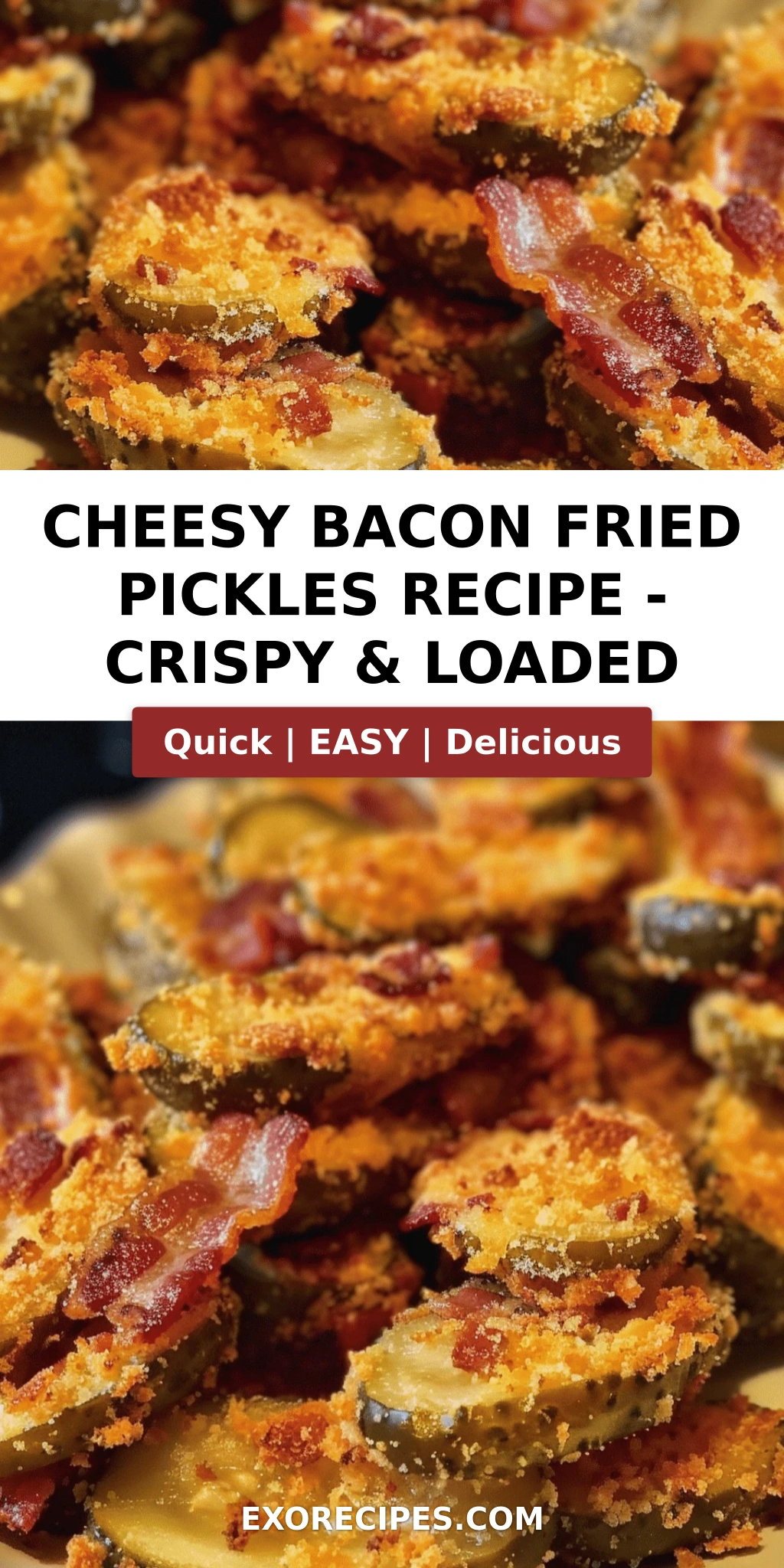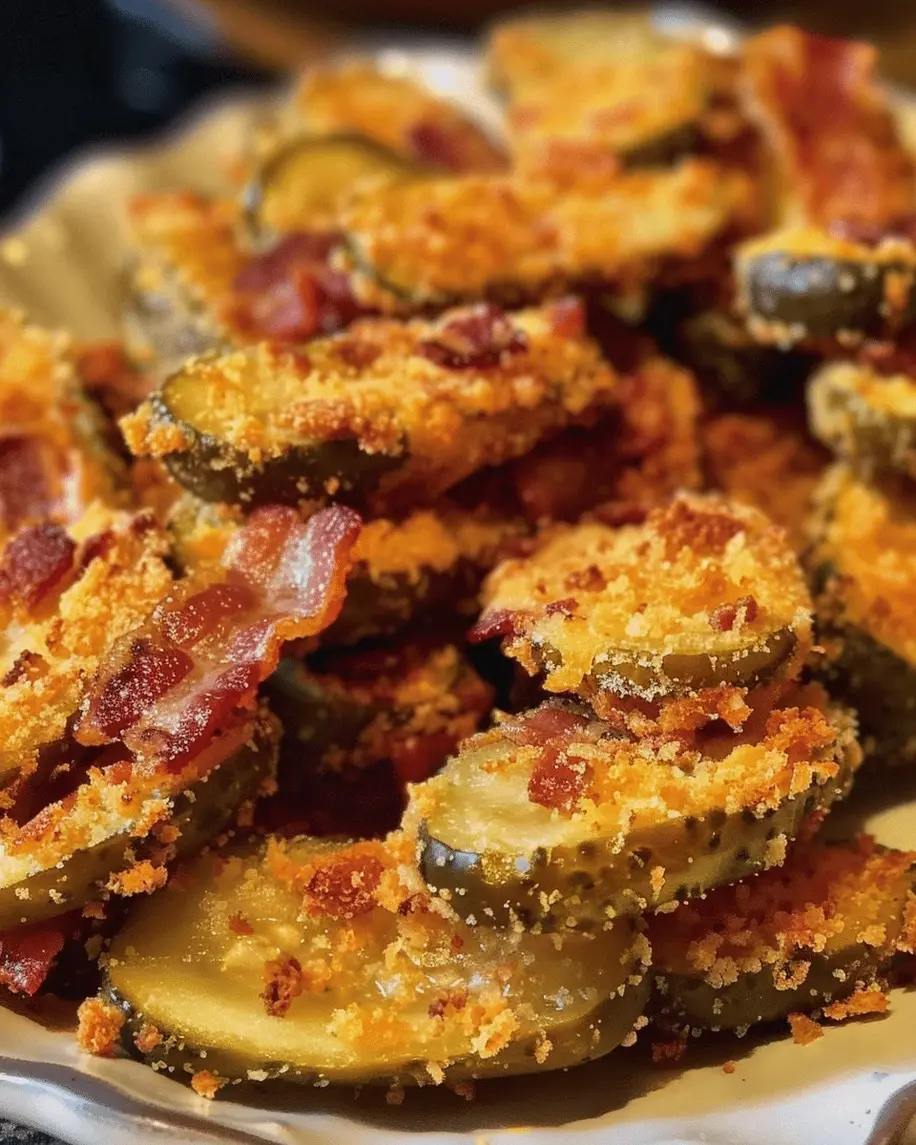
Cheesy Bacon Fried Pickles – The Ultimate Appetizer with a Triple-Crunch Coating

⚖️
Difficulty
Easy
⏲️
Prep Time
15 mins
🕒
Cook Time
10 mins
⏱️
Total Time
25 mins
🍽️
Servings
4 servings

Back in my mother’s kitchen in Morocco, we fried everything with love—but pickles? That was a discovery I made only after I moved to New York City. The first time I bit into a crispy fried pickle at a downtown diner, I knew I had to create my own version. This cheesy bacon fried pickles recipe is the result of years of perfecting that perfect crunch: a triple-coating technique I learned at culinary school in Paris, paired with the bold, smoky flavors that make this the ultimate snack. From my NYC kitchen to yours, get ready to fall in love.

Imagine biting through a shatteringly crispy shell, only to be met with a warm, tangy dill pickle center, then hit with a blanket of melted cheddar and crunchy bacon bits. The aroma alone—a mix of paprika, garlic, and rendered bacon fat—will have everyone hovering around your kitchen counter. These aren’t just any fried pickles; they’re a symphony of textures and flavors: salty, tangy, creamy, and smoky all at once. The secret lies in the panko breadcrumb coating and the immediate cheese melt while the pickles are still sizzling hot. Trust me, once you try this version, you’ll never go back to the diner kind.

I’ve tested this recipe more times than I can count—on game day with friends, as a holiday appetizer, and even as a late-night snack after a long shift in the kitchen. What sets my cheesy bacon fried pickles apart is the double-dredge technique: flour seasoned with garlic and paprika, a quick egg wash, and a final roll in panko for that extra crunch. Plus, I’ll share my pro tip for keeping the cheese from oozing out into the oil—a trick I picked up at Le Cordon Bleu. This recipe is foolproof, fast, and totally addictive. Let’s get started.

Why This Cheesy Bacon Fried Pickles Recipe Is the Best

The Flavor Secret

The combination of sharp cheddar cheese, smoky bacon, and tangy dill pickles is a match made in appetizer heaven. But the real magic happens when you season the flour coating with garlic powder and paprika—a blend I inherited from my French training, which adds depth without overwhelming the pickle. The bacon isn’t just a topping; it’s crumbled into small pieces that nestle into the melted cheese, giving every bite a burst of savory goodness. This is not your average fried pickle; it’s a flavor-packed experience.

Perfected Texture

Texture is everything in fried food, and here I deliver an unparalleled crunch. The triple-coating process—flour, egg wash, panko—creates a crust that stays crispy for a surprisingly long time, even after the cheese and bacon are added. The key is patting the pickle slices completely dry before breading; any excess moisture leads to soggy coating. And because I fry in small batches at 375°F, each piece comes out golden and airy, never greasy. It’s the same precision I use when making tempura in my Parisian kitchen, adapted for American comfort food.

Foolproof & Fast

This recipe is designed for home cooks of all skill levels. From start to finish, you’ll have a platter of these beauties on the table in just 25 minutes. No special equipment needed—just a deep skillet and a good thermometer. The steps are simple, and I’ve included my most common mistakes to avoid so you nail it on the first try. Whether you’re hosting a Super Bowl party or just craving something crunchy and cheesy, this recipe delivers consistent results every time.

Cheesy Bacon Fried Pickles Recipe Ingredients

I love sourcing my ingredients from the farmers market at Union Square—the dill pickles there are always crisp and briny. But a good jar from the grocery store works just as well. Here’s everything you’ll need for this fried pickles with bacon and cheese masterpiece.

Ingredients List

  • 1 jar (16 oz) dill pickle slices, drained and patted dry
  • 1 cup all-purpose flour
  • 1 teaspoon garlic powder
  • 1 teaspoon paprika
  • 1/2 teaspoon black pepper
  • 2 large eggs
  • 1/2 cup milk
  • 1 1/2 cups panko breadcrumbs
  • 1 cup shredded cheddar cheese
  • 6 slices bacon, cooked and crumbled
  • Vegetable oil, for frying

Ingredient Spotlight

Dill Pickle Slices: The star of the show. Look for pickle slices that are thick-cut (about ¼ inch) so they hold up to the breading and frying. I prefer kosher dill pickles for their robust flavor. A good substitution is using pickle spears cut into rounds, but adjust frying time accordingly.

Panko Breadcrumbs: These Japanese breadcrumbs are larger and flakier than regular breadcrumbs, giving an extra-crispy crust. If you can’t find panko, you can crush cornflakes or use plain breadcrumbs, but the texture won’t be as airy. 💡 mia’s Pro Tip: Toast panko in a dry skillet for 1-2 minutes before using—it adds even more crunch.

Cheddar Cheese: I use sharp cheddar for maximum flavor, but any melting cheese works—Monterey Jack, Gouda, or a smoked cheese for extra depth. Shred it yourself from a block; pre-shredded cheese contains anti-caking agents that prevent smooth melting.

Bacon: Thick-cut bacon is ideal because it stays meaty after cooking. I bake my bacon at 400°F for 15 minutes until crispy, then crumble it. You can also use turkey bacon or plant-based bacon for a lighter version, but the smokiness will be milder.

Original IngredientBest SubstitutionFlavor / Texture Impact
Dill pickle slicesBread-and-butter pickle slicesSweeter, less tangy; still crunchy
Panko breadcrumbsCrushed cornflakesExtra crispy, slightly sweeter
Shredded cheddar cheeseMonterey Jack or GoudaMilder or smokier flavor; melts similarly
BaconTurkey bacon or tempeh baconLess fat, less smoky; still adds crunch

How to Make Cheesy Bacon Fried Pickles – Step-by-Step

Follow these steps, and you’ll have a platter of golden, cheesy, bacon-topped pickles in no time. I’ve broken everything down so even a first-timer can succeed.

Step 1: Prepare the Breading Station

Set up three shallow bowls. In the first, combine 1 cup all-purpose flour, 1 teaspoon garlic powder, 1 teaspoon paprika, and ½ teaspoon black pepper. In the second, whisk 2 large eggs with ½ cup milk until smooth. In the third, place 1½ cups panko breadcrumbs. Make sure your pickle slices are patted very dry—excess moisture will make the coating fall off.

💡 mia’s Pro Tip: Line your breading bowls in a row – flour, egg, panko – so you don’t cross-contaminate. Use one hand for dry ingredients and the other for wet to keep things tidy.

Step 2: Coat Each Pickle

Dredge a pickle slice first in the flour mixture, shaking off excess. Then dip into the egg wash, letting any extra drip off. Finally, press into the panko breadcrumbs, coating both sides evenly. Place on a plate or wire rack. Repeat with all pickle slices.

⚠️ Common Mistake to Avoid: Don’t skip the flour step! The flour helps the egg wash adhere. Without it, the panko will slide off during frying.

Step 3: Heat the Oil

Pour about 1 inch of vegetable oil into a deep skillet or heavy-bottomed pot. Heat over medium-high until the oil reaches 375°F (190°C). Use a deep-fry thermometer for accuracy—if the oil is too cool, the coating will absorb oil and become greasy; too hot and the outside burns before the inside warms.

💡 mia’s Pro Tip: Test the oil with a breadcrumb: if it sizzles immediately and floats, it’s ready. If it sinks, wait another minute.

Step 4: Fry to Golden Perfection

Working in batches, carefully add about 6-8 coated pickle slices to the hot oil. Don’t overcrowd—this lowers the oil temperature. Fry for 2-3 minutes, flipping halfway, until golden brown and crisp. Transfer to a paper towel-lined plate to drain excess oil. Repeat with remaining pickles.

⚠️ Common Mistake to Avoid: Frying too many pickles at once causes soggy coating. Stick to small batches and let the oil come back to temperature between batches.

Step 5: Cheese and Bacon Topping

While the pickles are still hot, immediately sprinkle with shredded cheddar cheese and crumbled bacon. The residual heat will melt the cheese perfectly. Serve right away with your favorite dip—ranch dressing or a spicy sriracha mayo are my go-tos.

💡 mia’s Pro Tip: For an extra decadent touch, use a kitchen torch to melt the cheese gently if the pickles have cooled slightly. Or place them on a baking sheet under the broiler for 30 seconds (watch carefully!).

StepActionDurationKey Visual Cue
1Prepare breading station5 minsThree bowls lined up, dry pat pickles
2Coat each pickle5 minsEven, thick panko coating
3Heat oil5 minsOil shimmering, thermometer at 375°F
4Fry in batches2-3 mins per batchGolden brown, bubbles slow down
5Top with cheese & bacon1 minCheese melted, bacon adheres

Serving & Presentation

These crispy cheesy pickles are best served immediately, straight from the skillet to the plate. I like to arrange them on a wooden board or a platter lined with parchment, sprinkled with a few extra bacon crumbles and chopped chives for color. A side of cold ranch dressing is classic, but I also love a Moroccan-inspired harissa aioli (mix mayo with harissa paste) for a spicy kick.

For a full appetizer spread, pair these with other finger foods like jalapeño poppers or buffalo wings. They’re also fantastic on top of a burger—just pile a few onto your patty for an extra crunch. In my NYC apartment, I often serve them during game nights with a cold beer or a tangy lemonade. The contrast of hot, crispy, cheesy pickles with a cold drink is unbeatable.

Pairing TypeSuggestionsWhy It Works
Side DishSweet potato fries, coleslaw, onion ringsBalances salty with sweet or creamy
Sauce / DipRanch dressing, sriracha mayo, blue cheese dipCools the heat, adds creamy richness
BeverageLight lager, IPA, iced tea, lemonadeRefreshing contrast to fried richness
GarnishChopped chives, fresh dill, extra bacon bitsAdds color and fresh herbal notes

Make-Ahead, Storage & Reheating

I know life in NYC is busy, so I’ve figured out how to prep these babies ahead. You can bread the pickles up to a day in advance and keep them on a baking sheet in the fridge, uncovered, so the coating stays dry. When you’re ready to fry, just pull them out and go. Here’s how to store any leftovers (if you have any!).

MethodContainerDurationReheating Tip
RefrigeratorPaper towel-lined sealed containerUp to 2 daysReheat in 375°F oven for 5-7 minutes, or air fry at 350°F for 3-4 minutes
FreezerFreezer-safe bag, separate layers with parchmentUp to 1 monthReheat directly from frozen in 400°F oven for 10 minutes; add cheese after reheating
Make-Ahead (unfried)Baking sheet, uncovered in fridgeUp to 24 hours in advanceFry directly from fridge; add 30 seconds to fry time

One thing I’ve learned the hard way: never microwave leftover fried pickles. The coating turns rubbery and sad. Always use a dry-heat method like the oven or air fryer to restore that crunch. And if you’re making a big batch for a party, fry them just before serving—the texture is unbeatable right out of the oil.

Variations & Easy Swaps

This recipe is incredibly versatile. Here are a few of my favorite twists, inspired by my travels and kitchen experiments.

VariationKey ChangeBest ForDifficulty Impact
Spicy MoroccanAdd 1 tsp harissa powder to flour; drizzle with honeyHeat lovers, North African flavorsEasy
Gluten-Free / Dairy-FreeUse gluten-free flour and dairy-free cheeseAllergies, dietary restrictionsModerate (texture may differ)
Air FryerCoat in oil spray instead of deep fryingLighter version, smaller batchesEasy (different texture)

Spicy Moroccan Version

Growing up in Morocco, harissa was a pantry staple. For a North African twist, mix 1 teaspoon harissa powder (or more to taste) into the flour mixture. After frying, drizzle the finished pickles with a little honey and sprinkle with sesame seeds. The heat from the harissa combined with the sweetness of the honey and the tangy bacon is absolutely addictive. I often serve this version with a side of yogurt mint sauce as a nod to Moroccan street food.

Gluten-Free / Dairy-Free Version

For friends with dietary restrictions, I swap the all-purpose flour for a gluten-free all-purpose blend (one that contains xanthan gum works best) and use dairy-free shredded cheese (I like the mozzarella-style from Miyoko’s). The panko breadcrumbs are replaced with crushed gluten-free crackers or certified gluten-free panko. The texture is slightly less crunchy but still delicious. Follow the same breading and frying process; just note that dairy-free cheese may not melt as smoothly, so sprinkle it on while the pickles are very hot.

Air Fryer Version

If you want a lighter version without deep frying, the air fryer works beautifully. Preheat your air fryer to 375°F. Spray the breaded pickle slices with cooking spray or brush lightly with oil. Arrange in a single layer (no overlapping) and cook for 6-8 minutes, flipping halfway, until golden and crisp. The texture won’t be quite as shatteringly crunchy as deep frying, but it’s still satisfying. Add cheese and bacon immediately after air frying, then return to the air fryer for 30 seconds to melt the cheese if needed. I love this method for a quick after-work snack.

Frequently Asked Questions

What is the best type of pickle to use for cheesy bacon fried pickles?

I always recommend using kosher dill pickle slices that are thick-cut (about ¼ inch). The brine is robust and tangy, which holds up well against the rich cheese and bacon. Avoid sweet pickles like bread-and-butter; they can make the flavor too cloying. For an extra-crispy result, pat the pickles thoroughly dry before breading.

How do you keep the cheese from melting out of fried pickles while cooking?

The trick is to add the cheese after frying, not before. If you add cheese to the breading or try to melt it while the pickles are in the oil, it will simply ooze out and burn in the skillet. Instead, sprinkle shredded cheese on the hot fried pickles immediately after they come out of the oil. The residual heat melts it perfectly without losing any into the oil.

Can you make cheesy bacon fried pickles in an air fryer instead of deep frying?

Absolutely! An air fryer works wonderfully. Follow the same breading steps, then spray the coated pickles with oil and air fry at 375°F for 6-8 minutes, flipping halfway. The texture will be slightly less crunchy than deep frying but still very satisfying. Add cheese and bacon immediately after cooking, and if needed, return to the air fryer for 30 seconds to melt the cheese.

What dipping sauces go best with cheesy bacon fried pickles?

Classic ranch dressing is a no-brainer—its creamy herb flavors complement the tangy pickle and smoky bacon perfectly. For a spicy twist, mix sriracha with mayo. I also love a blue cheese dip for its sharp contrast, or a French-inspired dijonnaise (equal parts Dijon mustard and mayo). For a Moroccan flair, try harissa aioli—just stir harissa paste into mayo.

Can I use pickle spears instead of slices for this recipe?

Yes, you can use pickle spears, but keep in mind they will take a little longer to cook through—about 3-4 minutes per batch. Slice thicker spears in half lengthwise so they cook evenly. The breading process is the same. Just be sure to pat them very dry and adjust frying time until golden brown.

How can I make this recipe vegetarian?

Simply omit the bacon and use a vegetarian bacon substitute or skip it entirely. Add extra cheese or a sprinkle of smoked paprika to mimic the smoky flavor. You can also top with everything bagel seasoning or chopped nuts for crunch. The pickles and cheese are already vegetarian; just ensure the cheese is made with vegetarian rennet if that matters to you.

Why did my coating fall off during frying?

This is usually caused by moisture on the pickle slices. Make sure you pat them bone-dry with paper towels before breading. Another culprit is skipping the flour step—the flour acts as a glue layer for the egg wash. Also, let the coated pickles sit for 5 minutes before frying so the coating sets. And never crowd the pan; it lowers the oil temperature and leads to soggy, sliding coating.

Can I bake these instead of frying?

Yes, you can bake them. Preheat your oven to 425°F. Place the breaded pickles on a wire rack set over a baking sheet (for airflow) and spray with cooking oil. Bake for 12-15 minutes, flipping halfway, until golden and crispy. The texture will be less greasy but also less crunchy than deep frying. Add cheese and bacon in the last 2 minutes of baking. This method works well if you’re making a large batch.

How do I reheat leftovers to maintain crispiness?

The best way is in a preheated oven at 375°F for 5-7 minutes, or in an air fryer at 350°F for 3-4 minutes. Avoid the microwave—it turns the coating rubbery. If you’ve stored them in the fridge, let them come to room temperature for 10 minutes before reheating so they heat through evenly. Add a little extra cheese on top if you want that fresh-melted effect.

What is the best oil for frying these pickles?

Use an oil with a high smoke point and neutral flavor, like vegetable oil, canola oil, or peanut oil. I usually go with vegetable oil because it’s affordable and handles the high heat well. Avoid olive oil—it has a low smoke point and can impart a bitter taste. Remember to maintain the oil at 375°F for the crispiest results.

Share Your Version!

I hope this cheesy bacon fried pickles recipe becomes a new favorite in your home—it certainly is in mine! I’d love to see how they turn out for you. Snap a photo of your golden, cheesy, bacon-loaded pickles and tag me on Instagram or Pinterest @exorecipes. Drop a star rating below and leave a comment—tell me what dip you chose or if you tried one of the variations. Your feedback helps me create even better recipes for you.

Do you prefer a spicy kick or a classic ranch? Let me know in the comments! From my NYC kitchen to yours — I hope this recipe brings as much warmth to your table as it does to mine. — mia 🧡

📌

Love This Recipe? Save It to Pinterest!

If you enjoyed this Cheesy Bacon Fried Pickles recipe, don’t let it get lost in your browser tabs! 😄 Pin it now so you can find it again anytime — and explore hundreds more tried-and-tested recipes waiting for you on my Pinterest boards.

👉 Follow mia on Pinterest @exorecipe

📌 Pin this recipe · 🔁 Re-pin your favorites · 💬 Tag me when you make it — I love seeing your creations!

Print

clock clock iconcutlery cutlery iconflag flag iconfolder folder iconinstagram instagram iconpinterest pinterest iconfacebook facebook iconprint print iconsquares squares iconheart heart iconheart solid heart solid icon

Cheesy Bacon Fried Pickles

  • Author: Chef Mia
  • Prep Time: 15 minutes
  • Cook Time: 10 minutes
  • Total Time: 25 minutes
  • Yield: 4 servings 1x
  • Method: Appetizer
  • Cuisine: American

Description

Crispy, golden fried pickles loaded with melted cheese and crumbled bacon, served as the ultimate appetizer or snack.


Ingredients

Scale
  • 1 jar (16 oz) dill pickle slices, drained and patted dry
  • 1 cup all-purpose flour
  • 1 teaspoon garlic powder
  • 1 teaspoon paprika
  • 1/2 teaspoon black pepper
  • 2 large eggs
  • 1/2 cup milk
  • 1 1/2 cups panko breadcrumbs
  • 1 cup shredded cheddar cheese
  • 6 slices bacon, cooked and crumbled
  • Vegetable oil, for frying

Instructions

  1. Mix flour, garlic powder, paprika, and black pepper in a shallow bowl.
  2. Whisk eggs and milk together in another bowl.
  3. Place panko breadcrumbs in a third bowl.
  4. Dredge each pickle slice in the flour mixture, then dip in the egg mixture, and coat in panko.
  5. Heat about 1 inch of vegetable oil to 375°F (190°C) in a deep skillet or pot.
  6. Fry pickle slices in batches for 2-3 minutes until golden brown. Drain on paper towels.
  7. While still hot, sprinkle fried pickles with shredded cheddar cheese and crumbled bacon.
  8. Serve immediately with ranch dressing or your favorite dip.

Notes

For extra crunch, use double coating. Adjust cheese and bacon to taste.


Nutrition

  • Calories: 485 kcal
  • Sugar: 4 g
  • Fat: 33 g
  • Carbohydrates: 32 g
  • Protein: 15 g


Cheesy Bacon Fried Pickles

k">

Tried This Recipe? Leave a Comment!

Did you make this recipe? I’d love to hear how it turned out! Please leave a comment and a rating below. Your feedback helps other home cooks and supports cheerychop.com!

For more delicious inspiration, follow me on Pinterest!
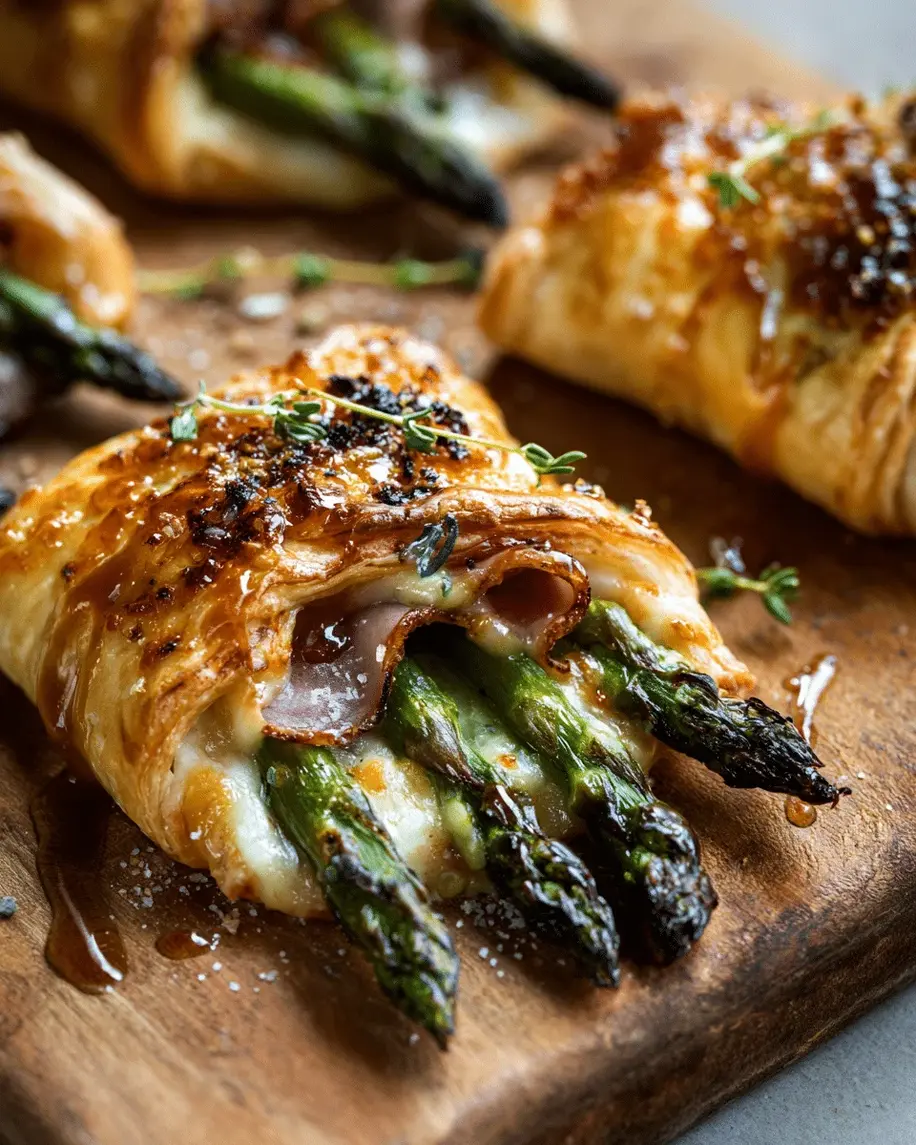
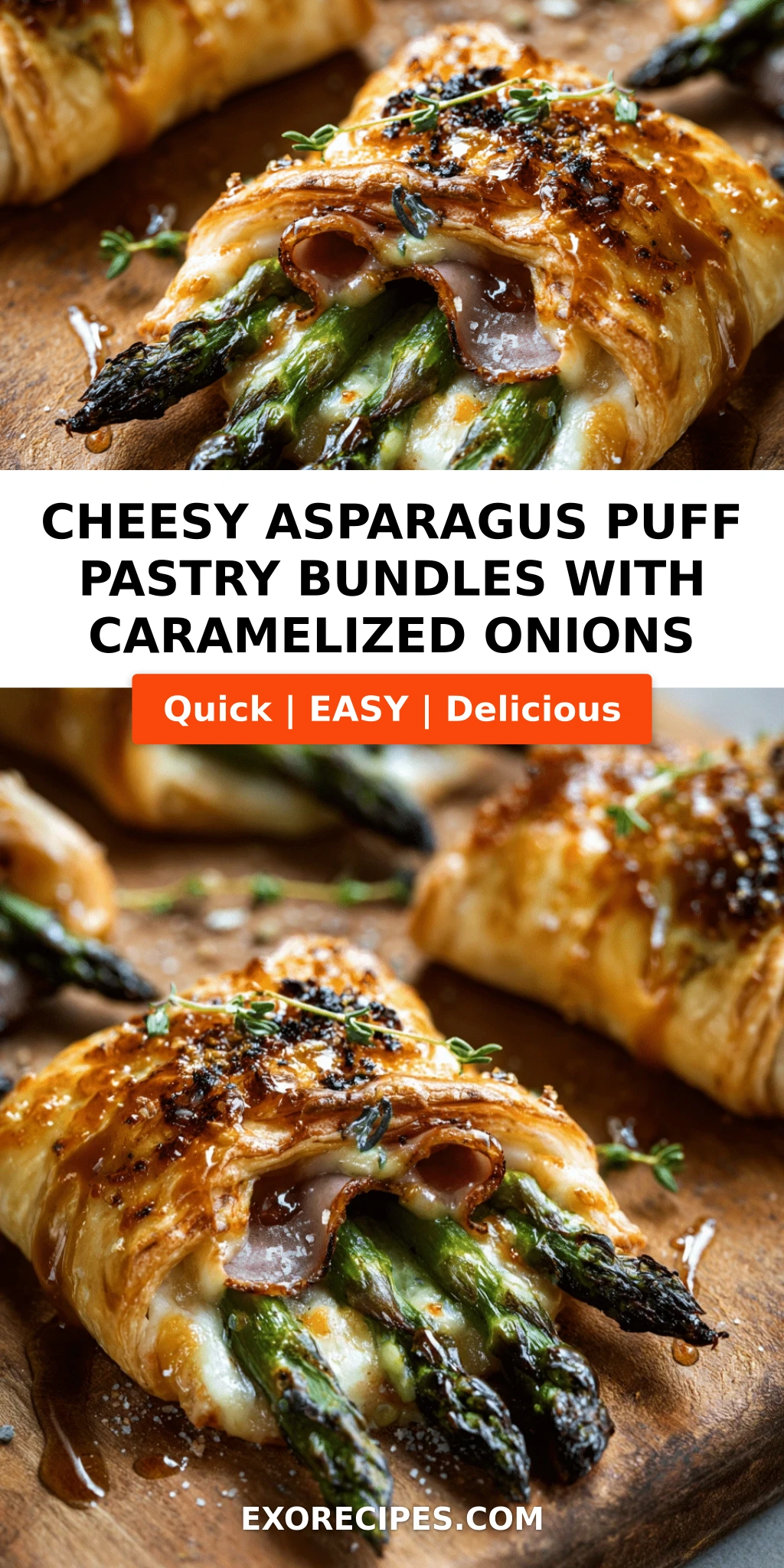
Cheesy Asparagus Puff Pastry Bundles with Caramelized Onions – Flaky, Cheesy & Irresistible!

⚖️
Difficulty
Easy
⏲️
Prep Time
15 mins
🕒
Cook Time
20 mins
⏱️
Total Time
35 mins
🍽️
Servings
6 bundles

I still remember the first time I made these cheesy asparagus puff pastry bundles for a spring gathering in my tiny NYC apartment. The smell of caramelized onions drifting through the kitchen — sweet, deep, and utterly comforting — brought me right back to my mother’s kitchen in Morocco, where she would slowly cook onions with butter and a pinch of saffron for hours. This recipe is my love letter to those memories, elevated with French pastry training and the best seasonal asparagus I can find at the Union Square Greenmarket. These cheesy asparagus puff pastry bundles with caramelized onions are elegant enough for a dinner party but simple enough for a weekday treat.

Imagine biting into a golden, flaky puff pastry shell that shatters ever so slightly, revealing a heart of tender green asparagus, melted Gruyère cheese, and the sweet, jammy richness of caramelized onions. The contrast of textures — crisp pastry against soft onions and firm-tender asparagus — is pure magic. A whisper of brown sugar deepens the onions’ natural sweetness, while the cheese adds a nutty, savory note that ties everything together. Each bundle is a little package of springtime joy, finished with a glossy egg wash that bakes into a beautiful burnished bronze.

I’ve tested this recipe every which way in my NYC kitchen, and I’m thrilled to share my version with you. The key difference? I caramelize the onions slowly with a touch of brown sugar for that deep, almost confit-like sweetness, and I use a quick folding technique that keeps the pastry light and layered. 💡 mia’s Pro Tip: Don’t skip the egg wash — it’s what gives these bundles that gorgeous, bakery-worthy shine. And one common mistake? Overfilling the pastry — trust me, less is more for a perfect seal and even baking.

Why This Cheesy Asparagus Puff Pastry Bundles Recipe Is the Best

The Flavor Secret: Most recipes just throw raw onions into the pastry, but I learned from my Moroccan mother that patience with onions pays off. Slowly caramelizing them with butter and a touch of brown sugar unlocks a sweetness that beautifully contrasts the grassy, fresh asparagus and the rich, nutty Gruyère. It’s a flavor combination that feels both luxurious and familiar — a hallmark of my cooking style that blends North African soul with French finesse.

Perfected Texture: As a trained pastry chef in Paris, I learned that puff pastry is all about respect — respect for the butter, the folds, and the oven temperature. These bundles are designed to bake up shatteringly crisp on the outside while staying tender inside. The asparagus retains a slight snap, the onions melt into a silky jam, and the cheese stretches into golden, bubbly pockets. Every bite is a study in contrast, and it’s absolutely intentional.

Foolproof & Fast: Despite how elegant they look, these cheesy asparagus puff pastry bundles come together in just 35 minutes. Store-bought puff pastry does the heavy lifting, and the caramelized onions can be made ahead. I’ve designed the assembly to be forgiving — even if your folds aren’t perfect, the bundles will still bake up beautiful and delicious. This is the kind of recipe that makes you look like a hero with minimal effort.

Cheesy Asparagus Puff Pastry Bundles Ingredients

I source my asparagus from the farmers market in Union Square when it’s in season — thin to medium spears that are bright green and snap cleanly. The puff pastry I keep in my freezer at all times from Dufour or Pepperidge Farm (both work beautifully). And the cheese? I splurge on Gruyère, but I’ve tested this with good-quality mozzarella too, and it’s still wonderful. These ingredients remind me of the careful selection my mother taught me in the souks of Morocco — choose each component with intention.

Ingredients List

  • 1 sheet puff pastry, thawed
  • 1 pound fresh asparagus, trimmed
  • 1 cup shredded Gruyère or mozzarella cheese
  • 1 large onion, thinly sliced
  • 2 tablespoons butter
  • 1 tablespoon olive oil
  • 1 teaspoon brown sugar
  • Salt and black pepper to taste
  • 1 egg, beaten (for egg wash)

Ingredient Spotlight

Asparagus: Look for bright green spears with firm, closed tips. Thin to medium spears work best because they cook evenly inside the pastry. If you have thick spears, blanch them for 1 minute first. In a pinch, frozen asparagus (thawed and patted dry) works too, though the texture will be slightly softer.

Puff Pastry: One sheet of store-bought puff pastry is all you need. I prefer all-butter varieties for the best flavor and flake. Thaw it in the fridge overnight or on the counter for about 30 minutes — it should be cool and pliable, not warm or sticky. If it cracks while folding, let it rest for 5 minutes before continuing.

Gruyère Cheese: This Swiss cheese melts beautifully and brings a nutty, slightly sweet flavor that pairs perfectly with caramelized onions and asparagus. If you can’t find Gruyère, provolone or white cheddar are excellent substitutes. Avoid pre-shredded cheese from a bag — it contains anti-caking agents that prevent smooth melting.

Brown Sugar: Just a teaspoon is enough to deepen the caramelization of the onions without making them sweet. You can substitute honey or maple syrup in a pinch, but brown sugar gives the most authentic caramel flavor. This little trick came from my days in a Parisian bistro kitchen.

Original IngredientBest SubstitutionFlavor / Texture Impact
Gruyère cheeseProvolone or white cheddarSlightly sharper, still melts well; provolone is milder
ButterVegan butter or gheeGhee gives richer flavor; vegan butter reduces dairy
Brown sugarHoney or maple syrupHoney adds floral note; maple adds earthy sweetness
AsparagusGreen beans or zucchini stripsGreen beans stay crunchier; zucchini softens more

How to Make Cheesy Asparagus Puff Pastry Bundles — Step-by-Step

Trust me, this comes together faster than you think. Once the onions are caramelized and the pastry is prepped, you’ll assembly-line these bundles in minutes. Let’s get started!

Step 1: Caramelize the Onions

In a skillet over medium heat, melt 2 tablespoons butter with 1 tablespoon olive oil. Add the thinly sliced onion and cook, stirring occasionally, until soft and golden brown, about 15–20 minutes. Stir in 1 teaspoon brown sugar, salt, and pepper. Remove from heat and set aside. The onions should be deeply golden and jammy — not burnt.

💡 mia’s Pro Tip: Use a wide skillet so the onions cook evenly and don’t steam. If they start to stick, add a splash of water or white wine to deglaze the pan.

Step 2: Prepare the Pastry

On a lightly floured surface, roll out the thawed puff pastry sheet into a 10×10-inch square. Cut into 6 equal strips, each about 3 inches wide. If the pastry feels too soft, pop it in the fridge for 5 minutes — cold pastry puffs better.

⚠️ Common Mistake to Avoid: Rolling the pastry too thin! Keep it about ⅛-inch thick for the best flake.

Step 3: Assemble the Bundles

Lay an asparagus spear diagonally across the center of each pastry strip. Top with a spoonful of caramelized onions and a generous sprinkle of shredded cheese. Fold one corner of the pastry over the filling, then fold the other side over to form a bundle. Press edges to seal. Place seam-side down on the prepared baking sheet.

💡 mia’s Pro Tip: Don’t overfill — about 1 tablespoon of onions and 2 tablespoons of cheese per bundle is perfect. Overfilling makes sealing difficult and can cause leaks.

Step 4: Egg Wash and Bake

Brush each bundle with the beaten egg. This gives them that gorgeous golden-brown shine. Bake at 400°F (200°C) for 15–18 minutes, or until the pastry is deeply golden and puffed. The smell in your kitchen will be absolutely intoxicating!

⚠️ Common Mistake to Avoid: Not brushing the edges with egg wash — those edges need the wash to seal properly and develop color.

Step 5: Cool and Serve

Let the bundles cool on the baking sheet for 5 minutes before transferring to a serving platter. This allows the pastry to set and the cheese to settle slightly. Serve warm — they’re best within 30 minutes of baking, but still delicious at room temperature.

💡 mia’s Pro Tip: For an extra touch, sprinkle flaky sea salt and a few cracks of black pepper over the hot bundles just before serving.

StepActionDurationKey Visual Cue
1Caramelize onions15–20 minsDeep golden, jammy, no burnt bits
2Roll & cut pastry5 minsEven 10×10 square, 6 strips
3Assemble bundles5 minsSealed edges, seam-side down
4Egg wash & bake15–18 minsGolden brown, puffed, bubbling cheese
5Cool & serve5 minsPastry set, warm to touch

Serving & Presentation

These bundles are stunning on a rustic wooden board or a white platter — the golden pastry against the green asparagus tips is pure spring elegance. I love serving them as an appetizer with a side of herbed crème fraîche or a light lemon aioli for dipping. The brightness of citrus cuts through the richness of the pastry and cheese beautifully.

For a main course, serve two to three bundles per person alongside a crisp green salad with a simple vinaigrette — the acidity balances the buttery pastry. My Parisian training taught me the value of contrast on a plate, and this combination delivers every time.

When I entertain in my NYC apartment, I often serve these bundles with a chilled glass of Sauvignon Blanc or a light Prosecco. The wine’s acidity echoes the lemon in the vinaigrette and cuts through the cheese. For a non-alcoholic option, sparkling water with a twist of lemon is perfection.

Pairing TypeSuggestionsWhy It Works
Side DishMixed green salad, roasted tomatoes, lemon-dressed arugulaAcidity and freshness balance the rich, buttery pastry
Sauce / DipHerbed crème fraîche, lemon aioli, balsamic glazeTangy or creamy dips enhance the sweet onions and cheese
BeverageSauvignon Blanc, Prosecco, sparkling water with lemonCrisp acidity cuts through richness; bubbles add festivity
GarnishFlaky sea salt, fresh thyme, lemon zest, microgreensAdds color, texture, and a fresh herbal note

Make-Ahead, Storage & Reheating

As a busy NYC food blogger and mom, I know the value of making things ahead. The caramelized onions can be made up to 5 days in advance and stored in the fridge — they actually get more flavorful over time. For the bundles themselves, you can assemble them completely (without the egg wash), cover, and refrigerate for up to 24 hours. Brush with egg wash just before baking.

MethodContainerDurationReheating Tip
RefrigeratorAirtight container, single layerUp to 3 daysReheat at 350°F for 8–10 mins to restore crispness
FreezerFreezer-safe bag, parchment between layersUp to 2 monthsBake from frozen at 400°F for 18–22 mins
Make-AheadCovered baking sheet in fridgeUp to 24 hours before bakingBrush with egg wash just before baking; no need to thaw

From my experience, reheating in the oven is non-negotiable for restoring that signature flake. Microwaving will make the pastry soggy — trust me, I’ve tried it in a pinch and regretted it. If you’re reheating from frozen, add 3–5 minutes to the bake time and check for golden color.

Variations & Easy Swaps

One of the things I love most about this recipe is how versatile it is. Over the years, I’ve tested countless variations in my NYC kitchen, and these are the ones my family and readers rave about.

VariationKey ChangeBest ForDifficulty Impact
Moroccan SpicedAdd 1 tsp cumin & ½ tsp paprika to onionsWarm, exotic flavor twistNo extra effort
Gluten-FreeUse gluten-free puff pastryDietary restrictionsSame method, check brand instructions
Spring HerbAdd fresh dill or chives to the fillingFresh, bright flavor for springNo extra effort

Moroccan Spiced Variation

This is my personal favorite — a nod to my heritage. While caramelizing the onions, stir in 1 teaspoon ground cumin and ½ teaspoon sweet paprika. The warm, earthy spices meld with the sweet onions and nutty Gruyère in a way that feels deeply comforting. I sometimes add a pinch of cayenne for heat. Serve with a dollop of harissa-spiked yogurt for an even more authentic North African touch.

Gluten-Free / Dairy-Free Variation

For gluten-free, use a high-quality gluten-free puff pastry — I’ve tested this with Schär and Gee Free brands, and both work beautifully. For dairy-free, substitute the butter with vegan butter (I like Miyoko’s), use a dairy-free cheese shred that melts well (Violife or Daiya mozzarella style work), and brush with dairy-free milk or oil instead of egg wash. The texture will be slightly less flaky but still delicious.

Spring Herb Variation

When I find fresh dill or chives at the Union Square market, I fold a tablespoon of finely chopped herbs into the caramelized onions just before assembling. The bright, grassy notes complement the asparagus and cheese beautifully. This variation is especially wonderful for Easter brunch or a spring bridal shower — it feels so fresh and seasonal.

How do you keep puff pastry from getting soggy when making cheesy asparagus puff pastry bundles?

The key to preventing soggy puff pastry is to control moisture at every stage. First, make sure your caramelized onions are cooked down until most of their liquid has evaporated — they should be jammy, not watery. Second, pat the asparagus spears dry with a paper towel before assembling. Third, bake the bundles on a preheated baking sheet or use parchment paper to promote even heat distribution. Finally, never skip the egg wash — it creates a barrier that helps the pastry stay crisp. If you’re making these ahead, assemble without the egg wash and refrigerate uncovered for 30 minutes before brushing and baking; this allows the pastry to dry out slightly, ensuring a flakier result.

Can I make cheesy asparagus puff pastry bundles ahead of time and reheat them?

Absolutely, and I do this all the time for parties. You have two great options. For fully baked bundles, let them cool completely, then store in an airtight container in the fridge for up to 3 days. Reheat in a 350°F oven for 8–10 minutes until the pastry crisps up again — avoid the microwave at all costs, as it will make the pastry soggy. For unbaked bundles, assemble them completely (without the egg wash), arrange on a parchment-lined baking sheet, cover tightly with plastic wrap, and refrigerate for up to 24 hours. Brush with egg wash just before baking and add 2–3 extra minutes to the bake time. You can also freeze unbaked bundles for up to 2 months; bake directly from frozen at 400°F for 18–22 minutes.

What is the best cheese to use in cheesy asparagus puff pastry bundles?

Gruyère is my top choice for these bundles — it melts beautifully, has a nutty, slightly sweet flavor that pairs perfectly with caramelized onions, and browns wonderfully under the broiler. That said, I’ve tested this recipe with several cheeses and have clear favorites. Provolone is a close second; it’s milder than Gruyère but melts just as smoothly. White cheddar brings a sharp, tangy note that cuts through the richness of the pastry. Mozzarella works in a pinch but is milder and can be a bit stringy. Avoid very hard cheeses like Parmesan (it doesn’t melt well) or overly soft cheeses like goat cheese (it can make the pastry soggy). For best results, shred your own cheese from a block — pre-shredded bags contain anti-caking agents that prevent smooth melting.

How do you caramelize onions quickly for this puff pastry recipe?

While traditional caramelized onions take 40–45 minutes, I’ve developed a faster method that delivers deep flavor in about 15–20 minutes. First, slice the onions very thinly — use a mandoline if you have one. Second, use a wide skillet so the onions spread out and cook evenly rather than steaming. Third, add a pinch of salt at the beginning to draw out moisture, and cook over medium-high heat, stirring every 2 minutes. Once the onions start to brown, reduce heat to medium and add 1 teaspoon of brown sugar, which speeds up caramelization and deepens the color. A splash of water or white wine when the pan looks dry helps deglaze and prevents burning. This method won’t give you the exact same depth as a slow cook, but for this recipe it’s more than enough — the cheese and pastry add plenty of richness.

Can I use frozen asparagus for these puff pastry bundles?

Yes, you can use frozen asparagus, but there are a few important steps to ensure success. First, thaw the asparagus completely in the refrigerator overnight or by placing the sealed bag in cold water for about 30 minutes. Then, pat each spear very dry with paper towels — excess moisture is the enemy of flaky puff pastry. Frozen asparagus will be slightly softer than fresh after baking, so I recommend using thin to medium spears (not the thick ones) so they cook through evenly. If your frozen spears are thick, blanch them for 1 minute in boiling salted water, then shock in ice water and dry thoroughly. I’ve used this method in a pinch during winter when fresh asparagus isn’t available, and the bundles still turn out delicious, though the texture is a bit more tender.

How do I prevent the puff pastry from cracking or tearing when folding?

Puff pastry can be finicky, but a few simple tricks will keep it intact. First, make sure the pastry is properly thawed — it should be cold but pliable, not warm or sticky. If it cracks when you try to fold it, let it rest at room temperature for 5 minutes to relax the gluten. Second, roll the pastry gently and evenly; if it resists, let it rest for a few minutes before continuing. Third, when cutting the strips, use a sharp knife or a pizza cutter — a dull blade can drag and tear the delicate layers. Fourth, if a small tear does occur, simply press it back together with your fingers; the egg wash will seal it during baking. Finally, work in a cool kitchen if possible — if the butter in the pastry gets too warm, it becomes soft and sticky, making tearing more likely.

What can I use instead of Gruyère in these asparagus bundles?

If you don’t have Gruyère, you have several excellent options. Provolone is my top substitute — it melts beautifully and has a mild, slightly tangy flavor that complements the onions without overpowering them. White cheddar is another great choice; it brings a sharper, more pronounced cheese flavor and browns nicely. Smoked mozzarella adds a subtle smoky note that pairs surprisingly well with caramelized onions. For a dairy-free option, use a plant-based mozzarella or cheddar shred that melts well — I’ve had good results with Violife and Miyoko’s brands. Avoid pre-shredded cheese bags, as they contain anti-caking agents that prevent smooth melting. Whichever cheese you choose, shred it yourself from a block for the best texture and flavor.

Can I add meat to these cheesy asparagus puff pastry bundles?

Absolutely — these bundles are wonderful with added protein. My favorite addition is thinly sliced prosciutto or serrano ham, which I lay on the pastry strip before adding the asparagus and onions. The salty, savory ham contrasts beautifully with the sweet onions and creamy cheese. Cooked, crumbled bacon is another excellent option — about 1 tablespoon per bundle adds smoky crunch. For a heartier version, add thin slices of roasted chicken or turkey. If you’re adding meat, reduce the cheese slightly to keep the bundles from overflowing, and make sure any cooked meat is patted dry so it doesn’t add excess moisture. I often serve a meat version for game-day parties or as a more substantial appetizer at holiday gatherings.

How do I know when the bundles are fully baked?

The visual cues are your best friends here. First, the pastry should be a deep golden brown all over — not pale yellow or burnt. Second, you should see the puff pastry has risen and separated into distinct, flaky layers, especially around the edges. Third, a little bit of cheese may have bubbled out from the seams — that’s a good sign that the inside is hot and melted. Fourth, the bundles should feel firm and crisp to the touch, not soft or doughy. If you’re unsure, use an instant-read thermometer: the internal temperature should be at least 165°F. Bake time is typically 15–18 minutes at 400°F, but ovens vary, so start checking at 14 minutes. If the tops are browning too quickly but the sides are still pale, tent loosely with foil for the last 3–4 minutes.

What other vegetables can I use instead of asparagus in this recipe?

This recipe is wonderfully adaptable to other vegetables. Green beans are my favorite substitute — they have a similar shape and snap, and they cook perfectly in the same time frame. Trim the ends and use them whole, just like asparagus. Zucchini strips (cut into 4-inch long, ½-inch wide strips) work beautifully too, though they release more moisture, so pat them very dry and consider salting them first to draw out excess water. Roasted red pepper strips add sweetness and a beautiful color contrast. For a winter version, use roasted butternut squash slices or blanched broccoli rabe. Whatever vegetable you choose, make sure it’s cut to a similar size and shape as asparagus, and pat it very dry before assembling to keep the pastry crisp.

Share Your Version!

I absolutely love hearing how these cheesy asparagus puff pastry bundles turn out in your kitchen. Did you try the Moroccan spiced variation? Did you add prosciutto or go full vegetarian? Drop a comment below with your star rating — your feedback helps other readers decide what to cook, and it makes my day to see your creations.

Snap a photo of your golden, flaky bundles and tag me on Instagram or Pinterest at @exorecipes — I re-share my favorites in my stories. And if there’s a variation you’d love to see me test, let me know in the comments. Your ideas often become my next recipe!

From my NYC kitchen to yours — I hope this recipe brings as much warmth to your table as it does to mine. — mia 🧡

📌

Love This Recipe? Save It to Pinterest!

If you enjoyed this Cheesy Asparagus Puff Pastry Bundles with Caramelized Onions recipe, don’t let it get lost in your browser tabs! 😄 Pin it now so you can find it again anytime — and explore hundreds more tried-and-tested recipes waiting for you on my Pinterest boards.

👉 Follow mia on Pinterest @exorecipe

📌 Pin this recipe · 🔁 Re-pin your favorites · 💬 Tag me when you make it — I love seeing your creations!

Print

clock clock iconcutlery cutlery iconflag flag iconfolder folder iconinstagram instagram iconpinterest pinterest iconfacebook facebook iconprint print iconsquares squares iconheart heart iconheart solid heart solid icon

Cheesy Asparagus Puff Pastry Bundles with Caramelized Onions

  • Author: Chef Mia
  • Prep Time: 15 minutes
  • Cook Time: 20 minutes
  • Total Time: 35 minutes
  • Yield: 6 bundles 1x
  • Method: Appetizer
  • Cuisine: American

Description

These cheesy asparagus puff pastry bundles with caramelized onions are an elegant and delicious appetizer or side dish. Fresh asparagus spears are wrapped in flaky puff pastry with melted cheese and sweet caramelized onions, then baked to golden perfection.


Ingredients

Scale
  • 1 sheet puff pastry, thawed
  • 1 pound fresh asparagus, trimmed
  • 1 cup shredded Gruyère or mozzarella cheese
  • 1 large onion, thinly sliced
  • 2 tablespoons butter
  • 1 tablespoon olive oil
  • 1 teaspoon brown sugar
  • Salt and black pepper to taste
  • 1 egg, beaten (for egg wash)

Instructions

  1. Preheat oven to 400°F (200°C). Line a baking sheet with parchment paper.
  2. In a skillet over medium heat, melt butter with olive oil. Add sliced onions and cook, stirring occasionally, until soft and golden brown, about 15-20 minutes. Stir in brown sugar, salt, and pepper. Remove from heat and set aside.
  3. On a lightly floured surface, roll out puff pastry sheet into a 10×10-inch square. Cut into 6 equal strips (about 3 inches wide each).
  4. Lay an asparagus spear diagonally across the center of each pastry strip. Top each with a spoonful of caramelized onions and a generous sprinkle of cheese.
  5. Fold one corner of the pastry over the filling, then fold the other side over to form a bundle. Press edges to seal. Place seam-side down on the prepared baking sheet.
  6. Brush each bundle with beaten egg. Bake for 15-18 minutes, or until pastry is golden brown and puffed. Serve warm.

Notes

You can substitute Gruyère with provolone or white cheddar. To save time, caramelize the onions ahead and refrigerate. For a vegetarian version, ensure the puff pastry is made with butter or vegetable shortening.


Nutrition

  • Calories: 320
  • Sugar: 4g
  • Fat: 22g
  • Carbohydrates: 24g
  • Protein: 10g


Cheesy Asparagus Puff Pastry Bundles with Caramelized Onions

k">

Tried This Recipe? Leave a Comment!

Did you make this recipe? I’d love to hear how it turned out! Please leave a comment and a rating below. Your feedback helps other home cooks and supports cheerychop.com!

For more delicious inspiration, follow me on Pinterest!
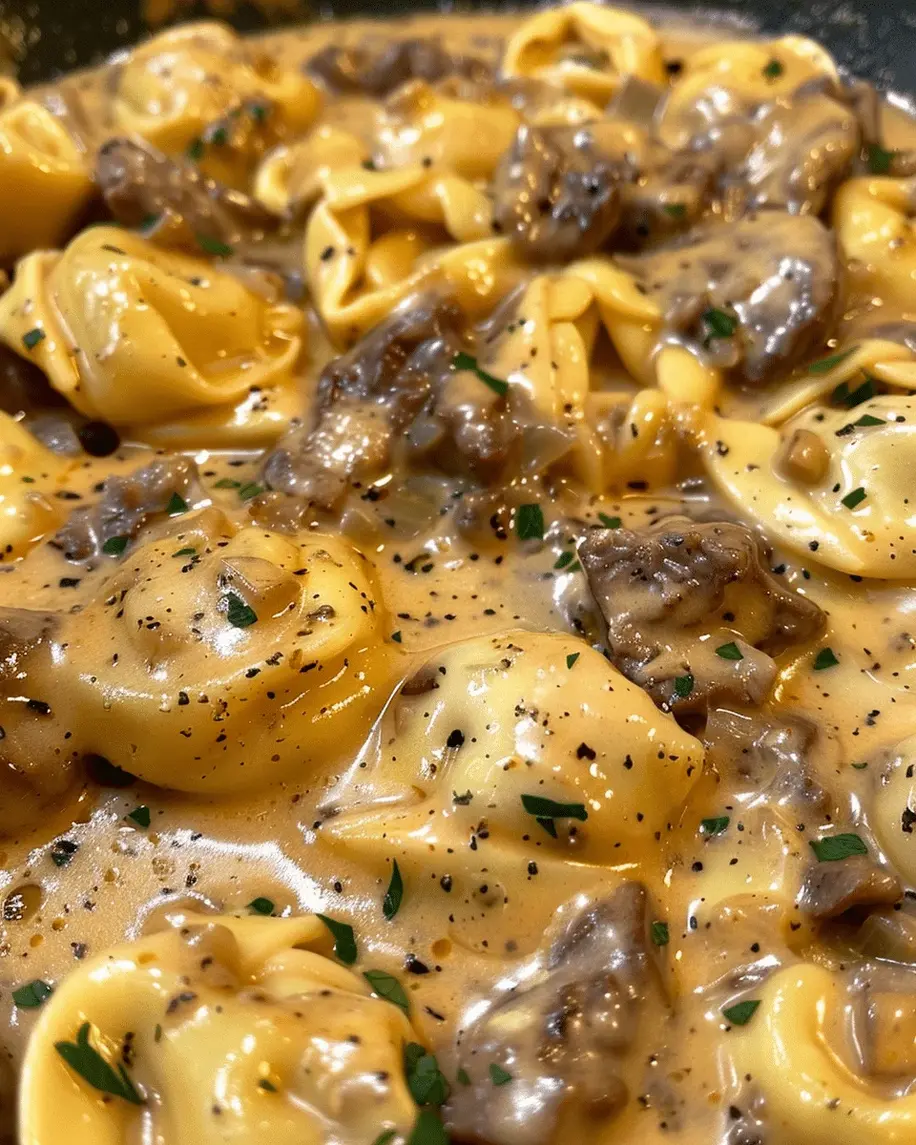
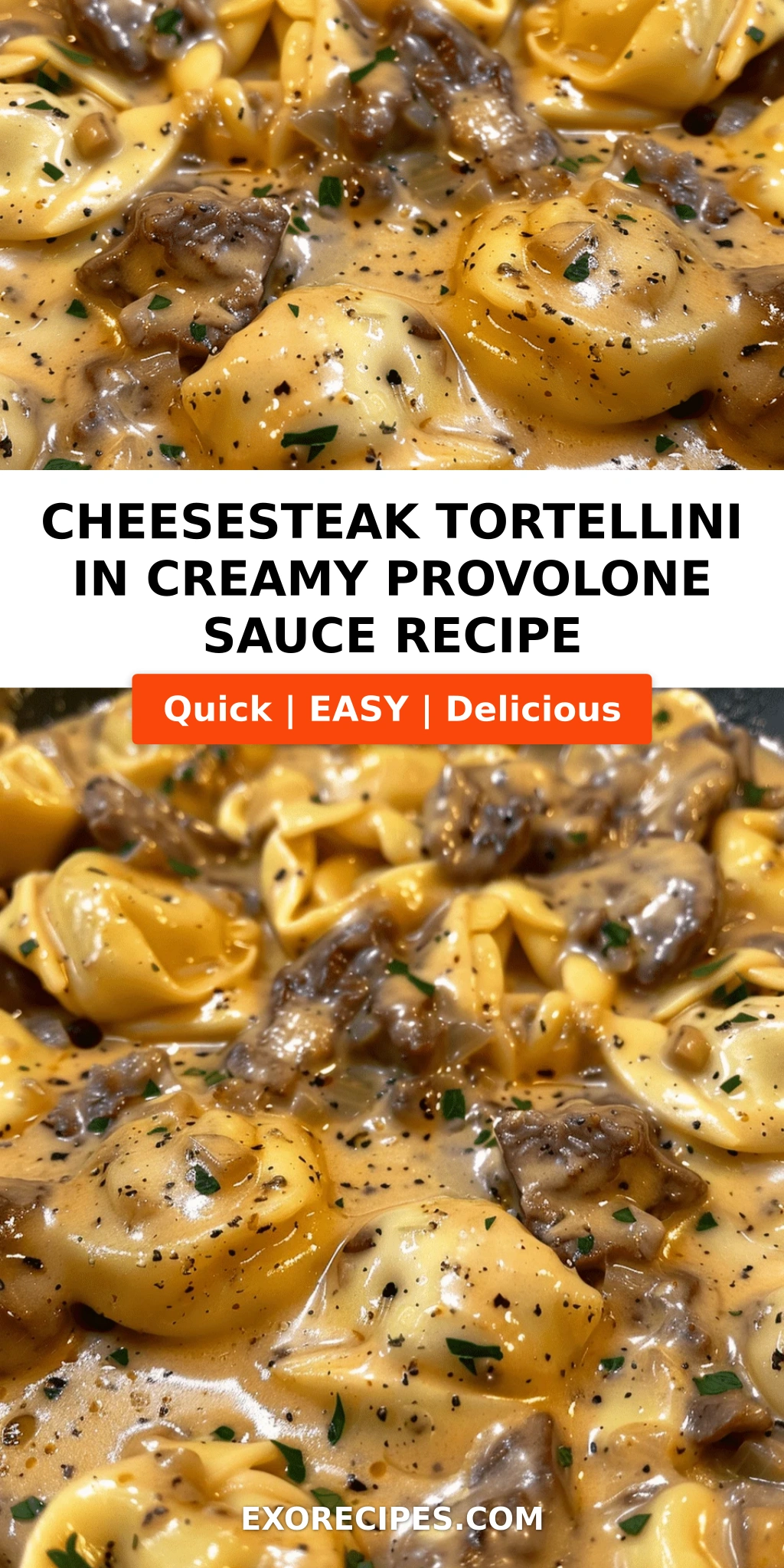
Cheesesteak Tortellini in Creamy Provolone Sauce – A Hearty 30-Minute Comfort Food Masterpiece

⚖️
Difficulty
Easy
⏲️
Prep Time
10 mins
🕒
Cook Time
20 mins
⏱️
Total Time
30 mins
🍽️
Servings
4

Growing up in Morocco, my mother taught me that the best meals come from blending bold, unexpected flavors with a whole lot of love. Years later, after training in Paris and settling in New York City, I found myself standing at a food cart in South Philadelphia with my first authentic cheesesteak. The tender beef, the caramelized onions, the melty provolone—it hit me like a wave of inspiration. I knew I had to turn that iconic sandwich into a pasta dish. This Cheesesteak Tortellini in Creamy Provolone Sauce is the result: a decadent, 30-minute cheesesteak pasta recipe that combines tender cheese tortellini with thinly sliced ribeye and a rich, velvety provolone sauce. It’s the kind of easy cheesesteak tortellini that feels fancy but comes together on a busy weeknight, and it has quickly become one of the most requested recipes in my NYC kitchen.

Imagine this: little pillows of cheese-filled tortellini, each one coated in a silky, golden provolone sauce that clings to every curve and crevice. The steak is seared until it’s deeply browned and juicy, then sliced thin so every forkful has a bit of beef along with the pasta. The onions and bell peppers soften into sweet, savory ribbons that add just the right amount of texture. And the sauce—oh, the sauce. It’s built on a classic French roux, which gives it a luxurious body, then finished with sharp provolone that melts into pure, creamy indulgence. A sprinkle of fresh parsley adds a pop of color and freshness. It’s the kind of dish that smells like dinner should: warm, cheesy, and deeply satisfying.

What makes my version of this tortellini with steak recipe stand out is the technique. In Paris, I learned that a great sauce starts with a proper roux—cooking the flour just until it smells nutty before adding liquid. That extra minute makes all the difference in texture and flavor. I also sear the steak in batches so it browns rather than steams, and I always cook the tortellini al dente because it will continue to cook briefly in the sauce. 💡 mia’s Pro Tip: Reserve a cup of pasta water before draining—if your sauce thickens too much when you combine everything, a splash of that starchy water will bring it back to the perfect consistency. This easy cheesesteak tortellini is comfort food elevated by a few chef-level touches, and I’m so excited to share it with you.

Why This Cheesesteak Tortellini Recipe Is the Best

The Flavor Secret: The magic of this creamy provolone sauce pasta comes from building layers of flavor. I start by searing the steak in the same pan I’ll use for the sauce, so all those browned bits (the French call it fond) dissolve into the broth and cream. Then I add the provolone gradually, off the heat, so it melts without breaking. The result is a sauce that tastes deeply of beef, cheese, and caramelized vegetables—no shortcuts, just pure, honest flavor. My Moroccan roots also remind me to season boldly: a good pinch of black pepper and a touch of salt wake everything up without overpowering the provolone.

Perfected Texture: Texture is everything in a pasta dish, and this one delivers on every level. The tortellini are tender but firm, the steak is juicy and tender, the vegetables are soft but not mushy, and the sauce is thick enough to coat the back of a spoon. The key is timing: I cook the tortellini while I sear the steak and sauté the vegetables, so everything comes together hot and fresh. I also use heavy cream for richness and all-purpose flour for body, which gives the sauce a luscious, restaurant-quality feel. No gloopy, thin sauce here—just a velvety provolone sauce that hugs every ingredient.

Foolproof & Fast: This cheesesteak pasta recipe is designed for real life. From start to finish, it takes just 30 minutes, and it uses one skillet plus a pot for the pasta. That means minimal cleanup and maximum flavor. Whether you’re a beginner or a seasoned cook, the steps are straightforward and forgiving. If you can slice an onion and stir a pot, you can make this. And because it’s so adaptable, you can swap in chicken, mushrooms, or even plant-based steak strips—the creamy provolone sauce works beautifully with any protein. It’s no-fuss cooking that delivers a wow factor every time.

Cheesesteak Tortellini in Creamy Provolone Sauce Ingredients

I love sourcing ingredients for this dish. At the Union Square Greenmarket in NYC, I pick up fresh bell peppers and onions that are almost sweet enough to eat raw. For the provolone, I head to a little Italian shop in Arthur Avenue in the Bronx, where the cheese is aged just right—sharp but not overwhelming. And the tortellini? I always keep a few bags of refrigerated cheese tortellini in my fridge; they’re the ultimate shortcut that tastes homemade. Here’s everything you’ll need for this easy cheesesteak tortellini.

Ingredients List

  • 1 lb cheese tortellini (fresh or refrigerated preferred)
  • 1 lb thinly sliced ribeye or sirloin steak
  • 2 tbsp olive oil
  • 1 yellow onion, thinly sliced
  • 1 green bell pepper, thinly sliced
  • 2 cloves garlic, minced
  • 2 tbsp all-purpose flour
  • 1 cup beef broth (low-sodium recommended)
  • 1 cup heavy cream
  • 2 cups shredded provolone cheese (about 8 oz)
  • Salt and black pepper to taste
  • Fresh parsley, chopped (for garnish)

Ingredient Spotlight

Ribeye Steak: Ribeye is the gold standard for cheesesteak because of its generous marbling, which keeps the meat tender and juicy even after a quick sear. Look for slices about ¼-inch thick—your butcher can do this for you, or you can pop a partially frozen ribeye in a food processor for quick, even slices. Sirloin is a leaner alternative that still works well, especially if you’re watching fat content. The key is to not overcook the steak; a quick sear on each side is all it needs.

Provolone Cheese: Provolone is the soul of this creamy provolone sauce pasta. I use a mix of mild and sharp provolone for depth: the mild melts smoothly into the sauce, while the sharp adds a tangy kick that cuts through the richness. Pre-shredded cheese often contains anti-caking agents that can make the sauce grainy, so I highly recommend shredding your own from a block. If you can’t find provolone, low-moisture mozzarella or white cheddar are excellent substitutes, though the flavor will shift slightly.

Cheese Tortellini: Fresh or refrigerated cheese tortellini are my go-to for this recipe because they cook in just 2–4 minutes and have a tender, delicate texture. Dried tortellini work in a pinch but take longer to cook and can be denser. The cheese filling inside the pasta echoes the provolone sauce, creating a double dose of cheesy goodness. For a gluten-free option, use your favorite gluten-free tortellini or even cheese ravioli.

Heavy Cream: Heavy cream gives this sauce its velvety, luxurious body. It’s the same technique I learned in Paris for classic sauces—cream adds richness without diluting flavor. Half-and-half can be substituted for a lighter sauce, but avoid milk as it may curdle when combined with the acidic beef broth and cheese. For a dairy-free version, full-fat canned coconut milk (unsweetened) works surprisingly well with the provolone’s savory notes.

Original IngredientBest SubstitutionFlavor / Texture Impact
Ribeye steakSirloin or flank steakLeaner, slightly firmer texture; still tender if sliced thin
Shredded provoloneLow-moisture mozzarella or white cheddarMozzarella is milder and stretchier; cheddar adds sharper, tangier notes
Cheese tortelliniCheese ravioli or gluten-free tortelliniRavioli works perfectly; gluten-free version may be slightly firmer
Heavy creamHalf-and-half or full-fat coconut milkHalf-and-half yields thinner sauce; coconut milk adds subtle sweetness

How to Make Cheesesteak Tortellini in Creamy Provolone Sauce — Step-by-Step

Trust me when I say this cheesesteak pasta recipe comes together faster than you’d expect. Here’s how to make it, step by step, with all the little chef tricks that guarantee a perfect result every time.

Step 1: Cook the Tortellini

Bring a large pot of generously salted water to a rolling boil. Add the cheese tortellini and cook according to package directions, usually 2–4 minutes for fresh or refrigerated pasta. Stir gently once or twice to prevent sticking. Drain well in a colander, but reserve about 1 cup of the starchy pasta water before draining. Set the tortellini aside—don’t rinse them; the starch on the surface helps the sauce cling.

⚠️ Common Mistake to Avoid: Overcooking the tortellini. Since they’ll cook for another 2–3 minutes in the sauce, you want them al dente—firm to the bite. Mushy tortellini will fall apart when stirred into the creamy provolone sauce. Set a timer and taste one at the minimum time recommended on the package.

Step 2: Sear the Steak

Heat 1 tablespoon of olive oil in a large skillet (12-inch is ideal) over medium-high heat. Pat the sliced steak dry with paper towels—moisture is the enemy of browning. Add the steak in a single layer (work in batches if needed) and cook for 2–3 minutes per side, until a deep brown crust forms. Transfer the seared steak to a plate and set aside. Don’t crowd the pan; if you add too much meat at once, it will steam instead of sear.

💡 mia’s Pro Tip: For the tenderest steak, slice it against the grain into thin strips before cooking. If your knife skills are rusty, ask your butcher to slice it for you. I also like to season the steak lightly with salt and pepper right before it hits the pan—not earlier, or the salt will draw out moisture.

Step 3: Sauté the Vegetables

Reduce the heat to medium and add the remaining 1 tablespoon of olive oil to the same skillet. Add the sliced onion and bell pepper, scraping up any browned bits from the bottom of the pan as they cook. Sauté for about 5 minutes, stirring occasionally, until the vegetables are softened and the onion is translucent. Add the minced garlic and cook for 1 minute more, until fragrant.

⚠️ Common Mistake to Avoid: Burning the garlic. Garlic cooks very quickly, so add it only after the onions and peppers are nearly done, and stir constantly for that one minute. Burnt garlic tastes bitter and will ruin the sauce. If you see the garlic browning too fast, reduce the heat slightly.

Step 4: Build the Roux

Sprinkle the 2 tablespoons of all-purpose flour evenly over the sautéed vegetables. Stir continuously for 1 full minute—this cooks the raw flour taste out and creates a blonde roux. The mixture will look thick and pasty at first, then loosen slightly as the flour absorbs the oil. This roux is the backbone of your creamy provolone sauce, giving it body without being gluey.

💡 mia’s Pro Tip: Let the roux cook for exactly 60 seconds, not a second less. In Paris, my chef used to say that undercooked roux is the number one reason sauces turn out gritty. You want it to smell slightly nutty and look like wet sand. If it starts to darken, the heat is too high—adjust to medium.

Step 5: Make the Creamy Provolone Sauce

Slowly pour in the beef broth while stirring constantly with a wooden spoon or whisk. The mixture will steam and thicken immediately. Once the broth is fully incorporated, add the heavy cream in a steady stream, still stirring. Bring the sauce to a gentle simmer—small bubbles around the edges—then reduce the heat to low. Gradually add the shredded provolone cheese, a handful at a time, stirring until each addition is fully melted and smooth before adding the next.

⚠️ Common Mistake to Avoid: Adding the cheese all at once or over high heat. Provolone can separate and become greasy if shocked with too much heat. Always melt it over low heat, stirring gently. If the sauce looks grainy, it likely got too hot; remove it from the heat immediately and whisk in a splash of the reserved pasta water to help re-emulsify.

Step 6: Combine Everything

Once the sauce is smooth and all the cheese has melted, season with salt and black pepper to taste. Return the seared steak (and any accumulated juices) to the skillet. Add the cooked tortellini and gently stir everything together. Cook for 2–3 minutes over low heat, until the tortellini are heated through and the sauce has thickened to a creamy, coat-the-spoon consistency. If the sauce seems too thick, add a splash of the reserved pasta water to loosen it.

💡 mia’s Pro Tip: Taste the sauce before adding the tortellini—this is your last chance to adjust seasoning. I often add a pinch of red pepper flakes at this stage for a subtle kick. And remember: the sauce will thicken slightly as it sits, so aim for a consistency that’s slightly looser than you want the finished dish to be.

Step 7: Serve and Garnish

Remove the skillet from the heat. Spoon the Cheesesteak Tortellini in Creamy Provolone Sauce into warm bowls or shallow plates. Garnish generously with freshly chopped parsley for a pop of color and freshness. Serve immediately, while the sauce is still hot and luscious. I like to add an extra crack of black pepper and a light grating of provolone on top for presentation.

⚠️ Common Mistake to Avoid: Letting the dish sit before serving. This creamy provolone sauce pasta is best enjoyed right away—the sauce will continue to thicken as it cools, and the tortellini will absorb liquid over time. If you need to hold it for a few minutes, cover the skillet loosely with a lid and keep it on the lowest possible heat, stirring occasionally.

StepActionDurationKey Visual Cue
1Cook tortellini2–4 minTortellini float and are tender but firm
2Sear steak4–6 min totalDeep brown crust on both sides
3Sauté vegetables5–6 minOnions translucent, peppers softened
4Build roux1 minFlour smells nutty, mixture looks like wet sand
5Make sauce4–5 minCheese fully melted, sauce is smooth and coats spoon
6Combine everything2–3 minTortellini heated through, sauce thick and glossy
7Serve and garnishImmediateParsley scattered on top, steam rising

Serving & Presentation

Serving this easy cheesesteak tortellini is where you get to play chef. I like to use wide, shallow bowls that show off the creamy sauce and the colorful vegetables. Twirl a generous portion of tortellini into the center of each bowl, then spoon extra sauce from the skillet over the top. Arrange a few slices of the seared steak on top so they’re visible—it makes the dish look as luxurious as it tastes. A final flourish of fresh parsley and a crack of black pepper is all you need.

When I serve this at dinner parties in my NYC apartment, I pair it with a simple arugula salad dressed with lemon and olive oil—the peppery greens cut through the richness of the creamy provolone sauce pasta beautifully. Sometimes I’ll add a side of crusty garlic bread to mop up every last drop of sauce. For wine, a medium-bodied red like a Barbera or a fruity Zinfandel complements the beef and cheese without overpowering them. And if I’m feeling nostalgic for Morocco, I’ll set out a small bowl of harissa on the side for anyone who wants a spicy kick.

This tortellini with steak recipe is also perfect for meal prep: portion it into individual containers and reheat gently on the stovetop or microwave with a splash of milk or broth to revive the sauce. It’s a lunch that feels like a treat, and it keeps beautifully for up to 3 days in the fridge. Whether you’re serving it for a cozy family dinner or a casual get-together with friends, this dish delivers comfort, flavor, and a touch of elegance every time.

Pairing TypeSuggestionsWhy It Works
Side DishArugula salad with lemon vinaigrette, roasted asparagus, garlic breadBright greens and crusty bread balance the rich, creamy pasta
Sauce / DipExtra provolone sauce, harissa, chili crispAdds heat or extra creaminess depending on mood
BeverageBarbera, Zinfandel, or sparkling water with lemonRed wine complements beef; sparkling water cleanses the palate
GarnishFresh parsley, extra provolone shavings, black pepper, red pepper flakesAdds color, texture, and a final layer of flavor

Make-Ahead, Storage & Reheating

As a busy NYC food blogger and mom, I’m all about meals that work for my schedule. This cheesesteak pasta recipe is one of my favorite make-ahead dishes because it reheats beautifully with just a little care. I often prep the components on Sunday—sear the steak, slice the veggies, shred the cheese—so all I have to do on a weeknight is cook the tortellini and whip up the sauce. If you want to make the full dish in advance, here’s how to store and reheat it for the best results.

MethodContainerDurationReheating Tip
RefrigeratorAirtight container3–4 daysReheat in a skillet over medium-low with a splash of milk or broth, stirring gently
FreezerFreezer-safe container or bagUp to 2 monthsThaw overnight in fridge, then reheat gently with extra cream or broth to restore sauce
Make-AheadPrep components separatelyUp to 2 days in advanceCook tortellini just before serving for best texture; store sauce and steak separately

When reheating, the key is to go low and slow. High heat can cause the provolone sauce to separate or become grainy. I reheat individual portions in a small skillet with a tablespoon of milk or broth, stirring frequently until hot. For the freezer, I recommend freezing the sauce and steak separately from the tortellini if possible—the pasta can absorb too much liquid and turn mushy. But if you freeze the whole dish together, it’s still delicious; just stir in a splash of cream or milk while reheating to bring the sauce back to life.

One more thing: if you’re meal-prepping for the week, consider doubling the sauce. It’s fantastic over other pastas, as a dip for crusty bread, or even as a base for a quick white pizza. I’ve been known to keep a jar of this creamy provolone sauce in my fridge just for emergencies—it’s that versatile.

Variations & Easy Swaps

One of the things I love most about this cheesesteak pasta recipe is how easily it adapts to different tastes and diets. Whether you’re cooking for a family with different preferences or just want to switch things up, here are three variations I’ve tested in my own kitchen that always get rave reviews.

VariationKey ChangeBest ForDifficulty Impact
Spicy Cheesesteak TortelliniAdd red pepper flakes, cayenne, and spicy provoloneHeat lovers who want a bold, fiery twistEasy (no extra steps)
Mushroom and Swiss VariationSwap provolone for Swiss, add sautéed mushroomsA more earthy, sophisticated flavor profileEasy (adds 5 minutes)
Lighter Cream Sauce VersionUse half-and-half, reduce cheese, add extra brothA lighter, everyday-friendly mealEasy (same technique)

Spicy Cheesesteak Tortellini

I grew up eating harissa in Morocco, so I have a soft spot for heat. For this variation, add ½ teaspoon of red pepper flakes along with the garlic, and stir in ¼ teaspoon of cayenne pepper with the flour when making the roux. Use sharp provolone or even pepper jack cheese for extra heat. The spicy kick cuts through the richness of the cream and beef beautifully, and it’s the version my husband always requests. For an authentic Moroccan touch, serve with a side of harissa paste for anyone who wants to dial up the heat even more.

Mushroom and Swiss Variation

This variation swaps the provolone for melted Swiss cheese and adds 8 oz of sliced cremini or white mushrooms, sautéed with the onions and peppers. The mushrooms add an earthy, umami depth that pairs perfectly with the beef and Swiss. Use the same roux technique, but substitute Swiss cheese for the provolone—Gruyère also works beautifully if you want something nuttier. This version feels a bit more refined, like something you’d get at a French bistro (my Paris training coming through!). It’s still quick enough for a weeknight but feels special enough for company.

Lighter Cream Sauce Version

If you’re looking for a lighter take on this easy cheesesteak tortellini without sacrificing flavor, this version is for you. Replace the heavy cream with 1 cup of half-and-half and reduce the provolone to 1½ cups (use a sharper provolone so you don’t lose cheesiness). Increase the beef broth to 1½ cups to make up for the lost liquid. The sauce will be thinner but still creamy and flavorful. I also like to add a handful of baby spinach at the end and let it wilt into the sauce for extra nutrients. It’s perfect for a lunch portion or a lighter dinner that still feels indulgent.

How do you prevent the tortellini from getting mushy when cooking it with the cheesesteak and sauce?

The most important trick is to cook the tortellini al dente—about 1 minute less than the package directs—because they’ll continue to cook for an additional 2–3 minutes when you add them to the sauce. I also recommend draining them well and not rinsing them; the starch on the surface actually helps the sauce cling better. When you combine the tortellini with the creamy provolone sauce, do it over low heat and stir gently just until heated through. If you’re planning to store leftovers, undercook the tortellini slightly since they’ll absorb liquid from the sauce as they sit. And always reserve a cup of pasta water before draining—if the sauce thickens too much, a splash will loosen it without making the pasta mushy.

What is the best cut of beef to use for a cheesesteak tortellini recipe?

Ribeye is hands-down the best choice for this cheesesteak pasta recipe because of its generous marbling, which keeps the meat tender and juicy even after a quick sear. Look for thinly sliced ribeye, about ¼-inch thick—your butcher can do this for you, or you can pop a partially frozen ribeye in a food processor for quick, even slices. Sirloin is a leaner but still excellent alternative; just be careful not to overcook it, as it can become tough. Flank steak also works if sliced very thin against the grain. I avoid pre-packaged “stir-fry” beef from the supermarket, which is often cut from tougher cuts and can be chewy. For the best results, buy a whole ribeye and slice it yourself or ask your butcher to slice it for cheesesteak.

Can I substitute provolone with another cheese in the creamy sauce?

Absolutely. Provolone gives this sauce its signature mild, buttery flavor with a slight sharpness, but several cheeses work beautifully as substitutes. Low-moisture mozzarella is the most neutral option—it melts smoothly and creates a stretchy, mild sauce that’s very kid-friendly. White cheddar adds a sharper, tangier flavor that still complements the beef and vegetables beautifully. For a nuttier, more sophisticated sauce, try Swiss or Gruyère, which melt just as well. If you want to keep it Italian, fontina is a fantastic choice with its creamy texture and earthy notes. Just remember: whatever cheese you choose, shred it from a block yourself—pre-shredded bags have anti-caking agents that can make your sauce grainy.

How long does it take to make cheesesteak tortellini in creamy provolone sauce from start to finish?

This easy cheesesteak tortellini comes together in just 30 minutes from start to finish, making it a perfect weeknight dinner. The prep time is only about 10 minutes—slice the onion and bell pepper, mince the garlic, shred the provolone, and pat the steak dry. The active cooking time is roughly 20 minutes: 2–4 minutes to cook the tortellini, 4–6 minutes to sear the steak, 5–6 minutes to sauté the vegetables, and about 5 minutes to make the sauce and combine everything. The beauty of this recipe is that you can multitask: cook the tortellini while you sear the steak and sauté the veggies, so it all comes together at the same time. It’s one of those rare dishes that tastes like you spent an hour in the kitchen but actually comes together in half that.

Can I make this cheesesteak tortellini recipe gluten-free?

Yes, this cheesesteak pasta recipe can be made gluten-free with a few simple swaps. Use gluten-free cheese tortellini or cheese ravioli—many brands now offer excellent options that cook up tender and flavorful. For the roux, replace the all-purpose flour with an equal amount of gluten-free all-purpose flour blend (one that contains xanthan gum for stability) or cornstarch. If using cornstarch, whisk it into the beef broth before adding it to the pan to avoid lumps. Also check your beef broth and provolone cheese to ensure they’re certified gluten-free (most are, but it’s always worth a quick label check). Everything else in the recipe is naturally gluten-free, so these three swaps are all you need for a delicious, celiac-safe version of this creamy provolone sauce pasta.

What should I serve with cheesesteak tortellini in creamy provolone sauce?

This tortellini with steak recipe is rich and satisfying on its own, but a few simple sides can round out the meal beautifully. A bright, acidic salad is my top recommendation—try arugula with lemon vinaigrette, or a simple mixed greens salad with balsamic dressing. The acidity cuts through the creamy provolone sauce and cleanses your palate. Garlic bread or crusty baguette slices are perfect for sopping up any extra sauce (trust me, you won’t want to leave a drop behind). For vegetables, roasted asparagus, sautéed spinach, or grilled zucchini work wonderfully. If you’re serving this for a dinner party, start with a light antipasto platter and pair the main course with a medium-bodied red wine like Barbera or Zinfandel. The key is to keep sides simple so the cheesesteak tortellini stays the star of the show.

How do I reheat leftover cheesesteak tortellini without the sauce breaking?

The key to reheating this creamy provolone sauce pasta without the sauce separating is low, gentle heat. I always reheat leftovers in a skillet over medium-low heat, adding a splash of milk, half-and-half, or beef broth to help loosen the sauce as it warms. Stir frequently and patiently—it usually takes about 5–7 minutes. If you’re using a microwave, use 50% power in 30-second bursts, stirring between each, and add a tablespoon of liquid before heating. Avoid high heat at all costs, as it can cause the provolone proteins to tighten up and turn the sauce grainy. If the sauce does look a little separated, whisk in a splash of warm milk or cream off the heat, and it will often come back together. The tortellini will be a bit softer than fresh, but the flavor will still be absolutely delicious.

Can I use chicken instead of beef in this cheesesteak tortellini recipe?

Absolutely—this creamy provolone sauce pasta is very adaptable to different proteins. For a chicken version, use 1 lb of boneless, skinless chicken thighs or breasts, sliced thin. Chicken thighs are more forgiving and stay juicier, but chicken breasts work well if you’re watching fat content. Sear the chicken slices the same way you would the steak, about 3–4 minutes per side until golden and cooked through. The provolone sauce pairs beautifully with chicken, especially if you add a pinch of dried thyme or rosemary to the roux for an herbal note. You can also use leftover rotisserie chicken—just skip the searing step and add the shredded chicken when you combine everything, letting it warm through in the sauce. The cooking time remains the same, and the result is a delicious, lighter twist on the original.

Share Your Version!

I absolutely love hearing how this Cheesesteak Tortellini in Creamy Provolone Sauce turns out in your kitchen. Did you try the spicy variation with harissa, or did you go the lighter route with half-and-half and spinach? Maybe you added mushrooms and Swiss for a bistro-style twist—whatever you did, I want to know about it! Drop a star rating and a comment below to let me and the exorecipes community know how it went. Your feedback not only helps me create better recipes but also inspires other home cooks to try something new.

If you snapped a photo of your creation, please share it on Instagram or Pinterest and tag @exorecipes. I’m always scrolling through the hashtag and love seeing your beautiful plates. One question I get asked often is: “What’s your favorite way to customize the sauce?” I’d love to hear your answer in the comments—whether it’s a pinch of smoked paprika, a splash of Worcestershire, or a handful of fresh herbs. From my NYC kitchen to yours — I hope this recipe brings as much warmth to your table as it does to mine. — mia 🧡

📌

Love This Recipe? Save It to Pinterest!

If you enjoyed this Cheesesteak Tortellini in Creamy Provolone Sauce recipe, don’t let it get lost in your browser tabs! 😄 Pin it now so you can find it again anytime — and explore hundreds more tried-and-tested recipes waiting for you on my Pinterest boards.

👉 Follow mia on Pinterest @exorecipe

📌 Pin this recipe · 🔁 Re-pin your favorites · 💬 Tag me when you make it — I love seeing your creations!

Print

clock clock iconcutlery cutlery iconflag flag iconfolder folder iconinstagram instagram iconpinterest pinterest iconfacebook facebook iconprint print iconsquares squares iconheart heart iconheart solid heart solid icon

Cheesesteak Tortellini in Creamy Provolone Sauce

  • Author: Chef Mia
  • Prep Time: 10 minutes
  • Cook Time: 20 minutes
  • Total Time: 30 minutes
  • Yield: 4 1x
  • Method: Main Course
  • Cuisine: American-Italian

Description

A hearty and creamy pasta dish combining tender cheesesteak flavors with cheese tortellini in a rich provolone sauce.


Ingredients

Scale
  • 1 lb cheese tortellini
  • 1 lb thinly sliced ribeye or sirloin steak
  • 2 tbsp olive oil
  • 1 yellow onion, thinly sliced
  • 1 green bell pepper, thinly sliced
  • 2 cloves garlic, minced
  • 2 tbsp all-purpose flour
  • 1 cup beef broth
  • 1 cup heavy cream
  • 2 cups shredded provolone cheese
  • Salt and black pepper to taste
  • Fresh parsley, chopped (for garnish)

Instructions

  1. Bring a large pot of salted water to a boil and cook tortellini according to package directions; drain and set aside.
  2. While pasta cooks, heat olive oil in a large skillet over medium-high heat. Add sliced steak and cook until browned, about 2-3 minutes per side. Remove steak from skillet and set aside.
  3. In the same skillet, add onion and bell pepper; sauté until softened, about 5 minutes. Add garlic and cook for 1 minute more.
  4. Sprinkle flour over the vegetables and stir for 1 minute. Slowly pour in beef broth while stirring, then add heavy cream. Bring to a simmer.
  5. Reduce heat to low and gradually stir in shredded provolone cheese until melted and smooth. Season with salt and pepper.
  6. Return the cooked steak to the skillet and stir in the cooked tortellini. Cook for 2-3 minutes until everything is heated through.
  7. Serve warm, garnished with chopped parsley.

Notes

For a milder flavor, use mild provolone; for extra kick, add a pinch of red pepper flakes.


Nutrition

  • Calories: 680
  • Sugar: 6g
  • Fat: 38g
  • Carbohydrates: 48g
  • Protein: 34g


Cheesesteak Tortellini in Creamy Provolone Sauce

ph">For more delicious inspiration, follow me on Pinterest!
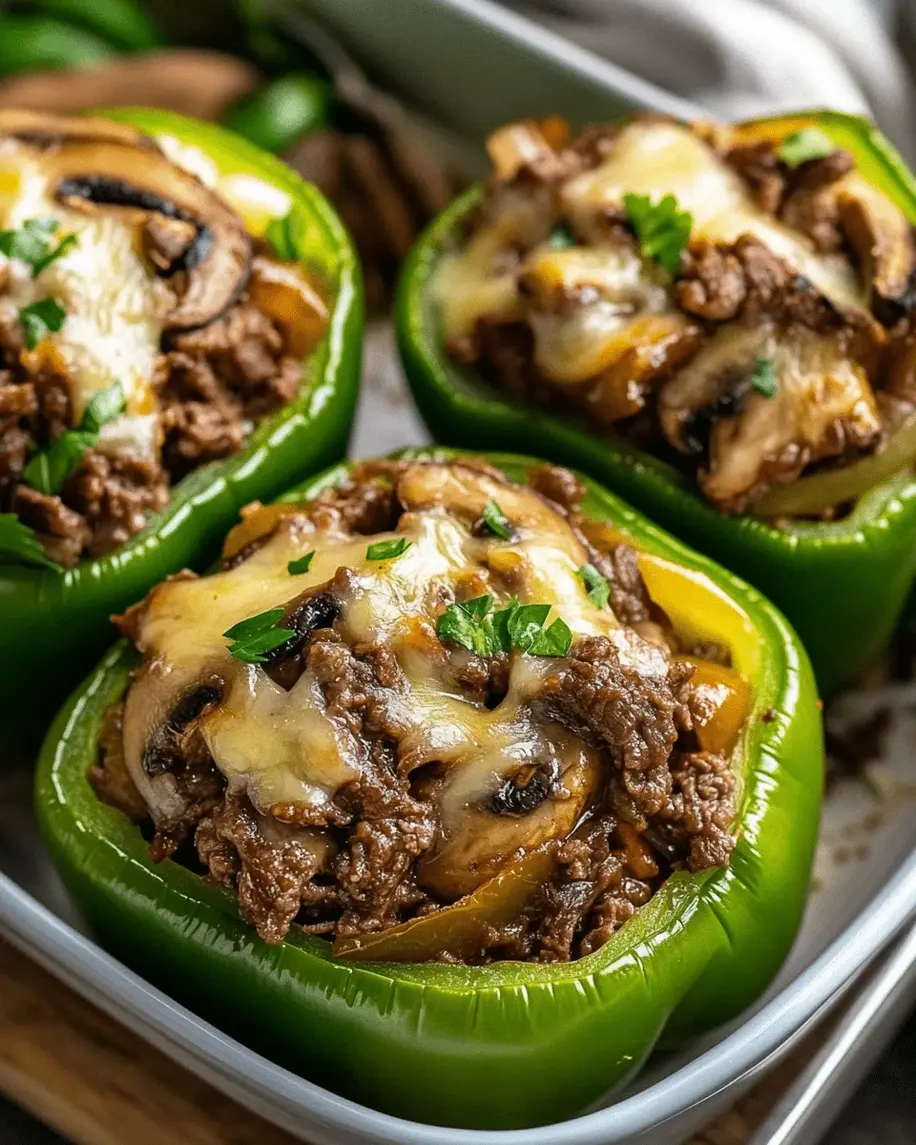
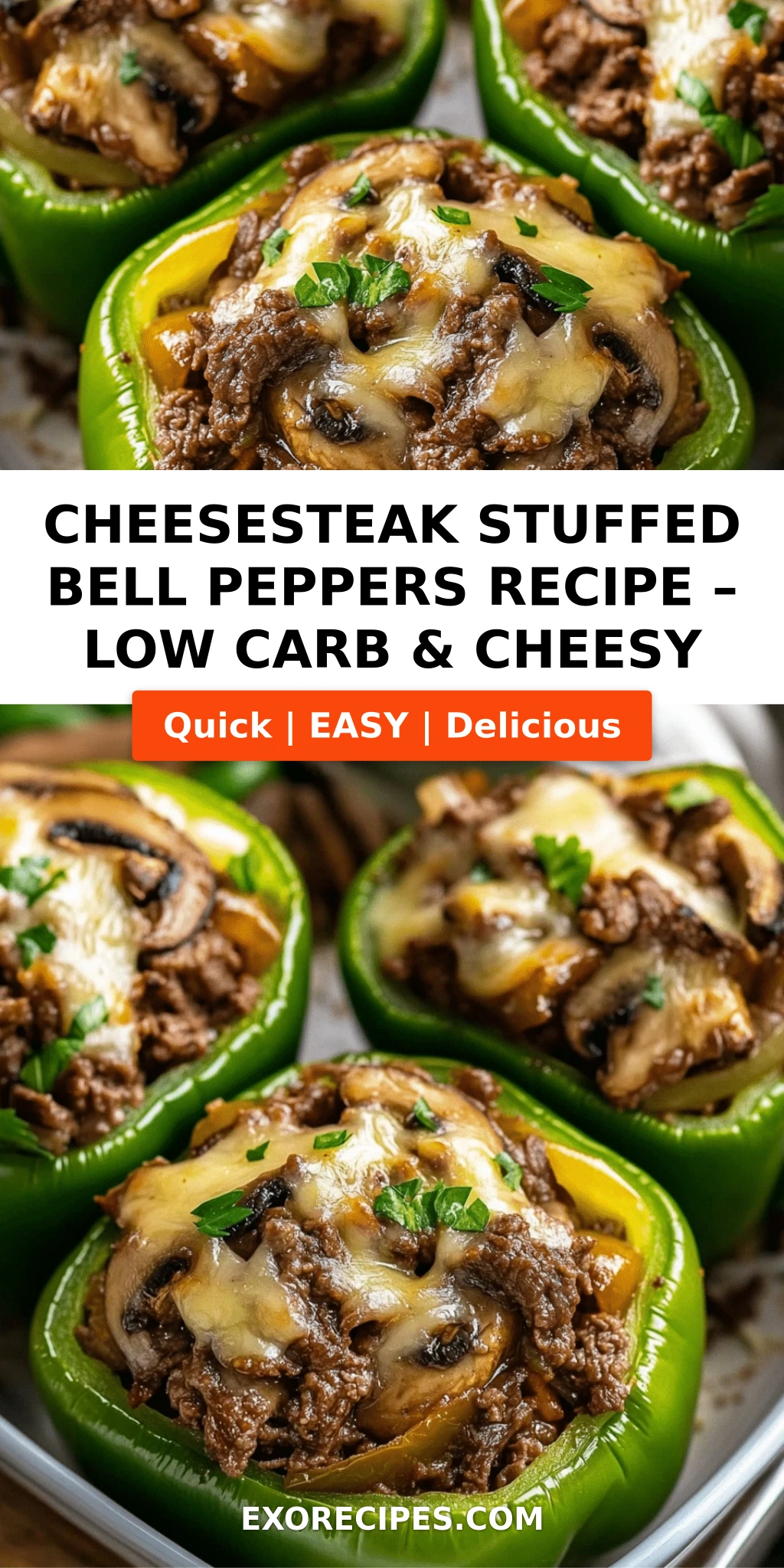
Cheesesteak Stuffed Bell Peppers – A Low-Carb Twist on a Philly Classic

⚖️
Difficulty
Easy
⏲️
Prep Time
15 mins
🕒
Cook Time
30 mins
⏱️
Total Time
45 mins
🍽️
Servings
4

Growing up in Morocco, my mother would stuff bell peppers with spiced ground lamb and couscous, a dish that still makes me homesick. After training at Le Cordon Bleu in Paris, I learned to layer flavors like a classic French chef, but when I moved to New York City, my cravings took an American turn. That’s how these cheesesteak stuffed bell peppers were born—a low-carb, keto-friendly version of Philadelphia’s iconic sandwich, with all the savory beef, melted provolone, and caramelized onions tucked into tender roasted peppers. No bread, no regrets, just pure comfort.

Slide your knife into one of these peppers and watch the provolone stretch like a warm blanket over the juicy beef mixture. The natural sweetness of the bell peppers balances the umami from the Worcestershire sauce and mushrooms, while the slight char on the pepper skin adds a smoky edge. My Paris-trained palate insists on a perfect emulsion of flavors—sweet, savory, salty, and a hint of tang from the cheese. The aroma alone will transport you straight to a Philly steak shop, minus the carb coma.

I’ve tested this recipe a dozen times to get the texture just right—no soggy peppers, no dry meat. The secret lies in a technique I learned at a bistro in the 10th arrondissement: sauté vegetables until they release their moisture and begin to caramelize before adding the beef. This creates a concentrated base that stays moist even after baking. I’ll also show you how to avoid the common mistake of waterlogged peppers (hint: a quick dry-broil is your friend). Plus, this is hands-down the best keto cheesesteak peppers you’ll find, because we use provolone—a cheese that melts beautifully without turning greasy.

Why This Cheesesteak Stuffed Bell Peppers Recipe Is the Best

The Flavor Secret
I bring my Moroccan spice intuition to the classic Philly cheesesteak. While a traditional sandwich relies on the beef and cheese alone, I add a splash of Worcestershire sauce and a pinch of black pepper that echoes the warmth of my mother’s spice cabinet. The mushrooms aren’t just filler—they add a meaty umami that makes the beef taste even beefier. And because I trained in Paris, I know that proper browning (the Maillard reaction) is non-negotiable. That deep caramelization on the onions and beef is where the magic lives.

Perfected Texture
Nobody wants a mushy stuffed pepper. After years of cooking in NYC’s fast-paced food scene, I perfected a two-step process: briefly par-roast the pepper shells for 5 minutes before stuffing them. This firms up the walls so they hold their shape and develop a tender-crisp bite. The filling is cooked separately to ensure every component is perfectly done before it even meets the oven. The result? A pepper that’s soft enough to cut with a fork but sturdy enough to hold its filling without collapsing.

Foolproof & Fast
Even if you’ve never made stuffed peppers before, this recipe is forgiving. The ingredients are straightforward and available at any American grocery store. The active prep is only 15 minutes, and the oven does the rest. I’ve made this on busy weeknights when I need dinner on the table in under an hour, and it’s always a hit. Plus, it’s naturally low-carb and keto-friendly—only 12g net carbs per serving—so you can enjoy comfort food without guilt.

Cheesesteak Stuffed Bell Peppers Ingredients

I love shopping for the peppers at the Union Square Greenmarket in New York, where the bell peppers are so vibrant they almost glow. When I see the deep reds, yellows, and oranges, I’m transported back to the souks of Marrakech, where vendors pile peppers in pyramids of color. For this recipe, choose peppers that are squat and wide—they stand up better in the baking dish and hold more filling. Let’s gather everything you need.

Ingredients List

  • 4 large bell peppers (any color), tops cut off and seeded
  • 1 tablespoon olive oil
  • 1 pound thinly sliced beef sirloin or ribeye steak
  • 1 medium onion, thinly sliced
  • 1 green bell pepper, thinly sliced (optional, for extra veg)
  • 8 ounces cremini mushrooms, sliced
  • 2 cloves garlic, minced
  • 1 teaspoon salt
  • ½ teaspoon black pepper
  • 1 teaspoon Worcestershire sauce
  • 8 ounces provolone cheese, sliced
  • Fresh parsley for garnish (optional)

Ingredient Spotlight

Beef: Thinly sliced ribeye or sirloin works best. Ribeye has marbling that keeps it tender; sirloin is leaner but still great when sliced thin. If you can’t find pre-sliced beef at the deli counter, pop the steak in the freezer for 20 minutes—it’s much easier to slice thinly when partially frozen.

Bell Peppers: Go for large, thick-walled peppers—red, yellow, or orange are sweeter than green. I often use red peppers because they remind me of the roasted peppers my French chef instructor would serve with a simple vinaigrette. Make sure they can stand upright without tipping over.

Provolone Cheese: This is the star of the show. Provolone melts into a creamy, slightly sharp blanket that perfectly complements the beef. I’ve tested with mozzarella (too bland) and cheddar (overpowers the beef)—provolone is the winner. If you can find aged provolone, even better.

Mushrooms: Cremini (baby bella) mushrooms add a deep, earthy flavor that mimics the richness of extra beef. I chop them finely so they blend into the filling without being too chunky. White button mushrooms also work, but cremini have more depth.

Original IngredientBest SubstitutionFlavor / Texture Impact
Ribeye or sirloin steakGround beef (80/20)Ground beef is easier but less tender; drain excess fat.
Provolone cheeseLow-moisture mozzarellaMilder flavor; still melts well; less tang.
Cremini mushroomsPortobello mushrooms (diced)Deeper, earthier flavor; slightly firmer texture.
Worcestershire sauceTamari or coconut aminos (GF)Similar umami; tamari is saltier—adjust accordingly.

How to Make Cheesesteak Stuffed Bell Peppers — Step-by-Step

I promise this comes together faster than you can say “Philly.” Just follow these nine simple steps, and you’ll have dinner on the table in under an hour. Let’s get started!

Step 1: Prepare the Bell Peppers

Preheat your oven to 375°F (190°C). Slice the tops off the peppers and remove the seeds and white membranes. To help them stand upright, you can trim a tiny bit off the bottom if they wobble (but don’t cut a hole!). Place them in a baking dish just large enough to hold them snugly. To prevent sogginess, I like to pop the empty peppers into the oven for 5 minutes while I prepare the filling. This initial blast firms up the walls.

⚠️ Common Mistake to Avoid: Skipping the pre-bake step. Without it, the peppers release too much water as they bake, leaving you with a watery filling. Trust me, those 5 minutes make all the difference.

Step 2: Sauté the Vegetables

Heat 1 tablespoon olive oil in a large skillet over medium-high heat. Add the sliced onion, bell pepper strips (if using extra), and mushrooms. Cook for 5–7 minutes, stirring occasionally, until the vegetables are softened and the mushrooms have released their moisture and started to brown. This is where the flavor base develops.

💡 mia’s Pro Tip: Don’t crowd the pan! If your skillet is small, cook the mushrooms and onions in batches. Overcrowding steams them instead of browning, and you lose that deep, caramelized flavor I learned to love at Parisian brasseries.

Step 3: Add Garlic and Seasonings

Add the minced garlic, salt, black pepper, and Worcestershire sauce to the skillet. Stir continuously for about 1 minute until the garlic is fragrant.

Step 4: Cook the Beef

Push the vegetables to one side of the skillet, then add the sliced beef in a single layer. Let it cook undisturbed for 2 minutes to develop a nice sear, then stir and cook for another 1–2 minutes until just browned. Mix the beef with the vegetables. If your beef releases a lot of liquid, let it evaporate by cooking another minute.

⚠️ Common Mistake to Avoid: Overcooking the beef. Thin slices only need about 3–4 minutes total. Overcooked beef becomes tough, and you want those slices to be tender and juicy.

Step 5: Stuff the Peppers

Remove the pre-baked peppers from the oven. Divide the beef and vegetable mixture evenly among the four peppers, packing it down gently. Fill them to the top—it’s okay to mound it a little, as it will settle during baking.

Step 6: Top with Cheese

Layer the provolone slices over the top of each stuffed pepper. Use enough to cover the filling completely—about 2 ounces per pepper. Let the cheese overlap the edges slightly, as it will melt and drip down the sides, creating a lovely crust.

Step 7: Bake

Bake the peppers for 20 minutes, or until the cheese is melted and bubbly and the peppers are tender when pierced with a fork. If you want the cheese extra golden, switch to broil for the last 1–2 minutes—watch closely so it doesn’t burn.

💡 mia’s Pro Tip: For a perfectly gooey top, let the peppers rest for 5 minutes after baking. The cheese will set slightly without losing its stretch, making it easier to serve.

Step 8: Garnish and Serve

Sprinkle fresh parsley over the top for a pop of color and freshness. Serve the peppers hot, directly from the baking dish. I often place them on a bed of arugula with a drizzle of balsamic glaze—the peppery greens cut through the richness.

StepActionDurationKey Visual Cue
1Pre-bake empty peppers5 minutesPeppers slightly soften, no longer raw inside.
2Sauté vegetables5–7 minutesOnions translucent, mushrooms browned.
3Add garlic + seasoning1 minuteGarlic fragrant, spices evenly distributed.
4Cook beef3–4 minutesBeef browned, no pink remains.
5Stuff peppers2 minutesPeppers filled to the top, mixture compact.
6Top with cheese1 minuteCheese covers filling completely.
7Bake20 minutesCheese bubbly, peppers tender when pierced.
8Garnish & serve2 minutesParsley brightens the dish.

Serving & Presentation

I love serving these peppers straight from the oven in the same baking dish—it’s rustic and homey, the kind of dinner that makes my NYC studio feel like a cozy bistro. For a casual weeknight, I’ll place each pepper on a dinner plate with a side of oven-roasted broccoli or a simple cucumber salad. The cool, crisp greens balance the warm, rich filling beautifully.

If I’m hosting friends, I’ll transfer the peppers to a platter lined with fresh arugula, top them with additional fresh parsley and a sprinkle of red pepper flakes for heat. A dollop of crema or even a drizzle of ranch dressing brings a cool creaminess that echoes the steakhouse vibe. My Parisian chef instructor would have approved of the clean presentation—each pepper standing tall like a little crown.

For a Moroccan twist (because I can’t help myself), I sometimes serve these with a side of harissa-zinged yogurt sauce. The spicy, tangy sauce cuts through the richness of the cheese and beef—a fusion that always surprises my guests.

Pairing TypeSuggestionsWhy It Works
Side DishRoasted broccoli, cauliflower mash, or a crisp green bean saladAdds freshness and contrasting texture; keeps meal low-carb.
Sauce / DipYogurt harissa sauce, ranch dressing, or balsamic glazeAdds moisture and tang; harissa brings heat, ranch brings coolness.
BeverageLight red like Pinot Noir, an IPA beer, or sparkling water with lemonPinot Noir complements beef; IPA cuts through cheese; lemon water cleanses palate.
GarnishFresh parsley, red pepper flakes, toasted pine nutsParsley adds freshness; flakes add heat; pine nuts add crunch (Moroccan touch!).

Make-Ahead, Storage & Reheating

As a busy mom and food blogger in New York, I rely on make-ahead meals to keep my week sane. These cheesesteak stuffed peppers are perfect for meal prep—you can assemble them a day in advance, or cook them fully and reheat later. Here’s my tested system for keeping every bite as delicious as the first.

MethodContainerDurationReheating Tip
RefrigeratorAirtight container, peppers uprightUp to 3 daysReheat in a 350°F oven for 10–12 minutes, covered with foil to prevent drying.
FreezerFreezer-safe bag or container, individually wrappedUp to 2 monthsThaw overnight in fridge; reheat at 350°F for 15 minutes uncovered, then broil 1–2 minutes for cheese.
Make-AheadAssemble in baking dish, cover tightlyRefrigerate up to 24 hours before bakingAdd 5 minutes to baking time if starting from fridge; no need to pre-bake peppers again.

If you’re reheating a single serving, the microwave works in a pinch—just place the pepper on a microwave-safe plate, cover with a damp paper towel, and heat in 30-second bursts for about 2 minutes. The cheese won’t be as bubbly as fresh from the oven, but it still tastes amazing. I often make a double batch and freeze half for those days when I’m rushing from the gym to a deadline.

One more tip from my NYC kitchen: If you freeze the peppers, reheat them in a toaster oven if you have one. It restores the pepper’s texture much better than a microwave, and the cheese gets that desirable golden crust again.

Variations & Easy Swaps

One of the best things about this recipe is how adaptable it is. Whether you need to feed a vegetarian, use up garden veggies, or just want to change things up, here are my favorite variations. I’ve tested every single one in my own kitchen.

VariationKey ChangeBest ForDifficulty Impact
Chicken Cheesesteak PeppersSub beef with thinly sliced chicken breastLighter option, leaner proteinEasy – same cooking time, avoid overcooking chicken.
Vegetarian Mushroom & Pepper JackDouble mushrooms, add black beans, use Pepper Jack cheeseVegetarian, still hearty, spicy kickEasy – skip beef step, sauté mushrooms and beans together.
Spicy Harissa CheesesteakAdd 1 tablespoon harissa paste to beef mixtureMoroccan-inspired, extra heatEasy – stir in harissa after cooking beef.

Chicken Cheesesteak Peppers

For a lighter version, swap the beef with thinly sliced chicken breast. I learned this variation from a deli in Brooklyn that serves chicken cheesesteaks. The key is to not overcook the chicken—add it to the skillet after the vegetables and cook just until no longer pink (about 3 minutes). The rest of the recipe stays the same, and you’ll save about 50 calories per serving. Great for a post-workout dinner.

Vegetarian Mushroom & Pepper Jack

This version is a hit with my vegetarian friends. I double the mushrooms (use 16 ounces) and add a can of drained black beans for protein. The Pepper Jack cheese brings a mild heat that complements the mushrooms perfectly. The cooking time is identical; just sauté the mushrooms and beans together with the aromatics. If you want even more “meaty” texture, crumble in some tempeh or use diced portobello caps.

Spicy Harissa Cheesesteak

I couldn’t resist bringing my North African roots into this recipe. Stirring a tablespoon of harissa paste (store-bought or homemade) into the beef mixture after cooking adds a smoky, spicy depth that wakes up the whole dish. My mother always kept harissa in the fridge, and I do the same in my NYC apartment. If you’re not used to spicy food, start with half a tablespoon. Serve with a dollop of Greek yogurt to mellow the heat.

How do you keep the bell peppers from getting too soggy when making cheesesteak stuffed peppers?

The secret to avoiding soggy peppers is a two-part approach that I’ve perfected in my NYC kitchen. First, I pre-bake the empty pepper shells for 5 minutes at 375°F before stuffing them. This initial blast helps firm up the cell walls and evaporates some of the surface moisture, so the peppers are more resistant to releasing liquid during the final bake. Second, I cook the filling thoroughly on the stovetop to evaporate any excess moisture from the mushrooms and onions. If you skip either step, the trapped water will leak out and make the peppers mushy. Also, choose thick-walled peppers—they’re naturally firmer and hold up better.

What type of cheese melts best for cheesesteak stuffed bell peppers?

Provolone cheese is hands-down the best choice for these stuffed peppers. It melts into a creamy, slightly elastic layer that doesn’t turn greasy or separate, which is exactly what you want to mimic the classic Philly cheesesteak experience. I tested mozzarella (too bland and watery), cheddar (too sharp and oily), and Swiss (too nutty and not stretchy enough). Aged provolone has a sharper flavor than young provolone, but both work beautifully. If you absolutely need a dairy-free option, use a high-quality plant-based provolone-style shred—just be aware that the texture will be a bit different.

Can you use ground beef instead of thinly sliced steak for this recipe?

Yes, ground beef is a perfectly good substitute, and many readers have told me they prefer it because it’s easier to handle. Use 80/20 ground beef for the best flavor and moisture. Cook it the same way as the sliced steak: after sautéing the vegetables, push them aside, add the ground beef, and break it up with a spatula. Cook until no longer pink, about 5 minutes, then mix with the vegetables. Drain any excess fat if your beef was particularly greasy. The texture will be more homogenous than the sliced version, but the taste is still fantastic. For lower fat, you can use ground sirloin (90/10) but add a tablespoon of olive oil to keep it moist.

How long should you bake cheesesteak stuffed bell peppers for the best texture?

For the ideal balance where the peppers are tender but still hold their shape and the filling is hot and bubbly, bake them at 375°F for exactly 20 minutes. If you’ve pre-baked the peppers for 5 minutes beforehand (which I recommend), the total time the peppers spend in the oven is 25 minutes. This timing ensures the peppers are cooked through without becoming mushy. If you skipped the pre-bake step, add 5–7 minutes to the final bake time, but check the peppers after 20 minutes—they may be done sooner. The cheese should be completely melted and lightly browned on the edges. For an extra-golden top, switch to broil for the last minute of baking.

Can I make cheesesteak stuffed peppers ahead of time?

Absolutely! In fact, I often prepare them a day ahead for busy weeknights. You have two options: Assemble the peppers completely (including the cheese) in the baking dish, cover tightly with foil, and refrigerate for up to 24 hours. When ready to bake, add 5 minutes to the baking time. Or you can cook them fully, let them cool, and refrigerate in an airtight container for up to 3 days. Reheat in a 350°F oven for 10–12 minutes covered with foil to keep them moist. I don’t recommend freezing assembled peppers because the cheese can become grainy, but fully baked peppers freeze well for up to 2 months.

Is this recipe keto-friendly and low-carb?

Yes, this cheesesteak stuffed bell peppers recipe is naturally low-carb and keto-friendly. Each serving contains approximately 12g of total carbohydrates, which fits well into a standard keto diet (usually under 20-50g net carbs per day). The main carb source is the bell peppers themselves, which are relatively low in sugar compared to other vegetables. There are no added sugars, breadcrumbs, or starchy fillers. The high fat content from the beef (especially if you use ribeye) and the provolone cheese also make it perfectly suited for ketogenic macros. For extra fat, you can add a drizzle of olive oil over the peppers before serving.

Can I use different colors of bell peppers?

Definitely! In fact, using a mix of colors makes the dish more vibrant on the plate. Red, yellow, and orange bell peppers are sweeter and more tender than green ones because they’re fully ripe. Green peppers are less sweet and have a slight bitterness, which some people love for a more “peppery” flavor. I personally prefer red peppers for this recipe because their sweetness balances the savory beef and cheese beautifully. If you use only green peppers, you might want to add a pinch of sugar to the beef mixture to compensate. All colors work equally well in terms of cooking time.

What can I serve with cheesesteak stuffed peppers for a complete meal?

These stuffed peppers are quite substantial on their own, but if you want to round out the meal, I recommend simple sides that don’t compete with the flavors. A crisp green salad with a lemony vinaigrette provides acidity that cuts through the richness. Roasted asparagus or broccoli cooked on the same sheet pan works beautifully for low-carb options. If you’re not watching carbs, a side of roasted potatoes or crusty bread is wonderful for soaking up any juices. For a more substantial meal, serve with cauliflower rice or a side of sautéed spinach. And don’t forget a dip—my yogurt harissa sauce is a game-changer!

Share Your Version!

I absolutely love hearing from you—whether you tried the classic version or one of my variations. Did you use ground beef instead of sliced steak? Did you add a spicy kick with harissa? Let me know in the comments below! Your feedback helps other home cooks find the perfect version for their family. Don’t forget to leave a star rating if you enjoyed the recipe—it truly means the world to me.

Snap a photo of your cheesesteak stuffed peppers and tag me on Instagram (@exorecipes) or save the recipe to your Pinterest board. I love seeing your creations in my feed. And if you have any questions about substitutions or techniques, just ask—I read every comment and I’ll be happy to help you make this recipe your own.

From my NYC kitchen to yours — I hope this recipe brings as much warmth to your table as it does to mine. — mia 🧡

📌

Love This Recipe? Save It to Pinterest!

If you enjoyed this Cheesesteak Stuffed Bell Peppers recipe, don’t let it get lost in your browser tabs! 😄 Pin it now so you can find it again anytime — and explore hundreds more tried-and-tested recipes waiting for you on my Pinterest boards.

👉 Follow mia on Pinterest @exorecipe

📌 Pin this recipe · 🔁 Re-pin your favorites · 💬 Tag me when you make it — I love seeing your creations!

Print

clock clock iconcutlery cutlery iconflag flag iconfolder folder iconinstagram instagram iconpinterest pinterest iconfacebook facebook iconprint print iconsquares squares iconheart heart iconheart solid heart solid icon

Cheesesteak Stuffed Bell Peppers

  • Author: Chef Mia
  • Prep Time: 15 minutes
  • Cook Time: 30 minutes
  • Total Time: 45 minutes
  • Yield: 4 servings 1x
  • Method: Main Course
  • Cuisine: American

Description

A low-carb twist on the classic Philly cheesesteak, with all the savory flavors stuffed into tender bell peppers.


Ingredients

Scale
  • 4 large bell peppers (any color), tops cut off and seeded
  • 1 tablespoon olive oil
  • 1 pound thinly sliced beef sirloin or ribeye steak
  • 1 medium onion, thinly sliced
  • 1 green bell pepper, thinly sliced (optional, for extra veg)
  • 8 ounces cremini mushrooms, sliced
  • 2 cloves garlic, minced
  • 1 teaspoon salt
  • 1/2 teaspoon black pepper
  • 1 teaspoon Worcestershire sauce
  • 8 ounces provolone cheese, sliced
  • Fresh parsley for garnish (optional)

Instructions

  1. Preheat oven to 375°F (190°C).
  2. Prepare bell peppers: Slice off the tops, remove seeds and membranes. Place peppers upright in a baking dish just large enough to hold them.
  3. Heat olive oil in a large skillet over medium-high heat. Add sliced onion, bell pepper strips (if using), and mushrooms. Cook until softened, about 5–7 minutes.
  4. Add garlic, salt, pepper, and Worcestershire sauce. Stir for 1 minute.
  5. Push vegetables to the side of the skillet and add the sliced beef. Cook until browned, about 3–4 minutes, then mix everything together.
  6. Stuff each bell pepper with the beef and vegetable mixture, packing it tightly.
  7. Top each stuffed pepper with provolone cheese slices.
  8. Bake for 20 minutes, until cheese is melted and bubbly and peppers are tender.
  9. Garnish with fresh parsley if desired, and serve hot.

Notes

For a gluten-free version, ensure Worcestershire sauce is gluten-free. Leftovers can be refrigerated for up to 3 days.


Nutrition

  • Calories: 420 kcal
  • Sugar: 7 g
  • Fat: 26 g
  • Carbohydrates: 12 g
  • Protein: 34 g


Cheesesteak Stuffed Bell Peppers

Cheesecake Factory Chicken Madeira Recipe – Copycat NYC Style: How to Make This Restaurant Favorite at Home

⚖️
Difficulty
Medium
⏲️
Prep Time
15 mins
🕒
Cook Time
35 mins
⏱️
Total Time
50 mins
🍽️
Servings
4

I still remember the first time I tasted Chicken Madeira at The Cheesecake Factory in New York City. It was a rainy afternoon, and I was homesick for the rich, braised dishes my mother used to make in Morocco. That first bite — tender chicken, earthy mushrooms, and a velvety wine sauce — transported me. I knew then that I had to recreate this Cheesecake Factory Chicken Madeira Recipe at home, and after years of tweaking and testing, this copycat Cheesecake Factory Chicken Madeira is the one I turn to again and again. What makes it special? It’s not just a sauce — it’s a technique I learned in Paris: building layers of flavor through proper searing and reduction.

Imagine a golden-brown chicken breast, sprinkled with melted mozzarella, sitting atop a bed of crisp-tender asparagus, all swimming in a luscious Madeira mushroom cream sauce. The aroma — a heady mix of sautéed mushrooms, wine, and cream — fills your kitchen like a warm hug. Each bite offers a contrast: the juicy chicken, the slight snap of asparagus, the silky sauce with tiny bits of mushroom. It’s a restaurant-style Chicken Madeira recipe that doesn’t require a chef’s coat. I’ve simplified the steps without cutting corners, so you get that same luxurious result on a Tuesday night.

When I moved to New York from Paris, I brought my French sauce training and added a Moroccan touch — a pinch of cumin in the mushroom sauté (yes, it works!). This easy Chicken Madeira recipe is my gift to anyone who loves creamy, comforting dinners. I’ll share my pro tip for keeping the chicken ultra-juicy, plus a common mistake that can ruin the sauce. Let’s make this homemade Chicken Madeira together — you’ll never order it out again.

Why This Cheesecake Factory Chicken Madeira Recipe Is the Best

The flavor secret lies in the Madeira wine. In Paris, my chef taught me never to use “cooking wine” — it’s loaded with salt and preservatives. I use a real Sercial or Rainwater Madeira, which adds a nutty, slightly sweet depth that dry sherry can only hint at. Plus, I deglaze the pan with wine after searing the chicken, scraping up those browned bits (the fond) that hold incredible flavor. That one step elevates this from a simple cream sauce to a complex, restaurant-worthy creation.

Texture is everything. Many copycats end up with dry chicken and a watery sauce. I sear the chicken until golden on both sides, then finish it in the oven with the sauce and cheese — this keeps the meat moist and the sauce thick. The asparagus stays bright green because I blanch it quickly in the pan before baking. Every mouthful has a satisfying crunch, creaminess, and tenderness. It’s the kind of copycat Cheesecake Factory Chicken Madeira that makes you close your eyes and sigh.

This recipe is foolproof even for beginner cooks. The ingredients are easy to find at any US grocery store (I buy my asparagus at the Union Square Greenmarket). The steps follow a logical flow — sear, sauté, deglaze, simmer, bake. And I’ve included visual cues and timings so you know exactly when each stage is done. Whether you’re cooking for a date night or a family dinner, you’ll achieve a plate that looks and tastes like it came from the Cheesecake Factory’s kitchen.

Cheesecake Factory Chicken Madeira Recipe Ingredients

When I shop for these ingredients, I head to the produce aisle first for fresh asparagus and mushrooms — I love the creminis from the farmer’s market near my apartment in Brooklyn. Madeira wine sits on the fortified wine shelf; I grab a bottle that costs under $20 and use the rest in a dessert or on the rocks. Good quality butter and heavy cream make all the difference. Here’s exactly what you’ll need.

Ingredients List

  • 4 boneless skinless chicken breasts (about 6 oz each)
  • 1 teaspoon salt
  • 1/2 teaspoon black pepper
  • 2 tablespoons olive oil
  • 1 tablespoon butter
  • 1 pound fresh asparagus spears, trimmed
  • 2 cups sliced mushrooms (cremini or white button)
  • 2 cloves garlic, minced
  • 1 cup Madeira wine (or dry sherry)
  • 1 cup chicken broth
  • 1 cup heavy cream
  • 1 tablespoon cornstarch mixed with 2 tablespoons water (slurry)
  • 1 cup shredded mozzarella cheese
  • Fresh parsley for garnish (optional)

Ingredient Spotlight

Madeira wine is the soul of this dish. Look for a Sercial or Rainwater Madeira — it’s not too sweet and has a lovely nuttiness. If you can’t find it, dry sherry works well, but reduce the cooking time slightly because sherry evaporates faster. A tip from my Paris days: never use “cooking wine” from the supermarket; it’s salty and will ruin your sauce.

Chicken breasts should be even in thickness. If they’re very thick on one end, butterfly them or pound them lightly between plastic wrap. Even cooking prevents dry spots. I always buy organic, air-chilled chicken for the best texture.

Mozzarella melts beautifully, but for a more complex flavor, try a blend of mozzarella and fontina. The fontina adds a nutty note that complements the Madeira sauce. Shred your own cheese — pre-shredded contains anti-caking agents that can make the sauce grainy.

Original IngredientBest SubstitutionFlavor / Texture Impact
Madeira wineDry sherrySlightly less nutty, more sharp; reduce sauce a minute sooner
Heavy creamHalf-and-half + 1 tbsp butterLighter sauce, less rich; add cornstarch slurry if needed
MozzarellaFontina or provoloneMore savory, nuttier; melts just as well
AsparagusBroccolini or green beansSimilar crunch; adjust blanching time

How to Make Cheesecake Factory Chicken Madeira — Step-by-Step

Don’t be intimidated by the steps — I’ve broken it down so each part feels like a small victory. You’ll be surprised how quickly the sauce comes together.

Step 1: Prep the Chicken

Preheat oven to 375°F. Season chicken breasts with salt and pepper on both sides. If they’re uneven, pound them to about 1/2-inch thickness for even cooking.

💡 mia’s Pro Tip: Pat the chicken dry with paper towels before seasoning. Moisture on the surface prevents a good golden sear. I learned this in Paris — a dry surface equals a beautiful crust.

Step 2: Sear the Chicken

Heat olive oil in a large oven-safe skillet over medium-high heat. Add chicken and cook for 4–5 minutes per side until deep golden brown. Remove chicken to a plate. Don’t crowd the pan — work in batches if needed.

⚠️ Common Mistake to Avoid: Don’t move the chicken while it’s searing! Let it sit until it releases naturally. If you force it, the crust tears.

Step 3: Blanch the Asparagus

In the same skillet, add butter and asparagus spears. Sauté for 2–3 minutes until bright green and crisp-tender. Remove asparagus and set aside. The butter adds a nutty flavor that pairs with the wine.

💡 mia’s Pro Tip: For perfectly crisp asparagus, blanch in boiling salted water for 1 minute, then shock in ice water, before adding to the skillet. This step is from my restaurant days — it keeps the color vibrant.

Step 4: Sauté Mushrooms and Garlic

Add mushrooms to the skillet and cook without stirring for 2 minutes, then stir and cook until browned, about 3 more minutes. Add garlic and cook for 30 seconds until fragrant.

⚠️ Common Mistake to Avoid: Don’t crowd the mushrooms. If they steam instead of brown, they won’t develop that rich, meaty flavor.

Step 5: Deglaze and Reduce

Pour in Madeira wine and chicken broth. Bring to a simmer, scraping up any browned bits from the bottom. Let the liquid reduce by half, about 5 minutes. This concentrates the flavor.

💡 mia’s Pro Tip: Use a wooden spoon to scrape the fond — those brown bits are pure flavor gold. You’re building the base of the sauce right here.

Step 6: Finish the Sauce

Stir in heavy cream and bring to a gentle simmer. Add the cornstarch slurry and stir until thickened, about 2 minutes. The sauce should coat the back of a spoon.

⚠️ Common Mistake to Avoid: Don’t boil the cream vigorously or it may separate. Keep the heat low and stir gently.

Step 7: Assemble and Bake

Return chicken to the skillet, spooning sauce over each piece. Top each chicken breast with a portion of asparagus, then a generous handful of shredded mozzarella. Transfer skillet to the preheated oven and bake for 15–20 minutes, until chicken is cooked through (internal temp 165°F) and cheese is melted and bubbly.

💡 mia’s Pro Tip: For extra browning on the cheese, switch the oven to broil for the last 2 minutes. Watch closely so it doesn’t burn.

Step 8: Garnish and Serve

Garnish with fresh parsley if desired, and serve hot with the sauce from the skillet. The sauce will keep warm in the pan — just stir before serving.

StepActionDurationKey Visual Cue
1Sear chicken4–5 min per sideGolden brown crust, no sticking
2Blanch asparagus2–3 minBright green, fork-tender
3Sauté mushrooms5 minDeep golden edges
4Deglaze & reduce5 minLiquid reduced by half, bubbles slow
5Thicken sauce2 minSauce coats spoon, not runny
6Bake with cheese15–20 minCheese melted, bubbly, 165°F internal

Serving & Presentation

I love serving this plate straight from the skillet — it feels rustic and impressive. Use a large spatula to lift each chicken breast with its bed of asparagus and melted cheese, then spoon extra sauce around it. A sprinkle of fresh parsley adds a pop of green. For a touch of North African flair, I sometimes add a pinch of smoked paprika on top.

Pair this with something simple to soak up that luscious sauce. My go-to is creamy mashed potatoes (I make them with a touch of harissa butter from my Moroccan kitchen at home) or crusty sourdough bread to mop every drop. A side of roasted baby carrots or a simple green salad with lemon vinaigrette balances the richness beautifully. This is comfort food elevated — perfect for a date night or a Sunday dinner that feels special.

For beverages, I like a medium-bodied red like a Merlot or a Pinot Noir, or even a crisp Chardonnay. The wine you used in the sauce would also be lovely to sip alongside. Non-drinkers can enjoy sparkling water with a squeeze of lemon — the acidity cuts the creaminess.

Pairing TypeSuggestionsWhy It Works
Side DishMashed potatoes, roasted carrots, garlic breadAbsorb sauce, add texture, and balance richness
Sauce / DipExtra Madeira cream sauce, lemon aioliEnhances the main dish; aioli adds brightness
BeverageMerlot, Pinot Noir, Chardonnay, sparkling waterWine complements the Madeira; water cleanses palate
GarnishFresh parsley, smoked paprika, lemon zestAdds color, aroma, and a hint of freshness

Make-Ahead, Storage & Reheating

Living in NYC means I’m always meal-prepping. This Chicken Madeira actually gets better after a day in the fridge — the flavors meld beautifully. Here’s how I store and reheat it for the best results. I always make extra sauce because it’s great over pasta the next day.

MethodContainerDurationReheating Tip
RefrigeratorAirtight containerUp to 3 daysReheat in a skillet over medium-low, adding a splash of broth to loosen sauce
FreezerFreezer-safe containerUp to 2 monthsThaw overnight in fridge; reheat gently on stovetop
Make-AheadPrepare sauce and sear chicken, store separatelyUp to 2 days beforeAssemble and bake when ready — add 5 extra minutes to oven time if chilled

A quick note from my own experience: when reheating, avoid the microwave — it can make the chicken rubbery and the sauce separate. Instead, warm it in a covered skillet over low heat, turning the chicken once. If the sauce thickens too much, stir in a little chicken broth or cream. Leftover asparagus may soften, but the flavor is still wonderful.

Variations & Easy Swaps

I love playing with this recipe depending on the season or what’s in my fridge. These variations have all been tested — sometimes at the request of friends who need gluten-free or dairy-free options. Each one delivers that same comforting elegance.

VariationKey ChangeBest ForDifficulty Impact
Moroccan Spice TwistAdd cumin, coriander, and a pinch of cinnamon to mushroomsWarming, exotic flavorEasy (just extra spices)
Gluten-Free / Dairy-FreeUse tamari instead of cornstarch, coconut cream for heavy cream, dairy-free mozzarellaDietary restrictionsMedium (watch for separation)
Spring Vegetable SwapReplace asparagus with sugar snap peas or artichoke heartsSeasonal variationEasy (cook time adjusts slightly)

Moroccan Spice Twist

Growing up in Morocco, my mother always added warm spices to her braised meats. I took that memory and added 1/2 teaspoon of cumin, 1/4 teaspoon of ground coriander, and a pinch of cinnamon to the mushrooms as they cooked. The spices bloom in the butter and create a fragrant, slightly sweet undertone that pairs beautifully with the Madeira. It’s a subtle twist — not overpowering — but it gives the dish a unique signature that reminds me of home.

Gluten-Free / Dairy-Free Version

For my friends with dietary needs, I’ve tested a version that swaps heavy cream for full-fat coconut cream (the thick part from a can of coconut milk). The sauce becomes slightly coconut-sweet, so I add a squeeze of lemon to brighten it. Use tamari instead of cornstarch for thickening (or arrowroot powder), and a good dairy-free mozzarella that melts well. The texture is a little less rich but still creamy. Be careful not to boil the coconut cream or it may separate.

Spring Vegetable Swap

When asparagus isn’t in season at my Union Square market, I reach for sugar snap peas or baby artichokes. Snap peas need only 1 minute in the skillet; artichokes (frozen or canned, drained) can go straight into the sauce before baking. Both add a fresh, crisp element that mimics the original. The key is to not overcook them — you want a bit of bite left.

What is the best substitute for Madeira wine in Chicken Madeira?

The best substitute for Madeira wine is dry sherry (like amontillado or fino). It has a similar nutty, slightly sweet profile. If you don’t have sherry, use a combination of white wine and a splash of brandy or cognac. For a non-alcoholic option, use white grape juice with a teaspoon of balsamic vinegar — it won’t replicate the depth exactly, but it will give some sweetness and acidity. Avoid “cooking wine” at all costs; it’s too salty and will ruin the sauce.

How do you get the chicken tender and juicy like Cheesecake Factory’s version?

The secret is a two-step cooking method: sear first, then finish in the oven. Searing at high heat locks in juices, and baking at 375°F gently cooks the chicken through without drying it. Also, don’t overcook it — use a meat thermometer and pull it at 165°F. Let the chicken rest for a few minutes after baking before cutting. Another trick: pound the chicken to an even thickness so every bite cooks at the same rate. That’s how I get that tender, restaurant-quality texture every time.

What side dishes pair well with Cheesecake Factory Chicken Madeira?

Classic pairings include creamy mashed potatoes, roasted baby carrots, or a crisp green salad with lemon vinaigrette. The potatoes soak up the luscious Madeira sauce, while the salad cuts through the richness. For a more indulgent side, try garlic bread or cheesy polenta. If you want to keep it light, steamed broccoli or sautéed spinach works beautifully. I personally love serving it with couscous — a nod to my Moroccan roots — tossed with fresh herbs and lemon.

Can I make the mushroom sauce for Chicken Madeira ahead of time?

Absolutely! The mushroom sauce can be made up to 2 days in advance. After you finish the sauce (step 6), let it cool, then store it in an airtight container in the refrigerator. When you’re ready to serve, reheat the sauce gently on the stovetop, adding a splash of broth if it’s too thick. You can then assemble the dish with seared chicken, asparagus, and cheese, and bake as usual. The sauce’s flavor actually deepens overnight, so making it ahead is a great time-saver.

Can I use chicken thighs instead of breasts for this recipe?

Yes, boneless skinless chicken thighs work very well. They are more forgiving and stay juicy even if overcooked a bit. Use 6 thighs (about 4–5 oz each) and adjust the searing time to 3–4 minutes per side. Bake time may increase by 5 minutes because thighs are thicker. The rest of the recipe remains the same. Thighs add a richer flavor that complements the creamy sauce beautifully.

What if I don’t have an oven-safe skillet?

No worries! After searing the chicken and preparing the sauce, simply transfer everything to a baking dish (9×13-inch works well). Arrange the chicken, pour the sauce over, top with asparagus and cheese, and bake as directed. The only difference is you’ll have one more dish to wash. If you use a baking dish, cover it with foil for the first 10 minutes of baking to keep the chicken moist, then uncover to brown the cheese.

Is the Cheesecake Factory Chicken Madeira very difficult to make at home?

Not at all! I’d rate this recipe as medium difficulty, but it’s very approachable if you follow the steps. The most “advanced” part is deglazing and reducing the wine, but even that is simple — just let it simmer until it thickens. If you can pan-sear chicken and follow a timeline, you can make this. The recipe includes visual cues and timings for each step. I’ve had friends who rarely cook succeed on their first try. Honest!

Can I use frozen asparagus for Chicken Madeira?

Yes, but fresh asparagus yields better texture. Frozen asparagus tends to be softer and release more water, which can thin the sauce. If using frozen, thaw and pat it very dry before sautéing. Reduce the cooking time to 1–2 minutes, and don’t bake it as long (add the asparagus just for the last 5 minutes of baking so it doesn’t turn mushy). Broccolini or green beans are more forgiving frozen options.

Share Your Version!

I absolutely love seeing how you put your own spin on this Cheesecake Factory Chicken Madeira recipe. Did you add a Moroccan spice twist? Swap in chicken thighs? Or maybe you found the perfect side dish pairing? Leave a star rating and a comment below — your feedback helps other home cooks who are just starting out. And if you snap a photo of your gorgeous dish, please share it on Instagram or Pinterest and tag @exorecipes. I personally reply to every tag — it makes my day!

One question for you: What’s your favorite wine to cook with when you’re not using Madeira? I’m always looking for new ideas to test in my NYC kitchen. Drop your answer in the comments — let’s chat! From my NYC kitchen to yours — I hope this recipe brings as much warmth to your table as it does to mine. — mia 🧡

📌

Love This Recipe? Save It to Pinterest!

If you enjoyed this Cheesecake Factory Chicken Madeira Recipe, don’t let it get lost in your browser tabs! 😄 Pin it now so you can find it again anytime — and explore hundreds more tried-and-tested recipes waiting for you on my Pinterest boards.

👉 Follow mia on Pinterest @chefrecipes2

📌 Pin this recipe · 🔁 Re-pin your favorites · 💬 Tag me when you make it — I love seeing your creations!

Print

clock clock iconcutlery cutlery iconflag flag iconfolder folder iconinstagram instagram iconpinterest pinterest iconfacebook facebook iconprint print iconsquares squares iconheart heart iconheart solid heart solid icon

Cheesecake Factory Chicken Madeira Recipe: How You Can Make This Restaurant Favorite at Home

  • Author: Chef Mia
  • Prep Time: 15 minutes
  • Cook Time: 35 minutes
  • Total Time: 50 minutes
  • Yield: 4 1x
  • Method: Main Course
  • Cuisine: American

Description

This copycat Cheesecake Factory Chicken Madeira recipe features pan-seared chicken breasts smothered in a rich mushroom Madeira wine sauce, topped with melted mozzarella and fresh asparagus. A restaurant favorite made easy at home.


Ingredients

Scale
  • 4 boneless skinless chicken breasts (about 6 oz each)
  • 1 teaspoon salt
  • 1/2 teaspoon black pepper
  • 2 tablespoons olive oil
  • 1 tablespoon butter
  • 1 pound fresh asparagus spears, trimmed
  • 2 cups sliced mushrooms (cremini or white button)
  • 2 cloves garlic, minced
  • 1 cup Madeira wine (or dry sherry)
  • 1 cup chicken broth
  • 1 cup heavy cream
  • 1 tablespoon cornstarch mixed with 2 tablespoons water (slurry)
  • 1 cup shredded mozzarella cheese
  • Fresh parsley for garnish (optional)

Instructions

  1. 1. Preheat oven to 375°F (190°C).
  2. 2. Season chicken breasts with salt and pepper on both sides.
  3. 3. Heat olive oil in a large oven-safe skillet over medium-high heat. Add chicken and cook for 4–5 minutes per side until golden brown. Remove chicken and set aside.
  4. 4. In the same skillet, add butter and asparagus. Sauté for 2–3 minutes until bright green. Remove asparagus and set aside.
  5. 5. Add mushrooms to the skillet and cook until browned, about 5 minutes. Add garlic and cook for 30 seconds.
  6. 6. Pour in Madeira wine and chicken broth. Bring to a simmer, scraping up any browned bits. Let reduce by half, about 5 minutes.
  7. 7. Stir in heavy cream and bring to a gentle simmer. Add cornstarch slurry and stir until thickened, about 2 minutes.
  8. 8. Return chicken to the skillet, spooning sauce over each piece. Top each chicken breast with a portion of asparagus and then mozzarella cheese.
  9. 9. Transfer skillet to the preheated oven and bake for 15–20 minutes, until chicken is cooked through (internal temp 165°F) and cheese is melted and bubbly.
  10. 10. Garnish with parsley if desired, and serve hot with the sauce from the skillet.

Notes

For best flavor, use a good quality Madeira wine (not cooking wine). If you don’t have an oven-safe skillet, transfer the mixture to a baking dish before adding the cheese. Leftovers can be stored in an airtight container in the refrigerator for up to 3 days.


Nutrition

  • Calories: 650
  • Sugar: 4g
  • Fat: 38g
  • Carbohydrates: 12g
  • Protein: 52g


Cheesecake Factory Chicken Madeira Recipe: How You Can Make This Restaurant Favorite at Home