Table of Contents
Butternut Squash and Brussels Sprouts with Caramelized Maple-Balsamic Glaze – A Healthy Fall Side Dish
Growing up in Morocco, my mother’s kitchen was always filled with the aroma of roasted vegetables — sweet carrots with cumin, peppers blistered over an open flame, and squash slow-cooked with cinnamon and honey. When I moved to New York City after my culinary training in Paris, I found myself craving that same deep, caramelized sweetness but with a quicker, weeknight-friendly approach. This roasted butternut squash and Brussels sprouts recipe is exactly that: it honors the North African love for sweet-and-savory vegetable roasts while bringing in the French technique of a proper glaze — in this case, a simple maple-balsamic combination that caramelizes beautifully at 400°F. The result is a healthy fall vegetable side dish that feels both elegant and effortless.
What I love most about this dish is the contrast. The butternut squash turns tender and almost candy-sweet at the edges, while the Brussels sprouts get crisp and charred in all the right places. The maple syrup and balsamic vinegar work together to create a glaze that clings to every piece without making anything soggy — a balance I learned to perfect during my time at Le Cordon Bleu in Paris, where we spent an entire module on vegetable cookery and how to build layers of flavor through proper roasting technique. A whisper of good olive oil, a pinch of salt, and that’s it. Simple, honest, and deeply satisfying.
My version of this easy roasted vegetables recipe stands out because of one small but critical step: I toss the vegetables in the maple-balsamic mixture before roasting rather than drizzling it on afterward. This allows the sugars to caramelize slowly in the oven, creating a beautiful sticky coating that intensifies as the vegetables roast. In this post, I’ll walk you through exactly how to cut butternut squash safely, the best temperature for roasting both vegetables together, and my favorite pro tip for getting perfectly crispy Brussels sprouts every time. If you’ve ever ended up with mushy or unevenly cooked roasted vegetables, I promise this method will change the way you roast forever.
Why This Roasted Butternut Squash and Brussels Sprouts Recipe Is the Best
The Flavor Secret — The combination of maple syrup and balsamic vinegar is a classic for a reason, but the key is in the timing. By tossing the vegetables with the glaze before roasting, the natural sugars in the squash and the added maple syrup caramelize together at 400°F, creating a sticky, deeply flavored coating that tastes like something you’d get at a NYC farm-to-table restaurant. In Morocco, we would use honey and a touch of orange blossom water for a similar effect — this version is my French-trained, NYC-adapted take on that childhood memory.
Perfected Texture — One of the biggest challenges when roasting two different vegetables together is that they cook at different rates. Butternut squash takes a bit longer to soften, while Brussels sprouts can go from perfectly crisp to mushy quickly. My solution? Cut the butternut squash into 1-inch cubes and halve the Brussels sprouts so they’re roughly the same size. Then spread everything in a single layer on a sheet pan — crowding the pan is the number one cause of steamed, soggy vegetables. This technique, which I refined during my years cooking at a busy NYC bistro, guarantees tender squash and crispy sprouts every time.
Foolproof & Fast — With just seven ingredients and 40 minutes from start to finish, this is the kind of recipe I turn to after a long day at the farmers market or when I need a reliable side dish for a weeknight dinner. It’s naturally gluten-free, dairy-free, and vegan — no complicated substitutions needed. The optional dried cranberries add a pop of tartness that brightens the whole dish, but even without them, this easy roasted vegetables recipe delivers big flavor with minimal effort. As I always tell my readers, if you can chop a squash and toss it with oil, you can make this dish.
Roasted Butternut Squash and Brussels Sprouts Ingredients
I picked up this particular combination of ingredients on a crisp Saturday morning at the Union Square Greenmarket in NYC, where the fall squash and Brussels sprouts were piled high in earthy mounds of orange and green. The beauty of this butternut squash and Brussels sprouts recipe is that you can find everything at any well-stocked grocery store, but if you’re lucky enough to have a farmers market nearby, that’s where the flavor really shines. Here’s what you’ll need.
Ingredients List
- 1 butternut squash, peeled, seeded, and cut into 1-inch cubes (about 3–4 cups)
- 1 pound Brussels sprouts, trimmed and halved
- 2 tablespoons olive oil
- 1 tablespoon maple syrup
- 1 tablespoon balsamic vinegar
- Salt and pepper to taste
- Optional: 1/4 cup dried cranberries
Ingredient Spotlight
Butternut Squash — This is the heart of the dish. Look for a squash that feels heavy for its size with firm, unblemished skin. The neck (the narrow part) is easier to peel and has fewer seeds, while the bulbous base contains the seed cavity. If you’re short on time, pre-cut butternut squash from the produce section works beautifully — just make sure the pieces are about 1 inch for even roasting. In a pinch, you can substitute with sweet potato or acorn squash, though the roasting time may vary slightly.
Brussels Sprouts — Fresh Brussels sprouts are ideal for this recipe because they hold their shape and get beautifully crispy at the edges. Choose sprouts that are bright green, firm, and tightly closed — avoid any with yellowing or loose leaves. Frozen Brussels sprouts can be used in a pinch (I’ll cover that in the FAQ), but fresh truly gives the best texture. When halving them, try to keep the core intact so the leaves don’t fall apart during roasting.
Maple Syrup & Balsamic Vinegar — These two ingredients form the glaze that makes this dish so special. Use pure maple syrup (not pancake syrup) for the best flavor. The balsamic vinegar adds acidity that balances the sweetness and helps with caramelization. If you don’t have maple syrup, honey or agave nectar work well. For the balsamic, you can substitute apple cider vinegar or sherry vinegar, though the flavor profile will shift slightly.
Olive Oil — A good quality extra-virgin olive oil makes a difference here since it’s a primary flavor component. I use a fruity Sicilian oil that I buy from a specialty shop in Brooklyn, but any good cooking olive oil will work. The oil helps the vegetables roast evenly and carries the flavors of the maple and balsamic.
| Original Ingredient | Best Substitution | Flavor / Texture Impact |
|---|---|---|
| Butternut Squash | Sweet Potato or Acorn Squash | Slightly starchier texture; sweet potato browns faster — reduce roasting time by 5 minutes. |
| Brussels Sprouts | Broccoli or Cauliflower Florets | Broccoli gets charred edges faster; cauliflower is milder and slightly sweeter. |
| Maple Syrup | Honey or Agave Nectar | Honey is slightly less sweet but caramelizes similarly; agave is thinner and milder. |
| Balsamic Vinegar | Apple Cider Vinegar or Sherry Vinegar | Apple cider is fruitier and less complex; sherry vinegar is nuttier and more refined. |
How to Make Roasted Butternut Squash and Brussels Sprouts — Step-by-Step
This is one of those recipes that looks impressive but is almost embarrassingly simple to make. Trust me — if you can chop a squash and turn on an oven, you’ve got this. Here’s how I make it in my NYC kitchen.
Step 1: Prep the Vegetables
Preheat your oven to 400°F (200°C). While it heats, peel the butternut squash using a sharp vegetable peeler or a chef’s knife. Cut off the top and bottom, then slice the squash in half where the narrow neck meets the bulbous base. Scoop out the seeds from the bottom half with a spoon. Cut both pieces into 1-inch cubes — aim for uniform size so they roast evenly. For the Brussels sprouts, trim the stem ends and remove any yellow or loose outer leaves, then cut each sprout in half through the stem. This is also a great time to line your baking sheet with parchment paper for easy cleanup.
💡 mia’s Pro Tip: To make peeling butternut squash easier, microwave the whole squash for 2 minutes to slightly soften the skin. This trick came from my Paris chef instructor who swore by it for winter squashes — it really does make the blade glide through more smoothly.
⚠️ Common Mistake to Avoid: Cutting the squash pieces too small. If you cut them smaller than 1 inch, they’ll cook too quickly and turn mushy before the Brussels sprouts are done. Consistency is key for this healthy fall vegetable side dish.
Step 2: Season and Coat
In a large bowl, combine the butternut squash cubes and halved Brussels sprouts. Drizzle with 2 tablespoons olive oil, 1 tablespoon maple syrup, and 1 tablespoon balsamic vinegar. Season generously with salt and pepper — about 1/2 teaspoon salt and 1/4 teaspoon pepper, though I always recommend starting with a little less and adjusting to taste. Toss everything with your hands or a spatula until every piece is evenly coated. The maple-balsamic mixture should lightly cling to the vegetables without pooling at the bottom of the bowl.
⚠️ Common Mistake to Avoid: Overcrowding the bowl or using too much liquid. If you see excess dressing at the bottom of the bowl, the vegetables will steam instead of roast. Add the oil and vinegar gradually — you can always toss in more, but you can’t take it out.
💡 mia’s Pro Tip: Spread the vegetables in a single layer on your baking sheet with a little space between each piece. If they’re touching too closely, they’ll steam and won’t develop that beautiful caramelized char. Use two sheet pans if needed — it’s better to have two perfectly roasted trays than one crowded, soggy one.
Step 3: Roast to Perfection
Place the baking sheet in the preheated oven and roast for 25–30 minutes, stirring halfway through at the 15-minute mark. The vegetables are done when the butternut squash is tender enough to pierce easily with a fork and the Brussels sprouts are deeply browned and crispy at the edges. The maple-balsamic glaze should be sticky and caramelized, not burnt. If you want extra color, you can turn on the broiler for the last 1–2 minutes — but watch carefully because sugar burns quickly. Remove from the oven, sprinkle with dried cranberries if desired, and serve warm.
💡 mia’s Pro Tip: Every oven runs slightly differently. At the 20-minute mark, check for doneness by poking a squash cube with a fork. If it slides through easily, the vegetables are ready. If not, give them another 5 minutes and check again. The natural sugars in the squash and maple syrup can go from perfectly caramelized to burnt very quickly, so stay attentive in the last few minutes.
| Step | Action | Duration | Key Visual Cue |
|---|---|---|---|
| 1 | Prep & Preheat | 10 minutes | Oven at 400°F, squash cut into 1-inch cubes, sprouts halved |
| 2 | Season & Coat | 5 minutes | Vegetables evenly glazed, no pooling liquid in bowl |
| 3 | Roast (first half) | 15 minutes | Vegetables starting to brown, edges of sprouts turning dark |
| 4 | Stir & Roast (second half) | 10–15 minutes | Squash tender when pierced, sprouts crispy and caramelized |
Serving & Presentation
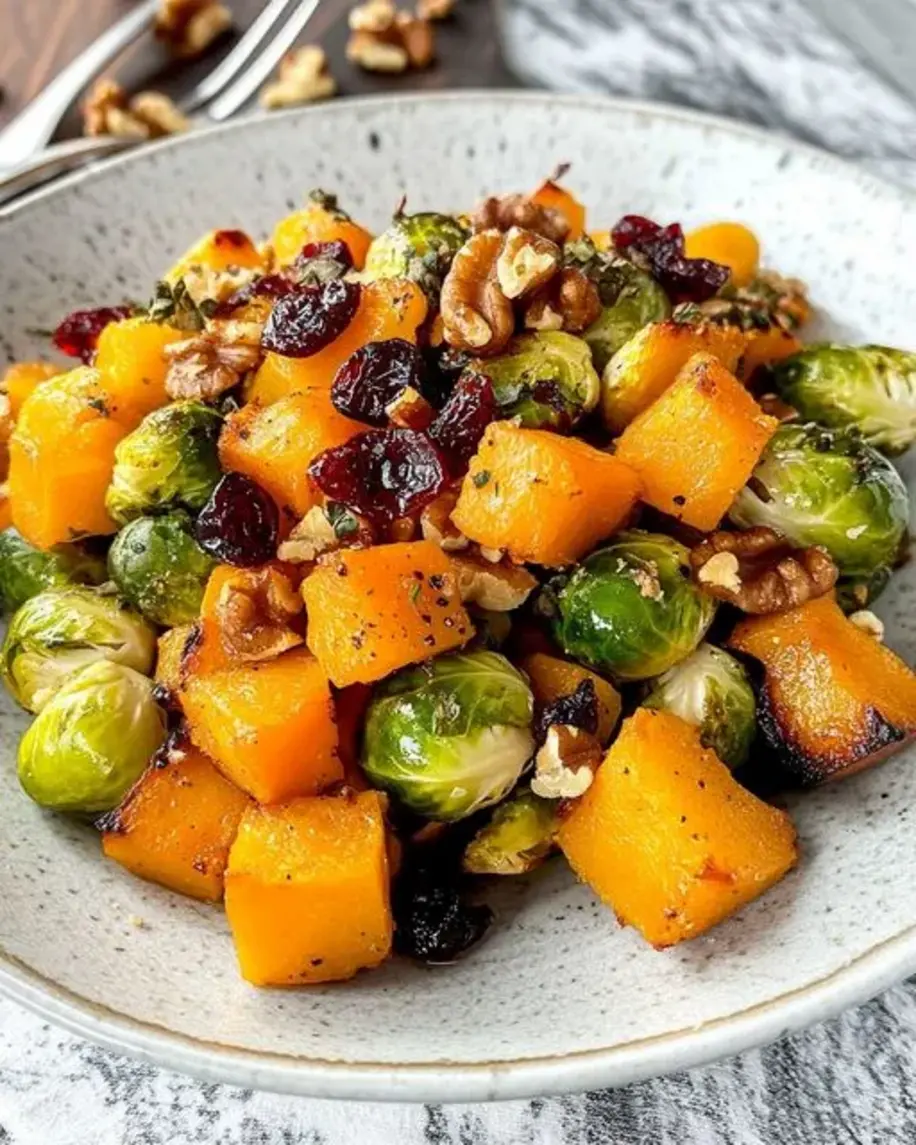
When I serve this roasted butternut squash and Brussels sprouts dish, I like to transfer it to a warm platter and scatter the dried cranberries over the top for a pop of color and tartness. The deep orange of the squash, the rich green of the sprouts, and the ruby red of the cranberries make for a stunning presentation that looks as good as it tastes. A final sprinkle of flaky sea salt — like Maldon — right before serving adds a delicate crunch and brightens all the flavors. In my NYC apartment, I often pair this with a simple roast chicken or pan-seared salmon for a complete meal that feels both cozy and elegant.
For a more substantial vegetarian main, serve these vegetables over a bed of warm quinoa or farro with a dollop of herbed yogurt or tahini sauce. The creamy element balances the sweetness of the glaze and adds a lovely contrast in texture. I also love tossing leftovers into a fall salad with mixed greens, toasted pecans, and a light vinaigrette — the caramelized vegetables become the star of the salad. However you choose to serve it, this healthy fall vegetable side dish is versatile enough to complement almost any main course.
Growing up in Morocco, we would have served something similar alongside lamb tagine or couscous. In Paris, my chef would have plated it as a seasonal accompaniment to duck confit. Here in New York, I’ve seen it paired with everything from Thanksgiving turkey to a simple weeknight pork chop. The beauty of this recipe is that it adapts to whatever you’re cooking — it’s humble enough for a Tuesday dinner and impressive enough for a holiday table.
| Pairing Type | Suggestions | Why It Works |
|---|---|---|
| Side Dish | Roast chicken, seared salmon, grilled pork chops, turkey | The sweet-tangy glaze complements rich proteins without overpowering them. |
| Sauce / Dip | Herbed yogurt, tahini sauce, balsamic reduction, garlic aioli | Creamy or tangy sauces balance the caramelized sweetness and add richness. |
| Beverage | Dry Riesling, Sauvignon Blanc, hard cider, sparkling water with lemon | Acidic, crisp drinks cut through the sweetness and refresh the palate. |
| Garnish | Dried cranberries, toasted pecans, pomegranate seeds, fresh parsley, flaky sea salt | Adds texture, color contrast, and a bright finish that elevates the dish visually. |
Make-Ahead, Storage & Reheating
Between my busy recipe testing schedule and running around NYC, I’m a huge advocate for make-ahead cooking. This roasted butternut squash and Brussels sprouts recipe is perfect for meal prep because the vegetables hold up surprisingly well in the fridge. I often make a double batch on Sunday to use throughout the week — tossed into salads, piled onto grain bowls, or simply reheated as a quick side dish. Here’s everything you need to know about storing and reheating this easy roasted vegetables recipe.
| Method | Container | Duration | Reheating Tip |
|---|---|---|---|
| Refrigerator | Airtight container in a single layer or with parchment between layers | Up to 5 days | Reheat in a 375°F oven for 8–10 minutes to restore crispness. Avoid microwaving — it makes the vegetables soggy. |
| Freezer | Freezer-safe zip-top bag or container, remove as much air as possible | Up to 3 months | Thaw overnight in the fridge, then reheat in a 400°F oven for 10–12 minutes. The texture will be slightly softer but still delicious. |
| Make-Ahead | Prep vegetables and store separately from dressing | Up to 2 days in advance | Toss with oil, maple syrup, and vinegar just before roasting. This keeps the vegetables freshest and prevents sogginess. |
One thing I’ve learned from years of meal prepping in my tiny NYC kitchen is that roasted vegetables are best reheated in the oven — never the microwave. The microwave will turn your beautiful caramelized edges into sad, steamed mush. If you’re in a hurry, you can reheat them in a hot skillet with a tiny splash of water and a lid for 3–4 minutes, which helps revive some of the texture. And if you’re packing these for lunch, I recommend eating them cold or at room temperature — they’re surprisingly delicious straight from the container, especially tossed into a salad or grain bowl.
If you’re making this butternut squash and Brussels sprouts recipe for Thanksgiving or a holiday dinner, you can prep all the vegetables up to two days ahead and store them in a sealed container in the fridge. On the day of, simply toss with the glaze and roast as directed. This make-ahead strategy is a lifesaver when you’re juggling multiple dishes — trust me, I’ve used it for every Friendsgiving I’ve hosted in Brooklyn.
Variations & Easy Swaps
One of the things I love most about this recipe is how easily it adapts to different flavor profiles and dietary needs. Whether you’re craving something with a Moroccan twist, need a nut-free option, or just want to use what’s in your fridge, there’s a variation here for you. These are all tested in my NYC kitchen and approved by my dinner guests — some of whom are professional chefs and some of whom just really love good food.
| Variation | Key Change | Best For | Difficulty Impact |
|---|---|---|---|
| Moroccan Spiced | Add ras el hanout, cumin, and cinnamon | Warming, aromatic flavor — perfect for fall and winter | Easy (just add spices) |
| Balsamic-Pomegranate Twist | Swap cranberries for pomegranate seeds, add pomegranate molasses | Bright, tangy-sweet flavor — great for holiday tables | Easy (simple swap) |
| Spicy Maple-Ginger | Add fresh grated ginger and red pepper flakes | Sweet-heat combo — pairs beautifully with Asian-style mains | Easy (just add aromatics) |
Moroccan Spiced Version
This variation is closest to my heart because it reminds me of my mother’s kitchen in Morocco. Add 1 teaspoon of ras el hanout, 1/2 teaspoon of ground cumin, and 1/4 teaspoon of cinnamon to the maple-balsamic mixture before tossing with the vegetables. The warm, aromatic spices complement the sweetness of the squash beautifully and add an exotic depth that makes this dish feel special. I like to finish it with a handful of toasted almonds and fresh cilantro instead of cranberries. This version is particularly wonderful alongside lamb or roasted chicken — it’s the kind of dish that transports you straight to a Moroccan souk with every bite.
Balsamic-Pomegranate Twist
For a bright, tangy-sweet variation that’s perfect for Thanksgiving or holiday entertaining, replace the dried cranberries with fresh pomegranate seeds and add 1 tablespoon of pomegranate molasses to the glaze mixture. The pomegranate molasses adds a deeper, more complex sweetness than balsamic alone, and the fresh seeds provide little bursts of tart juice that cut through the richness of the roasted vegetables. This version is stunning on a holiday table — the jewel-like pomegranate seeds against the orange and green vegetables make for a truly gorgeous presentation. If you can’t find pomegranate molasses at your local grocery store, you can make it by simmering pomegranate juice until it reduces to a syrupy consistency.
Spicy Maple-Ginger Version
When I’m craving something with a little heat, I add 1 tablespoon of fresh grated ginger and 1/2 teaspoon of red pepper flakes to the maple-balsamic mixture. The ginger adds a warm, slightly peppery note that pairs beautifully with the sweetness of the maple syrup, while the red pepper flakes bring a gentle heat that builds as you eat. This variation is fantastic alongside Asian-inspired mains like teriyaki salmon or sesame tofu. I found this combination one chilly afternoon at the Union Square farmers market when I picked up some gorgeous local ginger and decided to experiment — it’s been a staple in my winter rotation ever since. For a milder version, skip the red pepper flakes and use just the ginger.
How do you cut butternut squash for roasting with Brussels sprouts?
To cut butternut squash for this butternut squash and Brussels sprouts recipe, start by cutting off both ends with a sharp chef’s knife. Slice the squash in half where the narrow neck meets the bulbous base — this makes it much easier to handle. Use a vegetable peeler or a sharp knife to remove the skin. Scoop out the seeds from the bulbous half with a spoon. Cut the neck into 1-inch cubes, then cut the bulbous half into similar-sized pieces, working around the seed cavity. Aim for uniform 1-inch cubes so they roast evenly alongside the halved Brussels sprouts. If you’re using pre-cut squash from the store, look for pieces that are roughly 1 inch for the best results.
Can you use frozen Brussels sprouts for this butternut squash recipe?
Yes, you can use frozen Brussels sprouts for this easy roasted vegetables recipe, but there are a few things to keep in mind. Frozen Brussels sprouts contain more moisture than fresh, which can cause them to steam rather than roast and caramelize properly. To get the best results, thaw them completely and pat them very dry with a clean kitchen towel or paper towels before tossing with the glaze. You may also need to add 5–8 minutes to the roasting time to allow the excess moisture to evaporate. That said, fresh Brussels sprouts will always give you a crispier, more caramelized result. If you have access to fresh, I recommend using them for the best texture and flavor in this healthy fall vegetable side dish.
What temperature is best to roast butternut squash and Brussels sprouts together?
400°F (200°C) is the ideal temperature for roasting butternut squash and Brussels sprouts together. This temperature is hot enough to caramelize the natural sugars in the squash and the maple-balsamic glaze, while also giving the Brussels sprouts enough heat to develop crispy, charred edges without burning. At 400°F, the vegetables will be perfectly tender and caramelized in 25–30 minutes. You can roast at 425°F for a slightly faster result — about 20–25 minutes — but you’ll need to check more frequently to prevent the sugar in the glaze from burning. I don’t recommend roasting below 375°F for this sheet pan Brussels sprouts and butternut squash recipe, as the vegetables will steam rather than caramelize and the texture won’t be as appealing.
What goes well with roasted butternut squash and Brussels sprouts as a main dish?
Roasted butternut squash and Brussels sprouts pair beautifully with a wide range of main dishes. For protein, roasted chicken, seared salmon, grilled pork chops, or pan-seared steak all work wonderfully — the sweet-tangy glaze complements rich meats without overpowering them. For a vegetarian main, serve the vegetables over a bed of warm quinoa, farro, or couscous with a dollop of herbed yogurt or tahini sauce. They also make an excellent addition to grain bowls with roasted chickpeas, avocado, and a lemon-tahini dressing. During the holidays, this sheet pan Brussels sprouts and butternut squash recipe is a natural companion to turkey, ham, or roast beef. I personally love it alongside a simple roast chicken with garlic and herbs — it’s the perfect balance of flavors and textures.
How do you peel butternut squash easily?
Peeling butternut squash can be tricky because of its hard skin and curved shape, but there are a few tricks that make it much easier. My favorite method is to microwave the whole squash for 2 minutes — this slightly softens the skin and makes it much easier to peel with a standard vegetable peeler. Another option is to cut the squash into manageable sections first: cut off the top and bottom, then slice the squash in half where the narrow neck meets the bulbous base. Stand each piece on its flat end and use a sharp chef’s knife to slice off the skin from top to bottom, following the curve of the squash. If you’re really short on time, look for pre-peeled and pre-cut butternut squash in the produce section of your grocery store — it’s a perfectly fine shortcut for this butternut squash and Brussels sprouts recipe.
Can I make this roasted butternut squash and Brussels sprouts recipe ahead of time?
Absolutely! This healthy fall vegetable side dish is great for make-ahead meal prep. You can prepare the vegetables up to two days in advance — peel and cut the butternut squash, trim and halve the Brussels sprouts, and store them separately in airtight containers in the refrigerator. When you’re ready to serve, simply toss with the olive oil, maple syrup, balsamic vinegar, salt, and pepper, then roast as directed. Alternatively, you can fully roast the vegetables, let them cool completely, and store them in an airtight container in the fridge for up to 5 days. To reheat, spread them on a baking sheet and warm in a 375°F oven for 8–10 minutes to restore some of the crispness. Avoid microwaving, as it will make the vegetables soggy.
How do you keep Brussels sprouts from getting mushy when roasting?
The key to crispy, not mushy, Brussels sprouts in this easy roasted vegetables recipe is threefold. First, make sure the sprouts are completely dry after washing — any excess moisture will create steam and prevent caramelization. Second, cut them in half so the flat cut side can make direct contact with the hot baking sheet, which promotes browning and crispness. Third — and this is the most important tip — don’t overcrowd the pan. Spread the vegetables in a single layer with a little space between each piece. If they’re crowded, they’ll steam instead of roast. If you’re making a large batch, use two sheet pans rather than piling everything onto one. I learned this lesson the hard way when I first started cooking in a busy NYC bistro kitchen — crowded pans were the number one mistake I saw.
Can I add other vegetables to this sheet pan recipe?
Yes, you can easily customize this sheet pan Brussels sprouts and butternut squash recipe by adding other vegetables. Carrots, parsnips, red onion wedges, and sweet potatoes all roast beautifully alongside the squash and sprouts and complement the maple-balsamic glaze. Just keep in mind that different vegetables have different roasting times — denser vegetables like carrots and parsnips may need a few extra minutes, while more delicate vegetables like bell peppers or zucchini should be added halfway through the roasting time. If you’re adding multiple vegetables, try to cut them all into similar-sized pieces (about 1 inch) for even cooking. I often add red onion wedges and sliced carrots when I want a more substantial vegetable medley. Just adjust the seasoning slightly to account for the extra volume.
Is this butternut squash and Brussels sprouts recipe vegan and gluten-free?
Yes, this butternut squash and Brussels sprouts recipe is naturally both vegan and gluten-free! The ingredients are all plant-based — butternut squash, Brussels sprouts, olive oil, maple syrup, balsamic vinegar, salt, pepper, and optional dried cranberries. There are no animal products or gluten-containing ingredients in the recipe as written. The dried cranberries are optional, but most brands are vegan and gluten-free — just check the label to be sure, as some processed dried cranberries may contain added sugars or preservatives. This makes it a wonderful option for holiday gatherings where you might have guests with dietary restrictions. I’ve served this at multiple Friendsgiving dinners in Brooklyn, and it’s always a hit with everyone, regardless of their dietary preferences.
What can I use instead of maple syrup in this recipe?
If you don’t have maple syrup or prefer not to use it, there are several excellent substitutes for this easy roasted vegetables recipe. Honey is the best replacement — use the same amount (1 tablespoon) and expect a slightly less complex sweetness but similar caramelization. Agave nectar also works well and is thinner in consistency, so the glaze will be a bit lighter. For a less sweet option, you can use a sugar-free maple-flavored syrup or simply increase the balsamic vinegar slightly and add a pinch of brown sugar. Keep in mind that the sweetness level and caramelization will vary depending on the substitute. I’ve tested this with honey many times and love the floral notes it adds. If you’re looking for a sugar-free option, a monk fruit-based maple syrup alternative works surprisingly well, though the caramelization will be less pronounced.
Share Your Version!
I absolutely love hearing how you make this recipe your own. Have you tried the Moroccan spiced version with ras el hanout? Did you add pomegranate seeds for a holiday twist? Or maybe you discovered a new favorite pairing — I’d love to know what main dish you served it with. Drop a comment below and let me know how it turned out. Your star rating means the world to me and helps other readers find this recipe too.
📸 Share your creation on Instagram or Pinterest and tag @exorecipes — I feature my favorite reader photos every week!
What’s one fall vegetable you’d love to see me roast next? Let me know in the comments! 🍂
From my NYC kitchen to yours — I hope this recipe brings as much warmth to your table as it does to mine. — mia 🧡
Love This Recipe? Save It to Pinterest!
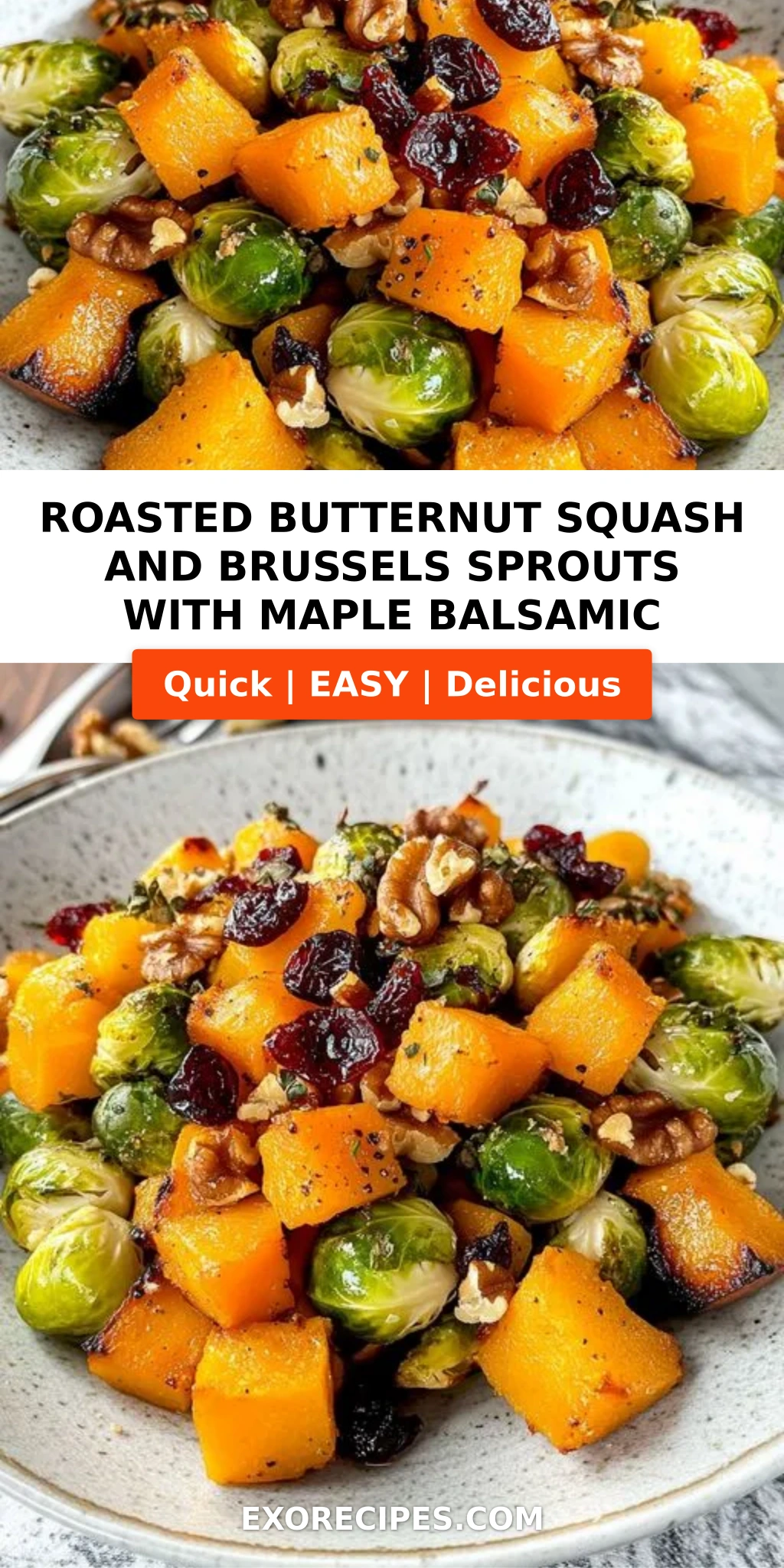
If you enjoyed this Butternut Squash and Brussels Sprouts recipe, don’t let it get lost in your browser tabs! 😄 Pin it now so you can find it again anytime — and explore hundreds more tried-and-tested recipes waiting for you on my Pinterest boards.
👉 Follow mia on Pinterest @exorecipe
📌 Pin this recipe · 🔁 Re-pin your favorites · 💬 Tag me when you make it — I love seeing your creations!
Butternut Squash and Brussels Sprouts
- Prep Time: 10 minutes
- Cook Time: 30 minutes
- Total Time: 40 minutes
- Yield: 4 1x
- Method: Side Dish
- Cuisine: American
Description
A delightful side dish featuring roasted butternut squash and Brussels sprouts with a touch of maple syrup and balsamic glaze.
Ingredients
- 1 butternut squash, peeled, seeded, and cut into 1-inch cubes
- 1 pound Brussels sprouts, trimmed and halved
- 2 tablespoons olive oil
- 1 tablespoon maple syrup
- 1 tablespoon balsamic vinegar
- Salt and pepper to taste
- Optional: 1/4 cup dried cranberries
Instructions
- Preheat oven to 400°F (200°C).
- In a large bowl, combine butternut squash cubes and Brussels sprouts. Drizzle with olive oil, maple syrup, and balsamic vinegar. Toss to coat evenly.
- Season with salt and pepper. Spread in a single layer on a baking sheet.
- Roast for 25-30 minutes, stirring halfway, until vegetables are tender and caramelized.
- Remove from oven, sprinkle with dried cranberries if desired, and serve warm.
Notes
To save time, you can use pre-cut butternut squash from the store. Adjust sweetness by adding more or less maple syrup.
Nutrition
- Calories: 180
- Sugar: 12g
- Fat: 5g
- Carbohydrates: 35g
- Protein: 4g
Tried This Recipe? Leave a Comment!
Did you make this recipe? I’d love to hear how it turned out! Please leave a comment and a rating below. Your feedback helps other home cooks and supports cheerychop.com!
For more delicious inspiration, follow me on Pinterest!
