Table of Contents
Beef and Broccoli Noodle Soup with Garlic, Ginger & Chili – A Spicy, Comforting Bowl of Bold Flavors
Growing up in Morocco, I learned that the best soups aren’t just food — they’re a hug in a bowl. My mother would spend hours layering spices, building depth with every pinch of cumin and dash of cinnamon. Years later, training at Le Cordon Bleu in Paris taught me the precision behind those instincts: how a proper sear builds flavor, how timing makes vegetables sing, and how a single aromatic can transform an entire dish. This Beef and Broccoli Noodle Soup with garlic, ginger, and chili is the bridge between those two worlds — a quick, weeknight-friendly soup that tastes like it simmered all day. It’s my answer to cold New York evenings when I want something deeply savory, lightly spicy, and packed with tender beef and vibrant broccoli.
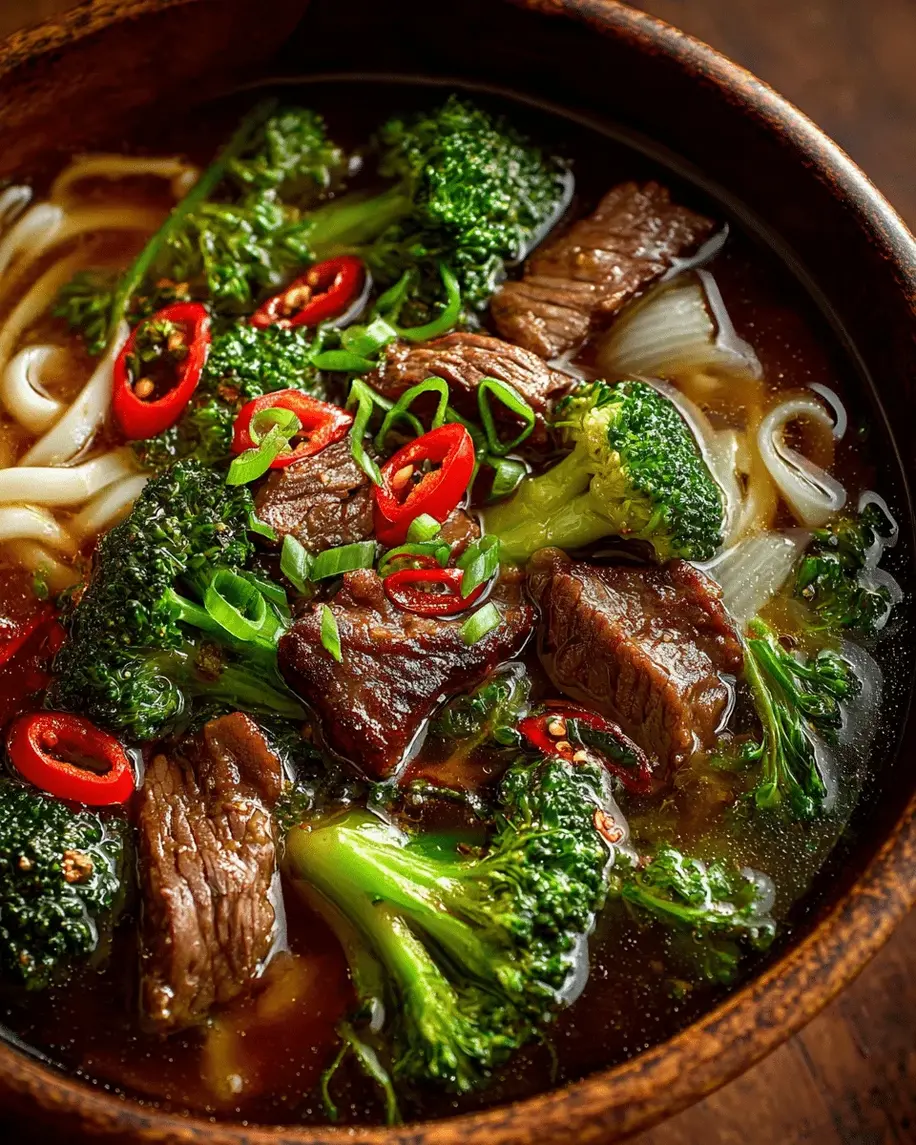
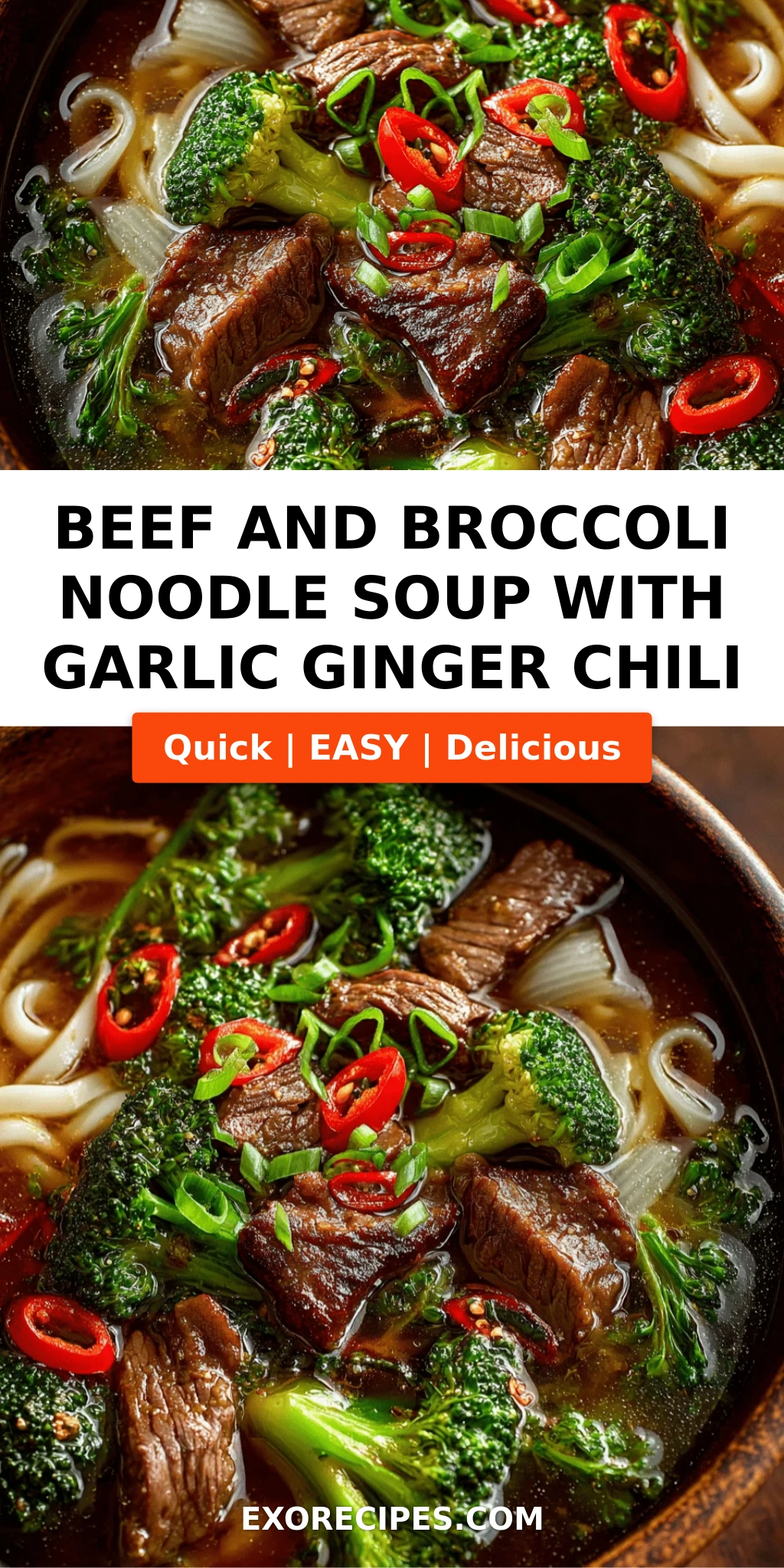
Imagine a steaming bowl of rich, aromatic broth, tinted amber from soy and touched with the warmth of fresh ginger and garlic. Slivers of red chili float on the surface, promising gentle heat that builds with every spoonful. The beef is seared until caramelized on the edges, then returned to the broth just long enough to stay melt-in-your-mouth tender. Broccoli florets soften into the broth, absorbing all those savory notes, while rice noodles — slippery and satisfying — make every bite feel complete. A sprinkle of green onion and fresh cilantro on top adds freshness that cuts through the richness. It’s bold, it’s comforting, and it comes together in under 40 minutes.
What sets this spicy beef noodle soup apart is how I treat the beef. Instead of boiling it directly in the broth — which can make it tough — I sear it first in a hot pan, then add it back only at the end. That technique, straight from my French training, locks in flavor and guarantees tenderness. I also build the aromatic base the way I learned in my mother’s kitchen: letting garlic, ginger, and chili bloom in oil before adding any liquid. It’s a small step that makes a huge difference. 💡 mia’s Pro Tip: Slice your beef against the grain and freeze it for 15 minutes before cutting — it makes thin, even slices so much easier. And the most common mistake? Overcooking the noodles. Cook them just until al dente, because they’ll soften more in the hot broth.
Why This Beef and Broccoli Noodle Soup Recipe Is the Best
The Flavor Secret — The magic here is in the layering. Garlic, ginger, and chili are sautéed until fragrant before any liquid touches the pot, creating a deep aromatic base that infuses every drop of broth. I add a touch of brown sugar to balance the heat and soy, a trick I picked up from a Vietnamese street vendor in Paris. It doesn’t make the soup sweet — it rounds out the edges and makes the umami pop. This ginger garlic beef soup has a complexity that tastes like it simmered for hours, even though it’s ready in 35 minutes.
Perfected Texture — I sear the beef in batches over medium-high heat so it browns deeply without steaming. That caramelized crust adds a layer of savory flavor that you simply don’t get from boiling. The broccoli goes in just long enough to soften but still hold its shape — about 4 minutes — so every floret is tender but not mushy. And the noodles? I cook them separately in the broth itself, so they absorb flavor without becoming sticky or clumpy. Every component is timed to reach its peak texture at exactly the same moment.
Foolproof & Fast — This recipe is designed for busy home cooks. There’s no complicated technique, no exotic equipment, and no long simmer. You use one pot, a cutting board, and about 35 minutes from start to finish. I’ve tested this homemade beef noodle soup with beginner cooks in my NYC cooking classes, and everyone nails it on the first try. The ingredient list is straightforward — everything is available at any US grocery store — and the instructions are written so you can follow along even if you’re juggling kids, a work call, or a hungry family.
Beef and Broccoli Noodle Soup Ingredients
I love shopping for these ingredients at the Union Square Greenmarket in Manhattan, where I find the freshest ginger, garlic, and chilies. The broccoli there is always crisp and sweet, perfect for this soup. And the beef sirloin? I get it from a butcher in Chelsea Market who knows exactly how to slice it thin for me. If you’re shopping at a regular supermarket, don’t worry — every ingredient here is easy to find. Here’s exactly what you’ll need.
Ingredients List
- 1 tablespoon vegetable oil
- 1 pound beef sirloin, thinly sliced
- 4 cloves garlic, minced
- 1 tablespoon fresh ginger, grated
- 2 red chili peppers, sliced (or to taste)
- 6 cups beef broth
- 2 cups water
- 3 tablespoons soy sauce
- 1 tablespoon fish sauce (optional)
- 1 teaspoon brown sugar
- 2 cups broccoli florets
- 8 ounces rice noodles or egg noodles
- 2 green onions, sliced (for garnish)
- Fresh cilantro (for garnish)
Ingredient Spotlight
Beef Sirloin: This cut is lean but tender when sliced thin and seared quickly. Look for bright red color with fine marbling. If you can’t find sirloin, flank steak or ribeye work beautifully — just trim excess fat. Freeze for 15 minutes before slicing for paper-thin pieces that cook in seconds.
Fresh Ginger & Garlic: These are the aromatic backbone of the soup. Fresh ginger should feel firm with smooth skin — no wrinkling. Garlic should be plump and heavy for its size. Pre-minced jars work in a pinch but fresh gives a brighter, more pungent flavor that makes this Asian beef and broccoli soup truly shine.
Red Chili Peppers: I use fresh red chilies like Fresno or red jalapeño for their fruity heat and vibrant color. Thai bird chilies are spicier — use half if you’re sensitive. For a milder version, remove the seeds and membranes. You can also use 1 teaspoon red pepper flakes in a pinch.
Rice Noodles: These soak up broth without getting mushy, making them ideal for this soup. I prefer medium-width flat rice noodles (like pad Thai noodles) or thin vermicelli. Egg noodles are a great alternative if you want a chewier texture — just adjust the cooking time based on the package directions.
Broccoli Florets: Fresh broccoli adds a sweet, earthy contrast to the spicy broth. Choose bunches with tight, dark green florets and firm stalks. Frozen broccoli works too — add it frozen directly to the broth, but expect a slightly softer texture.
| Original Ingredient | Best Substitution | Flavor / Texture Impact |
|---|---|---|
| Beef Sirloin | Flank steak, ribeye, or thinly sliced chicken breast | Flank is leaner and slightly chewier; ribeye is richer and more tender; chicken is milder and lighter. |
| Soy Sauce | Tamari (gluten-free) or coconut aminos | Tamari is almost identical in flavor; coconut aminos are slightly sweeter and less salty. |
| Rice Noodles | Egg noodles, soba noodles, or zucchini noodles | Egg noodles are chewier; soba adds nutty flavor; zucchini noodles are low-carb but less hearty. |
| Fish Sauce (optional) | Worcestershire sauce or a splash of extra soy sauce | Fish sauce adds unique umami depth; Worcestershire is tangier; extra soy is simpler but saltier. |
| Red Chili Peppers | 1 tsp red pepper flakes, sriracha, or chili oil | Flakes add heat without fresh chili flavor; sriracha adds sweetness and vinegar; chili oil adds richness. |
How to Make Beef and Broccoli Noodle Soup — Step-by-Step
This recipe moves quickly, so I like to have all my ingredients prepped and measured before I start — that’s a habit from my Paris days. Trust me, once you start cooking, everything comes together fast. Let’s walk through each step.
Step 1: Sear the Beef
Heat 1 tablespoon vegetable oil in a large pot over medium-high heat until it shimmers. Add the sliced beef in a single layer — don’t overcrowd the pot. Sear for 1–2 minutes per side until deep golden brown. The beef should be caramelized on the outside but still slightly pink in the center. Remove the beef with a slotted spoon and set it aside on a plate. This initial sear locks in juices and creates that rich, savory flavor base for the ginger garlic beef soup.
💡 mia’s Pro Tip: Pat the beef dry with paper towels before searing. Moisture is the enemy of browning — dry beef means a better crust and deeper flavor.
Step 2: Build the Aromatic Base
In the same pot, reduce the heat to medium. Add the minced garlic, grated ginger, and sliced red chili peppers. Cook for 1–2 minutes, stirring constantly, until the kitchen fills with that incredible fragrance. Be careful not to burn the garlic — it should become golden and aromatic, not bitter. This step mirrors what my mother taught me in Morocco: always let aromatics bloom in oil before adding liquid. It’s the foundation of this Asian beef and broccoli soup.
⚠️ Common Mistake to Avoid: Adding garlic and ginger to cold oil or overheating them. Start with medium heat and stir continuously — burnt garlic turns bitter and ruins the broth.
Step 3: Create the Broth
Pour in 6 cups beef broth and 2 cups water, then stir in 3 tablespoons soy sauce, 1 tablespoon fish sauce (if using), and 1 teaspoon brown sugar. Increase the heat to high and bring the mixture to a rolling boil. The brown sugar balances the saltiness and heat, creating a well-rounded broth that coats every noodle. Give it a taste here — it should be savory, slightly sweet, and gently spicy. Adjust the soy or chili to your preference before adding the vegetables.
💡 mia’s Pro Tip: Use a low-sodium beef broth so you can control the salt level with the soy sauce. If your broth tastes flat, add a splash of fish sauce or a pinch more brown sugar to deepen the umami.
Step 4: Cook Broccoli and Noodles
Once the broth is boiling, add 2 cups of broccoli florets and 8 ounces of rice noodles or egg noodles. Stir gently to separate the noodles, then cook according to the package directions — typically 4–6 minutes for rice noodles. The broccoli should be bright green and tender when pierced with a fork, and the noodles should be al dente. Remember, the noodles will continue to soften in the hot broth even after you turn off the heat, so slightly undercook them if you prefer a firmer texture.
⚠️ Common Mistake to Avoid: Overcooking the noodles. Check them a minute before the package suggests. Mushy noodles can’t be fixed, so pull them as soon as they’re tender but still have a slight bite.
Step 5: Combine and Finish
Return the seared beef to the pot, along with any juices that accumulated on the plate. Let everything heat through for 1–2 minutes — just long enough to warm the beef without overcooking it. The beef should be tender and juicy, not chewy. Taste the broth one last time and adjust the seasoning with more soy sauce or chili if needed.
Step 6: Ladle and Garnish
Ladle the soup into deep bowls, making sure each serving gets a good portion of beef, broccoli, and noodles. Top with sliced green onions and fresh cilantro. Serve immediately while the broth is steaming hot. The garnishes add freshness and color that make this homemade beef noodle soup look as good as it tastes.
💡 mia’s Pro Tip: For an extra pop of flavor, drizzle a teaspoon of chili oil or sesame oil over each bowl just before serving. It adds a beautiful sheen and a final layer of aroma.
| Step | Action | Duration | Key Visual Cue |
|---|---|---|---|
| 1 | Sear beef slices | 2–4 minutes total | Deep golden-brown crust on both sides |
| 2 | Sauté aromatics | 1–2 minutes | Garlic turns golden, ginger becomes fragrant |
| 3 | Boil broth | 5–7 minutes to boil | Broth reaches a rolling boil |
| 4 | Cook broccoli & noodles | 4–6 minutes | Broccoli is bright green and tender; noodles are al dente |
| 5 | Return beef & heat through | 1–2 minutes | Beef is warmed through, still tender |
Serving & Presentation
I love serving this soup in deep, wide bowls that let the broth steam up and hit your nose before the spoon even reaches your mouth. Garnish generously with sliced green onions and fresh cilantro — don’t be shy with them. The green against the amber broth is stunning, and the freshness cuts through the richness of the beef and the heat of the chili. For a final touch, I sometimes add a wedge of lime to each bowl; a quick squeeze brightens all the flavors in a way that reminds me of the fresh lemon my mother always added to her Moroccan harira.
This soup is a complete meal on its own, but it pairs beautifully with simple sides. I often serve it with a side of crispy spring rolls or garlicky Chinese greens for extra crunch and texture. In my NYC cooking classes, I recommend a light cucumber salad dressed with rice vinegar and sesame oil to balance the heat. For beverages, a cold ginger beer or a crisp lager cuts through the spice perfectly. If you’re in the mood for something warm, a cup of jasmine tea is a lovely, soothing companion.
| Pairing Type | Suggestions | Why It Works |
|---|---|---|
| Side Dish | Crispy spring rolls, garlicky Chinese greens, cucumber salad | Adds crunch and freshness that contrast with the warm, brothy soup. |
| Sauce / Dip | Chili oil, hoisin sauce, soy-vinegar dip | Adds customizable heat, sweetness, or tanginess to each bite. |
| Beverage | Ginger beer, crisp lager, jasmine tea, cold sake | Carbonation and coolness cut the spice; tea complements the aromatic ginger. |
| Garnish | Green onions, cilantro, lime wedge, sesame seeds | Adds freshness, color, and a pop of brightness to every spoonful. |
Make-Ahead, Storage & Reheating
I live by meal prep, especially in my busy NYC life. This Beef and Broccoli Noodle Soup is actually perfect for making ahead, but there’s one trick: store the broth, beef, and vegetables separately from the noodles. If you leave the noodles in the broth overnight, they’ll absorb all the liquid and turn mushy. I prep everything up to step 4, then cool and refrigerate the broth mixture and the cooked beef separately. When I’m ready to eat, I reheat the broth, cook fresh noodles, and assemble. It takes 5 minutes and tastes like it’s freshly made.
| Method | Container | Duration | Reheating Tip |
|---|---|---|---|
| Refrigerator | Airtight container (broth + beef separate from noodles) | Up to 4 days | Reheat broth on stove, cook fresh noodles, then combine. |
| Freezer | Freezer-safe container or zip-top bag (broth + beef only, no noodles) | Up to 3 months | Thaw overnight in fridge, reheat on stove, add fresh broccoli and noodles. |
| Make-Ahead | Store broth + beef in fridge; prep vegetables in a separate bag | Up to 2 days in advance | When ready, boil broth, add veggies and noodles, finish with beef. |
When reheating, I always bring the broth to a gentle simmer on the stovetop — never the microwave, which can make the beef tough. If the broth has thickened from the noodles absorbing liquid, add a splash of water or extra broth to loosen it up. For the best texture, cook fresh noodles each time you serve. I know it sounds like extra work, but it takes just 4 minutes and makes a world of difference. This way, every bowl of spicy beef noodle soup tastes as vibrant and satisfying as the first one.
Variations & Easy Swaps
One of my favorite things about this recipe is how adaptable it is. I’ve made versions with everything from leftover roast beef to extra vegetables from my CSA box. Below are three of my go-to variations, each with a slightly different personality. Whether you’re craving something lighter, gluten-free, or with a Moroccan twist, there’s an option here for you.
| Variation | Key Change | Best For | Difficulty Impact |
|---|---|---|---|
| Chicken & Bok Choy | Substitute chicken breast for beef and bok choy for broccoli | Lighter, leaner, and weeknight-friendly | Easy — same technique, no added difficulty |
| Gluten-Free | Use tamari instead of soy sauce and rice noodles or gluten-free noodles | Those avoiding gluten | Easy — simple swaps, no technique change |
| Moroccan-Spiced | Add 1 tsp cumin, 1/2 tsp cinnamon, and 1/4 tsp turmeric to the aromatics | Warming, exotic flavor with North African roots | Easy — just add spices, no extra steps |
Chicken & Bok Choy Version
For a lighter take, swap the beef for boneless, skinless chicken breast — slice it thin and sear just like the beef. Substitute bok choy for broccoli; it cooks in about the same time and adds a mild, slightly sweet flavor. I love this version on nights when I want something hearty but not heavy. The chicken stays tender and juicy, and the bok choy adds a lovely crunch. It’s a staple in my NYC winter meal rotation, especially when I’m craving Asian beef and broccoli soup but want to change things up.
Gluten-Free Version
This is one of the most common requests from my readers, and it’s incredibly easy. Use tamari instead of soy sauce — it tastes almost identical and is brewed without wheat. For the noodles, choose 100 percent rice noodles or any gluten-free noodle brand. Double-check your beef broth too; some store-bought brands contain wheat. Pacific Foods and Imagine make excellent gluten-free beef broths. Everything else in the recipe is naturally gluten-free, so with these two swaps, the entire homemade beef noodle soup becomes safe and delicious for gluten-sensitive guests.
Moroccan-Spiced Version
This one is close to my heart. When I make it for myself, I add 1 teaspoon of ground cumin, 1/2 teaspoon of cinnamon, and 1/4 teaspoon of turmeric to the aromatics in step 2. The cumin adds an earthy warmth, the cinnamon brings a subtle sweetness that plays beautifully with the chili, and the turmeric gives the broth a beautiful golden hue. It’s a nod to the soups my mother made in Morocco — familiar, comforting, and deeply flavorful. I love serving this version with a dollop of harissa on the side for extra heat. It transforms the spicy beef noodle soup into something entirely new and personal.
How do you make beef tender for beef and broccoli noodle soup?
The key to tender beef is threefold: choose the right cut, slice it properly, and don’t overcook it. Beef sirloin, flank steak, or ribeye are all great options — they’re naturally tender when handled right. Slice the beef against the grain into thin strips about 1/4-inch thick. For easier slicing, pop the beef in the freezer for 15 minutes before cutting. The most important step is the sear: cook the beef over medium-high heat for just 1–2 minutes per side until browned, then remove it from the pot. Add it back only at the end to heat through for 1–2 minutes. This prevents the beef from simmering too long and becoming tough. Searing locks in the juices and creates a flavorful crust that makes every bite of this ginger garlic beef soup satisfying.
What type of noodles work best in beef and broccoli noodle soup?
Rice noodles are my top recommendation — they absorb the broth beautifully without becoming soggy, and their neutral flavor lets the garlic, ginger, and chili shine. Medium-width flat rice noodles (like pad Thai noodles) or thin vermicelli both work wonderfully. If you prefer a chewier texture, egg noodles are an excellent alternative, though they’ll absorb more liquid and may soften faster. For a low-carb option, zucchini noodles or shirataki noodles work in a pinch, but they won’t soak up the broth the same way. Whatever noodle you choose, cook them just until al dente — they’ll continue to soften in the hot broth. This is especially important for this Asian beef and broccoli soup, where noodle texture can make or break the dish.
Can I use frozen broccoli instead of fresh in this soup?
Absolutely — frozen broccoli works perfectly in this recipe. Add it directly from the freezer to the boiling broth without thawing. Frozen broccoli will cook slightly faster than fresh, usually in about 3–4 minutes instead of 4–6. The texture will be a bit softer than fresh broccoli, but it still holds its shape and absorbs the broth’s flavors well. One tip: don’t overcook frozen broccoli, or it can become mushy. I actually keep a bag of frozen broccoli in my New York freezer for nights when I’m too busy to shop. It’s a convenient swap and still delivers plenty of nutrients and color to this homemade beef noodle soup. Just look for florets without added sauces or seasonings.
How long should you simmer beef and broccoli noodle soup for the best flavor?
This soup comes together quickly because the flavor is built through searing and blooming aromatics, not long simmering. Once you’ve added the broth, bring it to a rolling boil, then reduce to a simmer for about 5 minutes before adding the broccoli and noodles. The total simmer time is around 10–12 minutes from start to finish. The beef is seared separately and added back at the end to prevent it from toughening. If you’re looking for even deeper flavor, you can simmer the broth with a piece of ginger, a garlic clove, and a chili pepper for 20 minutes before straining, but it’s not necessary for this recipe. The beauty of this spicy beef noodle soup is that it delivers rich, complex flavor in under 35 minutes.
Can I make this beef and broccoli noodle soup ahead of time?
Yes, with one important tip: store the broth, beef, and vegetables separately from the noodles. If you combine them, the noodles will absorb the broth and turn mushy within a few hours. I recommend preparing the broth with the broccoli and beef, cooling it completely, and refrigerating it in an airtight container for up to 4 days. When you’re ready to serve, reheat the broth on the stove, cook fresh noodles separately, and then combine everything in bowls. You can also freeze the broth mixture (without noodles) for up to 3 months. This make-ahead approach is a lifesaver on busy weeknights and still delivers a delicious homemade beef noodle soup every time.
Is this beef and broccoli noodle soup gluten-free?
As written, the recipe uses soy sauce, which contains wheat, and rice noodles, which are naturally gluten-free. To make the entire soup gluten-free, simply substitute tamari or coconut aminos for the soy sauce — both are excellent gluten-free alternatives with a similar flavor profile. Also, double-check your beef broth brand, as some contain wheat-based ingredients. Pacific Foods and Imagine are reliable gluten-free broth options. All other ingredients — beef, broccoli, garlic, ginger, chili, fish sauce, brown sugar, and rice noodles — are naturally gluten-free. With these simple swaps, this ginger garlic beef soup becomes a safe and satisfying meal for anyone avoiding gluten.
What protein can I use instead of beef in this soup?
This soup is incredibly versatile when it comes to protein. Thinly sliced chicken breast or thighs work beautifully — sear them just like the beef. For a seafood twist, add shrimp during the last 2 minutes of cooking, or use flaked white fish like cod or tilapia added at the very end. Tofu is an excellent vegetarian option: use extra-firm tofu, press it dry, cube it, and pan-fry until golden before adding to the broth. For a plant-based version, try soy curls or seitan, which mimic the texture of meat. Each protein brings its own character to the soup, but the aromatic broth of garlic, ginger, and chili complements them all. This Asian beef and broccoli soup adapts to whatever protein you have on hand.
How do I store leftover beef and broccoli noodle soup?
Store leftover soup in an airtight container in the refrigerator for up to 4 days, but remove the noodles first if possible. The noodles will continue to absorb broth and become soft over time. If you’ve already combined everything, the soup will still be safe to eat — the noodles will just be very tender. For the best texture, reheat the broth on the stovetop over medium heat rather than in the microwave, which can make the beef tough. If the broth has thickened, add a splash of water or beef broth to thin it out. You can freeze the broth and beef portion for up to 3 months, but skip freezing the noodles. This method helps maintain the quality of your homemade beef noodle soup for future meals.
Can I add other vegetables to this soup?
Absolutely — this soup is a great canvas for extra vegetables. Bok choy, snow peas, and bell peppers are fantastic additions that cook quickly in the broth. Mushrooms, especially shiitake or cremini, add an earthy umami that complements the beef beautifully. If you want to stretch the soup further, add shredded carrots, bean sprouts, or sliced bamboo shoots. Just keep in mind that heartier vegetables like carrots or bell peppers should be sliced thinly so they cook in the same 4–6 minute window as the broccoli. I often add what I have in my CSA box from the Union Square market — this spicy beef noodle soup changes with the seasons, and that’s exactly what I love about it.
What makes this soup spicy and how can I adjust the heat level?
The heat in this soup comes from fresh red chili peppers, which add both spice and a fruity, slightly smoky flavor. Fresno peppers and red jalapeños are my go-to choices — they’re moderately spicy with a clean heat. For a milder soup, remove the seeds and membranes from the chilies before slicing, or use just one chili instead of two. For a spicier version, add an extra chili or include the seeds. You can also stir in a teaspoon of chili oil, sriracha, or red pepper flakes at the end for a final kick. I always recommend starting with less chili and tasting the broth before adding more — you can increase heat easily, but you can’t take it out. This ginger garlic beef soup is meant to be customizable, so adjust it to your comfort level.
Share Your Version!
I absolutely love seeing how you make this recipe your own. Did you add extra chili? Swap in chicken or tofu? Try the Moroccan-spiced version? Drop a star rating and a comment below — it helps other readers find the recipe and gives me so much joy. If you share a photo on Instagram or Pinterest, tag me @exorecipes so I can see your beautiful bowls of soup. I personally respond to every comment and question, so don’t be shy — tell me what worked, what you changed, and what you’d love to see next. Your feedback is what keeps this little NYC kitchen going!
One question I always ask my readers: What’s your favorite noodle for this soup — rice noodles, egg noodles, or something else entirely? Let me know in the comments. I’m always testing new variations and your ideas might just end up in my next recipe!
From my NYC kitchen to yours — I hope this recipe brings as much warmth to your table as it does to mine. — mia 🧡
Love This Recipe? Save It to Pinterest!
If you enjoyed this Beef and Broccoli Noodle Soup recipe, don’t let it get lost in your browser tabs! 😄 Pin it now so you can find it again anytime — and explore hundreds more tried-and-tested recipes waiting for you on my Pinterest boards.
👉 Follow mia on Pinterest @exorecipe
📌 Pin this recipe · 🔁 Re-pin your favorites · 💬 Tag me when you make it — I love seeing your creations!
Beef and Broccoli Noodle Soup with Garlic, Ginger & Chili
- Prep Time: 15 minutes
- Cook Time: 20 minutes
- Total Time: 35 minutes
- Yield: 4 1x
- Method: Main Course
- Cuisine: Asian-inspired
Description
A comforting and spicy soup with tender beef, broccoli, and noodles, infused with garlic, ginger, and chili.
Ingredients
- 1 tablespoon vegetable oil
- 1 pound beef sirloin, thinly sliced
- 4 cloves garlic, minced
- 1 tablespoon fresh ginger, grated
- 2 red chili peppers, sliced (or to taste)
- 6 cups beef broth
- 2 cups water
- 3 tablespoons soy sauce
- 1 tablespoon fish sauce (optional)
- 1 teaspoon brown sugar
- 2 cups broccoli florets
- 8 ounces rice noodles or egg noodles
- 2 green onions, sliced (for garnish)
- Fresh cilantro (for garnish)
Instructions
- Heat vegetable oil in a large pot over medium-high heat. Add beef slices and sear until browned on both sides. Remove beef and set aside.
- In the same pot, add garlic, ginger, and chili peppers. Cook for 1-2 minutes until fragrant.
- Pour in beef broth and water. Add soy sauce, fish sauce (if using), and brown sugar. Bring to a boil.
- Add broccoli florets and noodles. Cook according to noodle package directions until tender, about 4-6 minutes for rice noodles.
- Return the cooked beef to the pot and heat through for 1-2 minutes.
- Ladle soup into bowls. Garnish with green onions and fresh cilantro. Serve hot.
Notes
Adjust chili quantity to your spice preference. For a gluten-free version, use tamari instead of soy sauce and gluten-free noodles.
Nutrition
- Calories: 450
- Sugar: 6g
- Fat: 15g
- Carbohydrates: 45g
- Protein: 32g
Tried This Recipe? Leave a Comment!
Did you make this recipe? I’d love to hear how it turned out! Please leave a comment and a rating below. Your feedback helps other home cooks and supports cheerychop.com!
