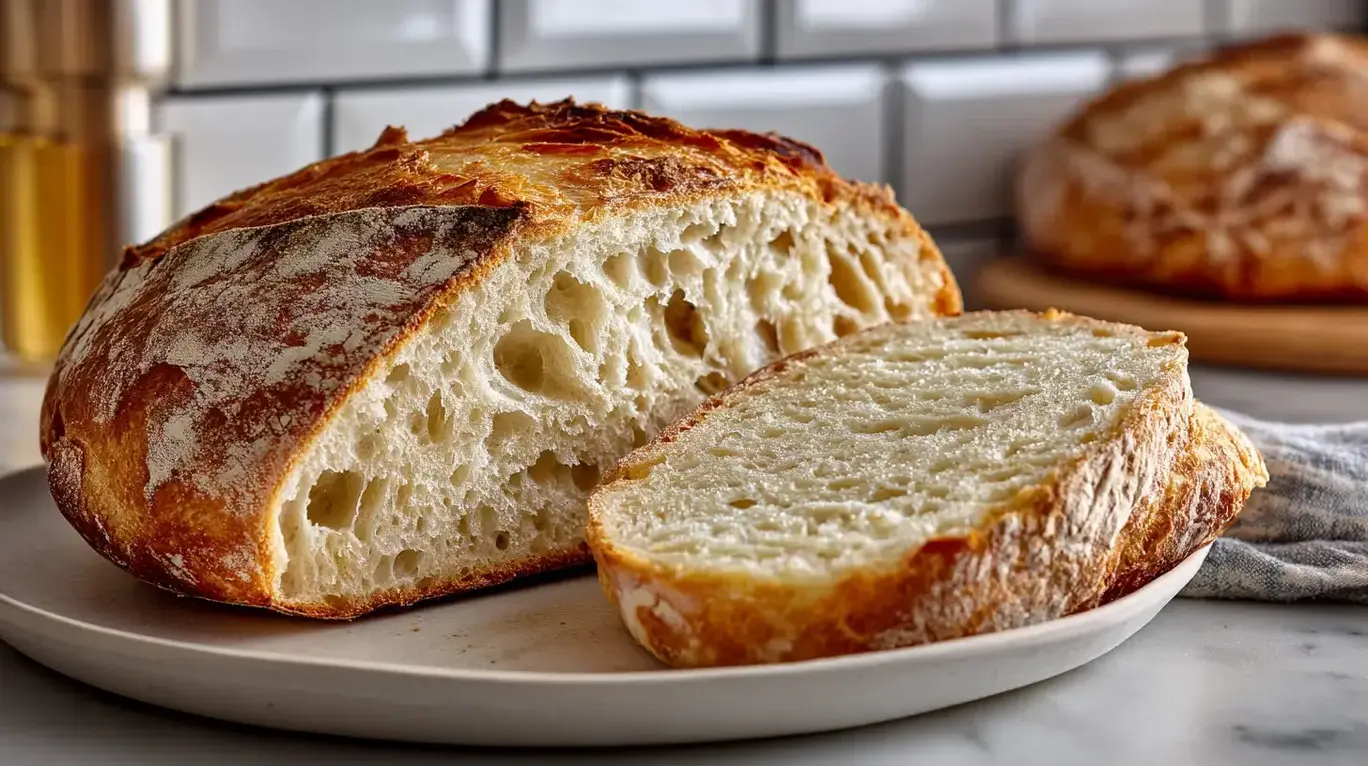
Soft and Chewy Sourdough Bread Made from Scratch

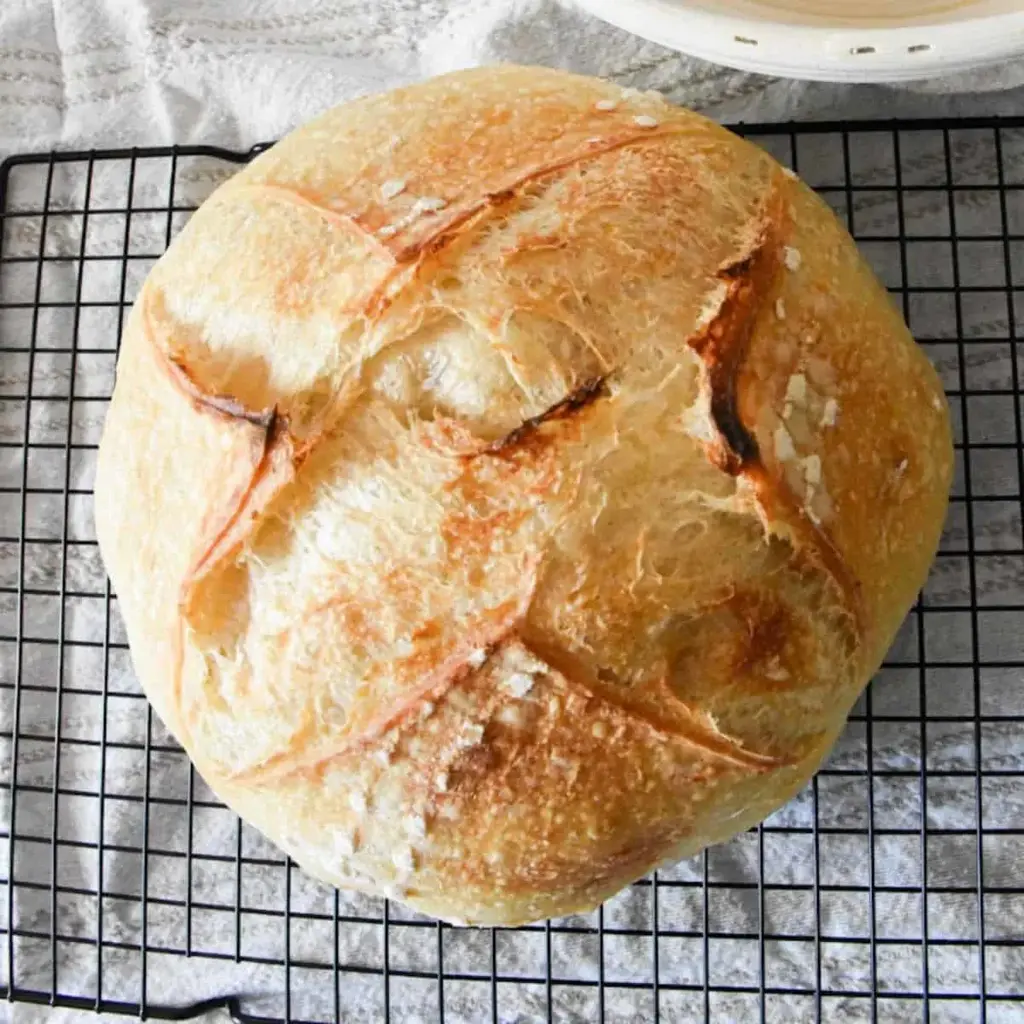
Make soft sourdough bread with this homemade sourdough bread recipe that’s great for beginners. It includes a complete guide to sourdough bread starter and shows how to bake crusty Dutch oven sourdough bread with no kneading required. If you’re interested in sourdough bread recipes that work every time, this one’s worth trying. Perfect for anyone learning about bread starter or making sourdough bread the easy way.

Print

clock clock iconcutlery cutlery iconflag flag iconfolder folder iconinstagram instagram iconpinterest pinterest iconfacebook facebook iconprint print iconsquares squares iconheart heart iconheart solid heart solid icon

Sourdough Bread

  • Author: Chef Mia

Description

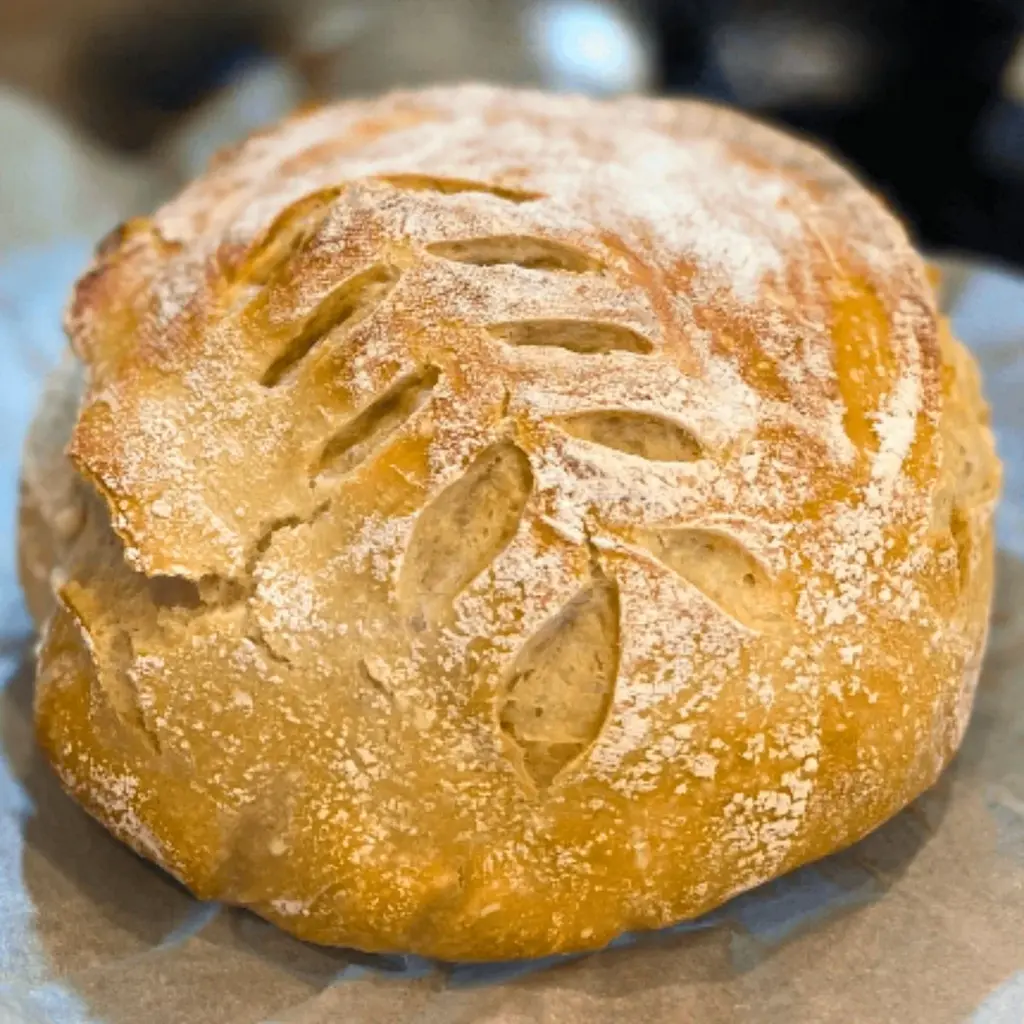
This classic sourdough bread has a chewy center, crisp golden crust, and simple ingredients. Its naturally leavened and baked to perfection in a Dutch ovenno kneading needed.


Ingredients

Scale
  • 4 cups 500g bread flour or all-purpose flour
  • 1 cups 375g warm water
  • 1 cup 200g active sourdough starter
  • 2 teaspoons 10g salt

Instructions

  1. In a large mixing bowl, combine 4 cups of flour and 1 cups of warm water.
  2. Stir until a shaggy dough forms, then let it rest for 30 minutes.
  3. After resting, add 1 cup of active sourdough starter and 2 teaspoons of salt.
  4. Mix well until everything is fully combined.
  5. Cover the bowl with a clean towel or plastic wrap.
  6. Let the dough sit at room temperature.
  7. Every 30 minutes for 2 hours, perform a set of stretch and folds.
  8. To stretch and fold, pull one side of the dough upward and fold it over itself.
  9. Turn the bowl a quarter turn and repeat three more times.
  10. After the final fold, cover the bowl again and let the dough rise for 6 to 8 hours.
  11. It should double in size and appear bubbly and puffy.
  12. Gently transfer the dough to a lightly floured surface.
  13. Shape it into a round or oval loaf by folding and tucking the edges underneath.
  14. Place the shaped dough seam-side up into a floured proofing basket or towel-lined bowl.
  15. Cover and refrigerate for 8 to 12 hours.
  16. The next day, place a Dutch oven into your oven and preheat to 450°F (232°C).
  17. Remove the dough from the fridge and turn it out onto parchment paper.
  18. Score the top of the dough with a sharp knife or razor blade.
  19. Carefully lower the dough into the hot Dutch oven using the parchment paper.
  20. Cover and bake for 20 minutes.
  21. Remove the lid and bake uncovered for another 25 minutes.
  22. Take the bread out of the Dutch oven and let it cool completely on a wire rack before slicing.
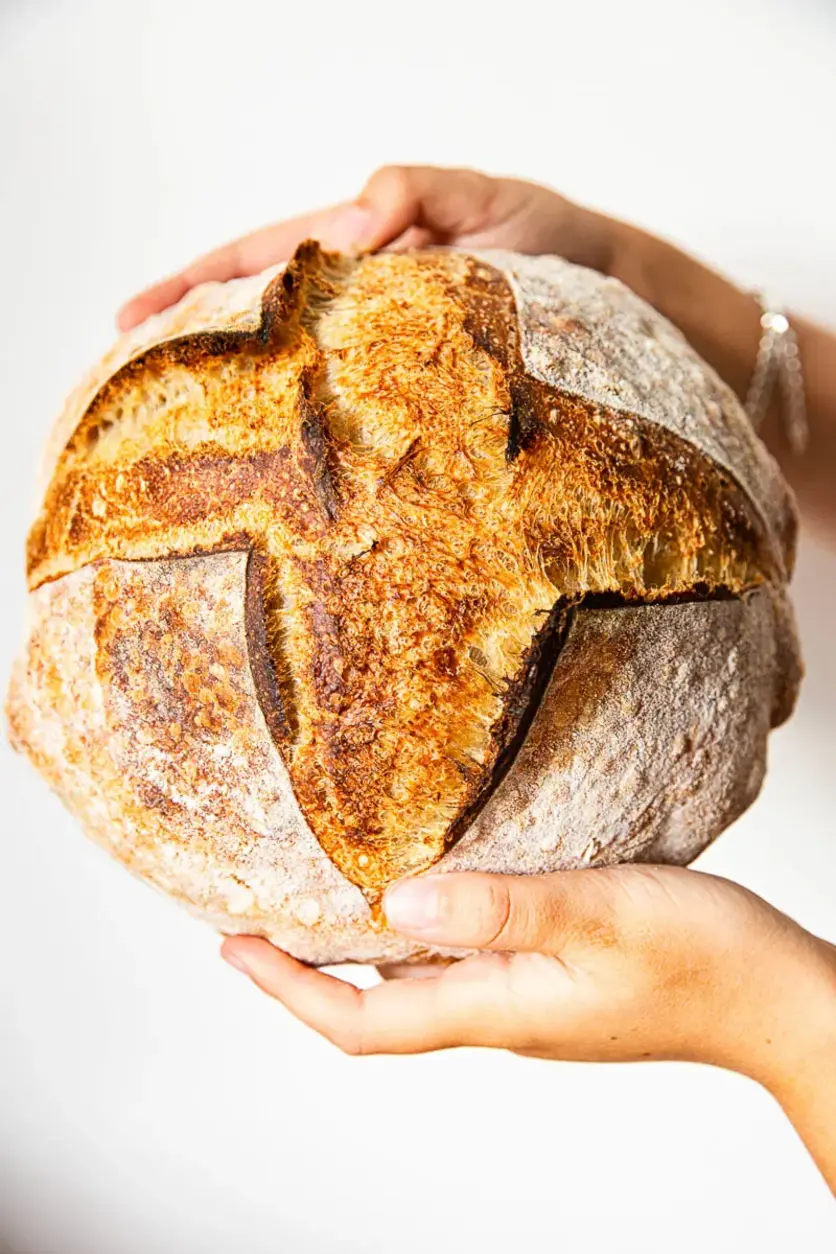
Sourdough Bread for Beginners

Everything you need to know to start baking delicious sourdough bread. From making the starter to troubleshooting for common issues.

Print

clock clock iconcutlery cutlery iconflag flag iconfolder folder iconinstagram instagram iconpinterest pinterest iconfacebook facebook iconprint print iconsquares squares iconheart heart iconheart solid heart solid icon

Sourdough Bread for Beginners

  • Author: Chef Mia

Description

Everything you need to know to start baking delicious sourdough bread. From making the starter to troubleshooting for common issues.


Ingredients

Scale
  • 100g/1/2 cup sourdough starter
  • 500g/4 cups white bread flour
  • 350ml/1 1/3 cups + 1 tablespoon water
  • 910g/ 1/2 tablespoon salt

Instructions

  1. In the morning discard a half of your active starter, then feed it by adding 50g of flour and 50g of water. Leave to ferment at room temperature. It should double in size after 4-5 hours depending on the strength of your starter and the temperature of your house. (It will rise quicker in the summer but might take 6-7 hours in the winter.)
  2. When you starter is nearly doubled in size. Start the autolyse by mixing the flour and water. Cover with plastic wrap and set aside until the starter is ready to be used. (It will take anywhere between 30 minutes to 1 hour.)
  3. Once the starter is at its peak add 100g of it to the flour and water mixture, then add the salt and mix well. You should have some of the starter left over, keep it until the next day, then feed it as usual.
  4. Knead the dough either in the bowl of a stand mixer using a dough hook or by hand. It takes approximately 10 minutes on low speed (I use speed 1 or 2 out of 7 on the dial) if kneading in a stand mixer. We aim to develop gluten in the dough, so to check is the dough is ready, pull a small amount away and stretch it between your fingers. The dough should stretch easily into a transparent membrane and not tear. This is called a windowpane test and is a good indicator that your dough has been kneaded properly.
  5. Cover the dough with plastic wrap, so it doesn't dry out and let it ferment for 5-7 hours. Gently scrape the dough out of the bowl onto a floured work surface. With floured hands pull one side of the dough and fold it over itself, repeat the same motion with the other 3 sides. Wrap it like an envelope and pinch at the top, so it stay together. Your dough should be full of bubbles at this point, so make sure to not knock them down.
  6. Using a bench scraper pick the dough up and flip it over, so the pinched knot is facing the countertop now. Then shape it into a ball by tucking the sides of the dough inwards with your hands. Keep spinning the dough while tucking the sides in at the same time in order to create tension on the surface, so the top is smooth and round. (It helps to have very little flour on your work surface, so when you spin the dough it catches and pulls for a taut surface. Check photos for reference.)
  7. Generously dust your banneton with rice flour (it prevents the dough from sticking!) and put the shaped loaf in the seam side up. Cover with a tea towel and allow to ferment in a refrigerator for 16-20 hours.
  8. The following day preheat the oven with your Dutch Oven inside to the highest temperature 450F/220C or higher one hour before you intend to bake. Take the dough out of the proofing basket and flip it over on a piece of parchment paper. Placing the paper on a flat baking sheet helps with the flipping. Then score the dough with a sharp knife or a blade in any way you like. Take the Dutch Oven out of the oven, pick the shaped loaf by the opposite sides of parchment paper and quickly drop it into the pot, put the lid on bake for 30 minutes, then take the lid off and bake for 15 minutes longer.
  9. Cool your sourdough bread on a wire rack for at least 4-5 hours before slicing it.

Notes

Please note:
You need to start this bread recipe a day before you actually bake the bread.


Nutrition

  • Calories: 127kcal
  • Sugar: 1g
  • Protein: 4g

Same Day Sourdough Bread Recipe

Are you craving the delightful aroma of freshly baked bread🥖 without the wait? Look no further! This easy same day sourdough recipe will have you enjoying a delicious loaf of bread in just a matter of hours. 🌟 It is a fast⏰ sourdough bread🥖 recipe made in one day📆, including feeding your starter. If you need a quick sourdough bread recipe, try this one, I’m sure it won’t disappoint!

Print

clock clock iconcutlery cutlery iconflag flag iconfolder folder iconinstagram instagram iconpinterest pinterest iconfacebook facebook iconprint print iconsquares squares iconheart heart iconheart solid heart solid icon

Same Day Sourdough Bread

  • Author: Chef Mia

Description

Are you craving the delightful aroma of freshly baked bread without the wait? Look no further! This easy same day sourdough bread will have you enjoying a delicious loaf of bread in just a matter of hours.


Ingredients

Scale
  • 410 grams all-purpose flour
  • 290 grams water
  • 160 grams starter
  • 8 grams salt

Instructions

  1. In a large bowl, mix together your water, starter, and salt. I like mixing those up first so the starter and the salt have a chance to disperse in the water.
  2. Add the flour and mix well. I usually do this with a spoon and finish with my hands to break up all the flour. Cover with something airtight (plastic wrap, aluminum foil, plastic bag, even a shower cap works!) and let rest for 30 minutes. I find putting a plastic bag over top is the most practical.
  3. After 30 minutes, do a set of stretch and folds. That means that you grab the edge of the dough, stretch it up, and fold it under on the other side. Rotate your bowl for 90 degrees and repeat 3 more times. We're going for 4 sets of stretch and folds in total. Cover again and leave to rest for 20 minutes and so another set of stretch and folds.
  4. Repeat this process until you do 4 sets of stretch and folds (which should take 1 hour in total). Be sure to cover your dough with something airtight in-between sets of stretch and folds to prevent the dough from drying out!
  5. After you are finished with stretch and folds, cover the dough again (it should resemble a smooth ball by now) and let the dough rise for 3 – 4 hours at room temperature (I usually just leave it on the counter). It should almost double in volume.
  6. After the bulk fermentation, transfer your dough to a lightly floured surface. We are going to shape your dough. The way to do that is to grab the opposite ends of the dough and pinch them together on top. Repeat with the other two opposites.
  7. Prepare your bread basket (or banneton basket) so that you line it with a lightly floured tea towel. Carefully transfer your dough ball into a tea towel-lined basket. The pinched parts should be facing upwards. If your dough is extra wobbly, you can help yourself with a dough scraper.
  8. Cover the dough again (I use the same plastic bag as before) and let it do its final rise for 2 hours at room temperature. About an hour in, you can turn your oven on to preheat it.
  9. When your dough puffed up a bit and your dutch oven and oven are both sufficiently preheated, prepare a piece of parchment paper. Transfer your dough from the basket to the parchment paper, so the floured bottom of the dough is now the top of the dough. Score your dough with a razor blade or a sharp knife; make two deep cuts so you get a crisis cross pattern.
  10. Transfer your parchment paper with a dough on it into a hot dutch oven. Splash just a bit of water between the parchment paper and dutch oven to create some steam and cover quickly to capture it inside. Put the bread in the oven for 30 minutes at 460°F (238°C). Take the lid off and bake for an additional 10 minutes with the lid off at 440°F (227°C) to get that golden brown color. Bake time depends on the strength of your oven, so you can adjust it a bit after. After taking the bread out of the oven, put it on a cooling rack, cover it with a damp kitchen towel and leave it to cool for at least an hour before you slice into it.

Notes

Notes Wet your fingers with water before doing the stretch and folds. This will help prevent the dough from sticking to your fingers. Allow the dough to proof until almost double in size. Add your mix-ins like seeds, spices and cheese during the last series of stretch and folds.


Nutrition

  • Calories: 109kcal
  • Sugar: 0.1g
  • Protein: 3g

Sourdough Bread for Beginners

If you have an active sourdough starter than you can make this easy sourdough bread for beginners! #sourdoughbread https://farmhouseharvest.net/no-kneed-sourdough-bread-recipe/

Print

clock clock iconcutlery cutlery iconflag flag iconfolder folder iconinstagram instagram iconpinterest pinterest iconfacebook facebook iconprint print iconsquares squares iconheart heart iconheart solid heart solid icon

Easy Sourdough bread recipe: High starter method

  • Author: Chef Mia

Description

This recipe is designed to be forgiving and ensures your first loaf is a success by using a generous amount of starter to accelerate the rise. (with video)


Ingredients

Scale
  • 2 cups Active Sourdough Starter (400 grams) active and bubbly, made from equal parts flour and water
  • 3 cups Sifted All-Purpose Flour (360 grams)
  • 1 cup Warm Water (240 grams)
  • 1.5 teaspoons Salt (≈9 grams)

Instructions

  1. In a large mixing bowl (not metal) add 2 cups (400 grams) 100% hydration active sourdough starter. (For active starter, feed it and keep it OUT of the fridge for at least 4 hours, or overnight.)
  2. Add 1 cup warm water and whisk till well combined with the starter.
  3. Add: 3 cups sifted flour. (Sift or fluff your flour before measuring so it isn’t too compact in the measuring cup.) And 1.5 teaspoons salt. (I love to use Himalayan Pink Salt)
  4. Use a large spoon to mix ingredients together. It will be wet, biscuit-like dough.
  5. Cover this shaggy dough with a clean damp kitchen towel, and let the dough rest in a warm place for 2 hours. (Or in a warm oven (about 80 degrees) for about 1 hour)
  6. First stretch and fold: After 2 hours of rising on your counter, uncover the dough, with wet hands pick up one side of the dough and fold it in half, over on top of the other side of the dough. Turn the bowl 90 degrees. Repeat 4-6 times by stretching and folding over all four sides of the dough, then rotating the bowl and repeating the stretch and folds on all sides. (The dough does not stick to wet hands as badly as dry hands.)Rise: Cover with a clean towel (or plastic wrap), and let the dough rise (about 45 minutes depending on the temperature of your kitchen) or till doubled again.
  7. Second stretch & fold: Uncover the dough, wet your hands, then pick up one side of the dough and fold it in half, over on top of the other side of the dough. Rotate bowl 90 degrees. Repeat 4-6 times by stretching and folding over all four sides of the dough. The dough is becoming more bread-like now!Rise: Cover with a clean towel, and let rise till doubled again.
  8. 3rd stretch and fold: Uncover the dough, wet your hands, then pick up one side of the dough and fold it in half, over on top of the other side of the dough. Rotate the dough 90 degrees. Repeat 4-6 times by stretching and folding over all four sides of the dough. The dough is even more smooth and bread-like now!Rise: Cover with a clean towel, and let rise till doubled again.
  9. 4th stretch and fold: Uncover the dough, wet your hands, then pick up one side of the dough and fold it in half, over on top of the other side of the dough. Turn the dough 90 degrees. Repeat stretch and folds 4-6 times by stretching and folding over all four sides of the dough, rotating the dough and doing it on all 4 sides each time. The dough is fluffy and bread-like now!
  10. After 4th stretch and fold, SHAPE YOUR DOUGH INTO A ROUND LOAF.
  11. Dust a towel, or proofing basket, generously with flour. And place shaped sourdough bread dough ball in it.
  12. Dust top of dough ball with flour, and cover the top with a clean towel.
  13. Refrigerate: Place the sourdough bread bowl into the refrigerator to chill and rise for 4 – 8 hours.
  14. Preheat Oven to 400 degrees F. and place your dutch oven into the oven to preheat too.
  15. Parchment paper: Cut a 2-foot section of parchment and place it on your counter.
  16. Gently turn out your chilled sourdough ball onto the parchment paper.
  17. Score: USE A VERY SHARP KNIFE OR RAZOR to SCORE A DESIGN INTO THE TOP OF YOUR DOUGH.
  18. Remove the hot dutch oven from your preheated oven.
  19. Place dough into the dutch oven: Lift the raw sourdough loaf into the dutch oven by the ends of the parchment paper. (It’s ok for parchment paper to hang over the sides of the dutch oven.) And put the lid on your dutch oven.
  20. Bake: Use hot pads or towels to put the hot dutch oven back into the preheated oven at 400 degrees. Bake covered for 25 minutes.
  21. Remove the dutch oven lid.
  22. Bake for 25 more minutes!
  23. Let cool and enjoy!
  24. Ask me any questions you have in the comments. And don't forget to rate this recipe card and let me know what you think!

Notes

Prep your sourdough starter for this recipe
This recipe requires 2 cups (400 grams) of active, peak-rise starter. A kitchen scale is highly recommended for this step to ensure accuracy, especially since volume measurements for starter can vary wildly.
The night before you bake, you need to feed your existing starter using a 1:1:1 ratio by weight to hit the 400 gram target. To easily get the required amount, you need to feed:
This feed yields about 405 grams total. Let it rise until doubled and bubbly (peak activity), then measure out the 2 cups (400 grams) for your recipe.


Nutrition

  • Calories: 152kcal
  • Sugar: 0.1g
  • Protein: 4g

Sourdough Cheese Bread From Scratch

This sourdough cheese bread is a soft, tangy sourdough bread twisted with cheese and baked until golden and melty. This recipe makes an already incredible bread the perfect side for dinner, an appetizer, or a spruced up sandwich.

Print

clock clock iconcutlery cutlery iconflag flag iconfolder folder iconinstagram instagram iconpinterest pinterest iconfacebook facebook iconprint print iconsquares squares iconheart heart iconheart solid heart solid icon

Sourdough Cheese Bread

  • Author: Chef Mia

Description

A soft, tangy sourdough bread twisted with cheese and baked until golden and melty.


Ingredients

Scale
  • 1 cup milk, can substitute with water 244 g
  • 1/2 cup active sourdough starter, 113 g
  • 1 large egg
  • 1 tablespoon sugar, 12 g
  • 1 teaspoon salt, 5 g
  • 1 teaspoon garlic powder, 3 g
  • 3 cups flour, 420 g
  • 4 tablespoons butter, 56 g
  • 2 cups shredded cheddar cheese
  • Optional: egg yolk for egg wash and a bit of flaky salt

Instructions

  1. Feed sourdough starter 4- 12 hours. The starter should be active and bubbly before making the dough. Take out butter and place it at room temperature.
  2. In a stand mixer, add milk, sourdough starter, egg, sugar, salt, and garlic powder. Turn on low and add in flour one cup at a time. Once the flour is added, turn the stand mixer to medium.
  3. Add in chunks of softened butter and mix until smooth and glossy. You want it to pull away from the sides of the mixing bowl and be smooth and elastic about 10 minutes. It should pass the windowpane test. Grab a small ball of the dough and stretch it into a square. It should stretch thin enough to see through without breaking.
  4. Place dough in a greased bowl with a lid (or plastic wrap) and allow to rise for 8-12 hours at room temperature.
  5. Optional step: Cant bake right away? You can also stick the dough in the fridge (covered) for a few hours before proceeding to the next step.
  6. Roll the dough out into a rectangle on a clean work surface. Dust with flour, if needed.
  7. Sprinkle cheese evenly over the dough and roll VERY tightly so the cheese doesnt fall out (if the dough is too warm, it will also be difficult to shape).
  8. Cut in half lengthwise, leaving about 1-2 inches uncut at the top.
  9. Twist the dough together and pinch the ends.
  10. Transfer to a parchment lined or a greased loaf pan.
  11. Cover with a towel and allow to rise in a warm spot for 2-4 hours at room temperature, or until doubled. In the summer when it is warmer, it may only take one hour. Just keep an eye on it.
  12. Preheat the oven to 350.
  13. Optional step: Brush with egg wash and sprinkle with flakey sea salt. This gives it an amazing crust.
  14. Bake for 45 minutes. The top should be golden.
  15. Allow to cool. Slice and serve.

Notes

Notes The sourdough starter needs to be super active and bubbly to make this recipe. Make sure the butter is super soft and cube it up so it blends right into the dough. Dont over ferment the dough. It will turn into a sloppy disaster that wont rise well. If it starts to rise too much and you dont have time to bake it, you can place it in the fridge. This slows down the fermentation process. The dough needs to be rolled really tightly so the cheese doesnt fall out. Also, if the dough is too warm it may be difficult to roll. If that is the case, I suggest popping in the fridge for 30 minutes to an hour to cool it down enough to roll.


Nutrition

  • Calories: 256kcal
  • Sugar: 2g
  • Protein: 9g