Table of Contents
Asparagus Quiche with Sesame Crust and Fresh Herbs – A Crisp, Herbaceous Twist on a French Classic
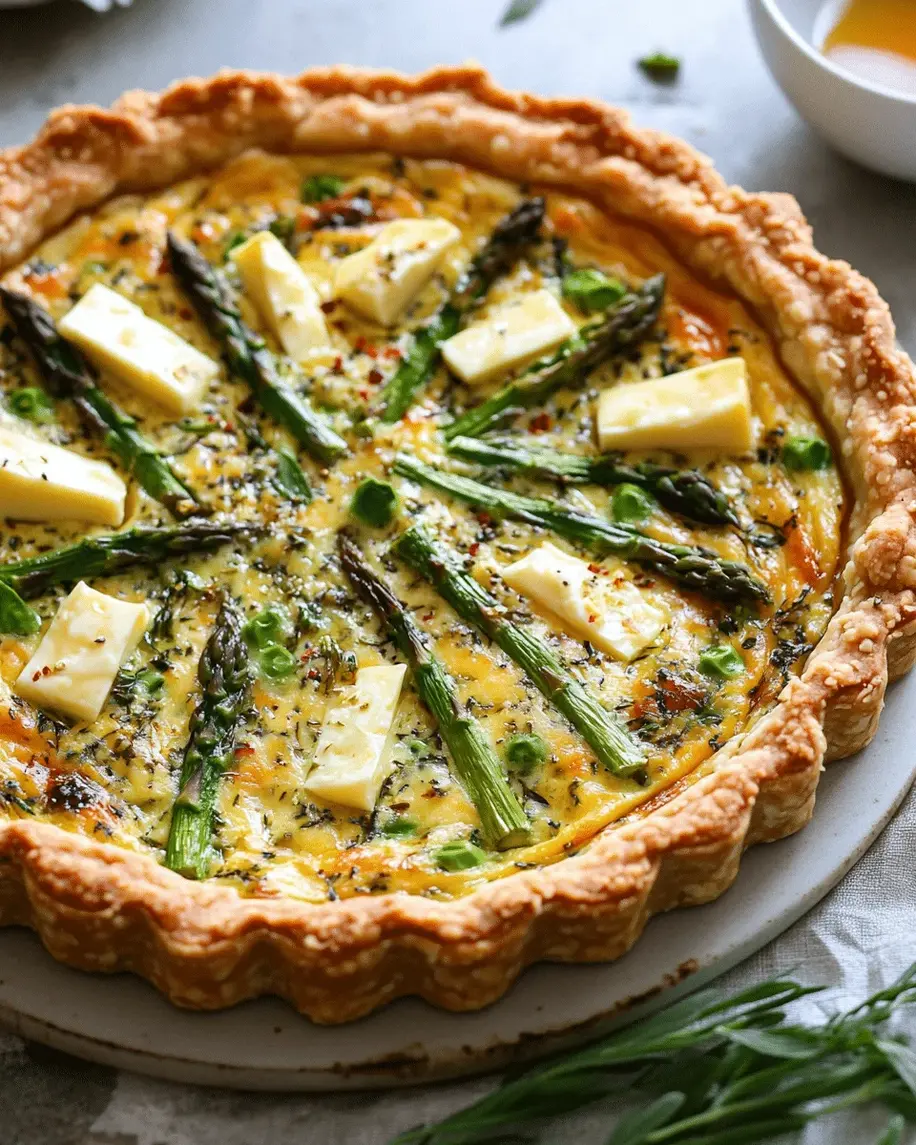
Every spring, as the first tender asparagus appears at the Union Square Greenmarket here in New York City, I feel pulled back into my mother’s kitchen in Morocco. She would roast bundles of wild asparagus with olive oil, cumin, and a squeeze of lemon — simple, honest, and bright. This asparagus quiche recipe is my French-trained answer to that memory, grounded in a sesame crust quiche that crackles with nutty aroma and gives way to a silky, herb-flecked custard. It’s a spring vegetable quiche that celebrates the season in every bite, with a crust that sets it apart from any other.
Imagine slicing into a wedge: the golden, sesame-freckled crust shatters softly under your fork, releasing the fragrance of toasted seeds and butter. The filling is a creamy cloud — eggs, cream, and a touch of nutmeg — studded with bright green asparagus tips and a confetti of fresh parsley, chives, and tarragon. Gruyère melts into every nook, adding a nutty, salty depth that echoes the sesame crust. It’s the kind of easy asparagus quiche that looks like you spent hours on it, but comes together with a relaxed, confident rhythm.
What makes this version truly special is the crust. Most quiche with fresh herbs recipes use a standard pâte brisée, but I’ve folded in toasted sesame seeds for a toasty, almost tahini-like richness that pairs beautifully with asparagus. I learned this trick during my pastry training in Paris — a tiny patisserie in the 6th arrondissement where the chef added crushed hazelnuts to his tart dough. I swapped in sesame, and it worked like a charm. In this post, I’ll share my blind-baking method to keep the crust perfectly crisp, the one herb you should never skip, and a common mistake that makes quiche watery.
Why This Asparagus Quiche Recipe Is the Best
The Flavor Secret: The sesame crust isn’t just a gimmick — it’s a bridge between the earthiness of asparagus and the richness of Gruyère. Toasting the seeds before mixing them into the dough unlocks an almost meaty, nutty aroma that you don’t get from raw seeds. This is a trick I picked up from my Moroccan grandmother, who toasted sesame seeds for her amlou (argan butter dip). It’s one layer of flavor that makes this spring vegetable quiche unforgettable.
Perfected Texture: Blind-baking the crust with pie weights ensures a crisp, sturdy base that won’t turn soggy under the custard. I also pre-cook the asparagus just until crisp-tender, which removes excess moisture and concentrates its flavor. The result is a quiche that slices cleanly, with a custard that’s set but still tremblingly soft — never rubbery or wet.
Foolproof & Fast: Even though this easy asparagus quiche has several steps, each one is straightforward. I’ve streamlined the process so you can prep the dough and the filling while the crust chills. The ingredient list is short and the technique is forgiving — perfect for a weekend brunch or a make-ahead weekday dinner.
Asparagus Quiche Recipe Ingredients
I source my asparagus from the farmers at the Union Square market — they stock thick, emerald-green spears that snap with freshness in early April. Fresh herbs come from my tiny fire-escape garden (tarragon grows like a weed in NYC), and I always use European-style butter for the flakiest crust. Each ingredient plays a supporting role in this quiche with fresh herbs, so quality matters.
Ingredients List
For the crust:
- 1 1/4 cups all-purpose flour
- 1/2 cup sesame seeds (toasted)
- 1/2 teaspoon salt
- 1/2 cup cold unsalted butter, cubed
- 3-4 tablespoons ice water
For the filling:
- 1 tablespoon olive oil
- 1 bunch asparagus (about 1 pound), trimmed and cut into 2-inch pieces
- 1/2 cup chopped fresh herbs (such as parsley, chives, and tarragon)
- 4 large eggs
- 1 cup heavy cream
- 1/2 cup whole milk
- 1/2 teaspoon salt
- 1/4 teaspoon black pepper
- 1/8 teaspoon ground nutmeg
- 1 cup shredded Gruyère cheese
Ingredient Spotlight
Sesame Seeds: Toast them in a dry skillet over medium heat for 2-3 minutes, stirring constantly, until they turn golden and smell fragrant. This step is non-negotiable — raw sesame seeds taste bitter and dusty. I buy hulled white sesame seeds from the bulk bin at Whole Foods; they toast evenly and blend seamlessly into the dough.
Asparagus: Look for spears that are firm, bright green, and have tightly closed tips. Thicker spears work better here because they hold their shape after cooking. If you can only find thin asparagus, reduce the sauté time to 3 minutes. In a pinch, frozen asparagus (thawed and patted dry) works, but the texture will be softer.
Gruyère: This Swiss cheese melts into a creamy, slightly salty layer that binds the filling. Substitute Comté or Emmental for a similar nuttiness, or use sharp white cheddar for a bolder flavor. Avoid pre-shredded cheese — it contains anti-caking agents that prevent smooth melting.
Fresh Herbs: Tarragon is the star — its subtle anise flavor is a classic pairing with asparagus. Chives add a mild oniony bite, and parsley brings freshness. If tarragon isn’t available, use dill or chervil instead. Dried herbs won’t give the same brightness, so stick with fresh for this quiche with fresh herbs.
| Original Ingredient | Best Substitution | Flavor / Texture Impact |
|---|---|---|
| Sesame Seeds | Poppy seeds or toasted sunflower seeds | Poppy seeds add a milder crunch; sunflower seeds give a nuttier, earthier profile |
| Gruyère Cheese | Comté, Emmental, or sharp white cheddar | Comté is closest; cheddar adds a sharper, more assertive flavor |
| Heavy Cream | Half-and-half or full-fat coconut milk | Half-and-half produces a lighter custard; coconut milk adds a subtle sweetness and dairy-free option |
| Fresh Tarragon | Fresh dill or fresh chervil | Dill adds a brighter, more licorice-like note; chervil is delicate and slightly sweet |
How to Make Asparagus Quiche — Step-by-Step
This spring vegetable quiche comes together in three main stages: the crust, the filling, and the assembly. Follow these steps, and you’ll have a stunning quiche that rivals any Parisian bistro version.
Step 1: Make the Sesame Crust
In a food processor, pulse the flour, toasted sesame seeds, and salt until combined. Add the cold cubed butter and pulse in short bursts until the mixture resembles a coarse meal with pea-sized butter pieces. Drizzle in ice water, 1 tablespoon at a time, pulsing after each addition until the dough just holds together when squeezed. Do not over-process — the dough should be shaggy, not a solid ball.
💡 mia’s Pro Tip: Freeze the butter for 10 minutes before cubing — it will stay cold longer and create a flakier crust.
Step 2: Chill the Dough
Turn the shaggy dough onto a lightly floured surface and gather it into a disk. Wrap tightly in plastic wrap and refrigerate for at least 30 minutes (or up to 3 days). Chilling relaxes the gluten and firms the butter, which prevents shrinkage during baking.
⚠️ Common Mistake to Avoid: Skipping the chill leads to a tough, shrinking crust. Don’t rush it — 30 minutes is the minimum.
Step 3: Preheat and Roll
Preheat the oven to 375°F (190°C). On a floured surface, roll the chilled dough into a 12-inch circle, about 1/8-inch thick. Transfer to a 9-inch tart pan with a removable bottom, pressing gently into the fluted edges and trimming the excess. Prick the bottom all over with a fork to prevent air bubbles.
💡 mia’s Pro Tip: Roll the dough between two sheets of parchment paper for easier transfer — no sticking, no mess.
Step 4: Blind Bake the Crust
Line the crust with parchment paper and fill with pie weights or dried beans. Bake for 15 minutes, then remove the parchment and weights and bake for 5 more minutes, until the crust is lightly golden. Cool on a wire rack while you prepare the filling.
⚠️ Common Mistake to Avoid: Skipping the weights causes the crust to puff up and lose its shape. Use dried beans if you don’t have pie weights — they’re reusable for blind baking.
Step 5: Prepare the Asparagus Filling
In a large skillet, heat olive oil over medium heat. Add the asparagus pieces and cook, stirring occasionally, for 5 minutes until crisp-tender and bright green. Remove from heat, stir in the chopped fresh herbs (parsley, chives, and tarragon), and set aside.
💡 mia’s Pro Tip: Cook the asparagus just until it turns bright green and yields slightly to a fork — it will continue to cook in the oven, so you don’t want it mushy from the start.
Step 6: Whisk the Custard
In a large bowl, whisk together the eggs, heavy cream, milk, salt, pepper, and nutmeg until completely smooth and homogeneous. The mixture should be pale yellow and slightly frothy on top.
⚠️ Common Mistake to Avoid: Over-whisking incorporates too much air, which can cause the quiche to puff up and then collapse. Whisk just until smooth — about 20 seconds.
Step 7: Assemble the Quiche
Spread the asparagus-herb mixture evenly over the pre-baked crust. Sprinkle the shredded Gruyère over the asparagus, then pour the egg custard over the cheese. The cheese will float slightly — that’s fine; it creates a delicious top layer.
💡 mia’s Pro Tip: Pour the custard slowly over the back of a spoon to avoid disturbing the asparagus arrangement. This keeps the filling evenly distributed.
Step 8: Bake to Perfection
Place the assembled quiche on a baking sheet and bake at 375°F for 30-35 minutes, until the center is just set (a gentle jiggle in the very center when you shake the pan) and the top is lightly golden. Cool on a rack for at least 10 minutes before slicing — this allows the custard to finish setting.
⚠️ Common Mistake to Avoid: Over-baking is the #1 cause of a rubbery quiche. The center should still wobble slightly when you pull it out — it will set as it cools.
| Step | Action | Duration | Key Visual Cue |
|---|---|---|---|
| 1 | Make crust dough | 5 minutes | Coarse meal with pea-sized butter pieces |
| 2 | Chill dough | 30 minutes | Dough firms and feels cool to touch |
| 3 | Roll and shape crust | 5 minutes | 12-inch circle, even thickness |
| 4 | Blind bake crust | 20 minutes | Lightly golden, dry surface |
| 5 | Sauté asparagus with herbs | 5 minutes | Bright green, crisp-tender |
| 6 | Whisk custard | 2 minutes | Pale yellow, smooth, slightly frothy |
| 7 | Assemble quiche | 5 minutes | Even layers: asparagus, cheese, custard |
| 8 | Bake quiche | 30-35 minutes | Center set with slight jiggle, top golden |
Serving & Presentation
I love serving this spring vegetable quiche warm — not piping hot, but just slightly above room temperature, when the custard is at its creamiest and the sesame crust is still crisp. Slice it into 8 wedges with a sharp chef’s knife, wiping the blade clean between cuts for neat edges. Arrange the slices on a large wooden board or a white platter, and garnish with a few fresh herb sprigs and a light dusting of flaky sea salt.
For a complete meal, I pair it with a simple arugula salad dressed in lemon vinaigrette — the peppery bite cuts through the richness of the quiche. In my NYC apartment, I often serve it alongside roasted cherry tomatoes or a bowl of chilled pea soup for a true spring spread. Inspired by my Parisian training, I sometimes add a dollop of crème fraîche on the side and a sprinkle of Espelette pepper for a subtle, smoky heat.
| Pairing Type | Suggestions | Why It Works |
|---|---|---|
| Side Dish | Arugula salad with lemon vinaigrette, roasted cherry tomatoes, or chilled pea soup | Bright acidity and freshness balance the rich, creamy quiche |
| Sauce / Dip | Crème fraîche, Dijon mustard, or a drizzle of balsamic glaze | Adds tangy complexity and a touch of elegance |
| Beverage | Crisp Sauvignon Blanc, dry rosé, or sparkling water with lemon | The wine’s acidity cuts through the custard; sparkling water cleanses the palate |
| Garnish | Fresh tarragon sprigs, flaky sea salt, edible flowers | Adds color, texture, and a final layer of herbal aroma |
Make-Ahead, Storage & Reheating
This easy asparagus quiche is a meal-prep hero. I often make it on Sunday evening and enjoy slices throughout the busy NYC workweek. The key is to cool it completely before storing, and to reheat gently to preserve the custard’s silky texture.
| Method | Container | Duration | Reheating Tip |
|---|---|---|---|
| Refrigerator | Airtight container or tightly wrapped in plastic | Up to 3 days | Reheat in a 300°F oven for 10-12 minutes, or microwave individual slices for 45 seconds |
| Freezer | Wrap each slice in plastic then foil, or use a freezer-safe container | Up to 2 months | Thaw overnight in the fridge, then reheat at 300°F for 15 minutes |
| Make-Ahead | Assemble quiche completely but do not bake; cover and refrigerate | Up to 1 day in advance | Add 5-7 minutes to the baking time if baking straight from the fridge |
To reheat, I prefer the oven method — it revives the crust’s crispness better than a microwave. Place slices on a baking sheet and warm at 300°F for 10-12 minutes. If the edges of the crust start browning too quickly, tent loosely with foil. For a quick breakfast, I microwave a single slice for about 45 seconds — it softens the crust slightly, but the flavor is still wonderful.
Variations & Easy Swaps
This asparagus quiche recipe is endlessly adaptable. Here are my favorite variations, each tested in my NYC kitchen:
| Variation | Key Change | Best For | Difficulty Impact |
|---|---|---|---|
| Spring Pea & Asparagus | Add 1 cup fresh or frozen peas to the filling | Extra sweetness and color | Easy — no change in technique |
| Gluten-Free Sesame Crust | Replace all-purpose flour with gluten-free 1:1 baking flour | Gluten-free diets | Medium — add 1 tsp xanthan gum if your flour blend doesn’t include it |
| Smoked Salmon & Dill | Replace half the asparagus with flaked smoked salmon and use dill instead of tarragon | A luxurious brunch twist | Easy — just swap ingredients |
Spring Pea & Asparagus Quiche
Add 1 cup of fresh or frozen peas (thawed if frozen) to the asparagus mixture in Step 5. The peas add a pop of sweetness and a vibrant green contrast. I love this version for Easter brunch — it feels extra festive. If using fresh peas, blanch them in boiling water for 2 minutes before adding.
Gluten-Free Sesame Crust Quiche
Substitute the all-purpose flour with a high-quality gluten-free 1:1 baking flour blend (I use Bob’s Red Mill). Add 1 teaspoon of xanthan gum if your blend doesn’t already contain it. The dough will be slightly more delicate, so press it into the pan gently rather than rolling it. The sesame seeds help bind the crust and add texture. This version has been tested by my gluten-sensitive sister-in-law and gets rave reviews.
Smoked Salmon & Dill Twist
Replace half of the asparagus with 4 ounces of flaked smoked salmon, and swap the tarragon for fresh dill. The smoky, salty salmon pairs beautifully with the creamy custard and sesame crust. I discovered this combination at a Sunday brunch spot in Brooklyn — it’s now my go-to for special occasions. Reduce the salt in the custard slightly, as the salmon is already salty.
Can I use a different type of crust for this asparagus quiche if I don’t have sesame seeds?
Absolutely — the sesame crust is a signature element, but this asparagus quiche recipe works beautifully with a standard pâte brisée or even a store-bought pie crust. If you skip the sesame seeds, simply replace them with an equal volume of flour (1/2 cup). For a nutty alternative, try using toasted sunflower seeds or poppy seeds — they’ll give a similar crunch and visual appeal. A gluten-free crust made from almond flour or a ready-made gluten-free pie shell also works well. Just be sure to blind-bake any crust to prevent sogginess.
How do I prevent the quiche crust from getting soggy when using fresh asparagus?
The key to a crisp, non-soggy crust in any spring vegetable quiche is a two-step approach: blind-bake the crust until lightly golden, and pre-cook the asparagus to remove excess moisture. Sautéing the asparagus for 5 minutes until crisp-tender evaporates much of its water content. Additionally, sprinkle the shredded Gruyère directly onto the asparagus before pouring the custard — the cheese acts as a barrier that helps protect the crust from absorbing liquid. Let the quiche cool for at least 10 minutes after baking to allow the custard to set fully before slicing.
Should I blanch the asparagus before adding it to the quiche filling?
Blanching is not necessary for this easy asparagus quiche — in fact, I recommend sautéing rather than blanching. Sautéing in olive oil concentrates the asparagus flavor and keeps the spears firm enough to hold their shape during baking. Blanching would add an extra step and could make the asparagus waterlogged, which would release moisture into the custard. If you prefer a very tender asparagus texture, you can blanch the pieces for 2 minutes in salted boiling water, then plunge them into ice water and pat them very dry before adding to the quiche.
What fresh herbs pair best with asparagus in a quiche recipe?
For a quiche with fresh herbs, my top three are tarragon, chives, and parsley. Tarragon has a subtle licorice-like flavor that is a classic French pairing with asparagus — it elevates the quiche without overpowering it. Chives add a mild oniony freshness, and parsley brings a clean, grassy note. If you want to experiment, dill works beautifully with asparagus (especially if you add smoked salmon), and chervil adds a delicate, almost sweet flavor. Avoid strongly flavored herbs like rosemary or sage, as they can dominate the delicate custard and asparagus.
Can I make this asparagus quiche dairy-free?
Yes, with a few smart substitutions. Replace the heavy cream and whole milk with full-fat canned coconut milk (shake well before measuring) or a good-quality unsweetened oat cream. For the cheese, use a dairy-free shredded mozzarella or cheddar-style alternative — look for one that melts well, like Violife or Miyoko’s. In the crust, substitute the butter with cold vegan butter or coconut oil (use 1/3 cup coconut oil instead of 1/2 cup butter). Blind-bake the crust as directed. The texture will be slightly less rich but still deliciously creamy.
How do I know when the quiche is fully baked?
The classic test for a perfectly baked asparagus quiche recipe is the jiggle test. Gently shake the tart pan — the center should have a slight, soft wobble, like a firm custard, while the edges should be fully set. If the center ripples like liquid, it needs more time. Additionally, insert a thin knife about 1 inch from the center; if it comes out clean, the quiche is done. The internal temperature should read 165°F to 170°F on an instant-read thermometer. Remember that the quiche continues to cook as it cools, so pull it out when the center still has a gentle jiggle.
Can I use frozen asparagus for this quiche?
Yes, frozen asparagus works in a pinch, but the texture will be softer than fresh. Thaw the spears completely, then pat them very dry with paper towels to remove as much moisture as possible. Cut them into 2-inch pieces and sauté in olive oil for 3-4 minutes (frozen asparagus cooks faster than fresh). Frozen asparagus tends to be more watery, so I recommend increasing the blind-baking time by 2-3 minutes to ensure the crust stays crisp. Fresh asparagus is always best for this spring vegetable quiche, but frozen is a fine substitute when asparagus is out of season.
What can I serve alongside this quiche for a complete meal?
This quiche with fresh herbs is hearty enough to be the star of the meal, but a few simple sides turn it into a feast. A crisp green salad with a tangy lemon vinaigrette is my go-to — the acidity cuts through the rich custard. Roasted baby potatoes or a bowl of spring pea soup make excellent warm sides. For a lighter option, serve with steamed green beans or a simple tomato salad. I also love offering a small bowl of cornichons and whole-grain mustard on the side — it’s a French bistro touch that adds a punchy, acidic contrast to every bite.
Can I freeze the unbaked quiche for later?
Absolutely — this easy asparagus quiche freezes beautifully before baking. Assemble the quiche completely in the tart pan, but do not bake. Wrap the entire pan tightly in plastic wrap, then in a layer of aluminum foil, and freeze for up to 2 months. When ready to bake, do not thaw — bake directly from frozen at 375°F, adding 15-20 minutes to the baking time. Cover the edges with foil if they brown too quickly. The texture will be slightly less delicate than a freshly assembled quiche, but it’s a wonderful time-saving option for busy weeks.
Why did my quiche turn out watery on top?
A watery top layer usually indicates that the custard separated during baking — this happens when the quiche is over-baked or baked at too high a temperature. The eggs overcook and release moisture, which pools on the surface. To fix this, always bake at the recommended 375°F and use an oven thermometer to verify accuracy. Another cause is using vegetables that haven’t been properly dried — make sure to sauté the asparagus until any excess moisture has evaporated. If the top still weeps, try reducing the milk by 2 tablespoons and increasing the cream by the same amount for a more stable custard.
Share Your Version!
I absolutely love seeing how this asparagus quiche recipe turns out in your kitchen! Did you stick with the sesame crust or try one of the variations? Did you add a pinch of cumin for a Moroccan touch, or swap in dill for a Scandinavian vibe? Leave a star rating and a comment below — your feedback helps other home cooks decide which version to try first.
Snap a photo of your quiche and tag me on Instagram or Pinterest @exorecipes — I share my favorites in my stories every week. And if you made the gluten-free or dairy-free version, I’d especially love to hear how it went. What’s your favorite herb to pair with asparagus in a spring quiche? Drop your answer in the comments!
From my NYC kitchen to yours — I hope this recipe brings as much warmth to your table as it does to mine. — mia 🧡
Love This Recipe? Save It to Pinterest!
If you enjoyed this Asparagus Quiche with Sesame Crust and Fresh Herbs recipe, don’t let it get lost in your browser tabs! 😄 Pin it now so you can find it again anytime — and explore hundreds more tried-and-tested recipes waiting for you on my Pinterest boards.
👉 Follow mia on Pinterest @exorecipe
📌 Pin this recipe · 🔁 Re-pin your favorites · 💬 Tag me when you make it — I love seeing your creations!
I Want to Hear From You!
Have a question about this recipe? Tried a fun variation? Drop a comment below or tag me on social — I read every single one and answer as fast as I can. Your voice makes this community special!
⬇️ Scroll down to leave your star rating and comment! ⬇️
Asparagus Quiche with Sesame Crust and Fresh Herbs
- Prep Time: 25 minutes
- Cook Time: 35 minutes
- Total Time: 1 hour 30 minutes (includes chilling)
- Yield: 8 1x
- Method: Main Course
- Cuisine: French-inspired
Description
A savory quiche featuring a crisp sesame crust, tender asparagus, and a medley of fresh herbs baked in a creamy egg custard.
Ingredients
- For the crust:
- 1 1/4 cups all-purpose flour
- 1/2 cup sesame seeds (toasted)
- 1/2 teaspoon salt
- 1/2 cup cold unsalted butter, cubed
- 3–4 tablespoons ice water
- For the filling:
- 1 tablespoon olive oil
- 1 bunch asparagus (about 1 pound), trimmed and cut into 2-inch pieces
- 1/2 cup chopped fresh herbs (such as parsley, chives, and tarragon)
- 4 large eggs
- 1 cup heavy cream
- 1/2 cup whole milk
- 1/2 teaspoon salt
- 1/4 teaspoon black pepper
- 1/8 teaspoon ground nutmeg
- 1 cup shredded Gruyère cheese
Instructions
- Make the crust: In a food processor, pulse flour, sesame seeds, and salt. Add butter and pulse until mixture resembles coarse meal. Drizzle in ice water, 1 tablespoon at a time, pulsing until dough just holds together.
- Turn dough onto a floured surface, shape into a disk, wrap in plastic, and refrigerate for at least 30 minutes.
- Preheat oven to 375°F (190°C).
- Roll dough on a floured surface to a 12-inch circle. Transfer to a 9-inch tart pan with removable bottom, pressing into bottom and sides. Trim excess. Prick bottom with a fork.
- Line crust with parchment paper and fill with pie weights or dried beans. Bake for 15 minutes. Remove parchment and weights, bake 5 more minutes until lightly golden. Cool on a rack.
- Prepare filling: In a skillet, heat olive oil over medium heat. Add asparagus and cook 5 minutes, until crisp-tender. Stir in fresh herbs; set aside.
- In a bowl, whisk eggs, cream, milk, salt, pepper, and nutmeg until smooth.
- Spread asparagus mixture evenly over crust. Sprinkle Gruyère over asparagus. Pour egg mixture on top.
- Bake quiche for 30-35 minutes, until center is set and top is lightly golden. Cool on rack 10 minutes before slicing.
- Serve warm or at room temperature. Garnish with extra fresh herbs if desired.
Notes
To toast sesame seeds, heat a dry skillet over medium heat and stir seeds for 2-3 minutes until fragrant. Quiche can be stored in the refrigerator for up to 3 days.
Nutrition
- Calories: 380
- Sugar: 3g
- Fat: 30g
- Carbohydrates: 18g
- Protein: 14g

k">
Tried This Recipe? Leave a Comment!
Did you make this recipe? I’d love to hear how it turned out! Please leave a comment and a rating below. Your feedback helps other home cooks and supports cheerychop.com!
For more delicious inspiration, follow me on Pinterest!
