Table of Contents
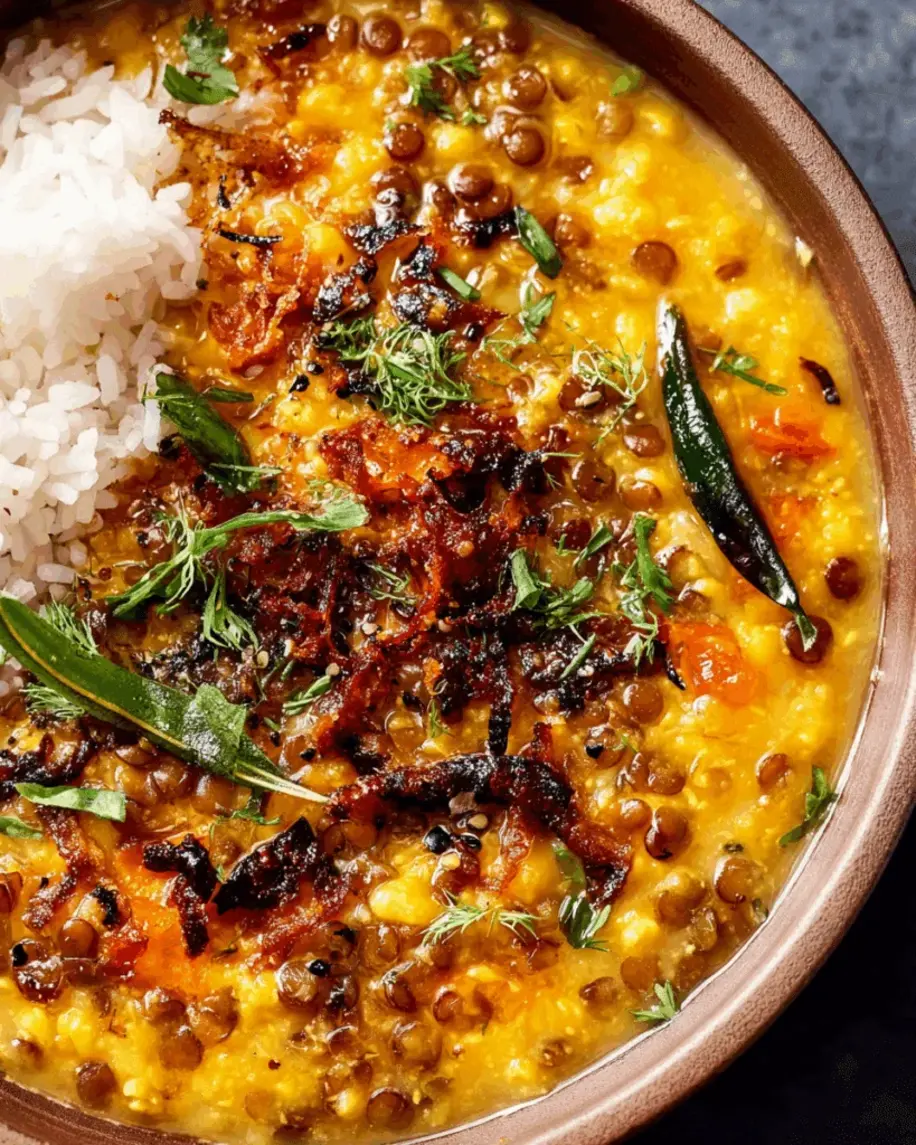
Comforting Two-Lentil Dal with Aromatic Tempering – A Hearty, Spiced Bowl of Comfort
I still remember the first time I made a truly comforting dal in my tiny New York apartment. I had just moved from Paris, where I trained at Le Cordon Bleu, and my pantry was a mix of Moroccan spices from my mother’s kitchen in Casablanca and French staples like butter and thyme. That night, I craved something deeply warming—a dish that would wrap me in memories of home. I reached for red lentils and yellow split lentils, and with the aromatic tempering—tadka—I created this two-lentil dal recipe that has become my signature. The combination of earthy lentils and a sizzling tempering of mustard seeds, cumin, and curry leaves is pure comfort in a bowl.
The beauty of this comforting dal recipe lies in its layers. The red lentils break down to a creamy, almost velvety texture while the yellow lentils hold a bit of shape, giving you a wonderful contrast. When you pour the hot tempering—ghee infused with asafoetida, dried red chilies, and fresh curry leaves—over the cooked lentils, the aroma hits you first: warm, pungent, and inviting. Each spoonful is a balance of earthy, tangy, and lightly spicy notes, with a hint of sweetness from caramelized onions. It’s the kind of dish that makes you slow down and savor every bite.
I’ve tested this homemade dal countless times—for weeknight dinners, meal prep sessions, and even for friends who claim they can’t cook Indian food. My version is foolproof because I bring the technique I learned in French kitchens—low and slow simmering, careful layering of flavors—together with the soulful spice wisdom of my Moroccan heritage. The key is the aromatic tempering: done right, it elevates the dal from simple to spectacular. I’ll show you how to master it without burning a single seed. From my NYC kitchen to yours, let’s make this two-lentil dal recipe together.
Why This Two-Lentil Dal Recipe Is The Best
The Flavor Secret – The aromatic tempering is where this comforting dal recipe really shines. By blooming mustard seeds, cumin, asafoetida, and curry leaves in ghee, you create a fragrance bath that infuses every drop of the dal. Growing up in Morocco, my mother always tempered her lentil dishes with similar spices, and in Paris I learned the precision of heating oil just to the right temperature. Here, I combine both worlds: controlled heat and bold spices. The result is a dal that tastes complex but comes together in under an hour.
Perfected Texture – Combining red lentils (masoor dal) and yellow split lentils (moong dal) gives you the ideal consistency. Red lentils dissolve into a silky puree, while yellow lentils retain a slight bite. To achieve this, I soak them briefly and simmer them slowly, stirring occasionally to prevent sticking. The French technique of à feu doux (low heat) ensures even cooking. No mushy mess, no undercooked grains—just a luscious, hearty dal that clings to rice or naan.
Foolproof & Fast – This homemade dal is made for busy home cooks. With just 15 minutes of prep and 35 minutes of hands-off simmering, you can have a nutritious, protein-packed meal on the table. The ingredient list is straightforward—most are pantry staples. And because I’ve tested the tempering timing repeatedly, you don’t need to worry about burning the spices. Just follow my visual cues, and you’ll nail it every time. Plus, it scales beautifully for meal prep.
Two-Lentil Dal Recipe Ingredients
I love sourcing my lentils from the bulk bins at the Union Square Greenmarket here in NYC—they’re fresh and affordable. The spices for the aromatic tempering come from my favorite little shop in Jackson Heights, but you can find all of them at any well-stocked grocery store. This two-lentil dal recipe uses simple ingredients that together create something magical.
Ingredients List
- 1/2 cup red lentils (masoor dal)
- 1/2 cup yellow split lentils (moong dal)
- 4 cups water
- 1 teaspoon turmeric powder
- 1 teaspoon salt, or to taste
- For the tempering:
- 2 tablespoons ghee or oil
- 1 teaspoon mustard seeds
- 1 teaspoon cumin seeds
- 1/2 teaspoon asafoetida (hing)
- 2 dried red chilies, broken
- 1 sprig curry leaves
- 1 medium onion, finely chopped
- 2 cloves garlic, minced
- 1-inch piece ginger, grated
- 1 green chili, slit
- 1 large tomato, chopped
- 1/2 teaspoon red chili powder
- 1/2 teaspoon garam masala
- Fresh cilantro for garnish
Ingredient Spotlight
Red Lentils (Masoor Dal): These cook quickly and break down into a creamy base. Look for bright orange-red, unbroken lentils. If you can only find brown lentils, note that they take longer to cook and won’t break down as much—add 10 extra minutes and expect a chunkier texture.
Yellow Split Lentils (Moong Dal): They add a nutty flavor and hold their shape nicely. Choose split moong dal (without skin) for the right texture. Whole moong (green gram) works but requires longer soaking and cooking—soak overnight and simmer for 40 minutes instead of 25.
Asafoetida (Hing): This pungent resin is the secret to authentic Indian dal. It adds a deep, savory note that mimics onion and garlic. If you don’t have it, you can omit it—the dal will still be delicious, but you’ll miss that unique umami lift.
Curry Leaves: Fresh curry leaves are a game-changer. They release a citrusy, aromatic flavor when fried. Don’t confuse them with curry powder. If you can’t find fresh, dried curry leaves work, but use half the amount and crush them slightly before adding.
| Original Ingredient | Best Substitution | Flavor / Texture Impact |
|---|---|---|
| Red lentils | Brown lentils (soaked longer) | Chunkier, earthier, longer cook time |
| Yellow split lentils | Whole moong (soaked overnight) | Firmer texture, green hue, nuttier flavor |
| Asafoetida (hing) | Pinch of garlic powder + onion powder | Less complex but still savory |
| Fresh curry leaves | Dried curry leaves (crushed) or lime zest | Less aromatic; lime zest adds brightness |
| Ghee | Coconut oil or avocado oil | Coconut oil adds slight sweetness; avocado oil is neutral |
How to Make Two-Lentil Dal — Step-by-Step
Making this comforting dal is easier than you think. I’ll guide you through each step with visual cues and my tried-and-true tips. Let’s get cooking.
Step 1: Prepare the Lentils
Rinse both lentils thoroughly under cold running water until the water runs clear. This removes excess starch and any debris. Then soak them in water for 15 minutes. Drain well. Soaking softens the lentils and helps them cook evenly.
💡 mia’s Pro Tip: Don’t skip the soak – even a short soak reduces cooking time and prevents the lentils from foaming while boiling. If you’re in a hurry, skip it, but add 5 minutes to simmer time.
Step 2: Cook the Lentils
In a large pot, combine the drained lentils, 4 cups water, turmeric powder, and salt. Bring to a boil over high heat, then reduce heat to low, cover, and simmer for 20–25 minutes. Stir occasionally and add a little more water if the dal becomes too thick. The lentils should be soft and mushy when done.
⚠️ Common Mistake to Avoid: Boiling too vigorously can cause the lentils to break apart too much and stick to the bottom. Keep it at a gentle simmer, and stir every 5 minutes.
Step 3: Start the Tempering
While the lentils cook, heat ghee or oil in a small pan over medium heat. Add mustard seeds and cumin seeds. Let them splutter for about 15 seconds – they should pop and release their aroma.
💡 mia’s Pro Tip: To avoid burning seeds, use a heavy-bottomed pan and watch carefully. As soon as the mustard seeds start popping, add the next ingredients. If they burn, start over—it’s not worth the bitter taste.
Step 4: Add Aromatics
Add asafoetida, broken dried red chilies, and curry leaves. Sauté for about 10 seconds, until the curry leaves become crisp and the asafoetida releases its pungent smell. Be careful not to brown the curry leaves too much.
⚠️ Common Mistake to Avoid: Non-Indian cooks often add curry leaves too early. They burn quickly and turn bitter. Add them only after the seeds have popped, and stir for just 10 seconds before moving to the next step.
Step 5: Cook the Onion Mixture
Add the finely chopped onion, minced garlic, grated ginger, and slit green chili. Sauté over medium heat until the onion turns golden brown, about 5–6 minutes. Stir frequently to prevent burning.
💡 mia’s Pro Tip: For deeper flavor, let the onion get dark golden edges—that’s where the sweetness comes from. If the pan seems dry, add a teaspoon of water to deglaze.
Step 6: Add Tomatoes and Spices
Add the chopped tomato and red chili powder. Cook until the tomatoes soften and the oil separates from the mixture, about 3–4 minutes. Then add garam masala and stir for 30 seconds.
⚠️ Common Mistake to Avoid: Adding garam masala too early can make it taste raw. Wait until the tomatoes are cooked down, then add it at the very end of the tempering for a fresh, aromatic finish.
Step 7: Combine and Simmer
Pour the entire tempering over the cooked lentils. Stir well to combine. Let the dal simmer for 5 minutes so the flavors meld. Taste and adjust salt and spices. Garnish with fresh cilantro.
💡 mia’s Pro Tip: After adding the tempering, let the dal sit off heat for 10 minutes before serving. This resting time allows the spices to deepen. It tastes even better the next day!
| Step | Action | Duration | Key Visual Cue |
|---|---|---|---|
| 1 | Prepare lentils | 15 min soak | Water runs clear, lentils swell slightly |
| 2 | Cook lentils | 20-25 min | Soft, mushy, can mash easily |
| 3 | Start tempering | 15 sec | Mustard seeds pop, cumin seeds darken |
| 4 | Add aromatics | 10 sec | Curry leaves crisp, asafoetida fragrant |
| 5 | Sauté onion mix | 5-6 min | Onion golden brown, garlic fragrant |
| 6 | Add tomato & spices | 3-4 min | Tomato soft, oil separates, masala fragrant |
| 7 | Combine & simmer | 5 min | Dal thickens, color deepens, aroma blends |
Serving & Presentation
This homemade dal is incredibly versatile. I love serving it over a bed of fluffy basmati rice – the grains soak up the dal beautifully. For a gluten-free option, pair it with warm naan or roti, which you can find fresh at many NYC Indian bakeries. A squeeze of fresh lemon juice right before serving brightens all the flavors.
When I serve this at dinner parties, I finish it with a drizzle of good ghee and a handful of fresh cilantro. Sometimes I add a dollop of Greek yogurt on the side – the coolness balances the warmth of the spices. For a Moroccan touch (my mother’s influence), I sprinkle a pinch of cinnamon and toasted cumin seeds on top. It’s unexpected but absolutely delicious.
| Pairing Type | Suggestions | Why It Works |
|---|---|---|
| Side Dish | Steamed rice, naan, roti, quinoa | Neutral base contrasts rich dal; naan adds chewiness |
| Sauce / Dip | Mango chutney, yogurt raita, pickled onions | Sweet/sour cuts heat; raita cools palate |
| Beverage | Mango lassi, chai, cold beer (lager) | Creamy lassi matches texture; beer refreshes |
| Garnish | Cilantro, lemon wedge, extra ghee, toasted cumin | Adds freshness, brightness, and richness |
Make-Ahead, Storage & Reheating
This comforting dal is a meal prep dream. I often make a double batch on Sunday and enjoy it for lunch all week. The flavors only get better as they meld – that’s because the spices have time to marry. Here’s how to store it properly.
| Method | Container | Duration | Reheating Tip |
|---|---|---|---|
| Refrigerator | Airtight glass container | Up to 4 days | Add a splash of water, reheat on stovetop or microwave, stirring occasionally |
| Freezer | Freezer-safe bag or container (leave headspace) | Up to 3 months | Thaw overnight in fridge, then reheat with a little water; dal will thicken – thin as needed |
| Make-Ahead | Prepare lentils and tempering separately | Lentils: 3 days; tempering: 1 day | Reheat lentils, then make fresh tempering just before serving for best aroma |
When reheating, I prefer the stovetop because it lets me adjust consistency. The dal tends to thicken significantly after refrigeration – that’s normal. Just stir in a quarter cup of water or vegetable broth and warm over low heat, stirring occasionally. If the flavors seem muted, a pinch of salt and a squeeze of lemon juice will revive them. Avoid boiling hard, as it can break the lentils further and make the dal pasty.
Variations & Easy Swaps
One of the reasons I love this two-lentil dal recipe is how adaptable it is. You can change up the lentils, the tempering, or even add vegetables. Here are some of my favorite variations.
| Variation | Key Change | Best For | Difficulty Impact |
|---|---|---|---|
| Creamy Coconut Dal | Add 1/2 cup coconut milk at end; replace ghee with coconut oil | Vegan comforting dal, tropical twist | Easy (no extra steps) |
| Spicy Pumpkin Dal | Add 1 cup pumpkin puree with lentils; increase red chili powder | Fall flavors, extra nutrition | Easy (stir in puree) |
| One-Pot Lentil Soup | Increase water to 6 cups, add 1 cup chopped carrots and celery | Lighter meal, soup lovers | Easy (add vegetables with lentils) |
Creamy Coconut Dal
This variation is my go-to when I want a richer, dairy-free version. Replace the ghee with coconut oil in the tempering, and stir in 1/2 cup full-fat coconut milk after combining the tempering with the lentils. The coconut adds a subtle sweetness that pairs beautifully with the warm spices. I like to finish with fresh curry leaves fried in coconut oil – it’s a nod to Kerala-style cooking. The dal becomes almost dessert-like, but still savory. Serve with steamed rice and a side of sautéed greens.
Vegan & Gluten-Free Dal
This recipe is already gluten-free as written (no wheat ingredients). For a vegan version, simply swap the ghee for your favorite neutral oil – avocado or sunflower work well. I’ve tested it with coconut oil too, and it’s fantastic. The asafoetida is naturally gluten-free (check the label, as some brands add wheat flour). To keep it fully vegan, serve with rice or gluten-free flatbreads. The rest of the ingredients – lentils, spices, vegetables – are all plant-based. It’s a protein-packed meal that satisfies everyone at the table.
Moroccan-Spiced Dal
When I’m craving a taste of my childhood, I make this version. Replace the garam masala with 1 teaspoon ras el hanout (a North African spice blend) and add a pinch of cinnamon and smoked paprika. In the tempering, swap the curry leaves for a few strands of saffron soaked in warm water. The result is a dal that’s warm, sweet, and slightly smoky. I like to top it with toasted almonds and a drizzle of honey – it’s unexpected but magical. This variation is perfect for a cozy dinner with crusty bread.
What is the best way to cook two different types of lentils together so they have the right texture?
The key to perfect texture when cooking two types of lentils together is to choose lentils with similar cooking times. In this two-lentil dal recipe, red lentils and yellow split lentils both cook in about 20–25 minutes. I also recommend a brief 15-minute soak to soften them evenly. If you mix lentils with different cooking times (like brown lentils and red), you can add the slower-cooking ones first, then the faster ones later. Always simmer gently – boiling can cause uneven cooking and make the dal stick to the pot. Stir occasionally and add water as needed to maintain a thick, soupy consistency.
Can I substitute one of the lentils in a two-lentil dal recipe with another type?
Absolutely, but you need to adjust cooking times and liquid. For example, you can replace red lentils with brown lentils – brown lentils are firmer and take about 35–40 minutes to cook, so increase the simmer time and add an extra 1/2 cup of water. If you swap yellow split lentils for whole moong (green gram), soak them overnight and cook for 40 minutes instead of 25. The texture will change: brown lentils hold their shape more, while whole moong stays slightly chewy. For a truly comforting dal, I recommend sticking with red and yellow split lentils for their creamy-yet-slightly-chunky balance.
How do you make the aromatic tempering (tadka) for dal without it burning?
Burning the tempering is a common frustration, but it’s easy to avoid with a few tricks. First, use a heavy-bottomed pan (like stainless steel or cast iron) that distributes heat evenly. Always heat the ghee or oil over medium heat – never high heat. When you add mustard seeds and cumin seeds, they should splutter within 15 seconds; if they pop too slowly, the heat is too low. Have all your other ingredients (asafoetida, chilies, curry leaves) ready and add them immediately after the seeds pop. Keep stirring constantly, and if the pan starts smoking, remove it from the heat briefly. The entire tempering process should take less than 10 minutes, so stay attentive.
What is the ideal cooking time for a comforting two-lentil dal on the stovetop?
For this two-lentil dal recipe with red and yellow split lentils, the total stovetop time is about 35 minutes: 15 minutes for prep (rinsing and soaking) and 20–25 minutes of simmering. After that, you’ll add the tempering and let it simmer for another 5 minutes to meld flavors. So from start to finish, you’re looking at roughly 50 minutes total. If you skip the soak, add 5–7 minutes to the simmer. The dal is ready when the lentils are soft enough to mash with a spoon against the side of the pot. If you’re in a hurry, you can use a pressure cooker – that cuts the lentil cooking time to 10 minutes.
Can I make this two-lentil dal in an Instant Pot or pressure cooker?
Yes, this recipe adapts beautifully to an Instant Pot. Rinse and soak the lentils as directed. Add them to the pot with 3 cups of water (instead of 4, since less evaporates) plus turmeric and salt. Pressure cook on high for 10 minutes with natural release for 10 minutes. Meanwhile, prepare the tempering in a separate pan (or use the Instant Pot’s sauté function after releasing pressure – but be careful not to burn). Once the lentils are done, pour the tempering over them and use the sauté function to simmer for 2–3 minutes. The texture will be even creamier. Adjust water to your preferred consistency.
What can I use instead of ghee to make this dal vegan?
You can use any neutral oil with a high smoke point – avocado oil, sunflower oil, or refined coconut oil all work well. Coconut oil adds a subtle sweetness that complements the spices, while avocado oil is completely neutral. Avoid olive oil, as its flavor can clash with the traditional Indian tempering. If you’re using coconut oil, note that it solidifies at cooler temperatures, so your dal may thicken more when refrigerated – just stir in a little warm water when reheating. For a richer vegan flavor, you can also add a splash of full-fat coconut milk at the end.
How do I adjust the spiciness of this aromatic tempering dal?
Controlling the heat is easy. For a milder dal, use only one dried red chili (remove the seeds if you want even less heat) and omit the green chili or replace it with a small bell pepper. For more heat, increase the dried chilies to 3–4 and add a pinch of cayenne pepper with the red chili powder. Remember that the heat from whole dried chilies infuses the oil, so you can remove them before serving if you prefer just a background warmth. Also, the asafoetida adds a pungent, almost garlicky note that boosts flavor without heat – it’s a great way to add depth without spiciness.
Why does my dal sometimes taste bitter? How can I prevent it?
Bitterness in dal usually comes from burnt spices in the tempering. Mustard seeds and cumin can go from perfectly toasted to acrid in seconds. Always use medium heat and have your next ingredients ready before you start. If the curry leaves or dried chilies turn black, they’ll add a burnt flavor – add them only after the seeds pop and stir for just 10 seconds. Another cause is old spices – stale asafoetida or garam masala can taste bitter. Always check your spice freshness. Lastly, if your turmeric is too old, it can become bitter; use bright yellow, fragrant turmeric. If the dal does turn bitter, try balancing it with a squeeze of lemon juice and a pinch of sugar.
What side dishes go best with this comforting dal recipe?
This dal is incredibly versatile. The classic pairing is steamed basmati rice and a simple vegetable stir-fry like okra or green beans. Naan bread – garlic or plain – is perfect for scooping up every drop. I also love serving it with a fresh cucumber and tomato salad dressed with lemon and chaat masala. For a more substantial meal, add a side of roasted spiced cauliflower or a dollop of yogurt raita. In my NYC home, I often serve it with quinoa for a protein-packed bowl, or with crusty sourdough bread when I’m feeling fusion. The key is to keep sides simple so the dal remains the star.
Can I freeze this two-lentil dal? How does it reheat?
Yes, this dal freezes beautifully. Let it cool completely, then transfer to freezer-safe containers or bags, leaving some headspace for expansion. It will keep for up to 3 months. The texture may thicken significantly upon freezing and thawing, so when reheating, add a generous splash of water or vegetable broth and stir as it warms. I recommend reheating on the stovetop over low heat for the best result – microwave works too, but the stovetop allows you to control consistency. The flavor often improves after freezing, as the spices have time to meld even more. Just be sure to taste and adjust salt before serving.
Share Your Version!
I truly hope you enjoy making this comforting two-lentil dal with aromatic tempering as much as I do. It’s a dish that brings warmth to cold days, comfort to busy weeks, and a touch of spice to quiet evenings. Whether you stick to the classic recipe or try one of the variations, I’d love to hear how it turns out for you.
Leave a star rating and a comment below – tell me what you served it with, any swaps you made, or how it became your new go-to comfort meal. Tag me on Instagram or Pinterest @exorecipe with your photos – I always love seeing your creations! And if you have a burning question about the tempering technique or lentil cooking times, just ask in the comments. I’m here to help you master this aromatic dal. From my NYC kitchen to yours — I hope this recipe brings as much warmth to your table as it does to mine. — mia 🧡
Love This Recipe? Save It to Pinterest!
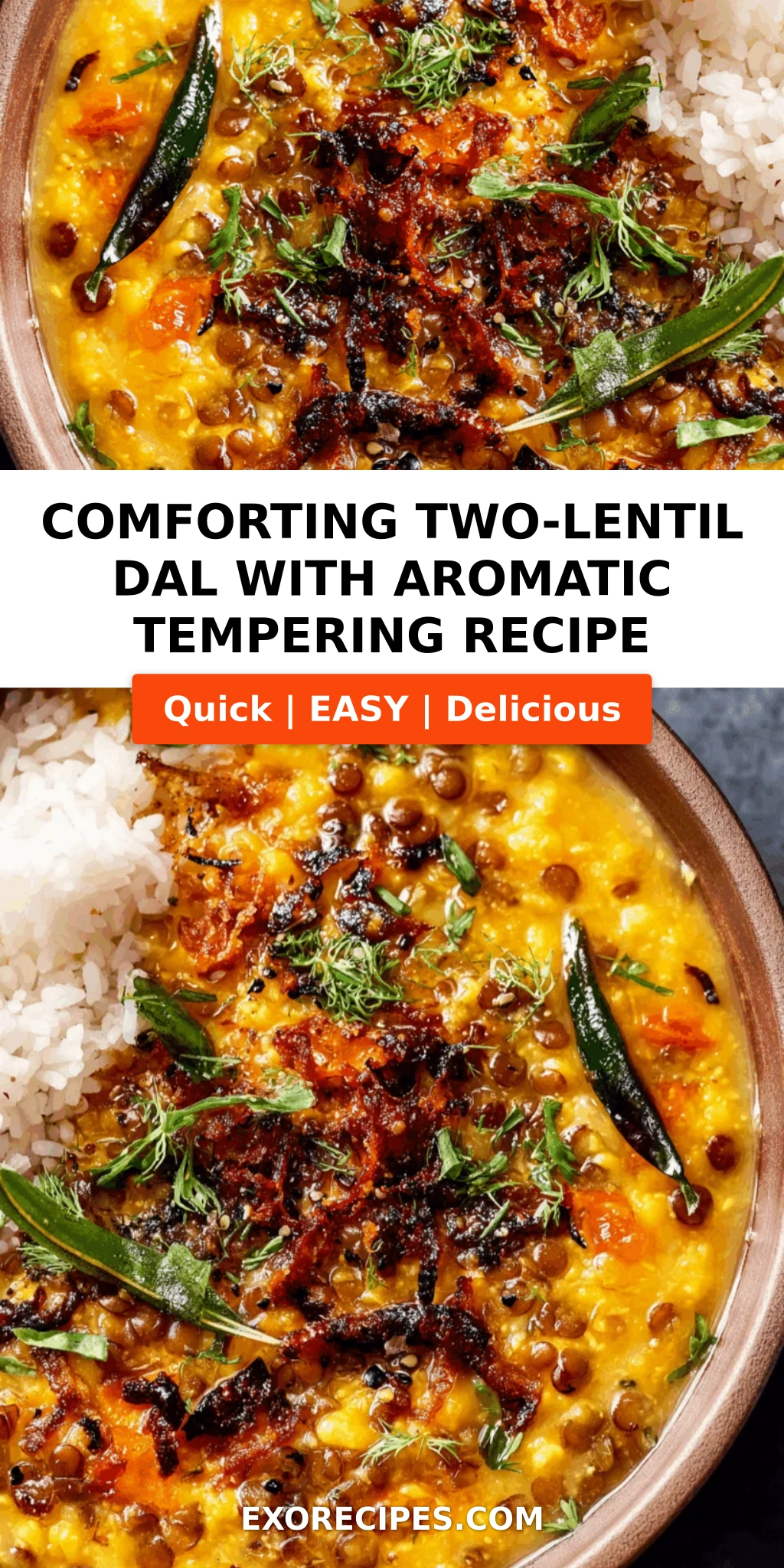
If you enjoyed this Comforting Two-Lentil Dal with Aromatic Tempering recipe, don’t let it get lost in your browser tabs! 😄 Pin it now so you can find it again anytime — and explore hundreds more tried-and-tested recipes waiting for you on my Pinterest boards.
👉 Follow mia on Pinterest @exorecipe
📌 Pin this recipe · 🔁 Re-pin your favorites · 💬 Tag me when you make it — I love seeing your creations!
💬 Did you make this dal? I’d love to hear how your aromatic tempering turned out! Leave a comment below and share your experience with our community.

Comforting Two-Lentil Dal with Aromatic Tempering
- Prep Time: 15 minutes
- Cook Time: 35 minutes
- Total Time: 50 minutes
- Yield: 4 1x
- Method: Main Course
- Cuisine: Indian
Description
A hearty, comforting dal made with two types of lentils, tempered with aromatic spices for a deeply flavorful and nourishing meal.
Ingredients
- 1/2 cup red lentils (masoor dal)
- 1/2 cup yellow split lentils (moong dal)
- 4 cups water
- 1 teaspoon turmeric powder
- 1 teaspoon salt, or to taste
- For the tempering:
- 2 tablespoons ghee or oil
- 1 teaspoon mustard seeds
- 1 teaspoon cumin seeds
- 1/2 teaspoon asafoetida (hing)
- 2 dried red chilies, broken
- 1 sprig curry leaves
- 1 medium onion, finely chopped
- 2 cloves garlic, minced
- 1-inch piece ginger, grated
- 1 green chili, slit
- 1 large tomato, chopped
- 1/2 teaspoon red chili powder
- 1/2 teaspoon garam masala
- Fresh cilantro for garnish
Instructions
- Rinse both lentils thoroughly under running water until water runs clear. Soak in water for 15 minutes, then drain.
- In a large pot, add the drained lentils, 4 cups water, turmeric powder, and salt. Bring to a boil over high heat.
- Reduce heat to low, cover, and simmer for 20-25 minutes until lentils are soft and mushy. Stir occasionally and add more water if needed for desired consistency.
- While lentils cook, prepare the tempering. Heat ghee or oil in a small pan over medium heat.
- Add mustard seeds and cumin seeds; let them splutter.
- Add asafoetida, dried red chilies, and curry leaves. Sauté for 10 seconds.
- Add chopped onion, garlic, ginger, and green chili. Sauté until onion turns golden brown, about 5-6 minutes.
- Add chopped tomato and red chili powder. Cook until tomatoes soften and oil separates, about 3-4 minutes.
- Add garam masala and stir for another 30 seconds.
- Pour the tempering over the cooked lentils and mix well. Simmer for 5 minutes to blend flavors.
- Taste and adjust salt and spices as needed. Garnish with fresh cilantro.
- Serve hot with steamed rice or naan.
Notes
For a vegan version, use oil instead of ghee. You can adjust the consistency by adding more water; this dal thickens as it cools. Leftovers can be refrigerated for up to 3 days.
Nutrition
- Calories: 280
- Sugar: 5g
- Fat: 8g
- Carbohydrates: 38g
- Protein: 14g
Tried This Recipe? Leave a Comment!
Did you make this recipe? I’d love to hear how it turned out! Please leave a comment and a rating below. Your feedback helps other home cooks and supports cheerychop.com!
For more delicious inspiration, follow me on Pinterest!
