Table of Contents
Rainbow Marble Cake Recipe
Introduction
Did you know that colorful foods can boost our mood by up to 14%? It’s true! That’s why this stunning Rainbow Marble Cake isn’t just a feast for the eyes—it’s a scientifically-proven way to add a little extra joy to your celebration. Perfect for birthdays, pride celebrations, or any festive occasion, this cake is a masterpiece of swirling, vibrant colors hidden within a tender, moist crumb, all crowned with a cloud of smooth vanilla buttercream frosting. More than just a dessert, it’s a conversation starter and a centerpiece that embodies pure joy. Let’s dive into how you can create this edible rainbow that promises to be the highlight of any gathering.
Ingredients List
Gather these high-quality ingredients for the best results. For accuracy, use a kitchen scale where noted.
For the Cake:
- All-Purpose Flour (360g / 3 cups): The structural backbone. For a lighter texture, sift it first to aerate.
- Baking Powder (1 tbsp): The leavening agent that gives the cake its beautiful rise.
- Salt (1/2 tsp): A pinch to balance and enhance all the sweet flavors.
- Unsalted Butter (226g / 1 cup), softened: Use room-temperature butter for a creamy, pale batter. It should indent easily when pressed.
- Granulated Sugar (400g / 2 cups): For sweetness and that tender, golden crumb.
- Large Eggs (4), room temperature: They emulsify the batter, adding richness and structure.
- Pure Vanilla Extract (2 tsp): The aromatic soul of the cake. Use real extract, not imitation.
- Whole Milk (240ml / 1 cup), room temperature: For moisture and tenderness. Substitution: Buttermilk for a subtle tang, or a non-dairy milk like almond or oat.
- Gel Food Coloring (Red, Orange, Yellow, Green, Blue, Purple): Gel colors are essential! They provide vibrant hues without thinning the batter like liquid dyes.
For the Vanilla Buttercream Frosting:
- Unsalted Butter (452g / 2 cups), softened: The base for a fluffy, spreadable frosting.
- Powdered Sugar (480g / 4 cups), sifted: Sifting is non-negotiable for a silky-smooth texture without lumps.
- Heavy Cream or Milk (2-3 tbsp): To adjust consistency. Heavy cream adds extra richness.
- Pure Vanilla Extract (1 tbsp): For that classic, warm vanilla flavor.
- Pinch of Salt: Cuts the sweetness and rounds out the flavor profile.
Timing
While the total time is around 3.5 hours, most of it is hands-off cooling. The active prep time of 40 minutes is highly efficient compared to many multi-layer cakes, which often require 60+ minutes of prep. This streamlined process allows you to create a spectacular visual impact without an entire day in the kitchen. Plan ahead for the cooling period to ensure your cake layers are completely cool before frosting.
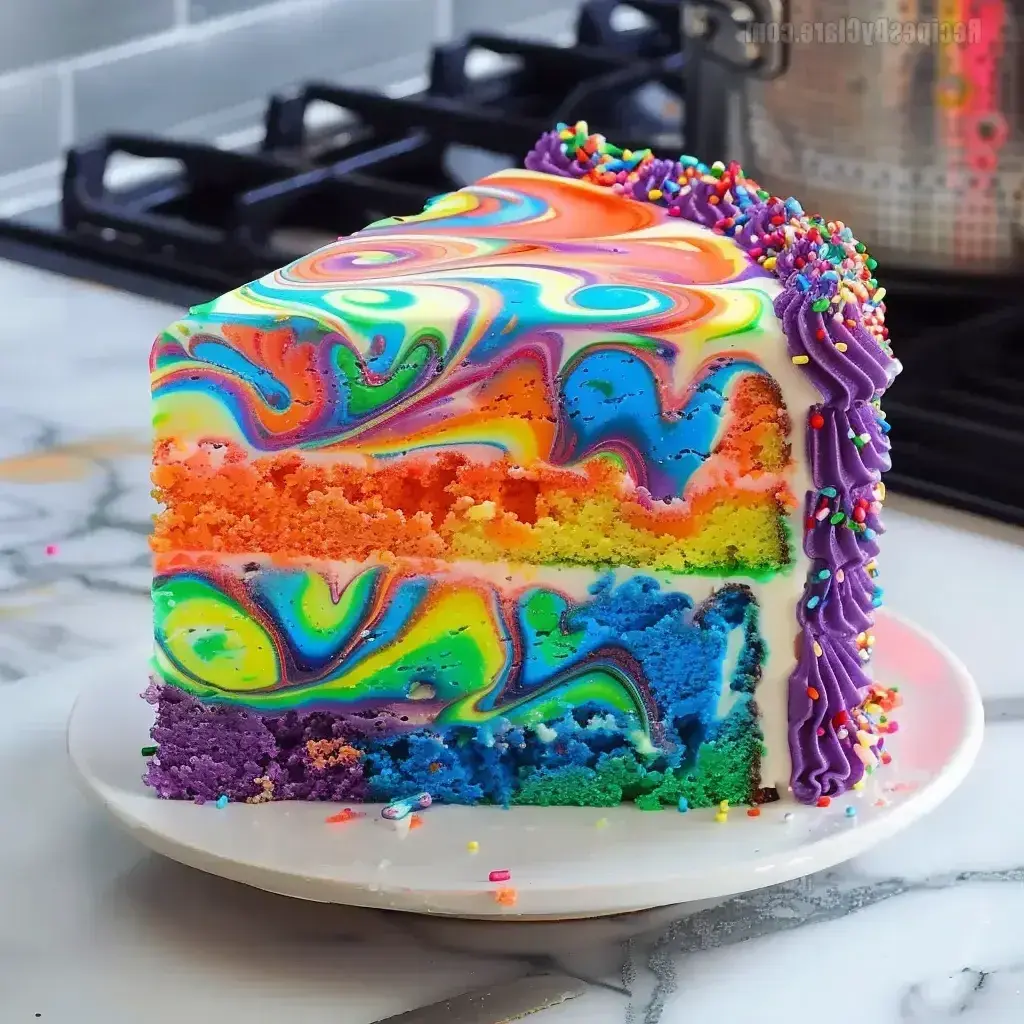
Our stunning Rainbow Marble Cake, a swirl of color in every slice.
Step-by-Step Instructions
Step 1: Prepare the Batter
Preheat your oven to 350°F (175°C). Generously grease and flour two 8-inch round cake pans, then line the bottoms with parchment paper circles—this guarantees easy release. In a medium bowl, whisk together the flour, baking powder, and salt. Set this dry mixture aside. In the bowl of a stand mixer fitted with the paddle attachment (or using a hand mixer), cream the softened butter and granulated sugar on medium-high speed for 3-4 minutes. You’re looking for a mixture that is light, fluffy, and almost white in color. This step incorporates air, which is crucial for texture. Add the eggs one at a time, beating well after each addition and scraping down the bowl. Beat in the vanilla extract. With the mixer on low, alternately add the dry ingredients and the milk in three parts, beginning and ending with the dry ingredients. Mix just until combined; overmixing at this stage will develop gluten and lead to a tough cake.
Step 2: Color the Batter
Now for the fun part! Divide the batter evenly among six small bowls. You can use a kitchen scale for perfect precision. Using toothpicks or clean spoons, add gel food coloring to each bowl—red, orange, yellow, green, blue, and purple. Start with a small amount, as gel color is potent. Stir gently until the color is uniform and vibrant. If the colors seem too pastel, add a tiny bit more gel. Remember, the colors will bake slightly darker.
Step 3: Marble and Bake
Here’s the technique for perfect marbling: Using separate spoons for each color to keep them distinct, randomly dollop the colored batters into the two prepared pans. Alternate colors and don’t worry about being neat. Once all the batter is in the pans, take a thin knife or a skewer. Insert it into the batter and make a few slow, swirling “S” shapes or figure-eights. The key is to swirl just 3-4 times per pan. Over-swirling will muddy the colors into a brown mess. You want distinct, beautiful swirls. Tap the pans gently on the counter to release any large air bubbles. Bake for 35-40 minutes, or until a toothpick inserted into the center comes out clean. The tops should be springy to the touch.
Step 4: Make the Frosting
While the cakes cool completely on wire racks (this is vital—warm cakes will melt the frosting), make the buttercream. In the clean bowl of your stand mixer with the paddle attachment, beat the softened butter on medium speed for 2-3 minutes until very smooth and slightly pale. With the mixer on low, gradually add the sifted powdered sugar about a cup at a time. Once incorporated, increase the speed to medium-high and beat for a full 3 minutes. This whips air into the frosting, making it light and fluffy. Add the vanilla, salt, and 2 tablespoons of cream. Beat again. If the frosting is too thick for spreading, add more cream, one teaspoon at a time, until you reach a smooth, spreadable consistency.
Step 5: Frost and Decorate
Place one completely cooled cake layer on your serving plate or cake stand. Spread a generous layer of frosting over the top with an offset spatula. Carefully place the second layer on top. Apply a thin “crumb coat” of frosting over the entire cake to seal in any loose crumbs. Chill the cake for 15-20 minutes to set this coat. Finally, apply the final, thick, and beautiful layer of frosting all over the cake. Use your spatula to create decorative swirls. For a final festive touch, you can sprinkle the top with rainbow sprinkles or add a border of piped frosting stars.
Nutritional Information
The following estimates are for 1 slice (1/12th of the cake) including frosting, calculated using standard ingredients.
- Calories: ~580 kcal
- Total Fat: 28g
- Saturated Fat: 17g
- Cholesterol: 125mg
- Sodium: 180mg
- Total Carbohydrates: 78g
- Dietary Fiber: 0.5g
- Sugars: 58g
- Protein: 5g
Healthier Alternatives
You can still enjoy this vibrant cake with some mindful swaps that don’t sacrifice flavor:
- Flour: Substitute half the all-purpose flour with white whole wheat flour for added fiber and nutrients.
- Sugar: Reduce granulated sugar in the cake by 1/4 cup. In the frosting, you can replace up to half the powdered sugar with a powdered erythritol/monk fruit blend designed for baking.
- Fat: For the cake, replace half the butter with unsweetened applesauce or mashed ripe banana for moisture with less saturated fat. For the frosting, use a blend of half butter and half Greek cream cheese (Neufchâtel) for a tangy, slightly lighter option.
- Dairy: Use unsweetened almond milk in the batter and a plant-based butter alternative for a dairy-free version. Ensure your food coloring is also plant-based if needed.
Serving Suggestions
This cake is a star on its own, but you can elevate the experience:
- Serve each slice with a dollop of freshly whipped cream or a scoop of vanilla bean ice cream.
- Drizzle individual plates with a raspberry or mango coulis for a fruity contrast.
- Pair with a cup of strong coffee, black tea, or a glass of cold milk to balance the sweetness.
- For a brunch or tea party, bake the batter in a Bundt pan for a stunning ring-shaped marble cake.
Common Mistakes
- Using Liquid Food Coloring: This adds too much liquid and can thin your batter, affecting the cake’s structure and producing washed-out colors. Gel or paste colors are mandatory.
- Over-Swirling: The most common error. A few gentle swirls create a marble effect; vigorous stirring blends the colors into a murky brown.
- Frosting a Warm Cake: Impatience leads to a melted, sliding mess of frosting. Let the layers cool completely, even if it takes 2 hours.
- Overmixing the Batter: Once you add the flour, mix only until just combined. Overworked gluten equals a dense, chewy cake instead of a tender crumb.
- Not Sifting Powder
