Table of Contents
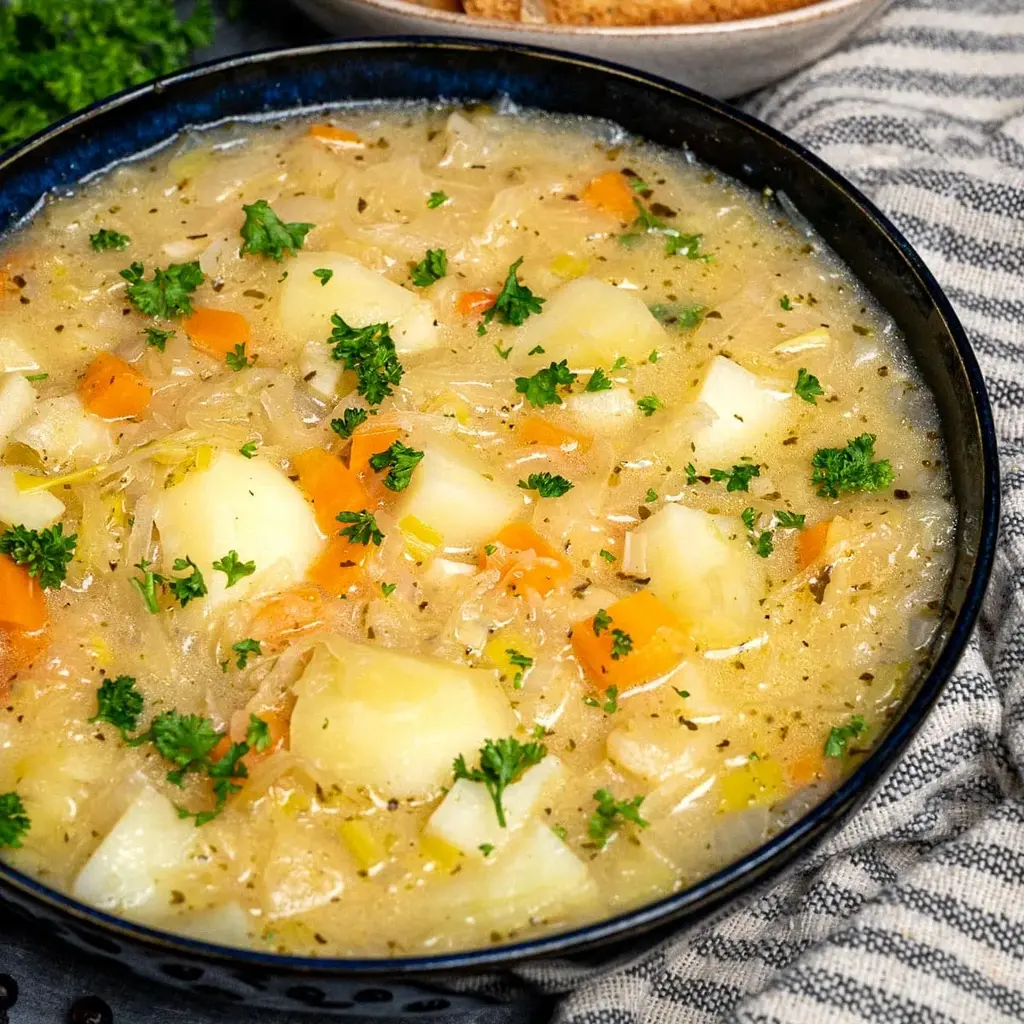
Polish Sauerkraut Soup (Kapusniak) – A Hearty Vegan Classic
Growing up, my mother’s kitchen in Morocco was always fragrant with simmering tagines and aromatic spices. But after training in Paris and living in New York, I’ve discovered a deep love for hearty, comforting soups from cultures around the world. One such revelation has been this incredible Polish sauerkraut soup, known as Kapusniak. It’s a beautifully warming dish, perfect for those chilly NYC evenings, and surprisingly, my vegan version captures all the depth and soul of the traditional recipe without the meat. This healthy cabbage soup is not only naturally vegan but also incredibly satisfying and easy to customize to your palate, making it a true cold-weather champion.
What makes this Kapusniak recipe so special are the layers of flavor that develop with each step. We start with a base of tender leeks, carrots, and parsnips, then introduce an aromatic bouquet of caraway seeds, marjoram, allspice, and juniper berries that truly sing with the piquant sauerkraut. The texture is a delightful dance between the tender shredded cabbage, soft potato cubes, and the slight bite of the roasted vegetables. The rich vegetable stock brings everything together into a wonderfully balanced and deeply flavorful broth that smells absolutely divine as it simmers on the stove, filling your home with an inviting aroma.
As a professional cook, I’ve refined this traditional Kapusniak into a truly foolproof recipe that anyone can master. My approach emphasizes building flavor gradually, ensuring each ingredient has a chance to shine. I’ve found that many recipes rush the cooking of the sauerkraut, but a little patience here makes all the difference! I’ll share a pro tip on how to achieve the perfect balance of tanginess without it overpowering the other ingredients, and I’ll also highlight a common mistake to avoid when cooking with sauerkraut to ensure your soup is always a success. Get ready to discover your new favorite easy Polish soup!
Why This Polish Sauerkraut Soup Recipe Is the Best
My rendition of Polish sauerkraut soup truly stands out thanks to a specific blend of cooking traditions. While I honor the Eastern European roots of Kapusniak, I bring in techniques from my French culinary training, focusing on slow-building flavor profiles. The addition of parsnip, a tip I picked up from a farmer at a Brooklyn farmers market, adds an unexpected hint of sweetness and earthiness that beautifully balances the sauerkraut’s tang, making it uniquely delicious and robust. This healthy cabbage soup feels both deeply traditional and refreshingly modern.
The perfected texture in this easy Polish soup comes from a careful layering process. By sautéing the aromatics and root vegetables until deeply softened before adding the sauerkraut and stock, we ensure they contribute fully to the body of the soup, rather than just floating through it. The potatoes are added later, preventing them from becoming mushy and allowing them to retain their delightful cube shape and tender-firm texture. It’s all about timing and respect for each ingredient’s role, much like the precision I learned in pastry school.
This Kapusniak recipe is designed to be foolproof and fast enough for a weeknight meal, while tasting like it simmered all day. The active cooking time is minimal, mostly involving chopping and stirring, with simmering doing most of the work. I’ve broken down each step clearly, from how to perfectly drain your sauerkraut to seasoning “to taste,” so even if you’ve never made a Polish dish before, you’ll feel confident creating a delicious, traditional kapusniak. It’s a testament to how simple ingredients can yield extraordinary results with a little guidance.
Polish Sauerkraut Soup Ingredients
When I head out to pick up ingredients for this hearty Polish sauerkraut soup, I love browsing the specialty stores in my diverse NYC neighborhood. It’s a treat to find the perfect bay leaves or fresh, firm parsnips, reminiscing about the vibrant spice markets of my childhood in Morocco. This Kapusniak recipe truly benefits from quality ingredients, but don’t worry, everything listed is readily available at your local grocery store.
Ingredients List
- 2 tablespoons sunflower oil
- 1 large onion, diced
- 1 medium leek, white and light green parts only, finely sliced
- 1 medium carrot, diced
- 1 medium parsnip, diced
- 2 large garlic cloves, finely chopped
- 1/2 teaspoon caraway seeds
- 1 teaspoon dried marjoram
- 1 teaspoon allspice
- 6-8 juniper berries
- 2-3 bay leaves
- 400 g (1 lb) sauerkraut, drained
- 3 potatoes, peeled and cut into 1-inch cubes (about 500 g)
- 1.5 litres (6 cups) vegetable stock
- Salt and freshly ground pepper to taste
Ingredient Spotlight
Sauerkraut (400g / 1 lb): This is the star of our Kapusniak recipe! Look for refrigerated, unpasteurized sauerkraut, often found in the produce or dairy section, as it has the best flavor and probiotics. Avoid canned or jarred varieties that have been heavily processed, as their flavor can be overly sharp or bland. Ensure you drain it well to control the sourness in your soup.
Juniper Berries (6-8): These small, dark berries add a wonderfully unique, slightly piney and peppery aroma that is classic in Eastern European cooking and truly elevates this healthy cabbage soup. They are often found in the spice aisle with other whole spices. If you can’t find them, you can omit them, although the soup will have a slightly less complex and traditional flavor. There isn’t a direct substitute for their specific flavor profile.
Parsnip (1 medium): Parsnips bring a subtle sweetness and earthy depth that beautifully balances the sourness of the sauerkraut. When buying, choose firm, unblemished parsnips that feel heavy for their size. If parsnips are unavailable, you can substitute with an extra carrot, though you’ll miss that unique sweet-earthy note. Alternatively, a small turnip could also work, adding a slightly more peppery flavor.
Caraway Seeds (1/2 teaspoon): These seeds are frequently paired with cabbage and sauerkraut in Eastern European cuisine, lending a distinctive warm, slightly anisy, and nutty flavor that is essential to an authentic Kapusniak. They are usually found in the spice rack. If you absolutely can’t find caraway seeds, you could try a pinch of fennel seeds, but the flavor profile will be noticeably different.
Vegetable Stock (6 cups): A good quality vegetable stock forms the flavorful base of this vegan Polish sauerkraut soup. Look for low-sodium options to control the seasoning yourself. If you don’t have vegetable stock, water can be used but the soup won’t be as rich or deeply flavored. A homemade stock would be ideal if you have it on hand!
| Original Ingredient | Best Substitution | Flavor / Texture Impact |
|---|---|---|
| Sunflower Oil | Olive oil or other neutral cooking oil | Slightly different flavor profile depending on the oil, but generally fine. |
| Leek | 1/2 cup chopped celery with a small amount of onion | Similar aromatic base, but without the leek’s subtle sweetness and tender texture. |
| Parsnip | Extra carrot or a small turnip | Extra carrot adds sweetness, turnip adds a slightly peppery note; neither quite captures the parsnip’s unique earthy sweetness. |
| Juniper Berries | Omit (no direct substitute) | Loss of unique piney, slightly peppery, traditional flavor. |
| Caraway Seeds | Pinch of fennel seeds or omit | Fennel seeds introduce an anisy flavor, but caraway’s complex earthiness will be missed. |

How to Make Polish Sauerkraut Soup — Step-by-Step
Making this easy Polish sauerkraut soup is a journey of building flavors. Take your time with each step, and you’ll be rewarded with a truly comforting and delicious Kapusniak!
Step 1: Sauté the Aromatics
Heat the 2 tablespoons of sunflower oil in a large stockpot or Dutch oven over medium heat. Add the diced onion and sauté for 2-3 minutes, stirring occasionally, until it starts to soften and become translucent. This initial step builds the aromatic foundation of your healthy cabbage soup.
💡 mia’s Pro Tip: Don’t rush the onions! Allowing them to soften properly creates a sweet, complex base that will deepen the overall flavor of your Kapusniak, similar to starting a classic French mirepoix.
Step 2: Soften the Root Vegetables
Add the finely sliced leek, diced carrot, and diced parsnip to the pot. Continue to cook for another 8-10 minutes, stirring occasionally, until all the vegetables are tender-crisp. You want them softened but not browned, allowing their natural sweetness to emerge.
Step 3: Infuse with Spices
Stir in the 2 finely chopped garlic cloves, 1/2 teaspoon caraway seeds, 1 teaspoon dried marjoram, 1 teaspoon allspice, 6-8 juniper berries, and 2-3 bay leaves. Continue to cook for 1-2 minutes, stirring constantly. This brief toasting of the spices in the hot oil helps release their full aromas and flavors, a technique my mother always used in her Moroccan kitchen.
⚠️ Common Mistake to Avoid: Overcooking the garlic at this stage. Garlic can burn quickly, turning bitter and spoiling the flavor of your Polish sauerkraut soup. Add it towards the end of the vegetable sauté and cook just until fragrant.
Step 4: Cook the Sauerkraut
Add the 400g (1 lb) of drained sauerkraut to the pot. Continue cooking for 1-2 minutes, stirring well to combine it with the vegetables and spices. Next, add just one ladle of vegetable stock (about 1/2 cup) to the pot. Bring it to a gentle simmer and let it cook for 10 minutes. This controlled simmering helps to temper the sauerkraut’s sourness and integrate its flavors without making the final soup too sharp.
Step 5: Simmer with Potatoes
Add the 3 peeled and 1-inch cubed potatoes (about 500g) to the pot, followed by the remaining 1.5 litres (6 cups) of vegetable stock. Bring the soup to a very gentle simmer, then reduce the heat to low, cover, and let it cook for 25 minutes, or until the potatoes are fork-tender. Ensure the liquid is just barely bubbling to prevent the potatoes from breaking down too much.
Step 6: Season and Serve
Carefully remove the bay leaves and juniper berries (if you prefer not to eat them) from the soup. Season the Polish sauerkraut soup generously with salt and freshly ground pepper to taste. Taste and adjust seasonings as needed, perhaps adding a touch more salt or pepper. Ladle the hot Kapusniak into bowls and serve immediately with a side of rye bread or your favorite crusty bread for dipping.
| Step | Action | Duration | Key Visual Cue |
|---|---|---|---|
| 1 | Sauté onion | 2-3 minutes | Onion translucent and softened |
| 2 | Sauté root vegetables | 8-10 minutes | Vegetables tender-crisp |
| 3 | Infuse spices | 1-2 minutes | Garlic fragrant, spices aromatic |
| 4 | Cook sauerkraut | 12-13 minutes | Sauerkraut integrated, flavors melding |
| 5 | Simmer with potatoes | 25 minutes | Potatoes fork-tender |
| 6 | Season and serve | As needed | Flavors balanced to taste |
Serving & Presentation
Serving this Polish sauerkraut soup is all about embracing its rustic charm and comforting nature. Ladle generous portions into deep, warm bowls. I love to garnish my Kapusniak with a swirl of fresh dill or parsley for a pop of color and a contrasting herbaceous note. A dollop of vegan sour cream (or regular if you’re not strictly vegan) also adds a creamy richness that beautifully complements the tang of the sauerkraut.
For me, the perfect accompaniment to this healthy cabbage soup is a thick slice of hearty rye bread, perhaps lightly toasted, or a crusty sourdough baguette. It’s wonderful for soaking up the flavorful broth. On a cold New York evening, I sometimes even serve this with a side of crispy roasted potatoes, or a simple green salad with a light vinaigrette to cut through the richness. It’s a complete meal in a bowl, but these additions make it even more special.
When I was a student in Paris, we learned that presentation is key, even for the most humble dishes. While Kapusniak isn’t a “fancy” soup, arranging the vegetables nicely in the bowl and adding a thoughtful garnish elevates the experience. Imagine the aroma filling your dining room, a comforting embrace that takes you back to simpler times, or perhaps introduces you to a new culinary tradition from Eastern Europe.
| Pairing Type | Suggestions | Why It Works |
|---|---|---|
| Side Dish | Hearty rye bread, crusty sourdough, roasted potatoes, simple green salad | Perfect for dipping, adding textural contrast, or a refreshing palate cleanser. |
| Sauce / Dip | Vegan sour cream or regular sour cream, a swirl of extra virgin olive oil | Adds creamy richness and balances the soup’s tanginess. |
| Beverage | Crisp lager, dry white wine (e.g., Sauvignon Blanc), sparkling water with lemon | Refreshes the palate and complements the soup’s robust flavors. |
| Garnish | Fresh dill, chopped parsley, thinly sliced scallions, a sprinkle of smoked paprika | Adds freshness, color, and an extra layer of aroma or subtle smokiness. |
Make-Ahead, Storage & Reheating
As someone with a busy schedule in NYC, meal prepping is essential, and this Polish sauerkraut soup is a dream for make-ahead meals. It actually tastes even better the next day as the flavors have more time to meld and deepen – a true culinary gem!
| Method | Container | Duration | Reheating Tip |
|---|---|---|---|
| Refrigerator | Airtight container | Up to 4-5 days | Gently reheat on the stovetop over low-medium heat, stirring occasionally. Add a splash of water or stock if too thick. |
| Freezer | Freezer-safe containers or bags | Up to 3 months | Thaw overnight in the refrigerator, then reheat on the stovetop. |
| Make-Ahead | Cook up to 2-3 days in advance | Flavors deepen over time | Prepare completely, store, and just reheat when ready to serve. Perfect for busy weeknights. |
When freezing this Kapusniak recipe, make sure to cool it completely before transferring it to freezer-safe containers. Leave a little headspace in your containers as the soup will expand slightly when frozen. This healthy cabbage soup holds up beautifully in the freezer, making it a fantastic prep-ahead option for those cold winter months.
For reheating, my preferred method is always on the stovetop. This allows for even heating and you can easily adjust the consistency. If the soup has thickened too much in the fridge or freezer, a small splash of vegetable stock or even water can bring it back to its perfect consistency. Avoid microwaving large batches, as it can heat unevenly and sometimes dull the vibrant flavors of the spices and sauerkraut.
Variations & Easy Swaps
While this traditional Kapusniak recipe is vegan, it’s incredibly versatile! Here are some variations and easy swaps inspired by my culinary journey from Morocco to Paris to NYC farmers markets, letting you tailor this healthy cabbage soup to your taste and dietary needs.
| Variation | Key Change | Best For | Difficulty Impact |
|---|---|---|---|
| Smoky Kapusniak (Meat Lover’s) | Add smoked paprika or smoked sausage | Adding depth and traditional meatiness | Slightly more complex if cooking meat, but still easy. |
| Creamy Kapusniak | Stir in plant-based cream or pureed cannellini beans | Richer mouthfeel, less sharp tang | None (easy addition at the end). |
| Spicy Kapusniak | Add red pepper flakes or a pinch of harissa | For those who love a kick | None (simple spice addition). |
Smoky Kapusniak
For those who appreciate a smoky depth, you can easily adapt this Polish sauerkraut soup. Before adding the stock, stir in 1 teaspoon of smoked paprika alongside the other spices. If you’re not keeping it vegan, you could also sauté some diced smoked Polish sausage (kielbasa) with the onions at the beginning of the recipe. This adds a beautiful, savory layer that complements the sour notes of the sauerkraut.
Gluten-Free Kapusniak
This Kapusniak recipe is naturally gluten-free, which is fantastic! Just ensure that your vegetable stock is certified gluten-free, as some brands might contain hidden sources of gluten. All the other ingredients are inherently gluten-free, allowing you to enjoy this easy Polish soup without any modifications. It’s always good to double-check labels, a habit I picked up from scrutinizing ingredients for my French patisserie desserts.
Spicy Kapusniak
If you’re like me and love a little heat, adding some spice can transform this healthy cabbage soup. Stir in 1/2 teaspoon of red pepper flakes when you add the rest of the spices, or for a Moroccan twist, a small dollop of harissa paste at the very end of cooking. This brings a lovely warmth that contrasts beautifully with the tangy sauerkraut, creating a truly exciting flavor profile.
What is the best way to make Polish sauerkraut soup (Kapusniak) less sour?
To reduce the sourness in your Kapusniak, there are a few tried-and-true methods. Firstly, ensure you thoroughly drain your sauerkraut before adding it to the pot. Rinsing it briefly under cold water can also help, but be careful not to rinse too much, as you’ll lose some of its distinctive flavor. During cooking, a “pro-tip” I often use is adding a pinch of sugar or a grated apple along with the sauerkraut – the sweetness will balance the acidity without making the soup taste sweet. Simmering with a small portion of the stock first, as in my recipe, also helps to mellow the tang over time, allowing it to integrate more smoothly into the soup.
Can I make a vegetarian version of Kapusniak, and what can I use instead of meat?
Absolutely, my Kapusniak recipe is already a delicious and hearty vegan (and therefore vegetarian) version! Traditionally, Kapusniak often includes smoked pork ribs or sausage, but omitting them and using a rich vegetable stock still yields an incredibly flavorful result. Instead of meat, I rely on a robust base of slow-sautéed onions, leeks, carrots, and parsnips, combined with aromatic spices like caraway, marjoram, and juniper berries. If you want more ‘umami’ or a meatier texture, you could sauté some sliced mushrooms (like cremini or shiitake) with the initial vegetables, or even add a can of drained and rinsed cannellini beans or lentils towards the end of cooking for extra protein and body. Smoked paprika also adds a wonderful, subtle ‘meaty’ flavor.
How long does it take to cook Polish sauerkraut soup from start to finish?
This easy Polish sauerkraut soup will take you approximately 70 minutes from start to finish. The prep time, which primarily involves chopping vegetables and draining sauerkraut, is about 20 minutes. The active cooking time on the stovetop is around 50 minutes. This includes sautéing the aromatics and root vegetables, infusing the spices, briefly cooking the sauerkraut, and then simmering the entire soup with potatoes until they’re fork-tender. While the simmering takes a good chunk of that time, it’s mostly hands-off, allowing the flavors to develop beautifully, similar to how I let my Moroccan tagines slowly come to life. It’s truly a rewarding process for a weeknight masterpiece.
What are traditional sides or breads to serve with Kapusniak?
Traditionally, Polish sauerkraut soup is often served with hearty, rustic breads that can soak up the delicious broth. Thick slices of rye bread or a good crusty sourdough are classic choices and make for a wonderfully comforting meal. In my New York kitchen, I sometimes even serve it with a fresh, lightly dressed green salad to add a refreshing contrast to the rich soup. Sometimes people opt for boiled potatoes on the side, but since this recipe already has potatoes in it, a simple bread is usually sufficient. A dollop of vegan sour cream (or regular, if preferred) and a sprinkle of fresh dill or parsley are also customary and enhance both the flavor and presentation of the Kapusniak.
Can I use fresh cabbage instead of sauerkraut for Kapusniak?
While you certainly can use fresh cabbage to make a delicious cabbage soup, it would no longer be considered classic “Kapusniak.” The defining characteristic and flavor profile of Polish sauerkraut soup comes from the fermented sauerkraut, which provides a distinct tang and depth that fresh cabbage simply cannot replicate. Fresh cabbage would make a delicious, healthy cabbage soup, but it would be a milder, sweeter dish. If you want to use fresh cabbage while still retaining some tang, you could add a splash of apple cider vinegar or lemon juice at the end, but it’s not a direct substitute for the complex flavor developed through fermentation.
Is Kapusniak considered a healthy cabbage soup?
Absolutely! Especially this vegan version, Kapusniak can be a very healthy cabbage soup. It’s packed with vegetables like cabbage (sauerkraut), onions, leeks, carrots, parsnips, and potatoes, providing an abundance of vitamins, minerals, and fiber. Sauerkraut, being a fermented food, is also rich in beneficial probiotics which are great for gut health. By making it vegan, we avoid the saturated fats often found in traditional meat versions, keeping it lighter yet still hearty and satisfying. It’s a nourishing, low-fat, and flavorful choice that will leave you feeling good, much like the wholesome meals my family enjoyed in Morocco.
What kind of potatoes are best for Polish sauerkraut soup?
For this Kapusniak recipe, I recommend using waxy or all-purpose potatoes. Varieties like Yukon Gold, red potatoes, or even new potatoes work wonderfully. These types of potatoes hold their shape well during simmering, giving you nice, discernible cubes of tender potato in your soup without turning mushy. Starchy potatoes like Russets tend to break down too much, making the soup cloudy and affecting the texture. I prefer to cut them into 1-inch cubes so they cook evenly and are a good size for each spoonful of this healthy cabbage soup.
Can I make this Kapusniak recipe in a slow cooker?
Yes, you can adapt this Polish sauerkraut soup recipe for a slow cooker! While I’m partial to the stovetop for better control over flavor development, a slow cooker offers convenience. For best results, I still recommend sautéing the onion, leek, carrot, parsnip, and garlic in a pan before transferring them to the slow cooker with the spices. This step builds crucial flavor that you’d miss otherwise. Then, add the sauerkraut and vegetable stock, and cook on low for 4-6 hours or on high for 2-3 hours. Add the cubed potatoes during the last hour of cooking to prevent them from becoming too soft. Finish with seasoning to taste.
Share Your Version!
I poured my heart into perfecting this healthy cabbage soup recipe, and I truly hope you enjoy it as much as I do! There’s nothing more rewarding than seeing my recipes come to life in your kitchens. If you make this easy Polish sauerkraut soup, please come back and leave a star rating and comment below to let me know how it turned out. Your feedback is so valuable!
Don’t forget to share your culinary creations with me! Snap a photo of your traditional Kapusniak and tag @exorecipes on Instagram or Pinterest. I love seeing your beautiful versions and hearing about any personal touches you added. Did you try the smoky variation? Or perhaps added a unique NYC market find? Let’s connect and share our love for good food!
From my NYC kitchen to yours — I hope this recipe brings as much warmth to your table as it does to mine. — mia 🧡
Love This Recipe? Save It to Pinterest!
If you enjoyed this Polish Sauerkraut Soup (Kapusniak) recipe, don’t let it get lost in your browser tabs! 😄 Pin it now so you can find it again anytime — and explore hundreds more tried-and-tested recipes waiting for you on my Pinterest boards.
👉 Follow mia on Pinterest @chefrecipes2
📌 Pin this recipe · 🔁 Re-pin your favorites · 💬 Tag me when you make it — I love seeing your creations!

Polish Sauerkraut Soup (Kapusniak)
Description
Polish sauerkraut soup is a simple yet hearty recipe thats just perfect to enjoy on a cold day. Also known as kapusniak, this sauerkraut soup is naturally vegan and can be easily customized to your liking.
Ingredients
- 2 tablespoons sunflower oil
- 1 large onion, diced
- 1 medium leek, white and light green parts only, finely sliced
- 1 medium carrot, diced
- 1 medium parsnip, diced
- 2 large garlic cloves, finely chopped
- 1/2 teaspoon caraway seeds
- 1 teaspoon dried marjoram
- 1 teaspoon allspice
- 6–8 juniper berries
- 2–3 bay leaves
- 400 g (1 lb) sauerkraut, drained
- 3 potatoes, peeled and cut into 1-inch cubes (about 500 g)
- 1.5 litres (6 cups) vegetable stock
- Salt and freshly ground pepper to taste
Instructions
- Heat the oil in a large stockpot or Dutch oven and sauté the onion for 2-3 minutes over medium heat.
- Add the leek, carrot and parsnip and continue to cook for 8-10 minutes until the veggies soften.
- Stir in the garlic, caraway seeds, marjoram, allspice, juniper berries and bay leaves and continue to cook for 1-2 minutes, stirring occasionally.
- Add the sauerkraut and continue cooking for 1-2 minutes. Next, add a ladle of veggie stock and simmer for 10 minutes.
- Add the potatoes and the rest of the stock and simmer on a low heat for 25 minutes or until the potatoes are fork-tender.
- Season to taste and serve with rye bread or your favourite crusty bread.
Nutrition
- Calories: 189 calories
- Sugar: 6 grams sugar
- Fat: 5 grams fat
- Carbohydrates: 33 grams carbohydrates
- Protein: 5 grams protein

Tried This Recipe? Leave a Comment!
Did you make this recipe? I’d love to hear how it turned out! Please leave a comment and a rating below. Your feedback helps other home cooks and supports cheerychop.com!
