“`html
Table of Contents
Cranberry Raisin Walnut Artisan Bread – Rustic No-Knead Cinnamon Loaf
Every time I pull a crackling, flour-dusted loaf out of my Dutch oven here in my tiny NYC kitchen, I’m transported back to my mother’s kitchen in Morocco. The scent of warm bread with cinnamon, toasted nuts, and sweet dried fruit was the heartbeat of our home. But this Cranberry Raisin Walnut Artisan Bread is no ordinary loaf — it’s my no-knead love letter to that memory, made achievable for the busiest home baker. With the simple stir-and-wait technique I perfected during my years at a French culinary school in Paris, this rustic no-knead bread delivers a bakery-quality artisan crumb layered with tart cranberries, golden raisins, and toasted walnuts.
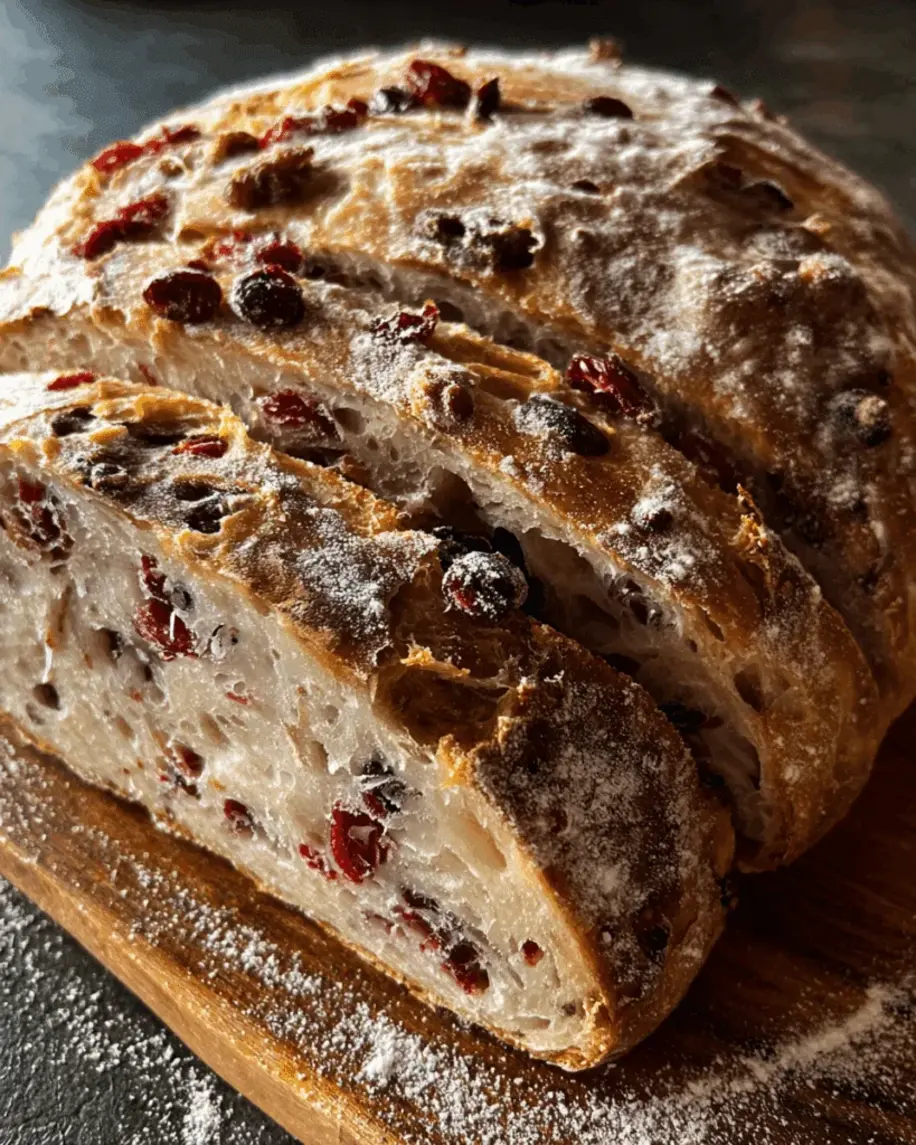
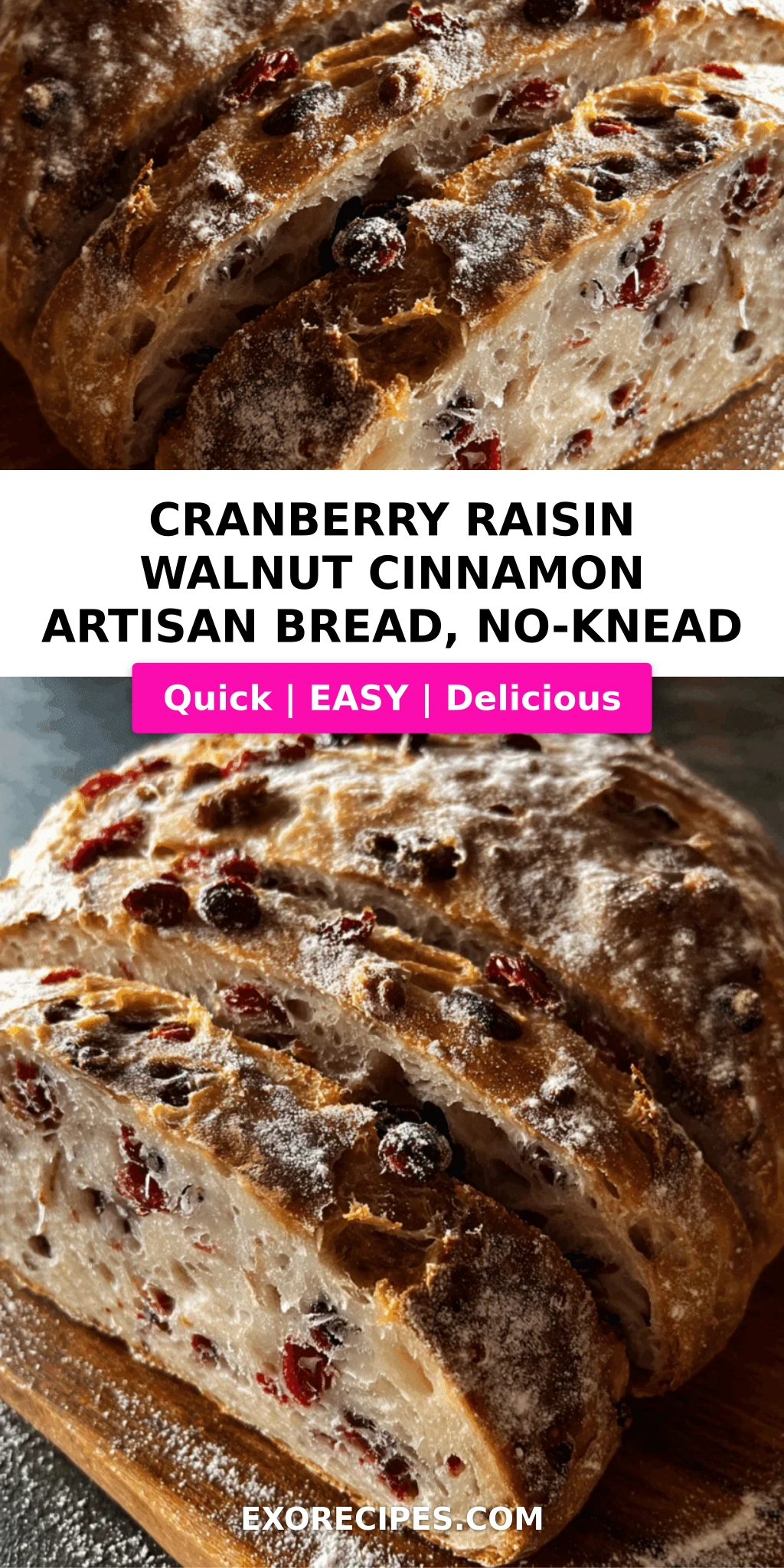
Imagine slicing into a warm, golden-brown loaf: the crust shatters with a satisfying crack, revealing a soft, airy crumb ribboned with jewel-toned cranberries, sweet raisins, and crunchy walnut pieces. The cinnamon doesn’t just perfume the dough — it weaves through every bite, warming you from the inside out. The aroma that fills your kitchen is pure comfort: a hint of spice, a whisper of toast, and that unmistakable sour-note depth that only a long, slow fermentation can create. It’s the kind of bread you eat with salted butter and a drizzle of honey, but also the kind that steals the show at dinner, slathered with brie or served alongside a steaming bowl of soup.
There are plenty of no-knead bread recipes out there, but this one is different. My version pairs the classic no-knead method with a Moroccan-inspired flavor combination and a French baker’s attention to detail. The 12-hour rise builds deep, complex flavor without any effort. The cinnamon is measured precisely — just enough to perfume the dough without overpowering it. My pro tip? Toast your walnuts before adding them; it takes five minutes and elevates the entire loaf. And the most common mistake I see home bakers make? Skipping the covered bake, which traps steam and creates that crackly, bakery-crisp crust. I promise: follow my instructions and you’ll nail a perfect first loaf.
Why This Cranberry Raisin Walnut Artisan Bread Recipe Is the Best
The Flavor Secret: What makes this Cranberry Raisin Walnut Artisan Bread unforgettable is the balance of tangy, sweet, and earthy elements. The tart dried cranberries cut through the warm cinnamon sweetness, while walnuts add a rich, buttery crunch. I learned this balance in my mother’s Moroccan kitchen, where cinnamon and nuts were never optional — they were the soul of the dish. Here in New York, I’ve watched how this flavor combo turns a simple loaf into the centerpiece of a weekend brunch table.
Perfected Texture: The texture is where my French training comes in. A 12-18 hour slow fermentation develops gluten naturally and creates an open, irregular crumb with incredible chew. The high-heat Dutch oven bake mimics the steam-injected ovens of artisan bakeries, producing a glassy, shattering crust. Inside stays moist and tender — never dry or dense. Once you master this technique, you’ll stop buying bread altogether.
Foolproof & Fast: The beauty of this recipe is that the method does all the work — you just mix, wait, and bake. I designed it for busy mornings and slow weekends alike. The hands-on time is only about 15 minutes; the rest is your kitchen timer doing the heavy lifting. Even if you’ve never baked bread before, you can absolutely pull this off. It’s the recipe I teach my New York friends who insist they “can’t bake” — and it always proves them wrong.
Cranberry Raisin Walnut Artisan Bread Ingredients
For this rustic cinnamon bread, I love shopping at the Union Square Greenmarket when the seasons allow. The cranberries remind me of the dried fruit my mother bought at the souk in Marrakech — intensely flavored and naturally sweetened by the sun. Here in NYC, I rely on regular supermarket ingredients, which makes this recipe wonderfully approachable for anyone, anywhere in the US.
Ingredients List
- 3 cups (375g) all-purpose flour
- 1/2 teaspoon instant yeast
- 1 1/2 teaspoons salt
- 1 teaspoon ground cinnamon
- 1/2 cup dried cranberries
- 1/2 cup raisins
- 1/2 cup chopped walnuts
- 1 1/2 cups (355ml) water, at room temperature
Nutrition Facts (per serving, based on 8 servings): 220 kcal | Carbohydrates 40g | Fat 6g | Protein 5g | Sugar 12g
Ingredient Spotlight
All-Purpose Flour: The moderate protein content (around 10-11%) provides enough structure for this high-hydration dough without turning it tough. If you want a chewier texture, substitute up to 1 cup of bread flour. In Paris, I learned to weigh ingredients for consistency, so a kitchen scale is your best friend here.
Dried Cranberries: I prefer sweetened dried cranberries (like Craisins) because they stay plump during the long rise. Unsweetened ones work too but give a more tart bite. You don’t need to soak them — the high-hydration dough will rehydrate them naturally. If using fresh cranberries, be aware they release extra moisture and produce a denser texture.
Walnuts: Toast the walnuts before adding! I place them in a dry skillet over medium heat for 4-5 minutes until fragrant. This deepens their flavor immeasurably and helps them stay crunchier in the final bread. Pecans or pistachios are wonderful replacements.
Cinnamon: The quality of cinnamon matters. I reach for Ceylon cinnamon when I can find it — it’s sweeter and more delicate than cassia. In a pinch, a pumpkin pie spice blend works, but reduce the amount to 3/4 teaspoon so it doesn’t compete with the fruit.
| Original Ingredient | Best Substitution | Flavor / Texture Impact |
|---|---|---|
| All-purpose flour | Bread flour (up to 50%), or whole wheat (up to 50%) | Chewier crumb; denser if all whole wheat |
| Dried cranberries | Fresh cranberries (not soaked), dried cherries | More moisture; denser loaf; tarter or sweeter |
| Raisins | Dark raisins, chopped dried apricots, dried cherries | Different sweet/tart character |
| Walnuts | Pecans, pistachios, hazelnuts | Different nut flavor; pecans are closest |
| Ground cinnamon | Pumpkin pie spice blend | More complex but less pure cinnamon |
How to Make Cranberry Raisin Walnut Artisan Bread — Step-by-Step
Grab a large bowl, a wooden spoon, and a bit of patience — the rest is practically magic. Let’s get mixing!
Step 1: Mix Dry Ingredients
In a large mixing bowl, whisk together the flour, yeast, salt, and cinnamon. Make sure the yeast and salt are evenly distributed; clumps of salt can inhibit yeast activity and create patches of overdough.
💡 mia’s Pro Tip: Use a whisk, not a spoon, to sift and aerate the flour. This makes a lighter dough and ensures the cinnamon doesn’t settle in one spot.
Step 2: Add Fruit and Nuts
Add the cranberries, raisins, and walnuts, and stir to combine. Toss them through the flour so each piece is coated — this prevents them from clumping when you add the water.
⚠️ Common Mistake to Avoid: Don’t dump all the dried fruit into one spot. Scatter it evenly through the flour so you get cranberries and raisins in every single slice.
Step 3: Add Water and Stir
Add the room-temperature water and stir with a wooden spoon until a shaggy, wet dough forms. Do not knead! The dough should be sticky and rough, with no dry flour visible at the bottom of the bowl.
💡 mia’s Pro Tip: If the dough looks too dry, add 1-2 tablespoons of water. If it looks like a soup, add 2-3 tablespoons of flour. The goal is a shaggy but well-hydrated dough.
Step 4: First Rise (12–18 Hours)
Cover the bowl with plastic wrap or a damp kitchen towel and let it rest at room temperature for 12-18 hours. The dough should double in size, appear bubbly on top, and smell faintly yeasty and sweet.
⚠️ Common Mistake to Avoid: Don’t rush the rise. If your kitchen is cold (below 72°F), it may need closer to 18-20 hours. Look for the visual cue — a puffy, cratered surface — not the clock.
Step 5: Shape the Dough
When the dough is ready, transfer it to a lightly floured work surface. With floured hands, fold it over itself a few times, then shape it into a rough ball. You want to form a taut surface, but don’t be too aggressive.
💡 mia’s Pro Tip: Keep your hands and work surface lightly floured — not heavily. Too much flour gets incorporated into the dough and creates dry streaks inside the baked loaf.
Step 6: Second Rest & Preheat
Place the dough on a piece of parchment paper, cover with a clean kitchen towel, and let it rest for 30 minutes. Meanwhile, place a covered Dutch oven in your oven and preheat to 450°F (230°C).
⚠️ Common Mistake to Avoid: Make sure your Dutch oven is fully preheated — this takes at least 30 minutes. A cold pot will shock the dough and prevent that magnificent oven spring.
Step 7: Bake Covered
Carefully remove the hot Dutch oven from the oven. Use the parchment paper to lift the dough into the pot. Cover with the lid and bake for 30 minutes. The lid traps steam, which keeps the crust soft while the inside cooks through.
💡 mia’s Pro Tip: When lowering the dough into the hot pot, don’t hold the parchment too high above the pot — the steam escaping is very hot. Lower it gently, like a tiny parachute.
Step 8: Bake Uncovered
Remove the lid and bake for an additional 15-20 minutes, until the crust is deep golden brown and the loaf sounds hollow when tapped on the bottom.
⚠️ Common Mistake to Avoid: If the top is getting too dark but the bottom isn’t done, reduce the oven to 425°F and move the loaf to a lower rack. Every oven runs a little differently.
Step 9: Cool Before Slicing
Carefully remove the bread from the pot and let it cool on a wire rack for at least one hour before slicing. I know it’s tempting to cut warm bread, but patience gives you clean, beautiful slices and a properly set crumb.
💡 mia’s Pro Tip: For a softer crust, let the bread cool completely in a sealed container or wrap it in a clean towel immediately after baking. For a crisp crust, leave it uncovered on the rack.
| Step | Action | Duration | Key Visual Cue |
|---|---|---|---|
| Step 1 | Mix dry ingredients | 3 min | Evenly blended, cinnamon distributed |
| Step 2 | Add fruit & nuts | 3 min | All pieces coated in flour |
| Step 3 | Add water & stir | 5 min | Shaggy, sticky dough |
| Step 4 | First rise | 12–18 hrs | Doubled, bubbly surface |
| Step 5 | Shape dough | 5 min | Smooth ball, taut surface |
| Step 6 | Rest & preheat | 45 min | Dough relaxed, oven at 450°F |
| Step 7 | Bake covered | 30 min | Soft top, steam trapped |
| Step 8 | Bake uncovered | 15–20 min | Deep golden, hollow sound |
| Step 9 | Cool | 60+ min | Crumb set, no steam escaping |
Serving & Presentation
I love serving this bread while it’s still slightly warm, with a generous smear of salted butter and a drizzle of wildflower honey. In my Paris training, we learned that the right accompaniments elevate bread from a side to a moment. Now in New York, I love pairing this cranberry walnut loaf with sharp aged cheddar, a dollop of fig jam, or as the foundation for an open-faced turkey sandwich the day after Thanksgiving.
To present it beautifully, place the loaf whole on a rustic wooden board and let guests tear off pieces with their hands. If you’re slicing, cut thick, generous pieces — the bread is sturdy enough to hold spreads but tender enough to melt in your mouth. A light dusting of flour or oat flakes on the crust adds a gorgeous bakery-style finish.
| Pairing Type | Suggestions | Why It Works |
|---|---|---|
| Side Dish | Roasted butternut soup, hearty kale salad, aged cheddar | Sweet, nutty bread complements savory fall dishes |
| Sauce / Dip | Whipped honey butter, fig jam, olive oil with za’atar | Salted butter and honey enhance cinnamon-sweet crumb |
| Beverage | Spiced chai latte, mulled wine, cold brew coffee | Warm spices + caffeine or mulled aromas = cozy |
| Garnish | Fresh thyme, flaky sea salt, orange zest | Adds a pop of color and freshness to the crust |
Make-Ahead, Storage & Reheating
My best advice for keeping this Cranberry Raisin Walnut Cinnamon Artisan Bread fresh comes from my years of baking for New York City dinner parties: store it properly and reheat it to bring back the crust. The bread is at its peak on day one, but I’ve developed a simple system that keeps it delicious for up to three days. On a busy NYC work week, I bake a loaf on Sunday and turn it into toast for breakfast, croutons for lunch, and bread pudding by midweek.
| Method | Container | Duration | Reheating Tip |
|---|---|---|---|
| Refrigerator | Sealed container or beeswax wrap | Up to 3 days | Toast slices at 350°F for 4–5 minutes |
| Freezer | Double-wrapped foil + zip-top bag | Up to 2 months | Thaw at room temp; toast to re-crisp |
| Make-Ahead | Covered dough in bowl | 12–18 hrs ahead | Bake directly from bowl, no extra rise |
One extra tip: if you’re reheating a whole loaf, wrap it in foil and place it in a 350°F oven for 10 minutes. The foil traps moisture and softens the interior, while a final minute without foil re-crisps the crust. This works wonders for a loaf that’s a day old.
Variations & Easy Swaps
| Variation | Key Change | Best For | Difficulty Impact |
|---|---|---|---|
| Spiced Orange | 1 tsp orange zest + 1 tbsp orange blossom water | Holiday breakfast | Easy |
| Gluten-Free | 1:1 GF flour blend + extra 1/4 cup water | GF dinner guests | Medium |
| Chocolate + Sea Salt | 1/2 cup chocolate chips + flaky salt on top | Dessert grilled cheese | Easy |
Spiced Orange Cranberry Walnut Bread
For a holiday twist, add 1 teaspoon of orange zest to the dry ingredients and replace 2 tablespoons of the water with orange blossom water — a trick I learned from my mother in Morocco. The citrus oil brightens the cinnamon and pairs beautifully with the cranberries. This is the bread I imagine on a Christmas morning brunch table upstate, shared with family in cozy sweaters.
Gluten-Free No-Knead Version
To make a gluten-free version, use a 1:1 gluten-free all-purpose flour blend (like Bob’s Red Mill) and increase the water to 1 3/4 cups, as GF flours absorb more liquid. The crumb will be tighter and slightly more delicate, but the toasted walnut-cranberry combo still shines. I tested this for a friend after her celiac diagnosis, and it became her breakfast staple.
Dark Chocolate & Sea Salt Twist
This is my NYC chef’s twist: fold in 1/2 cup of dark chocolate chips along with the dried fruit, and sprinkle flaky sea salt on top of the loaf before baking. The salt-cocoa combination transforms the bread into a dessert-worthy indulgence. It makes the most incredible grilled cheese with brie — trust me on this one.
Frequently Asked Questions
What is the best way to incorporate cranberries, raisins, and walnuts into no-knead bread dough without deflating it?
The best technique is to toss the cranberries, raisins, and walnuts into the dry flour mixture before adding any liquid. This coats each piece in flour, preventing clumping and keeping them evenly distributed. After the long rise in this no-knead bread, use a gentle folding motion when shaping the dough on a floured surface — rather than aggressive kneading — so the dried fruit and nuts stay suspended in the gluten structure and you don’t knock out the air bubbles that give artisan bread its light, open crumb.
Can I use dried cranberries instead of fresh, and do I need to soak them before adding to the bread dough?
Yes, dried cranberries are the preferred choice for this Cranberry Raisin Walnut Artisan Bread. Fresh cranberries contain a lot of moisture, which can make the high-hydration no-knead dough gluey and difficult to shape. You do not need to soak dried cranberries before adding them — they’ll rehydrate naturally during the 12-18 hour rise. If you prefer a plumper berry, you can soak them in warm water, orange juice, or even bourbon for 10-15 minutes, then drain and pat them dry before tossing them into the flour mixture.
How long should I let the no-knead dough rest, and what is the ideal proofing time for this artisan bread?
The ideal first rise for this no-knead bread is 12 to 18 hours at room temperature (72-78°F). This long, slow fermentation is what develops the deep, yeasty, sourdough-like flavor without any kneading. A shorter rise of 8-10 hours works in a pinch but will give you a less complex flavor. After shaping, the dough rests for just 30 minutes before baking — this second, shorter proof allows the gluten to relax slightly and gives you better oven spring when the dough hits the hot Dutch oven.
What is the best way to achieve a crispy, rustic crust on this cinnamon bread, and should I use a Dutch oven for baking?
A Dutch oven is absolutely the best tool for achieving a crispy, rustic crust on homemade artisan bread. Baking the dough inside the covered pot traps the steam that escapes from the dough, simulating the humid environment of a professional bakery. This steam keeps the crust soft while the bread expands, and then once you remove the lid, the dry heat transforms it into a deep golden, crackly crust. Preheat your Dutch oven in the oven for at least 30 minutes at 450°F, and always bake the first 30 minutes covered.
Why is my no-knead bread dough so sticky?
A sticky, shaggy dough is completely normal for no-knead bread — in fact, it’s a sign you’re on the right track! The dough’s high hydration ratio is what produces the light, airy crumb with those beautiful irregular holes. If the dough is so wet it’s impossible to handle, add a light dusting of flour to your work surface and your hands when shaping. Use a bench scraper to help fold and shape the dough without it sticking to you. You’ll find that after a 12-hour rise, the dough becomes much more manageable as gluten develops naturally.
Can I replace walnuts with another nut in this Cranberry Raisin Walnut Artisan Bread?
Absolutely. Pecans are the closest substitute for walnuts — they have a similar buttery richness and even a slightly sweeter flavor that pairs beautifully with cinnamon and cranberries. Hazelnuts, especially toasted and skinned, bring an upscale, European bakery feel to the loaf. Pistachios would create a more colorful, Mediterranean-inspired bread that looks gorgeous sliced. Whatever nut you choose, toast it before adding to the dough. This extra step deepens the flavor and keeps the nuts crunchy through the long rise and bake.
Do I need a Dutch oven, or can I bake this bread on a regular baking sheet?
A Dutch oven gives you the most reliable results, but if you don’t have one, you can still bake this bread on a regular baking sheet with a pan of water on the bottom rack to create steam. Simply preheat a baking sheet in the oven, carefully slide the parchment and dough onto it, add 1 cup of boiling water to a cast-iron skillet on the rack below, and bake at 450°F for 35-40 minutes. The crust won’t be quite as shattery, but the bread will still be deliciously rustic.
How do I know when the no-knead bread is fully baked?
The easiest method is the hollow-sound test: tap the bottom of the loaf — if it sounds hollow, it’s done. You should also see a deep golden-brown crust, almost mahogany in the crevices. For absolute precision, insert an instant-read thermometer into the center of the crumb; it should read 200-210°F. Remember, the internal temperature rises slightly as it cools, so don’t pull it from the oven too early.
Can I add more cinnamon or other spices to the dough?
Of course! I love this recipe with a pinch of ground cardamom or cloves to deepen the warm spice profile, especially during the fall and winter months. If you increase the cinnamon to 1 1/2 teaspoons, you’ll get a more pronounced cinnamon flavor that edges the bread toward dessert territory. Keep in mind that strong spices can overpower the subtle tang of the fermented dough, so start with small increments — 1/4 teaspoon at a time — and taste the dry mix to check the strength.
Can I use bread flour or whole wheat flour instead of all-purpose flour?
Yes, you can mix flours with excellent results. Replace up to half of the all-purpose flour with bread flour for a chewier, more open crumb. For whole wheat, I recommend starting with 1 cup of whole wheat and 2 cups of all-purpose flour — the whole wheat adds a nutty, earthy flavor that complements the walnuts and cranberries beautifully. However, since whole wheat absorbs more water, you’ll need to add an extra 2-3 tablespoons of water to maintain the same sticky, high-hydration dough texture.
Share Your Version!
Have you made my Cranberry Raisin Walnut Cinnamon Artisan Bread? I would love to hear how it turned out! Leave me a star rating and a comment below — I read every single one and I’m always ready to troubleshoot if something didn’t look right. If you’re a visual person like me, snap a photo and tag me on Pinterest or Instagram @exorecipes. I love seeing your golden, crackly loaves — and honestly, your honey-butter smear photos make my whole day. What’s your favorite way to enjoy this rustic no-knead bread: toasted with butter, dunked in soup, or smeared with fig jam?
From my NYC kitchen to yours — I hope this recipe brings as much warmth to your table as it does to mine. — mia 🧡
Love This Recipe? Save It to Pinterest!
If you enjoyed this Cranberry Raisin Walnut Cinnamon Artisan Bread recipe, don’t let it get lost in your browser tabs! 😄 Pin it now so you can find it again anytime — and explore hundreds more tried-and-tested recipes waiting for you on my Pinterest boards.
👉 Follow mia on Pinterest @exorecipe
📌 Pin this recipe · 🔁 Re-pin your favorites · 💬 Tag me when you make it — I love seeing your creations!
Craving more rustic, no-knead bread?
Subscribe to my newsletter for weekly artisan bread recipes, New York food stories, and my best baking secrets delivered straight to your inbox.
“`
Print
Cranberry Raisin Walnut Cinnamon Artisan Bread Rustic No-Knead Favorite
- Prep Time: 15 minutes
- Cook Time: 45 minutes
- Total Time: 12 hours 30 minutes (includes rising)
- Yield: 1 loaf (8 servings) 1x
- Method: Bread
- Cuisine: American
Description
A rustic no-knead artisan bread studded with cranberries, raisins, walnuts, and cinnamon. Perfect for a hearty breakfast or a snack.
Ingredients
- 3 cups (375g) all-purpose flour
- 1/2 teaspoon instant yeast
- 1 1/2 teaspoons salt
- 1 teaspoon ground cinnamon
- 1/2 cup dried cranberries
- 1/2 cup raisins
- 1/2 cup chopped walnuts
- 1 1/2 cups (355ml) water, at room temperature
Instructions
- In a large mixing bowl, whisk together the flour, yeast, salt, and cinnamon.
- Add the cranberries, raisins, and walnuts, and stir to combine.
- Add the water and stir with a wooden spoon until a shaggy dough forms. Do not knead.
- Cover the bowl with plastic wrap and let it rest at room temperature for 12-18 hours.
- When the dough has risen and is dotted with bubbles, transfer it to a lightly floured work surface and shape it into a ball, folding it over itself a few times.
- Place the dough on a piece of parchment paper, cover with a clean kitchen towel, and let it rest for 30 minutes. Meanwhile, preheat the oven to 450°F (230°C) with a covered Dutch oven inside.
- After the rest, use the parchment paper to carefully lift the dough into the hot Dutch oven. Cover with the lid and bake for 30 minutes.
- Remove the lid and bake for an additional 15-20 minutes, until the crust is deep golden brown.
- Carefully remove the bread from the pot and let it cool on a wire rack before slicing.
Notes
For a softer crust, let the bread cool completely in a sealed container or wrap it in a towel. Store in a bread box for up to 3 days.
Nutrition
- Calories: 220 kcal per serving
- Sugar: 12 g
- Fat: 6 g
- Carbohydrates: 40 g
- Protein: 5 g
k">
Tried This Recipe? Leave a Comment!
Did you make this recipe? I’d love to hear how it turned out! Please leave a comment and a rating below. Your feedback helps other home cooks and supports cheerychop.com!
For more delicious inspiration, follow me on Pinterest!
