Table of Contents
Hibachi Steak Bowls: Easy Weeknight Favorite
Living in New York City, I’ve developed a deep appreciation for the vibrant culinary scene, which often means embracing quick, flavorful, and satisfying meals. My “Sol-Moroccan” upbringing, with its emphasis on aromatic spices and communal eating, blends beautifully with the French techniques I honed in Paris and the dynamic energy of NYC. This passion for fusion is exactly what led me to create these incredible Hibachi Steak Bowls. They are my answer to those nights when I crave the excitement of a steakhouse experience but need something I can realistically whip up after a long day at my studio. Drawing inspiration from the theatrical sizzle of hibachi grills and the comforting bowls I remember from my mother’s kitchen, these hibachi steak bowls are designed to be both impressive and incredibly approachable, making them a perfect weeknight entrée.
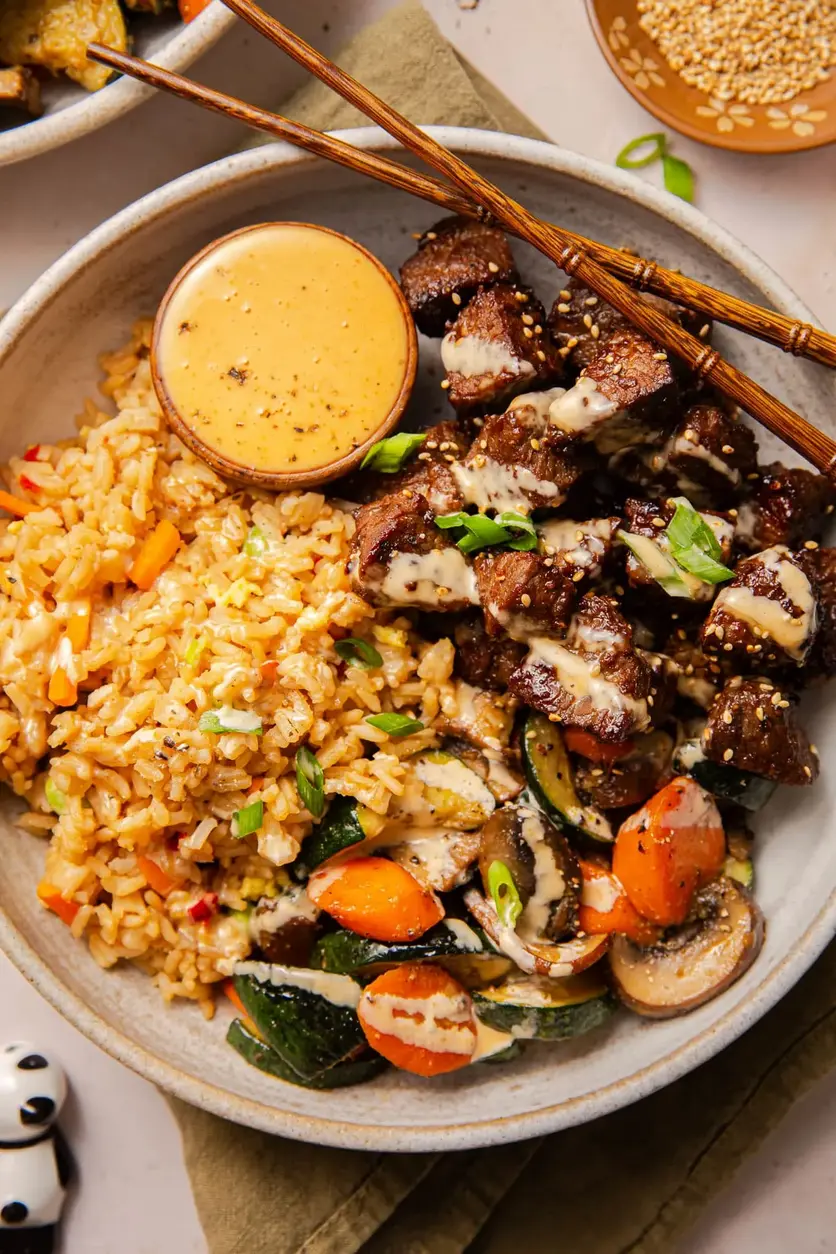
Imagine this: tender, marinated sirloin steak, seared to perfection with those delightful crispy edges, tossed in a glistening, savory-sweet glaze. Accompanying this are vibrant, crisp-tender vegetables – think bright orange carrots, tender zucchini, and earthy mushrooms – all sautéed to unlock their natural sweetness. Served atop a bed of fluffy fried rice and finished with a creamy, tangy drizzle of Yum Yum sauce, each bite is a symphony of textures and tastes. The aroma alone, a delightful mix of garlic, ginger, and sesame, is intoxicating. This dish captures the essence of a beloved restaurant classic, right in your own kitchen, using a simple yet effective stir-frying technique I learned during my culinary training.
What sets my hibachi steak bowl recipe apart is its unwavering commitment to both authenticity of flavor and the reality of a busy schedule. I’ve meticulously tested every step to ensure maximum flavor with minimal fuss, a philosophy deeply ingrained from my years in professional kitchens. You’ll find that the marinade isn’t just for show; it’s designed to tenderize and infuse the steak deeply. I’m also going to share a pro tip on how to achieve that coveted restaurant-style sear without needing a specialized grill. And, of course, I’ll point out a common mistake that can turn your steak tough, ensuring yours is always perfectly succulent. Let’s get cooking!
Why This Hibachi Steak Bowls Recipe Is the Best
My love for combining global flavors truly shines in this hibachi steak recipe. While French cuisine taught me precision and balance, my Moroccan roots instilled a love for warm spices and slow-cooked richness. For these hibachi steak bowls, I’ve incorporated a touch of mirin for a subtle sweetness and depth that perfectly complements the savory steak, much like how a hint of orange blossom water can elevate a tagine. This unique marinade, along with precise cooking temperatures, ensures a steak that’s both incredibly tender and bursting with flavor, a signature touch that elevates it beyond a simple stir-fry. It’s this thoughtful layering of influences that makes my approach to classic dishes so special.
Achieving that perfect sear on your steak is crucial, and it’s a technique I’ve refined over years of restaurant service. The key lies in using a screaming hot pan and not overcrowding it. By cooking the steak in batches if necessary and ensuring your pan is properly heated before adding the meat, you create a beautiful Maillard reaction, locking in juices and developing that irresistible crust. I’ve also found that using a combination of butter and sesame oil creates a higher smoke point and adds a nutty depth that’s hard to beat. This attention to detail in the cooking process ensures that each piece of steak in your hibachi beef bowl is a delight.
This recipe is a testament to the fact that you don’t need to be a classically trained chef to recreate restaurant-quality meals at home. I’ve designed every step to be straightforward and forgiving, allowing you to focus on enjoying the cooking process. From the simple marinade that does most of the flavor work to the quick sauté of vibrant vegetables, these hibachi steak and rice bowls come together remarkably fast. It’s the perfect example of how I like to bring sophisticated flavors into everyday cooking, making impressive dishes accessible for anyone looking to elevate their weeknight dinners.
Hibachi Steak Bowls Ingredients
For this recipe, I like to make a trip to my local farmers market here in NYC for the freshest produce, but you can find everything you need at your neighborhood grocery store. My mother always said that the best meals start with the best ingredients, and for these hibachi steak bowls, that means good quality sirloin and crisp vegetables. If I’m feeling fancy, I might even pick up some extra shiitake mushrooms from the specialty aisle!
Ingredients List
- 2 lbs top sirloin steak, cut into rough chunks
- 1 tablespoon mirin
- 6 cloves of garlic, finely minced or pressed
- 2 teaspoons ginger paste
- 2 tablespoons plus 1 teaspoon sesame oil, divided
- ½ teaspoon ground white pepper (or black pepper)
- Kosher salt, to taste
- 4 tablespoons unsalted butter, divided
- 3 medium carrots, thinly cut on a bias
- 2 medium zucchinis, sliced in half lengthwise & then cut into half moons
- 4-5 ounces sliced mushrooms (I use baby bella)
- ½ teaspoon garlic powder
- 1-2 tablespoons teriyaki sauce or Japanese BBQ Sauce (we love Bachans!)
- For serving: Fried rice & store-bought Yum Yum Sauce
Ingredient Spotlight
Top Sirloin Steak: This cut is my go-to for these hibachi steak bowls because it offers a fantastic balance of flavor and tenderness without breaking the bank. When shopping in the US, look for bright red, well-marbled cuts. Ensure it’s at least 1-inch thick for best results when searing. If you can’t find sirloin, a good quality flank steak or even ribeye would work, though cooking times might need adjustment.
Mirin: This is a sweet Japanese rice wine that adds a subtle sweetness and umami depth to the marinade. It’s essential for achieving that authentic hibachi flavor. You can usually find it in the international aisle of most major supermarkets or at an Asian grocery store. If you absolutely cannot find mirin, a dry sherry mixed with a teaspoon of sugar can be a close substitute, though the flavor profile will be slightly different.
Sesame Oil: I prefer to use toasted sesame oil for its rich, nutty aroma and flavor, which is a staple in my Moroccan kitchen for many of the same aromatic reasons. Use it sparingly, as its flavor is potent! Make sure you’re buying toasted sesame oil for cooking and marinades; regular sesame oil is much milder. You’ll find this easily in the condiment aisle of any US grocery store.
| Original Ingredient | Best Substitution | Flavor / Texture Impact |
|---|---|---|
| Top Sirloin Steak | Ribeye or Flank Steak | Ribeye will be richer and more tender. Flank steak will be leaner; slice against the grain for tenderness. |
| Mirin | Dry Sherry + 1 tsp Sugar | Slightly dryer and less sweet, but still adds good depth. |
| Toasted Sesame Oil | Toasted Walnut Oil or just skip | Loss of nutty depth; rely more on other aromatics. |
| Baby Bella Mushrooms | Shiitake or Cremini Mushrooms | Shiitake will add more umami; cremini are a very similar earthy flavor. |
How to Make Hibachi Steak Bowls — Step-by-Step
Taking inspiration from Parisian kitchens, where mise en place is king, let’s get all your ingredients prepped and ready before we start cooking. This ensures a smooth and efficient cooking process for your hibachi steak bowls.
Step 1: Marinate the Steak
Place the sirloin into a large bowl (or inside a large plastic baggie). Add the mirin, 4 cloves of minced garlic (save the other 2 for the veggies), 2 teaspoons ginger paste, 1 teaspoon sesame oil, and white pepper (or black pepper). Add salt to taste, ensuring the steak chunks are thoroughly coated. Let the steak marinate for at least 30 minutes at room temperature, or up to 2 hours in the refrigerator.
💡 mia’s Pro Tip: For maximum flavor infusion, feel free to marinate the steak overnight in the refrigerator. Just remember to bring it to room temperature for about 30 minutes before cooking to ensure even cooking.
Step 2: Sauté the Vegetables
In a wok or large skillet, heat 2 tablespoons of butter and 1 tablespoon of sesame oil over medium heat. When the butter is melted and shimmering, add the sliced carrots, zucchini, and mushrooms. Cook the veggies, tossing them often, until they are tender-crisp and golden brown, about 10-15 minutes. Season the vegetables with the remaining 2 cloves of minced garlic, garlic powder, and salt and pepper to taste. Transfer the sautéed vegetables to a clean plate and set aside. If your pan has any burnt bits, carefully wipe it clean with a damp paper towel.
⚠️ Common Mistake to Avoid: Don’t overcrowd the pan with vegetables! Cooking them in batches ensures they sauté properly and develop a nice caramelization, rather than steaming and becoming mushy.
Step 3: Sear the Steak
In the same pan (no need to wash), add the remaining 2 tablespoons of butter and 1 tablespoon of sesame oil over medium-high heat. Once the butter is melted and the oil is shimmering hot, add the marinated steak in a single layer. Cook, tossing the beef often, until it’s nicely seared on all sides, about 3-4 minutes. Be careful not to overcook the steak, as it can become tough quickly. Remove the pan from the heat, then drizzle in the teriyaki sauce or Japanese BBQ sauce, and toss the steak well to coat each piece in the glossy sauce until it glistens.
💡 mia’s Pro Tip: To achieve a restaurant-level sear, ensure your pan is very hot before adding the steak. This encourages a quick crust formation, sealing in the juices and preventing the meat from steaming.
Step 4: Assemble the Bowls
To serve, evenly divide the cooked steak and sautéed vegetables into shallow bowls. Add a generous portion of your prepared fried rice to each bowl. Finish each hibachi steak bowl with a drizzle of store-bought Yum Yum sauce (or feel free to serve it on the side for guests to add themselves) to complete this incredibly flavorful and satisfying meal.
⚠️ Common Mistake to Avoid: Don’t let the steak rest for too long after searing if you plan to serve it immediately. Over-resting can lead to juices pooling and the steak cooling down too much, affecting the overall warmth of the dish.
| Step | Action | Duration | Key Visual Cue |
|---|---|---|---|
| 1 | Marinate Steak | 30+ mins | Steak coated evenly with marinade |
| 2 | Sauté Vegetables | 10-15 mins | Tender-crisp, golden brown |
| 3 | Sear Steak | 3-4 mins | Nicely seared, glistening |
| 4 | Assemble Bowls | 5 mins | Evenly divided ingredients |
Serving & Presentation
When I think about serving these bowls, I’m reminded of the beautiful presentation we aimed for at my culinary school in Paris – elegant yet approachable. For your hibachi steak bowls, aim for a bowl that’s wide enough to showcase the colorful layers. Start with the fried rice as your base, then artfully arrange the sautéed vegetables and the glistening, saucy steak on top. A final drizzle of Yum Yum sauce adds a creamy, bright finish that pulls everything together visually and gastronomically. It’s a feast for the eyes before it even becomes a feast for the palate.
Here in NYC, presentation is key, and these bowls are all about vibrant colors and appealing textures. The key is to ensure each component is distinct yet harmonious. Don’t be afraid to let a little sauce from the steak drip onto the rice; that’s where the magic happens! If you want to elevate it further, consider a sprinkle of toasted sesame seeds or finely chopped green onions for a pop of freshness and visual contrast. It’s these little touches that transform a good meal into a memorable one, echoing the care I learned to put into every dish.
| Pairing Type | Suggestions | Why It Works |
|---|---|---|
| Side Dish | Steamed White or Brown Rice, or additional Fried Rice | Provides a perfect neutral base to soak up all the delicious flavors. |
| Sauce / Dip | Yum Yum Sauce, Teriyaki Glaze, Spicy Mayo | Complements the savory steak and vegetables with creaminess or a touch of heat. |
| Beverage | Cold Green Tea, Sake, or a Light Lager | Refreshing palate cleansers that pair well with Asian-inspired flavors. |
| Garnish | Toasted Sesame Seeds, Sliced Green Onions, Pickled Ginger | Adds visual appeal, a slight crunch, and a bright, zesty contrast. |
Make-Ahead, Storage & Reheating
As a busy New Yorker, meal prepping is a lifesaver! These hibachi steak bowls are perfect for making ahead. The components can be prepared separately and assembled just before serving, or you can portion them into individual containers for grab-and-go lunches throughout the week. Just ensure you cool each component completely before packing them away.
| Method | Container | Duration | Reheating Tip |
|---|---|---|---|
| Refrigerator | Airtight containers | 3-4 days | Gently reheat steak and vegetables in a skillet or microwave. Rice can be reheated separately. Avoid overheating steak. |
| Freezer | Freezer-safe containers | 1-2 months | Thaw overnight in the refrigerator. Reheat as per refrigerator instructions. Texture of vegetables may soften slightly. |
| Make-Ahead | Separate containers for components | 1-2 days in advance | Reheat steak and veggies, then assemble with fresh or reheated rice. Add sauce just before serving. |
When reheating, I find that the best way to maintain the steak’s texture is to warm it gently. If using a microwave, heat in short bursts, stirring occasionally, until just warmed through. For a slightly better result, especially if you have a few minutes, a quick sear in a hot skillet with a tiny bit of oil over medium-high heat will revive the steak beautifully. Remember to toss the rice separately until heated through. This technique ensures you get the best possible texture, even from leftovers.
Variations & Easy Swaps
| Variation | Key Change | Best For | Difficulty Impact |
|---|---|---|---|
| Spicy Kick | Add red pepper flakes or sriracha to marinade/sauce | Those who love a bit of heat | No change |
| Veggie Lover | Add broccoli florets, snap peas, or bell peppers | Vegetable enthusiasts | Slightly increased cook time for veggies |
| Protein Swap | Use chicken breast, shrimp, or firm tofu | Alternative protein preferences | Adjust cooking times for protein |
Gluten-Free Hibachi Steak Bowls
To make this steak hibachi bowl gluten-free, ensure you use gluten-free tamari instead of soy sauce if your teriyaki sauce contains it, or use a dedicated gluten-free teriyaki sauce. Many brands are now available in US supermarkets. The mirin and other ingredients are naturally gluten-free. This modification has no significant impact on the flavor or texture, making it an easy swap for those with gluten sensitivities.
Vegetarian Hibachi Tempeh Bowls
For a delicious vegetarian option, swap the steak for firm tempeh or extra-firm tofu. Press the tempeh or tofu well to remove excess water, then cut it into bite-sized cubes. Marinate it in the same mixture as the steak for at least 30 minutes. Pan-fry until golden brown and slightly crispy, then toss with the teriyaki sauce. This substitution offers a satisfying, plant-based protein that absorbs flavors wonderfully, just like the steak.
Seasonal Vegetable Swap
Embrace the bounty of the NYC seasons by swapping the vegetables based on what’s fresh. In the spring and summer, I love adding crisp asparagus or snap peas. For an autumn twist, consider adding chunks of sweet potato or Brussels sprouts, roasted until tender before adding to the bowl. These seasonal additions bring unique flavors and textures, keeping your hibachi steak and rice bowl exciting year-round.
What cuts of steak work best for hibachi steak bowls?
For the best hibachi steak bowls, I recommend cuts that are tender and flavorful. Top sirloin is my preferred choice as it offers a great balance and cooks quickly. Ribeye is another excellent option for its richness and marbling, ensuring a super tender steak. Flank steak can also work, but be sure to slice it thinly against the grain after cooking to maximize tenderness. The key is to choose a cut that can withstand high-heat searing without becoming tough or dry.
Can I make hibachi steak bowls without a flat top grill?
Absolutely! You don’t need a specialized flat-top grill to make delicious hibachi steak bowls. A good quality wok or a large, heavy-bottomed skillet (like cast iron) works perfectly. The most important thing is to get your pan very hot before adding the ingredients, especially the steak, to achieve that desirable sear. The high heat mimics the conditions of a hibachi grill and ensures your steak cooks quickly and develops a beautiful crust.
How do I get a good sear on the steak for hibachi-style bowls?
Achieving a great sear is all about heat and technique. First, ensure your steak is patted completely dry before marinating and again before cooking. This removes surface moisture that steams the meat instead of searing it. Then, heat your pan (cast iron or stainless steel is best) until it’s smoking hot. Add a high-smoke-point oil like avocado or grapeseed oil (or the butter/sesame oil combo I use). Don’t overcrowd the pan; cook the steak in batches if necessary. Sear for just a few minutes per side until a nice brown crust forms.
What sauces go well with hibachi steak bowls?
Beyond the teriyaki or Japanese BBQ sauce used in the recipe, classic hibachi steak bowls are wonderfully complemented by a variety of sauces. My personal favorite, as mentioned, is a creamy, tangy Yum Yum sauce, which adds a delightful richness. Another popular choice is a spicy mayonnaise, easily made by whisking sriracha into mayonnaise. A simple drizzle of extra teriyaki sauce or even a garlic butter sauce can also elevate the dish beautifully. The key is a sauce that adds moisture and a burst of flavor.
Can I substitute the vegetables in this hibachi steak bowl recipe?
Absolutely! The beauty of these hibachi steak bowls is their versatility. While carrots, zucchini, and mushrooms are a classic combination, feel free to use your favorite vegetables or whatever you have on hand. Broccoli florets, bell peppers (any color), snow peas, asparagus, green beans, or even onions would be fantastic additions. Just ensure you chop them into similar-sized pieces for even cooking and adjust the sauté time as needed based on their density.
What is the purpose of mirin in the steak marinade?
Mirin is a Japanese rice wine that plays a crucial role in marinades for dishes like these hibachi steak bowls. It contributes a subtle sweetness that balances savory elements and helps to tenderize the meat, breaking down some of the protein fibers. It also adds a touch of umami, that pleasant savory depth, which enhances the overall flavor profile of the steak without being overpowering. It’s a key ingredient for achieving that authentic, slightly sweet and savory, glazed finish characteristic of hibachi-style cooking.
How do I make fried rice to go with my hibachi steak bowls?
Making fried rice is surprisingly simple and a perfect accompaniment. The trick is to use day-old, cold cooked rice, which is drier and less likely to clump. Sauté some aromatics like garlic and onion, add your desired vegetables (peas, carrots, corn are classic), then push them to the side of the pan. Add beaten eggs and scramble them, then add the cold rice. Stir-fry everything together, seasoning with soy sauce or tamari, and a touch of sesame oil. It comes together quickly and is much more satisfying than plain rice.
Can I use a different type of steak than sirloin?
Yes, absolutely! While top sirloin is my go-to for its excellent flavor and tenderness at a reasonable price point, other cuts can work well for hibachi steak bowls. Ribeye is a fantastic substitute if you want something richer and more decadent, thanks to its marbling. Flank steak is a leaner option and becomes very tender if you remember to slice it thinly against the grain after cooking. Even a tenderloin or a good quality New York strip would yield delicious results, though they tend to be more expensive.
Share Your Version!
I would absolutely love to see what you create with this hibachi steak bowl recipe! If you’ve tried it, please consider leaving a star rating and a comment below – your feedback helps me immensely. And if you’ve made this dish, snap a photo and share it on Instagram or Pinterest, tagging me @exorecipes. I’m always eager to see your delicious creations! What’s your favorite vegetable to add when you make these steak hibachi bowls?
From my NYC kitchen to yours — I hope this recipe brings as much warmth to your table as it does to mine. — mia 🧡
Love This Recipe? Save It to Pinterest!
If you enjoyed this Hibachi Steak Bowls recipe, don’t let it get lost in your browser tabs! 😄 Pin it now so you can find it again anytime — and explore hundreds more tried-and-tested recipes waiting for you on my Pinterest boards.
👉 Follow mia on Pinterest @chefrecipes2
📌 Pin this recipe · 🔁 Re-pin your favorites · 💬 Tag me when you make it — I love seeing your creations!
Hibachi Steak Bowls
Description
These Hibachi Steak Bowls are loaded with tender, flavorful pieces of sirloin, sautéed vegetables, and fried rice. If you love Benihana and Kobé Japanese steakhouses, you’ll enjoy these bowls inspired by those restaurants! This recipe is wildly easy and perfect for a delicious weeknight-friendly dinner or meal prepping!
Ingredients
- 2 lbs top sirloin steak, cut into rough chunks
- 1 tablespoon mirin
- 6 cloves of garlic, finely minced or pressed
- 2 teaspoons ginger paste
- 2 tablespoons plus 1 teaspoon sesame oil, divided
- ½ teaspoon ground white pepper (or black pepper)
- Kosher salt, to taste
- 4 tablespoons unsalted butter, divided
- 3 medium carrots, thinly cut on a bias
- 2 medium zucchinis, sliced in half lengthwise & then cut into half moons
- 4–5 ounces sliced mushrooms (I use baby bella)
- ½ teaspoon garlic powder
- 1–2 tablespoons teriyaki sauce or Japanese BBQ Sauce (we love Bachans!)
- For serving: Fried rice & store-bought Yum Yum Sauce
Instructions
- Place the sirloin into a large bowl (or inside a large plastic baggie). Add the mirin, garlic, ginger, 1 teaspoon sesame oil, white pepper (or black pepper), and salt-to taste. Toss all ingredients to fully combine, ensuring steak chunks are thoroughly coated. Then set the steak aside to marinate for at least 30 minutes.
- In a wok or large skillet, heat 2 tablespoons of butter and 1 tablespoon of sesame oil over medium heat. When hot, add the carrots, zucchini, and mushrooms. Cook the veggies, tossing often, until tender and golden brown, about 10-15 minutes. Season the veggies with garlic powder and salt/pepper- to taste. Then transfer the sautéed veggies to a clean plate and set aside. If needed, carefully wipe the pan clean with a damp paper towel.
- In the same pan, add remaining 2 tablespoons butter and 1 tablespoon sesame oil over medium-high heat. When hot, add the steak. Cook, tossing beef often, until nicely seared, about 3-4 minutes- careful not to overcook steak into toughness. Then remove from heat, and drizzle in the teriyaki sauce or Japanese BBQ sauce, toss well to coat steak in sauce until chunks are glistening.
- Evenly divide the cooked steak and sautéed veggies into shallow bowls, along with fried rice. Finish off bowls with a drizzle of store-bought Yum Yum sauce (or feel free to serve it on the side) to complete these hibachi steak bowls. Enjoy!

Tried This Recipe? Leave a Comment!
Did you make this recipe? I’d love to hear how it turned out! Please leave a comment and a rating below. Your feedback helps other home cooks and supports cheerychop.com!
