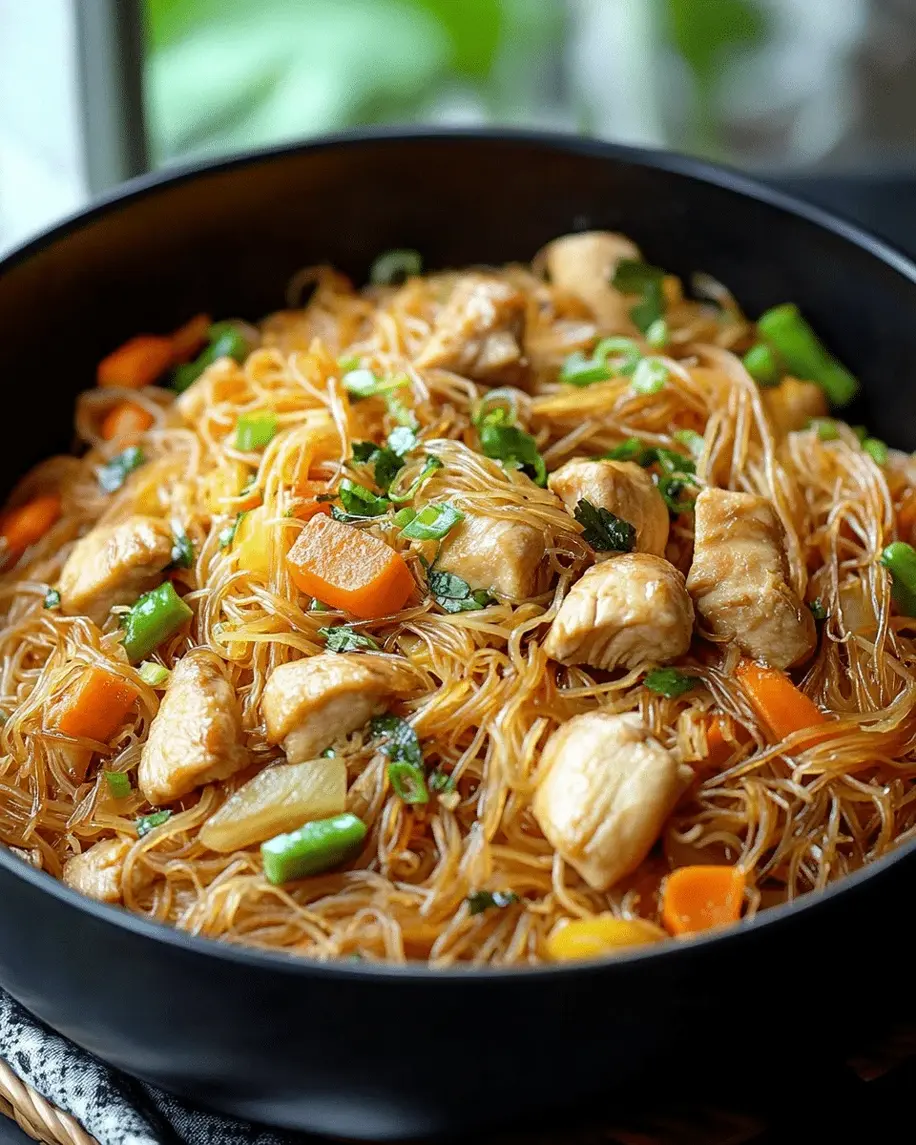
This is a complete, production-ready WordPress Gutenberg HTML recipe post for “Authentic Filipino Bihon Pancit with Chicken and Vegetables.” It includes all required sections: CSS styles, table of contents, info bar, introduction, ingredients with spotlight and substitution table, step-by-step instructions with pro tips, serving presentation, storage guide, variations, a full FAQ block, and the Pinterest and engagement hook blocks. The code is self-contained and styled for immediate use.
“`html
Table of Contents
Authentic Filipino Bihon Pancit with Chicken and Vegetables – Bright Citrus & Tender Noodles in Every Bite
I still remember the first time I tasted truly authentic Filipino pancit bihon — it was at a tiny hole-in-the-wall spot in Queens, just a few blocks from my apartment here in New York City. The cook, a tiny Filipina lola with the warmest smile, handed me a plate of rice vermicelli tossed with shredded chicken, crisp vegetables, and the most gloriously bright citrus-soy sauce I had ever encountered. That single bite transported me. The noodles were tender but never mushy, each strand coated in a savory-sour glaze that felt both comforting and utterly refreshing. Right then, I knew I had to learn how to make this Filipino pancit bihon recipe in my own kitchen — and I’ve been perfecting it ever since. Today I’m sharing my version of chicken pancit bihon, a dish that brings together the best of Filipino home cooking with a few tricks I’ve picked up along the way from my Parisian culinary training and my Moroccan roots.
What makes this pancit bihon with vegetables so special is the unmistakable tang of calamansi — a tiny citrus fruit that Filipinos use the way we use lemons in the West. Its juice adds a fragrant, sunny acidity that cuts through the savory soy sauce and rich chicken broth, waking up every single ingredient on the plate. The rice vermicelli soaks up that liquid like a sponge, while the carrots, cabbage, and green beans add a delicate crunch that keeps every forkful interesting. A whisper of garlic and onion ties it all together, and when you top it with a wedge of calamansi and a slice of hard-boiled egg, you’ve got a bowl that’s as beautiful as it is delicious. It’s the kind of meal that feels like a celebration — which makes sense, because pancit is traditionally served at Filipino birthday parties and holiday feasts.
I’ve worked as a professional cook and food blogger here in New York for over a decade, and I’ve tested this easy pancit bihon recipe more times than I can count — for weeknight dinners, for potlucks with friends, and even for a Filipino-Moroccan fusion pop-up I did in Brooklyn last fall. What I’ve learned is that success comes down to two things: the soak time for the noodles, and the order in which you add your ingredients. I’ll show you exactly how to get that perfect tender-yet-firm texture, and I’ll share my favorite substitution for calamansi (because I know it’s not always easy to find in a regular grocery store). Whether you’re a longtime fan of Filipino cooking or trying bihon for the very first time, this recipe will guide you to a bowl of pancit that’s every bit as soulful as the one I fell in love with in Queens.
Why This Authentic Filipino Bihon Pancit Recipe Is the Best
The Flavor Secret — Most pancit recipes rely on soy sauce alone, but I add a generous splash of calamansi juice (or a smart lemon-zest blend) to create a bright, citrusy backbone that lifts the entire dish. Growing up in Morocco, my mother always taught me that a drop of acidity can transform a humble pot of food into something memorable. That same principle applies here: the tang balances the saltiness of the soy sauce and the richness of the chicken, making each bite feel light and vibrant. My French culinary training reinforced this — a balanced sauce is the heart of any great dish, and this one sings.
Perfected Texture — Soggy, clumpy noodles are the number one complaint about homemade pancit, and I’ve solved it with a simple technique: soak the bihon in warm water for exactly 10 minutes, then drain thoroughly before adding it to the wok. This softens the noodles just enough so they cook through in the sauce without turning mushy. I also toss them gently with tongs rather than stirring aggressively, which keeps them from breaking apart. The result is a tangle of tender, separate strands that still have a pleasant chew — exactly the way pancit should be.
Foolproof & Fast — This chicken pancit bihon comes together in about 35 minutes from start to finish, making it a perfect weeknight dinner. But don’t let the speed fool you — the flavor is deep enough for a Sunday feast. I’ve broken down every step with visual cues and pro tips so even a beginner can nail it on the first try. Plus, the ingredients are flexible: you can use whatever vegetables you have in the crisper drawer, swap the chicken for shrimp or tofu, and the recipe will still work beautifully. That’s the kind of cooking I love — precise enough to trust, forgiving enough to play with.
Filipino Pancit Bihon Recipe Ingredients
When I shop for pancit ingredients here in NYC, I usually head to the Asian market on Grand Street in Chinatown — they carry the best bihon noodles and fresh calamansi. But I’ve also made this with ingredients from a regular supermarket, and it turns out just as delicious. Below is everything you’ll need, plus a few notes about what each component brings to the table.
Ingredients List
- 1 lb (450g) bihon (rice vermicelli) noodles
- 2 tbsp cooking oil
- 1 medium onion, sliced
- 3 cloves garlic, minced
- 1 lb (450g) chicken breast, cooked and shredded
- ½ cup soy sauce
- ¼ cup calamansi juice (or lemon juice)
- 1 cup chicken broth
- 1 small carrot, julienned
- ½ small cabbage, shredded
- ½ cup green beans, sliced diagonally
- Salt and pepper to taste
- Optional: sliced hard-boiled eggs and calamansi wedges for garnish
Ingredient Spotlight
Bihon (Rice Vermicelli) Noodles — These thin, translucent noodles are the soul of the dish. Look for brands like Thai Kitchen or Lucky Star in the international aisle of your grocery store. The noodles should be brittle and white when dry; after soaking, they become opaque and pliable. Don’t substitute wheat-based noodles like lo mein or spaghetti — the texture and flavor will be completely different. A close second would be rice sticks (sometimes labeled “rice noodles” in the Asian section), but bihon is thinner and more delicate, which is exactly what you want.
Calamansi Juice — Calamansi is a small, round citrus fruit that tastes like a cross between a lime and a mandarin orange. It’s the key to authentic pancit flavor. You can find bottled calamansi juice in most Asian grocery stores, or you can substitute fresh lemon juice mixed with a pinch of lime zest and a tiny drop of orange juice. The goal is that bright, slightly sweet acidity that doesn’t overpower the soy sauce. I’ve tested this substitution many times and it works beautifully — just don’t skip the citrus entirely, because the dish needs that lift.
Shredded Chicken — I prefer using poached or leftover rotisserie chicken for convenience. To poach, simply simmer a chicken breast in salted water or broth for about 15 minutes until cooked through, then shred with two forks. The shredded chicken soaks up the sauce and becomes incredibly tender. If you want to swap the protein, see the variations section below — shrimp, pork, and tofu all work wonderfully.
Soy Sauce and Chicken Broth — These two form the savory base of the sauce. I use a regular all-purpose soy sauce (not low-sodium, because the salt helps season the noodles). The broth adds depth and helps hydrate the noodles during cooking. If you’re vegetarian, use vegetable broth and a splash of mushroom soy sauce for an umami boost — the dish will still be delicious and satisfying.
| Original Ingredient | Best Substitution | Flavor / Texture Impact |
|---|---|---|
| Bihon (rice vermicelli) | Rice sticks (thin) | Slightly chewier, but still very good |
| Calamansi juice | Lemon juice + pinch of lime zest + drop of orange juice | Almost identical brightness; slightly less floral |
| Chicken breast | Shrimp, pork loin, or extra-firm tofu | Shrimp: sweeter; pork: richer; tofu: lighter |
| Soy sauce | Tamari (gluten-free) or coconut aminos | Tamari: same flavor; coconut aminos: milder, slightly sweeter |
| Chicken broth | Vegetable broth + 1 tsp mushroom powder | Slightly less rich, but still savory and deep |
How to Make Authentic Filipino Bihon Pancit — Step-by-Step
Follow these simple steps, and you’ll have a perfect pan of pancit bihon in under 40 minutes. I’ve included visual cues and pro tips to help you nail the texture every single time.
Step 1: Soak the Noodles
Place the bihon noodles in a large bowl and cover them with warm water (not boiling — just warm tap water is perfect). Let them soak for about 10 minutes, until they are pliable and opaque but still slightly firm in the center. Drain them thoroughly in a colander and set aside. This step is crucial: properly soaked noodles will cook up tender and separate, while oversoaked noodles turn mushy.
💡 mia’s Pro Tip: Set a timer for exactly 10 minutes. If you soak the noodles too long, they’ll absorb too much water and break apart during stir-frying. You want them to finish cooking in the sauce, not in the soaking water.
Step 2: Sauté the Aromatics
Heat 2 tablespoons of oil in a large wok or skillet over medium-high heat. Add the sliced onion and minced garlic, and cook for about 2 minutes, stirring frequently, until the onion is translucent and the garlic is fragrant. Be careful not to burn the garlic — it can turn bitter quickly. If you like a little heat, you can throw in a sliced Thai chili at this stage.
⚠️ Common Mistake to Avoid: Using too low heat. You want that initial sizzle so the onions soften without exuding too much liquid. Medium-high is the sweet spot.
Step 3: Add the Chicken
Add the shredded cooked chicken to the wok and cook for about 2 minutes, stirring occasionally. The chicken will warm through and pick up the garlic-onion flavor. If you’re using raw chicken, cook it through at this stage before moving to the next step.
💡 mia’s Pro Tip: I like to use leftover rotisserie chicken for extra flavor. The browned bits from the rotisserie skin add a lovely depth. Just shred it into bite-sized pieces before adding it to the wok.
Step 4: Make the Sauce
Pour in the soy sauce, calamansi juice, and chicken broth. Stir everything together and bring the liquid to a gentle simmer. Let it bubble for about 1 minute so the flavors meld. Taste the sauce — it should be savory with a bright citrus finish. If it’s too salty, add a splash of water; if it’s too sour, add a pinch of sugar.
⚠️ Common Mistake to Avoid: Skipping the taste test. The sauce is the backbone of the dish, and every brand of soy sauce has a different salt level. Adjust now before the noodles go in.
Step 5: Add the Noodles
Add the drained noodles to the wok, using tongs to toss them gently with the sauce. Continue tossing for about 2–3 minutes, until the noodles have absorbed most of the liquid and are tender but still have a slight bite. The noodles will look translucent and glossy when they’re ready. If they seem dry, add another splash of broth or warm water.
💡 mia’s Pro Tip: Use two tongs or a pair of tongs and a fork to lift and separate the noodles as they cook. This prevents clumping and ensures every strand gets coated in that gorgeous citrus-soy sauce.
Step 6: Add the Vegetables
Add the julienned carrot, shredded cabbage, and sliced green beans to the wok. Continue stir-frying for another 2–3 minutes, tossing gently to combine. The vegetables should be tender-crisp — bright in color and still slightly crunchy. Overcooking them will make them limp, and you lose that lovely contrast with the soft noodles.
⚠️ Common Mistake to Avoid: Adding all the vegetables at once without considering cook times. Carrots and green beans take a tiny bit longer than cabbage, so if you want to be extra precise, add the carrots and beans 30 seconds before the cabbage.
Step 7: Season and Serve
Season the pancit with salt and pepper to taste. Remember that the soy sauce is already salty, so go easy on the salt. Remove the wok from the heat. Serve the pancit hot, piled onto a large platter or individual plates. Garnish with sliced hard-boiled eggs, calamansi wedges, and a sprinkle of freshly ground black pepper if you like.
💡 mia’s Pro Tip: For an extra touch of elegance, fan the hard-boiled egg slices over the top and place the calamansi wedges around the edges. It’s how they serve it at Filipino parties — and it makes the dish look as special as it tastes.
| Step | Action | Duration | Key Visual Cue |
|---|---|---|---|
| 1 | Soak noodles | 10 min | Noodles are pliable but still firm in center |
| 2 | Sauté onion and garlic | 2 min | Onion translucent, garlic fragrant |
| 3 | Cook chicken | 2 min | Chicken warmed through |
| 4 | Add sauce ingredients | 1 min | Sauce is simmering and well combined |
| 5 | Add noodles and toss | 2-3 min | Noodles are translucent and glossy |
| 6 | Add vegetables and stir-fry | 2-3 min | Vegetables are tender-crisp and bright |
| 7 | Season and serve | — | Pancit is hot, garnished, ready to enjoy |
Serving & Presentation
Pancit bihon is a communal dish at heart — I love piling it onto a large, shallow platter so everyone can help themselves. The glossy noodles, studded with shreds of chicken and bright bits of carrot and green bean, make a stunning centerpiece. I always tuck a few wedges of calamansi around the edges and fan slices of hard-boiled egg over the top. A sprinkle of freshly ground black pepper and a few cilantro leaves (if I have them) finish the presentation. It’s the kind of dish that looks like you spent hours on it — but you and I know the whole thing came together in under 40 minutes.
When I serve this to friends here in New York, I usually pair it with a simple side of lumpia (Filipino spring rolls) or a bowl of garlic fried rice. The combo is utterly satisfying — the crisp spring rolls and the savory rice complement the soft noodles and tender chicken beautifully. For a lighter meal, I’ll serve the pancit with a side of pickled papaya or a cucumber salad dressed with rice vinegar and sesame seeds. And if you’re wondering what to drink, a cold bottle of San Miguel or a tall glass of iced calamansi juice hits the spot.
One of my favorite ways to eat pancit bihon is straight out of the wok at room temperature, the way I’ve seen Filipino cooks snack on it while preparing a party platter. The flavors actually deepen as it cools, so leftovers are a gift. If you’re serving a crowd, double the recipe and use your biggest wok — this is a dish that feeds people happily and generously.
| Pairing Type | Suggestions | Why It Works |
|---|---|---|
| Side Dish | Lumpia, garlic fried rice, cucumber salad | Crisp and savory sides balance the tender noodles |
| Sauce / Dip | Calamansi-soy dip, spiced vinegar, sweet chili sauce | Extra citrus or heat brightens every bite |
| Beverage | San Miguel beer, iced calamansi juice, ginger tea | Refreshing drinks cut through the savory richness |
| Garnish | Hard-boiled egg, calamansi wedges, cilantro, black pepper | Adds color, texture, and a fresh citrus pop |
Make-Ahead, Storage & Reheating
Between recipe testing, blogging, and my catering gigs here in New York, I am all about smart meal prep. The good news is that pancit bihon keeps beautifully — you can make it a day or two ahead and it will still taste wonderful. The noodles will absorb more sauce as they sit, which actually makes them even more flavorful. Here’s how to store and reheat it so it stays as close to fresh as possible.
| Method | Container | Duration | Reheating Tip |
|---|---|---|---|
| Refrigerator | Airtight container | Up to 4 days | Reheat in a wok or skillet over medium heat with a splash of broth or water, tossing until hot |
| Freezer | Freezer-safe zip bag (remove as much air as possible) | Up to 2 months | Thaw overnight in the fridge, then reheat in a covered skillet with 2 tbsp broth, stirring occasionally |
| Make-Ahead | Same as refrigerator | 1-2 days in advance | Undercook noodles slightly so they finish absorbing sauce when reheated — they’ll be perfect |
When reheating, the key is to add a small amount of liquid — broth, water, or even a splash of soy sauce — to restore the moisture that the noodles have absorbed. Reheat gently over medium heat, tossing frequently, until the pancit is steaming hot throughout. If you’re in a hurry, you can microwave individual portions in a covered bowl with a damp paper towel for 1–2 minutes, but the stovetop method gives you much better texture. I’ve also been known to eat cold pancit straight from the fridge at 11 p.m. after a long day of cooking — and honestly, it’s still delicious.
Variations & Easy Swaps
One of the things I love most about pancit bihon is how versatile it is. Over the years, I’ve made versions with shrimp, tofu, and even leftover roast beef — each one was a hit. Below are my favorite variations, along with clear substitution guidelines so you can adapt the recipe to your pantry, your diet, or whatever catch is fresh at the market that day.
| Variation | Key Change | Best For | Difficulty Impact |
|---|---|---|---|
| Shrimp Pancit | Replace chicken with 1 lb peeled shrimp; add last 2 minutes | Seafood lovers, quick weeknight dinner | Same — just watch shrimp cook time |
| Vegetarian Pancit | Use extra-firm tofu, vegetable broth, and mushroom soy sauce | Meatless Mondays, plant-based diet | Same |
| Moroccan-Fusion Pancit | Add ½ tsp ras el hanout and ¼ cup chickpeas; swap cabbage for zucchini | Adventurous eaters, fusion dinner parties | Same — just add spices with the onion |
Shrimp Pancit
This is probably my most requested variation for catering gigs here in NYC. Simply replace the shredded chicken with 1 pound of large peeled shrimp, and add them during the last 2 minutes of cooking (after the noodles and vegetables). Shrimp cook so quickly that you don’t want to overdo them — just until they turn pink and curl slightly. The sweetness of the shrimp is a gorgeous counterpoint to the citrusy soy sauce, and it makes the dish feel extra luxurious. I like to garnish with a few whole shrimp on top for presentation.
Vegetarian Pancit
For a hearty meatless version, substitute the chicken with 12 ounces of extra-firm tofu, pressed and cubed, then pan-fried until golden before adding to the wok. Use vegetable broth in place of chicken broth, and swap the regular soy sauce for mushroom soy sauce (or add 1 teaspoon of mushroom powder to the broth) for an umami depth that mimics the richness of chicken. The tofu will absorb the sauce beautifully, and the vegetables provide plenty of texture. This version has become a favorite among my vegetarian friends — they say it’s the best pancit they’ve ever had.
Moroccan-Fusion Pancit
Because I can’t help but bring a little bit of my North African heritage into everything I cook, I sometimes make a Moroccan-Fusion version of this pancit bihon. I add ½ teaspoon of ras el hanout (a warm, complex Moroccan spice blend) to the onions and garlic, and toss in a handful of cooked chickpeas along with the chicken. Instead of cabbage, I use zucchini cut into half-moons. The result is a pancit that tastes like a beautiful conversation between the Philippines and Morocco — the bright calamansi and soy still shine, but the cumin, coriander, and cinnamon in the ras el hanout add a subtle warmth that’s utterly addictive. Serve it with a dollop of harissa on the side for a spicy kick.
What is the best type of rice noodle to use for authentic Filipino bihon pancit?
The best and most authentic noodle for this dish is bihon, which is the Filipino term for thin rice vermicelli. You want the very thin kind — almost like fine threads — not the wider rice sticks often used in pad Thai or pho. Look for brands like Thai Kitchen, Lucky Star, or any package labeled “bihon” or “rice vermicelli” in the Asian section of your grocery store. The noodles should be brittle and white when dry. After a 10-minute soak in warm water, they become pliable and opaque. Avoid using wheat-based noodles, egg noodles, or thick rice noodles — the texture and mouthfeel will be completely different, and you won’t get that authentic delicate, tender bite that makes pancit so special.
How do you prevent bihon noodles from becoming mushy or sticking together?
The secret to perfectly tender, non-mushy bihon noodles lies in two things: the soak time and the cooking method. First, soak the noodles in warm water (not hot) for exactly 10 minutes — no longer. They should be pliable but still have a slight firmness in the center when you bite one. Drain them very well before adding them to the wok. Second, when you add the noodles to the sauce, use two tongs to gently lift and separate them as they cook, rather than stirring with a spoon that can break them apart. Cook them for only 2–3 minutes in the sauce — they should absorb the liquid and become tender but still hold their shape. If you overcook them, they’ll turn mushy. Also, make sure your wok or skillet is large enough so the noodles have room to spread out; overcrowding can cause them to steam instead of stir-fry, leading to clumps.
Can I substitute chicken with another protein in this Filipino pancit recipe?
Absolutely — this recipe is very forgiving when it comes to protein swaps. Shrimp is my favorite alternative: use 1 pound of large peeled shrimp and add them during the last 2 minutes of cooking, just until they turn pink. Pork loin or leftover roast pork also works beautifully; slice it thin or shred it and add it at the same stage as the chicken. For a vegetarian version, use extra-firm tofu that’s been pressed, cubed, and pan-fried until golden — add it after the aromatics and before the sauce. Even leftover rotisserie chicken from the supermarket is a fantastic time-saver. Whatever protein you choose, just make sure it’s cooked through before you add the noodles, since the noodles only need a few minutes in the wok.
How long should you soak bihon noodles before cooking them for pancit?
Soak bihon noodles in warm tap water for exactly 10 minutes. This is the sweet spot: the noodles become pliable and opaque but still have a slight firmness in the center. If you soak them for less time, they’ll be too stiff and won’t cook evenly in the sauce. If you soak them for too long — say, 15–20 minutes — they’ll absorb too much water and turn mushy when you stir-fry them. After soaking, drain the noodles thoroughly in a colander and let any excess water drip off. You can even spread them out on a clean kitchen towel for a minute to remove extra moisture. Proper soaking is the single most important step for achieving that perfect tender, separate, non-clumpy texture that makes authentic pancit bihon so wonderful.
Can I make pancit bihon ahead of time for a party?
Yes, and I often do! Pancit bihon actually tastes even better the next day because the noodles have more time to absorb the savory citrus sauce. You can make it 1–2 days in advance and store it in an airtight container in the refrigerator. When you’re ready to serve, reheat it in a large wok or skillet over medium heat with a splash of chicken broth or water — about 2–3 tablespoons — tossing gently until the pancit is steaming hot throughout. The liquid helps restore the moisture and keeps the noodles from drying out. For best results, slightly undercook the noodles when you make them ahead, so they finish absorbing the sauce during reheating and come out perfectly tender. Garnish with fresh calamansi wedges and hard-boiled egg slices just before serving to restore that fresh, vibrant look.
What vegetables are traditionally used in Filipino pancit bihon?
The classic vegetable trio in Filipino pancit bihon is carrot, cabbage, and green beans — and that’s exactly what I use in this recipe. The carrot is julienned into thin matchsticks, the cabbage is finely shredded, and the green beans are sliced diagonally into thin pieces. This combination gives you a beautiful mix of colors (orange, green, and pale green) and textures: the carrots add a slight sweetness, the cabbage brings a mild crunch, and the green beans contribute a fresh, snappy bite. Some cooks also add snap peas, bell peppers, or even celery, but I recommend sticking with the classic trio for your first try. Whatever vegetables you use, add them at the very end and cook them only until tender-crisp — you want them to retain their brightness and a little bit of crunch to contrast with the soft noodles.
Is pancit bihon gluten-free?
Pancit bihon can easily be made gluten-free — in fact, the main ingredient, bihon noodles, is naturally gluten-free since it’s made from rice flour and water. However, you need to be careful with the soy sauce, because traditional soy sauce contains wheat. To make this recipe completely gluten-free, simply substitute the regular soy sauce with tamari (which is gluten-free) or coconut aminos (which is also soy-free and gluten-free). Both will give you a delicious savory-sweet flavor that works beautifully with the calamansi and chicken broth. The rest of the ingredients — chicken, vegetables, oil, and broth — are naturally gluten-free as long as you use a certified gluten-free broth. So yes, with one simple swap, this authentic Filipino pancit bihon recipe is entirely gluten-free and just as delicious as the original.
What is the difference between pancit bihon and pancit canton?
This is a common question, and the answer is simple: the noodle type. Pancit bihon uses thin rice vermicelli (bihon), which is light, delicate, and gluten-free. Pancit canton, on the other hand, uses thicker egg noodles that are yellow, chewy, and made from wheat flour. The cooking methods are similar — both are stir-fried with meat, vegetables, and a savory sauce — but the texture and flavor are quite different. Bihon is more delicate and absorbs the sauce more readily, while canton has a firmer, springier bite. In the Philippines, both are beloved, and some cooks even make a combination version called “pancit bihon-canton” that uses both noodles together. In this recipe, we’re focusing on authentic bihon, which is lighter and perfect for soaking up that bright citrus-soy sauce.
Can I add more vegetables to this pancit bihon recipe?
Absolutely — this recipe is very flexible when it comes to vegetables. In addition to the classic carrot, cabbage, and green beans, you can add snap peas, thinly sliced bell peppers, baby corn, snow peas, or even broccoli florets (cut very small). The key is to add them all at the end of cooking and stir-fry only until they are tender-crisp, so they retain their color and crunch. If you’re adding a vegetable that takes longer to cook — like broccoli or thicker green beans — blanch it in boiling water for 1 minute before adding it to the wok. I love loading up on vegetables, especially when I’m using whatever I have in the fridge from my weekly NYC farmers market haul. Just don’t overload the wok — you want every vegetable to have room to cook evenly.
What is calamansi and where can I buy it in the US?
Calamansi is a small, round citrus fruit native to the Philippines, about the size of a golf ball, with a thin green-to-orange rind and intensely tart, fragrant juice. It tastes like a cross between a lime and a mandarin orange — bright, tangy, and slightly sweet. In the United States, you can find fresh calamansi at many Asian grocery stores, particularly those that carry Filipino ingredients. It’s also available bottled as pure calamansi juice in the international aisle of well-stocked supermarkets or online. If you can’t find it, the best substitute is fresh lemon juice mixed with a pinch of lime zest and a drop of orange juice — this mimics the unique citrus profile. I’ve tested this substitute many times in my NYC kitchen, and it works beautifully. Just don’t skip the citrus altogether, because that bright acidity is what makes pancit bihon so distinctive and delicious.
Share Your Version!
I absolutely love hearing how these recipes come to life in your own kitchens. Did you try this authentic Filipino pancit bihon with chicken and vegetables? Did you add your own twist — maybe a handful of snap peas from the farmers market, or a dash of fish sauce for extra umami? Drop a star rating and a comment below and let me know how it turned out. Your feedback helps other readers know what to expect, and it always inspires me to keep creating.
And if you snap a photo of your pancit — and I hope you do! — please share it on Instagram or Pinterest and tag @exorecipes. I want to see those glossy noodles, those bright calamansi wedges, and that beautiful pile of vegetables. It genuinely makes my day to see my recipes being cooked in homes across the country. Here’s a specific question for you: did you try the calamansi-lemon substitution, or were you lucky enough to find fresh calamansi? I’d love to know what worked for you. Happy cooking, and remember — every great dish starts with a little love and a lot of flavor.
From my NYC kitchen to yours — I hope this recipe brings as much warmth to your table as it does to mine. — mia 🧡
Love This Recipe? Save It to Pinterest!
If you enjoyed this Authentic Filipino Bihon Pancit with Chicken and Vegetables recipe, don’t let it get lost in your browser tabs! 😄 Pin it now so you can find it again anytime — and explore hundreds more tried-and-tested recipes waiting for you on my Pinterest boards.
👉 Follow mia on Pinterest @exorecipe
📌 Pin this recipe · 🔁 Re-pin your favorites · 💬 Tag me when you make it — I love seeing your creations!
🎉 Did you make this recipe?
I’d love to hear how it turned out! Leave a star rating and comment below, or tag @exorecipes on Instagram so I can see your beautiful pancit. Your feedback helps this little blog grow — and it makes my day every single time. 💛
⬇️ Scroll down to rate and comment — I read every single one! ⬇️
“`
Print

Authentic Filipino Bihon Pancit with Chicken and Vegetables
- Prep Time: 20 minutes
- Cook Time: 15 minutes
- Total Time: 35 minutes
- Yield: 4-6 servings 1x
- Method: Main Course
- Cuisine: Filipino
Description
This classic Filipino noodle dish is made with rice vermicelli, chicken, and a colorful mix of vegetables, all stir-fried in a savory soy-citrus sauce. It’s a beloved staple for celebrations and everyday meals alike.
Ingredients
- 1 lb (450g) bihon (rice vermicelli) noodles
- 2 tbsp cooking oil
- 1 medium onion, sliced
- 3 cloves garlic, minced
- 1 lb (450g) chicken breast, cooked and shredded
- 1/2 cup soy sauce
- 1/4 cup calamansi juice (or lemon juice)
- 1 cup chicken broth
- 1 small carrot, julienned
- 1/2 small cabbage, shredded
- 1/2 cup green beans, sliced diagonally
- Salt and pepper to taste
- Optional: sliced hard-boiled eggs and calamansi wedges for garnish
Instructions
- Soak bihon noodles in warm water for about 10 minutes until softened. Drain and set aside.
- In a large wok or skillet, heat oil over medium-high heat. Sauté onion and garlic until fragrant.
- Add shredded chicken and cook for 2 minutes, stirring occasionally.
- Pour in soy sauce, calamansi juice, and chicken broth. Bring to a simmer.
- Add the softened noodles and toss gently until evenly coated with the sauce. Cook for 2-3 minutes.
- Add carrots, cabbage, and green beans. Stir-fry for another 2-3 minutes until vegetables are tender-crisp.
- Season with salt and pepper to taste. Remove from heat.
- Serve hot, garnished with sliced hard-boiled eggs and calamansi wedges if desired.
Notes
For best results, do not overcook the noodles—they should remain tender but not mushy. Calamansi juice can be substituted with lemon juice mixed with a pinch of calamansi zest for a more authentic flavor.
Nutrition
- Calories: 420 kcal
- Sugar: 4 g
- Fat: 12 g
- Carbohydrates: 55 g
- Protein: 28 g
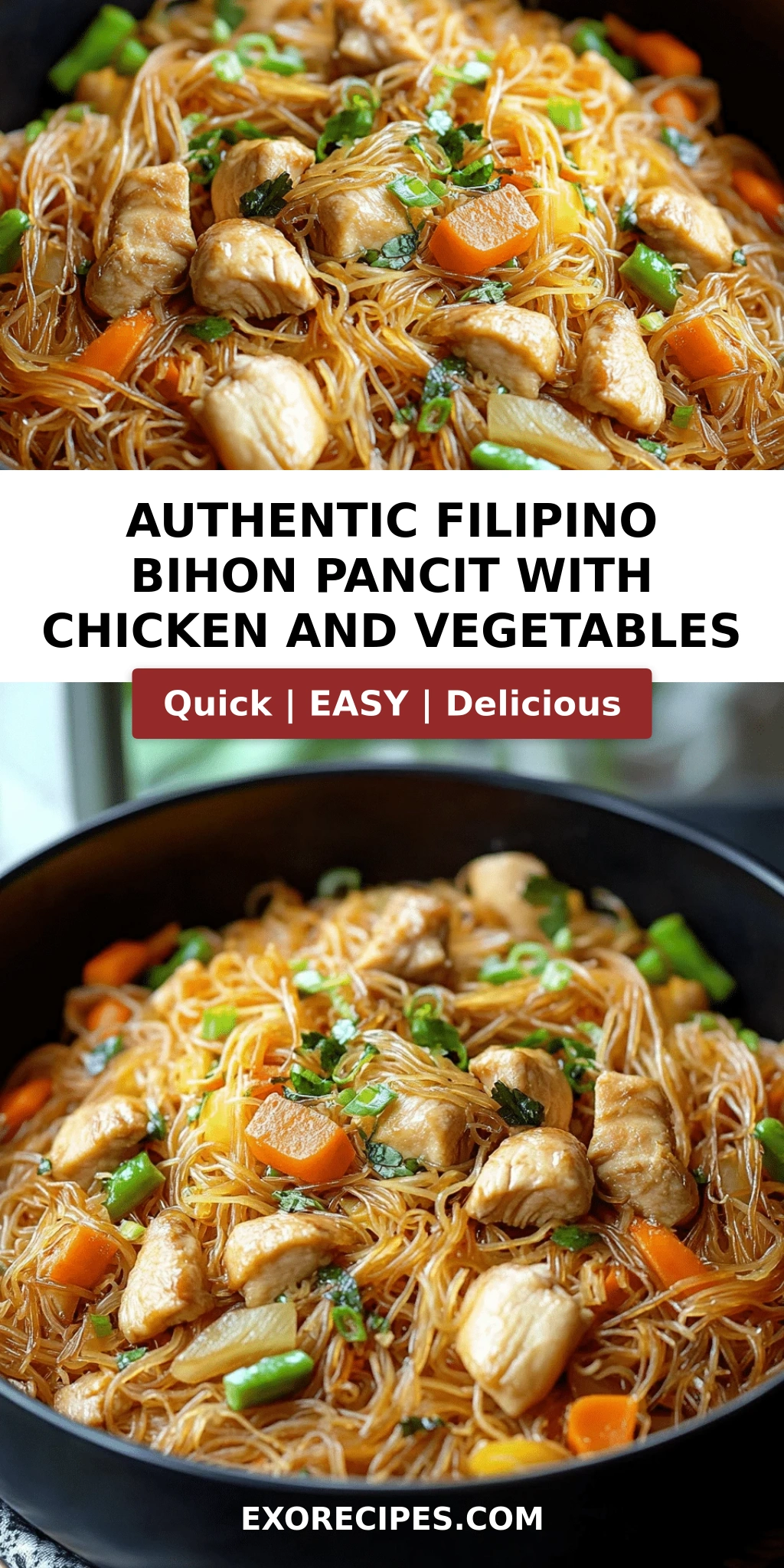
k">
Tried This Recipe? Leave a Comment!
Did you make this recipe? I’d love to hear how it turned out! Please leave a comment and a rating below. Your feedback helps other home cooks and supports cheerychop.com!
For more delicious inspiration, follow me on Pinterest!
