Table of Contents
This Creamy Amaranth Recipe with Carrot Purée & Caramelized Onions Is Pure Comfort in a Bowl

There are some recipes that feel like a warm hug in a bowl, and this creamy amaranth recipe is exactly that for me. My mother used to make soft, comforting grain porridges in our kitchen in Morocco, slowly simmering grains until they turned silky and soothing. I recreated that memory in New York with this nourishing amaranth and carrot purée bowl. The gentle sweetness of carrots, the deep caramelized richness of onions, and the velvety amaranth come together in one wholesome dish. It is comfort food that also happens to be a healthy amaranth dinner recipe — proof that eating well doesn’t mean sacrificing flavor. When I tested it for my family, they asked for seconds before I even put the pan down.
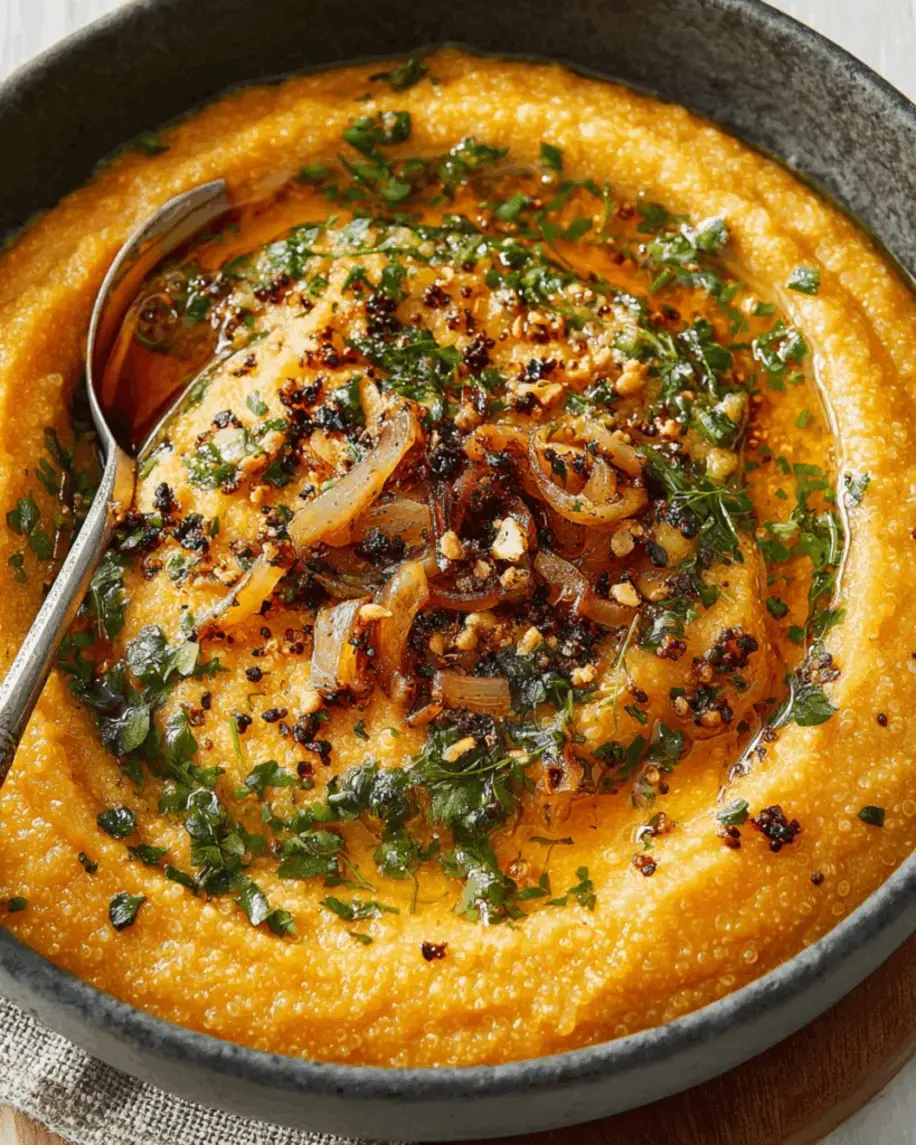
I love the aroma that fills my apartment when this amaranth porridge with caramelized onions is on the stove. The grains plump up and release their subtle nutty starch while the coconut milk makes everything glossy and luxurious. Then there’s the carrot purée — a bright, silky swirl of sunshine on top — and the onions, slowly cooked until jammy, sweet, and almost balsamic-like. Every spoonful has a little of everything: creamy porridge, sweet purée, and rich caramelized onions, with fresh parsley cutting through at the end. It’s comfort food with personality, the kind of dish that feels both familiar and exciting at the same time.
I spent years training at a culinary school in Paris, where I learned that the best dishes are often the simplest ones executed with care. After moving to New York City, I found amaranth at my local farmers market and immediately knew it would become a staple in my kitchen. This vegan amaranth bowl is my way of bridging my Moroccan childhood, my French training, and my love of bold New York City food. In this post, I’ll share my chef-approved techniques to keep the amaranth creamy without turning mushy, how to get perfectly caramelized onions every time, and one common mistake to avoid. Trust me — once you make this, it will become part of your regular dinner rotation.
Why This Creamy Amaranth Recipe with Carrot Purée & Caramelized Onions Wins
The flavor secret is the combination of three distinct layers: creamy, mildly sweet amaranth; a velvety carrot purée with just the right amount of brightness; and deeply caramelized onions that add savory, almost smoky richness. In Morocco, we love balancing sweet and savory in the same dish, and that balance is exactly what makes this bowl so special. The balsamic vinegar at the end doesn’t make the onions tangy — it lifts them, the same way I’d deglaze a pan after making French onion soup in Paris.
Perfected texture comes from technique. Amaranth is a tiny ancient grain that releases starch as it cooks, which is a good thing — that starch is what creates the creamy porridge texture. The key is to simmer it gently with the lid on, avoid constant stirring, and let it rest for a few minutes before stirring in the coconut milk. The carrot purée should be smooth but thick enough to hold a swirl, and the onions should be soft, golden, and almost sticky.
This recipe is foolproof enough for beginner cooks and fast enough for busy weeknights. Most of it is hands-off cooking, which means you can multi-task while the onions caramelize and the amaranth simmers. It’s also naturally vegan, gluten-free, and made with simple ingredients from any US grocery store. Whether you’re meal prepping for the week or making a cozy dinner tonight, this vegan amaranth bowl will never let you down.
Creamy Amaranth Recipe Ingredients: Building a Bowl of Comfort
When I shop for this creamy amaranth recipe in New York City, I love hitting the Union Square Greenmarket for carrots and onions. There’s something so satisfying about using sweet, freshly harvested vegetables in a dish that tastes this good. If you don’t have a market nearby, regular grocery store carrots and yellow onions work perfectly. Look for amaranth in the grains aisle or bulk section — it’s becoming more popular now, especially among people looking for gluten-free ancient grains.
Ingredients List
- 1 cup amaranth, rinsed
- 2 cups vegetable broth (or water)
- 1 cup coconut milk (or heavy cream)
- 2 large carrots, peeled and chopped
- 1 tablespoon olive oil
- 2 large onions, thinly sliced
- 1 tablespoon balsamic vinegar
- 1 teaspoon maple syrup (optional)
- Salt and black pepper, to taste
- 2 tablespoons chopped fresh parsley, for garnish
Ingredient Spotlight
Amaranth: This tiny grain packs a serious nutritional punch. It has a mild, earthy, slightly nutty flavor and naturally thickens as it cooks, giving you that creamy texture without any added dairy. When shopping, look for whole, uniform grains with no signs of moisture. Store it in an airtight jar in your pantry and it will keep for months.
Carrots: For the purée, choose tender, sweet carrots. Farmers market carrots are fantastic because they’re often sweeter and more vibrant in color. If your carrots are very thick, cut them into smaller pieces so they cook evenly and become soft enough to blend into a silky purée.
Onions: Yellow or Vidalia onions are my top choice for caramelizing because they have enough natural sugar to turn sweet and jammy. Slice them thinly and consistently so they cook at the same rate. The low-and-slow method is key — rushing them over high heat will only lead to bitterness.
Coconut Milk: Full-fat coconut milk is what gives this dish its rich, velvety finish. It adds a subtle tropical note that pairs beautifully with the caramelized onions and carrots. For a lighter version, you can use light coconut milk or a creamy oat milk, but the porridge will be slightly less indulgent.
| Original Ingredient | Best Substitution | Flavor / Texture Impact |
|---|---|---|
| Amaranth | Quinoa or millet | Less creamy; grain texture stays more distinct |
| Coconut Milk | Heavy cream or unsweetened oat cream | Heavy cream adds luxury; oat cream stays lighter and neutral |
| Carrots | Butternut squash or sweet potato | Sweeter, richer purée; thicker texture |
| Balsamic Vinegar | Red wine vinegar + pinch of sugar | Sharper, less syrupy; add sugar slowly |
How to Make This Creamy Amaranth Recipe — Step-by-Step
This is one of those recipes that feels effortless once you understand the rhythm: start the amaranth, make the carrot purée, caramelize the onions, and bring everything together. I promise it’s easier than it sounds, and the result tastes like something from a cozy café.
Step 1: Cook the Amaranth
In a medium saucepan, combine the rinsed amaranth and vegetable broth. Bring it to a boil over medium-high heat, then reduce the heat to low, cover, and let it simmer for 20–25 minutes until the liquid is absorbed and the amaranth is tender.
💡 mia’s Pro Tip: Use a heavy-bottomed saucepan and resist the urge to stir constantly. Amaranth needs gentle steam to cook evenly. If you stir too often, the grains release too much starch too quickly and can turn gummy.
Step 2: Make the Carrot Purée
While the amaranth cooks, place the chopped carrots in a small pot with enough water to cover them. Bring to a boil and cook until very tender, about 15 minutes. Drain them, but save a splash of the cooking water. Transfer the carrots to a blender with that splash of water and blend until completely smooth. Season with salt and pepper, then keep warm.
⚠️ Common Mistake to Avoid: Don’t skip the cooking water. That small splash is what loosens the purée into a silky, swirlable texture without diluting the flavor. Using tap water works, but cooking water carries the carrot’s sweetness into the purée.
Step 3: Caramelize the Onions
Heat the olive oil in a large skillet over medium heat. Add the sliced onions and a pinch of salt. Cook, stirring occasionally, until the onions are deeply golden and jammy, about 20 minutes. Stir in the balsamic vinegar and maple syrup if you’re using it, and cook for one more minute.
💡 mia’s Pro Tip: Use a wide skillet and don’t crowd the onions — they need room to release moisture and caramelize instead of steam. If they start sticking before they’re golden, add a tablespoon of water or a little extra splash of broth.
Step 4: Finish with Coconut Milk
Once the amaranth is cooked, stir in the coconut milk and let everything simmer over low heat for 5 minutes until it becomes creamy and glossy. Taste it and adjust the seasoning with salt and black pepper if needed.
⚠️ Common Mistake to Avoid: Don’t let the amaranth boil hard after adding the coconut milk. A gentle simmer is enough to warm it through and meld the flavors. Boiling can cause the coconut milk to separate and the amaranth to lose its velvety texture.
Step 5: Assemble and Serve
To serve, spoon the warm creamy amaranth into shallow bowls. Add a generous swirl of carrot purée on top, followed by a pile of caramelized onions. Sprinkle with fresh chopped parsley and finish with a crack of black pepper.
💡 mia’s Pro Tip: Warm your bowls before serving, just like they do in Paris bistros. A warm bowl keeps the amaranth creamy from the first bite to the last, and the layers stay beautifully distinct when you look at the plated dish.
| Step | Action | Duration | Key Visual Cue |
|---|---|---|---|
| 1 | Simmer amaranth in broth | 20–25 minutes | Liquid absorbed, grains tender |
| 2 | Boil and blend carrots | 15 minutes | Smooth, bright orange purée |
| 3 | Caramelize onions | 20 minutes | Deep golden, jammy onions |
| 4 | Add coconut milk and simmer | 5 minutes | Creamy, glossy porridge |
| 5 | Assemble bowls | 5 minutes | Layers of purée, onions, and parsley |
Serving & Presentation
I love serving this creamy amaranth recipe in wide, shallow bowls so the layers can shine. Start with a generous base of amaranth, then create a swoosh of carrot purée with the back of a spoon. Pile the caramelized onions in the center and finish with fresh parsley. It looks like something you’d order at a stylish NYC café, but it comes together in your own kitchen with minimal effort.
For a heartier dinner, serve the bowls alongside a simple crisp green salad with lemon vinaigrette or a piece of toasted sourdough. If you want to add a little Moroccan-inspired heat, a drizzle of harissa or a pinch of smoked paprika on top is incredible. The sweetness of the carrots and onions also makes this dish pair beautifully with mint tea or a lightly chilled sparkling water with lemon.
| Pairing Type | Suggestions | Why It Works |
|---|---|---|
| Side Dish | Simple green salad, roasted chickpeas, crusty sourdough | Adds freshness, crunch, or something to soak up the creamy porridge |
| Sauce / Dip | Extra balsamic glaze, tahini drizzle, harissa yogurt (dairy-free) | Adds tang, creaminess, or a spicy kick to balance the sweetness |
| Beverage | Moroccan mint tea, sparkling water with lemon, light red wine | Mint tea feels nostalgic and refreshing; wine pairs with the caramelized notes |
| Garnish | Chopped parsley, toasted pumpkin seeds, pomegranate seeds | Adds color, texture, and a pop of brightness |
Make-Ahead, Storage & Reheating
This vegan amaranth bowl is my go-to meal prep recipe during busy NYC weeks. I make the three components on Sunday — creamy amaranth, carrot purée, and caramelized onions — then mix and match through the week. Storing them separately keeps the textures and flavors intact, so every meal feels freshly made.
| Method | Container | Duration | Reheating Tip |
|---|---|---|---|
| Refrigerator | Airtight glass containers | Up to 4 days | Gently reheat amaranth with a splash of broth or non-dairy milk |
| Freezer | Freezer-safe containers or zip-top bags | Up to 2 months | Thaw overnight in the fridge, then reheat low and slow |
| Make-Ahead | Store components separately | 2–3 days in advance | Warm each part separately, then assemble fresh into bowls |
From my experience, the amaranth thickens once refrigerated, so don’t be alarmed. When you reheat it, add a tablespoon or two of vegetable broth or coconut milk and stir over low heat. It will return to that creamy, silky texture in just a few minutes. The carrot purée also benefits from a splash of water when reheating, while the onions stay deliciously jammy right out of the fridge.
Variations & Easy Swaps
This healthy amaranth dinner recipe is endlessly versatile. I’ve played with so many variations depending on the season and what I find at the farmers market. Some are inspired by my Moroccan roots, while others come from my French training. Here are three of my favorite ways to switch things up without losing that comforting, creamy base.
| Variation | Key Change | Best For | Difficulty Impact |
|---|---|---|---|
| Moroccan Spiced | Add 1 tsp ras el hanout + pinch of cinnamon | Cozy, aromatic, nostalgic flavor | No added difficulty |
| Golden Beet & Herb | Swap carrots with roasted golden beets + fresh dill or parsley | Earthy, vibrant pink-gold bowls | Slightly higher time if roasting beets |
| Crunchy Seed & Herb Oil | Top with toasted sunflower seeds, pumpkin seeds, and mint oil | Extra texture and an elegant finish | Same, quick |
Moroccan Spiced Amaranth Bowl
This variation takes me straight back to my mother’s kitchen. Stir one teaspoon of ras el hanout into the amaranth along with the broth, and add a pinch of ground cinnamon to the carrot purée while blending. The warm spices complement the sweet carrots and caramelized onions beautifully. Finish with a handful of chopped fresh cilantro instead of parsley and a squeeze of lemon juice for brightness. It tastes like a cozy Moroccan market in bowl form.
Golden Beet & Herb Purée Bowl
When I spot golden beets at the NYC farmers market, I love swapping them for carrots. Roast the beets at 400°F until fork-tender, peel them, and blend with a splash of cooking water or olive oil. The purée turns a stunning golden-pink color, and the flavor is earthy and slightly sweeter than carrots. Add a handful of fresh dill or parsley to the blender for a bright, herbaceous note. It’s a beautiful gluten-free amaranth bowl option for special dinners.
Crunchy Seed & Herb Oil Finish
For an elegant French-inspired touch, top your creamy amaranth with toasted seeds and a quick herb oil. Lightly toast pumpkin seeds and sunflower seeds in a dry skillet until golden and fragrant. Then blend fresh parsley or mint with olive oil, a pinch of salt, and a drop of lemon juice to make a vivid green oil. Drizzle it over the assembled bowls just before serving. The seeds add crunch and protein, while the herb oil makes the whole dish feel special.
Frequently Asked Questions
How do you cook amaranth so it becomes creamy without getting mushy?
Start with a 1:2 ratio of amaranth to liquid, then simmer it gently in a covered saucepan. The key is to use low heat, avoid constant stirring, and cook for about 20–25 minutes until the grains are tender but still hold their shape. Stirring too often breaks up the grains and can turn them into paste. Once the liquid is absorbed, stir in coconut milk and let it simmer for 5 more minutes. That final step builds creaminess in a controlled way without making the amaranth mushy.
Can you use a different vegetable instead of carrot for the purée in this amaranth bowl?
Absolutely. Butternut squash, sweet potato, golden beet, or even roasted cauliflower work beautifully in this healthy amaranth dinner recipe. Cook your chosen vegetable until completely fork-tender, then blend it with a splash of cooking water until smooth. Butternut squash and sweet potato create a richer, sweeter purée, while golden beet adds a gorgeous pink color and earthy flavor. Just season with salt and pepper after blending so the purée stays bright and balanced.
What is the best way to caramelize onions to bring out their sweetness for this dish?
The best way is to be patient and use medium-low heat. Slice your onions thinly and cook them in a wide skillet with olive oil and a pinch of salt. Let them cook slowly for about 20 minutes, stirring occasionally, until they turn deeply golden and jammy. If they start sticking to the pan, add a tablespoon of water or broth. A splash of balsamic vinegar at the end deglazes the pan and enhances the natural sweetness without making the onions taste vinegary.
Can I make this creamy amaranth with carrot purée ahead of time and reheat it for meal prep?
Yes, this is one of my favorite meal prep recipes. Cook the amaranth, carrot purée, and caramelized onions separately, then store them in airtight containers in the fridge for up to 4 days. Reheat the amaranth gently on the stovetop with a splash of broth or coconut milk to bring back its creamy texture. Warm the purée and onions separately, then assemble the bowls just before serving. You can also freeze each component for up to 2 months.
Is amaranth naturally gluten-free?
Yes, amaranth is naturally gluten-free and an excellent ancient grain for anyone avoiding gluten. This creamy amaranth recipe is naturally gluten-free when you use vegetable broth that is certified gluten-free. If you have celiac disease or a serious gluten sensitivity, look for amaranth that is processed in a dedicated gluten-free facility. The rest of the ingredients in this recipe — coconut milk, carrots, onions, olive oil, balsamic vinegar, and fresh herbs — are naturally gluten-free as well.
Can I swap coconut milk for another non-dairy milk in this amaranth porridge?
Yes, you can use oat milk, cashew milk, or soy milk instead of coconut milk. Oat milk and cashew milk are the best choices if you still want a creamy texture. Almond milk works in a pinch but will make the porridge thinner and less velvety. If you don’t need this vegan amaranth bowl to be dairy-free, heavy cream is a spectacular substitute. Just choose an unsweetened plain milk so the flavors stay balanced and the natural sweetness of the carrots and onions can shine.
What does amaranth taste like?
Amaranth has a mild, earthy, slightly nutty flavor that is often compared to a blend of corn and whole wheat. It’s more subtle than quinoa, so it takes on the flavors of whatever you cook it with. In this amaranth porridge with caramelized onions, the grain absorbs the vegetable broth and coconut milk, creating a comforting, savory base. The small grains are tender but have a delicate bite, which gives the dish a lovely porridge-like texture without feeling heavy.
Can I freeze the carrot purée for this recipe?
Yes, carrot purée freezes wonderfully. Let it cool completely, then transfer it to a freezer-safe container, a silicone ice cube tray, or a zip-top bag. It will keep for up to 2 months. When you’re ready to use it, thaw it in the fridge overnight and reheat gently with a tiny splash of water. Freezing the purée separately from the amaranth and onions is the best approach for meal prep, because each component keeps its own texture perfectly.
How can I make this vegan amaranth bowl higher in protein?
To boost the protein, add about 1/2 cup of cooked chickpeas or white beans to each bowl before serving. Toasted pumpkin seeds, sunflower seeds, or hemp hearts are also excellent crunchy toppings that add plant-based protein. Another trick is to stir a spoonful of almond butter or tahini into the amaranth after adding the coconut milk. This adds richness and protein while keeping the dish silky. With a simple bean addition, you can easily increase the protein from 9 grams to around 18 grams per serving.
Can I cook amaranth in an Instant Pot for this recipe?
Yes, Instant Pot amaranth is quick and reliable. Use the same 1:2 ratio of amaranth to broth, set the pressure cooker to high for 15 minutes, then let the pressure release naturally for 10 minutes. Carefully use the quick-release valve for any remaining pressure. Once the amaranth finishes cooking, stir in the coconut milk and keep it on sauté mode for 5 minutes on low. This gives you the same creamy texture without monitoring a stovetop pot.
Share Your Version!
I hope this creamy amaranth recipe becomes one of your favorite comforting dinners, just like it is in my NYC kitchen. If you try it, please leave a star rating and a comment below — I absolutely love hearing how recipes turn out for you. Share a photo on Instagram or Pinterest and tag @exorecipes so I can see your beautiful bowls.
I’d also love to know: what is your favorite way to make a grain bowl feel extra special? Do you add something crunchy, spicy, or tangy on top? Let me know in the comments, and let’s keep swapping kitchen ideas.
From my NYC kitchen to yours — I hope this recipe brings as much warmth to your table as it does to mine. — mia 🧡
Love This Recipe? Save It to Pinterest!
If you enjoyed this Creamy Amaranth with Carrot Purée & Caramelized Onions recipe, don’t let it get lost in your browser tabs! 😄 Pin it now so you can find it again anytime — and explore hundreds more tried-and-tested recipes waiting for you on my Pinterest boards.
👉 Follow mia on Pinterest @exorecipes
📌 Pin this recipe · 🔁 Re-pin your favorites · 💬 Tag me when you make it — I love seeing your creations!
Ready to dig in?
If you make this creamy amaranth recipe, let me know by rating it below or tagging #exorecipes in your photos. I can’t wait to see how it turns out for you!
Happy cooking, friends — this one is pure comfort in a bowl. 🧡

Creamy Amaranth with Carrot Purée & Caramelized Onions: A Nourishing Bowl of Comfort and Flavor
- Prep Time: 15 minutes
- Cook Time: 30 minutes
- Total Time: 45 minutes
- Yield: 4 servings 1x
- Method: Main Course
- Cuisine: American
Description
A creamy, hearty bowl of amaranth topped with sweet carrot purée, caramelized onions, and a sprinkle of fresh herbs—comfort food that’s both nourishing and flavorful.
Ingredients
- 1 cup amaranth, rinsed
- 2 cups vegetable broth (or water)
- 1 cup coconut milk (or heavy cream)
- 2 large carrots, peeled and chopped
- 1 tablespoon olive oil
- 2 large onions, thinly sliced
- 1 tablespoon balsamic vinegar
- 1 teaspoon maple syrup (optional)
- Salt and black pepper, to taste
- 2 tablespoons chopped fresh parsley, for garnish
Instructions
- In a medium saucepan, combine amaranth and broth. Bring to a boil, then reduce heat to low, cover, and simmer for 20-25 minutes until liquid is absorbed and amaranth is tender.
- While amaranth cooks, prepare the carrots: place chopped carrots in a small pot with water, bring to a boil, and cook until very tender, about 15 minutes. Drain and transfer to a blender with a splash of cooking water and blend until smooth. Season with salt and pepper; keep warm.
- In a large skillet, heat olive oil over medium heat. Add onions and a pinch of salt; cook, stirring occasionally, until deeply golden and caramelized, about 20 minutes. Stir in balsamic vinegar and maple syrup (if using); cook for 1 more minute.
- Once amaranth is cooked, stir in coconut milk and simmer over low heat for 5 minutes until creamy. Adjust seasoning.
- To serve, spoon creamy amaranth into bowls. Top with a generous swirl of carrot purée, a pile of caramelized onions, and a sprinkle of fresh parsley.
Notes
For a vegan version, use maple syrup instead of honey. You can substitute the coconut milk with any non-dairy milk, but the creamy texture may change slightly. Leftover amaranth can be stored in an airtight container in the fridge for up to 4 days.
Nutrition
- Calories: 420 kcal
- Sugar: 12 g
- Fat: 18 g
- Carbohydrates: 55 g
- Protein: 9 g

k">
Tried This Recipe? Leave a Comment!
Did you make this recipe? I’d love to hear how it turned out! Please leave a comment and a rating below. Your feedback helps other home cooks and supports cheerychop.com!
For more delicious inspiration, follow me on Pinterest!
