Table of Contents
Cranberry Balsamic Ribeye Roast with a Sweet-Tart Twist – A Holiday Showstopper
The first time I made a cranberry balsamic ribeye roast, it was the winter I moved to New York City. I was missing the vibrant, comforting flavors of my mother’s kitchen in Morocco — where dried fruits and warm spices always found their way into savory dishes — and I wanted something that felt both familiar and entirely new. I had just returned from the Union Square Greenmarket with a bag of bright, ruby-red cranberries and a bottle of aged balsamic from a small Italian importer. That evening, this holiday ribeye roast was born: a beautiful marriage of tart berries, robust balsamic, and rich, buttery beef. It was the first recipe that truly felt like “mia” — a little bit of North Africa, a little bit of Paris, and a whole lot of New York.
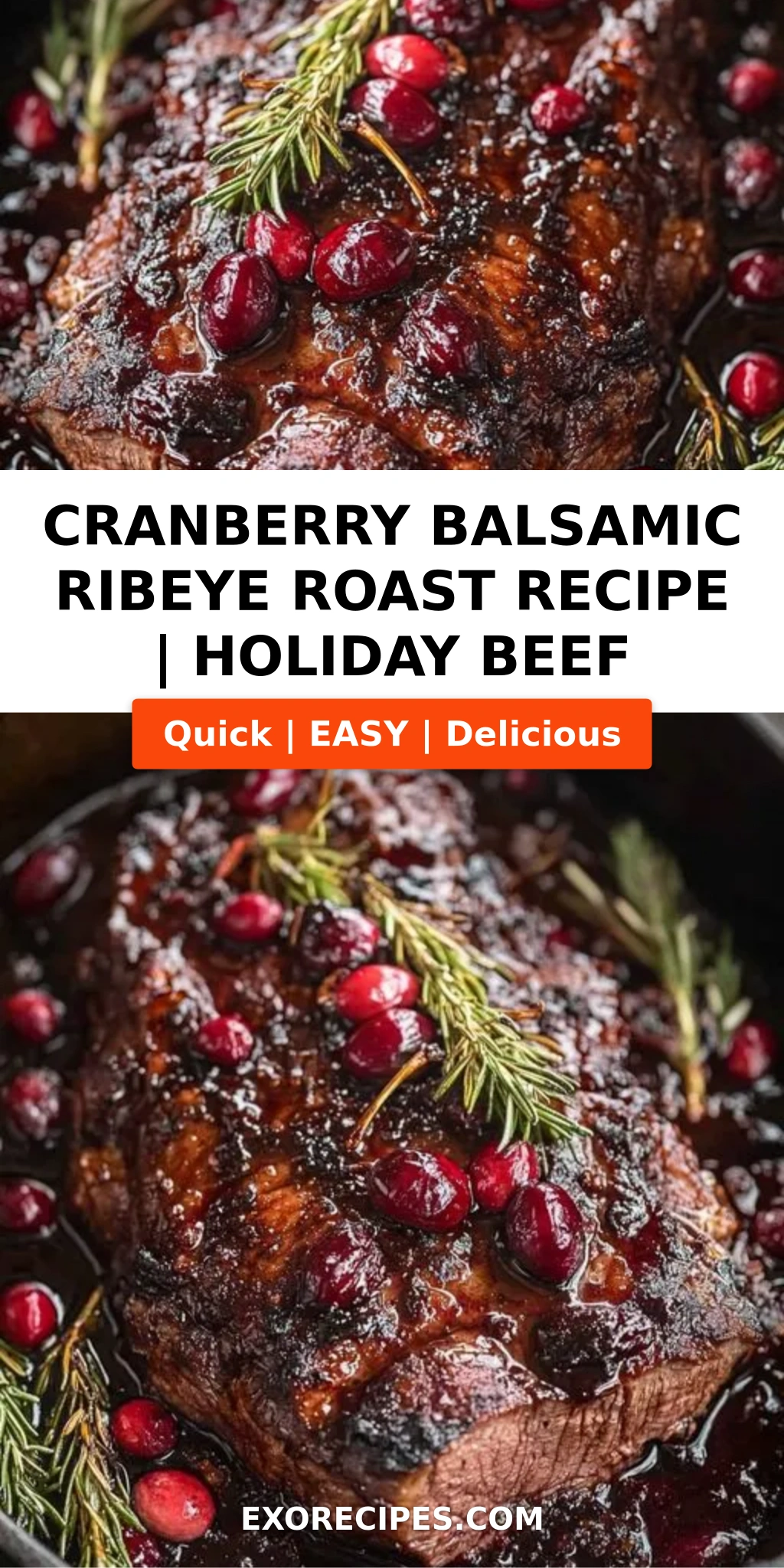
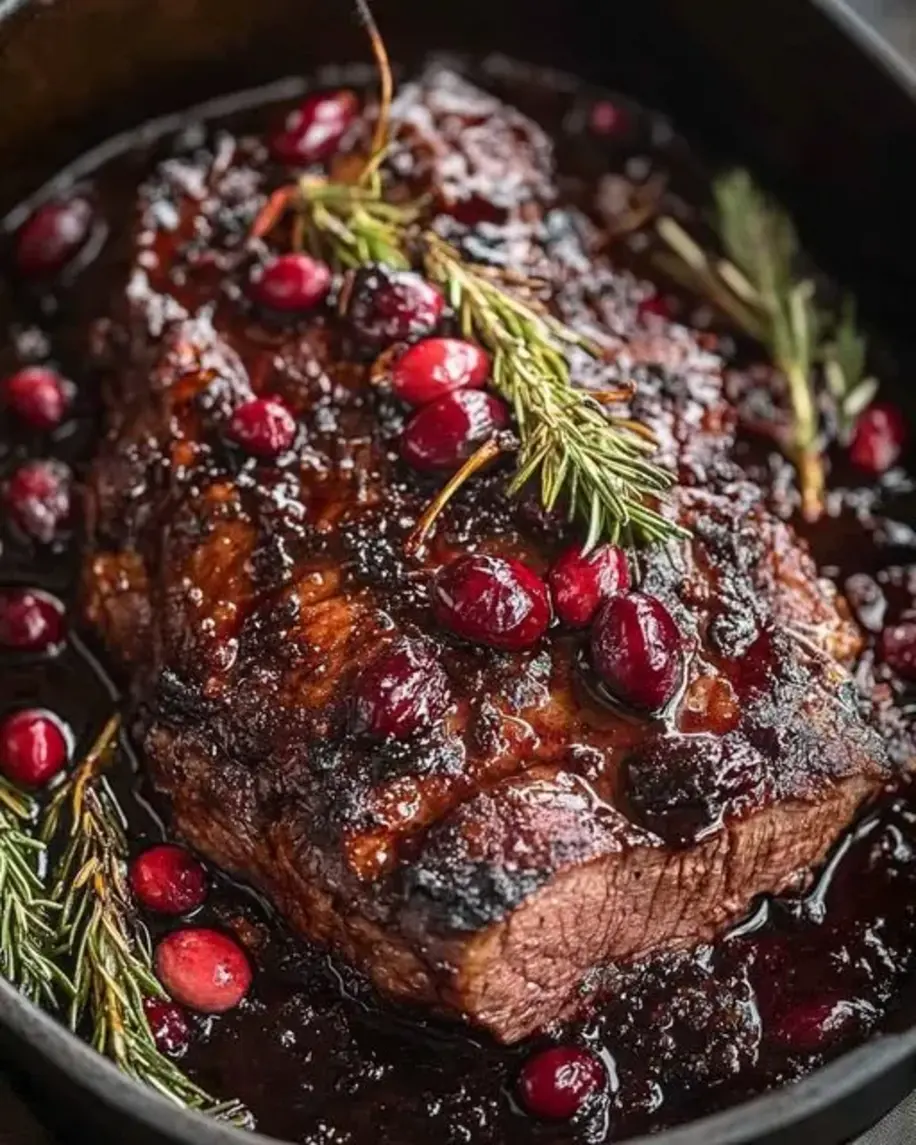
Imagine the most incredible thing you’ve ever smelled coming from a kitchen: the deep, caramelized aroma of seared beef, the sweet-tangy perfume of cranberries simmering down with balsamic vinegar and honey, and the earthy whisper of fresh rosemary and garlic. As the roast bakes, that cranberry balsamic glaze transforms into a glossy, mahogany lacquer that clings to the ribeye like a jewel. Every slice reveals a perfect rosy-pink center, framed by a deeply caramelized crust. The first bite gives you that burst of tart-sweet cranberry, followed by the rich, savory juiciness of the beef, with a subtle, elegant finish of balsamic that dances right on the edge of your palate. It’s a ribeye roast recipe that doesn’t just taste good — it tastes like a celebration.
Now, I’ll be honest with you: people often get intimidated by the idea of roasting a large cut of beef, especially during the holidays. But this cranberry balsamic ribeye roast is my answer to every roasting fear. My version uses a slow-roast method after an initial high-heat sear that guarantees a tender, juicy interior with a gorgeous crust — no dry, tough results, ever. I’ll walk you through my tested technique for getting medium-rare perfection every single time, share my 💡 mia’s Pro Tip for the basting process, and flag the one common mistake I see home cooks make all the time (it involves checking the temperature from the wrong spot!). So, if you’re ready to serve the most memorable balsamic glazed ribeye your family has ever tasted, let’s dive in.
Why This Cranberry Balsamic Ribeye Roast Recipe Is the Best
The Flavor Secret. This isn’t just a ribeye roast recipe; it’s a masterclass in balancing flavors. Growing up in Morocco, I was taught that the best dishes play sweet against savory. That principle is at the heart of this balsamic glazed ribeye. The cranberries bring a bright, slightly bitter-tart note; the balsamic adds depth and a touch of acidity; honey and brown sugar round everything out with warmth. To tie it all together, I simmer the glaze with rosemary and garlic — a classic French touch from my training in Paris that makes every bite more complex and aromatic.
Perfected Texture. Getting that perfect texture in a holiday ribeye roast is all about heat management. By searing the roast at high heat first, we create a beautiful, flavor-rich crust through the Maillard reaction. Then, by dropping the oven to a gentle 325°F, we allow the collagen to melt slowly, making the ribeye exquisitely tender. This two-temperature method is the professional chef’s secret, and it’s far more foolproof than roasting at a single high temperature, which can leave you with a burnt exterior and a raw center.
Foolproof & Fast to Prep. Despite its show-stopping appearance, this cranberry balsamic ribeye roast is surprisingly easy. The active prep time is only about 20 minutes! Most of the cooking time is hands-off, making it ideal for busy holiday hosts. You don’t need any special equipment — a simple Dutch oven or oven-safe skillet works beautifully. It’s forgiving, it’s flexible, and it delivers restaurant-quality results that will make you look like a culinary superstar. This truly is the easiest way to make a special occasion feel effortless.
Cranberry Balsamic Ribeye Roast Ingredients
When I’m shopping in NYC, I love hitting up the farmers markets for fresh cranberries in the fall. There’s something so nostalgic about their tart scent — it reminds me of sour cherries my grandmother used in tagines back in Morocco. For this cranberry balsamic sauce for beef, you want cranberries that are firm and vibrant; if fresh ones aren’t in season, frozen cranberries are just as good. I also recommend sourcing a good-quality balsamic vinegar — it doesn’t have to be the most expensive aged kind, but avoid the “balsamic glaze” that’s already sweetened. You want the pure vinegar so you can control the sweetness yourself.
Ingredients List
- 1 (5-6 pound) boneless ribeye roast, tied
- 2 teaspoons kosher salt
- 1 teaspoon black pepper
- 2 tablespoons olive oil
- For the Cranberry Balsamic Glaze:
- 1 cup fresh or frozen cranberries
- 1/2 cup balsamic vinegar
- 1/4 cup honey
- 2 tablespoons brown sugar
- 2 sprigs fresh rosemary
- 3 cloves garlic, smashed
Ingredient Spotlight
Boneless Ribeye Roast: This is the king of roasts. It comes from the rib section, which is well-marbled with fat, ensuring a juicy and flavorful result. When you’re at the butcher counter, ask for a roast with even fat distribution. If you can’t find a boneless one, a bone-in ribeye roast (often called prime rib) also works perfectly — just adjust the cooking time upward by about 15-20 minutes. You can also substitute a boneless prime rib or even a top round roast, but keep in mind top round is leaner and will need less cooking time.
Fresh or Frozen Cranberries: These little berries are the tart backbone of our cranberry balsamic glaze. When simmered, they burst and release natural pectin, which helps the glaze thicken beautifully without any added cornstarch. In a pinch, you can substitute whole-berry cranberry sauce, but dial back the brown sugar since it’s already sweetened. The flavor will be slightly less bright, but still delicious.
Balsamic Vinegar: For this holiday ribeye roast, choose a balsamic with a slightly thick consistency and a balanced sweet-sour flavor. This is not the place for an ultra-cheap vinegar, which can be harshly acidic. A good mid-range “balsamic vinegar of Modena” is perfect. The balsamic reduces as it simmers, concentrating its flavor and giving the glaze a gorgeous dark color that makes the beef look even more enticing.
Fresh Rosemary & Garlic: These aromatics are non-negotiable for me. Fresh rosemary brings an earthy, pine-like fragrance that pairs beautifully with beef, while smashed garlic cloves infuse the glaze with a mellow sweetness as they simmer. Feel free to add a sprig of fresh thyme too — it’s one of my favorite French additions and adds another subtle layer of complexity.
| Original Ingredient | Best Substitution | Flavor / Texture Impact |
|---|---|---|
| Fresh or Frozen Cranberries | Whole-berry cranberry sauce | Slightly sweeter, less tart; reduce or omit brown sugar |
| Balsamic Vinegar | Red wine vinegar + 1 tsp sugar | Sharper acidity, less complexity; add a touch of molasses for depth |
| Honey | Pure maple syrup | Adds a woodsy, smoky sweetness; slightly thinner glaze |
| Fresh Rosemary | 1 tbsp dried rosemary | Works in a pinch; slightly less aromatic, so crush it before adding |
How to Make Cranberry Balsamic Ribeye Roast — Step-by-Step
This is one of those recipes that feels luxurious but is actually quite simple once you understand the rhythm. I’ve broken it down into manageable steps with my personal tips and warnings, so you can make this balsamic glazed ribeye with total confidence.
Step 1: Prepare the Roast
Remove the roast from the refrigerator 1 hour before you plan to cook it. This crucial step takes the chill off the meat, allowing it to cook more evenly. Pat it completely dry with paper towels — this helps create a beautiful, golden-brown sear. Season the roast generously on all sides with the kosher salt and black pepper, pressing the seasoning gently into the surface so it adheres.
💡 mia’s Pro Tip: Don’t be shy with the salt! A 5-pound roast needs that full 2 teaspoons to flavor the entire cut. Think of it as seasoning the whole piece of meat, not just the outside. If you have time, salt it the night before and leave it uncovered in the fridge — it’s called dry-brining and it works wonders.
Step 2: Preheat and Make the Glaze
Preheat your oven to 450°F (230°C). While the oven is heating, prepare your cranberry balsamic glaze. In a small saucepan, combine the cranberries, balsamic vinegar, honey, brown sugar, rosemary sprigs, and smashed garlic cloves. Bring the mixture to a gentle simmer over medium heat. Let it cook for about 8-10 minutes, or until the cranberries have burst and softened and the mixture has reduced slightly. Remove the rosemary sprigs — they’ve done their job infusing all that wonderful fragrance.
⚠️ Common Mistake to Avoid: Don’t let the glaze boil fiercely! You want it to simmer gently, so the cranberries soften without turning the vinegar bitter. Also, remember to pull the rosemary out before you blend or use it — nobody wants to chew on a woody stem.
Step 3: Sear the Roast
Heat the olive oil in a large, oven-safe skillet or Dutch oven over high heat. Once the oil is shimmering and just beginning to smoke, carefully place the roast in the pan. Sear it on all sides — this means the top, bottom, and all four sides if your roast is rectangular. You want each side to be deeply browned, which takes about 3-4 minutes per side. Don’t rush this; the crust is pure flavor.
💡 mia’s Pro Tip: Use tongs and a sturdy spatula to turn the roast. The meat will release from the pan naturally when it’s ready — if it sticks, it’s not done searing. Let it be! This is also the perfect time to use a Dutch oven, as it goes straight from stovetop to oven.
Step 4: Glaze and Roast
Turn off the heat under the skillet. Brush a generous amount of your cranberry balsamic glaze all over the seared roast, reserving the remaining glaze for serving. Place the skillet in the preheated oven and roast for 15 minutes at the high temperature. After 15 minutes, reduce the oven temperature to 325°F (165°C) and continue roasting for about 1.5 to 2 hours. During this time, baste the roast every 30 minutes with the pan juices and more of the reserved glaze.
⚠️ Common Mistake to Avoid: Don’t forget to lower the oven temperature! This is the classic error that leads to an over-browned, dry exterior and an undercooked center. Set a timer for 15 minutes so you don’t forget to make the switch from 450°F to 325°F.
Step 5: Monitor Temperature
About 1 hour into the roasting time, start checking the internal temperature of the roast using an instant-read meat thermometer. Insert it into the very center of the roast, making sure the probe is not touching any bone (if it’s a bone-in roast). For a perfect medium-rare, you’re looking for a final temperature of 130-135°F (54-57°C). Remember, the meat will continue to cook as it rests, so pull it out when it’s about 5°F below your target.
💡 mia’s Pro Tip: This is the most critical step in the entire process — the meat thermometer is your best friend. I use a digital instant-read thermometer and check it in a couple of different places just to be safe. Your eyes can lie to you, but the thermometer never does!
Step 6: Rest the Roast
Carefully transfer the roast to a cutting board. Tent it loosely with a piece of aluminum foil and let it rest for 20-30 minutes. This is not optional, I promise you! As the roast rests, the juices that have been pulled toward the center during cooking redistribute throughout the entire cut of meat. Resting makes the difference between a juicy slice and a dry one. After resting, remove the twine before slicing.
⚠️ Common Mistake to Avoid: Please don’t skip the rest! I know it’s tempting to slice right into that gorgeous roast, but if you do, all those precious juices will spill out onto the cutting board instead of staying in the meat. Set a timer for at least 20 minutes and let it be.
Step 7: Slice and Serve
While the roast rests, gently reheat the remaining cranberry balsamic glaze in a small saucepan over low heat. To serve, slice the roast against the grain — this breaks up the muscle fibers and makes each bite extra tender. Arrange the slices on a beautiful platter, spoon some of the warm glaze over the top, and serve the extra on the side for guests to help themselves.
💡 mia’s Pro Tip: Use a long, sharp carving knife for clean, even slices. Aim for slices that are about 1/2-inch thick — thick enough to stay juicy, thin enough to showcase that beautiful rosy center. And for a final elegant touch, sprinkle some flaky sea salt over the top.
| Step | Action | Duration | Key Visual Cue |
|---|---|---|---|
| 1 | Rest & season roast | 1 hour | Roast is no longer cold to the touch |
| 2 | Make cranberry balsamic glaze | 8-10 mins | Cranberries burst; sauce coats a spoon |
| 3 | Sear roast on all sides | 12-16 mins | Deep golden-brown crust |
| 4 | Glaze, roast at 450°F, then reduce | 1.5 – 2 hrs | Shiny lacquered surface; rich aroma |
| 5 | Check internal temperature | Instant read | Thermometer reads 130-135°F |
| 6 | Rest, tented with foil | 20-30 mins | Juices reabsorb; roast firms slightly |
| 7 | Slice against the grain | 5 mins | Clean slices with rosy pink centers |
Serving & Presentation
When it comes to serving this holiday ribeye roast, I love to make it the undisputed star of the table. Whether we’re gathered around my small Brooklyn apartment table or at my parents’ house, I always bring the roast out whole for a dramatic moment before carving. The glossy, dark mahogany glaze, glistening under the dining room lights, is a showstopper in itself. I typically place it on a large, rustic wooden board or a white platter, arrange fresh rosemary sprigs and a few extra raw cranberries around it for a pop of festive color, and let everyone admire it before I start slicing. It creates a moment, you know?
For the actual plating, I gravitate towards sides that can soak up all those incredible juices and extra glaze. Think creamy mashed potatoes, roasted root vegetables, or a simple wild rice pilaf. A bright, acidic side, like a shaved Brussels sprout salad with lemon vinaigrette, can also help cut through the richness of the beef. And of course, you’ll want some crusty bread on hand to mop up every last drop of the cranberry balsamic sauce for beef — that’s the rule in my house, no exceptions.
| Pairing Type | Suggestions | Why It Works |
|---|---|---|
| Side Dish | Creamy mashed potatoes, roasted carrots & parsnips, wild rice pilaf | Creamy and earthy sides complement the rich beef and tart glaze |
| Sauce / Dip | Extra cranberry balsamic glaze, horseradish cream, red wine jus | Adds brightness, heat, or savory depth based on preference |
| Beverage | Full-bodied red wine (Cabernet Sauvignon), cranberry spritzer, dark stout beer | Bold flavors pair beautifully with the robust, sweet-tart profile |
| Garnish | Fresh rosemary, flaky sea salt, candied orange peel, pomegranate arils | Enhances visual appeal and adds pops of color and texture |
Make-Ahead, Storage & Reheating
Between running my blog and juggling life in NYC, I am the queen of make-ahead cooking. The beauty of this cranberry balsamic ribeye roast is that several components can be prepped in advance, making your actual cooking day stress-free and enjoyable. You can make the entire cranberry balsamic glaze up to 3 days ahead and store it in an airtight container in the fridge. Also, you can season and dry-brine the roast the night before — just keep it uncovered in the refrigerator. This not only saves time but also makes the beef even more flavorful and tender.
| Method | Container | Duration | Reheating Tip |
|---|---|---|---|
| Refrigerator | Airtight container for sliced roast; jar for glaze | 3-4 days | Reheat gently in a skillet or microwave at 50% power until just warm |
| Freezer | Heavy-duty freezer bag or vacuum-sealed bag | 2-3 months | Thaw overnight in fridge; reheat slices in a covered skillet with a splash of beef broth |
| Make-Ahead | Glaze in a glass jar; roast seasoned and wrapped | Glaze: 3 days; seasoned roast: 1 day | Warm glaze before using; bring roast to room temp before searing |
If you’re reheating leftover slices, the key is to do it gently to avoid drying out the meat. I like to heat a cast-iron skillet over medium-low heat with a splash of leftover pan juices or beef broth, add the slices, and warm them just until they’re heated through. You can also use the oven method: place the slices in a baking dish with a little broth, cover with foil, and warm at 300°F for about 10 minutes. Whatever you do, resist the urge to blast it in the microwave — it will turn a beautiful medium-rare slice into a sad, gray piece of rubber in seconds.
Variations & Easy Swaps
One of the things I love most about this recipe is how versatile it is. It’s a wonderful base that you can adapt to your preferences, your guests’ dietary needs, or simply whatever’s in your fridge. Over the years, I’ve tested many twists on this cranberry balsamic ribeye roast, and here are some of my absolute favorites that have earned a permanent place in my recipe rotation.
| Variation | Key Change | Best For | Difficulty Impact |
|---|---|---|---|
| Moroccan Spice Rub | Add 1 tsp ground cumin, 1 tsp paprika, 1/2 tsp cinnamon to salt rub | Adventurous palates; a nod to North African flavors | No added difficulty |
| Gluten-Free Friendly | Recipe is naturally gluten-free; check balsamic label | Guests with gluten sensitivity | No added difficulty |
| Cherry-Balsamic Twist | Substitute fresh or frozen pitted cherries for cranberries | Summer entertaining; a sweeter, fuller-bodied sauce | No added difficulty |
Moroccan Spice Rub Variation
Growing up, the aroma of cumin, paprika, and cinnamon drifting from my mother’s tagine was the soundtrack of my childhood. For a subtle nod to those North African roots, add 1 teaspoon each of ground cumin and sweet paprika and 1/2 teaspoon of ground cinnamon to your salt and pepper rub. The warm, earthy spices don’t overwhelm the beef — instead, they create a beautiful, aromatic crust that pairs magically with the sweet-tart cranberry balsamic glaze. It’s a subtle, unexpected layer of flavor that always gets people asking, “What is that amazing spice?”
Gluten-Free Friendly Note
This is one of those recipes that’s naturally gluten-free, which makes it a lifesaver for gluten-sensitive guests during the holidays. The only thing you need to verify is that your balsamic vinegar is pure and hasn’t been aged in barrels sealed with wheat paste (this is rare but possible with some artisanal varieties). All the other ingredients — fresh cranberries, honey, brown sugar, rosemary, garlic, and the ribeye roast itself — are naturally gluten-free, so you’re already set. Just be sure to serve it with gluten-free sides and check the labels on any pre-made beef broth you use for basting.
Cherry-Balsamic Twist Variation
In the summer, when fresh, juicy cherries are at their peak at the Union Square Greenmarket, I love making this swap! It transforms this holiday ribeye roast into a summertime showstopper. Replace the cranberries with an equal amount of fresh or frozen pitted dark sweet cherries. The resulting glaze is sweeter, richer, and slightly more full-bodied than the cranberry version. I usually reduce the honey to 2 tablespoons since cherries are naturally sweeter than tart cranberries, and I’ll add a splash of brandy for an extra special finishing touch. It’s a beautiful way to adapt the recipe through the seasons.
What is the best way to cook a ribeye roast so it stays tender and juicy?
The best way to cook a ribeye roast so it stays tender and juicy is to use a two-temperature method: sear it at a high temperature first to develop a flavorful crust, then finish roasting at a lower temperature for even cooking. This slow-roasting technique allows the fat to render and the collagen to melt without drying out the meat. Always use a meat thermometer to monitor the internal temperature, and never skip the resting period — resting allows the juices to redistribute, guaranteeing a tender, juicy result every time.
Can I use fresh cranberries instead of cranberry sauce for the balsamic glaze?
Absolutely! In fact, I highly recommend using fresh or frozen whole cranberries rather than cranberry sauce for this balsamic glaze. Fresh cranberries dissolve and burst as they simmer, releasing natural pectin that helps thicken the glaze to the perfect consistency. They also offer a much brighter, more authentic tartness that balances the sweetness of the honey and brown sugar beautifully. If you only have cranberry sauce on hand, you can use it as a substitute, but be sure to reduce the added sugar and expect a slightly different, sweeter flavor profile.
How long should I let a ribeye roast rest after cooking, and why?
You should let a ribeye roast rest for 20 to 30 minutes after coming out of the oven. This is a critical step in any ribeye roast recipe. During cooking, the heat drives the juices toward the center of the roast. If you cut into it immediately, those juices will run right out, leaving you with a drier, less flavorful final product. Resting allows the muscle fibers to relax and the juices to redistribute evenly throughout the entire roast. To keep it warm, tent it loosely with aluminum foil during resting.
What temperature should the ribeye roast reach for a medium-rare finish?
For a perfect medium-rare finish, you should cook the ribeye roast to an internal temperature of 130-135°F (54-57°C) as measured by an instant-read thermometer inserted into the thickest part of the meat. Keep in mind that the roast’s temperature will continue to rise by about 5-10°F as it rests, a process known as carryover cooking. So, I recommend removing the roast from the oven when the temperature hits around 125-130°F, then letting it rest. This ensures you hit that beautiful rosy-pink medium-rare in the final serving.
Should I cook a ribeye roast covered or uncovered?
You should cook a ribeye roast uncovered for almost the entire cooking time. Roasting it uncovered allows the heat to circulate around the meat, which dries out the surface just enough to create that beautiful, deeply caramelized crust. If you cover the roast, especially with a lid, you trap moisture and essentially braise the meat, which will prevent browning and leave you with a pale, soggy exterior. The only time I use foil is during the resting period, when I want to slow down the cooling without trapping so much heat that it continues to cook significantly.
What is the difference between a ribeye roast and a prime rib roast?
The difference between a ribeye roast and a prime rib roast is simply whether the bones are attached. A prime rib roast comes from the same cut of beef, but it’s cooked with the bones intact, which some find adds extra flavor and a more dramatic presentation. A ribeye roast is the exact same cut but with the bones removed, making it easier to slice and serve. You can use them interchangeably in this cranberry balsamic ribeye roast recipe, though a bone-in roast will typically require a bit more cooking time.
Can I prepare the cranberry balsamic sauce ahead of time?
Absolutely! This cranberry balsamic sauce for beef is perfect for making ahead, which is one of the reasons I love this recipe for holiday entertaining. Simply prepare the glaze up to 3 days in advance, allow it to cool completely, and store it in an airtight container in the refrigerator. When you’re ready to use it, just reheat it gently in a small saucepan or in the microwave at 50% power. The flavors actually meld together and intensify overnight, so it can be even better the next day!
Why is my ribeye roast tough and chewy?
If your ribeye roast is tough and chewy, it’s likely due to one of three issues: overcooking, under-resting, or carving incorrectly. Overcooking is the most common culprit — cooking past medium-well causes the muscle fibers to contract and expel all their moisture, resulting in a dry, tough texture. Not resting the roast enough is another common mistake, as you’re cutting in before the juices can redistribute. Finally, carving with the grain instead of against it creates long, stringy strands of meat that are inherently harder to chew.
What can I do with leftover cranberry balsamic ribeye roast?
Leftover cranberry balsamic ribeye roast is a treasure trove in my kitchen! I love warm leftover slices gently reheated in a skillet with a splash of broth, served alongside eggs for a luxurious breakfast hash. Thin slices are also wonderful cold in a sandwich with arugula, provolone, and a smear of the cranberry balsamic glaze. You can also chop any small pieces and fold them into a warm pasta or risotto for a quick, flavorful weeknight dinner. If you have a lot left, freeze it in airtight bags for up to 3 months.
Is it better to sear ribeye roast before roasting?
Yes, searing the ribeye roast before roasting is absolutely essential for the best flavor and texture. When you sear the meat at a high temperature in a hot pan with a bit of oil, you trigger the Maillard reaction, which is a chemical process that creates hundreds of new, complex flavor compounds. This gives the roast its characteristically deep, savory, nutty crust, and the caramelized bits left in the pan add incredible flavor to the cooking juices you baste with. Searing also helps lock in moisture, giving you a juicier final roast. I never skip it, and it elevates this balsamic glazed ribeye from good to unforgettable.
Share Your Version!
I absolutely love hearing from you and seeing your creations in my kitchen. If you make this cranberry balsamic ribeye roast for your family or guests, please leave a star rating and a comment below — your feedback truly makes my day and helps other readers in our community feel confident trying the recipe. Don’t forget that this ribeye roast recipe has quickly become a staple in my NYC kitchen, and I want to see how it turns out in yours! Whether it’s for Christmas Eve or a cozy Sunday dinner, I’m sure your table will feel as warm and festive as mine.
Share a photo of your gorgeous balsamic glazed ribeye on Instagram or Pinterest and tag @exorecipes — some of my favorite reader renditions have actually inspired new recipe variations on this very blog! Speaking of which, I’d love to know: what are you serving alongside this cranberry balsamic sauce for beef? Mashed potatoes? Roasted green beans? Tell me in the comments — let’s swap ideas the way we’d swap stories across a holiday table. From my NYC kitchen to yours — I hope this recipe brings as much warmth to your table as it does to mine. — mia 🧡
Love This Recipe? Save It to Pinterest!
If you enjoyed this Cranberry Balsamic Ribeye Roast recipe, don’t let it get lost in your browser tabs! 😄 Pin it now so you can find it again anytime — and explore hundreds more tried-and-tested recipes waiting for you on my Pinterest boards.
👉 Follow mia on Pinterest @exorecipe
📌 Pin this recipe · 🔁 Re-pin your favorites · 💬 Tag me when you make it — I love seeing your creations!