Table of Contents
Coconut Curry Chicken Noodle Soup with Lime and Rice Vinegar – A Creamy, Spicy, Bright Thai-Inspired Bowl of Comfort
There are some soups that just wrap their arms around you, and this Coconut Curry Chicken Noodle Soup is one of them. I still remember the first time I made a version of this — I was living in Paris during culinary school, missing the bold, sun-drenched flavors of my mother’s kitchen in Morocco. I had just discovered a little Thai grocery near the Bastille market, and the smell of lemongrass and galangal stopped me in my tracks. I bought red curry paste, coconut milk, and limes, and went home to create something that bridged my North African roots with the bright, aromatic soul of Southeast Asian cooking. That night, standing over a tiny Parisian stove, I stirred lime juice and rice vinegar into the simmering pot and knew I had stumbled onto something special — a soup that was creamy, spicy, and unapologetically bright all at once.
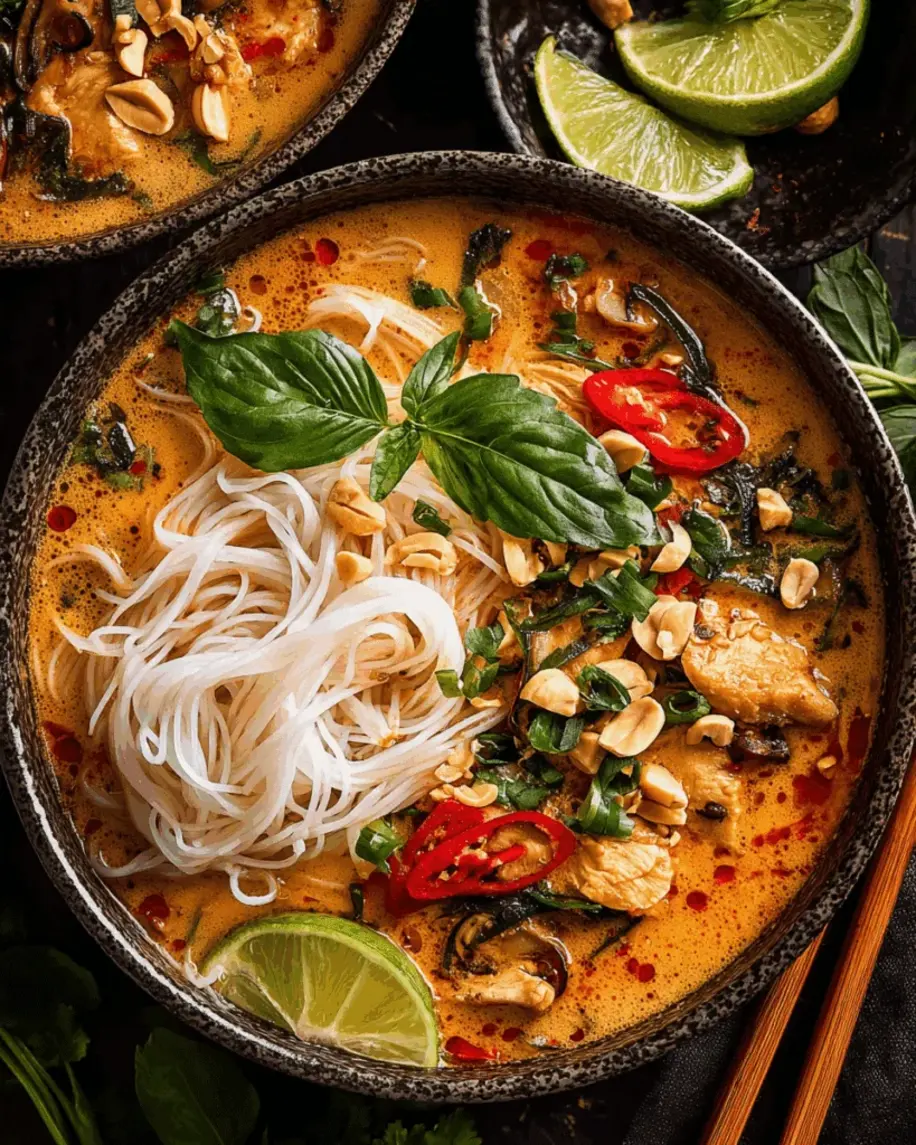
Every spoonful of this Coconut Curry Chicken Noodle Soup is a study in contrast. The broth is velvety and rich from full-fat coconut milk, yet it cuts through that richness with a double dose of acidity — fresh lime juice and rice vinegar — so each sip feels clean and refreshing. The red curry paste brings a gentle, layered heat that builds slowly, while tender shredded chicken and soft rice noodles make it deeply satisfying. A whisper of fish sauce adds savory depth without screaming “fishy,” and the fresh cilantro and extra lime wedges on top bring it all home. It smells like comfort, tastes like adventure, and looks like a bowl of golden sunshine on a gray day.
What I love most about this recipe is that it delivers restaurant-quality Thai flavor with supermarket-friendly ingredients and a straightforward technique that any home cook can master. My version leans into a trick I learned from making Moroccan harira: bloom the aromatics and spices in oil before adding liquid. That one step extracts every bit of fragrance from the ginger, garlic, and curry paste, building a base so flavorful you barely need to simmer. 💡 mia’s Pro Tip: don’t skip the rice vinegar and lime together — the two acids work in tandem to keep the coconut cream from feeling heavy, and they mimic the tangy lift you’d get from tamarind in a traditional Thai broth. A common mistake I see is adding the noodles directly to the pot and letting them overcook into mush — I’ll show you exactly how to avoid that so every bowl stays slurp-worthy.
Why This Coconut Curry Chicken Noodle Soup Recipe Is the Best
The Flavor Secret. The heart of this soup lies in how we treat the aromatics. In my Paris training, I learned that patience with the first few minutes of cooking defines the entire dish. Here, we sauté the onion, garlic, and ginger until they’re soft and fragrant, then cook the red curry paste for a full minute in that oil — this “blooming” technique releases fat-soluble flavor compounds that simply won’t emerge if you dump everything into liquid at once. It’s the same principle I use when toasting cumin and coriander for a Moroccan tagine, and it makes the difference between a broth that tastes like it simmered for hours and one that tastes flat.
Perfected Texture. A great coconut curry soup should feel luxurious without being gluey. My trick is cooking the rice noodles separately and adding them to each bowl just before serving. This keeps the noodles firm and separate, while the broth stays silky and unthickened by excess starch. The shredded chicken is simmered directly in the broth, which infuses it with flavor and keeps it exceptionally tender. I also add the lime juice at the very end — off the heat — so its brightness stays vibrant and doesn’t cook off into bitterness.
Foolproof & Fast. From start to finish, this soup comes together in 45 minutes, and most of that is hands-off simmering. There’s no marinating, no complicated layering, and no special equipment beyond a large pot and a fork for shredding. I’ve tested this with beginner home cooks and busy weeknight warriors alike, and it works every time. Whether you’re cooking for your family or meal-prepping for the week ahead, this recipe delivers consistent, crowd-pleasing results with minimal fuss.
Coconut Curry Chicken Noodle Soup Ingredients
I picked up most of these ingredients at my local NYC grocery, but a few — like the red curry paste and fish sauce — I like to grab from a little Thai market in Chinatown. The smell of that curry paste always takes me back to Paris, where I’d buy it in little jars from a shop near the Canal Saint-Martin and imagine faraway kitchens. Here’s everything you’ll need for this Thai coconut chicken soup that’s about to become your new cold-weather favorite.
Ingredients List
- 2 tablespoons vegetable oil
- 1 onion, diced
- 3 cloves garlic, minced
- 1 tablespoon fresh ginger, grated
- 2 tablespoons red curry paste
- 4 cups chicken broth
- 1 (13.5 oz) can coconut milk
- 2 tablespoons fish sauce
- 1 tablespoon rice vinegar
- 1 tablespoon brown sugar
- 1 pound boneless skinless chicken breasts
- 6 ounces rice noodles
- Juice of 1 lime
- Salt to taste
- Fresh cilantro, for garnish
- Lime wedges, for serving
Ingredient Spotlight
Red Curry Paste. This is the flavor backbone of the entire dish. Look for a brand like Mae Ploy or Thai Kitchen in the international aisle of your supermarket — avoid the “curry sauce” jars, which are diluted. Red curry paste is a concentrated blend of dried red chilies, lemongrass, galangal, garlic, shallots, and shrimp paste. It’s potent and aromatic, and a little goes a long way. Substitute: If you can’t find red curry paste, you can use yellow or green curry paste for a milder or herbaceous twist, though the flavor profile will shift. Start with 1 tablespoon and taste from there.
Coconut Milk. Full-fat coconut milk is non-negotiable here for that velvety, creamy texture. Light coconut milk will make the broth watery and thin, and it won’t carry the curry paste as effectively. Shake the can well before opening — the cream and water separate during storage. I always buy unsweetened, pure coconut milk with no stabilizers or gums if possible. Substitute: In a pinch, you can use 1 cup of heavy cream mixed with 1 cup of water and 1 teaspoon of coconut extract, but the flavor won’t be as authentic. For a dairy-free option that’s still rich, blend 1 cup of raw cashews with 1½ cups of water until smooth and use that in place of the coconut milk — it’s a trick I learned from a vegan friend in Brooklyn.
Rice Vinegar and Lime. This dynamic duo is what sets my version apart from standard coconut curry soups. The rice vinegar adds a mild, slightly sweet acidity that melds into the broth, while the fresh lime juice brings a bright, citrusy pop at the end. Together, they keep the coconut cream from feeling heavy and mimic the tangy lift of tamarind. Substitute: You can replace the rice vinegar with apple cider vinegar or white wine vinegar, and the lime juice with lemon juice, but the flavor will be less nuanced. If you have tamarind paste, dissolve 1 teaspoon in 2 tablespoons of warm water and use it in place of both — that’s a pro move from my Thai cooking adventures.
| Original Ingredient | Best Substitution | Flavor / Texture Impact |
|---|---|---|
| Red Curry Paste | Yellow or Green Curry Paste (1 tbsp to start) | Milder, more herbaceous or earthy; still delicious but different heat profile |
| Coconut Milk (full-fat) | Cashew Cream (1 cup cashews + 1½ cups water, blended) | Less sweet, slightly nutty, still creamy; dairy-free and vegan-friendly |
| Fish Sauce | Soy Sauce + 1 tsp anchovy paste (or extra salt) | Less complex umami; soy sauce adds saltiness without the fermented depth |
| Rice Noodles (6 oz) | Thin spaghetti or angel hair pasta (cooked al dente) | Slightly different chew but works; cook separately and add to bowls |
| Chicken Breasts | Boneless Skinless Chicken Thighs | More tender, juicier, richer flavor; shreds beautifully |
How to Make Coconut Curry Chicken Noodle Soup — Step-by-Step
This chicken noodle soup with curry comes together in one pot with just a few simple steps. Follow along, and I’ll show you exactly how to get that rich, aromatic broth and perfectly tender chicken every single time.
Step 1: Sauté the Aromatics
Heat 2 tablespoons of vegetable oil in a large pot or Dutch oven over medium heat. Add the diced onion and cook, stirring occasionally, until softened and translucent — about 4 minutes. Add the minced garlic and grated ginger, and cook for another minute, until the mixture is incredibly fragrant. The oil should be shimmering but not smoking.
💡 mia’s Pro Tip: Grate your ginger on a microplane rather than chopping it — this releases more juice and ensures the ginger melts into the broth without leaving fibrous bits. I learned this trick from a pastry chef in Paris who used it for ginger crème brûlée, and it works beautifully here.
Step 2: Bloom the Curry Paste
Stir in 2 tablespoons of red curry paste and cook for 1 minute, stirring constantly. You’ll see the oil take on a deep orange color, and the fragrance will become intense and spicy. This step is crucial — it cooks out the raw edge of the curry paste and melds it with the aromatics.
⚠️ Common Mistake to Avoid: Don’t rush this step or add the liquid too soon. If you skip the blooming, the curry paste will taste raw and the broth won’t develop the same depth. Watch for the paste to darken slightly and become very aromatic — that’s your cue to proceed.
Step 3: Build the Broth
Pour in 4 cups of chicken broth, 1 can of full-fat coconut milk, 2 tablespoons of fish sauce, 1 tablespoon of rice vinegar, and 1 tablespoon of brown sugar. Stir everything together, scraping up any browned bits from the bottom of the pot. Bring the liquid to a gentle simmer — you should see small bubbles breaking the surface, not a rolling boil.
💡 mia’s Pro Tip: Use a wooden spatula to scrape the bottom of the pot well. Those browned bits (called “fond” in French cooking) are packed with flavor from the aromatics and curry paste, and dissolving them into the broth adds incredible depth.
Step 4: Cook and Shred the Chicken
Add 1 pound of boneless skinless chicken breasts directly to the simmering broth. Reduce the heat to low, cover the pot, and let it cook gently for 15–20 minutes, until the chicken is cooked through and reaches an internal temperature of 165°F. Remove the chicken with tongs or a slotted spoon and place it on a cutting board. Let it rest for 2–3 minutes, then shred it with two forks. Return the shredded chicken to the pot and stir to combine.
⚠️ Common Mistake to Avoid: Don’t boil the chicken vigorously — a gentle simmer is key. Boiling can make chicken breasts tough and dry. If you’re using chicken thighs, they’re more forgiving and can simmer a bit longer without drying out.
Step 5: Prepare the Noodles
While the chicken simmers, cook the rice noodles according to the package directions. Typically, you’ll soak them in hot water for 4–6 minutes or boil them for 2–3 minutes until just tender. Drain them in a colander and rinse briefly with cold water to stop the cooking. Toss with a few drops of oil to prevent sticking, and set them aside.
💡 mia’s Pro Tip: Cook the noodles al dente — they’ll continue to soften slightly when you ladle the hot broth over them. Overcooked noodles turn mushy and break apart in the soup. This separate-cooking method is the number one way to ensure perfect texture every time.
Step 6: Finish and Serve
Remove the pot from the heat and stir in the juice of 1 lime. Taste the broth and add salt as needed — remember that the fish sauce already contributes saltiness, so go slowly. Divide the cooked noodles among 4 bowls, ladle the hot soup and shredded chicken over the noodles, and garnish generously with fresh cilantro. Serve immediately with lime wedges on the side for an extra squeeze.
⚠️ Common Mistake to Avoid: Adding the lime juice too early or while the soup is still boiling will cause the bright, fresh flavor to dissipate and can introduce a bitter note. Always add lime juice off the heat, just before serving, to preserve its vibrance.
| Step | Action | Duration | Key Visual Cue |
|---|---|---|---|
| 1 | Sauté onion, garlic, ginger | 5 minutes | Onion is translucent; garlic and ginger are fragrant |
| 2 | Bloom curry paste | 1 minute | Paste darkens; oil turns deep orange; intense aroma |
| 3 | Add liquids and simmer | 5 minutes to come to simmer | Broth is smooth and uniformly golden-orange |
| 4 | Cook and shred chicken | 15–20 minutes simmer | Chicken reaches 165°F; shreds easily with forks |
| 5 | Cook rice noodles separately | 4–6 minutes (soak) or 2–3 minutes (boil) | Noodles are tender but still firm (al dente) |
| 6 | Add lime juice, assemble, garnish | 2 minutes | Broth brightens; cilantro adds fresh green contrast |
Serving & Presentation
This spicy coconut chicken soup is a complete meal in a bowl, but the way you present it can elevate the whole experience. I like to serve it in wide, shallow bowls so the noodles and chicken are visible and every garnish stands out. Arrange a generous heap of fresh cilantro on top — stems and all — and place two lime wedges on the side of each bowl. For extra crunch and color, I sometimes add a handful of bean sprouts, a few slices of fresh red chili, and a sprinkle of chopped scallions. It’s a trick I picked up at a Vietnamese restaurant in NYC’s East Village, and it makes the bowl look as vibrant as it tastes.
For a complete meal that will satisfy a hungry household, I love pairing this soup with a simple cucumber salad dressed with rice vinegar, sugar, and a pinch of red pepper flakes — the cool crunch is a perfect contrast to the warm, creamy broth. A side of grilled or steamed jasmine rice is also wonderful for sopping up every last drop of the curry broth. And if you’re feeling indulgent, serve it with a side of crispy spring rolls or fried wontons — the combination of textures is pure magic.
| Pairing Type | Suggestions | Why It Works |
|---|---|---|
| Side Dish | Cucumber salad, jasmine rice, steamed bok choy | Cool, crunchy, or neutral sides balance the rich, spicy broth |
| Sauce / Dip | Sriracha mayo, sweet chili sauce, hoisin-lime dip | Adds heat, sweetness, or umami for dipping chicken or wontons |
| Beverage | Crisp lager, iced lemongrass tea, sparkling water with lime | Light, refreshing drinks cut through the richness of the coconut broth |
| Garnish | Fresh cilantro, lime wedges, sliced red chili, bean sprouts, scallions | Adds freshness, heat, crunch, and visual appeal to every bowl |
Make-Ahead, Storage & Reheating
As a busy NYC food blogger and mom, I’m all about recipes that work for real life. This Coconut Curry Chicken Noodle Soup reheats beautifully — with one important trick. I always store the noodles separately from the broth, otherwise they’ll soak up all the liquid and turn into a mushy mess within hours. Here’s exactly how I meal-prep this soup for the week ahead.
| Method | Container | Duration | Reheating Tip |
|---|---|---|---|
| Refrigerator | Airtight container (broth separate from noodles) | 3–4 days | Reheat broth on stove or microwave, then pour over fresh noodles or leftover noodles added at the last minute |
| Freezer | Freezer-safe zip-top bag or container (broth only, no noodles) | Up to 3 months | Thaw overnight in fridge, reheat gently on stove, cook fresh noodles when serving |
| Make-Ahead | Pot with lid (store noodles separately) | 2–3 days in advance | Assemble bowls fresh: reheat broth, add pre-cooked noodles, garnish |
One thing I’ve learned the hard way: if you’re making this soup for meal prep, cook the noodles a minute less than the package directs, rinse them well in cold water, and toss them with a little sesame oil before storing. This keeps them separate and springy. When you’re ready to eat, simply reheat the broth until simmering, add the noodles for just 30 seconds to warm them through, then ladle into bowls. The lime juice should always be added fresh at the end — don’t add it before storing, or it will lose its brightness. I keep a few extra limes on hand for exactly this reason.
Variations & Easy Swaps
This coconut curry noodle soup recipe is endlessly adaptable. Whether you’re cooking for dietary restrictions, using up what’s in your fridge, or just craving a different flavor profile, here are my favorite variations — each one tested in my own kitchen.
| Variation | Key Change | Best For | Difficulty Impact |
|---|---|---|---|
| Vegetarian / Vegan | Replace chicken with tofu or chickpeas; use soy sauce instead of fish sauce | Plant-based eaters, Meatless Monday | Easy — minimal change in technique |
| Gluten-Free & Dairy-Free | Use tamari instead of fish sauce (already GF) and rice noodles | Gluten-free and dairy-free diets | Easy — naturally GF and DF as written |
| Extra Spicy Thai | Add 1–2 bird’s eye chilies, extra curry paste, and a drizzle of chili oil | Heat lovers who want a fiery kick | Easy — just add more heat |
Vegetarian / Vegan Version
For a plant-based version that doesn’t skimp on flavor, replace the chicken with 1 block of extra-firm tofu (pressed, cubed, and pan-seared until golden) or 1 can of chickpeas (drained and rinsed). Swap the fish sauce for 2 tablespoons of soy sauce or tamari, and use vegetable broth instead of chicken broth. The tofu soaks up the coconut curry broth beautifully, and the chickpeas add a lovely heartiness. I like to add a handful of baby spinach or bok choy to the pot right before serving for extra greens — a trick I picked up from a vegan cooking class in Brooklyn.
Gluten-Free & Dairy-Free
The great news is that this coconut curry chicken noodle soup recipe is already gluten-free and dairy-free as written — as long as you use tamari or a certified gluten-free fish sauce (some brands contain wheat). Rice noodles are naturally gluten-free, and coconut milk is dairy-free. Just double-check your red curry paste label, as some brands may contain trace gluten. I recommend Mae Ploy or Thai Kitchen, both of which are safe. If you’re serving guests with celiac disease, prepare the soup in a dedicated gluten-free cooking space to avoid cross-contamination.
Extra Spicy Thai Version
When I’m craving serious heat — which happens often after a long NYC winter — I take this soup to the next level. Add 2 thinly sliced bird’s eye chilies (also called Thai chilies) along with the garlic and ginger, increase the red curry paste to 3 tablespoons, and finish each bowl with a drizzle of homemade or store-bought chili oil. A pinch of red pepper flakes stirred into the broth adds another layer of warmth. My father-in-law, who grew up eating spicy food in Thailand, approved of this version wholeheartedly — just make sure you have a cold drink nearby!
What is the best type of noodles to use for coconut curry chicken noodle soup?
For this Thai coconut chicken soup, I recommend using medium-width rice noodles (sometimes labeled “pad Thai noodles” or “rice sticks”). They have a delicate, slightly chewy texture that absorbs the coconut curry broth without becoming mushy. You can find them in the international aisle of most US grocery stores. Thin rice vermicelli works too, but cook them for a shorter time since they soften very quickly. Avoid wheat-based noodles like ramen or spaghetti — they’re too heavy and don’t have the same light, silky mouthfeel that makes this soup so satisfying.
Can I substitute coconut milk with something else in this soup?
Yes, you can substitute coconut milk, but keep in mind that the flavor and texture will change significantly. The best non-dairy alternative is cashew cream — blend 1 cup of raw cashews with 1½ cups of water until completely smooth — which gives a similarly rich and creamy body. If you’re not avoiding dairy, you can use a mixture of 1 cup heavy cream and 1 cup water with a dash of coconut extract, though it won’t have the same authentic Thai flavor. Avoid using light coconut milk or almond milk, as they will make the broth thin and watery. For the best results, stick with full-fat coconut milk.
How long does it take to cook coconut curry chicken noodle soup?
This coconut curry noodle soup recipe comes together in about 45 minutes total. The prep time is roughly 15 minutes — that’s dicing the onion, mincing the garlic, grating the ginger, and measuring out your ingredients. The active cooking time is about 30 minutes, which includes sautéing the aromatics, blooming the curry paste, simmering the chicken until tender, and cooking the rice noodles. The good news is that most of that time is hands-off: you’ll let the chicken simmer gently while you prepare the noodles and set the table. It’s a perfect weeknight meal that feels like you spent hours in the kitchen.
What can I serve with coconut curry chicken noodle soup for a complete meal?
For a complete and satisfying meal, I love pairing this spicy coconut chicken soup with a simple cucumber salad dressed with rice vinegar, sugar, and a pinch of red pepper flakes — the cool crunch is a perfect contrast to the warm, creamy broth. A side of steamed jasmine rice is also wonderful for soaking up the extra coconut curry broth. If you want to go all out, serve it with crispy spring rolls or fried wontons for added crunch. For a low-carb option, try serving it with sautéed bok choy or a simple green salad. A crisp lager or iced lemongrass tea makes an excellent beverage pairing.
Can I make this soup ahead of time?
Absolutely! This chicken noodle soup with curry is great for meal prep, but there’s one important rule: store the noodles separately from the broth. Rice noodles will soak up all the liquid and turn into a mushy mess within a few hours if left in the broth. Cook the broth and chicken as directed, let them cool, and store the broth in an airtight container in the refrigerator for up to 4 days. Cook the noodles separately, rinse them in cold water, toss with a little oil, and store them in a separate container. When you’re ready to eat, simply reheat the broth, add the noodles just long enough to warm them through, and finish with fresh lime juice and cilantro.
Is coconut curry chicken noodle soup spicy?
This coconut curry chicken noodle soup has a mild to medium level of heat, depending on the brand of red curry paste you use and how much you add. The 2 tablespoons called for in this recipe provide a gentle, layered warmth that builds slowly — it’s flavorful and aromatic without being overwhelming. If you’re sensitive to spice, start with 1 tablespoon of curry paste and taste the broth before adding more. If you love heat, increase the curry paste to 3 tablespoons and add fresh sliced bird’s eye chilies or a pinch of red pepper flakes. The coconut milk and brown sugar help balance the heat, so even a spicier version remains creamy and approachable.
Can I freeze coconut curry chicken noodle soup?
Yes, you can freeze the broth and chicken portion of this soup for up to 3 months, but do not freeze the noodles. Rice noodles become unpleasantly soft and mushy after thawing. To freeze, let the broth and chicken cool completely, then transfer them to a freezer-safe container or zip-top bag. Leave a little headspace for expansion. Thaw overnight in the refrigerator, then reheat gently on the stove over medium-low heat, stirring occasionally. Cook fresh rice noodles when you’re ready to serve, and add the lime juice and garnishes at the end. This method preserves the bright, fresh flavors and perfect texture of the soup.
What protein can I use instead of chicken in this soup?
This coconut curry noodle soup is very flexible when it comes to protein. Boneless skinless chicken thighs are an excellent substitute for breasts — they’re juicier and more forgiving if you simmer them a few minutes longer. For a seafood version, try peeled and deveined shrimp: add them during the last 3–4 minutes of cooking, just until they turn pink. Firm tofu (pressed and cubed) works beautifully for a vegetarian option, as do chickpeas or even pan-seared salmon fillets. If using tofu or chickpeas, swap the chicken broth for vegetable broth and use soy sauce instead of fish sauce to keep it vegetarian. Each protein brings its own character to the dish.
How do I make this soup less spicy?
To make this coconut curry chicken noodle soup milder, start by reducing the red curry paste to 1 tablespoon or even 1½ teaspoons. You can also choose a mild curry paste — some brands label their heat level on the jar. The brown sugar and coconut milk naturally mellow the heat, so you’re already off to a good start. After the soup is cooked, if it’s still too spicy for your taste, stir in an extra splash of coconut milk or a dollop of plain yogurt (if not dairy-free) to cool it down. Serving it with extra lime wedges also helps — the acidity cuts through the heat and refreshes your palate.
Can I add vegetables to this soup?
Absolutely! This soup is wonderful with added vegetables, and it’s a great way to clean out your fridge. I recommend adding vegetables that cook quickly so they don’t become mushy. Bell peppers (thinly sliced), snap peas, baby spinach, or bok choy are all excellent choices — add them during the last 2–3 minutes of simmering the broth. Mushrooms, such as shiitake or cremini, can be added earlier since they benefit from a longer cook time. For a heartier version, try adding diced sweet potato or butternut squash along with the broth and let them cook until tender before adding the chicken. Just be aware that adding vegetables will dilute the broth slightly, so you may need to adjust the seasoning.
Share Your Version!
I absolutely love hearing how this Coconut Curry Chicken Noodle Soup turns out in your kitchen. Did you add extra chilies for heat? Swap in shrimp instead of chicken? Serve it with crispy spring rolls on the side? Drop a comment below and let me know — I read every single one, and your feedback helps me create even better recipes for you. If you’re on Instagram or Pinterest, snap a photo of your beautiful bowl and tag @exorecipes — I want to see those golden, aromatic creations!
Here’s a question I’d love for you to answer in the comments: What’s one ingredient you always keep on hand for making quick, flavorful soups? For me, it’s red curry paste and a good fish sauce — they transform a simple broth into something extraordinary in minutes. I can’t wait to hear your go-to pantry staples!
From my NYC kitchen to yours — I hope this recipe brings as much warmth to your table as it does to mine. — mia 🧡
Love This Recipe? Save It to Pinterest!
If you enjoyed this Coconut Curry Chicken Noodle Soup recipe, don’t let it get lost in your browser tabs! 😄 Pin it now so you can find it again anytime — and explore hundreds more tried-and-tested recipes waiting for you on my Pinterest boards.
👉 Follow mia on Pinterest @exorecipe
📌 Pin this recipe · 🔁 Re-pin your favorites · 💬 Tag me when you make it — I love seeing your creations!
⭐ Did you make this recipe? I’d love to hear from you!
Rate it, leave a comment below, and tag @exorecipes on social media. Your feedback helps me create more recipes you’ll love! 💬👇
Coconut Curry Chicken Noodle Soup with Lime and Rice Vinegar
- Prep Time: 15 minutes
- Cook Time: 30 minutes
- Total Time: 45 minutes
- Yield: 4 1x
- Method: Main
- Cuisine: Thai
Description
A comforting and aromatic soup with tender chicken, rice noodles, and a creamy coconut curry broth, brightened with lime and rice vinegar.
Ingredients
- 2 tablespoons vegetable oil
- 1 onion, diced
- 3 cloves garlic, minced
- 1 tablespoon fresh ginger, grated
- 2 tablespoons red curry paste
- 4 cups chicken broth
- 1 (13.5 oz) can coconut milk
- 2 tablespoons fish sauce
- 1 tablespoon rice vinegar
- 1 tablespoon brown sugar
- 1 pound boneless skinless chicken breasts
- 6 ounces rice noodles
- Juice of 1 lime
- Salt to taste
- Fresh cilantro, for garnish
- Lime wedges, for serving
Instructions
- Heat oil in a large pot over medium heat. Add onion and cook until softened, about 4 minutes.
- Add garlic and ginger, cook for 1 minute until fragrant.
- Stir in red curry paste and cook for 1 minute.
- Pour in chicken broth, coconut milk, fish sauce, rice vinegar, and brown sugar. Stir to combine.
- Add chicken breasts to the pot. Bring to a simmer, then reduce heat and cook for 15-20 minutes, until chicken is cooked through.
- Remove chicken from the pot and shred with two forks. Return shredded chicken to the pot.
- Meanwhile, cook rice noodles according to package directions. Drain and set aside.
- Stir lime juice into the soup. Season with salt to taste.
- Divide noodles among bowls. Ladle soup over noodles.
- Garnish with cilantro and serve with lime wedges.
Notes
For a spicier soup, use more curry paste or add a pinch of red pepper flakes. You can substitute chicken thighs for breasts if desired.
Nutrition
- Calories: 450
- Sugar: 8g
- Fat: 22g
- Carbohydrates: 35g
- Protein: 28g
Tried This Recipe? Leave a Comment!
Did you make this recipe? I’d love to hear how it turned out! Please leave a comment and a rating below. Your feedback helps other home cooks and supports cheerychop.com!
