Table of Contents
Classic Scotch Meat Pies A Timeless Taste of Home – Quick Puff Pastry Version
There’s something about a classic Scotch meat pie that brings me straight back to my grandmother’s kitchen in Marrakech—not because she ever made one, but because the same principle of wrapping spiced minced meat in a sturdy, buttery crust is pure comfort food to me. When I moved to New York City after my culinary training in Paris, I searched high and low for an authentic Scotch pie that didn’t require a pilgrimage to a specialty shop. The traditional version uses a hot water crust pastry, which is wonderful but time-consuming. I wanted a version I could whip up on a busy weekday that still delivered that deep, savory filling and satisfying bite. That’s how this scotch meat pie recipe was born—a quick, foolproof puff pastry take on the beloved traditional Scotch pie.
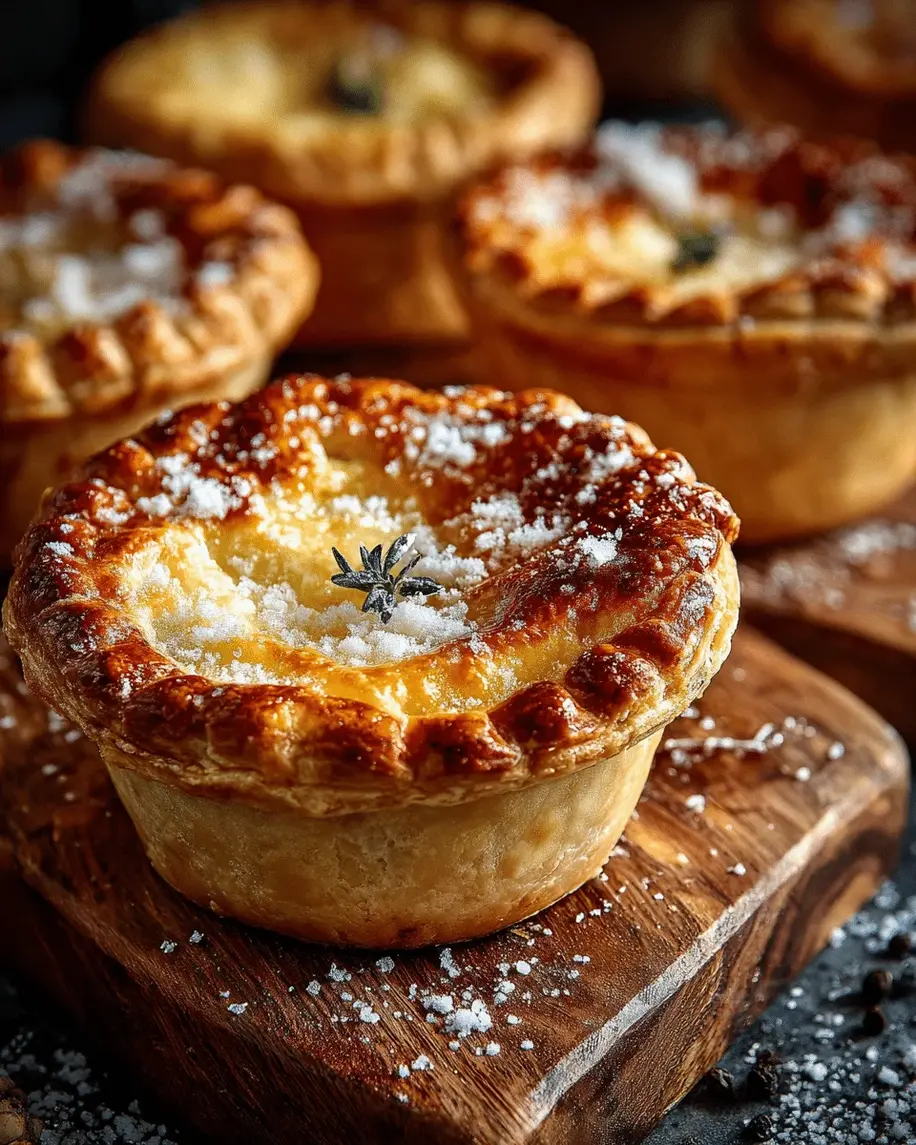
Imagine this: a golden, flaky puff pastry shell that shatters when you bite into it, revealing a rich, peppery minced beef filling that’s been simmered with onions, garlic, Worcestershire sauce, and a whisper of nutmeg. The filling is dense and moist, not dry or crumbly, with just the right amount of gravy to keep every mouthful juicy. The puff pastry bakes up crisp and light, a lovely contrast to the hearty filling. I love these pies straight from the oven with a dollop of HP sauce or a side of mashed potatoes—they’re the epitome of cozy, no-fuss Scottish comfort food.
As a professional cook who trained in Paris and now navigates the Union Square Greenmarket every Saturday, I’ve learned that the best shortcuts are the ones that don’t compromise flavor. My version skips the hot water crust altogether, using store-bought puff pastry to shave off over an hour of dough work. But don’t let the shortcut fool you—the filling is built on classic French technique: a proper roux-based gravy that locks in moisture and depth. I’ll share my go-to trick for keeping the bottom crust crisp (no soggy bottoms here!), plus a common mistake that can turn your pie into a pasty swamp. Trust me, after you try this authentic scotch pie puff pastry version, you’ll never look back.
Why This Scotch Meat Pie Recipe Is the Best
The Flavor Secret: The heart of any great Scotch pie is the filling. I use 80/20 ground beef (for flavor and moisture) and build a rich gravy with beef stock, a splash of Worcestershire, and a pinch of ground nutmeg—an unexpected but classic Scottish spice. I learned in Paris that a slow-simmered roux gives body that no cornstarch slurry can match. The result is a filling that’s deeply savory, with layers of umami that cling to every bite.
Perfected Texture: Puff pastry is delicate—overwork it and you lose the flake. I create the pies by lining a standard muffin tin with pastry rounds, filling with cooled meat, and topping with a second pastry lid. The key is to let the filling cool completely before assembling. Hot filling will melt the butter in the pastry before it even hits the oven, leading to a dense, greasy crust. I also dock the tops with a fork to let steam escape, which keeps the pastry crisp and the filling moist.
Foolproof & Fast: This recipe comes together in under an hour, with only 20 minutes of hands-on prep. It’s perfect for beginner bakers because the puff pastry does all the heavy lifting. You don’t need to roll, chill, or blind-bake—just cut and fill. I’ve tested this with dozens of home cooks in my NYC cooking classes, and even first-timers produce gorgeous, golden pies every time. Plus, you can easily double the batch and freeze half for later—a lifesaver for busy weeks.
Scotch Meat Pie Recipe Ingredients
I love sourcing my beef from the butcher at the Union Square market—grass-fed chuck ground fresh that morning. For the puff pastry, I swear by all-butter brands (like Dufour or Trader Joe’s frozen) because they bake up flakier and taste infinitely better than the cheap stuff. My Paris-trained palate can’t tolerate margarine-based pastry!
Ingredients List
- 1 lb 2 oz (500g) minced beef (80/20 or ground chuck)
- 1 medium onion, finely chopped (about 1 cup)
- 2 cloves garlic, minced
- 2 tablespoons all-purpose flour
- 1 cup (250ml) beef stock (low-sodium)
- 1 tablespoon Worcestershire sauce
- 1 teaspoon salt
- ½ teaspoon black pepper
- ½ teaspoon ground nutmeg
- 2 sheets puff pastry (each about 10×10 inches, thawed if frozen)
- 1 egg, beaten with 1 tablespoon water (for egg wash)
Ingredient Spotlight
Minced Beef: The fat content is crucial—lean meat will yield a dry, crumbly filling. 80/20 is ideal; you can also use ground lamb or mutton (if available) for a more traditional Scotch pie flavor. Substitution: Ground pork or a mix of beef and pork works well. The flavor will be slightly sweeter, so reduce nutmeg to ¼ teaspoon.
Worcestershire Sauce: This adds that deep, tangy umami that’s a hallmark of British pies. If you’re out, use soy sauce + a splash of balsamic vinegar, but know the flavor will be more Asian-inspired. Substitution: Dark soy sauce (1 tablespoon) plus a teaspoon of molasses works in a pinch.
Ground Nutmeg: It might seem odd, but nutmeg is traditional in Scottish meat pies—it brings warmth without overwhelming. Freshly grated is best. Substitution: ½ teaspoon ground mace or allspice, but note allspice is more pungent, so start with ¼ teaspoon.
Puff Pastry: All-butter puff pastry makes all the difference. Regular puff pastry (made with shortening) will still work but won’t be as flaky or buttery. Substitution: For a gluten-free version, use a good gluten-free puff pastry (like the one from Schär) and follow the same assembly method.
| Original Ingredient | Best Substitution | Flavor / Texture Impact |
|---|---|---|
| Minced Beef (80/20) | Ground lamb or mutton | More traditional, gamier, slightly drier; increase fat with a tablespoon of olive oil |
| Worcestershire Sauce | Soy sauce + balsamic vinegar (1:1) | Less complex, more salty; reduce salt by ¼ teaspoon |
| Ground Nutmeg | Ground mace or allspice | Mace is closer, allspice is warmer; use half the quantity |
| Puff Pastry (all-butter) | Regular puff pastry or pie crust | Less flaky, more tender; pie crust will be denser, more like a traditional hot water crust |
How to Make Classic Scotch Meat Pies – Step-by-Step
Don’t be intimidated by the pastry—this is one of the most forgiving recipes I know. Just follow these steps, and you’ll be rewarded with a batch of golden, steaming pies that taste like they came from a Glasgow bakery.
Step 1: Cook the Aromatics
Heat a large skillet over medium heat and add a drizzle of oil (or a pat of butter). Sauté the finely chopped onion until translucent, about 4–5 minutes. Add the minced garlic and cook for 30 seconds until fragrant. Do not brown the garlic—it can turn bitter.
💡 mia’s Pro Tip: If you’re short on time, pulse the onion and garlic together in a food processor until finely minced. They’ll cook faster and blend seamlessly into the filling.
Step 2: Brown the Meat
Increase heat to medium-high and add the minced beef. Break it up with a wooden spoon and let it cook undisturbed for 2 minutes to develop a good sear. Then stir and continue cooking until the meat is browned all over and any liquid has evaporated—this should take about 5–6 minutes.
⚠️ Common Mistake to Avoid: Do not stir the meat constantly; you’ll miss the browning. Uneven browning leads to a pale, bland filling. Let it sit in the pan!
Step 3: Thicken the Filling
Sprinkle the flour over the meat mixture and stir well to coat. Cook for 1 minute to remove the raw flour taste. Gradually pour in the beef stock while stirring continuously to avoid lumps. Add Worcestershire sauce, salt, pepper, and nutmeg. Reduce heat to low and simmer for 5 minutes until the gravy thickens and clings to the meat. The filling should be thick — not soupy — so it won’t soak the pastry. Remove from heat and let it cool completely (about 15–20 minutes).
💡 mia’s Pro Tip: To speed up cooling, spread the filling on a large plate or shallow baking dish. It will cool in half the time.
Step 4: Cool and Assemble
Preheat the oven to 400°F (200°C). While the filling cools, prepare the pastry. On a lightly floured surface, unroll both puff pastry sheets. Using a 4-inch round cutter (or a glass), cut 12 circles — you need 6 for the bottoms and 6 for the tops. If your pastry is a bit short, gently re-roll scraps once. Press the bottom circles into a standard 12-cup muffin tin (you’ll fill 6 of the cups). Make sure the pastry reaches slightly above the rim. Divide the cooled filling among the pastry-lined cups (about ⅓ cup each). Place a top circle over each, press the edges together with a fork to seal, and cut a small slit or prick with a fork to allow steam to escape. Brush the tops with the egg wash.
💡 mia’s Pro Tip: Don’t stretch the pastry when pressing it into the tin — gentle fingers work best. Stretched pastry will shrink back during baking and create a dented edge.
Step 5: Bake to Perfection
Bake in the preheated oven for 20–25 minutes until the pastry is golden brown and puffed. Let the pies cool in the tin for 5 minutes before carefully transferring them to a wire rack. This resting step is vital — it allows the pastry to set and prevents breaks. Serve warm, not piping hot, so the filling sets further.
⚠️ Common Mistake to Avoid: Don’t skip the cooling in the tin! Pies that are turned out too early will collapse or tear. Trust me, I learned this the hard way during a disastrous dinner party.
| Step | Action | Duration | Key Visual Cue |
|---|---|---|---|
| 1 | Cook aromatics | 4-5 min | Onion translucent, garlic fragrant |
| 2 | Brown the meat | 5-6 min | Deep brown color, no pink |
| 3 | Thicken filling | 6-7 min | Gravy coats meat, no standing liquid |
| 4 | Assemble pies | 10 min | Pastry circles fill muffin cups evenly |
| 5 | Bake | 20-25 min | Golden brown, puffed up |
Serving & Presentation
I love serving these pies right out of the oven, still warm, with a generous dollop of HP Sauce or Branston pickle — classic British condiments that cut through the richness. In my NYC apartment, I often plate them alongside a pile of buttery mashed potatoes and a simple green salad with a sharp vinaigrette. For a heartier meal, mushy peas are an absolute must. I also like to garnish with a sprinkle of fresh parsley and a pinch of flaky sea salt — a touch I learned from a Scottish chef I met at the Brooklyn Flea.
Remember, the pies are quite sturdy, so they’re perfect for lunchboxes, picnics, or even as a savory snack at a party. If you’re serving them cold (which is how many Scots eat them at football matches), let them cool completely on a wire rack, then wrap individually in parchment paper. They’ll keep for a day at room temperature. I also love serving them with a thick, caramelized onion gravy and a dollop of sour cream when I want to fancy them up — a nod to both my Moroccan heritage (we love a good savory pastry) and my French training (sauces, always sauces).
| Pairing Type | Suggestions | Why It Works |
|---|---|---|
| Side Dish | Mashed potatoes, mushy peas, or a crisp green salad | Starch balances richness; acidity cuts through fat |
| Sauce / Dip | HP Sauce, Branston pickle, onion gravy, Dijon mustard | Tangy, sweet, or spicy elements enhance the savory meat |
| Beverage | Scottish ale, stout, cider, or a bold red wine (Malbec) | Malt, roast, and tannin complement the beefy filling |
| Garnish | Fresh parsley, flaky sea salt, cracked black pepper | Adds color and a final punch of flavor |
Make-Ahead, Storage & Reheating
As a busy mom of two and a food blogger in Manhattan, I live by batch cooking. These pies freeze beautifully, making them a weekly staple in my house. I often make a double batch on Sunday, bake half fresh for dinner, and freeze the rest unbaked for later. The frozen pies can go directly into the oven with a few extra minutes — perfect for those days when you need a home-cooked meal in a flash.
| Method | Container | Duration | Reheating Tip |
|---|---|---|---|
| Refrigerator | Airtight container in single layer | 3-4 days | Reheat in a 350°F oven for 8-10 minutes; avoid microwave (soggy pastry) |
| Freezer (unbaked) | On a baking sheet, then wrap individually in plastic and foil | Up to 3 months | Bake from frozen: add 5-8 minutes to the original baking time. |
| Freezer (baked) | Airtight container or zip-top bag | Up to 2 months | Thaw in fridge overnight, then reheat at 350°F for 10-12 minutes |
I always recommend reheating pies in the oven, not the microwave. The microwave turns the pastry into a sad, chewy mess. If you’re in a hurry, you can use an air fryer at 350°F for 5-6 minutes — it’s my secret trick for reviving leftover pies from the fridge. They come out almost as good as fresh.
Variations & Easy Swaps
One of the things I love most about this recipe is how easy it is to adapt. Whether you want to go fully traditional, cater to dietary restrictions, or just play with flavors, there’s a version for you. Here are my three favorite twists.
| Variation | Key Change | Best For | Difficulty Impact |
|---|---|---|---|
| Traditional Hot Water Crust | Replace puff pastry with hot water crust pastry | Purists; more authentic texture | Medium-Hard (requires rolling and baking) |
| Gluten-Free Version | Use gluten-free puff pastry; ensure stock and Worcestershire are GF | Celiac or gluten-sensitive guests | Easy (same method, different pastry) |
| Spiced Mutton Version | Replace beef with ground mutton or lamb; add 1 tsp cumin and ½ tsp cinnamon | Closer to authentic Scottish taste | Easy (same method) |
Traditional Hot Water Crust
If you want the real deal, swap the puff pastry for a hot water crust pastry. This is the pastry used in classic Scotch pies — dense, sturdy, slightly crisp. It requires boiling water, lard, and flour, and you must work the dough while still warm. The method is different: you roll the dough into rounds and press them into greased pie molds (or muffin tins) and blind bake them before filling. The filling is the same, but you’ll need to bake the filled pies for an additional 10-15 minutes because the crust is thicker. This version is more authentic but also more hands-on. I only make it on special occasions now, but when I do, I always think of my Parisian pastry instructor who drilled the importance of hot water crust for savory pies.
Gluten-Free Version
For my gluten-free friends, this recipe is surprisingly easy to adapt. Use a good-quality gluten-free puff pastry (Schär is my go-to). Also check that your beef stock and Worcestershire sauce are certified gluten-free (Lea & Perrins is gluten-free in the US). The filling is naturally gluten-free if you use cornstarch instead of flour: mix 2 tablespoons cornstarch with 3 tablespoons cold water to make a slurry and add it at the same stage as the flour. The texture of the filling will be slightly glossier, but just as delicious. My daughter’s best friend has celiac, and I’ve served these pies at countless birthday parties — they’ve never been able to tell the difference.
Spiced Mutton Version
For a true taste of Scotland, use ground mutton or lamb — the traditional meat for Scotch pies. Mutton is gamier and richer than beef, so I like to add a teaspoon of ground cumin and half a teaspoon of cinnamon to the filling. The warm spices blend beautifully with the nutmeg and Worcestershire. I first tried this combination during a visit to Edinburgh’s farmers market. The butcher there told me that his grandmother always added a “pinch of warmth” to her mince. Now I make this version every St. Andrew’s Day. If you can’t find mutton, lamb works fine, but it’s milder. Pro tip: Ask your butcher to double-grind the meat for a finer texture that’s closer to traditional mince.
FAQ – Scotch Meat Pie Recipe
What is the best type of meat to use for classic Scotch meat pies?
For a truly classic Scotch pie, ground mutton (adult sheep) is the traditional choice. Mutton has a deep, gamey flavor that stands up well to the pastry and spices. However, in the US it can be hard to find. Ground lamb is an excellent substitute — it’s widely available and has a milder gaminess. If you prefer a more familiar taste, 80/20 ground beef works beautifully. Just make sure to use a fatty cut (80% lean / 20% fat) so the filling stays moist. Avoid lean ground turkey or chicken — they’ll turn out dry. My go-to is a 50/50 mix of ground lamb and beef, which gives the best of both worlds: richness and familiarity.
Can I make the hot water pastry for Scotch meat pies ahead of time?
Yes, you can prepare hot water crust pastry a day or two ahead and store it in the fridge wrapped tightly in plastic wrap. Note that the dough will firm up considerably when cold. Let it sit at room temperature for about 20–30 minutes before rolling — it will become pliable again. Hot water crust is unique because it doesn’t use butter, so it won’t suffer from over-working or being chilled. If you’re making the puff pastry version (like this recipe), puff pastry is easier to prep ahead: just thaw pre-made sheets overnight in the fridge and use directly. For the filling, you can make it up to three days in advance and keep it covered in the refrigerator. That actually improves the flavor as the spices meld.
What is the ideal baking time and temperature for homemade Scotch meat pies?
For this puff pastry version, the ideal temperature is 400°F (200°C) and the baking time is 20–25 minutes. You want the pastry to be deep golden brown and puffed. For traditional hot water crust pies, the temperature is slightly lower at 375°F (190°C) and baking time is longer — about 30–35 minutes — because the crust is denser and needs more time to cook through without burning. Always place pies on the center rack and rotate the pan halfway through for even browning. The most reliable doneness test: the internal temperature of the filling should reach 165°F (74°C) if you’re using a meat thermometer.
How do you prevent the bottom of Scotch meat pies from becoming soggy?
Soggy bottoms are the number one enemy of any meat pie. Here are my chef-tested tips: First, make sure the filling is completely cooled before assembling — hot filling melts the butter in the pastry before it even hits the oven. Second, dock the bottom pastry (prick it all over with a fork) before adding the filling; this allows steam to escape and prevents the pastry from steaming. Third, bake the pies on a preheated baking sheet — the extra initial heat helps set the bottom crust quickly. Finally, use a muffin tin (not a flat tray) so the sides are supported and the pastry stays upright. If you still have issues, brush the inside of the bottom pastry with a thin layer of egg white before filling — this creates a moisture barrier.
Can I freeze unbaked Scotch meat pies for later?
Absolutely! Freezing unbaked pies is one of my favorite meal prep strategies. Assemble the pies completely (with the egg wash) but don’t bake. Place the muffin tin in the freezer for 2–3 hours until the pies are solid. Pop them out, wrap each pie individually in plastic wrap, then place in a freezer bag. They’ll keep for up to 3 months. When ready to bake, place the frozen pies on a baking sheet (no need to thaw) and bake at 400°F for 28–32 minutes, adding a few minutes to the original time. The egg wash may not brown as much if frozen, so brush a second coat of egg wash after 15 minutes of baking for a golden finish.
What can I use instead of puff pastry for Scotch meat pies?
If you don’t have puff pastry (or want a different texture), you have several great options. The most traditional substitute is hot water crust pastry, which is the classic Scottish pie crust — it’s more like a thick, crisp bread dough. You can also use shortcrust pastry (like a standard pie crust) which is buttery and tender. For a low-carb option, use a keto pie crust made with almond flour and butter. If you’re really short on time, even refrigerated biscuits or crescent roll dough can work in a pinch — the pies will be lighter and fluffier, but still delicious. Just adjust the baking time: biscuit dough takes about 15–18 minutes at 375°F.
Is this Scotch meat pie recipe gluten-free?
This specific recipe uses all-purpose flour and regular puff pastry, so it is not gluten-free. However, it’s very easy to adapt for a gluten-free diet. Simply: use a gluten-free puff pastry (I like Schär brand); substitute the 2 tablespoons of all-purpose flour with cornstarch (mixed with 3 tablespoons cold water to make a slurry); and ensure your beef stock and Worcestershire sauce are certified gluten-free (most US brands are, but check labels). The resulting pies will have a slightly different texture — the filling will be a bit glossier — but the flavor is just as good. My gluten-free friends always request these for our potlucks.
How do I get the perfect golden crust on my Scotch meat pies?
The secret to a gorgeous golden crust is twofold: eggs wash and temperature. Brush the tops of your pies generously with a mixture of 1 beaten egg and 1 tablespoon of water (or milk). This gives that deep golden-brown sheen. Bake at a high temperature — 400°F is ideal — because the intense heat triggers the Maillard reaction quickly. If you want an extra professional finish, after brushing the egg wash, sprinkle a flaky sea salt or a pinch of turbinado sugar over the top. The salt adds visual pop and crunch; the sugar adds a tiny sparkle without changing the flavor. And never, ever open the oven door during the first 15 minutes — that cold blast can deflate the pastry.
Share Your Version!
I’d love to see how these classic Scotch meat pies turn out in your kitchen! Did you stick with the puff pastry shortcut, or did you go the traditional hot water crust route? Did you add a secret spice or swap the beef for lamb? Drop a comment below with your experience — I read every single one and try to answer within 24 hours. If you took a photo, please post it on Instagram or Pinterest and tag @exorecipes — I get so much joy seeing your creations. And if you’re looking for more cozy pies, check out my Steak and Ale Pie or Mince and Potato Pie — both reader favorites.
From my NYC kitchen to yours — I hope this recipe brings as much warmth to your table as it does to mine. — mia 🧡
Love This Recipe? Save It to Pinterest!
If you enjoyed this Classic Scotch Meat Pies recipe, don’t let it get lost in your browser tabs! 😄 Pin it now so you can find it again anytime — and explore hundreds more tried-and-tested recipes waiting for you on my Pinterest boards.
👉 Follow mia on Pinterest @chefrecipes2
📌 Pin this recipe · 🔁 Re-pin your favorites · 💬 Tag me when you make it — I love seeing your creations!
🔥 Loved this recipe? ⭐ Rate it & leave a comment below!
Tag @exorecipes on Instagram or Pinterest so I can feature your bake!

Classic Scotch Meat Pies A Timeless Taste of Home
- Prep Time: 20 minutes
- Cook Time: 25 minutes
- Total Time: 45 minutes
- Yield: 6 pies 1x
- Method: Main Course
- Cuisine: Scottish
Description
These classic Scotch meat pies are a hearty and savory pastry filled with seasoned minced meat, perfect for a comforting meal or snack.
Ingredients
- 500g minced beef
- 1 onion, finely chopped
- 2 cloves garlic, minced
- 2 tbsp plain flour
- 250ml beef stock
- 1 tbsp Worcestershire sauce
- 1 tsp salt
- 1/2 tsp black pepper
- 1/2 tsp ground nutmeg
- 1 sheet puff pastry
- 1 egg, beaten (for glazing)
Instructions
- Preheat the oven to 200°C (400°F).
- In a large pan, cook the onion and garlic until soft.
- Add the minced beef and cook until browned.
- Stir in the flour and cook for 1 minute.
- Gradually add the beef stock, Worcestershire sauce, salt, pepper, and nutmeg. Simmer until thickened.
- Allow the filling to cool slightly.
- Cut the puff pastry into circles and line a muffin tin.
- Fill each pastry case with the meat mixture.
- Top with another pastry circle, seal edges, and brush with beaten egg.
- Bake for 20-25 minutes until golden brown.
Notes
For a traditional touch, add a splash of dark ale to the filling. Serve with mashed potatoes or chips.
Nutrition
- Calories: 450
- Sugar: 3g
- Fat: 28g
- Carbohydrates: 30g
- Protein: 20g

Tried This Recipe? Leave a Comment!
Did you make this recipe? I’d love to hear how it turned out! Please leave a comment and a rating below. Your feedback helps other home cooks and supports cheerychop.com!
