Table of Contents
Classic Pineapple Upside-Down Cake with Cherries: A Timeless Holiday Dessert to Savor
Every holiday season, my kitchen in New York City fills with the unmistakable aroma of caramelized sugar and pineapple. It’s a scent that takes me straight back to my mother’s kitchen in Morocco, where she would make a version of this pineapple upside-down cake recipe for special family gatherings. That memory of sweet, sticky pineapple rings and bright maraschino cherries set against a tender yellow cake is what inspired me to perfect this classic holiday dessert. After years of training in Paris and cooking for friends in Brooklyn, I’ve come to realize that the best desserts are the ones that feel both nostalgic and effortless. This pineapple cherry cake is exactly that—it’s simple enough for a weekday treat yet beautiful enough for a Christmas table. I still use the same cast-iron skillet my mother gave me, and every time I invert the cake onto a plate, I feel that same thrill I did as a child.
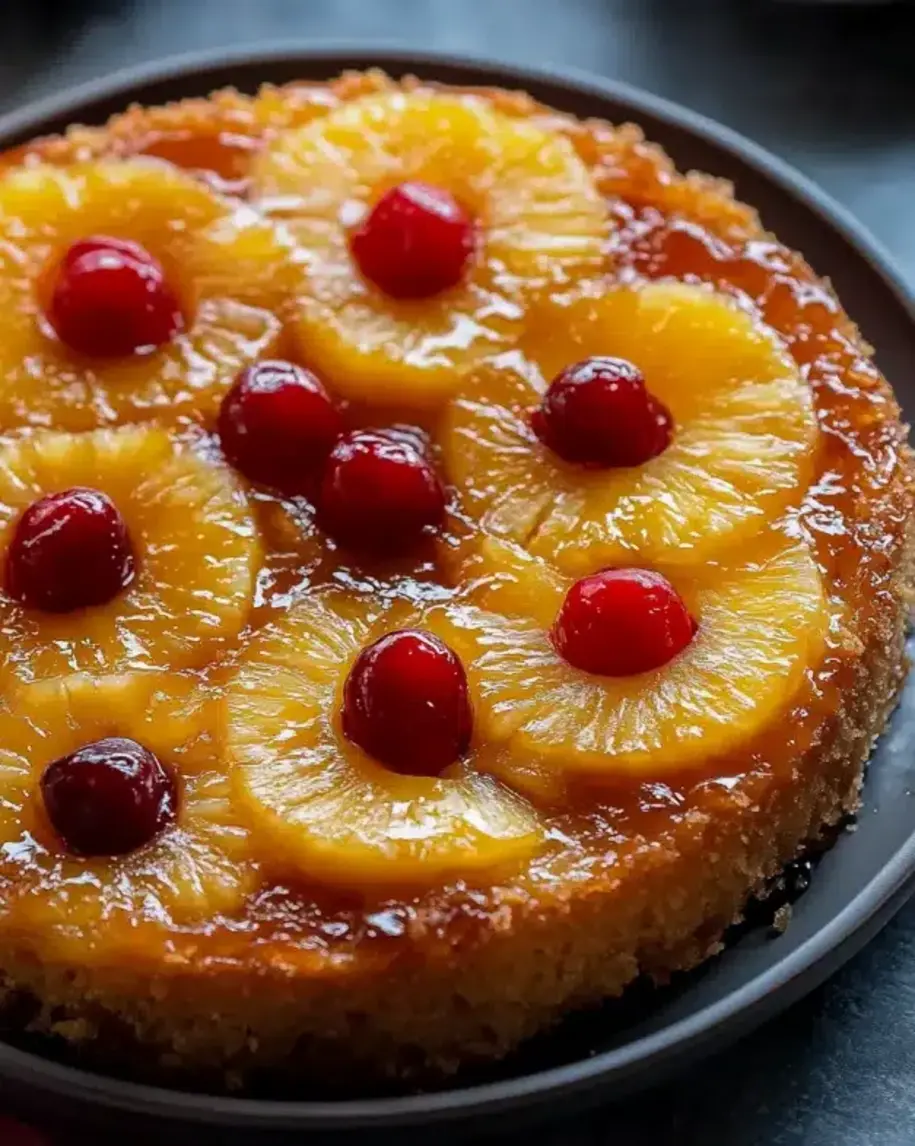
The magic of this traditional upside-down cake lies in the contrast of textures and temperatures. The top (which becomes the bottom after flipping) is a mosaic of golden pineapple rings with jewel-red cherries nestled in the centers. Underneath that glossy caramel layer is a moist, tender crumb that’s lightly perfumed with vanilla and brown sugar. When you cut into it, the cake releases a soft, buttery fragrance, and each bite delivers a burst of sweet-tart pineapple balanced with the richness of the batter. I love serving it slightly warm, when the caramel is still a little runny and the cherries glisten like edible ornaments. It’s one of those easy pineapple cake recipes that feels fancy without demanding hours of work.
What sets my version apart is a technique I learned at Le Cordon Bleu: melting the butter and brown sugar together in the pan in the oven before adding the fruit. This ensures the caramel is evenly distributed and doesn’t crystallize. Plus, I use reserved pineapple juice in the batter for an extra layer of fruit flavor—a tip I picked up from a patissier in Paris. Over the years, I’ve also discovered that letting the cake cool for exactly 10 minutes before inverting is the secret to a flawless release. In this post, I’ll share my 💡 mia’s Pro Tip for the perfect flip, as well as a common mistake that can leave your topping stuck to the pan. Whether you’re a seasoned baker or trying this for the first time, I promise this recipe will earn a permanent spot in your holiday rotation.
Why This Pineapple Upside-Down Cake Recipe Is the Best
The Flavor Secret
Most recipes rely solely on canned pineapple juice, but I go a step further by using the reserved juice in the cake batter. This doubles the pineapple presence without adding extra sugar. The brown sugar caramelizes with the butter to create a deep, almost toffee-like flavor that complements the fruit beautifully. My Moroccan background taught me to balance sweetness with a pinch of salt in the caramel—a small but mighty trick that makes every ingredient sing.
Perfected Texture
The hallmark of a great upside-down cake is a batter that’s sturdy enough to hold the fruit yet tender enough to melt in your mouth. I achieve this by alternating the dry ingredients with the liquid (pineapple juice or milk) and mixing only until combined. Overmixing is the enemy of a soft crumb—something I learned during my time in a Parisian pâtisserie, where we treated every batter with gentle hands. The result is a cake that’s both light and moist, with an even rise that won’t sink under the weight of the topping.
Foolproof & Fast
I’ve tested this pineapple upside-down cake recipe dozens of times to make it accessible for home bakers. The prep is only 20 minutes, and the oven does most of the work. No complicated equipment—just a 9-inch round pan (or skillet, my favorite) and a mixing bowl. Even if you’ve never made a cake from scratch, the detailed step-by-step below will guide you through each stage. I’ve also included my trusted tips for preventing sticking and ensuring that gorgeous caramel top every time.
Pineapple Upside-Down Cake Recipe Ingredients
Whenever I make this cake, I head to the Union Square farmers market for fresh eggs and butter, but the rest is pantry-friendly. In Morocco, my mother used canned pineapple because fresh was not always available—and honestly, the quality of canned pineapple in its own juice is perfect for this recipe. It’s tender, sweet, and holds its shape during baking. Here’s everything you’ll need.
Ingredients List
- For the Topping:
- 1/4 cup unsalted butter
- 2/3 cup packed brown sugar
- 1 can (20 oz) pineapple slices in juice, drained (reserve 1/3 cup juice)
- 10–12 maraschino cherries, drained
- For the Cake:
- 1 1/2 cups all-purpose flour
- 1 cup granulated sugar
- 1/2 cup unsalted butter, softened
- 2 large eggs
- 1 teaspoon vanilla extract
- 1/2 cup reserved pineapple juice (or milk)
- 1 1/2 teaspoons baking powder
- 1/4 teaspoon salt
Ingredient Spotlight
Butter: I use unsalted butter to control the sodium. In the topping, it melts with brown sugar to form the caramel layer. For the cake, softened butter creamed with sugar creates the airy structure. You can use salted butter, but reduce the added salt in the batter to 1/8 teaspoon.
Pineapple: Canned pineapple slices in juice (not syrup) give the best texture and sweetness. The juice reserved from the can adds moisture and flavor to the batter. If you want to use fresh pineapple, choose a very ripe one and cut rings about 1/4-inch thick—see the FAQ for more details.
Maraschino Cherries: They are a classic pairing, adding color and a hint of almond-like flavor. Drain them well to avoid bleeding into the caramel. You can substitute with fresh or frozen pitted cherries (thawed), but the color may be less vibrant.
Brown Sugar: Light or dark brown sugar works; dark gives a deeper molasses flavor. Do not use granulated sugar for the topping—the molasses content is essential for the sticky caramel.
Eggs: Large eggs at room temperature incorporate more air into the batter. If yours are cold, place them in a bowl of warm water for 5 minutes before using.
| Original Ingredient | Best Substitution | Flavor / Texture Impact |
|---|---|---|
| Unsalted butter | Salted butter (reduce salt to 1/8 tsp) | Slightly saltier caramel, marginally denser crumb |
| Canned pineapple in juice | Fresh ripe pineapple rings (1/4-inch thick) | Firmer texture, less sweet; may need to add 2 tbsp juice to batter |
| Maraschino cherries | Fresh pitted cherries (thawed if frozen) | Tartness more pronounced; juice may bleed into caramel |
| All-purpose flour | Gluten-free 1:1 baking blend | Slightly drier crumb; add 1 tablespoon milk if needed |
How to Make Pineapple Upside-Down Cake – Step-by-Step
Follow these simple steps, and you’ll have a gorgeous, caramel-topped cake that will impress everyone. I’ve broken each stage down with visual cues and my chef-tested tips.
Step 1: Prepare the Topping
Preheat your oven to 350°F (175°C). Place 1/4 cup unsalted butter in a 9-inch round cake pan (preferably a cast-iron skillet) and put it in the oven just until the butter melts, about 2-3 minutes. Remove the pan carefully, then sprinkle 2/3 cup packed brown sugar evenly over the melted butter. The sugar will start to dissolve into the butter—that’s perfect. Now arrange the drained pineapple slices in a single layer over the sugar, placing a maraschino cherry in the center of each ring and tucking extra cherries into the gaps between slices. This pattern will become the top of your cake, so take a moment to make it pretty.
💡 mia’s Pro Tip: If your pineapple slices are very wet, pat them dry with a paper towel before arranging. Too much liquid can make the caramel soupy.
Step 2: Mix the Cake Batter
In a large bowl, cream together 1/2 cup softened unsalted butter and 1 cup granulated sugar with an electric mixer on medium speed until light and fluffy, about 2–3 minutes. Add the eggs one at a time, beating well after each, then stir in 1 teaspoon vanilla extract. In a separate medium bowl, whisk together 1 1/2 cups all-purpose flour, 1 1/2 teaspoons baking powder, and 1/4 teaspoon salt. Gradually add the dry ingredients to the butter mixture, alternating with the reserved 1/2 cup pineapple juice (or milk). Start and end with the flour mixture, and mix only until just combined—do not overmix, or the cake will be tough.
⚠️ Common Mistake to Avoid: Overmixing the batter after adding the flour activates gluten and yields a dense, rubbery cake. Stop as soon as you see no more streaks of flour.
Step 3: Assemble and Bake
Pour the cake batter evenly over the pineapple topping in the pan. Use a spatula to gently spread it to the edges without disturbing the fruit arrangement. Bake on the center rack for 35–40 minutes, until the top is golden brown and a toothpick inserted into the center of the cake (not through the fruit) comes out clean. The cake will pull away slightly from the sides of the pan.
💡 mia’s Pro Tip: Place a sheet of foil loosely over the top after 20 minutes if the cake is browning too quickly. Every oven runs a little differently.
Step 4: Cool and Invert
Let the cake cool in the pan for exactly 10 minutes on a wire rack. This allows the caramel to set enough to hold the fruit in place but not so much that it sticks. Run a thin knife around the edge of the pan to loosen the cake. Place a large serving plate (with a lip to catch any syrup) upside down over the pan, then quickly and confidently flip the pan and plate together. Lift the pan off slowly—if any fruit sticks, gently nudge it back into place with a spatula. Serve warm or at room temperature.
⚠️ Common Mistake to Avoid: Letting the cake cool too long (more than 15 minutes) will cause the caramel to harden and stick to the pan, making the flip messy. Set a timer for 10 minutes exactly.
| Step | Action | Duration | Key Visual Cue |
|---|---|---|---|
| 1 | Melt butter in pan, add brown sugar and arrange fruit | 3 minutes | Butter is fully melted, sugar starts to dissolve |
| 2 | Cream butter and sugar, add eggs and vanilla, then dry/wet alternately | 5 minutes | Batter is fluffy and pale, no lumps |
| 3 | Pour batter over fruit, spread evenly | 1 minute | Batter covers all fruit; smooth surface |
| 4 | Bake | 35–40 minutes | Golden top, toothpick clean, edges pull from pan |
| 5 | Cool 10 min, run knife, invert | 10 minutes | Caramel bubbly but not hard; cake releases smoothly |
Serving & Presentation
I love serving this cake warm, when the caramel is still slightly runny and the cherries gleam like jewels. Place it on a round platter or a wooden cake stand, and let the pineapple rings be the star. A light dusting of powdered sugar (optional) adds a snowy holiday touch, but the cake is already beautiful on its own. For an extra flourish, add a few fresh mint leaves or a dollop of lightly sweetened whipped cream—the creaminess balances the sweet-tart caramel.
When I bring this to a holiday potluck in Brooklyn, I always slice it at the table so everyone can admire the pattern. It pairs wonderfully with a scoop of vanilla bean ice cream or a cup of hot coffee. In my Moroccan home, we would serve it with mint tea—a combination that never fails to spark conversation. The cake is also delicious at room temperature for breakfast the next morning (if there are leftovers!).
| Pairing Type | Suggestions | Why It Works |
|---|---|---|
| Side Dish | Whipped cream, crème fraîche, Greek yogurt | Creaminess cuts the sweetness and adds tang |
| Sauce / Dip | Caramel sauce, chocolate drizzle, rum sauce | Enhances the caramel notes; rum adds warmth |
| Beverage | Coffee, hot tea (Moroccan mint), cold milk | Bitter/crisp drinks contrast the sweet cake |
| Garnish | Powdered sugar, fresh mint, toasted coconut flakes | Adds visual contrast and fresh flavor |
Make-Ahead, Storage & Reheating
Between recipe testing for my blog and running around NYC, I’m all about smart meal prep. This cake is ideal for making a day ahead—in fact, the flavors meld even more overnight. Here’s how to store it properly.
| Method | Container | Duration | Reheating Tip |
|---|---|---|---|
| Refrigerator | Airtight container or covered plate | Up to 4 days | Microwave individual slices 20 seconds, or warm in 300°F oven for 10 minutes |
| Freezer | Wrap tightly in plastic wrap, then foil | Up to 3 months | Thaw overnight in fridge, then reheat in a 325°F oven for 10–12 minutes |
| Make-Ahead | Assemble in pan, cover, refrigerate unbaked | Up to 24 hours | Add 5 minutes to baking time; let pan sit at room temp 20 minutes before baking |
I often bake the cake a day before a big dinner and reheat it just before serving. The caramel softens again and the cake tastes freshly made. One tip: if you refrigerate the cake, the caramel can become sticky and hard. A quick warm-up in the oven restores the gooey texture. Avoid the microwave for the whole cake—it makes the top soggy. Instead, warm individual slices in the microwave for 15–20 seconds if you’re in a hurry.
Variations & Easy Swaps
| Variation | Key Change | Best For | Difficulty Impact |
|---|---|---|---|
| Caramelized Peach Version | Replace pineapple with canned peach halves | Summer gatherings, brunch | Easy (same method) |
| Gluten-Free/Dairy-Free | Use gluten-free flour blend, plant-based butter & milk | Dietary restrictions | Medium (texture adjustment) |
| Spiced Holiday Twist | Add 1 tsp cinnamon, 1/2 tsp nutmeg, 1/4 tsp cloves to batter | Christmas, Thanksgiving | Easy (just add spices) |
Caramelized Peach Version
In late summer, I swap the pineapple for canned peach halves (drained). The peaches soften into a buttery, tender topping that pairs beautifully with a pinch of cinnamon. For a touch of Moroccan flair, I sometimes add a teaspoon of rose water to the batter—it’s a nod to the floral pastries my mother made during Eid. This version is especially lovely with a dollop of mascarpone.
Gluten-Free/Dairy-Free Option
I’ve tested this with a good-quality gluten-free 1:1 baking blend (like Bob’s Red Mill). The cake is slightly more delicate, so handle it gently when inverting. For dairy-free, use a plant-based butter stick (not spread) and unsweetened oat or almond milk in the batter. The caramel still works beautifully with vegan butter—just watch it closely as it may brown differently. When baking for my friends with allergies, I also line the pan with parchment paper for extra insurance against sticking.
Spiced Holiday Twist
This is my favorite winter adaptation. I add a mix of cinnamon, nutmeg, and a tiny pinch of cloves to the flour mixture. The warm spices complement the caramelized pineapple perfectly and make the cake smell like Christmas morning. I often fold in 1/4 cup of toasted pecans (chopped) along with the batter for crunch. Serve it with eggnog whipped cream for an über-seasonal treat. I first created this version for a holiday market in Chelsea—it sold out within an hour!
Can I use fresh pineapple instead of canned for a classic pineapple upside-down cake?
Yes, you can use fresh pineapple, but there are a few things to keep in mind. Fresh pineapple contains more water and a powerful enzyme (bromelain) that can break down proteins, making the cake mushy if not handled properly. To avoid this, I recommend briefly cooking fresh pineapple slices in a dry skillet over medium heat for 2 minutes per side to deactivate the enzyme. Also, fresh pineapple is less sweet than canned in juice, so you may want to add an extra tablespoon of brown sugar to the topping. Cut the rings about 1/4-inch thick to match the texture of canned. For the batter, replace the reserved pineapple juice with milk or buttermilk (since you won’t have juice).
How do you prevent the cherry filling from sticking or burning in a pineapple upside-down cake?
The key is to drain the maraschino cherries very well—pat them dry with paper towels before placing them in the caramel. Excess liquid from the cherries can seep into the caramel and cause it to become too thin, which leads to sticking. Additionally, arrange the cherries only on top of the pineapple slices or in the gaps, not directly on the pan bottom where they might burn. If you’re using fresh or frozen cherries, consider dusting them lightly with flour before placing them; this helps absorb extra moisture. Keep an eye on the cake during the last 10 minutes of baking—if the cherries look dark, cover the pan loosely with foil to prevent scorching.
What’s the best way to flip a pineapple upside-down cake without it falling apart?
Patience and timing are everything. Let the cake cool in the pan for exactly 10 minutes—no less, no more. If you flip too soon, the caramel runs and the fruit slides; if you wait too long, the caramel hardens and sticks. After 10 minutes, run a thin knife or offset spatula around the entire edge of the pan to loosen the cake. Place a serving plate (larger than the pan) face down on top. Then, with one hand holding the pan handle and the other pressing firmly on the plate, quickly and confidently invert the entire assembly. Set it down and wait 2–3 seconds before lifting the pan. If any fruit sticks, use a small spatula to reposition it. This method has never failed me in hundreds of bakes.
Can I make pineapple upside-down cake ahead of time for a holiday dessert?
Absolutely! This cake is actually better when made a day ahead because the flavors meld and the texture becomes even more moist. Bake the cake completely, let it cool in the pan for 10 minutes, then invert it onto a plate. Let it cool to room temperature, then cover it loosely with plastic wrap or place it in a cake carrier. Refrigerate up to 4 days. To serve, reheat the whole cake in a 300°F oven for 10–15 minutes (or individual slices in the microwave for 20 seconds). If you want to prep even earlier, you can assemble everything in the pan (without baking), cover, and refrigerate for up to 24 hours. Then bake as directed, adding 5 extra minutes to the baking time.
Why did my caramel topping stick to the pan and not come out cleanly?
This usually happens for two reasons: either the cake cooled too long before flipping (more than 15 minutes), or the pan wasn’t greased well enough. Even though you melt butter and sugar in the pan, the caramel can still stick to the sides. Always run a knife around the edge before inverting. Also, make sure your brown sugar is fresh and not hardened; old brown sugar can crystallize and create clumps that bond to the pan. If you’re using a traditional cake pan (not nonstick), consider lining the bottom with a round of parchment paper for extra insurance. I also recommend using a metal pan instead of glass—glass conducts heat unevenly and can cause caramel to stick more.
Can I use a different size pan for this pineapple upside-down cake recipe?
Yes, you can adjust the pan size, but you may need to tweak the baking time. An 8-inch square pan works perfectly and will give you the same height. A 9-inch square pan will produce a thinner cake, so check for doneness at 30 minutes. For a 10-inch cast-iron skillet, the batter will be thinner and bake in about 30 minutes. Avoid using a very deep pan (like a 9×13) because the topping will be too sparse. If you halve the recipe, use a 6-inch round pan and bake for 25–30 minutes. Always use the toothpick test to determine doneness.
How can I make this pineapple upside-down cake dairy-free or vegan?
To make it dairy-free, replace the butter in the topping and cake with a plant-based butter stick (like Miyoko’s) and use oat milk or almond milk in the batter. For a vegan version, you’ll also need to replace the eggs. I’ve had great results with a “flax egg” (1 tablespoon ground flaxseed + 3 tablespoons water per egg, let sit 5 minutes). The cake will be slightly denser but still delicious. Keep in mind that vegan butter can have a higher water content, so the caramel may be a bit thinner. I recommend cooking the topping on the stovetop for 2 minutes before adding fruit to help it thicken.
What can I use instead of maraschino cherries in a pineapple upside-down cake?
If you don’t have maraschino cherries, you can use other fruit or omit them altogether. Fresh pitted cherries (thawed if frozen) work well, though they are more tart and may bleed slightly into the caramel. Dried cranberries or raisins (plumped in warm water for 10 minutes) add a chewy, tangy contrast. For a tropical twist, try dried mango pieces or candied ginger. If you want to keep the color, use fresh raspberries—but press them gently into the caramel so they don’t fall apart. The recipe will still be wonderful even without the cherries.
How do I know when the cake is fully baked?
The most reliable test is the toothpick test: insert a wooden toothpick into the center of the cake (avoid hitting a pineapple ring). If it comes out clean or with a few moist crumbs (no wet batter), the cake is done. Additionally, the top should be golden brown and the edges will have started to pull away from the sides of the pan. A digital thermometer inserted into the center of the cake (not the fruit) should read 200–210°F. Start checking at 35 minutes, and if the top is browning too fast, tent loosely with foil.
Can I use a boxed cake mix for the base?
Yes, you can use a yellow cake mix to speed things up. Replace the from-scratch batter with one box (about 15–16 oz) of yellow cake mix prepared according to package directions, but substitute the water with the reserved pineapple juice for better flavor. Use the same topping method. The cake will be slightly less tender than the scratch version but still delicious. I’ve done this for last-minute holiday parties and no one could tell the difference. Just note that box mixes often contain more sugar, so you might want to reduce the brown sugar in the topping by a tablespoon to avoid an overly sweet dessert.
Share Your Version!
I hope this pineapple upside-down cake recipe becomes a cherished part of your holiday traditions. There’s something so satisfying about watching a simple batter and fruit transform into a golden, caramel-laced masterpiece. If you try it, I’d love to hear how it turned out! Leave a star rating and comment below—tell me if you used my spiced twist or went with the classic.
Tag me on Instagram or Pinterest using @exorecipes when you share your creation. Seeing your beautiful cakes never fails to make my day. And if you have a question I didn’t cover, drop it in the comments—I answer every one within 48 hours.
From my NYC kitchen to yours — I hope this recipe brings as much warmth to your table as it does to mine. — mia 🧡
Love This Recipe? Save It to Pinterest!
If you enjoyed this Classic Pineapple Upside-Down Cake with Cherries recipe, don’t let it get lost in your browser tabs! 😄 Pin it now so you can find it again anytime — and explore hundreds more tried-and-tested recipes waiting for you on my Pinterest boards.
👉 Follow mia on Pinterest @exorecipe
📌 Pin this recipe · 🔁 Re-pin your favorites · 💬 Tag me when you make it — I love seeing your creations!

Classic Pineapple Upside-Down Cake with Cherries: A Timeless Holiday Dessert to Savor
- Prep Time: 20 minutes
- Cook Time: 40 minutes
- Total Time: 1 hour
- Yield: 8 servings 1x
- Method: Dessert
- Cuisine: American
Description
A classic holiday dessert featuring caramelized pineapple rings, maraschino cherries, and a moist yellow cake base, baked to golden perfection and inverted onto a serving plate.
Ingredients
- For the Topping:
- 1/4 cup unsalted butter
- 2/3 cup packed brown sugar
- 1 can (20 oz) pineapple slices in juice, drained (reserve 1/3 cup juice)
- 10–12 maraschino cherries, drained
- For the Cake:
- 1 1/2 cups all-purpose flour
- 1 cup granulated sugar
- 1/2 cup unsalted butter, softened
- 2 large eggs
- 1 teaspoon vanilla extract
- 1/2 cup reserved pineapple juice (or milk)
- 1 1/2 teaspoons baking powder
- 1/4 teaspoon salt
Instructions
- Preheat oven to 350°F (175°C).
- Melt 1/4 cup butter in a 9-inch round cake pan (or cast iron skillet) in the oven. Sprinkle brown sugar evenly over melted butter.
- Arrange pineapple slices on top of brown sugar, placing a cherry in the center of each slice and in gaps.
- In a large bowl, cream together 1/2 cup butter and granulated sugar until light and fluffy. Beat in eggs one at a time, then add vanilla.
- In a separate bowl, whisk flour, baking powder, and salt. Gradually add to butter mixture alternately with pineapple juice (or milk), mixing just until combined.
- Pour batter evenly over pineapple topping and spread gently to edges.
- Bake for 35-40 minutes or until a toothpick inserted in center comes out clean.
- Let cool in pan for 10 minutes. Run a knife around edges, invert onto a serving plate, and serve warm or at room temperature.
Notes
This recipe uses a 9-inch round pan; an 8-inch square pan also works. For best results, let cake cool in pan before inverting to prevent sticking.
Nutrition
- Calories: 380 kcal
- Sugar: 40 g
- Fat: 16 g
- Carbohydrates: 58 g
- Protein: 3 g

Tried This Recipe? Leave a Comment!
Did you make this recipe? I’d love to hear how it turned out! Please leave a comment and a rating below. Your feedback helps other home cooks and supports cheerychop.com!
For more delicious inspiration, follow me on Pinterest!
