“`html
Table of Contents
Classic Deviled Eggs – The Perfect Creamy & Tangy Appetizer
I still remember the first time I made classic deviled eggs for a gathering in my tiny New York City apartment. I was nervous — this was the appetizer everyone judges you by at a potluck. But I drew on two things: my mother’s patient hands in our kitchen in Morocco, where she taught me to respect simple ingredients, and the precision I later learned at culinary school in Paris. That combination — soulful home cooking meets French technique — is exactly what makes this classic deviled eggs recipe stand out. The filling is luxuriously creamy, perfectly tangy, and balanced in a way that makes people close their eyes when they take a bite. And the best part? It’s genuinely easy to pull off, even if you’ve never made deviled eggs before.
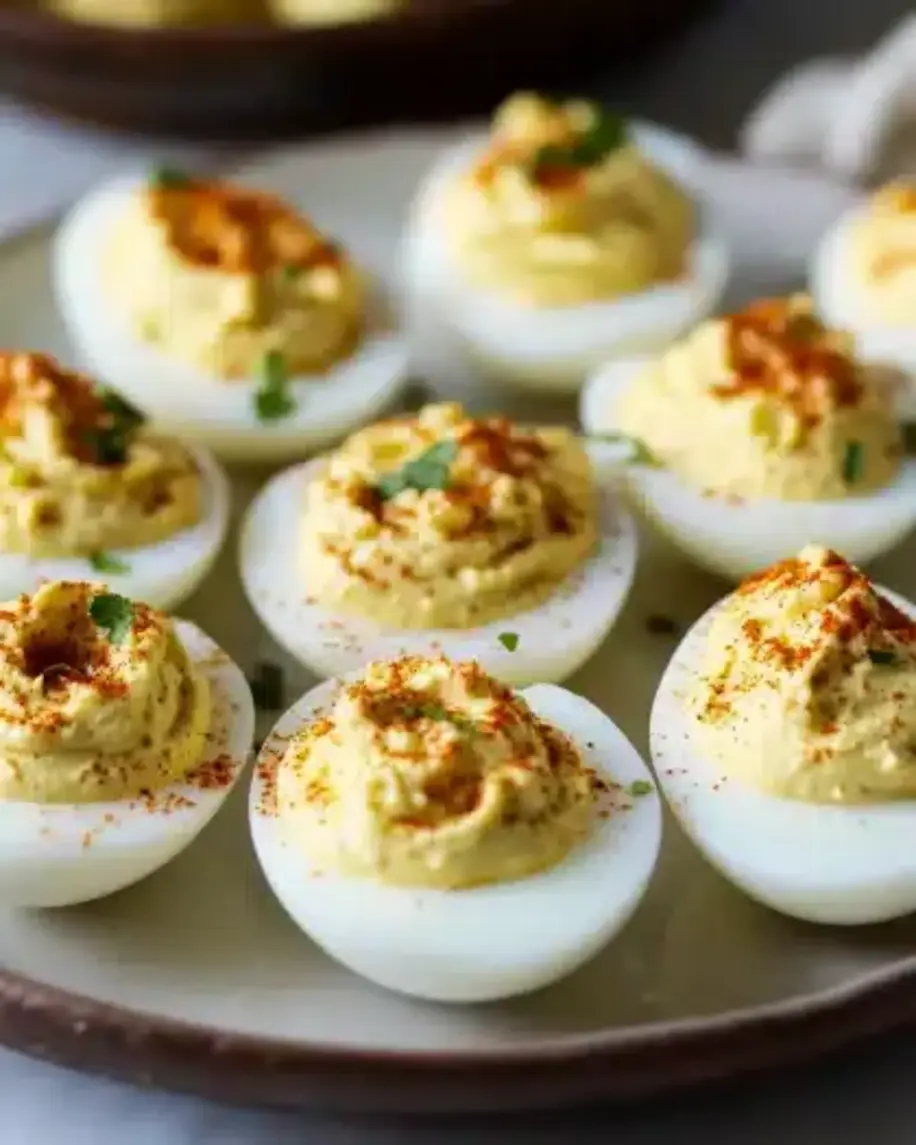
When you bite into one of these, the first thing you notice is the texture: the yolk mixture is silky-smooth, almost mousse-like, with a bright tang from the Dijon mustard and white vinegar that cuts right through the richness of the mayonnaise. A whisper of salt and black pepper lifts everything, and the paprika on top adds a gentle warmth and a beautiful pop of color. I love garnishing mine with fresh dill or chives — it adds a little freshness that reminds me of the herb gardens my grandmother tended in our courtyard back home. The egg whites are tender but firm, cradling the filling like a little bowl of comfort. It’s the kind of appetizer that disappears fast, and you’ll find yourself sneaking one more when no one’s looking.
What I’m sharing here is my best classic deviled eggs recipe — tested dozens of times in my own kitchen and refined until every detail was just right. I’ll show you my foolproof method for hard-boiling eggs so the shells come off easily (no more frustrating peeling!), the secret to a filling that’s impossibly creamy without being heavy, and a few small tweaks that elevate this dish from good to unforgettable. Whether you’re bringing these to a backyard barbecue, a holiday brunch, or just treating yourself to a nostalgic snack, I promise this recipe will become your new go-to. Let’s get started!
Why This Classic Deviled Eggs Recipe Is the Best
The Flavor Secret. The magic of this best deviled eggs recipe lies in the balance. Many versions lean too heavily on mustard or skip the vinegar entirely, resulting in a flat, one-note filling. I use a precise ratio of mayonnaise to Dijon mustard to white vinegar — tested until it sang. The Dijon brings a subtle heat and complexity, while the vinegar brightens everything without making it sharp. It’s a trick I picked up in Paris: a tiny amount of acid wakes up rich ingredients and makes them taste lighter. My mother would approve — she always said the best cooking is about harmony, not overpowering.
Perfected Texture. Texture is everything with homemade deviled eggs. I learned in culinary school that how you break down the yolks matters more than you’d think. I mash them by hand with a fork until they’re completely smooth before adding any liquid ingredients — this prevents lumps and ensures a velvety finish. Then I fold in the mayonnaise and mustard gently, just until combined. The result is a filling that’s creamy and spreadable but still light, with no greasy mouthfeel. It pipes beautifully into the whites and holds its shape without being stiff.
Foolproof & Fast. This easy deviled eggs recipe is designed for real life. Whether you’re a beginner or a seasoned cook, the steps are straightforward and forgiving. I’ve included my best tips for peeling eggs without tearing the whites, and the filling comes together in minutes. You can make these a day ahead without any loss of quality — perfect for busy hosts. And because the ingredient list is short and all items are available at any US grocery store, you can whip them up on a whim. No specialty items needed, just a little care and a love for good food.
Classic Deviled Eggs Recipe Ingredients
I buy my eggs from a small farm at the Union Square Greenmarket in NYC when I can — the yolks are a deeper orange and have so much flavor. But any good-quality large eggs from the grocery store work beautifully. The rest of the ingredients are pantry staples I always keep on hand. Let me walk you through each one so you know exactly what to look for and why each ingredient matters.
Ingredients List
- 6 large eggs (at least a week old for easier peeling)
- 1/4 cup mayonnaise (preferably full-fat, like Hellmann’s or Duke’s)
- 1 teaspoon Dijon mustard (smooth, not whole-grain)
- 1 teaspoon white vinegar
- 1/8 teaspoon salt (fine sea salt or table salt)
- 1/8 teaspoon black pepper (freshly ground is best)
- Paprika, for garnish (smoked or sweet — I love a mix)
- Fresh dill or chives, for garnish (optional but highly recommended)
Ingredient Spotlight
Eggs. The foundation of the entire dish. Use large eggs — not extra-large or jumbo, because the whites-to-yolks ratio is different and the filling proportions will be off. For the easiest peeling, use eggs that are at least 7–10 days old. Fresh eggs are wonderful for frying but a nightmare to peel when hard-boiled. If you only have fresh eggs, add a teaspoon of baking soda to the cooking water — it raises the pH and helps the shells release more easily.
Mayonnaise. Full-fat mayonnaise gives the creamiest, richest texture. I prefer Hellmann’s (Best Foods west of the Rockies) or Duke’s for its tangy profile. If you’re looking for a lighter option, you can use half mayonnaise and half plain Greek yogurt — but don’t go all Greek yogurt or the filling will be too tangy and less creamy. For a dairy-free version, use a high-quality vegan mayonnaise like Just Mayo or Vegenaise.
Dijon Mustard. Dijon is smoother and more complex than yellow mustard, with a gentle heat that doesn’t overpower. Grey Poupon is my go-to. Avoid whole-grain mustard here — the seeds create an uneven texture in the filling. If you don’t have Dijon, you can use 1/2 teaspoon of dry mustard powder mixed with 1 teaspoon of water, or even a tiny pinch of cayenne for heat.
White Vinegar. This is the secret to a bright, balanced filling. White vinegar adds acidity without adding color or a strong flavor. You can substitute with apple cider vinegar for a slightly fruitier note, or with fresh lemon juice for a brighter, more citrusy tang. I’ve tested all three and each works beautifully — just use the same amount (1 teaspoon).
Paprika. The classic garnish that also adds a subtle warmth. Smoked paprika gives a deeper, more complex flavor that I love — it reminds me of the Spanish influence on Moroccan cooking. Sweet paprika is milder and more traditional. I often mix both for the best of both worlds. Store your paprika in a cool, dark place and replace it every 6 months for the brightest flavor and color.
| Original Ingredient | Best Substitution | Flavor / Texture Impact |
|---|---|---|
| Mayonnaise | Half mayo + half plain Greek yogurt | Lighter, tangier, slightly less creamy |
| Dijon mustard | 1/2 tsp dry mustard + 1 tsp water | Similar heat, slightly less smooth |
| White vinegar | Apple cider vinegar or lemon juice | Fruitier or brighter tang, still excellent |
| Paprika | Cayenne (use sparingly) or sumac | Spicier or more lemony, different color |
How to Make Classic Deviled Eggs — Step-by-Step
Making these classic deviled eggs is simpler than you think. Follow each step closely, and you’ll have a platter of gorgeous, crowd-pleasing appetizers in no time. I’ve included my best tips and common mistakes to avoid at every stage — learn from my years of testing so you don’t have to make the same mistakes I did!
Step 1: Hard-Boil the Eggs
Place 6 large eggs in a single layer in a saucepan and cover with cold water by 1 inch. Bring to a boil over high heat. As soon as the water reaches a full rolling boil, remove the pan from the heat, cover it tightly, and let it stand for exactly 12 minutes. This gentle cooking method gives you fully set yolks without the green ring that forms when eggs are overcooked.
💡 mia’s Pro Tip: Set a timer the moment you remove the pan from the heat. Those 12 minutes are precise — any less and the yolks will be too soft to mash smoothly, any more and they can develop that greenish-gray discoloration. Trust the timing!
Step 2: Cool and Peel
Drain the hot water immediately and transfer the eggs to a bowl of ice water (or run them under cold running water for several minutes). Let them cool completely for about 5 minutes. Gently tap each egg on the countertop to crack the shell all over, then roll it between your palms to loosen the shell. Start peeling from the wider end, where the air pocket is — the membrane lifts more easily there.
⚠️ Common Mistake to Avoid: Don’t skip the ice bath! Shocking the eggs in cold water stops the cooking process and helps the membrane shrink away from the shell, making peeling dramatically easier. Also, peeling under a thin stream of running water helps flush away shell fragments.
Step 3: Slice and Remove Yolks
Once peeled, pat the eggs dry. Slice each egg in half lengthwise with a sharp knife, wiping the blade clean between cuts for neat edges. Carefully pop the yolks out into a small mixing bowl. Arrange the egg white halves on a serving platter cut-side up. If they wobble, slice a tiny sliver off the bottom of each half to create a flat base — this is a classic French presentation trick.
💡 mia’s Pro Tip: For perfectly centered yolks, make sure your eggs are stored pointy-end down in the carton before boiling. This centers the yolk naturally. And use a sharp, thin-bladed knife to slice the eggs cleanly without tearing the whites.
Step 4: Make the Filling
Mash the yolks thoroughly with a fork until no large lumps remain — this should take about 30 seconds of patient mashing. Add 1/4 cup mayonnaise, 1 teaspoon Dijon mustard, 1 teaspoon white vinegar, 1/8 teaspoon salt, and 1/8 teaspoon black pepper. Stir until the mixture is completely smooth and uniform. Taste and adjust seasoning if needed — a tiny pinch more salt or a drop more vinegar can make a big difference.
⚠️ Common Mistake to Avoid: Don’t overmix! Once the mayonnaise and mustard are incorporated, stop stirring. Overmixing can break the emulsion and make the filling greasy. Also, if your filling seems too stiff, add a tiny splash of water or extra vinegar (1/4 teaspoon at a time) until it reaches a soft, pipeable consistency.
Step 5: Fill the Egg Whites
Spoon the yolk mixture into a piping bag fitted with a star tip (or use a zip-top bag with one corner snipped off). Pipe the filling generously into each egg white half, creating a decorative swirl. If you don’t have a piping bag, simply use a small spoon to mound the filling neatly — it will still look beautiful and taste exactly the same.
💡 mia’s Pro Tip: For the most professional look, fill the piping bag only halfway and twist the top tightly before piping. This gives you maximum control. Pipe from the center of the egg white outward in a spiral motion. And don’t be shy — fill each half so the filling rises slightly above the edge of the white. It looks abundant and inviting.
Step 6: Garnish and Chill
Sprinkle the filled eggs lightly with paprika — use a fine-mesh sieve for even distribution. Garnish with small sprigs of fresh dill or finely snipped chives if using. Cover loosely with plastic wrap and refrigerate for at least 30 minutes before serving. This resting time allows the flavors to meld and the filling to firm up slightly.
⚠️ Common Mistake to Avoid: Don’t garnish too far in advance if using fresh herbs — they can wilt or become soggy. Add the herbs no more than 1–2 hours before serving. The paprika can be sprinkled on up to 4 hours ahead without issue. Also, always serve deviled eggs chilled or at cool room temperature — never warm.
| Step | Action | Duration | Key Visual Cue |
|---|---|---|---|
| 1 | Boil then rest covered | 12 min rest | Water boils, then off heat, lid on |
| 2 | Cool in ice water, peel | 5 min cool + 5 min peel | Eggs feel cool to the touch |
| 3 | Slice and remove yolks | 2 min | Clean cut, intact whites |
| 4 | Mash yolks and mix filling | 3 min | Smooth, creamy, no lumps |
| 5 | Pipe or spoon into whites | 5 min | Filling mounded above edge |
| 6 | Garnish and chill | 30 min chill | Paprika evenly dusted, herbs fresh |
Serving & Presentation
Classic deviled eggs are a staple of American entertaining, and I love serving them in a way that feels both familiar and special. Arrange the filled eggs on a large, flat platter in concentric circles or neat rows — this makes them easy to grab and looks stunning. I often place a small bowl of extra paprika and a few herb sprigs in the center for a finishing touch. For a Moroccan-inspired twist, I sometimes sprinkle a tiny bit of ground cumin or sumac along with the paprika — it’s a subtle nod to my heritage that always sparks conversation.
These eggs pair beautifully with so many dishes. They’re the perfect starter for a brunch spread alongside fresh fruit, pastries, and mimosas. At a backyard cookout, they hold their own next to burgers, grilled chicken, and potato salad. For holiday gatherings, I like to arrange them on a bed of peppery arugula or watercress — the greens add a pop of color and a fresh, peppery bite that contrasts with the creamy filling. In New York City, I’ve seen them served atop tiny toast points or with a sliver of smoked salmon tucked under the filling — both are lovely variations if you want to dress them up.
When it comes to garnishes, don’t be afraid to get creative. Finely chopped fresh chives, dill fronds, a tiny pinch of flaky sea salt, or even a thin slice of radish or pickled shallot can add color and texture. I always tell my readers: deviled eggs are a blank canvas. Once you master the classic filling, you can riff endlessly. And because they’re served cold, they’re wonderfully low-stress for the host — make them ahead, arrange them on the platter, and you’re free to enjoy your own party.
| Pairing Type | Suggestions | Why It Works |
|---|---|---|
| Side Dish | Potato salad, coleslaw, grilled vegetables | Cool, creamy contrast to smoky or tangy sides |
| Sauce / Dip | Honey mustard, ranch, herbed aioli | Extra layer of flavor for dipping |
| Beverage | Mimosa, crisp white wine, iced tea | Acidity and bubbles cut through richness |
| Garnish | Fresh dill, chives, smoked paprika, flaky salt | Adds color, freshness, and texture contrast |
Make-Ahead, Storage & Reheating
One of the things I love most about this deviled eggs filling recipe is how well it works for meal prep. As a busy New Yorker, I’m all about recipes that let me get ahead of the game. You can cook and peel the eggs, make the filling, and even pipe it into the whites a full day before serving. Just hold off on the paprika and fresh herbs until right before you serve — they stay fresher and more vibrant that way. Here’s everything you need to know about storing and prepping ahead.
| Method | Container | Duration | Reheating Tip |
|---|---|---|---|
| Refrigerator | Airtight container, single layer | Up to 2 days | Serve cold — no reheating needed |
| Freezer | Not recommended | — | Freezing ruins the texture of both whites and filling |
| Make-Ahead | Covered platter or container | 1 day in advance | Add garnish just before serving |
If you’re making these a day ahead, I recommend storing the filled eggs in a single layer in an airtight container. Place a sheet of paper towel on top (not touching the eggs) to absorb any excess moisture, then seal the container. This prevents condensation from making the whites slippery. When you’re ready to serve, transfer them to your serving platter, let them sit at room temperature for about 10 minutes to take off the chill, then add your paprika and herbs. They’ll taste just as fresh as the day you made them.
One important note: never microwave deviled eggs. The whites become rubbery and the filling can separate. These are meant to be served cold or at cool room temperature. If you’ve refrigerated them, just set them out 10–15 minutes before serving — that’s all the “reheating” they need. And if you have leftovers (which rarely happens in my house!), they keep well for another day in the fridge. After that, the texture of the whites starts to soften.
Variations & Easy Swaps
One of the reasons I never get tired of making deviled eggs is how endlessly adaptable they are. Over the years, I’ve developed several variations that keep this recipe feeling fresh and exciting. Whether you’re looking for a dairy-free option, a flavor twist inspired by my Moroccan roots, or a way to use up what’s in your fridge, there’s a version here for you. Each variation has been tested in my NYC kitchen and approved by my family and friends.
| Variation | Key Change | Best For | Difficulty Impact |
|---|---|---|---|
| Harissa Deviled Eggs | Add 1–2 tsp harissa paste to filling | Spicy food lovers, North African flair | Easy |
| Avocado & Lime | Replace half mayo with mashed avocado, use lime juice | Lighter, dairy-free option | Easy |
| Everything Bagel | Top with everything bagel seasoning | Brunch lovers, NYC vibes | Easy |
Harissa Deviled Eggs
This is my favorite variation — a nod to my Moroccan roots. Stir 1 to 2 teaspoons of harissa paste (I love the brand Mina or homemade) into the yolk mixture along with the other ingredients. The harissa adds a complex, smoky heat with notes of roasted red pepper, garlic, and warm spices like caraway and coriander. It’s not overwhelmingly spicy — just enough to make people take notice. Finish with a tiny dollop of harissa on top of each egg and a sprinkle of fresh cilantro. These always disappear first at parties, and they pair beautifully with a cold beer or a crisp rosé.
Avocado & Lime Deviled Eggs
For a lighter, dairy-free version, replace half the mayonnaise with the flesh of one ripe avocado. Add 1 teaspoon of fresh lime juice (instead of vinegar) and a pinch of cumin. The avocado makes the filling extra creamy and gives it a beautiful pale green color — just be sure to use a perfectly ripe avocado for the best texture. This version is best enjoyed the same day, as the avocado can oxidize and turn brown. To slow down browning, press a piece of plastic wrap directly onto the surface of the filling before piping. Garnish with a thin slice of radish and a sprinkle of flaky sea salt for a stunning presentation.
Everything Bagel Deviled Eggs
Inspired by my adopted home of New York City, this variation is ridiculously easy and ridiculously good. Make the classic filling as directed, then top each deviled egg with a generous sprinkle of everything bagel seasoning (sesame seeds, poppy seeds, dried garlic, dried onion, and salt). The crunchy, savory topping contrasts beautifully with the creamy filling. I like to add a tiny dollop of sour cream or Greek yogurt on top before the seasoning for extra tang. These are a huge hit at brunch and come together in minutes. Pro tip: toast the seasoning in a dry skillet for 30 seconds to wake up the flavors before sprinkling.
What is the best way to peel hard-boiled eggs for deviled eggs so the shells come off easily?
The best way to peel hard-boiled eggs starts with the cooking method itself. Use eggs that are at least 7–10 days old — fresher eggs have a lower pH, which makes the membrane cling tightly to the shell. When cooking, bring the eggs to a boil, then remove from heat, cover, and let stand for 12 minutes. Immediately transfer them to an ice water bath for at least 5 minutes to stop the cooking and shock the shells. To peel, gently crack the shell all over by tapping the egg on the counter, then roll it between your palms to loosen the shell. Start peeling from the wider end (where the air pocket is) under a thin stream of cold running water — the water helps separate the membrane from the white. This method consistently gives me clean, smooth eggs with no torn whites.
Can I make deviled eggs with mayonnaise alternatives like Greek yogurt or avocado?
Absolutely — you can use Greek yogurt or avocado as a substitute for some or all of the mayonnaise, though the texture and flavor will change slightly. For Greek yogurt, I recommend using only half yogurt and half mayonnaise (2 tablespoons each) rather than replacing all the mayo, because yogurt alone can make the filling too tangy and less creamy. For avocado, replace half the mayonnaise with the flesh of one ripe avocado — it adds a beautiful creamy texture and a mild, buttery flavor. Both alternatives work best when served the same day, as they don’t hold up as long as the classic version. If you’re looking for a fully dairy-free option, there are also excellent vegan mayonnaise brands (like Just Mayo or Vegenaise) that taste remarkably like the real thing and work perfectly in this recipe.
How far in advance can I prepare classic deviled eggs before serving them?
You can prepare classic deviled eggs up to 24 hours in advance without any loss of quality. For best results, cook and peel the eggs, make the filling, and pipe it into the whites, then store the assembled eggs in a single layer in an airtight container. Place a paper towel on top (not touching the eggs) to absorb excess moisture, then seal the container and refrigerate. Wait to add the paprika and fresh herb garnish until just before serving — the paprika stays brighter and the herbs stay fresh and crisp. If you need even more lead time, you can hard-boil the eggs up to 3 days ahead and store them unpeeled in the fridge, then peel, fill, and garnish on the day you plan to serve them.
What is the secret to making the deviled egg filling extra creamy and smooth?
The secret to an extra creamy and smooth deviled egg filling is twofold: mashing the yolks thoroughly before adding any liquid, and using the right ratio of ingredients. First, press the cooked yolks through a fine-mesh sieve or mash them with a fork until absolutely no lumps remain — this is the most important step and one that many home cooks rush through. Take your time and be patient. Second, use full-fat mayonnaise (not low-fat or Miracle Whip) and add it gradually, mixing gently until the filling is smooth and uniform. A tiny splash of water or extra vinegar (about 1/4 teaspoon) can help loosen the texture if it seems too stiff. I also recommend using Dijon mustard rather than yellow mustard, as it has a smoother consistency. For the ultimate velvety texture, some French chefs add a small pat of softened butter — just 1 teaspoon — which I sometimes do for special occasions.
How do I prevent the egg whites from being rubbery when making deviled eggs?
Rubbery egg whites are almost always the result of overcooking. The key is to avoid boiling the eggs at a rolling boil for more than a minute. My method — bringing the eggs to a boil, then removing them from the heat, covering, and letting them sit for exactly 12 minutes — yields tender, firm whites with fully set yolks. The residual heat is gentle enough to cook the whites perfectly without toughening them. Also, shocking the eggs in an ice water bath immediately after the 12-minute rest stops the cooking process instantly, preventing carryover cooking that can make the whites rubbery. If you follow these two steps, your egg whites will be tender but sturdy enough to hold the filling without tearing.
Can I use a piping bag to fill deviled eggs, and what tip should I use?
Yes, using a piping bag is the best way to achieve a beautiful, professional-looking filling on deviled eggs. I recommend using a large star tip (such as an open star tip like Ateco #825 or Wilton 1M), which creates a classic ruffled swirl that looks elegant and inviting. If you don’t have a piping bag, you can use a heavy-duty zip-top bag with one corner snipped off — just cut a 1/2-inch opening and pipe carefully. To fill the bag, place it tip-down in a tall glass, fold the edges over the rim, and spoon the filling in. This keeps your hands clean and makes filling easy. Pipe from the center of the egg white outward in a continuous spiral, lifting up slightly at the end for a neat finish.
What kind of paprika is best for deviled eggs — sweet or smoked?
Both sweet and smoked paprika work beautifully on deviled eggs, and the best choice really depends on your personal taste. Sweet paprika (also called Hungarian paprika) is the traditional choice — it’s mild, slightly sweet, and adds a beautiful bright red color without overwhelming the delicate flavor of the eggs. Smoked paprika (Spanish pimentón) adds a deeper, earthier flavor with a subtle smokiness that I personally love — it reminds me of the Spanish influence on Moroccan cuisine. My favorite approach is to mix them: use two parts sweet paprika to one part smoked paprika for a balanced flavor and gorgeous color. Whichever you choose, make sure your paprika is fresh (less than 6 months old) for the brightest color and strongest flavor.
Can I add other ingredients like bacon, cheese, or pickles to the deviled egg filling?
Absolutely — this easy deviled eggs recipe is a wonderful base for customization. Crumbled crispy bacon stirred into the filling or sprinkled on top adds a smoky, salty crunch that pairs beautifully with the creamy yolk mixture. Finely grated Parmesan or sharp cheddar (about 1–2 tablespoons) can be mixed in for a savory depth, though it will slightly change the texture. Finely chopped dill pickles or cornichons add a bright, tangy pop that cuts through the richness — just be sure to pat them dry before mixing so they don’t add too much moisture. If you’re adding any of these, taste the filling first before adjusting salt, as many of these add-ins are already salty. I recommend adding no more than 2 tablespoons of any single add-in to avoid overwhelming the classic deviled egg flavor.
Share Your Version!
I absolutely love hearing how this classic deviled eggs recipe turns out in your kitchen. Did you stick with the classic version, or did you try one of the variations — maybe the harissa twist or the everything bagel topping? Leave a star rating and a comment below to let me know how it went. Your feedback helps other readers trust the recipe and gives me ideas for new variations to develop.
If you share a photo of your deviled eggs on Instagram or Pinterest, please tag me @exorecipes — I love seeing your beautiful creations and I often share my favorites in my stories. And here’s a question for you: what’s your favorite unexpected deviled egg variation? I’m always looking for new ideas to test in my NYC kitchen, and your suggestions might just become the next recipe I develop. Drop your ideas in the comments!
From my NYC kitchen to yours — I hope this recipe brings as much warmth to your table as it does to mine. — mia 🧡
⭐ Did you make this recipe?
I’d love to hear how it went! Tap a star to rate it and leave a comment below — your feedback helps me and the whole community. 🧡
Love This Recipe? Save It to Pinterest!
If you enjoyed this Classic Deviled Eggs recipe, don’t let it get lost in your browser tabs! 😄 Pin it now so you can find it again anytime — and explore hundreds more tried-and-tested recipes waiting for you on my Pinterest boards.
👉 Follow mia on Pinterest @exorecipe
📌 Pin this recipe · 🔁 Re-pin your favorites · 💬 Tag me when you make it — I love seeing your creations!
“`
Print
Classic Deviled Eggs
- Prep Time: 15 minutes
- Cook Time: 15 minutes
- Total Time: 30 minutes
- Yield: 6 servings (12 deviled egg halves) 1x
- Method: Appetizer
- Cuisine: American
Description
A timeless appetizer featuring hard-boiled eggs filled with a creamy, tangy yolk mixture, garnished with paprika and fresh herbs.
Ingredients
- 6 large eggs
- 1/4 cup mayonnaise
- 1 teaspoon Dijon mustard
- 1 teaspoon white vinegar
- 1/8 teaspoon salt
- 1/8 teaspoon black pepper
- Paprika, for garnish
- Fresh dill or chives, for garnish (optional)
Instructions
- Place eggs in a single layer in a saucepan and cover with cold water by 1 inch.
- Bring to a boil over high heat, then remove from heat, cover, and let stand for 12 minutes.
- Drain and cool eggs under cold running water, then peel.
- Slice each egg in half lengthwise and carefully remove yolks to a small bowl.
- Mash yolks with a fork. Add mayonnaise, mustard, vinegar, salt, and pepper; mix until smooth.
- Spoon or pipe the yolk mixture into the egg white halves.
- Sprinkle with paprika and garnish with fresh herbs if desired.
- Refrigerate until serving.
Notes
For best results, use eggs that are at least a week old for easier peeling. Can be made a day ahead and stored covered in the refrigerator.
Nutrition
- Calories: 120 kcal per serving (2 halves)
- Sugar: 0.5 g
- Fat: 10 g
- Carbohydrates: 1 g
- Protein: 6 g

Tried This Recipe? Leave a Comment!
Did you make this recipe? I’d love to hear how it turned out! Please leave a comment and a rating below. Your feedback helps other home cooks and supports cheerychop.com!
