Table of Contents
Classic Beef Wellington Wrapped in Puff Pastry with Savory Mushroom Duxelles – A Show-Stopping Main Course
I still remember the first time I made a classic Beef Wellington recipe — I was in culinary school in Paris, standing beside a French chef who demanded perfection in every fold of puff pastry. Back then, I thought, “I’ll never get this right.” But now, after years of testing and tweaking in my NYC kitchen, this Beef Wellington with puff pastry has become my signature showstopper. The combination of a perfectly seared beef tenderloin, savory mushroom duxelles, and prosciutto wrapped in golden, flaky puff pastry is nothing short of spectacular. The secret? A few tricks I picked up from my mother’s cooking in Morocco — patience, layering flavors, and never rushing the process.
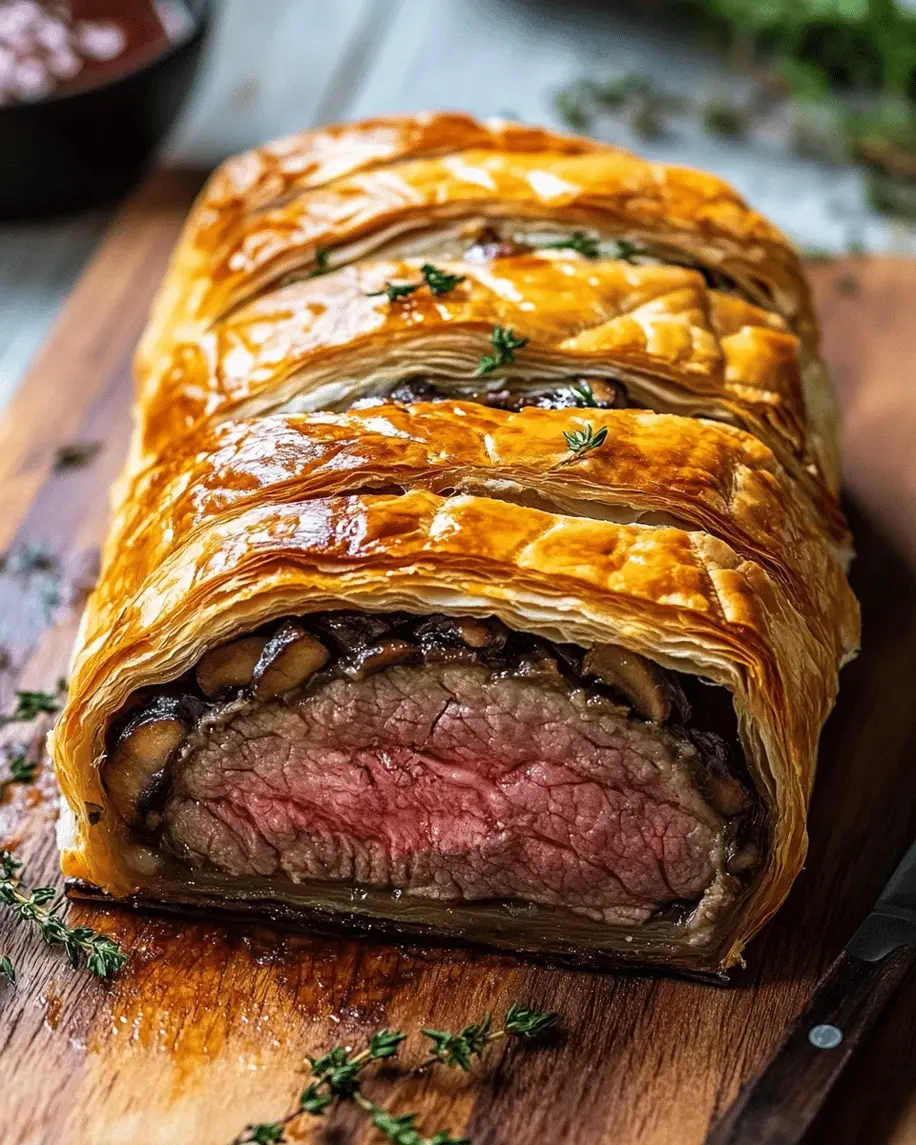
When you slice into this dish, the aroma hits you first: earthy mushrooms, rich beef, and buttery pastry. The duxelles — finely chopped mushrooms cooked down with shallots, garlic, white wine, and thyme — create a deep, umami-packed layer that keeps the meat moist and the pastry crisp. Each bite offers a contrast of textures: the tender, medium-rare center, the savory prosciutto wrapping, and the flaky, golden crust. A drizzle of red wine reduction or a dollop of creamy horseradish sauce elevates every forkful. This is the kind of meal that turns a Tuesday dinner into a celebration.
What sets my version apart is the technique I developed back in Paris — ensuring the mushroom duxelles are completely dry before layering, which is the number one trick to preventing a soggy pastry. I also chill the wrapped beef for a full 30 minutes before baking, a step many home cooks skip. 💡 mia’s Pro Tip: Always let the duxelles cool completely before spreading; any residual steam will ruin your crust. And the most common mistake? Overcrowding the pan when searing the beef — that causes steaming instead of browning. Trust me, follow these steps and you’ll nail this classic Beef Wellington recipe on your first try.
Why This Classic Beef Wellington Recipe Is the Best
The Flavor Secret — I layer the mushroom duxelles with a pinch of ras el hanout, a Moroccan spice blend I grew up with. It adds warmth and depth without overpowering the beef. This isn’t traditional, but it’s the subtle twist that makes guests ask, “What’s in this?” Every time I serve it at dinner parties in my Brooklyn brownstone, someone demands the recipe. The beef stays perfectly medium-rare because the duxelles and prosciutto act as insulators during baking, locking in every drop of juice.
Perfected Texture — The key is in the chilling. After wrapping the prosciutto around the beef, I chill it for 30 minutes. Then, after wrapping in puff pastry, I chill again for 15 minutes. This double-chill technique, taught to me by a pastry chef in Paris, ensures the puff pastry stays distinct from the filling. The result is a crisp, shattering crust that gives way to a tender, juicy center — no sogginess, no slipping layers.
Foolproof & Fast — I’ve streamlined the process so it feels approachable even for beginners. I use store-bought puff pastry (all-butter, please — from the freezer section at any NYC grocery store) to save time. The mushroom duxelles can be made two days ahead. I’ve broken down each step with visual cues and timing so you know exactly what to look for. Even if you’ve never worked with puff pastry before, you can pull off this classic Beef Wellington recipe with confidence.
Classic Beef Wellington Recipe Ingredients
I pick up my beef tenderloin at the Union Square Greenmarket in NYC from a butcher I trust — look for grass-fed, well-trimmed tenderloin with even thickness. The mushrooms I grab from the produce aisle: cremini or a mix of wild mushrooms work beautifully. For the puff pastry, I always use Dufour all-butter puff pastry — it’s available at Whole Foods and delivers that authentic French flakiness. Every ingredient in this Beef Wellington ingredients list plays a specific role, from the prosciutto that seals in moisture to the white wine that deglazes the pan and deepens the duxelles flavor.
Ingredients List
- 2 pounds beef tenderloin, trimmed
- 2 tablespoons olive oil
- 1 teaspoon salt
- 1 teaspoon black pepper
- 2 tablespoons butter
- 1 pound mushrooms, finely chopped (cremini or mixed wild)
- 2 shallots, minced
- 2 cloves garlic, minced
- 1/4 cup dry white wine
- 1/2 teaspoon dried thyme
- 8 slices prosciutto
- 1 sheet frozen puff pastry, thawed (all-butter preferred)
- 1 large egg, beaten (for egg wash)
Ingredient Spotlight
Beef tenderloin is the star — it’s the most tender cut, with a buttery texture that pairs perfectly with the rich duxelles and flaky pastry. When shopping, look for a center-cut tenderloin that’s evenly thick from end to end to ensure uniform cooking. For substitutions, a top-quality filet mignon roast works too, but avoid leaner cuts like sirloin which can dry out.
Cremini mushrooms are my go-to for duxelles because they have deeper flavor than white button mushrooms and are widely available. A mix of cremini, shiitake, and oyster mushrooms adds even more complexity. If you can’t find fresh, dried mushrooms reconstituted in warm water work — just squeeze them dry before chopping.
Prosciutto does double duty: it adds a salty, savory layer and helps seal the beef, keeping it juicy during baking. Look for thinly sliced prosciutto di Parma if possible. If you need a substitute, serrano ham or even thinly sliced bacon (par-cooked to render some fat) can work, though the flavor profile will shift.
All-butter puff pastry is non-negotiable for the best flavor and flakiness. Brands like Dufour or Trader Joe’s frozen puff pastry work beautifully. Avoid “puff pastry sheets” made with shortening — they lack the rich flavor and crisp texture that make this dish spectacular.
Dry white wine, like a Sauvignon Blanc or Pinot Grigio, adds acidity that lifts the earthy mushrooms. If you prefer not to cook with wine, substitute with equal parts low-sodium beef broth and a splash of sherry vinegar or lemon juice for brightness.
| Original Ingredient | Best Substitution | Flavor / Texture Impact |
|---|---|---|
| Beef tenderloin | Filet mignon roast (center-cut) | Similar tenderness; slightly less buttery |
| Cremini mushrooms | Mixed wild mushrooms (shiitake, oyster) | More earthy depth; similar texture |
| Prosciutto | Serrano ham or par-cooked bacon | Saltier; bacon adds smokiness |
| All-butter puff pastry | Trader Joe’s frozen puff pastry | Slightly less flaky but still good |
| Dry white wine | Beef broth + sherry vinegar | More savory; less acidic brightness |
How to Make Classic Beef Wellington — Step-by-Step
This is the moment where everything comes together. I’ve broken down each stage with the exact timing, visual cues, and the little chef tricks that guarantee success. Follow these steps and you’ll have a Beef Wellington that rivals any restaurant in Manhattan.
Step 1: Sear the Beef Tenderloin
Preheat your oven to 425°F (220°C). Season the beef tenderloin all over with salt and pepper. Heat olive oil in a large skillet — I use my trusty cast iron — over high heat until it shimmers. Carefully place the beef in the pan and sear for about 2 minutes per side, rotating to get a deep brown crust on all surfaces, including the ends. This takes about 8–10 minutes total. The crust is essential for flavor and helps seal in juices. Remove the beef to a plate and let it cool completely while you make the duxelles.
💡 mia’s Pro Tip: Don’t crowd the pan! If your skillet isn’t big enough, sear the beef in batches. Overcrowding causes steaming, not browning, and you’ll lose that deep, caramelized flavor.
Step 2: Make the Savory Mushroom Duxelles
In the same skillet, reduce the heat to medium and melt the butter. Add the finely chopped mushrooms, shallots, and garlic. Cook, stirring often, for 8–10 minutes — the mushrooms will release a lot of liquid. Continue cooking until all the moisture has evaporated and the mixture looks like a thick, dark paste. Add the white wine and dried thyme, scraping up any browned bits from the pan. Cook for another 3–4 minutes until the liquid is completely gone. Season with a pinch of salt and pepper. Spread the duxelles on a plate to cool completely — this is critical.
⚠️ Common Mistake to Avoid: Not drying the duxelles enough is the #1 reason for soggy Beef Wellington. If there’s any visible moisture, the puff pastry will turn into a sad, wet blanket. Cook until you can run a spoon through the pan and see the bottom clearly.
Step 3: Wrap with Prosciutto
Lay out a large sheet of plastic wrap on your counter. Arrange the 8 slices of prosciutto in two overlapping rows, creating a rectangle slightly larger than your beef tenderloin. Spread the cooled mushroom duxelles evenly over the prosciutto, leaving a 1-inch border around the edges. Place the cooled seared beef in the center. Using the plastic wrap, lift the prosciutto and wrap it tightly around the beef, encasing it completely. Twist the ends of the plastic wrap to seal and chill in the refrigerator for 30 minutes.
💡 mia’s Pro Tip: Use the plastic wrap like a sushi mat — pull it tight as you roll to create a snug, even wrap. This prevents air pockets and ensures the prosciutto adheres evenly to the beef.
Step 4: Wrap in Puff Pastry
On a lightly floured surface, roll out the thawed puff pastry sheet to about 1/8-inch thickness — just large enough to wrap the beef entirely. Unwrap the chilled beef from the plastic and place it in the center of the pastry. Brush the edges of the pastry with beaten egg. Fold the pastry over the beef, pressing the edges to seal tightly. Trim any excess pastry and use the scraps to decorate the top with leaves or lattice if desired. Place the Wellington seam-side down on a parchment-lined baking sheet. Brush the entire surface with beaten egg wash. Make 4–5 small slits on top for steam to escape. Chill for 15 minutes while the oven finishes preheating.
⚠️ Common Mistake to Avoid: Skipping the final chill ruins the pastry. Warm pastry will melt unevenly in the oven, leading to a misshapen Wellington with a pale, greasy crust. That 15-minute chill is your insurance policy for a perfect golden finish.
Step 5: Bake to Golden Perfection
Bake the Wellington in the preheated oven for 35–40 minutes, until the pastry is golden brown and puffed. For medium-rare, the internal temperature should reach 130°F (54°C) when tested with an instant-read thermometer inserted into the center through the pastry. If the pastry browns too quickly, tent loosely with foil for the last 10 minutes. Remove from the oven and let rest for a full 10 minutes before slicing — this allows the juices to redistribute. Slice into 1-inch-thick rounds and serve immediately.
💡 mia’s Pro Tip: An instant-read thermometer is your best friend here. Insert it through the end of the Wellington rather than the top to keep the presentation pristine. And never skip the rest — cutting too early causes the juices to flood the plate and turn the pastry soggy.
| Step | Action | Duration | Key Visual Cue |
|---|---|---|---|
| 1 | Sear beef | 8–10 min | Deep brown crust on all sides |
| 2 | Cook duxelles | 12–14 min | Thick paste, no visible liquid |
| 3 | Wrap in prosciutto | 5 min + 30 min chill | Even, snug wrap; firm to touch |
| 4 | Wrap in pastry | 10 min + 15 min chill | Neat seams, shiny egg wash |
| 5 | Bake | 35–40 min + 10 min rest | Golden puffed pastry, 130°F internal |
Serving & Presentation
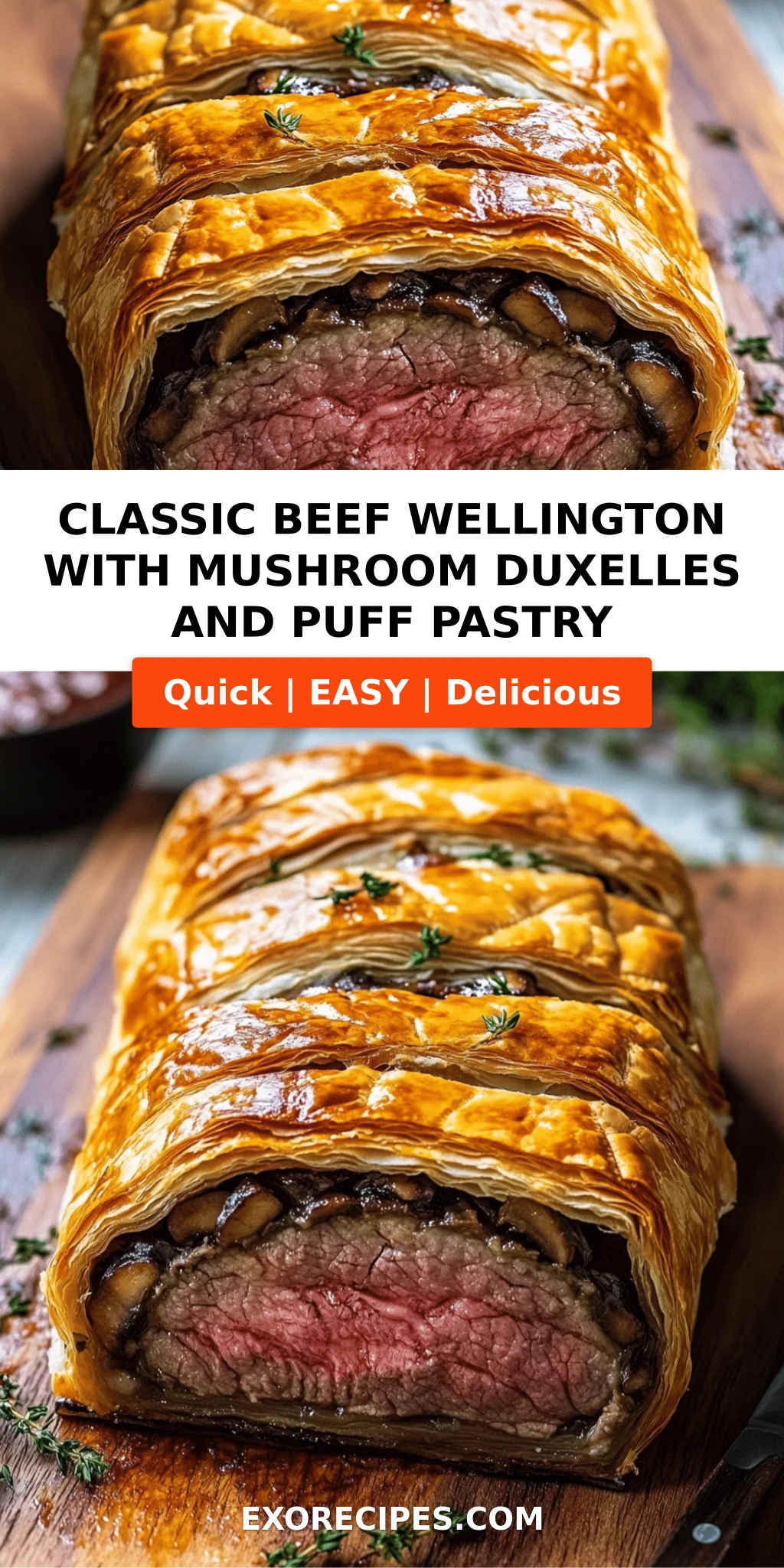
When I serve this classic Beef Wellington recipe at dinner parties in my NYC apartment, I slice it tableside for full dramatic effect. The first cut reveals that beautiful ruby center framed by dark duxelles and golden pastry — it’s a showstopper every time. I arrange the slices on a warm platter with a drizzle of red wine reduction and a sprinkle of flaky sea salt. For a touch of green, I add a few sprigs of fresh thyme or rosemary. The contrast of colors — deep brown, ruby red, and golden — makes the dish as beautiful as it is delicious.
For sides, I keep it elegant and simple. A creamy horseradish sauce served on the side cuts through the richness beautifully. Roasted asparagus or haricots verts with a squeeze of lemon add brightness. If I’m feeling nostalgic for my Paris days, I’ll serve it with a gratin dauphinois — thinly sliced potatoes baked in cream — which soaks up every drop of the red wine jus. For a lighter touch, a simple arugula salad with lemon vinaigrette balances the richness. From my Moroccan roots, I sometimes add a side of roasted carrots with cumin and honey — the sweetness plays wonderfully with the savory beef.
When it comes to beverages, a full-bodied red wine is the classic pairing. A Bordeaux, a Napa Valley Cabernet Sauvignon, or a French Malbec all complement the beef and mushroom flavors. For non-alcoholic options, a tart cherry spritzer or a robust black tea with a slice of orange works surprisingly well. The key is to let the Wellington be the star — every element on the table should support, not compete with, that perfect first bite.
| Pairing Type | Suggestions | Why It Works |
|---|---|---|
| Side Dish | Roasted asparagus, gratin dauphinois, haricots verts | Light veg cuts richness; creamy potato soaks jus |
| Sauce / Dip | Red wine reduction, creamy horseradish, truffle aioli | Acidity and heat balance the fatty beef and pastry |
| Beverage | Bordeaux, Napa Cabernet, Malbec, cherry spritzer | Tannins match beef intensity; fruit notes echo duxelles |
| Garnish | Fresh thyme, flaky sea salt, micro greens, edible flowers | Adds color, freshness, and a hint of herbaceous contrast |
Make-Ahead, Storage & Reheating
Between writing blog posts, testing recipes, and exploring NYC farmers markets, I’m all about smart meal prep. This classic Beef Wellington recipe is surprisingly make-ahead friendly if you plan carefully. I often prepare the mushroom duxelles up to two days in advance and keep it in the fridge. On the day of serving, I sear the beef, assemble, and bake — it breaks the work into manageable chunks and makes hosting a breeze.
| Method | Container | Duration | Reheating Tip |
|---|---|---|---|
| Refrigerator | Airtight container or wrapped in foil | Up to 3 days | Reheat at 350°F for 10 min; pastry crispens |
| Freezer | Tightly wrapped in plastic + foil | Up to 1 month | Thaw overnight in fridge; reheat at 350°F for 15 min |
| Make-Ahead | Duxelles in sealed container | Make duxelles 2 days ahead | Assemble and bake day of for freshest pastry |
If you have leftovers (rare in my apartment, but it happens!), here’s my best reheating advice: Place slices on a wire rack over a baking sheet and reheat in a 350°F oven for 8–10 minutes. This keeps the pastry crisp on all sides. Avoid the microwave at all costs — it turns the puff pastry into a sad, soggy mess. For the best texture, I recommend enjoying this dish the day it’s made, but with proper storage, you can still get a very respectable second-day meal.
Variations & Easy Swaps
| Variation | Key Change | Best For | Difficulty Impact |
|---|---|---|---|
| Moroccan-Spiced | Add ras el hanout to duxelles | Adventurous palates, special occasions | Same difficulty |
| Gluten-Free | Use gluten-free puff pastry | GF diets, celiac-friendly | Same difficulty; pastry may be delicate |
| Individual | Cut beef into 6 medallions | Dinner parties, portion control | Easier; faster cooking |
Variation 1: Moroccan-Spiced Beef Wellington
This is my personal favorite — a nod to my childhood in Morocco. Add 1 teaspoon of ras el hanout (a warm blend of cumin, coriander, cinnamon, ginger, and turmeric) to the mushroom duxelles along with the thyme. The spice adds an aromatic warmth that pairs beautifully with the beef. I also like to add a pinch of saffron threads soaked in the white wine for an extra layer of luxury. Serve with a side of harissa-spiced yogurt for dipping. My mother always said, “Spices are the soul of the dish,” and this variation proves her right.
Variation 2: Gluten-Free Beef Wellington
I’ve tested gluten-free puff pastry from brands like Schär and GeeFree, and they work surprisingly well. The key is to handle the dough gently — gluten-free pastry is more fragile and can crack when folding. Roll it between two sheets of parchment paper instead of on a floured surface. The bake time may need to be reduced by 5 minutes, as gluten-free pastry browns faster. Also, be extra diligent about the duxelles being completely dry, as gluten-free pastry absorbs moisture differently and can turn gummy if the filling is even slightly wet.
Variation 3: Individual Beef Wellingtons
For a dinner party with wow factor, cut the beef tenderloin into 6 equal medallions (about 5 ounces each). Sear each medallion individually, then wrap each one with prosciutto and duxelles, then with puff pastry cut into 5-inch squares. The bake time drops to 18–22 minutes for medium-rare. Individual Wellingtons are easier to serve and make for a stunning presentation — each guest gets their own golden parcel. Plus, they cook faster and are more forgiving if you’re nervous about the full roast. This is my go-to for holiday entertaining in NYC.
What is the best cut of beef to use for a classic Beef Wellington?
The best cut of beef for a classic Beef Wellington is beef tenderloin, specifically the center-cut portion. This cut is exceptionally tender, with a buttery texture and minimal connective tissue, which means it cooks evenly and stays juicy. Look for a 2-pound center-cut tenderloin that’s evenly thick from end to end — this ensures uniform cooking from the first slice to the last. A whole tenderloin can be trimmed at home, but buying pre-trimmed “center-cut” roast from a trusted butcher saves time and guarantees consistency. Avoid cuts like sirloin or ribeye, as they have more fat and connective tissue that can make wrapping and slicing difficult, and they won’t deliver that signature tender texture.
How do you prevent the puff pastry from getting soggy when making Beef Wellington?
Preventing soggy puff pastry comes down to three critical steps. First, cook the mushroom duxelles until every drop of liquid has evaporated — the mixture should look like a thick, dark paste that holds together. Any moisture in the duxelles will steam the pastry from the inside. Second, cool the duxelles completely before spreading it over the prosciutto; even residual warmth can create condensation. Third, chill the wrapped beef for at least 30 minutes after wrapping in prosciutto and another 15 minutes after wrapping in pastry. This firms up the butter in the pastry, so it puffs and crisps in the oven instead of melting and absorbing moisture. A fourth insurance tip: make a few small slits in the pastry top to allow steam to escape during baking.
Can I make the mushroom duxelles ahead of time for Beef Wellington?
Yes, absolutely — making the mushroom duxelles ahead of time is one of the best ways to simplify this classic Beef Wellington recipe. Cook the duxelles as directed, let it cool completely, then transfer to an airtight container and refrigerate for up to 3 days. You can also freeze it for up to 1 month. Before using, bring it to room temperature and spread it on a paper towel to absorb any condensation that may have formed during storage. This make-ahead step is a game-changer for dinner parties: you can prep the duxelles on Wednesday, sear and assemble on Friday, and bake fresh on Saturday. The flavor actually deepens as it sits, so the duxelles tastes even better the next day.
What internal temperature should beef tenderloin be for a perfect medium-rare Beef Wellington?
For a perfect medium-rare Beef Wellington, the internal temperature of the beef tenderloin should reach 130°F (54°C) when measured with an instant-read thermometer inserted into the center through the pastry. Keep in mind that the temperature will continue to rise about 5°F during the resting period, so if you pull it at 130°F, it will settle at a beautiful 135°F — which is the sweet spot for medium-rare. For rare, aim for 120°F before resting; for medium, aim for 140°F. Insert the thermometer through the end of the Wellington rather than the top to keep the pastry presentation flawless. Always let it rest a full 10 minutes before slicing to allow the juices to redistribute evenly.
Can I use a different type of mushroom for the duxelles in Beef Wellington?
Absolutely! While cremini mushrooms are my go-to for their balanced earthy flavor and availability, you can absolutely use other varieties. A mix of shiitake, oyster, and cremini mushrooms adds incredible depth and a more complex umami profile. Porcini mushrooms (fresh or dried and reconstituted) bring an intensely woodsy flavor that pairs beautifully with beef. If using dried mushrooms, soak them in warm water for 20 minutes, squeeze them dry, then chop finely. The key is to cook any mushroom variety until all moisture has evaporated — regardless of which type you choose, the duxelles must be dry to prevent soggy pastry. Each mushroom variety will bring its own unique flavor, so feel free to experiment based on what looks freshest at your local market.
Should Beef Wellington be served hot or at room temperature?
Beef Wellington is best served warm, not piping hot, and definitely not cold. After baking, let it rest for 10–12 minutes — this allows the juices to redistribute and the temperature to settle. The ideal serving temperature is warm enough that the pastry is still crisp and the beef is pleasantly warm in the center, but not so hot that it burns your mouth or causes the juices to run out when sliced. If you’re serving at a dinner party, you can hold it in a 200°F oven (uncovered) for up to 20 minutes after the rest period without compromising quality. Avoid serving it straight from the refrigerator; if you have leftovers, reheat slices gently in a 350°F oven for about 10 minutes to restore the pastry’s crispness.
What can I use instead of prosciutto in a Beef Wellington?
If you don’t have prosciutto or want a different flavor, there are several excellent substitutes. Serrano ham is the closest alternative — it has a similar saltiness and texture. Thinly sliced bacon (par-cooked for about 5 minutes to render some fat, then blotted dry) works beautifully and adds a smoky flavor. For a non-pork option, you can use thinly sliced turkey or chicken breast seasoned with salt and sage, though you’ll lose some richness. Another creative swap is a layer of blanched collard greens or Swiss chard leaves — they add color and a subtle earthy note while still helping to seal in moisture. Whatever you choose, the layer should be thin and even so it doesn’t overpower the beef or make the pastry bulge.
How do I keep the pastry from cracking or tearing when wrapping Beef Wellington?
Pastry cracking usually happens when the dough is too cold or too dry. First, make sure your puff pastry is fully thawed but still cold — about 15 minutes at room temperature after refrigeration is ideal. If it cracks when rolling, let it sit for 2–3 more minutes to soften slightly. Roll the pastry on a lightly floured surface and use gentle, even pressure from the center outward. If a tear does happen, don’t panic: brush the torn area with beaten egg and press a small patch of excess pastry over it — the egg wash acts as glue. Also, make sure your wrapped beef is smooth and even; any sharp edges or bulges can strain the pastry. The 15-minute chill after wrapping helps the pastry relax and reduces the risk of tearing during baking.
Can I make Beef Wellington completely vegetarian?
Yes, you can create a vegetarian version of Beef Wellington by replacing the beef tenderloin with a hearty, savory center. Portobello mushroom caps, roasted and marinated in balsamic vinegar and soy sauce, make an excellent substitute — their meaty texture and umami flavor mimic the richness of beef. Alternatively, a mix of roasted root vegetables (beets, carrots, parsnips) bound with cooked lentils and breadcrumbs forms a firm, sliceable center. Wrap the vegetarian filling in the same mushroom duxelles and prosciutto (use a plant-based prosciutto or thin slices of roasted eggplant for the wrap). The bake time reduces to about 25–30 minutes since the center is already cooked. This version is surprisingly satisfying and has become a popular request at my NYC dinner parties.
What is the best way to slice Beef Wellington for a clean presentation?
For clean, beautiful slices, use a long, sharp serrated knife — a bread knife works perfectly. The serrated edge cuts through the flaky pastry without crushing it, while a straight-edged knife tends to press down and squish the layers. Let the Wellington rest for a full 10 minutes after baking; this firms up the structure slightly and prevents the filling from oozing out. Slice with a gentle sawing motion, using the full length of the blade in long, smooth strokes. Wipe the knife clean between cuts with a damp paper towel — this prevents pastry crumbs and mushroom bits from smearing across the next slice. Aim for slices about 1 to 1.5 inches thick. If you want extra-clean edges, you can also chill the Wellington for 15 minutes after baking before slicing, then reheat slices briefly in the oven.
Share Your Version!
I love seeing how this classic Beef Wellington recipe comes to life in your kitchen! Did you try the Moroccan-spiced version? Did you make individual Wellingtons for a dinner party? Snap a photo and tag me on Instagram or Pinterest @exorecipes — I personally read every comment and love hearing about your cooking adventures. Leave a star rating below and tell me: what was the one tip that made the biggest difference for you? Was it the double-chill technique, the duxelles drying method, or something else? Your feedback helps me refine future recipes and inspires other home cooks to try something new. From my NYC kitchen to yours — I hope this recipe brings as much warmth to your table as it does to mine. — mia 🧡
Love This Recipe? Save It to Pinterest!
If you enjoyed this Classic Beef Wellington recipe, don’t let it get lost in your browser tabs! 😄 Pin it now so you can find it again anytime — and explore hundreds more tried-and-tested recipes waiting for you on my Pinterest boards.
👉 Follow mia on Pinterest @exorecipe
📌 Pin this recipe · 🔁 Re-pin your favorites · 💬 Tag me when you make it — I love seeing your creations!
⭐ Made this recipe? Let me know in the comments below! What was your favorite part — the crispy pastry, the tender beef, or that earthy duxelles?
Classic Beef Wellington Wrapped in Puff Pastry with Savory Mushroom Duxelles
- Prep Time: 30 minutes
- Cook Time: 40 minutes
- Total Time: 1 hour 10 minutes
- Yield: 6 1x
- Method: Main Course
- Cuisine: British
Description
A classic Beef Wellington with a perfectly seared beef tenderloin, savory mushroom duxelles, and prosciutto, all wrapped in flaky puff pastry.
Ingredients
- 2 pounds beef tenderloin, trimmed
- 2 tablespoons olive oil
- 1 teaspoon salt
- 1 teaspoon black pepper
- 2 tablespoons butter
- 1 pound mushrooms, finely chopped
- 2 shallots, minced
- 2 cloves garlic, minced
- 1/4 cup dry white wine
- 1/2 teaspoon dried thyme
- 8 slices prosciutto
- 1 sheet frozen puff pastry, thawed
- 1 large egg, beaten
Instructions
- Preheat oven to 425°F (220°C).
- Season beef tenderloin with salt and pepper. Heat olive oil in a large skillet over high heat. Sear beef on all sides until browned. Remove and let cool.
- In the same skillet, melt butter. Add mushrooms, shallots, and garlic; cook until mushrooms release liquid and it evaporates. Add wine and thyme, cook until liquid is gone. Season with salt and pepper. Let cool completely.
- Lay out prosciutto slices on plastic wrap, overlapping slightly. Spread mushroom mixture over prosciutto. Place beef in center and wrap prosciutto tightly around the beef. Chill for 30 minutes.
- Roll out puff pastry on a floured surface. Place wrapped beef in center. Brush edges with beaten egg. Fold pastry over beef, seal edges. Place seam side down on a baking sheet. Brush top with egg. Make a few slits for steam.
- Bake for 35-40 minutes until pastry is golden and internal temperature reaches 130°F (54°C) for medium-rare. Let rest 10 minutes before slicing.
Notes
For best results, ensure the mushroom duxelles are completely dry to avoid soggy pastry. Serve with a red wine reduction or creamy horseradish sauce.
Nutrition
- Calories: 720
- Sugar: 2 g
- Fat: 46 g
- Carbohydrates: 22 g
- Protein: 48 g
k">
Tried This Recipe? Leave a Comment!
Did you make this recipe? I’d love to hear how it turned out! Please leave a comment and a rating below. Your feedback helps other home cooks and supports cheerychop.com!
For more delicious inspiration, follow me on Pinterest!
