Table of Contents
Chicken and Vegetable Soup: The Ultimate Comfort Meal – Hearty, Nourishing & Easy
When the chill of a New York City winter settles into your bones, nothing—and I mean nothing—hits the spot like a bowl of homemade chicken and vegetable soup. I still remember the first time I made this chicken and vegetable soup recipe in my tiny Upper West Side kitchen, using the same layering technique I learned at Le Cordon Bleu in Paris. The aroma of garlic and herbs sizzling in olive oil instantly transported me back to my mother’s kitchen in Morocco, where every stew started with a fragrant base. This soup is my ultimate comfort meal: gentle yet bold, nourishing and deeply satisfying, with a secret weapon of toasted dried herbs that unlocks immense flavor without any fuss.
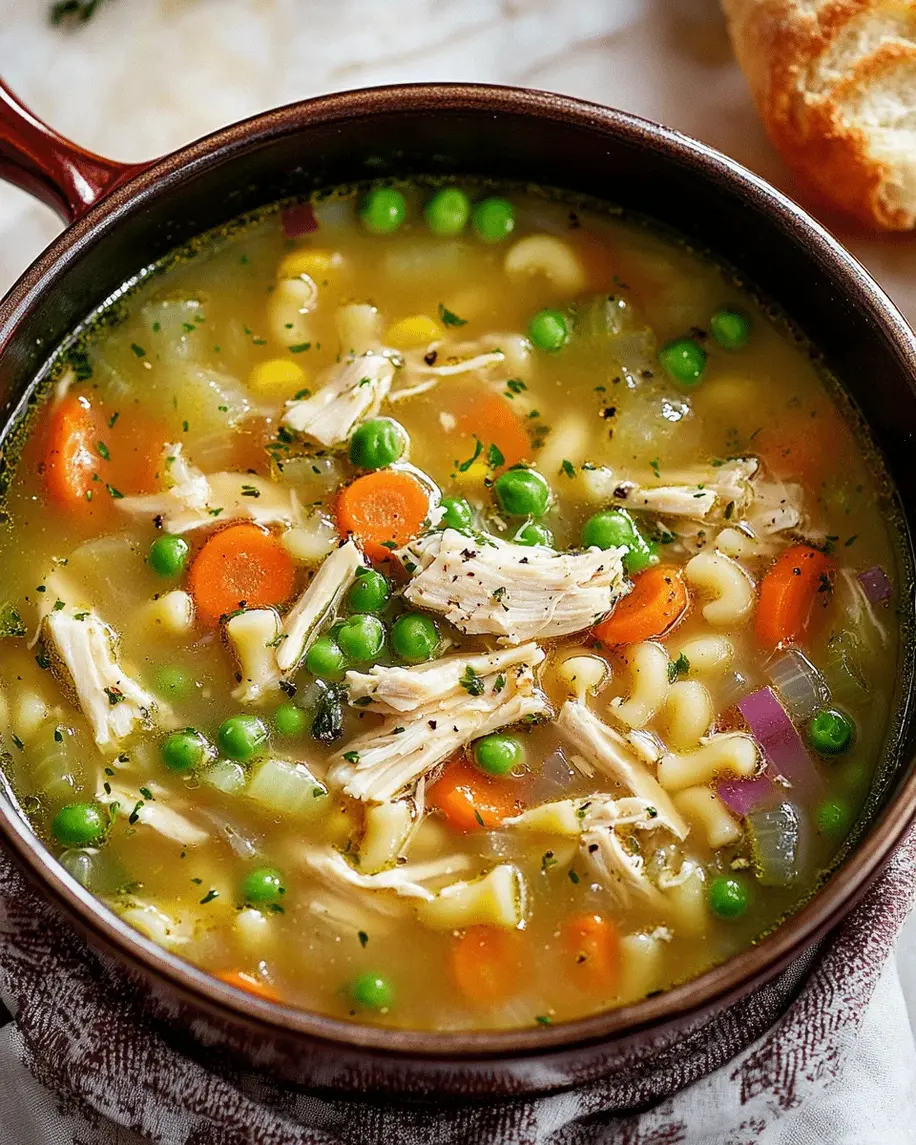
Picture a golden broth, shimmering with tiny droplets of goodness, packed with tender carrots, sweet corn, and bright green peas. Each spoonful is a symphony of textures: the soft give of perfectly cooked celery, the juicy pop of shredded chicken, and the silky body of a broth that’s been gently simmered with bay leaves. The thyme and rosemary don’t just hang around—they perfume every bite, while a final handful of fresh parsley adds a grassy brightness that cuts through the richness. It’s the kind of soup that makes you close your eyes and sigh.
I’ve tested this chicken and vegetable soup recipe dozens of times, scaling it for my Sunday meal prep and tweaking it for weeknight blues. What sets my version apart is a French technique I call “base building”: you toast the dried herbs in the hot oil for 30 seconds before adding liquid, which blooms their intensity. Plus, I’ll share my favorite shortcut—using a store-bought rotisserie chicken—so you can have this soup on the table in under an hour. One common mistake? Overcooking the vegetables until they disintegrate. Don’t worry, I’ll show you exactly when to add each ingredient for that perfect, tender texture.
Why This Chicken and Vegetable Soup Recipe Is the Best
The Flavor Secret – The backbone of any great soup is the aromatic foundation. By sautéing onion, carrots, and celery (the classic mirepoix) until they’re soft and beginning to caramelize, you create a natural sweetness that deepens as the broth simmers. Then I add a trick from my Paris days: blooming the dried thyme and rosemary in the hot olive oil for about 30 seconds. This releases their essential oils and makes the herb flavor feel more complex than any powdered seasoning could ever deliver. It’s a small step that transforms a simple chicken soup into something truly memorable.
Perfected Texture – One issue I see in many homemade soups is mushy vegetables. The key is staggered timing. I start the heartier vegetables (carrots and celery) with the onion, then add the frozen peas and corn only in the last five minutes of cooking. That way, the carrots keep a pleasant bite, and the peas stay bright green and sweet. The shredded chicken, added after the broth has simmered, absorbs flavor without becoming dry or overworked. Every element maintains its identity, yet they all come together in a harmonious spoonful.
Foolproof & Fast – This recipe is designed for everyone, from busy parents to novice cooks. Using pre-cooked chicken (leftover grilled breast or rotisserie) eliminates the risk of overcooking raw poultry and cuts total time by 15 minutes. The instructions are clear, with visual cues like “softened but not brown” and “fragrant and shimmering.” You don’t need any special equipment—just a large pot and a wooden spoon. Even if you’ve never made soup from scratch before, this will be your new go‑to comfort food soup.
Chicken and Vegetable Soup Recipe Ingredients
I pick up most of my produce at the Union Square Greenmarket, where the carrots still have their tops and the celery is impossibly crisp. There’s something deeply satisfying about using fresh vegetables that snap when you break them. But don’t worry—this easy chicken soup recipe works beautifully with supermarket staples, too. Here’s everything you’ll need.
Ingredients List
- 2 tablespoons olive oil
- 1 large onion, diced
- 3 carrots, peeled and sliced
- 3 celery stalks, sliced
- 4 cloves garlic, minced
- 1 teaspoon dried thyme
- 1 teaspoon dried rosemary
- 8 cups chicken broth (low‑sodium preferred)
- 2 cups cooked chicken, shredded (from rotisserie or leftover)
- 2 bay leaves
- 1 cup frozen peas
- 1 cup corn kernels (frozen or canned, drained)
- Salt and black pepper to taste
- 2 tablespoons fresh parsley, chopped
Ingredient Spotlight
Carrots – They provide natural sweetness and a lovely orange hue. Look for firm, smooth carrots; avoid rubbery ones. If you can’t find carrots, parsnips make an excellent substitute—they’re slightly earthier but equally tender.
Celery – This adds a subtle peppery note and a gentle crunch. Choose stalks that are tight and crisp, not limp. In a pinch, fennel bulb works well, lending a mild licorice undertone that pairs beautifully with chicken.
Chicken broth – The quality of your broth matters. I typically use a good store‑bought low‑sodium broth, but homemade is even better. If you use bouillon cubes, reduce the salt later. For a more robust flavor, try using bone broth.
Cooked chicken – Shredded rotisserie chicken is my go‑to for convenience. Leftover grilled or poached chicken works perfectly, too. Avoid pre‑shredded packaged chicken, which is often dry; shredding whole pieces gives you better texture.
Dried herbs – Thyme and rosemary are classic. Don’t skip blooming them in hot oil! If using fresh herbs, triple the amount and add them later in cooking to avoid bitterness. Marjoram or oregano can stand in for thyme.
| Original Ingredient | Best Substitution | Flavor / Texture Impact |
|---|---|---|
| Olive oil | Avocado oil or butter | Butter adds richness; avocado oil is neutral and high‑heat friendly |
| Chicken broth | Vegetable broth + 1 tsp soy sauce | Lighter color, still savory; soy sauce adds umami |
| Cooked chicken | Cooked turkey or canned chickpeas (for vegetarian) | Turkey is similar; chickpeas change texture to chunky and hearty |
| Frozen peas | Frozen green beans (chopped) or edamame | Green beans give a crisper bite; edamame adds extra protein |
| Corn kernels | Chopped zucchini or diced bell pepper | Zucchini softens quickly; bell pepper adds a sweet crunch |
How to Make Chicken and Vegetable Soup — Step-by-Step
This process unfolds just like a favourite song—each step builds on the last, and before you know it, you’ll be ladling pure comfort into bowls. Follow along, and I’ll guide you through the visual cues that tell you when you’re on the right track.
Step 1: Sauté the Aromatics
Heat the olive oil in a large pot over medium heat. Add the diced onion, sliced carrots, and sliced celery. Cook, stirring occasionally, for 5–7 minutes until the onion turns translucent and the vegetables begin to soften. You’re looking for them to be fragrant but not browned—that’s the sweet spot.
💡 mia’s Pro Tip: Cut all vegetables to a similar size (about ½‑inch pieces) so they cook evenly. I learned this precision from my pastry days in Paris—uniformity matters even in soup!
Step 2: Bloom the Spices
Stir in the minced garlic, dried thyme, and dried rosemary. Cook for exactly 1 minute, stirring constantly, until the garlic is fragrant and the herbs smell toasty. This quick bloom in hot oil unlocks their essential oils and makes the soup taste like it simmered for hours.
⚠️ Common Mistake to Avoid: Don’t let the garlic or herbs burn—they turn bitter. Lower the heat if needed, and keep stirring. The moment you smell a toasty aroma, move to the next step.
Step 3: Add the Broth and Bay
Pour in the chicken broth, scraping the bottom of the pot with a wooden spoon to release any browned bits (that’s pure flavor). Add the bay leaves. Increase the heat and bring the mixture to a gentle boil.
💡 mia’s Pro Tip: For an even richer taste, use a mix of chicken broth and 1 cup of water with 1 tablespoon of chicken bouillon paste. The extra gelatin from the bouillon gives the broth a silky mouthfeel.
Step 4: Simmer the Base
Once boiling, reduce the heat to low and let the soup simmer uncovered for 15 minutes. During this time, the flavors meld and the carrots become tender but still hold their shape. The liquid will reduce slightly, concentrating the taste.
⚠️ Common Mistake to Avoid: Don’t cover the pot while simmering—otherwise the vegetables can overcook and the broth stays thin. A gentle uncovered simmer allows just the right amount of evaporation.
Step 5: Add Chicken and Frozen Vegetables
Stir in the shredded cooked chicken, frozen peas, and corn kernels. Let everything cook for 5 more minutes. The peas will turn bright green and the chicken will soak up the seasoned broth.
💡 mia’s Pro Tip: If you want a thicker soup, mix 2 tablespoons of cornstarch with 2 tablespoons of cold water to form a slurry. Stir it in during this last 5 minutes—it won’t dilute the flavor and gives a lovely velvety body.
Step 6: Season and Finish
Remove the pot from the heat. Discard the bay leaves. Season with salt and black pepper to taste—start with ½ teaspoon salt and ¼ teaspoon pepper, then adjust. Finally, stir in the fresh chopped parsley. The parsley brings a vibrant lift and a touch of freshness.
⚠️ Common Mistake to Avoid: Add salt gradually. Broth brands vary in sodium; you can always add more, but you can’t take it out. Taste before serving and trust your palate.
💡 mia’s Pro Tip: Let the soup rest for 5 minutes off the heat before serving. This allows the flavors to settle and the vegetables to finish cooking gently. It’s a small patience that pays off.
| Step | Action | Duration | Key Visual Cue |
|---|---|---|---|
| 1 | Sauté aromatics | 5–7 min | Onion translucent, carrots slightly softened |
| 2 | Bloom garlic & herbs | 1 min | Garlic is fragrant, herbs smell toasty |
| 3 | Add broth & bay leaves | Bring to boil | Bubbles break surface evenly |
| 4 | Simmer base | 15 min | Carrots fork‑tender, liquid slightly reduced |
| 5 | Add chicken, peas, corn | 5 min | Peas bright green, corn plump |
| 6 | Season & finish with parsley | Off heat | Parsley scattered, seasoned to taste |
Serving & Presentation
I love serving this chicken and vegetable soup in deep, wide bowls so you can appreciate the golden broth and the colourful vegetables floating in it. A final drizzle of good extra‑virgin olive oil and a few extra parsley leaves on top make it restaurant‑worthy. In my Moroccan home, we always served soup with crusty bread for dipping, and I still do that today—a slice of sourdough or a warm baguette is perfect for sopping up every last drop.
For a complete meal, pair it with a simple side salad—try arugula, lemon juice, and shaved Parmesan. I also love adding a squeeze of fresh lemon to my bowl right before eating; the acidity brightens the whole soup and wakes up the herbs. During colder months, I sometimes stir in a spoonful of harissa paste (a nod to my North African roots) for a gentle kick of heat.
| Pairing Type | Suggestions | Why It Works |
|---|---|---|
| Side Dish | Crusty bread, garlic bread, simple green salad | Bread absorbs broth; salad adds freshness and crunch |
| Sauce / Dip | Harissa, pesto, or a dollop of crème fraîche | Harissa adds heat; pesto brings basil richness; crème fraîche cools and enriches |
| Beverage | Crisp white wine (Sauvignon Blanc), sparkling water with lemon, or herbal tea | Wine cuts richness; sparkling water refreshes; tea soothes |
| Garnish | Extra parsley, lemon wedge, drizzle of olive oil | Adds color, brightness, and a final layer of flavor |
Make-Ahead, Storage & Reheating
This soup is a meal‑prepper’s dream. I often make a double batch on Sunday so I have easy lunches ready for my busy NYC work week. The flavors actually deepen overnight, making the next day’s bowl even more delicious. Here’s how to store it properly so it stays fresh and tasty.
| Method | Container | Duration | Reheating Tip |
|---|---|---|---|
| Refrigerator | Airtight glass container | Up to 4 days | Reheat slowly on the stovetop over medium‑low, adding a splash of broth if too thick |
| Freezer | Freezer‑safe zip‑top bag or rigid container (leave 1‑inch headspace) | Up to 3 months | Thaw in fridge overnight, then reheat on stove; add fresh parsley after reheating |
| Make‑Ahead | Prepare fully, then cool quickly before refrigerating | Up to 2 days in advance | Assemble all but parsley; add parsley fresh after reheating for brightest flavor |
When reheating, I prefer the stovetop over the microwave because it heats more evenly and lets you control the texture. If the soup has thickened in the fridge (the starch from frozen vegetables can do that), simply stir in a few tablespoons of water or broth. Never boil it aggressively after it’s already cooked—gentle warming keeps the chicken tender and the vegetables from turning to mush.
One more tip from my NYC kitchen: portion the soup into single‑serve containers before freezing. That way you can grab exactly what you need without thawing the whole batch. I like using wide‑mouth mason jars (leave the lid loose until frozen, then seal) or Souper Cubes for perfectly portioned blocks.
Variations & Easy Swaps
This recipe is wonderfully flexible—change it up depending on what’s in your fridge or what you’re craving. I’ve tested each variation below and can vouch that they’re all delicious in their own way.
| Variation | Key Change | Best For | Difficulty Impact |
|---|---|---|---|
| Moroccan‑Spiced Soup | Add 1 tsp cumin, ½ tsp cinnamon, ½ tsp paprika with the herbs; replace peas with chickpeas | Warming, exotic twist | No change (easy) |
| Gluten‑Free / Dairy‑Free | Recipe is naturally GF/DF – check broth labels for gluten | Dietary restrictions | No change (easy) |
| Low‑Carb / Keto | Omit corn and peas; add chopped zucchini, spinach, or cauliflower florets | Lower carb count | No change (easy) |
Moroccan‑Spiced Soup
This variation is a tribute to my roots. When I’m craving the flavors of my mother’s kitchen, I add ground cumin, cinnamon, and paprika along with the dried herbs. The cinnamon might sound surprising, but it melts into the broth and gives a round, sweet warmth that pairs beautifully with the chicken. I swap the peas for drained chickpeas, which adds a hearty bite. Serve it with a wedge of lemon and a sprinkle of fresh cilantro instead of parsley—it’s like a bowl of sunshine.
Gluten‑Free / Dairy‑Free
Good news: this healthy chicken soup recipe is already gluten‑free and dairy‑free as written! The only thing to watch is the chicken broth—some commercial brands may contain gluten as a thickener. Look for a certified gluten‑free broth, or use homemade. If you want to add a creamy touch without dairy, stir in a splash of full‑fat coconut milk at the very end. It adds a subtle sweetness and a velvety texture that’s absolutely lovely.
Low‑Carb / Keto
When I’m in the mood for a lighter version, I skip the corn and peas and load up on non‑starchy vegetables. Zucchini, cut into half‑moons, and fresh spinach are my go‑to choices. The zucchini softens in the last 5 minutes of cooking, and the spinach wilts right before serving. Cauliflower florets also work beautifully—they soak up the broth and become tender without breaking apart. This version is just as comforting but with fewer carbs.
Frequently Asked Questions
How do you make chicken and vegetable soup from scratch for the best flavor?
Start with a solid aromatic base: sauté onion, carrots, and celery in olive oil until softened. This mirepoix builds depth. Then bloom your dried herbs (thyme, rosemary) in the hot oil for 30 seconds—this releases their essential oils and makes the flavor more pronounced. Use a good quality low‑sodium chicken broth, and add a couple of bay leaves during simmering. For extra umami, stir in a tablespoon of tomato paste with the aromatics, or use bone broth. Simmer uncovered for at least 15 minutes to concentrate flavors, then add your cooked chicken and frozen vegetables at the end so they stay bright and tender. Always taste and adjust salt right before serving; a squeeze of fresh lemon juice can lift everything beautifully.
What are the best vegetables to add to chicken soup for a hearty meal?
The classic trio—onion, carrots, and celery—is non‑negotiable for a strong foundation. For heartiness, add starchy options like potatoes (cubed, added with the broth) or sweet potatoes. Frozen peas and corn add sweetness and colour. Leafy greens like spinach or kale (stirred in at the end) boost nutrients. For extra texture, try green beans, chopped zucchini, or even cauliflower florets. If you want a truly substantial bowl, include canned chickpeas or cannellini beans. The key is to stagger your additions: start with hardier root vegetables early and save quick‑cooking greens and frozen vegetables for the last 5 minutes so they don’t turn mushy.
Can you use leftover chicken for chicken and vegetable soup?
Absolutely—that’s one of my favourite shortcuts! Leftover roasted, grilled, or poached chicken works perfectly. I often use a store‑bought rotisserie chicken; the dark meat adds extra juiciness. Just remove the skin and bones, then shred the meat into bite‑sized pieces. Add the shredded chicken during the last 5 minutes of cooking so it warms through without drying out. If you’re using raw chicken instead, you’ll need to cook it separately or in the broth—but pre‑cooked chicken is faster, more forgiving, and delivers great results every time. It also makes this recipe perfect for using up Sunday’s roast.
How long should you simmer chicken and vegetable soup for maximum tenderness?
For the best texture, simmer the soup uncovered for 15 minutes after bringing it to a boil. That’s enough time for the carrots and celery to become tender but still hold their shape. If you’re starting with raw chicken, you’ll need to simmer for 20–25 minutes until the chicken is cooked through, then remove it, shred, and return it. Over‑simmering (more than 30 minutes) can break down the vegetables into mush and dull the fresh flavours. The frozen peas and corn only need 5 minutes at the end—any longer and they lose their vibrant colour and become soft. Keep it gentle: a low, steady bubble, not a rolling boil.
What is the best way to thicken chicken and vegetable soup?
If you prefer a thicker, heartier soup, there are several easy methods. The simplest is to mash some of the cooked vegetables (like carrots and potatoes) against the side of the pot with a spoon—they’ll release their starch and naturally thicken the broth. Alternatively, mix 2 tablespoons of cornstarch with 2 tablespoons of cold water to form a slurry, then stir it in during the last 5 minutes of cooking. Let it simmer briefly to activate. For a creamier version without dairy, blend 1 cup of the soup (including vegetables) and stir it back in. Avoid adding flour directly—it can clump. The cornstarch slurry is my foolproof choice for a velvety texture.
Can I freeze chicken and vegetable soup with potatoes?
Yes, but with a small caveat. Potatoes can become grainy after freezing and thawing because their texture changes. If you plan to freeze the soup, I recommend adding the potatoes fresh when reheating rather than freezing them in the soup. Alternatively, use sweet potatoes, which freeze slightly better. For the best results, prepare the soup base without potatoes (or with turnips instead), cool completely, and freeze. When you’re ready to eat, thaw in the fridge, then reheat and add diced potatoes, simmering until tender. This way you get creamy potatoes without the mealy texture. The rest of the vegetables and chicken freeze wonderfully for up to 3 months.
What herbs go best with chicken and vegetable soup?
Dried thyme and rosemary are my classic go‑to pair—they bring an earthy, slightly floral aroma that complements chicken perfectly. Fresh parsley is a must at the end for a bright, clean finish. Bay leaves add subtle depth during simmering (remember to remove them before serving). You can also experiment with marjoram, sage, or a pinch of dried oregano. If you’re using fresh herbs, use about three times the amount of dried and add them later in the cooking to avoid bitterness. For a Moroccan twist, I sometimes add a pinch of ground cumin and cinnamon along with the thyme. Avoid stronger herbs like tarragon or mint unless you’re going for a specific flavor profile.
How do I make chicken and vegetable soup in a slow cooker?
To adapt this recipe for a slow cooker, start by sautéing the aromatics (onion, carrots, celery, garlic) on the stovetop first—this step is crucial for flavor and can’t be done in the slow cooker. Transfer the sautéed vegetables to the slow cooker, add the broth, bay leaves, dried herbs, and raw chicken breasts or thighs. Cook on low for 6–8 hours or on high for 3–4 hours. In the last 30 minutes, shred the chicken (remove and shred, then return), and stir in frozen peas and corn. Avoid adding frozen vegetables too early; they’ll become mushy. Season with salt and pepper, and add fresh parsley just before serving. The slow cooker version yields a very tender, melt‑in‑your‑mouth texture.
What can I use instead of chicken in vegetable soup?
If you want a vegetarian or vegan version, replace the chicken with canned chickpeas, cannellini beans, or firm tofu (cubed and added in the last few minutes). For a similar texture, try shredded jackfruit (young green jackfruit in brine, drained and shredded) or seitan. The broth can be swapped for vegetable broth; add a splash of soy sauce or a teaspoon of miso paste to boost umami. To keep it hearty, double up on the vegetables—add diced potatoes, sweet potatoes, or extra mushrooms (like cremini or shiitake) for a meaty feel. Nutritional yeast stirred in at the end can add a subtle savory richness that mimics chicken flavor.
How do I keep chicken soup from getting cloudy?
A cloudy broth is usually caused by vigorous boiling or stirring too aggressively, which emulsifies fat and starch. To keep your chicken and vegetable soup clear, always bring it to a gentle boil, then reduce to a low simmer—never a rolling boil. Skim any foam or impurities that rise to the surface during the first few minutes of simmering. If you’re using raw chicken, poach it gently rather than boiling it. For the clearest broth, use a high‑quality chicken broth or stock that has been defatted. If you do end up with a cloudy broth, it’s still perfectly delicious—cloudiness is purely a visual preference and doesn’t affect flavor. A quick trick: let the soup settle off the heat for 5 minutes before serving; some sediment will sink.
Share Your Version!
I truly hope this chicken and vegetable soup recipe becomes a staple in your kitchen the way it has in mine. Whether you’re making it on a snowy Sunday afternoon or on a busy weeknight after work, it’s a bowl of comfort that never disappoints. If you try it, I’d love to hear how it turned out—leave a star rating and a comment below, and tell me which variation you chose or what you served it with.
And don’t forget to snap a photo and share it on Instagram or Pinterest. Tag me @exorecipes so I can see your beautiful creation—I always get so excited when you guys make my recipes your own! If you have any questions about the soup, drop them in the comments; I read every one and answer personally.
From my NYC kitchen to yours — I hope this recipe brings as much warmth to your table as it does to mine. — mia 🧡
Love This Recipe? Save It to Pinterest!
If you enjoyed this Chicken and Vegetable Soup recipe, don’t let it get lost in your browser tabs! 😄 Pin it now so you can find it again anytime — and explore hundreds more tried-and-tested recipes waiting for you on my Pinterest boards.
👉 Follow mia on Pinterest @exorecipe
📌 Pin this recipe · 🔁 Re-pin your favorites · 💬 Tag me when you make it — I love seeing your creations!
Did you make this chicken and vegetable soup? Rate it ⭐⭐⭐⭐⭐ and tell me your favorite variation in the comments!

Chicken and Vegetable Soup: The Ultimate Comfort Meal
- Prep Time: 15 minutes
- Cook Time: 30 minutes
- Total Time: 45 minutes
- Yield: 6 1x
- Method: Soup
- Cuisine: American
Description
A hearty and comforting chicken soup loaded with vegetables, perfect for chilly days or when you need a nourishing meal.
Ingredients
- 2 tablespoons olive oil
- 1 large onion, diced
- 3 carrots, peeled and sliced
- 3 celery stalks, sliced
- 4 cloves garlic, minced
- 1 teaspoon dried thyme
- 1 teaspoon dried rosemary
- 8 cups chicken broth
- 2 cups cooked chicken, shredded
- 2 bay leaves
- 1 cup frozen peas
- 1 cup corn kernels
- Salt and pepper to taste
- 2 tablespoons fresh parsley, chopped
Instructions
- Heat olive oil in a large pot over medium heat.
- Add onion, carrots, and celery; cook until softened, about 5-7 minutes.
- Stir in garlic, thyme, and rosemary; cook for 1 minute until fragrant.
- Pour in chicken broth and add bay leaves; bring to a boil.
- Reduce heat and simmer for 15 minutes.
- Add shredded chicken, peas, and corn; cook for 5 more minutes.
- Season with salt and pepper to taste.
- Remove bay leaves and stir in fresh parsley before serving.
Notes
For a thicker soup, add 2 tablespoons of cornstarch mixed with 2 tablespoons of water during the last 5 minutes of cooking. You can also use leftover rotisserie chicken for convenience.
Nutrition
- Calories: 280
- Sugar: 6g
- Fat: 12g
- Carbohydrates: 18g
- Protein: 24g

Tried This Recipe? Leave a Comment!
Did you make this recipe? I’d love to hear how it turned out! Please leave a comment and a rating below. Your feedback helps other home cooks and supports cheerychop.com!
For more delicious inspiration, follow me on Pinterest!
