Table of Contents
Chicken, Shrimp & Mushroom Gumbo A Slow-Cooked Southern Delight – The Deep-South Bowl You Deserve
I still remember the first time a bowl of chicken shrimp mushroom gumbo truly stopped me in my tracks. It was a rainy Tuesday in my tiny Paris apartment, and I had just returned from a weekend in London where a Southern expat friend served me her grandmother’s recipe. That deep, earthy aroma — the slow meld of smoky sausage, tender chicken, and the ocean-sweet pop of shrimp — hit me like a warm blanket from home. Growing up in Morocco, my mother’s tagines taught me the power of patient simmering; later, culinary school in Paris drilled in the precision of a proper roux. This seafood gumbo recipe brings all of that together: the soul of North African slow-cooking, the French reverence for technique, and the bold, unfussy heart of Southern Louisiana. And because I now live in New York City where time is the most precious ingredient, I’ve adapted it for the slow cooker — so you get that all-day depth with hands-off ease.
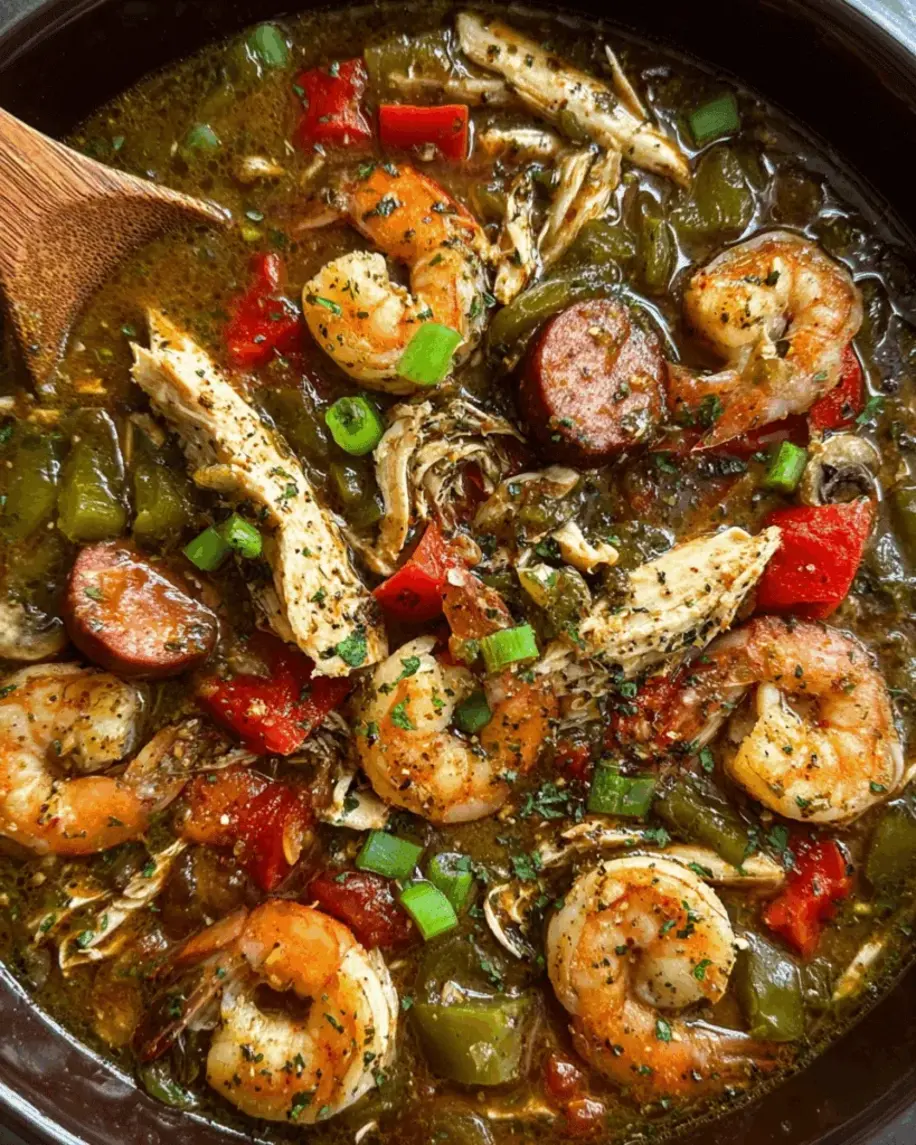
Let me paint you a picture of the finished bowl. The broth is a deep mahogany — almost chestnut-brown — with a velvety sheen that speaks to hours of gentle bubbling. Slices of cremini mushroom float like little umbrellas, soaking up every drop of that rich, peppered liquid. Shrimp curl into plump pink crescents, while chunks of chicken thigh shred at the slightest nudge of your spoon. The holy trinity of onion, bell pepper, and celery has long since surrendered its texture, leaving behind a sweet, aromatic backbone. And that roux — oh, that roux — it’s the quiet hero: no raw flour taste, just a nutty, toasted depth that clings to every grain of rice you spoon underneath. A whisper of cayenne lingers on your lips, warm but not punishing, inviting the next bite before you’ve even swallowed.
What makes my version of this cajun gumbo different? First, I take the time to build a proper dark roux — it’s a twenty-minute meditation, not a shortcut. That single step is the difference between a flat gumbo and one that tastes like it’s been simmering for two days. Second, I add the mushrooms and shrimp at the very end of the slow cooker gumbo process, so they stay plush and tender instead of turning into rubbery afterthoughts. And third, I sneak in a trick my mother used in her Moroccan kitchen: a tiny pinch of cinnamon and allspice that nobody will identify but everyone will miss if it’s gone. Whether you follow this as a straight southern gumbo or branch out into the variations I’ve included below, I promise you’ll end up with a pot of something deeply, proudly Louisiana — with a little bit of mia in every spoonful.
Why This Chicken, Shrimp & Mushroom Gumbo Recipe Is the Best
The Flavor Secret: Most gumbo recipes stop at the holy trinity and a basic roux. I built this one from my combined training — the Moroccan tagine instinct to layer spices gradually, and the French technique of building a roux to exactly the right color. The result is a broth that’s both deeply savory and surprisingly bright, with layers that unfold with every bite. The mushrooms add an umami punch that complements the shrimp and chicken without overwhelming them, and the slow cooker allows those flavors to marry without any risk of scorching.
Perfected Texture: Here’s a chef’s secret: protein texture is about timing. Chicken thighs can braise for hours and only get more tender, but shrimp and mushrooms have a much smaller window. By adding them in the final 20 minutes, I ensure the shrimp stay snappy and the mushrooms remain meaty, not slimy. The roux thickens the broth to a consistency that coats the back of a spoon — no need for okra or filé powder unless you want them. This is a gumbo that holds its own on a bed of rice without turning into soup, and that’s exactly how a proper southern gumbo should behave.
Foolproof & Fast (for a Slow Cooker Recipe): I know the word “roux” can intimidate beginners, but I promise you can master it. This recipe walks you through every shade of brown, from blonde to peanut-butter to the deep color of old pennies. And once that roux is done, everything else is simply layering ingredients and letting the slow cooker work its magic. Even if you’ve never made gumbo before, you’ll pull off a pot that tastes like it came from a Louisiana bayou kitchen. From my NYC kitchen to yours — this is the chicken shrimp mushroom gumbo you’ve been waiting for.
Chicken, Shrimp & Mushroom Gumbo Ingredients
I source most of my vegetables from the Union Square Greenmarket in Manhattan — the bell peppers there are incredibly sweet in late summer — and I grab my shrimp from a reliable fishmonger in Chelsea Market. When I can’t get fresh Gulf shrimp, frozen wild-caught American shrimp work beautifully. One memory that always surfaces when I make this gumbo: my mother in Marrakech, grinding her own spice blends in a stone mortar, telling me that “the cook who controls the spice controls the meal.” That philosophy runs through every ingredient list I write.
Ingredients List
- 1½ lbs boneless skinless chicken thighs (or breasts)
- 1 lb large raw shrimp, peeled and deveined (tails optional)
- 8 oz cremini mushrooms, sliced (or sub baby bella)
- 12 oz andouille sausage, sliced into ½-inch rounds
- ½ cup neutral oil (canola or vegetable)
- ½ cup all-purpose flour
- 1 large yellow onion, diced
- 1 green bell pepper, diced
- 3 celery stalks, diced
- 4 garlic cloves, minced
- 1 can (14.5 oz) diced tomatoes, undrained
- 4 cups low-sodium chicken broth
- 2 cups water (optional, adjust to desired thickness)
- 2 teaspoons Cajun seasoning
- 1 teaspoon dried thyme
- 2 bay leaves
- ¼ teaspoon cayenne pepper (adjust to heat preference)
- ¼ teaspoon smoked paprika (optional for extra depth)
- ⅛ teaspoon ground cinnamon (mia’s secret touch — optional but wonderful)
- Salt and black pepper to taste
- 3 green onions, sliced (for garnish)
- Fresh parsley, chopped (for garnish)
- Cooked white rice for serving (long-grain or jasmine)
Ingredient Spotlight
Andouille Sausage: This smoked pork sausage is the backbone of traditional gumbo. Look for a brand that lists pork and spices without excessive fillers. If you can’t find authentic andouille, a good-quality smoked kielbasa or chorizo works well — just adjust the spice level accordingly. The sausage gets browned first to render its fat, which then flavors the roux.
Cremini Mushrooms: I use cremini because they have more flavor than white button mushrooms but are easier to find than wild varieties. They absorb the broth beautifully without turning mushy. If you want to experiment, a mix of shiitake and oyster mushrooms adds even more earthy complexity. Avoid portobello caps, which can become too dense and release too much water.
Shrimp: For a seafood gumbo recipe like this, size matters. Look for 21-25 count per pound (large) shrimp — they’re big enough to feel substantial but small enough to cook through quickly. Wild-caught Gulf shrimp have the best flavor, but responsibly farmed American shrimp are a fine alternative. If using frozen, thaw them overnight in the refrigerator and pat them very dry before adding to the pot.
Chicken Thighs vs. Breasts: I strongly prefer boneless skinless thighs for slow cooking. They have more fat and connective tissue, which means they stay juicy and tender even after hours in the slow cooker. Breasts can become dry and stringy. If you want to use a whole chicken, cut it into pieces and brown the skin-on parts first for extra flavor.
| Original Ingredient | Best Substitution | Flavor / Texture Impact |
|---|---|---|
| Andouille sausage | Smoked kielbasa or chorizo | Slightly less smoky; chorizo adds more heat |
| Cremini mushrooms | Shiitake or oyster mushrooms | More earthy, umami-forward; slightly firmer texture |
| Chicken thighs | Chicken breasts (reduce cook time by 1 hr) | Less rich, can dry out if overcooked |
| Fresh shrimp | Frozen raw shrimp (thawed and patted dry) | Very similar; avoid pre-cooked frozen shrimp |
| All-purpose flour (for roux) | Gluten-free flour blend | Slightly less thickening power; may need extra cook time |
How to Make Chicken, Shrimp & Mushroom Gumbo — Step-by-Step
Making gumbo is a labor of love, but I’ve broken it down into manageable steps that even a first-timer can follow with confidence. The slow cooker does most of the heavy lifting — you just need to build the flavor base on the stovetop first. Trust me, that extra 30 minutes of active work pays off in a bowl of gumbo that tastes like it simmered all day on a Louisiana back porch.
Step 1: Make the Roux
In a large, heavy-bottomed pot or Dutch oven, heat ½ cup of neutral oil over medium heat. Whisk in ½ cup of all-purpose flour until smooth. Reduce the heat to medium-low and stir constantly with a wooden spoon or heatproof spatula. The roux will go through several stages: first it will smell like raw flour (about 3 minutes), then it will turn a pale blonde (5 minutes), then a peanut-butter color (10 minutes). Keep stirring — don’t walk away. After about 18-22 minutes, the roux will reach a deep, copper-brown color and smell nutty and toasted. Remove it from the heat immediately; it will continue to darken.
💡 mia’s Pro Tip: A proper dark roux is the single most important step in this chicken shrimp mushroom gumbo. If it burns (you’ll see black specks and smell acrid smoke), toss it and start over. Burnt roux ruins the entire pot. Keep your heat medium-low and stir constantly — this is your meditation moment.
Step 2: Sauté the Holy Trinity
Add the diced onion, bell pepper, and celery to the hot roux. Stir to coat the vegetables in the roux, then cook over medium heat for 6-8 minutes, until the onions become translucent and the mixture is fragrant. The roux will darken slightly as the vegetables release their moisture. Add the minced garlic and cook for 1 more minute, until fragrant.
⚠️ Common Mistake to Avoid: Don’t add cold vegetables to a blazing hot roux — it can cause the roux to seize or burn. Let the roux cool for 30 seconds off the heat before adding the vegetables, and stir them in quickly and thoroughly.
Step 3: Brown the Chicken and Sausage
While the vegetables cook, pat the chicken thighs dry and season them with a pinch of salt and black pepper. In a separate skillet over medium-high heat, add a drizzle of oil and brown the chicken thighs on both sides (3-4 minutes per side). They don’t need to be cooked through — just golden-brown. Transfer the chicken to a plate. In the same skillet, add the sliced andouille sausage and cook for 3-4 minutes until browned on the edges. Set aside with the chicken.
💡 mia’s Pro Tip: Browning the meat adds the Maillard reaction flavor that makes this southern gumbo taste incredibly rich. Don’t skip this step, even though the slow cooker will finish the cooking. The caramelized bits on the bottom of the skillet are pure gold — deglaze the pan with a splash of chicken broth and pour that liquid into the slow cooker too.
Step 4: Build the Broth
Return the pot with the roux-and-vegetable mixture to medium heat. Add the diced tomatoes (with their juices), chicken broth, Cajun seasoning, thyme, bay leaves, cayenne, smoked paprika (if using), and the optional pinch of cinnamon and allspice. Stir to combine, scraping up any browned bits from the bottom. Bring the mixture to a gentle simmer. Season with salt and pepper — go easy on the salt at this stage, as the sausage will add more.
⚠️ Common Mistake to Avoid: Adding all the liquid at once can make the roux clump. Pour the broth in gradually while whisking constantly to ensure a smooth, lump-free base for your slow cooker gumbo.
Step 5: Slow Cook
Transfer the broth mixture to your slow cooker. Add the browned chicken thighs and sausage slices. Cover and cook on LOW for 5 to 6 hours, or on HIGH for 3 to 4 hours. The chicken should be fork-tender and the broth deeply flavored. About 30 minutes before serving, remove the chicken thighs to a cutting board, shred them with two forks, and return the shredded meat to the pot.
💡 mia’s Pro Tip: For the ideal slow cooker gumbo timing, 5½ hours on LOW is the sweet spot. Any longer and the chicken may start to dry out. If you’re away all day, cook on LOW for up to 7 hours, then add the shrimp and mushrooms immediately when you get home and let them cook while you make the rice.
Step 6: Add Shrimp and Mushrooms
Twenty minutes before serving, add the sliced cremini mushrooms and raw shrimp to the slow cooker. Stir gently to submerge them in the hot broth. Cover and cook on HIGH for 15-20 minutes, until the shrimp are pink and opaque and the mushrooms have softened but still have some bite. Taste the broth and adjust seasoning with salt, pepper, or additional Cajun seasoning.
⚠️ Common Mistake to Avoid: Overcooking the shrimp is the most common error in any seafood gumbo recipe. Shrimp go from perfectly cooked to rubbery in less than 60 seconds. As soon as they turn pink and curl into a loose C-shape, they’re done. If you’re not serving immediately, turn the slow cooker to WARM to prevent further cooking.
Step 7: Rest and Serve
Turn off the slow cooker and let the gumbo rest for 5-10 minutes. This allows the flavors to settle and the broth to thicken slightly as it cools. Remove the bay leaves. Serve generous ladles of gumbo over steamed white rice, garnished with sliced green onions and fresh parsley. Add a dash of hot sauce if you like extra heat.
| Step | Action | Duration | Key Visual Cue |
|---|---|---|---|
| 1 | Make the roux | 18-22 min | Deep copper-brown, smells nutty |
| 2 | Sauté holy trinity | 6-8 min | Onions translucent, mixture fragrant |
| 3 | Brown chicken and sausage | 6-8 min | Golden-brown crust on meat |
| 4 | Build the broth | 5 min | Smooth, no lumps |
| 5 | Slow cook | 5-6 hr (LOW) | Chicken fork-tender |
| 6 | Add shrimp and mushrooms | 15-20 min | Shrimp pink and curled |
| 7 | Rest and serve | 5-10 min | Broth slightly thickened |
Serving & Presentation
When I serve this chicken shrimp mushroom gumbo at home in NYC, I like to set up a little gumbo bar on my kitchen island. A big pot of rice, a bowl of chopped green onions, a dish of fresh parsley, hot sauce on the side, and a basket of crusty French bread for soaking up every last drop of broth. I always use wide, shallow bowls so the gumbo sits beautifully over the rice — you want to see the shrimp peeking through, the mushrooms nestled in, and the dark broth pooling around the edges.
In Morocco, my mother taught me that the best meals are the ones where everyone serves themselves from a central dish, and that’s exactly how gumbo should be eaten. It’s a communal, soul-warming experience — the kind of meal that makes people linger at the table long after the plates are empty. For a true Southern touch, serve it with a side of potato salad (yes, really — the cool, creamy potato salad is a classic Louisiana pairing) or a simple slaw with a tangy vinaigrette.
| Pairing Type | Suggestions | Why It Works |
|---|---|---|
| Side Dish | Steamed white rice, crusty French bread, potato salad | Rice soaks up broth; bread adds crunch; potato salad cools the heat |
| Sauce / Dip | Hot sauce (Tabasco or Crystal), extra filé powder | Adds heat and tang; filé thickens and adds earthy notes |
| Beverage | Cold beer (lager or pilsner), sweet tea, or a crisp white wine | Lager cuts richness; sweet tea contrasts spice; wine adds acidity |
| Garnish | Sliced green onions, fresh parsley, a squeeze of lemon | Adds freshness and visual pop; lemon brightens the deep flavors |
Make-Ahead, Storage & Reheating
One of the best things about this slow cooker gumbo is that it tastes even better the next day. The flavors continue to meld as it sits, making it the perfect make-ahead meal for busy weeknights or weekend gatherings. I often make a double batch and freeze half for those New York evenings when I don’t have time to cook. Here’s exactly how to store and reheat it for the best results.
| Method | Container | Duration | Reheating Tip |
|---|---|---|---|
| Refrigerator | Airtight glass or plastic container | 3-4 days | Reheat gently on stovetop over low heat; add a splash of broth if too thick |
| Freezer | Freezer-safe zip bags or rigid containers | Up to 3 months | Thaw overnight in fridge; reheat on stovetop; add fresh shrimp when reheating |
| Make-Ahead | Slow cooker insert (store in fridge) | 1 day in advance | Cook without shrimp; add shrimp during reheating for best texture |
Here’s my favorite trick for reheating this seafood gumbo recipe: if the gumbo has been refrigerated overnight, the flavors will have deepened beautifully, but the shrimp may have lost some of their snap. I like to pick out the leftover shrimp (if any), reheat the broth, and add a handful of fresh frozen shrimp during the last 5 minutes of warming. It’s like having a freshly made pot all over again, with zero extra effort. For the same reason, if I’m freezing gumbo for meal prep, I always freeze it before adding the shrimp — then I add fresh or frozen-thawed shrimp when I reheat it.
Variations & Easy Swaps
Gumbo is one of those wonderfully flexible dishes that invites creativity. Over the years, I’ve tested countless variations — some inspired by my Moroccan roots, others by what I find at the Union Square farmers market. Here are three of my favorite twists on this cajun gumbo.
| Variation | Key Change | Best For | Difficulty Impact |
|---|---|---|---|
| Moroccan-Spiced Gumbo | Add ras el hanout, saffron, and chickpeas | North African flavor lovers | Easy (no extra steps) |
| Gluten-Free Gumbo | Use gluten-free flour blend for roux | Gluten-sensitive eaters | Easy (same technique) |
| Quick Weeknight Gumbo | Skip roux, use okra or filé for thickening | Busy weeknights | Easier (no roux) |
Moroccan-Spiced Gumbo
This variation is my love letter to my mother’s kitchen. Add 1 teaspoon of ras el hanout (a Moroccan spice blend) and a pinch of saffron threads to the broth along with the Cajun seasoning. Swap half the andouille for merguez sausage if you can find it, and throw in a can of drained chickpeas during the last hour of slow cooking. The rose and cumin notes in the ras el hanout play beautifully with the smoky andouille, and the saffron gives the broth a golden hue. It’s not traditional Louisiana, but it’s absolutely delicious — and it’s how I make gumbo when I’m missing home.
Gluten-Free Gumbo
Traditional roux is made with wheat flour, but you can easily make this southern gumbo gluten-free. Use a high-quality gluten-free all-purpose flour blend (I like Bob’s Red Mill 1-to-1) in place of regular flour. The technique is exactly the same, but keep in mind that gluten-free roux may thicken slightly less and can brown a little faster, so watch it carefully. Alternatively, you can skip the roux entirely and thicken the gumbo with okra (add 2 cups sliced okra during the last hour) or filé powder (stir in 2 teaspoons at the very end, off the heat). Both methods are authentic and yield a slightly different but equally wonderful texture.
Quick Weeknight Gumbo
For those evenings when you want gumbo but don’t have the time for a roux, here’s my shortcut: skip the roux entirely and instead sauté the holy trinity in a couple of tablespoons of oil until soft. Add an extra tablespoon of Cajun seasoning and a can of diced tomatoes with green chilies for complexity. When you add the broth, stir in 2 tablespoons of filé powder (or add 2 cups of frozen okra during the last hour of slow cooking). The gumbo will be thinner but still packed with flavor. I call this my “NYC weeknight gumbo” — it’s on the table in under an hour of active time, and it’s saved many a busy Tuesday in my apartment.
Share Your Version!
Now it’s your turn to bring this bowl of Louisiana sunshine to your kitchen. I truly believe that every cook makes a recipe their own, and I’d love to hear how yours turns out. Did you add the Moroccan spices? Did you try the gluten-free version? Or did you invent something entirely new? Drop a comment below with your star rating — your feedback helps other readers know what to expect, and it makes my day every single time I see that someone else is enjoying a recipe that came from my heart.
If you share a photo on Instagram or Pinterest, be sure to tag @exorecipes — I love scrolling through your beautiful creations and seeing how this chicken shrimp mushroom gumbo comes to life in your home. And if you have a question about any of the techniques or ingredients, just ask! I read every comment and I’m always happy to help troubleshoot. From my NYC kitchen to yours — I hope this recipe brings as much warmth to your table as it does to mine. — mia 🧡
Frequently Asked Questions About Chicken, Shrimp & Mushroom Gumbo
What is the best type of rice to serve with chicken, shrimp, and mushroom gumbo?
For an authentic Southern gumbo experience, long-grain white rice is the classic choice. It cooks up fluffy and separate, providing a neutral bed that soaks up the rich broth without competing for attention. Jasmine rice adds a subtle floral note that I especially love, while basmati rice has a lighter, drier texture that also works well. Avoid short-grain or sushi rice, which can become sticky and clumpy, making the gumbo feel heavy. I typically use standard American long-grain rice or jasmine — both are easy to find at any US grocery store and cook in about 15-18 minutes.
Can you use frozen shrimp in a slow-cooked chicken and mushroom gumbo?
Absolutely! Frozen shrimp are a fantastic convenience option for this slow cooker gumbo. The key is to thaw them properly and add them at the right time. Thaw frozen shrimp overnight in the refrigerator, then pat them very dry with paper towels before adding them to the pot. Never add frozen shrimp directly to the slow cooker — they’ll release too much water and dilute the broth, plus they’ll cook unevenly. Add the thawed shrimp during the last 20 minutes of cooking, just as you would with fresh shrimp. Wild-caught American frozen shrimp are my go-to when fresh isn’t available, and they deliver excellent flavor and texture.
How do you thicken gumbo without using okra or filé powder?
The most traditional and effective way to thicken gumbo without okra or filé is to use a dark roux — which is exactly what this recipe does. A properly made roux of flour and oil, cooked to a deep copper-brown color, provides all the thickening power you need while adding that signature nutty flavor. If you’re looking for a thicker consistency beyond what the roux provides, you can also mash a few of the cooked vegetables against the side of the pot, or blend a cup of the cooked gumbo (remove the shrimp first) and stir it back in. Another option is to reduce the broth by simmering it uncovered for 15-20 minutes after slow cooking, which concentrates both flavor and thickness naturally.
What is the ideal slow-cooker time for chicken, shrimp, and mushroom gumbo?
For the best results with this chicken shrimp mushroom gumbo, I recommend 5 to 6 hours on LOW heat, or 3 to 4 hours on HIGH. The chicken thighs need enough time to become tender and shred easily, which typically takes about 5½ hours on LOW. The shrimp and mushrooms should only be added during the final 20 minutes on HIGH, regardless of the total cook time. If you need to extend the cook time, 6 to 7 hours on LOW is acceptable, but add a splash of chicken broth before serving if the gumbo has thickened too much. Avoid cooking longer than 7 hours on LOW, as the chicken can begin to dry out and the broth may become overly concentrated.
Can I make this gumbo in an Instant Pot or pressure cooker?
Yes, you can adapt this seafood gumbo recipe for an Instant Pot, though the roux still needs to be made on the stovetop (or using the sauté function). Make the roux, sauté the holy trinity, and brown the meat using the Sauté mode. Then add the broth, tomatoes, and seasonings, and pressure cook on HIGH for 15 minutes with a natural release. After releasing the pressure, switch back to Sauté, add the shrimp and mushrooms, and cook for 4-5 minutes until the shrimp are pink. The pressure cooker version is faster but yields a slightly less deep flavor than the slow cooker method, so I recommend adding an extra pinch of Cajun seasoning to compensate.
How can I make this gumbo less spicy for my family?
Reducing the heat in this southern gumbo is simple. Omit the cayenne pepper entirely, and use a mild Cajun seasoning blend (many brands offer a mild version, or you can make your own by reducing the cayenne and black pepper). The andouille sausage adds some warmth, so consider using a milder smoked sausage like kielbasa if you want to dial it down further. You can also serve the gumbo with a dollop of sour cream or a side of crusty bread to help balance any remaining heat. The beauty of this recipe is that the slow cooking process mellows and integrates the spices, so even with less heat, you’ll still have a deeply flavorful bowl of gumbo.
Can I substitute the chicken with another protein?
Absolutely! This slow cooker gumbo is very adaptable. For a duck gumbo, use boneless duck thighs — they’re richer and work beautifully with the earthy mushrooms. Turkey thighs or drumsticks are a great option, especially after the holidays. If you want to make it fully seafood-based, omit the chicken and double the shrimp and mushrooms, adding a firm white fish like cod or halibut along with the shrimp. For a vegetarian version, replace the chicken with hearty portobello mushrooms, extra okra, and a can of drained chickpeas or red beans — the beans add protein and a creamy texture that mimics the mouthfeel of shredded meat.
Why did my gumbo turn out too thin or too thick?
A gumbo that’s too thin usually means the roux didn’t cook long enough to reach full thickening power, or there was too much liquid relative to the flour. To fix it, remove the lid of the slow cooker during the last hour of cooking to allow steam to escape and the broth to reduce. You can also mix 1 tablespoon of cornstarch with 2 tablespoons of cold water and stir it in, then cook for 10 more minutes. If your gumbo is too thick, simply stir in additional chicken broth or water, ½ cup at a time, until you reach the desired consistency. Remember that gumbo will thicken as it sits, so it’s better to err on the slightly thinner side when serving.
What’s the difference between Cajun and Creole gumbo, and which is this recipe?
Great question! This recipe leans toward Cajun style, which is more rustic and heavily influenced by French country cooking. Cajun gumbo typically uses a dark roux, no tomatoes or only a small amount, and relies on andouille sausage and game meats or chicken. Creole gumbo, on the other hand, often includes tomatoes more prominently, uses a lighter roux, and frequently features seafood like crab and oysters. My version walks a beautiful line — it uses a dark roux (Cajun) but includes diced tomatoes (Creole). The mushrooms and slow-cooker method are my own additions, making it a modern, approachable gumbo that honors both traditions while feeling fresh and accessible.
How do I store leftover gumbo and reheat it without overcooking the shrimp?
To store leftover gumbo, let it cool completely at room temperature (no more than 2 hours for food safety), then transfer it to an airtight container. Refrigerate for up to 3-4 days. The trick to reheating without ruining the shrimp is gentle low heat. Reheat the gumbo in a saucepan over medium-low heat, stirring occasionally, until it’s just heated through — about 8-10 minutes. Don’t let it boil aggressively, or the shrimp will become tough and rubbery. If you’re reheating from frozen, thaw it overnight in the refrigerator first, then use the same gentle stovetop method. If the shrimp seem a bit overdone after reheating, a squeeze of fresh lemon juice helps brighten the flavor and distract from any textural changes.
Share Your Version!
Now it’s your turn to bring this bowl of Louisiana sunshine to your kitchen. I truly believe that every cook makes a recipe their own, and I’d love to hear how yours turns out. Did you add the Moroccan spices? Did you try the gluten-free version? Or did you invent something entirely new? Drop a comment below with your star rating — your feedback helps other readers know what to expect, and it makes my day every single time I see that someone else is enjoying a recipe that came from my heart.
If you share a photo on Instagram or Pinterest, be sure to tag @exorecipes — I love scrolling through your beautiful creations and seeing how this chicken shrimp mushroom gumbo comes to life in your home. And if you have a question about any of the techniques or ingredients, just ask! I read every comment and I’m always happy to help troubleshoot. From my NYC kitchen to yours — I hope this recipe brings as much warmth to your table as it does to mine. — mia 🧡
Love This Recipe? Save It to Pinterest!
If you enjoyed this Chicken, Shrimp & Mushroom Gumbo recipe, don’t let it get lost in your browser tabs! 😄 Pin it now so you can find it again anytime — and explore hundreds more tried-and-tested recipes waiting for you on my Pinterest boards.
👉 Follow mia on Pinterest @exorecipe
📌 Pin this recipe · 🔁 Re-pin your favorites · 💬 Tag me when you make it — I love seeing your creations!
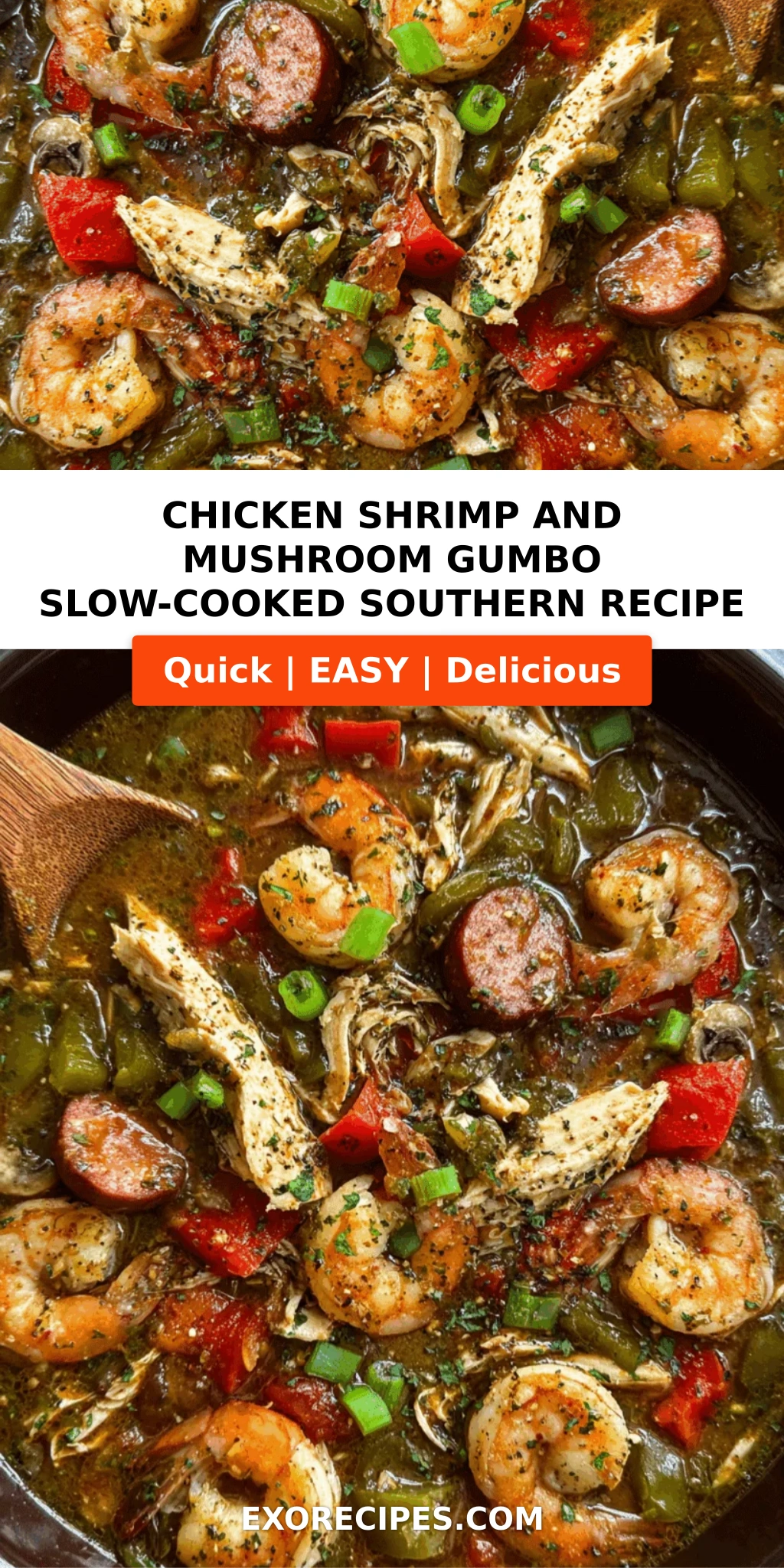
Chicken, Shrimp & Mushroom Gumbo A Slow-Cooked Southern Delight
Instructions
Tried This Recipe? Leave a Comment!
Did you make this recipe? I’d love to hear how it turned out! Please leave a comment and a rating below. Your feedback helps other home cooks and supports cheerychop.com!
For more delicious inspiration, follow me on Pinterest!
