Table of Contents
Chicken and Shrimp Jambalaya Recipe – One-Pot Creole Perfection
I still remember the first time I made a proper chicken and shrimp jambalaya recipe in my tiny Parisian apartment. I had just finished my pastry shift at a patisserie in the 7th arrondissement, and I was craving something bold, smoky, and nothing like the delicate butter creams I’d been piping all day. I called my mother in Morocco, and she said, “Use the same patience you use for a tagine — let the rice take its time.” That phone call changed everything. This spicy jambalaya with chicken and shrimp is the result of that conversation: a deeply savory, one-pot Creole classic that combines the French technique I learned in culinary school with the warm, layered spicing I grew up with in North Africa. It’s become my go-to for busy weeknights and weekend gatherings alike here in New York City.
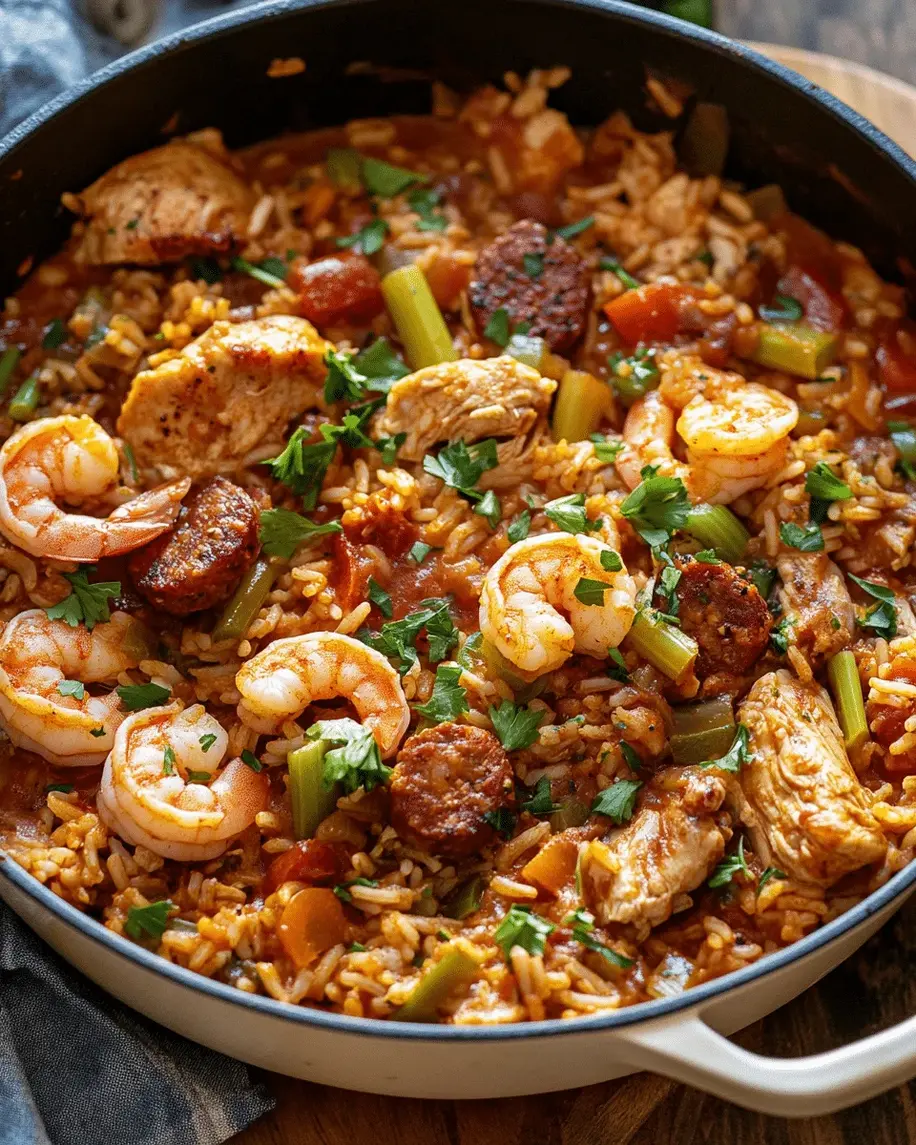
Imagine a pot filled with tender, seared chicken thighs, plump shrimp, and smoky Andouille sausage — all mingling with long-grain rice that has absorbed every drop of the richly seasoned tomato broth. The aroma alone is enough to pull everyone into the kitchen: garlic, onion, and bell pepper softening in bacon fat, then blooming with paprika, cayenne, dried thyme, and oregano. Each spoonful delivers a little heat, a little sweetness from the peppers, and a deep umami from the browned meat and sausage. The rice stays perfectly separate, never sticky or mushy, and the shrimp cook just until they’re pink and juicy. This easy Creole jambalaya is the kind of dinner that makes you close your eyes on the first bite and just smile.
What sets my version apart is the technique I borrowed from making Moroccan rice dishes: I toast the rice in the pot with the aromatics before adding any liquid. This locks in a nutty flavor and ensures every grain cooks evenly. I also use a precise 2-to-1 liquid-to-rice ratio and never stir once the lid goes on — that’s the secret to fluffy, not gummy, rice. I’ll share a pro tip below for layering the heat so you can control the spice level perfectly, plus the one common mistake that can turn your one pot jambalaya dinner into a mushy mess. Whether you’re new to Creole cooking or a seasoned pro, this recipe will become a staple in your home.
Why This Chicken and Shrimp Jambalaya Recipe Is the Best
The Flavor Secret: Most jambalaya recipes rely on heat alone. I layer the flavor with a technique I learned at Le Cordon Bleu — deglazing the pot with a splash of white wine after browning the sausage and chicken. That little step lifts all the browned bits and adds a subtle acidity that balances the richness of the meat and the heat of the cayenne. Combined with the smoky depth of Andouille and the sweetness of caramelized onions and bell peppers, every bite is complex without being heavy. This is an authentic jambalaya recipe that honors its Creole roots while adding a chef’s touch.
Perfected Texture: The biggest challenge with any chicken and shrimp jambalaya recipe is getting the rice right — too soggy, too hard, or unevenly cooked. My method uses a quick rice toast in the pot, followed by a sealed simmer with no stirring. This creates a flawless texture where each grain is distinct and tender. The shrimp go in during the last five minutes, so they stay succulent instead of turning rubbery. It’s the kind of precision I rely on in my NYC kitchen, and it works every time.
Foolproof & Fast: This is a true one pot jambalaya dinner — you only need a Dutch oven or a deep skillet. There’s no parboiling rice, no separate pans, and no complicated steps. From prep to table in just over an hour, it’s perfect for a Sunday supper or a meal-prep hero that tastes even better the next day. I’ve tested this recipe for everyone from busy moms to culinary school friends, and it’s never let me down.
Chicken and Shrimp Jambalaya Recipe Ingredients
I source my Andouille sausage from a little butcher shop in Brooklyn’s Bergen Street Market, and my shrimp from the fishmonger at the Union Square Greenmarket on Saturdays. The bell peppers and celery remind me of the souks in Marrakech — piled high in jewel tones — but here in NYC, I grab whatever looks freshest. This ingredient list is built for easy Creole jambalaya that feels both rustic and refined.
Ingredients List
- 1 lb boneless, skinless chicken thighs, cut into 1½-inch pieces
- 1 lb large shrimp (21–25 count), peeled and deveined
- 12 oz Andouille sausage, sliced into ½-inch rounds
- 4 slices thick-cut bacon, diced
- 1 large yellow onion, finely chopped
- 1 green bell pepper, diced
- 2 ribs celery, diced
- 4 cloves garlic, minced
- 1½ cups long-grain white rice (uncooked)
- 1 can (14.5 oz) diced fire-roasted tomatoes, undrained
- 2½ cups low-sodium chicken broth
- ½ cup dry white wine (optional, but recommended)
- 2 tsp smoked paprika
- 1 tsp sweet paprika
- 1 tsp dried oregano
- ½ tsp dried thyme
- ½ tsp cayenne pepper (adjust to taste)
- ½ tsp black pepper
- 1 tsp salt (plus more to taste)
- 2 bay leaves
- 3 green onions, thinly sliced (for garnish)
- ¼ cup fresh parsley, chopped (for garnish)
- Hot sauce, for serving (optional)
Ingredient Spotlight
Andouille Sausage: This smoked pork sausage is the backbone of any authentic jambalaya recipe. It brings a smoky, garlicky punch that infuses the entire dish. Look for Andouille in the refrigerated section of well-stocked grocery stores — brands like Savoie’s or Conecuh work beautifully. If you can’t find it, substitute with a good-quality smoked kielbasa, though the flavor will be slightly milder. You can also use a spicy chorizo for a different but delicious twist.
Chicken Thighs: I always use boneless, skinless thighs instead of breasts. Thighs stay juicy and tender even after browning and simmering, and they bring more flavor to the pot. If you prefer breast meat, reduce the browning time slightly and be careful not to overcook. For a quicker prep, you can use pre-cut stew meat, but I recommend thighs for the best texture in this spicy jambalaya with chicken and shrimp.
Long-Grain Rice: This is not the place for jasmine or basmati — their fragrances can clash with the bold Creole seasonings. Standard long-grain white rice, like Carolina or Mahatma, gives the perfect light, fluffy texture that absorbs the broth without becoming sticky. Never use instant rice or short-grain rice, which will turn gummy. I’ll show you the exact toasting method below to guarantee perfect results every time.
| Original Ingredient | Best Substitution | Flavor / Texture Impact |
|---|---|---|
| Andouille sausage | Smoked kielbasa | Less garlicky and smoky, but still hearty |
| Chicken thighs | Boneless skinless chicken breasts | Leaner, can dry out if overcooked; brown quickly |
| Fire-roasted tomatoes | Regular diced tomatoes + ½ tsp liquid smoke | Slightly less sweetness; liquid smoke adds back char |
| Long-grain white rice | Basmati rice (rinsed well) | Fragrant, slightly drier grains; works in a pinch |
How to Make Chicken and Shrimp Jambalaya — Step-by-Step
Follow these steps closely, and you’ll have a perfect one pot jambalaya dinner that tastes like it simmered all day — but comes together in just over an hour.
Step 1: Render the Bacon and Brown the Sausage
Place a large Dutch oven or heavy-bottomed pot over medium heat. Add the diced bacon and cook, stirring occasionally, until the fat renders and the bacon is crisp, about 5 minutes. Use a slotted spoon to transfer the bacon to a plate, leaving the rendered fat in the pot. Add the Andouille sausage slices in a single layer and cook for 3–4 minutes per side, until deeply browned. Transfer the sausage to the plate with the bacon. The browned bits stuck to the bottom of the pot are pure flavor — don’t clean them out.
💡 mia’s Pro Tip: Don’t overcrowd the pot when browning the sausage. If you pile it all in at once, the sausage will steam instead of sear, and you’ll miss out on that deep, smoky crust. Work in two batches if your pot isn’t wide enough.
Step 2: Sear the Chicken
Season the chicken pieces with ½ teaspoon salt and ¼ teaspoon black pepper. Add them to the hot pot in a single layer and cook for 4–5 minutes, turning once, until golden brown on both sides. The chicken doesn’t need to be fully cooked through at this stage — it will finish in the simmer. Transfer the chicken to the plate with the sausage and bacon.
⚠️ Common Mistake to Avoid: Skipping the searing step. If you skip browning the chicken, you lose the deep fond (those browned bits) that build the entire flavor base of this easy Creole jambalaya. Take the extra 5 minutes — it’s worth it.
Step 3: Sauté the Aromatics
Reduce the heat to medium-low. Add the onion, bell pepper, and celery (the “holy trinity” of Creole cooking) to the pot. Cook, scraping up the browned bits with a wooden spoon, for 6–8 minutes, until the vegetables are softened and translucent. Add the garlic and cook for 1 minute more, until fragrant. If the pot seems dry, add a splash of chicken broth or a drizzle of olive oil.
💡 mia’s Pro Tip: This step is where the magic happens. Let the vegetables cook low and slow — they should be sweet and jammy, not browned. This builds the mellow, savory backbone that balances the heat of the cayenne.
Step 4: Toast the Rice and Add the Spices
Add the uncooked rice to the pot and stir constantly for 2 minutes, until the grains become translucent at the edges and smell nutty. This toasting step is key to preventing mushy rice. Sprinkle in the smoked paprika, sweet paprika, oregano, thyme, cayenne, black pepper, and the remaining ½ teaspoon salt. Stir to coat the rice evenly. Let the spices bloom for 30 seconds — your kitchen will smell incredible.
⚠️ Common Mistake to Avoid: Toasting the rice over high heat. Medium heat is perfect. If the heat is too high, the spices will burn and turn bitter before the rice has a chance to toast. Keep it gentle and keep stirring.
Step 5: Deglaze and Add Liquids
Pour in the white wine and stir, scraping the bottom of the pot to release any remaining fond. Let the wine bubble and reduce for about 1 minute. Add the fire-roasted tomatoes (with their juices) and chicken broth. Drop in the bay leaves. Return the bacon, sausage, and chicken to the pot, along with any accumulated juices. Stir everything together gently — just once — and bring the liquid to a steady simmer.
💡 mia’s Pro Tip: The wine is optional, but it’s the same trick I use in French stews — a splash of acidity lifts all the flavors. If you don’t cook with wine, substitute with 2 tablespoons of apple cider vinegar mixed with 6 tablespoons of water. You’ll get a similar brightness.
Step 6: Simmer Low and Slow
Once the liquid is simmering, reduce the heat to low, cover the pot with a tight-fitting lid, and cook for 20 minutes. Do NOT lift the lid or stir during this time — the steam needs to circulate evenly to cook the rice perfectly. After 20 minutes, remove the pot from the heat and let it sit, still covered, for 10 minutes. This resting period allows the rice to absorb any remaining liquid and become perfectly tender.
⚠️ Common Mistake to Avoid: Peeking! Every time you lift the lid, steam escapes and the temperature drops. This can lead to unevenly cooked rice. Trust the timing — your pot is doing the work for you.
Step 7: Cook the Shrimp and Finish
After the 10-minute rest, remove the lid. Gently fold in the raw shrimp, pushing them just below the surface of the rice. Replace the lid and let the residual heat cook the shrimp for 5–7 minutes, until they are pink and opaque. Remove and discard the bay leaves. Fluff the jambalaya gently with a fork, taste, and adjust salt or cayenne if needed. Sprinkle with sliced green onions and fresh parsley. Serve hot with hot sauce on the side.
💡 mia’s Pro Tip: Adding the shrimp off the heat is my secret to perfectly cooked seafood. The lingering steam cooks them gently without toughening them. If you add shrimp too early, they’ll turn rubbery — and nobody wants that in their spicy jambalaya with chicken and shrimp.
| Step | Action | Duration | Key Visual Cue |
|---|---|---|---|
| 1 | Render bacon & brown sausage | 8–10 min | Bacon crispy, sausage deeply browned |
| 2 | Sear chicken | 4–5 min | Golden crust on both sides |
| 3 | Sauté aromatics | 7–9 min | Vegetables softened, translucent, fragrant |
| 4 | Toast rice & bloom spices | 2–3 min | Rice edges translucent, spices aromatic |
| 5 | Deglaze & add liquids | 2 min | Wine bubbles, fond lifts from bottom |
| 6 | Simmer covered | 20 min | Steam escaping, rice tender when checked |
| 7 | Rest, add shrimp, finish | 15–17 min | Shrimp pink and opaque, rice fluffy |
Serving & Presentation
I love serving this chicken and shrimp jambalaya recipe straight from the pot at the table — it’s rustic and communal, just like the tagine dinners of my childhood in Morocco. Spoon a generous portion into wide, shallow bowls so every spoonful gets a mix of rice, meat, and vegetables. I always garnish with a pile of fresh green onions and parsley for a pop of color and freshness. A few dashes of Crystal or Tabasco on top are non-negotiable in my NYC kitchen — the vinegar cuts through the richness beautifully.
For a complete meal, I pair this with a simple side of sautéed okra or a crisp green salad dressed with lemon and olive oil. The acidity and crunch balance the hearty, spicy jambalaya. If I’m feeling nostalgic for Paris, I’ll serve it with a crusty baguette for soaking up every last drop of the savory broth. And on a chilly New York evening, there’s nothing better than a bowl of this with a cold glass of Sazerac or a hoppy IPA.
| Pairing Type | Suggestions | Why It Works |
|---|---|---|
| Side Dish | Sautéed okra, crisp green salad, crusty baguette | Adds freshness, crunch, or starch-soaking power |
| Sauce / Dip | Crystal hot sauce, remoulade, creole mustard | Brightens and deepens the savory-spicy profile |
| Beverage | Sazerac, hoppy IPA, sweet tea | Cuts richness, complements spice, or cools the palate |
| Garnish | Green onions, parsley, lemon wedges | Adds color, freshness, and a touch of acidity |
Make-Ahead, Storage & Reheating
This one pot jambalaya dinner is a meal-prep superstar. In fact, I often make it a day ahead on purpose — the flavors meld and deepen overnight in the fridge. Here’s how I store and reheat it for my busy NYC week, whether I’m heading to the farmers market or rushing between recipe tests.
| Method | Container | Duration | Reheating Tip |
|---|---|---|---|
| Refrigerator | Airtight container | Up to 4 days | Add 1–2 tbsp water per serving, cover, reheat on stovetop over low heat 8–10 min, stirring gently |
| Freezer | Freezer-safe zip-top bag or container | Up to 3 months | Thaw overnight in fridge, then reheat as above; add a splash of broth to refresh |
| Make-Ahead | Prepare through step 6, cool, refrigerate | 1 day in advance | Reheat on stovetop, then add shrimp off heat for last 5–7 min |
When reheating, I always add a small splash of chicken broth or water to restore moisture, and I reheat gently on the stovetop rather than the microwave. The microwave tends to make the shrimp tough and the rice uneven. If you’re reheating a single serving, a covered skillet over medium-low heat works beautifully. And don’t forget to taste and adjust seasoning — refrigeration can mute the spices, so a pinch of salt or a dash of hot sauce brings it right back to life. This easy Creole jambalaya tastes even better the next day, so don’t hesitate to double the batch.
Variations & Easy Swaps
One of the things I love most about this chicken and shrimp jambalaya recipe is how adaptable it is. Whether you’re cooking for a dietary need or just cleaning out the fridge, these variations have all been tested in my NYC kitchen — and they’re all delicious.
| Variation | Key Change | Best For | Difficulty Impact |
|---|---|---|---|
| Smoked Turkey & Chicken Jambalaya | Replace Andouille with 12 oz smoked turkey sausage | Lower fat, still smoky | No change |
| Vegetarian Red Beans Jambalaya | Omit meat, add 1½ cups cooked kidney beans + 1 cup diced mushrooms | Meatless Monday, plant-based | Easy |
| Spicy Crawfish Jambalaya | Replace shrimp with 1 lb crawfish tails + ½ tsp extra cayenne | Louisiana-style twist | Easy |
Smoked Turkey & Chicken Jambalaya
If you want a lighter take on this authentic jambalaya recipe, swap the Andouille for smoked turkey sausage. It still brings that indispensable smoky flavor but with significantly less fat. I use this version when I’m testing recipes for clients who want bold taste without the heaviness. The technique stays exactly the same — just brown the turkey sausage as you would the Andouille. A sprinkle of smoked paprika (an extra ½ teaspoon) helps deepen the color and flavor. This variation is a hit at my NYC supper clubs, especially among friends who are watching their saturated fat intake but refuse to give up Creole food.
Vegetarian Red Beans Jambalaya
This is my nod to the classic red beans and rice of New Orleans, blended with the jambalaya format. Omit the chicken, sausage, bacon, and shrimp entirely. Add 1½ cups cooked kidney beans (drained and rinsed if using canned) and 1 cup diced cremini mushrooms. Sear the mushrooms in olive oil until deeply browned — this builds the umami that replaces the meat. Use vegetable broth instead of chicken broth, and add 1 tablespoon of liquid smoke to restore the smoky character. It’s a completely satisfying one pot jambalaya dinner that even dedicated carnivores love. The mushrooms and beans provide plenty of protein and a meaty texture.
Spicy Crawfish Jambalaya
When I can find fresh crawfish tails at the Chelsea Market fishmonger in spring, I make this Louisiana-inspired variation. Replace the shrimp with 1 pound of peeled crawfish tails, and add an extra ½ teaspoon of cayenne for a deeper, more complex heat. Crawfish have a sweeter, more delicate flavor than shrimp, so I also add a teaspoon of Creole seasoning (like Tony Chachere’s) to the spice mix. Fold the crawfish in during the last 3 minutes off the heat — they cook even faster than shrimp. Serve with extra lemon wedges and a cold Abita beer for the full bayou experience. This spicy jambalaya with chicken and shrimp (well, crawfish!) is pure New Orleans soul food.
What is the best type of rice to use for chicken and shrimp jambalaya?
The best rice for an authentic jambalaya recipe is standard long-grain white rice, such as Carolina, Mahatma, or any generic grocery store brand. Long-grain rice has a firm, separate texture after cooking and absorbs the seasoned broth without turning sticky or mushy. Avoid using short-grain rice (like sushi rice), jasmine rice, or basmati rice — jasmine and basmati have distinct floral aromas that can clash with the bold Creole spices, and short-grain rice releases too much starch. I also strongly recommend against instant or parboiled rice, which will become soft and pasty in a jambalaya. The toasting step in my recipe further ensures that each grain stays distinct and fluffy.
Can I use frozen shrimp in jambalaya without ruining the texture?
Yes, you can absolutely use frozen shrimp in this chicken and shrimp jambalaya recipe, but you need to prepare them properly to avoid a rubbery texture. Thaw the shrimp completely before cooking — the best method is to place them in a colander under cold running water for about 5–7 minutes, then pat them very dry with paper towels. Excess moisture from frozen shrimp can water down your broth and cause the rice to become gummy. Once thawed and dried, add them exactly as you would fresh shrimp: off the heat during the final resting stage, letting the steam cook them gently. Never cook frozen shrimp directly in the pot, as they will release water and toughen.
How long should you simmer jambalaya on the stove for the best flavor?
For the best flavor in this easy Creole jambalaya, you should simmer the covered pot on low heat for exactly 20 minutes, then let it rest off the heat for another 10 minutes before adding the shrimp. The 20-minute simmer is enough time for the rice to absorb the seasoned broth and become tender without turning mushy. The resting period is just as important — it allows the rice to finish cooking in the residual steam and lets the flavors meld together. If you simmer too long, the rice can overcook and the liquid can dry out. If you simmer too briefly, the rice will be hard in the center. Trust the 20 + 10 method — it’s foolproof.
What can I substitute for Andouille sausage in a Creole jambalaya recipe?
If you can’t find Andouille sausage for this spicy jambalaya with chicken and shrimp, the best substitute is a good-quality smoked kielbasa. Smoked kielbasa has a similar texture and a deep, smoky flavor that works beautifully in jambalaya. You can also use Spanish chorizo (cured or semi-cured), which adds a paprika-driven spiciness and a slightly firmer texture. For a milder option, use smoked turkey sausage — it still provides that indispensable smokiness with less fat. If you use raw Italian sausage, be sure to cook it fully before adding the liquids. Avoid breakfast sausage or bratwurst, as their flavor profiles don’t match the Creole seasoning.
Can I make jambalaya without a Dutch oven?
Absolutely — you can make this one pot jambalaya dinner in any heavy-bottomed pot or deep skillet that has a tight-fitting lid. A 5- to 6-quart stainless steel or enameled pot works perfectly. If you don’t have a lid, you can use a sheet of heavy-duty aluminum foil crimped tightly around the rim. The key is to use a pot that distributes heat evenly so the rice doesn’t scorch on the bottom. Avoid using a thin nonstick skillet, as it won’t hold heat well and can lead to uneven cooking. If you have a cast-iron Dutch oven, that’s actually my favorite tool for jambalaya — it retains heat beautifully and creates the best fond when browning the meat.
How do I control the spice level in jambalaya?
Controlling the heat in this chicken and shrimp jambalaya recipe is simple. The primary source of spice is cayenne pepper. For a mild jambalaya, use just ¼ teaspoon of cayenne. For medium heat (my personal sweet spot), use ½ teaspoon. For a fiery version, go up to 1 full teaspoon. You can also add a diced jalapeño along with the bell pepper for fresh heat, or serve the jambalaya with hot sauce on the table so everyone can customize their bowl. Remember that the Andouille sausage also contributes some heat, so if you use a spicy smoked sausage, you may want to dial back the cayenne. Always taste your broth before adding the rice — that’s your best moment to adjust the seasoning.
Can I add okra to this jambalaya?
Yes, okra is a traditional addition to many Creole jambalaya recipes and adds a wonderful texture and flavor. If you want to add okra, use fresh or frozen cut okra — about 1 cup. Add it during the sauté step with the onion, bell pepper, and celery. Fresh okra will release a mild, grassy flavor and a slight thickening quality that many people love. If you’re using frozen okra, there’s no need to thaw it first; just add it straight to the pot and increase the sauté time by 2–3 minutes to cook off excess moisture. Okra pairs beautifully with the tomatoes and spices in this easy Creole jambalaya. Some folks prefer to fry their okra separately and add it as a topping for crunch — that’s a great option too.
Why is my jambalaya always mushy or sticky?
A mushy jambalaya is usually caused by one of three things: using the wrong type of rice, stirring the rice after adding the liquid, or using too much liquid. First, always use long-grain white rice — never short-grain or medium-grain. Second, after you stir in the broth and bring it to a simmer, do NOT stir again until after the cooking time. Stirring releases starch from the rice and creates a gummy, risotto-like texture that’s not what you want in jambalaya. Third, use the correct liquid ratio: 2½ cups of broth plus the canned tomatoes for 1½ cups of rice. Finally, make sure your lid fits tightly so steam doesn’t escape. Follow my 20-minute simmer plus 10-minute rest, and you’ll have fluffy, separate grains every time.
Is this jambalaya recipe gluten-free?
This chicken and shrimp jambalaya recipe is naturally gluten-free as written, with one important caveat: you need to verify that your Andouille sausage is gluten-free. Some brands use fillers or additives that contain gluten. Check the label or contact the manufacturer if you’re unsure. All other ingredients — rice, chicken, shrimp, fresh vegetables, spices, and broth (use a certified gluten-free brand) — are naturally gluten-free. If you’re serving a gluten-free guest, also confirm that your hot sauce and any Worcestershire sauce you might add are gluten-free. This easy Creole jambalaya is a fantastic option for gluten-free dinner parties because it’s so flavorful and satisfying without relying on any wheat-based ingredients.
How do I get a good sear on the chicken without drying it out?
The key to a beautiful golden sear on chicken without drying it out is to pat the pieces completely dry with paper towels before seasoning. Moisture on the surface creates steam, which prevents browning. Next, use medium-high heat and don’t overcrowd the pot — cook the chicken in a single layer with a little space between each piece. Sear for about 4–5 minutes total, turning once, until the exterior is deeply browned. The chicken will not be cooked through at this point, and that’s exactly what you want. It will finish cooking gently during the simmering and resting stages, locking in its juices. If you cook the chicken all the way through during searing, it will become tough and dry by the time the jambalaya is done.
Share Your Version!
I truly believe that cooking is meant to be shared, and this chicken and shrimp jambalaya recipe is the perfect dish to bring people together. If you make it, I’d love to hear how it turned out in your kitchen! Leave a star rating and a comment below — tell me what substitutions you tried or how spicy you made it. Did you add okra? Use turkey sausage? Go full-on with extra cayenne? Every variation tells a story, and I read every single comment.
Snap a photo of your beautiful one pot jambalaya dinner and share it on Instagram or Pinterest. Tag me @exorecipes so I can see your creation and feature it on my stories. I’m always inspired by the ways home cooks adapt my recipes — that’s the beautiful thing about Creole cooking, it’s meant to be flexible and personal. And if you have a question about the toasting technique or the liquid ratio, drop it in the comments! I answer every question personally. From my NYC kitchen to yours — I hope this recipe brings as much warmth to your table as it does to mine. — mia 🧡
Love This Recipe? Save It to Pinterest!
If you enjoyed this Chicken and Shrimp Jambalaya Recipe, don’t let it get lost in your browser tabs! 😄 Pin it now so you can find it again anytime — and explore hundreds more tried-and-tested recipes waiting for you on my Pinterest boards.
👉 Follow mia on Pinterest @exorecipe
📌 Pin this recipe · 🔁 Re-pin your favorites · 💬 Tag me when you make it — I love seeing your creations!
⭐️ Loved this recipe? Share the love!
Tap the stars to leave a rating, tag @exorecipes on social, and save this post to your Pinterest board so you never lose it!
👉 What’s your favorite one-pot dinner? Let me know in the comments! 👇

Chicken and Shrimp Jambalaya Recipe A Delicious, Flavorful Creole Classic
Instructions
Tried This Recipe? Leave a Comment!
Did you make this recipe? I’d love to hear how it turned out! Please leave a comment and a rating below. Your feedback helps other home cooks and supports cheerychop.com!
For more delicious inspiration, follow me on Pinterest!
