Table of Contents
Chicken Pho-Style Noodle Soup with Baby Bok Choy & Lemongrass – A Fragrant Bowl of Comfort
I still remember the first time I tasted a bowl of pho—it was at a tiny noodle shop in Paris’s 13th arrondissement, and the broth was so fragrant it stopped me mid-sentence. Years later, after moving to New York City and training at Le Cordon Bleu, I realized I could bring that same depth of flavor home with ingredients I already loved. This chicken pho recipe is my love letter to that memory, but with a twist: I add baby bok choy and lemongrass for a vibrant, fresh finish. The combination of star anise, cinnamon, and ginger creates a broth that’s both warming and bright—perfect for chilly weeknights or a cozy weekend meal.
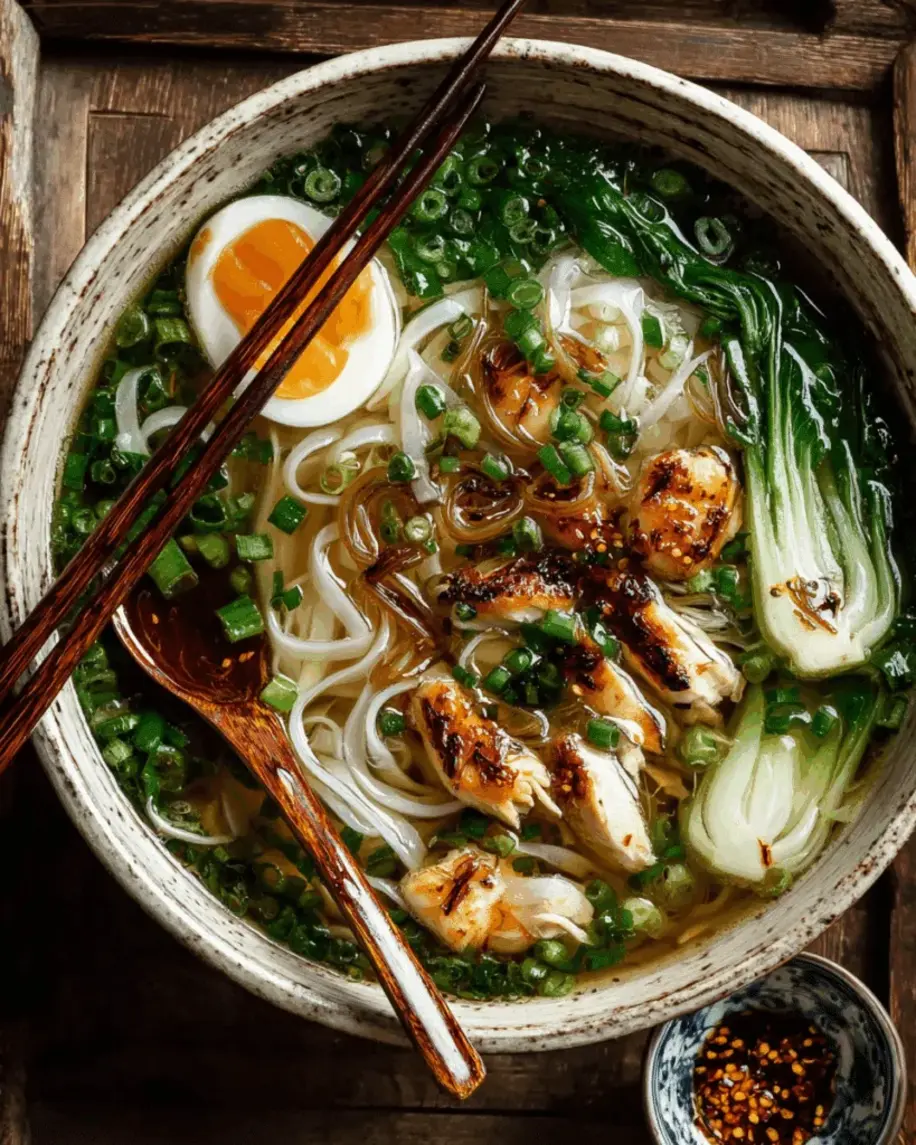
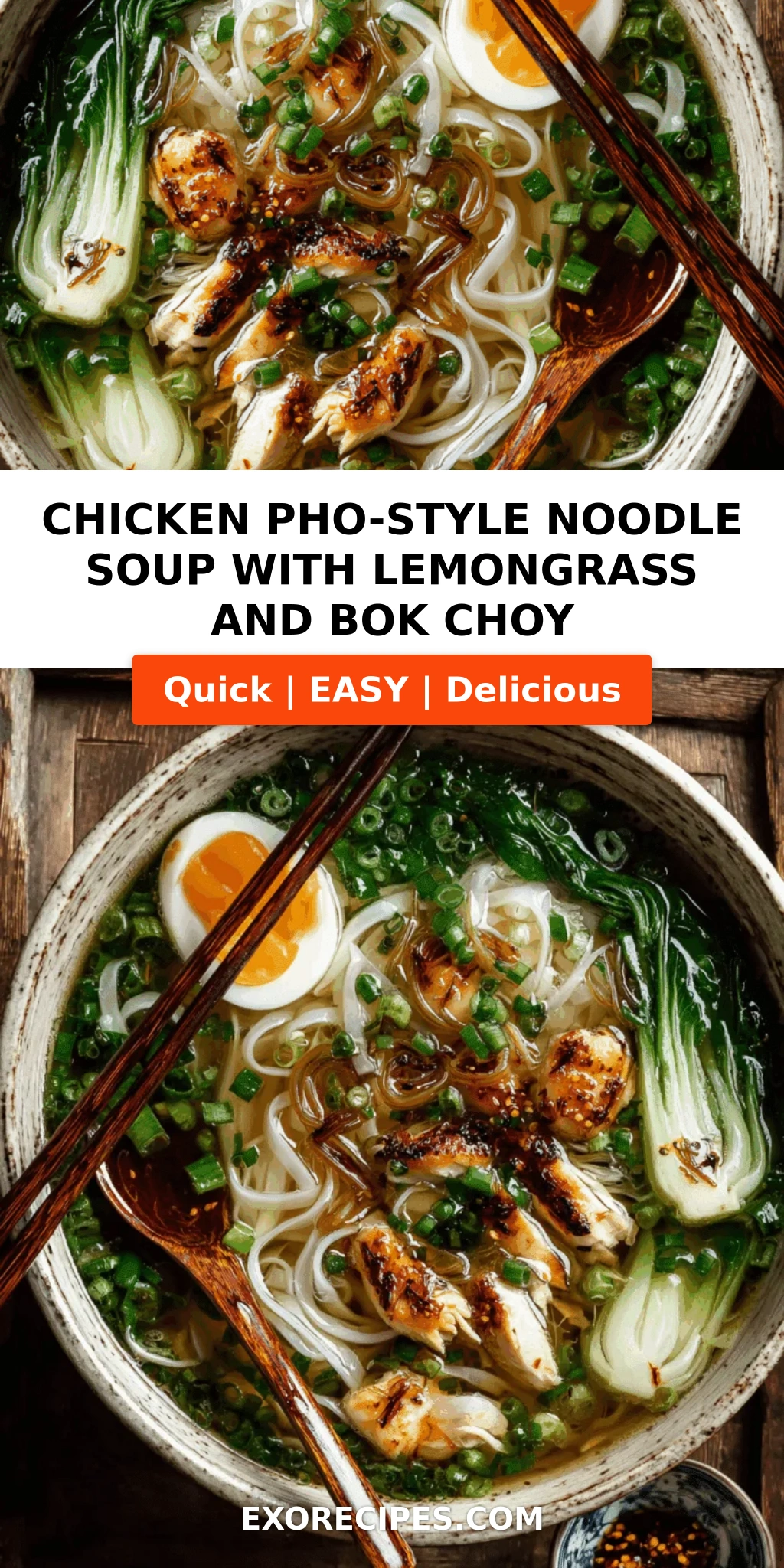
Picture this: a deep amber broth, steaming in your bowl, with tender shreds of chicken, soft rice noodles, and crisp-tender bok choy all swimming together. The lemongrass adds a citrusy undertone that cuts through the richness of the chicken, while the fish sauce brings that signature umami punch. A squeeze of lime and a handful of fresh herbs at the end make every spoonful feel like a trip to your favorite noodle bar. I love how the baby bok choy soaks up the broth—its slight bitterness is a perfect contrast to the sweet-savory balance. This lemongrass chicken soup is everything I crave when the weather turns cold.
What makes this Vietnamese chicken noodle soup different from others you’ll find? I’ve streamlined the process so you get a deeply aromatic broth in just 30 minutes of simmering—no need for hours of stock-making. The secret is charring the ginger and lemongrass (a trick I picked up in a Paris brasseries kitchen) and using high-quality store-bought broth as a base. A common mistake? Overcooking the chicken. I’ll show you exactly how to poach it to silky perfection. By the end of this post, you’ll have a foolproof baby bok choy noodle soup that tastes like it simmered all day.
Why This Chicken Pho-Style Noodle Soup Recipe Is the Best
The Flavor Secret: The magic lies in the aromatics—lemongrass, ginger, star anise, and cinnamon are briefly sautéed after charring to release their oils. This technique, which I learned during my classic French training, creates a deeper, more complex broth than simply simmering the raw spices. The baby bok choy and lemongrass are my twist on the traditional pho, adding a fresh, green note that balances the warm spices.
Perfected Texture: I insist on poaching the chicken breasts gently—never boiling—then shredding them into bite-sized pieces. This keeps the meat juicy and tender. The rice noodles are cooked separately and rinsed under cold water to stop the cooking, ensuring they stay springy rather than mushy when you pour the hot broth over them. The bok choy is blanched for just a minute, so it retains a slight crunch.
Foolproof & Fast: This pho-style noodle soup comes together in 45 minutes, with minimal active work. I’ve designed it for busy home cooks (like my New York neighbors) who want a restaurant-quality meal without the fuss. All the ingredients are available at any well-stocked supermarket—no special trips to an Asian grocer required. Even a beginner can nail this on the first try.
Chicken Pho Recipe Ingredients
Every time I walk through the Union Square Greenmarket in fall, I’m reminded of how lucky we are to have such fresh produce year-round. For this soup, I head straight to the stalls for the baby bok choy and fresh herbs. The lemongrass and ginger I pick up at my local Asian market on Canal Street—it’s a little ritual that connects me to the diverse culinary heartbeat of NYC.
Ingredients List
- 8 cups low-sodium chicken broth
- 2 stalks lemongrass, trimmed and smashed
- 4 slices fresh ginger (1/4-inch thick)
- 2 star anise pods
- 1 cinnamon stick (2 inches)
- 2 tablespoons fish sauce
- 1 tablespoon brown sugar
- 8 ounces flat rice noodles (bánh pho)
- 1 pound boneless, skinless chicken breasts
- 4 heads baby bok choy, halved lengthwise
- 1 cup fresh bean sprouts
- 1/2 cup fresh cilantro leaves
- 1/4 cup fresh Thai basil leaves
- 2 green onions, thinly sliced
- 1 fresh red chili, thinly sliced (optional)
- Lime wedges for serving
Ingredient Spotlight
Lemongrass: This is the star of my lemongrass chicken soup. Look for firm, pale green stalks with a strong citrus scent. To prepare, trim the root end and the top grassy part, then remove the tough outer layers. Smash the stalk with the side of a knife to release its oils—this is key for maximum flavor. If you can’t find fresh lemongrass, use 1 tablespoon of lemongrass paste (found in tubes in the produce section), but the flavor will be milder.
Baby Bok Choy: I love its tender texture and mild, slightly sweet flavor. When choosing, look for heads with bright green leaves and crisp, white stems. It cooks in just a minute, making it perfect for a quick noodle soup. Regular bok choy can be substituted if you cut it into smaller pieces—just increase the blanching time to 2 minutes.
Rice Noodles (bánh pho): These flat, thin noodles are the traditional choice for pho. They’re available in the Asian food aisle of most supermarkets. For this baby bok choy noodle soup, I recommend the 1/4-inch wide variety. Avoid using vermicelli rice noodles, as they are too thin and will become mushy. Soak dried noodles in warm water for 20 minutes before boiling, or use fresh ones from the refrigerated section—just cook them for 30 seconds.
Chicken Breasts: Boneless, skinless breasts are my go-to for this chicken pho recipe because they poach quickly and shred beautifully. For extra juiciness, brine them in a 5% salt water solution for 15 minutes before cooking. You can also use boneless, skinless chicken thighs (increase poaching time to 18 minutes). For a vegetarian version, replace chicken with firm tofu and use vegetable broth.
| Original Ingredient | Best Substitution | Flavor / Texture Impact |
|---|---|---|
| Lemongrass (fresh) | 1 tbsp lemongrass paste | Less intense citrus note; still good |
| Baby bok choy | Swiss chard or spinach (add at end) | Chard is heartier; spinach wilts quickly |
| Rice noodles (bánh pho) | Soba noodles or wide rice sticks | Soba adds nuttiness; rice sticks similar |
| Fish sauce | Soy sauce + squeeze of lime | Less umami; more salty-sour profile |
| Chicken breasts | Chicken thighs or shredded rotisserie chicken | Thighs richer; rotisserie adds smoky notes |
How to Make Chicken Pho-Style Noodle Soup — Step-by-Step
Follow these clear steps, and you’ll have a steaming bowl of Vietnamese chicken noodle soup on the table in under an hour. I’ve included my chef-tested tips and common pitfalls to avoid.
Step 1: Prepare the Broth
In a large pot, combine chicken broth, lemongrass, ginger, star anise, and cinnamon stick. Bring to a boil over high heat, then reduce heat to low and simmer for 20 minutes to infuse the flavors. The broth should be gently bubbling—not rapidly boiling. While it simmers, cover the pot partially to prevent too much evaporation.
💡 mia’s Pro Tip: For an even deeper flavor, char the ginger slices and lemongrass stalks directly over a gas flame or under the broiler for 2-3 minutes per side before adding them to the broth. This adds a subtle smokiness that reminds me of the pho stalls in Paris.
Step 2: Cook the Noodles
While the broth simmers, cook the rice noodles according to package directions until tender (usually 4-6 minutes for dried noodles that have been soaked, or 30 seconds for fresh). Drain in a colander and rinse under cold running water to stop the cooking and remove excess starch. Toss with a little oil to prevent sticking. Set aside.
⚠️ Common Mistake to Avoid: Do not overcook the noodles—they will become mushy when you add the hot broth. They should be just barely tender, with a slight chew.
Step 3: Poach and Shred the Chicken
Add the chicken breasts to the simmering broth, ensuring they are fully submerged. Poach for 12-15 minutes, until the internal temperature reaches 165°F (75°C) on an instant-read thermometer. The broth should be at a gentle simmer—no bubbles breaking the surface. Remove the chicken with tongs and let it cool for 5 minutes on a cutting board. Use two forks to shred into bite-sized pieces.
💡 mia’s Pro Tip: For perfectly juicy chicken, start checking the temperature after 12 minutes. Overcooked chicken becomes dry and stringy. I like to leave some pieces slightly larger for texture contrast.
Step 4: Strain and Season the Broth
Pour the infused broth through a fine-mesh sieve into a clean pot or large bowl, discarding the aromatics (lemongrass, ginger, star anise, cinnamon). Return the clear broth to the pot and stir in fish sauce and brown sugar. Taste and adjust seasoning—you want a balanced salty-sweet-savory profile. Keep the broth warm over low heat.
⚠️ Common Mistake to Avoid: Adding too much fish sauce at once. Start with 2 tablespoons and add more teaspoon by teaspoon. Remember, you can always add, but you can’t take away!
Step 5: Blanch the Bok Choy
Bring a small pot of water to a boil. Add the halved baby bok choy and blanch for 1 minute, until the stems turn bright green and the leaves wilt slightly. Immediately transfer the bok choy to a bowl of ice water to stop the cooking. Drain well and set aside. This step keeps the bok choy vibrant and crisp-tender.
💡 mia’s Pro Tip: If you want extra flavor, blanch the bok choy in the hot broth instead of water—but be careful not to cloud the broth. I prefer water blanching for a cleaner look and taste.
Step 6: Assemble the Bowls
Divide the cooked noodles among 4 large, warmed bowls. Top each with shredded chicken and 2 pieces of blanched bok choy (depending on size). Ladle the hot broth over the top—about 2 cups per bowl. The broth should cover the noodles and meats but leave some exposure for the garnishes.
⚠️ Common Mistake to Avoid: Adding too many noodles—they will absorb the broth and leave you with a thick, starchy soup. Use about 2 ounces of noodles per serving.
Step 7: Garnish and Serve
Place a generous handful of bean sprouts on top, then sprinkle with cilantro leaves, Thai basil, and sliced green onions. Add a few slices of fresh red chili if you like heat. Serve immediately with lime wedges on the side so everyone can squeeze to taste. The fresh herbs and sprouts add crunch and brightness to every spoonful.
💡 mia’s Pro Tip: Set up a “garnish bar” with small bowls of each topping—it makes the meal interactive and lets everyone customize their bowl. This is how we do it at my dinner parties in NYC!
| Step | Action | Duration | Key Visual Cue |
|---|---|---|---|
| 1 | Infuse broth with aromatics | 20 min | Broth becomes fragrant and golden |
| 2 | Cook and rinse noodles | 5–8 min | Noodles are tender but firm, not clumpy |
| 3 | Poach and shred chicken | 12–15 min | Chicken reaches 165°F, shreds easily |
| 4 | Strain and season broth | 5 min | Clear, aromatic liquid |
| 5 | Blanch bok choy | 1 min | Stems turn bright green, leaves soften |
| 6 | Assemble bowls | 2 min | Noodles, chicken, bok choy in each bowl |
| 7 | Garnish and serve | 2 min | Fresh herbs and sprouts on top |
Serving & Presentation
Serving this pho-style noodle soup is an experience in itself. I love bringing the pot to the table and letting everyone build their own bowl—it reminds me of the family-style meals my mother made in Morocco, where diners would customize their tagine with olives and preserved lemons. For a New York twist, I often serve it alongside a simple Vietnamese slaw made from shredded cabbage and a lime-chili dressing.
The key to a beautiful presentation is layering: noodles first, then chicken and bok choy, then the hot broth poured around them. Garnishes should be piled high and bright—don’t skimp on the cilantro and Thai basil. I also like to arrange the lime wedges on a small plate and offer extra fish sauce and chili on the side. The contrast of the hot broth with the cool, crunchy sprouts and herbs is what makes each bite exciting.
For a complete meal, pair this soup with a side of crispy spring rolls or a fresh mango salad. A crisp lager or a light, citrusy IPA is my go-to beverage—it cuts through the richness of the broth. And if you’re feeling fancy, a garnish of edible flowers (nasturtiums, for example) adds a pop of color that looks stunning on your Instagram feed.
| Pairing Type | Suggestions | Why It Works |
|---|---|---|
| Side Dish | Vietnamese spring rolls, pickled daikon & carrots, cucumber salad | Adds crunch and acidity to balance the warm soup |
| Sauce / Dip | Hoisin-sriracha mix, spicy fish sauce dip | Offers extra layers of sweet-spicy-umami |
| Beverage | Crisp lager, hoppy IPA, iced jasmine tea, sparkling water with lime | Refreshing palate cleansers; tea complements the herbal notes |
| Garnish | Extra Thai basil, mint sprigs, sliced jalapeño, lime zest | Enhances freshness and allows customization |
Make-Ahead, Storage & Reheating
Living in NYC means my schedule is always packed, so I rely on make-ahead strategies for this soup. The best approach is to prep the components separately—broth, shredded chicken, blanched bok choy, and cooked noodles—then assemble just before serving. This prevents the noodles from turning to mush and the bok choy from losing its vibrant color.
| Method | Container | Duration | Reheating Tip |
|---|---|---|---|
| Refrigerator | Separate airtight containers for broth, chicken, veggies, noodles | Up to 4 days | Reheat broth on stove until simmering; pour over noodles and toppings (noodles need 30-second dip in hot water) |
| Freezer | Freezer-safe bags or containers (broth only, no noodles) | Up to 3 months | Thaw overnight in fridge; reheat gently—do not boil. Cook fresh noodles and bok choy at serving time |
| Make-Ahead | Prepare broth, shred chicken, blanch bok choy up to 2 days ahead | Assemble: 5 min | Keep noodles separate and cook day of serving. Reheat broth on low; add fresh herbs just before serving |
One thing I’ve learned from years of meal prepping: never add the noodles and bok choy directly to the broth during storage. They will continue to cook and become unpleasantly soft. Instead, store the broth in a wide-mouth mason jar and the toppings in separate containers. When you’re ready to eat, simply reheat the broth, prepare fresh noodles (if possible), and assemble. The result is almost as good as day-one fresh.
Variations & Easy Swaps
| Variation | Key Change | Best For | Difficulty Impact |
|---|---|---|---|
| Spicy Lemongrass Tofu Pho | Replace chicken with pan-seared firm tofu; add 1 tsp sambal oelek to broth | Vegetarians and spice lovers | Easy |
| Coconut-Ginger Chicken Pho | Sub 1 cup broth with coconut milk; add 1 tsp grated fresh ginger extra | Creamy, dairy-free comfort | Easy |
| Moroccan-Spiced Chicken Noodle Soup | Add 1 tsp ras el hanout, 1/2 tsp turmeric, and 1/4 cup chopped cilantro stems to aromatics; replace bok choy with turnip greens | Fusion twist, reminiscent of mother’s cooking | Medium (new spice blend) |
Spicy Lemongrass Tofu Pho
For a vegetarian version that doesn’t skimp on flavor, press and cubes of firm tofu, then sear in a hot pan with a drizzle of soy sauce until golden. Add a teaspoon of sambal oelek (chili garlic paste) to the broth for a fiery kick. The tofu soaks up the lemongrass-flavored broth beautifully, and the extra heat is perfect for a cold evening. This variation is a staple in my Meatless Monday rotation.
Coconut-Ginger Chicken Pho
If you love creamy soups, try this twist: replace 1 cup of the chicken broth with full-fat coconut milk. Stir in an extra teaspoon of grated fresh ginger and finish with a squeeze of lime. The coconut milk mellows the spices and creates a luscious, velvety broth. I developed this version for a friend who is lactose intolerant, and it’s been a hit ever since. Pair it with a side of crispy spring rolls for a complete meal.
Moroccan-Spiced Chicken Noodle Soup
This is my personal tribute to the flavors I grew up with. Add 1 teaspoon of ras el hanout (a North African spice blend), ½ teaspoon of turmeric, and ¼ cup of chopped cilantro stems along with the other aromatics. Swap the bok choy for turnip greens or Swiss chard, which stand up well to the robust spices. The result is a lemongrass chicken soup that bridges my Moroccan roots and my love for Vietnamese food. It’s unexpected but deeply comforting.
What is the best way to infuse lemongrass flavor into chicken pho broth?
The key is to release the essential oils in the lemongrass before adding it to the broth. Start by trimming the tough outer leaves and root end, then smash the stalk firmly with the side of a chef’s knife or a heavy pan. For even more depth, char the smashed lemongrass over an open flame or under the broiler for 2-3 minutes until fragrant and slightly blackened. Add it to the broth along with the ginger, star anise, and cinnamon, then simmer gently for at least 20 minutes. The longer you simmer, the more pronounced the lemongrass flavor will be. Straining the broth afterward removes the fibrous pieces while keeping the citrusy essence.
Can I substitute baby bok choy with another green in this pho-style soup?
Absolutely. Baby bok choy gives a mild, sweet flavor and a tender-crisp texture, but several greens work well as substitutes. Swiss chard (especially the rainbow variety) is a great option—blanch it for 1.5 minutes. Spinach wilts very quickly, so add it directly to the hot broth just before serving. Tatsoi, a mild Asian green, is another excellent choice and cooks in under a minute. For a heartier option, use kale (remove the stems and blanch for 2 minutes). Each substitution will slightly change the flavor profile, but the soup will still be delicious.
How long should I simmer the chicken to get a rich pho broth without overcooking it?
For this recipe, the chicken is poached in the already-infused broth, not simmered for hours. Once the aromatics have steeped for 20 minutes, add the chicken breasts and poach at a gentle simmer (around 180-190°F) for 12-15 minutes, depending on the thickness of the breasts. The internal temperature should reach 165°F. Overcooking leads to dry, stringy meat. If you want a richer broth, you can simmer the aromatics for 30 minutes before adding the chicken, but avoid boiling the chicken itself. Shredding after poaching keeps the meat juicy.
What type of noodles work best for chicken pho-style soup with bok choy and lemongrass?
Flat rice noodles (bánh pho) are the traditional choice and work perfectly here. They are about 1/4-inch wide and have a delicate, slightly chewy texture that soaks up broth without becoming mushy. Dried bánh pho are widely available—soak them in warm water for 20 minutes before boiling, then cook for 4-6 minutes. You can also use fresh rice noodles (from the refrigerated section) which need just 30 seconds in boiling water. Avoid vermicelli rice noodles (thin like angel hair) as they will become too soft. Soba noodles or wide wheat noodles can be used in a pinch, but the flavor will differ.
Can I make this chicken pho recipe in an Instant Pot or pressure cooker?
Yes, you can adapt this recipe for a pressure cooker to speed up the broth infusion. Use the sauté function to char the lemongrass and ginger directly in the pot. Add the broth, star anise, and cinnamon, then cook on high pressure for 10 minutes. Quick-release, then add the chicken breasts (sliced in half if thick) and cook on high pressure for 5 minutes. Quick-release again, remove the chicken, strain the broth, and proceed with the remaining steps. The noodles should still be cooked separately on the stovetop. This method cuts the total time to about 25 minutes.
Is this lemongrass chicken soup gluten-free?
Yes, this recipe is naturally gluten-free as long as you use gluten-free fish sauce and rice noodles. Most brands of fish sauce (like Red Boat or Three Crabs) are made from anchovies, salt, and water, with no gluten. Rice noodles are made from rice flour and water, so they are safe. The other ingredients—chicken, vegetables, spices—are all gluten-free. Be sure to check your chicken broth label; some broths may contain wheat-based flavorings. I recommend low-sodium organic broth to avoid additives. This soup is perfect for those with celiac disease or gluten sensitivity.
How do I prevent the rice noodles from sticking together after cooking?
After draining the cooked noodles, rinse them immediately under cold running water to stop the cooking and wash away excess starch. Then toss them with a teaspoon of neutral oil (like avocado or grapeseed) to coat lightly. Spread the noodles on a baking sheet or in a large bowl—don’t pile them. If you are not serving them right away, keep them at room temperature for up to 2 hours. For longer storage, refrigerate the oiled noodles in a sealed container, but note that they will become firmer and will need a quick dip in hot water before serving to loosen them.
Can I use chicken thighs instead of breasts for this pho-style noodle soup?
Definitely. Boneless, skinless chicken thighs will add even more flavor and moisture to the soup because they have a higher fat content. The cooking time will be slightly longer—poach thighs for 18-22 minutes until they reach 165°F. You can also use bone-in, skin-on thighs; just simmer them for about 25 minutes, then remove the bones and skin before shredding. The extra fat from the thighs enriches the broth beautifully. If you prefer dark meat, this is an excellent swap.
What can I serve alongside this baby bok choy noodle soup for a complete meal?
This soup is fairly hearty on its own, but for a fuller meal, I recommend serving it with Vietnamese-style spring rolls (fresh or fried), a simple cucumber salad with rice vinegar, or crispy tofu bites. A side of pickled vegetables (daikon and carrots) adds a tangy crunch. For a lighter option, go with a green papaya salad. In terms of beverages, a crisp lager or a jasmine iced tea complements the aromatic broth perfectly. Don’t forget extra lime wedges and fresh herbs so everyone can customize their bowl.
How can I make this Vietnamese chicken noodle soup spicier?
There are several ways to add heat without overpowering the broth. Start by adding a fresh red chili (such as Thai bird or serrano) sliced into the broth while it simmers—remove it before serving to control the heat level. You can also stir in chili crisp or sambal oelek to taste at the table. For a smoky kick, toast dried chiles in a dry pan and then crumble them over the finished soup. Another favorite: mix a teaspoon of sriracha into the broth just before ladling. Remember that the herbs and lime juice can balance the heat, so adjust gradually.
Share Your Version!
I’d love to see how this chicken pho recipe turns out in your kitchen! If you made any swaps—maybe you used rainbow chard instead of bok choy, or added extra chili—tell me all about it in the comments below. Your feedback helps other home cooks, and it always inspires me to try new variations.
Don’t forget to snap a photo of your steaming bowl and tag me on Instagram or Pinterest @exorecipes. I love seeing the fresh herbs, the golden broth, and the happy faces around your table. And if you have a burning question about the technique or an ingredient, ask away—I read every comment and answer each one personally. From my NYC kitchen to yours — I hope this recipe brings as much warmth to your table as it does to mine. — mia 🧡
Love This Recipe? Save It to Pinterest!
If you enjoyed this Chicken Pho-Style Noodle Soup with Baby Bok Choy & Lemongrass recipe, don’t let it get lost in your browser tabs! 😄 Pin it now so you can find it again anytime — and explore hundreds more tried-and-tested recipes waiting for you on my Pinterest boards.
👉 Follow mia on Pinterest @exorecipes
📌 Pin this recipe · 🔁 Re-pin your favorites · 💬 Tag me when you make it — I love seeing your creations!
⭐⭐⭐⭐⭐
Did you love this recipe? Leave a 5-star rating below and tell me what you think! Your stars help other readers discover this warm bowl of comfort. 💬
Chicken Pho-Style Noodle Soup with Baby Bok Choy & Lemongrass
- Prep Time: 15 minutes
- Cook Time: 30 minutes
- Total Time: 45 minutes
- Yield: 4 1x
- Method: Main Course
- Cuisine: Vietnamese-inspired
Description
A fragrant and comforting chicken noodle soup inspired by Vietnamese pho, featuring tender chicken, baby bok choy, and aromatic lemongrass in a savory broth.
Ingredients
- 8 cups low-sodium chicken broth
- 2 stalks lemongrass, trimmed and smashed
- 4 slices fresh ginger (1/4-inch thick)
- 2 star anise pods
- 1 cinnamon stick (2 inches)
- 2 tablespoons fish sauce
- 1 tablespoon brown sugar
- 8 ounces flat rice noodles (bánh pho)
- 1 pound boneless, skinless chicken breasts
- 4 heads baby bok choy, halved lengthwise
- 1 cup fresh bean sprouts
- 1/2 cup fresh cilantro leaves
- 1/4 cup fresh Thai basil leaves
- 2 green onions, thinly sliced
- 1 fresh red chili, thinly sliced (optional)
- Lime wedges for serving
Instructions
- Step 1: Prepare the broth. In a large pot, combine chicken broth, lemongrass, ginger, star anise, and cinnamon stick. Bring to a boil, then reduce heat and simmer for 20 minutes to infuse flavors.
- Step 2: While broth simmers, cook the rice noodles according to package directions until tender. Drain and rinse under cold water; set aside.
- Step 3: Add chicken breasts to the simmering broth. Poach for 12-15 minutes until cooked through. Remove chicken, let cool slightly, then shred into bite-sized pieces.
- Step 4: Strain the broth through a fine-mesh sieve, discarding the aromatics. Return broth to pot and stir in fish sauce and brown sugar. Keep warm over low heat.
- Step 5: Bring a small pot of water to a boil. Blanch baby bok choy halves for 1 minute, then drain and plunge into ice water to stop cooking. Drain again.
- Step 6: To serve, divide cooked noodles among 4 large bowls. Top with shredded chicken and blanched bok choy. Ladle hot broth over the top.
- Step 7: Garnish with bean sprouts, cilantro, Thai basil, green onions, and sliced chili if desired. Serve with lime wedges on the side.
Notes
For a richer broth, char the ginger and lemongrass over an open flame before adding to the pot. Substitute chicken thighs if preferred. Adjust fish sauce to taste.
Nutrition
- Calories: 385
- Sugar: 5g
- Fat: 6g
- Carbohydrates: 48g
- Protein: 32g
Tried This Recipe? Leave a Comment!
Did you make this recipe? I’d love to hear how it turned out! Please leave a comment and a rating below. Your feedback helps other home cooks and supports cheerychop.com!
For more delicious inspiration, follow me on Pinterest!
