Table of Contents
Chicken & Mushroom Pad Thai with Peanuts and Lemon – Easy Pad Thai Recipe
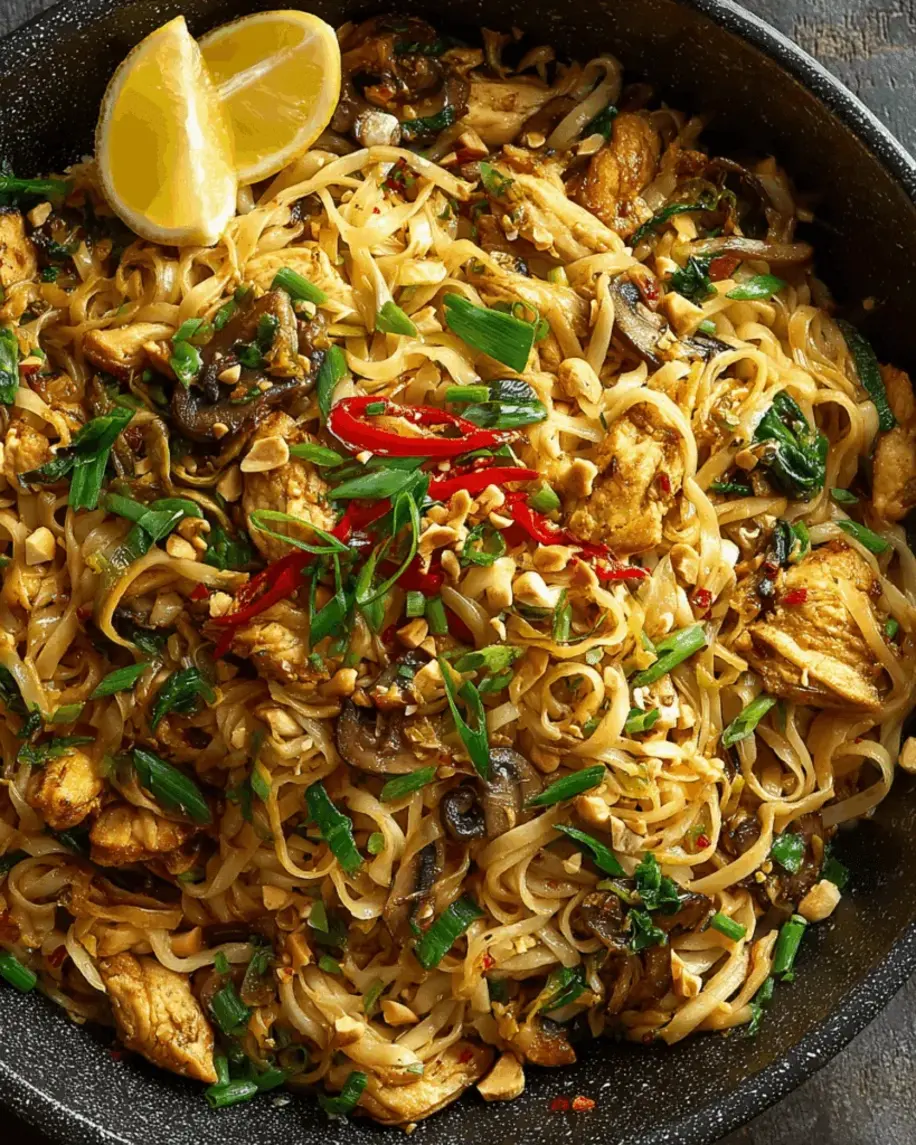
Growing up in my mother’s kitchen in Morocco, I learned that balance is the soul of great cooking—sweet, sour, salty, and spicy all in one bite. That same philosophy drives my Chicken & Mushroom Pad Thai with Peanuts and Lemon, a quick weeknight stir-fry that brings the vibrant flavors of Thailand to your table. This easy pad thai recipe combines tender chicken, earthy cremini mushrooms, and chewy rice noodles with a tangy sauce brightened by fresh lemon—a twist I picked up during my pastry training in Paris, where citrus is golden. In just 30 minutes, you’ll have a dish that tastes like it came from your favorite Thai takeout spot, but made with love in your own kitchen.
Imagine the sizzle of chicken hitting a hot wok, the nutty aroma of roasted peanuts, and the pop of fresh bean sprouts. The sauce coats every strand of noodle with a glossy, savory-sweet finish, while the lemon wedge adds a clean, bright note that cuts through the richness. I love using cremini mushrooms because they soak up the tamarind and soy like little sponges, adding an earthy depth that keeps you going back for more. The crunch of peanuts and the freshness of cilantro make every forkful a celebration of textures—this is pad thai at its most satisfying.
As a trained chef who has worked in Paris patisseries and now cooks in a tiny NYC kitchen, I’ve perfected this version to be foolproof. My secret? Cook the ingredients separately first to get that perfect caramelization, then toss everything together at the end. It’s a technique I borrowed from French stir-fry methods and it makes all the difference. In this post, I’ll also share my pro tip for avoiding sticky noodles and the one common mistake that can ruin your pad thai. Ready to stir-fry like a pro? Let’s get cooking!
Why This Chicken & Mushroom Pad Thai Recipe Is the Best
The Flavor Secret: My pad thai sauce gets its tangy backbone from tamarind paste—a treasure I first discovered at a spice souk in Marrakech. Combined with fish sauce, brown sugar, and a whisper of sriracha, it creates that iconic sweet-sour balance. The lemon wedge at the end isn’t just garnish; it’s a burst of acidity that lifts the entire dish. I learned in Paris that finishing a dish with citrus is a chef’s trick to make flavors sing—and it works beautifully here.
Perfected Texture: The key to great pad thai is avoiding mushy noodles. I cook the rice noodles just shy of al dente, then rinse them with cold water to stop the cooking. When they hit the hot wok with the sauce, they absorb just enough liquid to become tender but not sticky. Cooking the chicken and mushrooms separately ensures each component gets a golden sear rather than steaming in the pan. It’s a little extra effort that pays off in texture heaven.
Foolproof & Fast: Even if you’ve never made pad thai at home, this recipe is designed for success. I’ve tested it with home cooks in my NYC cooking classes, and everyone walks away with a perfect plate. The total time is 30 minutes—faster than delivery! Plus, the ingredients are easy to find: your local grocery store carries rice noodles, tamarind paste is available in the Asian section (or online), and cremini mushrooms are a staple. You’ll feel like a pro chef without leaving home.
Pad Thai Recipe Ingredients
I like to shop for my pad thai ingredients at the Union Square Greenmarket in NYC—the mushrooms there are always heavenly. My mother would use whatever protein she had on hand, but I’ve honed this list to deliver maximum flavor with minimum fuss. Here’s exactly what you’ll need.
Ingredients List
- 8 oz flat rice noodles (pad Thai style)
- 2 boneless, skinless chicken breasts, thinly sliced
- 8 oz cremini mushrooms, sliced
- 3 tbsp vegetable oil, divided
- 2 large eggs
- 1 cup fresh bean sprouts
- 1/2 cup roasted peanuts, roughly chopped
- 3 green onions, sliced
- 1/4 cup fresh cilantro, chopped
- 1 lemon, cut into wedges
- For the sauce:
- 3 tbsp fish sauce
- 2 tbsp tamarind paste
- 2 tbsp brown sugar
- 1 tbsp soy sauce
- 1 tsp sriracha (optional)
- 1 clove garlic, minced
Ingredient Spotlight
Rice Noodles: Also called “pad Thai noodles,” they’re available in most supermarkets. Look for flat, medium-width rice sticks. I prefer the brand that comes in a 8 oz package—soak them in warm water for 20 minutes before cooking, or follow package instructions. You can substitute with fresh rice noodles (found in the refrigerated section) but reduce cooking time.
Cremini Mushrooms: These are baby bellas—they have more flavor than white mushrooms. Choose firm, dry mushrooms with no sliminess. If you can’t find cremini, shiitake, oyster, or even portobello (cut in strips) work well. Each adds a slightly different earthy note; shiitakes are my second favorite for their umami punch.
Tamarind Paste: The soul of pad thai! It gives that distinct tangy-sweet flavor. I buy it in a jar from the Asian aisle—it keeps for months in the fridge. If you can’t find it, substitute with 2 tablespoons lime juice mixed with 1 tablespoon extra brown sugar. The flavor will be brighter and less complex, but still delicious.
| Original Ingredient | Best Substitution | Flavor / Texture Impact |
|---|---|---|
| Rice Noodles | Fresh rice noodles | Softer, cook faster – reduce stir-fry time by 1 minute |
| Cremini Mushrooms | Shiitake mushrooms | More intense umami, slightly chewier texture |
| Tamarind Paste | Lime juice + extra brown sugar | Brighter, less complex; add a dash of Worcestershire for depth |
| Fish Sauce | Soy sauce + a pinch of salt | Less pungent, still savory – add 1 tsp miso paste for extra oomph |
| Lemon | Lime wedges | More authentic Thai flavor, slightly less sweet |
How to Make Chicken & Mushroom Pad Thai – Step-by-Step
Don’t be intimidated—pad thai comes together in a flash once your ingredients are prepped. I’ll guide you through each step with chef-level tips to ensure wok-fresh perfection.
Step 1: Prep the Noodles
Cook the rice noodles according to package directions until just tender—usually 4–5 minutes in boiling water, then drain. Rinse under cold water to stop cooking and prevent sticking. Toss with a few drops of vegetable oil if making ahead.
💡 mia’s Pro Tip: Do not overcook the noodles! They should still have a slight bite when you drain them, because they’ll continue to cook in the wok. I always set a timer for 1 minute less than the package says.
Step 2: Make the Sauce
In a small bowl, whisk together fish sauce, tamarind paste, brown sugar, soy sauce, sriracha (if using), and minced garlic until the sugar dissolves. Set aside. The sauce will look thin, but it thickens as it coats the noodles.
⚠️ Common Mistake to Avoid: Don’t skip dissolving the brown sugar fully. Lumps of sugar in the sauce can burn in the wok. Whisk it well, or warm the mixture slightly if needed.
Step 3: Cook the Chicken
Heat 1 tablespoon vegetable oil in a large wok or skillet over high heat until shimmering. Add sliced chicken in a single layer (work in batches if needed) and cook without moving for 1 minute to get a sear. Then stir-fry until browned and cooked through, about 3–4 minutes total. Transfer to a plate.
💡 mia’s Pro Tip: Pat the chicken slices dry with paper towels before cooking. Moisture is the enemy of browning—you want a deep golden crust, not steamed meat.
Step 4: Cook the Mushrooms
Add another tablespoon of oil to the wok. Add sliced mushrooms and cook, stirring occasionally, until golden and softened (about 3–4 minutes). They should release their liquid and then reabsorb it. Transfer to the plate with the chicken.
⚠️ Common Mistake to Avoid: Overcrowding the mushrooms causes them to steam instead of sear. Cook them in a single layer and let them brown properly. If your wok is small, do them in two batches.
Step 5: Scramble the Eggs
Reduce heat to medium-high and add the remaining 1 tablespoon oil. Crack eggs directly into the wok and scramble until just set but still moist (about 1 minute). Break them into small pieces with your spatula.
Step 6: Combine Everything
Return the chicken and mushrooms to the wok. Add the cooked noodles and pour the prepared sauce over everything. Toss continuously with tongs or a spatula until all ingredients are well coated and heated through—about 2 minutes. The noodles should be glossy and the sauce should cling.
💡 mia’s Pro Tip: Use high heat here and keep tossing. The noodles absorb the sauce quickly; if they start to stick, add a splash of water (1–2 tablespoons) to loosen them.
Step 7: Serve Immediately
Remove from heat. Divide among plates and top with bean sprouts, chopped peanuts, sliced green onions, and cilantro. Serve with lemon wedges on the side. Squeeze lemon over individual servings just before eating—it’s a game-changer!
| Step | Action | Duration | Key Visual Cue |
|---|---|---|---|
| 1 | Cook noodles | 4–5 min | Tender but still chewy |
| 2 | Make sauce | 2 min | Sugar dissolved, smooth liquid |
| 3 | Sear chicken | 4–5 min | Golden brown, cooked through |
| 4 | Sauté mushrooms | 3–4 min | Golden edges, softened |
| 5 | Scramble eggs | 1 min | Just set, still moist |
| 6 | Combine & toss | 2 min | Noodles glossy, everything coated |
Serving & Presentation
I love to serve this pad thai in shallow bowls, piled high so the garnishes stay crunchy. Arrange the bean sprouts, crushed peanuts, green onions, and cilantro in separate little mounds on top—it looks beautiful and lets each diner customize their forkful. The lemon wedges go on the side; I always tell my guests, “Squeeze it yourself—it’s the final touch that wakes up the whole dish.”
Inspired by my French training, I like to add a tiny pinch of flaky sea salt and a drizzle of extra-virgin olive oil just before serving (yes, olive oil on pad thai—trust me, it adds a fruity richness that balances the acidity). My mother would serve this with a simple Moroccan carrot salad on the side, but here in NYC I often pair it with a cold cucumber salad or steamed edamame. For a complete Thai-inspired meal, start with fresh spring rolls and finish with coconut sticky rice and mango.
| Pairing Type | Suggestions | Why It Works |
|---|---|---|
| Side Dish | Cucumber salad, steamed edamame, fresh spring rolls | Crisp, cool contrast to warm noodles |
| Sauce / Dip | Extra sriracha, sweet chili sauce, tamarind dipping sauce | Adds heat or extra tang as desired |
| Beverage | Thai iced tea, crisp lager, dry Riesling | Creamy or light drinks balance spice and acidity |
| Garnish | Extra crushed peanuts, Thai basil, lime zest | Adds freshness, crunch, and fragrance |
Make-Ahead, Storage & Reheating
Between my busy NYC schedule and recipe testing, I know the value of a meal prep hero. This pad thai stores surprisingly well—just keep the toppings separate and stick to these guidelines.
| Method | Container | Duration | Reheating Tip |
|---|---|---|---|
| Refrigerator | Airtight container, toppings separate | Up to 3 days | Reheat in a hot wok with a splash of water, tossing until hot. |
| Freezer | Freezer-safe bag or container, no toppings | Up to 2 months | Thaw in fridge overnight, then stir-fry with 1 tsp oil and a splash of water. |
| Make-Ahead | Sauce + cooked noodles (tossed with oil) separate from protein/veg | 2 days in fridge | Assemble and stir-fry when ready – keep everything cold until needed. |
For reheating, I never use the microwave—it makes noodles rubbery. Instead, heat a nonstick or carbon steel pan over medium-high heat, add a teaspoon of oil, and toss the pad thai until steaming. If the noodles seem dry, add a tablespoon of water or chicken broth. The bean sprouts should always be added fresh after reheating to maintain their crunch. And don’t forget the lemon! A fresh squeeze makes leftovers taste new again.
Variations & Easy Swaps
| Variation | Key Change | Best For | Difficulty Impact |
|---|---|---|---|
| Vegetarian Pad Thai | Replace chicken with extra mushrooms or tofu; use soy sauce instead of fish sauce | Meat-free Monday, vegan guests | Easy (same process) |
| Spicy Peanut Pad Thai | Add 2 tbsp peanut butter to sauce and increase sriracha to 2 tsp; top with chili flakes | Peanut lovers, heat seekers | Easy (just sauce tweak) |
| Lemony Shrimp Pad Thai | Substitute chicken with 12 oz peeled shrimp; add lemon zest to sauce | Seafood lovers, lighter meal | Easy (shrimp cooks even faster – 2 min per side) |
Vegetarian Pad Thai
For a hearty meatless version, I swap the chicken for 12 oz of extra-firm tofu (pressed and cubed) plus an extra cup of mushrooms. Pan-fry the tofu until golden before adding the mushrooms—it gets beautifully crisp. Use a vegetarian “fish sauce” (made from mushrooms) or just double the soy sauce. My mother would approve of this plant-forward twist, and it’s become a favorite in my NYC cooking classes.
Gluten-Free Adaptation
Pad thai is naturally gluten-free if you swap two ingredients: use tamari instead of soy sauce, and ensure your fish sauce is certified GF (Red Boat is a great brand). Rice noodles are already gluten-free. The rest of the ingredients—chicken, mushrooms, eggs, peanuts—are naturally safe. I tested this version with a gluten-intolerant friend and she couldn’t tell the difference!
Spring Vegetable Pad Thai
In spring, when the Union Square market overflows with asparagus and snap peas, I skip the chicken and load up on vegetables. Add 1 cup of thinly sliced asparagus (cooked with the mushrooms) and a handful of snap peas tossed in at the end. The lemony finish is even brighter with a sprinkle of fresh mint alongside the cilantro. It’s my seasonal celebration on a plate.
Can I use a different type of mushroom in Chicken & Mushroom Pad Thai?
Absolutely! While cremini mushrooms are my go-to for their earthy flavor and meaty texture, you can easily swap them. Shiitake mushrooms add an even deeper umami note—just remove the stems before slicing. Oyster mushrooms are more delicate and cook faster, so keep an eye on them. For a wild option, try chanterelles in late summer; their fruity aroma pairs beautifully with the lemon. Whatever you choose, aim for about the same weight (8 oz) and slice them evenly for consistent cooking. Avoid canned mushrooms—they’re too watery and will make your pad thai soggy.
How do I prevent the rice noodles from getting too sticky or mushy in Pad Thai?
The number one rule: cook your noodles until just al dente, about 1 minute less than the package directs. They will continue to cook when you toss them in the hot wok. After draining, rinse them thoroughly with cold water to stop the cooking and wash away excess starch—that’s what causes stickiness. Then toss them with a teaspoon of vegetable oil right away. If you’re not using them immediately, keep them lightly oiled and covered. When stir-frying, use high heat and keep the noodles moving; if they start clumping, add a splash of water or extra sauce to loosen them.
What can I substitute for lemon in this Pad Thai recipe if I don’t have one?
Lime is the best substitute—it’s more authentic to Thai cuisine and offers a slightly different, but equally bright, acidity. Use the same amount (wedges for squeezing). If you don’t have lime either, a splash of rice vinegar (about 1 tablespoon) added to the sauce can mimic the tang. Alternatively, a mixture of equal parts white vinegar and water with a pinch of sugar can work in a pinch. But honestly, I love lemon in this recipe because it’s a bit sweeter and softer than lime, and it’s usually easier to find in US grocery stores. Don’t skip the citrus—it’s essential for balance!
Should I cook the chicken and mushrooms separately before adding them to the Pad Thai?
Yes, absolutely! This is one of the most important tips for restaurant-quality pad thai. Cooking the chicken and mushrooms separately (and in batches if needed) allows each to get a proper sear. Chicken should brown deeply, not steam, which only happens when it has room in the pan. Mushrooms need to caramelize to release their earthy flavor. If you crowd the pan, they release water and boil instead of browning. By removing them after cooking and combining everything at the end with the sauce, you keep the texture perfect and prevent the noodles from getting waterlogged.
Can I make Chicken & Mushroom Pad Thai ahead of time for a party?
You can prep components 2 days ahead: cook the noodles (toss with oil and refrigerate), slice the chicken and mushrooms, and make the sauce. Store everything separately. For the best texture, I recommend stir-frying the chicken, mushrooms, and eggs fresh on the day you serve. However, if you need to reheat a fully cooked batch, it reheats well in a hot pan with a splash of water. Keep garnishes like bean sprouts, peanuts, and cilantro fresh until serving. Pro tip: squeeze the lemon just before eating, not earlier—it loses its punch.
What’s the best way to reheat leftover Pad Thai without ruining the noodles?
Skip the microwave—it makes rice noodles rubbery and tough. Instead, reheat leftovers in a nonstick skillet or wok over medium-high heat. Add a teaspoon of oil and a splash of water (or chicken broth), then toss the noodles until steaming hot, about 2-3 minutes. The steam from the water helps rehydrate the noodles without making them mushy. If you have fresh bean sprouts, add them after reheating to keep them crunchy. And always finish with a fresh squeeze of lemon juice—it revitalizes the flavors as if the dish were just made.
Is tamarind paste necessary, or can I skip it?
Tamarind paste is what gives pad thai its signature sweet-sour flavor—I wouldn’t skip it entirely. But if you can’t find tamarind paste, a good substitute is 2 tablespoons of lime juice mixed with 1 tablespoon of extra brown sugar (to replicate the sweetness). Some cooks also add a teaspoon of Worcestershire sauce for depth. However, tamarind is widely available in the international aisle of most US supermarkets or online, and I recommend seeking it out. It keeps for months in the fridge, so one jar will last through many pad thai cravings.
Why are bean sprouts in pad thai—are they essential?
Bean sprouts add a wonderful fresh crunch that contrasts with the soft noodles and tender chicken. They’re not strictly essential for the flavor, but they bring texture and a light, vegetal freshness that I really love. If you can’t find fresh bean sprouts, try thinly sliced cucumber or julienned carrots for a similar crunch. You can also add shredded cabbage or even mung bean sprouts (same family). That said, if you want the most authentic pad thai experience, I encourage you to pick up a bag of sprouts—they’re cheap and transform the dish.
Can I use a different type of noodle for this Pad Thai recipe?
Traditional pad thai uses flat rice noodles, but in a pinch you can substitute other Asian noodles. Thin rice noodles (vermicelli) will work, though they have a very different texture—thinner and more delicate. Soba noodles (made from buckwheat) are an option, but they have a nutty flavor that changes the profile. For a gluten-free alternative, use kelp noodles or shirataki noodles; just note that they don’t absorb flavor as well. If you use spaghetti or linguine, you’ll have a decent stir-fry but it won’t taste like pad thai. Stick to rice noodles for the real deal!
How spicy is this Chicken & Mushroom Pad Thai?
This recipe as written is mildly spicy—the sriracha is optional and only adds a gentle warmth. If you’re sensitive to heat, leave out the sriracha; the tamarind and brown sugar still make a delicious sauce. For those who love spice, increase the sriracha to 1-2 tablespoons, add a pinch of red pepper flakes while cooking, or serve with extra sriracha on the table. You can also drizzle with chili oil at the end. The lemon and peanuts help balance the heat, so feel free to adjust to your tolerance. I usually make a medium-spicy version for my family and it’s always a hit.
Share Your Version!
I’d love to see how your Chicken & Mushroom Pad Thai turns out! Did you squeeze extra lemon? Add more sriracha? Try a wild mushroom mix? Drop a comment below with your star rating—your feedback helps the whole community. And if you snap a photo, tag me on Instagram or Pinterest @exorecipes—I share my favorites every week. What’s your go-to pad thai twist? Let’s keep this conversation cooking!
From my NYC kitchen to yours — I hope this recipe brings as much warmth to your table as it does to mine. — mia 🧡
Love This Recipe? Save It to Pinterest!
If you enjoyed this Chicken & Mushroom Pad Thai recipe, don’t let it get lost in your browser tabs! 😄 Pin it now so you can find it again anytime — and explore hundreds more tried-and-tested recipes waiting for you on my Pinterest boards.
👉 Follow mia on Pinterest @exorecipe
📌 Pin this recipe · 🔁 Re-pin your favorites · 💬 Tag me when you make it — I love seeing your creations!
Chicken & Mushroom Pad Thai with Peanuts and Lemon
- Prep Time: 15 minutes
- Cook Time: 15 minutes
- Total Time: 30 minutes
- Yield: 4 1x
- Method: Main Course
- Cuisine: Thai
Description
A tangy and savory pad Thai with tender chicken, earthy mushrooms, crunchy peanuts, and a bright squeeze of lemon. Quick enough for a weeknight dinner but impressive enough for guests.
Ingredients
- 8 oz flat rice noodles (pad Thai style)
- 2 boneless, skinless chicken breasts, thinly sliced
- 8 oz cremini mushrooms, sliced
- 3 tbsp vegetable oil, divided
- 2 large eggs
- 1 cup fresh bean sprouts
- 1/2 cup roasted peanuts, roughly chopped
- 3 green onions, sliced
- 1/4 cup fresh cilantro, chopped
- 1 lemon, cut into wedges
- For the sauce:
- 3 tbsp fish sauce
- 2 tbsp tamarind paste
- 2 tbsp brown sugar
- 1 tbsp soy sauce
- 1 tsp sriracha (optional)
- 1 clove garlic, minced
Instructions
- 1. Cook rice noodles according to package directions until just tender. Drain and set aside.
- 2. In a small bowl, whisk together fish sauce, tamarind paste, brown sugar, soy sauce, sriracha (if using), and minced garlic. Set aside.
- 3. Heat 1 tablespoon vegetable oil in a large wok or skillet over high heat. Add sliced chicken and cook until browned and cooked through, about 4–5 minutes. Remove chicken from wok and set aside.
- 4. Add another tablespoon of oil to the wok. Add mushrooms and cook until golden and softened, about 3–4 minutes. Remove and set aside with chicken.
- 5. Reduce heat to medium-high. Add remaining 1 tablespoon oil. Crack eggs into the wok and scramble until just set, about 1 minute.
- 6. Return chicken and mushrooms to the wok. Add cooked noodles and the prepared sauce. Toss everything together until well coated and heated through, about 2 minutes.
- 7. Remove from heat. Divide among plates and top with bean sprouts, chopped peanuts, sliced green onions, and cilantro. Serve with lemon wedges on the side.
Notes
For a vegetarian version, substitute chicken with extra mushrooms or tofu and use soy sauce instead of fish sauce. Tamarind paste can be found in Asian markets; if unavailable, use lime juice plus a little extra brown sugar.
Nutrition
- Calories: 485
- Sugar: 10 g
- Fat: 22 g
- Carbohydrates: 48 g
- Protein: 28 g
Tried This Recipe? Leave a Comment!
Did you make this recipe? I’d love to hear how it turned out! Please leave a comment and a rating below. Your feedback helps other home cooks and supports cheerychop.com!
