“`html
Table of Contents
Chicken Karaage Mushroom Bowls With Crispy Glaze and Rice — The Ultimate Japanese-Inspired Comfort Bowl
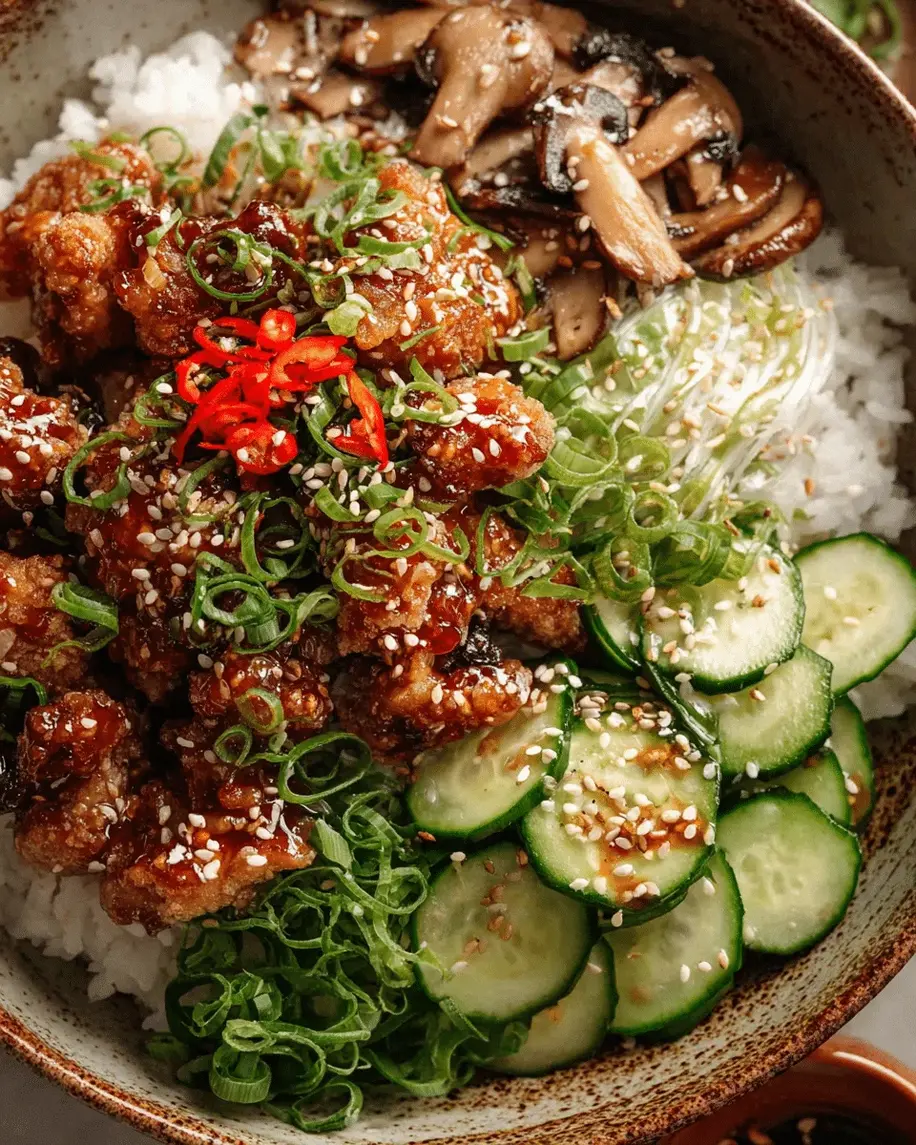
I still remember the first time I tasted truly great karaage — it was at a tiny izakaya in Manhattan’s East Village, tucked beneath a rattling subway line. The chicken arrived in a little paper cone, each piece shatteringly crisp, glistening with a soy-based glaze that somehow stayed crunchy even after it hit the rice. I sat there, chopsticks hovering, thinking about how my mother used to fry chicken in our kitchen in Morocco — the same careful attention to heat, the same generosity of flavor. That night, I knew I had to create my own version of Chicken Karaage Mushroom Bowls, combining the soulful crunch of Japanese fried chicken with the earthy depth of sautéed mushrooms and a sweet-savory glaze that seals the deal. This isn’t just a dinner — it’s a bowl of pure, focused joy.
Let me paint you a picture: each piece of chicken thigh is marinated in soy, sake, ginger, and garlic, then coated in a whisper-thin layer of potato starch and fried until it crackles when you bite into it. The mushrooms — I use shiitake or cremini — are browned in the same pan, soaking up a hit of soy and sesame oil until they’re tender and almost meaty. Then comes the glossy, golden crispy glaze: a simmered blend of soy, mirin, honey, and rice vinegar, thickened just enough to cling to every surface. Layered over steamed rice and topped with green onions and sesame seeds, this bowl hits every note — salty, sweet, savory, and wonderfully, irresistibly crunchy.
Here’s what makes this recipe different from other karaage bowl with rice recipes you’ll see online. I trained at Le Cordon Bleu in Paris, where I learned the French art of sauce-making and double-frying — techniques I’ve adapted here to ensure the chicken stays crispy even after the glaze goes on. The secret is in the temperature control and the slurry-thickened glaze that doesn’t soak into the crust. In this post, I’ll walk you through my exact timing, my favorite mushroom swap, and the one mistake that can make your karaage soggy (and how to avoid it). Ready to fry? Let’s go.
Why This Chicken Karaage Mushroom Bowls Recipe Is the Best
The Flavor Secret: Growing up in Morocco, my mother taught me that the best fried food starts with a bold marinade — not just for flavor, but for tenderness. In this crispy chicken karaage recipe, the chicken bathes in a mixture of soy sauce, sake, fresh ginger, and garlic for at least 30 minutes (though I often go longer). That marinade does double duty: it seasons the meat all the way through, and it helps the potato starch adhere in a thin, delicate crust. The mushrooms add an umami-rich layer that mirrors the depth of the glaze, creating a bowl that’s both grounded and exciting.
Perfected Texture: Texture is everything in a Japanese fried chicken bowl, and I’ve tested this recipe a dozen times to get it exactly right. The double-fry method — first at 325°F to cook through, then at 350°F to crisp — is straight from a classic Parisian frite technique I learned in culinary school. It guarantees a crust that stays audibly crunchy, even after sitting under the glaze and next to the mushrooms. The glaze itself is thickened with a cornstarch slurry, so it clings without penetrating the crust.
Foolproof & Fast: I know weeknights in New York City are hectic — I live them. That’s why this mushroom karaage bowl is designed to be approachable for any home cook. The ingredients are all available at your local grocery store, the steps are clearly timed, and I’ve included my best shortcuts (like using pre-sliced mushrooms and making the glaze while the chicken marinates). You don’t need a deep-fry thermometer — I’ll give you visual cues that work every time.
Chicken Karaage Mushroom Bowls Ingredients
When I shop for this recipe in New York City, I head straight to the farmers market in Union Square for the freshest mushrooms, and then to my favorite Japanese market on St. Mark’s Place for sake and mirin. The ingredients are simple, but each one plays a starring role. Here’s everything you’ll need.
Ingredients List
- For the Chicken Karaage:
- 1 lb boneless, skinless chicken thighs, cut into bite-sized pieces
- 2 tablespoons soy sauce
- 1 tablespoon sake or dry sherry
- 1 teaspoon grated fresh ginger
- 1 clove garlic, minced
- 1/2 cup potato starch or cornstarch
- Vegetable oil, for frying
- For the Mushrooms:
- 8 oz shiitake or cremini mushrooms, sliced
- 1 tablespoon vegetable oil
- 1 tablespoon soy sauce
- 1 teaspoon sesame oil
- For the Crispy Glaze:
- 1/4 cup soy sauce
- 2 tablespoons mirin
- 2 tablespoons honey or brown sugar
- 1 teaspoon rice vinegar
- 1 teaspoon sesame oil
- 1 clove garlic, minced
- 1 teaspoon cornstarch mixed with 2 teaspoons water (slurry)
- For Serving:
- 2 cups cooked white rice
- Sliced green onions
- Toasted sesame seeds
Ingredient Spotlight
Chicken Thighs: Boneless, skinless thighs are the gold standard for karaage. They stay juicy during frying thanks to their higher fat content, and they absorb the marinade beautifully. Look for thighs that are evenly thick — if some pieces are much larger than others, cut them to a uniform 1.5-inch size so they cook evenly. Substitution: Chicken breast will work, but it’s leaner and can dry out more easily. If you use breast, reduce frying time by about 1 minute per batch.
Potato Starch: This is the secret to the shatteringly crisp crust. Potato starch creates a lighter, airier coating than cornstarch — it’s what gives Japanese karaage its signature delicate crunch. You can find it in most Asian grocery stores or online. Substitution: Cornstarch works in a pinch, but the crust will be slightly denser. I don’t recommend all-purpose flour for this recipe; it absorbs too much oil and turns greasy.
Mirin: Mirin is a sweet Japanese rice wine that adds a gentle sweetness and glossy finish to the glaze. It’s essential for that authentic flavor. Look for “hon mirin” (genuine mirin) rather than the seasoned versions, which often have added corn syrup. Substitution: Mix 2 tablespoons of dry sherry with 1 teaspoon of sugar for a close approximation.
Shiitake Mushrooms: Shiitakes bring an earthy, almost smoky flavor that pairs beautifully with the soy-based glaze. Their meaty texture holds up well in the skillet. Substitution: Cremini mushrooms are easier to find and work perfectly — they’re less intense but still delicious. Avoid white button mushrooms, which release too much water and can make the bowl watery.
| Original Ingredient | Best Substitution | Flavor / Texture Impact |
|---|---|---|
| Chicken thighs | Chicken breast | Less juicy; reduce fry time by 1 min per batch |
| Potato starch | Cornstarch | Slightly denser crust, still very good |
| Mirin | Dry sherry + 1 tsp sugar | Less sweet, still balanced |
| Shiitake mushrooms | Cremini mushrooms | Less earthy, still meaty |
| Sake | Dry sherry or white wine | Slightly different acidity, still tenderizes |
How to Make Chicken Karaage Mushroom Bowls — Step-by-Step
Trust me when I say this: the process is simple, but the details matter. Follow these steps and you’ll have a bowl that rivals any izakaya in NYC.
Step 1: Marinate the Chicken
In a medium bowl, combine the chicken pieces with soy sauce, sake, grated ginger, and minced garlic. Use your hands to toss everything together — this ensures every piece is coated. Cover the bowl with plastic wrap and refrigerate for at least 30 minutes. If you have time, let it go for 2 hours; the flavor gets even deeper. Do not exceed 4 hours, or the acid in the soy sauce can start to break down the meat fibers too much, making it mushy.
💡 mia’s Pro Tip: Grate the ginger on a microplane rather than chopping it. The fine, almost paste-like texture disperses evenly through the marinade and melts into the chicken during frying.
Step 2: Make the Crispy Glaze
In a small saucepan, whisk together the soy sauce, mirin, honey, rice vinegar, sesame oil, and minced garlic. Bring the mixture to a gentle simmer over medium heat, stirring occasionally. In a small bowl, stir the cornstarch with water to form a slurry, then pour it into the simmering glaze while whisking constantly. Cook for about 1 minute, until the glaze thickens enough to coat the back of a spoon. Remove from heat and set aside. The glaze will continue to thicken as it cools.
⚠️ Common Mistake to Avoid: Adding the slurry all at once without whisking. This creates lumps. Pour in a slow, steady stream while whisking vigorously.
Step 3: Cook the Mushrooms
Heat 1 tablespoon of vegetable oil in a large skillet over medium-high heat until shimmering. Add the sliced mushrooms in a single layer — don’t crowd them, or they’ll steam instead of brown. Cook undisturbed for 2 minutes, then stir and cook for another 2–3 minutes until golden brown on the edges. Add 1 tablespoon soy sauce and 1 teaspoon sesame oil, toss to coat, then transfer to a plate. The mushrooms should be glossy and slightly caramelized.
💡 mia’s Pro Tip: Use a cast-iron skillet if you have one. It holds heat better and gives the mushrooms a deeper, more even sear.
Step 4: Fry the Chicken
Pour vegetable oil into a deep, heavy-bottomed pot to a depth of about 2 inches. Heat the oil to 350°F (175°C) — use a deep-fry thermometer for accuracy. While the oil heats, dredge the marinated chicken pieces in potato starch, shaking off any excess. You want a thin, even coating. Fry the chicken in batches — don’t overload the pot. Cook each batch for 4–5 minutes, turning occasionally, until deep golden brown and cooked through. Drain on a wire rack set over paper towels, not directly on paper towels (this prevents steam from softening the crust).
⚠️ Common Mistake to Avoid: Frying at oil that’s too low. If the oil drops below 330°F, the crust absorbs oil and becomes greasy. Keep an eye on your thermometer and let the oil come back to 350°F between batches.
Step 5: Assemble the Bowls
Divide the warm cooked rice among four bowls. Arrange the fried chicken and sautéed mushrooms on top of the rice. Drizzle generously with the crispy glaze — about 2 tablespoons per bowl. Garnish with sliced green onions and toasted sesame seeds. Serve immediately while the chicken is still audibly crunchy.
💡 mia’s Pro Tip: For an extra touch, drizzle a little of the glaze around the inside of the bowl before adding the rice. It soaks into the edges and creates little pockets of flavor in every bite.
| Step | Action | Duration | Key Visual Cue |
|---|---|---|---|
| 1 | Marinate chicken | 30 min – 2 hrs | Chicken looks glossy, smells fragrant |
| 2 | Make glaze | 4–5 min | Thickens, coats spoon, glossy |
| 3 | Cook mushrooms | 5–6 min | Golden edges, slightly caramelized |
| 4 | Fry chicken | 4–5 min per batch | Deep golden brown, floats to surface |
| 5 | Assemble bowls | 2–3 min | Glaze glistens, garnishes vibrant |
Serving & Presentation
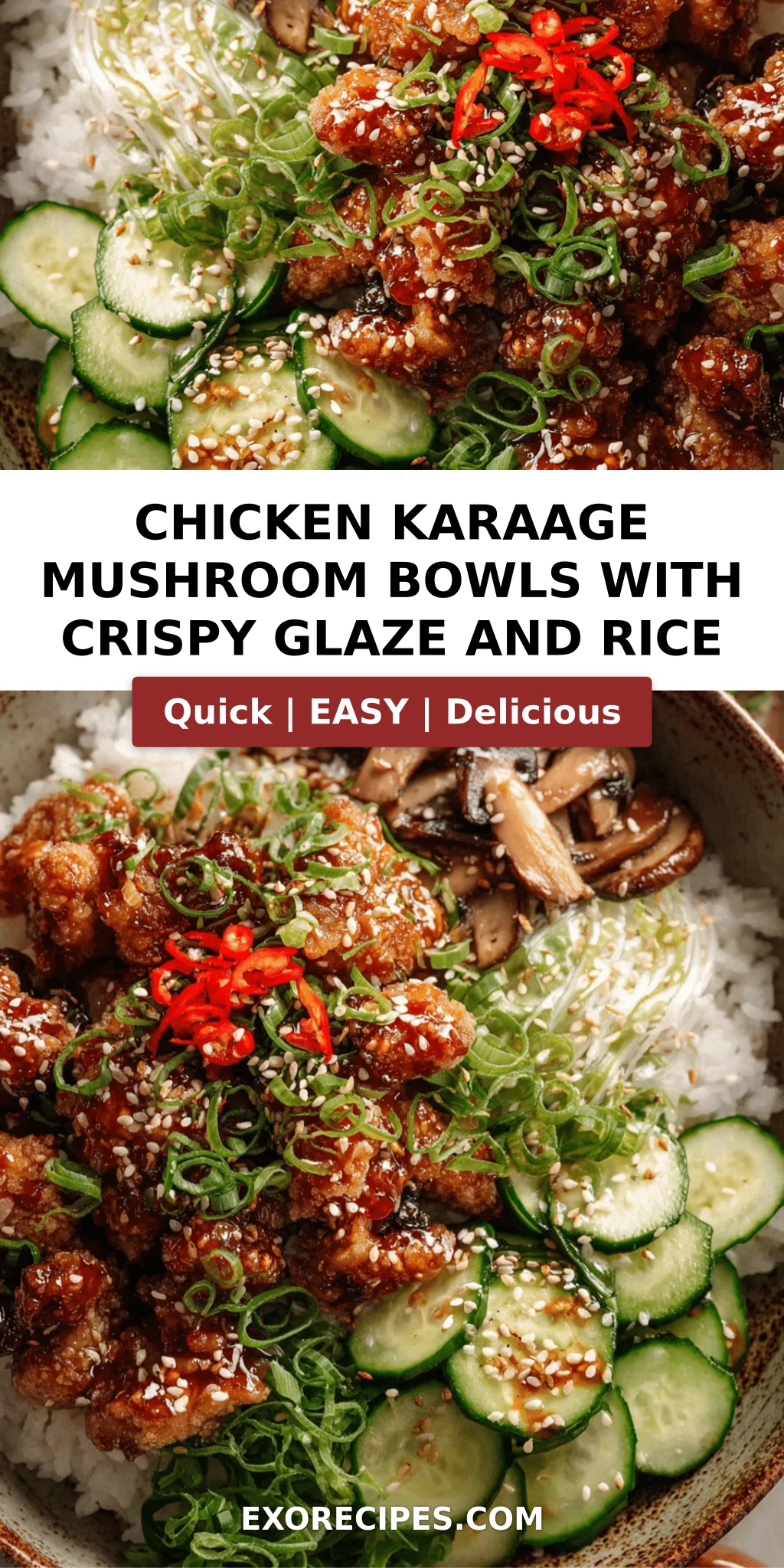
When I serve these Chicken Karaage Mushroom Bowls, I like to build them in wide, shallow bowls so every element is visible. Start with a generous scoop of steamed rice — I use short-grain Japanese rice for its sticky, fluffy texture, but any white rice works. Arrange the fried chicken and mushrooms in separate piles on top, then drizzle the glaze in a crosshatch pattern. Finish with a shower of green onions and sesame seeds. The visual contrast — golden chicken, dark mushrooms, white rice, bright green onions — is absolutely stunning.
In my NYC kitchen, I often pair this bowl with a simple cucumber salad dressed with rice vinegar and a pinch of sugar, or a bowl of miso soup for a complete meal. My mother would have added a side of preserved lemons — a Moroccan touch that cuts through the richness beautifully. For a drink, try a crisp lager or a chilled sake. And if you’re feeling indulgent, serve with a dollop of Japanese mayo on the side for dipping.
For a family-style dinner, set up a “karaage bar” with bowls of rice, chicken, mushrooms, glaze, and garnishes. Let everyone build their own bowl — it’s interactive and always a hit. I learned this from my grandmother’s table in Morocco, where every meal was a communal celebration.
| Pairing Type | Suggestions | Why It Works |
|---|---|---|
| Side Dish | Cucumber salad, miso soup, edamame | Refreshes palate, adds lightness |
| Sauce / Dip | Japanese mayo, spicy sriracha mayo, extra glaze | Adds creaminess or heat |
| Beverage | Crisp lager, chilled sake, iced green tea | Cuts through richness, cleanses palate |
| Garnish | Green onions, sesame seeds, shichimi togarashi | Adds color, crunch, and spice |
Make-Ahead, Storage & Reheating
Living in New York City means I’m always meal-prepping for busy weeks. This chicken karaage mushroom bowls recipe adapts beautifully to make-ahead strategies — you just need to store components separately to maintain that essential crunch. Here’s my system.
| Method | Container | Duration | Reheating Tip |
|---|---|---|---|
| Refrigerator | Airtight container, separate compartments | Up to 3 days | Reheat chicken in a 350°F oven for 8–10 min, not microwave |
| Freezer | Freezer-safe bag, remove air | Up to 2 months | Reheat directly from frozen at 375°F for 12–15 min |
| Make-Ahead | Store glaze, mushrooms, and rice separately | Up to 2 days in advance | Fry chicken fresh just before serving for best crunch |
Here’s my honest advice about reheating: the microwave will ruin the crust. Trust me, I’ve tested it. The best way to bring leftover karaage bowl with rice back to life is to reheat the rice separately in the microwave (covered with a damp paper towel), and reheat the chicken in a 350°F oven or air fryer for 8–10 minutes. The mushrooms can go right in with the chicken. Drizzle with fresh glaze just before serving — the glaze keeps beautifully in the fridge for up to a week.
One more thing: if you’re meal-prepping for the week, I recommend marinating the chicken and slicing the mushrooms up to 2 days ahead. Then all you have to do is dredge, fry, and assemble on the day you serve. That’s how I handle it in my NYC kitchen — it makes a weeknight feel like a special occasion.
Variations & Easy Swaps
This Japanese fried chicken bowl is incredibly versatile. Here are my favorite variations, each tested in my own kitchen so you can swap with confidence.
| Variation | Key Change | Best For | Difficulty Impact |
|---|---|---|---|
| Spicy Korean-Style | Add gochujang to glaze, use perilla leaves | Heat lovers | Easy |
| Gluten-Free | Use tamari instead of soy sauce | Gluten-free diets | Very easy |
| Harissa-Kissed | Add 1 tsp harissa to marinade | Moroccan-inspired twist | Easy |
Spicy Korean-Style Variation
This is my go-to when I want a kick. Stir 1 tablespoon of gochujang (Korean chili paste) into the glaze after it thickens, and toss the fried chicken in the spicy glaze instead of drizzling it. Add a handful of perilla leaves (or shiso, if you can find them) to the bowl for a fragrant, peppery finish. The gochujang adds a deep, fermented heat that pairs beautifully with the mushrooms. I discovered this combination at a Korean-Japanese fusion spot in Brooklyn, and it’s become a staple in my home.
Gluten-Free Version
Making this mushroom karaage bowl gluten-free is surprisingly simple. Swap the soy sauce for tamari (which is naturally wheat-free) or coconut aminos for a slightly sweeter profile. Ensure your mirin is also gluten-free — some brands contain wheat. The potato starch is already gluten-free, so the coating is safe. The flavor is almost identical to the original, with only a slightly less complex saltiness. I’ve served this version to friends with celiac disease and they couldn’t tell the difference.
Harissa-Kissed Moroccan Twist
This one’s from my heart. Add 1 teaspoon of harissa paste (I use the one from my mother’s recipe) to the chicken marinade along with the ginger and garlic. The harissa adds a smoky, spicy warmth that echoes the North African flavors I grew up with. Finish the bowl with a sprinkle of fresh cilantro and a squeeze of lemon. It’s a beautiful fusion — Japanese technique meets Moroccan soul. I love making this version when I’m feeling homesick for my mother’s kitchen.
What is the best way to keep chicken karaage crispy when adding it to a bowl with rice and glaze?
The key to keeping your chicken karaage mushroom bowls crispy is to follow the double-fry method and use a glaze that’s thickened with a cornstarch slurry. The slurry creates a coating that clings to the chicken without soaking into the crust. Also, assemble the bowls right before serving — don’t let the glazed chicken sit on the rice for more than a few minutes. If you’re meal-prepping, store the fried chicken separately from the rice and glaze, and reheat the chicken in a 350°F oven for 8–10 minutes before assembling. Avoid the microwave at all costs — it will turn that beautiful crust into a sad, soggy mess.
Can I use a different type of mushroom for the chicken karaage mushroom bowls?
Absolutely! While I recommend shiitake or cremini for their meaty texture and earthy flavor, you can absolutely experiment with other varieties. Oyster mushrooms bring a delicate, almost buttery texture that works wonderfully. King trumpet mushrooms, sliced into thick coins, hold up beautifully in the skillet and have a satisfying chew. Even beech or enoki mushrooms can work — just be aware that they cook much faster and release more water, so you may need to adjust the cooking time and drain them slightly after cooking. Avoid white button mushrooms, which tend to release too much liquid and can make the bowl watery. Whatever you choose, the soy and sesame finish will make them delicious.
How long should I marinate the chicken for karaage to get the most flavor?
For the best flavor in your crispy chicken karaage recipe, marinate the chicken for at least 30 minutes — that’s the minimum. But if you have time, 2 hours is the sweet spot. The soy sauce, sake, ginger, and garlic penetrate the meat deeply without breaking down the texture. I don’t recommend going beyond 4 hours, as the acidity in the soy sauce can start to make the chicken mushy. If you’re planning ahead, you can marinate the chicken in the morning before work, then dredge and fry it when you’re ready to cook. Just pull it out of the fridge 15 minutes before frying to take the chill off for more even cooking.
What can I substitute for the crispy glaze if I don’t have soy sauce or mirin?
If you’re out of soy sauce, tamari is the best substitute — it’s almost identical with a slightly milder saltiness. Coconut aminos also work well; they’re sweeter and less salty, so add a pinch of salt to balance. For mirin, the simplest swap is 2 tablespoons of dry sherry mixed with 1 teaspoon of sugar. You can also use 2 tablespoons of white wine with 1 teaspoon of sugar. The sugar mimics mirin’s sweetness, while the alcohol provides the acidity. If you don’t have honey for the glaze, brown sugar or maple syrup are excellent alternatives. The glaze will still be glossy and delicious — just slightly different in character. I’ve tested all of these and they all work beautifully.
Can I bake the chicken instead of frying it for a healthier version?
Yes, you can bake the chicken for a lighter version, but the texture will be different — you’ll lose that signature shatter-crunch that makes Japanese fried chicken bowl so special. To bake, preheat your oven to 425°F and place the dredged chicken pieces on a wire rack set over a baking sheet. Spray or brush generously with oil, then bake for 15–18 minutes, flipping halfway, until golden and cooked through. The crust will be crisp but not as delicate as fried. I also recommend broiling for the last 2 minutes for extra browning. Alternatively, an air fryer at 400°F for 12–14 minutes, shaking the basket halfway, gives you a much closer result to deep-frying with significantly less oil.
What type of rice is best for a karaage bowl?
For an authentic karaage bowl with rice, I strongly recommend short-grain Japanese rice — the kind you’d use for sushi. It has a sticky, slightly chewy texture that clings together beautifully, making it easy to eat with chopsticks. The grains are plump and tender, providing a soft, neutral base that contrasts perfectly with the crunchy chicken and savory glaze. If you can’t find Japanese rice, Calrose rice (a medium-grain variety from California) is an excellent substitute. Long-grain rice like jasmine or basmati will work in a pinch, but the texture is lighter and less cohesive, and the bowl won’t feel as satisfyingly balanced.
Can I make the crispy glaze ahead of time?
Absolutely — the crispy glaze is one of the best make-ahead components in this recipe. Prepare the glaze up to a week in advance and store it in an airtight container in the refrigerator. When you’re ready to use it, gently reheat it in a small saucepan over low heat, stirring occasionally. If it’s too thick after refrigeration, whisk in a teaspoon of water to loosen it. The glaze’s glossy texture and sweet-savory flavor hold up perfectly. I often double the glaze recipe and keep a jar in my fridge — it’s amazing on grilled chicken, roasted vegetables, or even as a dipping sauce for spring rolls.
What can I serve with chicken karaage mushroom bowls for a complete meal?
A mushroom karaage bowl is already a complete meal with protein, vegetables, and rice, but I love adding a few simple sides to round it out. A quick cucumber salad — sliced cucumbers tossed with rice vinegar, a pinch of sugar, and sesame seeds — adds a refreshing, acidic counterpoint. Miso soup with tofu and wakame is a classic pairing that warms the soul. For something green, try steamed or sautéed bok choy with a splash of soy sauce. And if you’re serving a crowd, a platter of gyoza or edamame makes a delightful starter. These additions turn the bowl into a full Japanese-inspired feast.
How do I prevent the chicken from sticking to the pot during frying?
The most important factor is getting your oil to the correct temperature — 350°F. If the oil isn’t hot enough, the chicken will sink to the bottom and stick. Use a deep-fry thermometer to be precise. Also, make sure your chicken pieces are well-coated in potato starch and that you shake off the excess. A light, even coating fries up crisp and releases easily. When you add the chicken to the oil, do it gently using tongs or a slotted spoon, and lower each piece in carefully to avoid splashing. Finally, use a heavy-bottomed pot — enameled cast iron or stainless steel works best — and avoid overcrowding, which drops the oil temperature and increases the chance of sticking.
Can I use chicken breast instead of thighs for this recipe?
Yes, you can substitute chicken breast for thighs in this crispy chicken karaage recipe, but there are a few trade-offs. Chicken breast is leaner and can dry out more easily, so reduce the initial fry time by about 1 minute per batch. I also recommend brining the breast pieces in a saltwater solution (1 tablespoon salt per 2 cups water) for 20 minutes before marinating — this helps them stay juicy. The flavor will still be excellent, but the texture will be firmer and less luscious than thigh meat. For the most authentic, melt-in-your-mouth karaage experience, thighs are the way to go. But if you’re watching fat intake or prefer white meat, breast works perfectly well with these adjustments.
Share Your Version!
I absolutely love hearing how this recipe comes to life in your kitchen. When you make these Chicken Karaage Mushroom Bowls With Crispy Glaze and Rice, I want to know: did you try the harissa twist? Did you go for the double-fry? Or did you create your own variation? Drop a comment below with your star rating — it helps other home cooks know what works. And if you share a photo on Instagram or Pinterest, tag me @exorecipes — seeing your bowls makes my day every single time.
One question I always ask my readers: what’s your favorite unexpected ingredient to add to a karaage bowl? For me, it’s a drizzle of yuzu kosho (Japanese citrus chili paste) for a bright, spicy kick. What’s yours? Let me know in the comments!
From my NYC kitchen to yours — I hope this recipe brings as much warmth to your table as it does to mine. — mia 🧡
Love This Recipe? Save It to Pinterest!
If you enjoyed this Chicken Karaage Mushroom Bowls recipe, don’t let it get lost in your browser tabs! 😄 Pin it now so you can find it again anytime — and explore hundreds more tried-and-tested recipes waiting for you on my Pinterest boards.
👉 Follow mia on Pinterest @chefrecipes2
📌 Pin this recipe · 🔁 Re-pin your favorites · 💬 Tag me when you make it — I love seeing your creations!
⭐️ Tried this recipe? Rate it below!
Your star rating and comments help other home cooks discover and love this dish. Drop a 🌟🌟🌟🌟🌟 and tell me how it turned out!
“`
Print
Chicken Karaage Mushroom Bowls With Crispy Glaze and Rice
- Prep Time: 20 minutes
- Cook Time: 25 minutes
- Total Time: 1 hour 15 minutes
- Yield: 4 servings 1x
- Method: Main course
- Cuisine: Japanese-inspired
Description
Crispy Japanese-style fried chicken and sautéed mushrooms served over steamed rice, drizzled with a sweet and savory soy glaze.
Ingredients
- For the Chicken Karaage:
- 1 lb boneless, skinless chicken thighs, cut into bite-sized pieces
- 2 tablespoons soy sauce
- 1 tablespoon sake or dry sherry
- 1 teaspoon grated fresh ginger
- 1 clove garlic, minced
- 1/2 cup potato starch or cornstarch
- Vegetable oil, for frying
- For the Mushrooms:
- 8 oz shiitake or cremini mushrooms, sliced
- 1 tablespoon vegetable oil
- 1 tablespoon soy sauce
- 1 teaspoon sesame oil
- For the Crispy Glaze:
- 1/4 cup soy sauce
- 2 tablespoons mirin
- 2 tablespoons honey or brown sugar
- 1 teaspoon rice vinegar
- 1 teaspoon sesame oil
- 1 clove garlic, minced
- 1 teaspoon cornstarch mixed with 2 teaspoons water (slurry)
- For Serving:
- 2 cups cooked white rice
- Sliced green onions
- Toasted sesame seeds
Instructions
- Marinate the chicken: In a bowl, combine chicken pieces with soy sauce, sake, ginger, and garlic. Toss to coat, cover, and refrigerate for at least 30 minutes.
- Make the glaze: In a small saucepan, whisk together soy sauce, mirin, honey, rice vinegar, sesame oil, and garlic. Bring to a simmer over medium heat. Stir in the cornstarch slurry and cook, stirring, until thickened, about 1 minute. Remove from heat and set aside.
- Cook the mushrooms: Heat 1 tablespoon vegetable oil in a large skillet over medium-high heat. Add mushrooms and cook, stirring occasionally, until golden brown. Add soy sauce and sesame oil, toss to coat, then transfer to a plate.
- Fry the chicken: Pour vegetable oil into a deep pot to a depth of about 2 inches. Heat to 350°F (175°C). Dredge marinated chicken pieces in potato starch, shaking off excess. Fry in batches until golden brown and cooked through, about 4–5 minutes per batch. Drain on paper towels.
- Assemble the bowls: Divide rice among serving bowls. Top with fried chicken and sautéed mushrooms. Drizzle with the crispy glaze. Garnish with green onions and sesame seeds. Serve immediately.
Notes
For extra crispiness, double-fry the chicken: fry once at 325°F for 3 minutes, let rest 5 minutes, then fry again at 350°F until golden. You can substitute chicken breast, but thighs stay juicier. The glaze can be stored in the refrigerator for up to a week.
Nutrition
- Calories: 620
- Sugar: 12 g
- Fat: 28 g
- Carbohydrates: 58 g
- Protein: 32 g
Tried This Recipe? Leave a Comment!
Did you make this recipe? I’d love to hear how it turned out! Please leave a comment and a rating below. Your feedback helps other home cooks and supports cheerychop.com!
