Table of Contents
Chicken and Vegetable Glass Noodle Stir-Fry with Gochujang – Quick Spicy Korean Favorite
I still remember the first time I tasted gochujang — it was at a tiny Korean restaurant in Manhattan’s Koreatown, and the sweet‑spicy depth hit me like a wave. Growing up in Morocco, my mother used harissa for heat and preserved lemons for tang, so I’ve always loved bold, layered condiments. This Chicken and Vegetable Glass Noodle Stir-Fry with Gochujang brings together my love for quick weeknight cooking and the kind of punchy flavor that makes you want to lick the bowl clean. It’s a Korean glass noodle stir-fry that comes together in 25 minutes, but tastes like you spent all day.
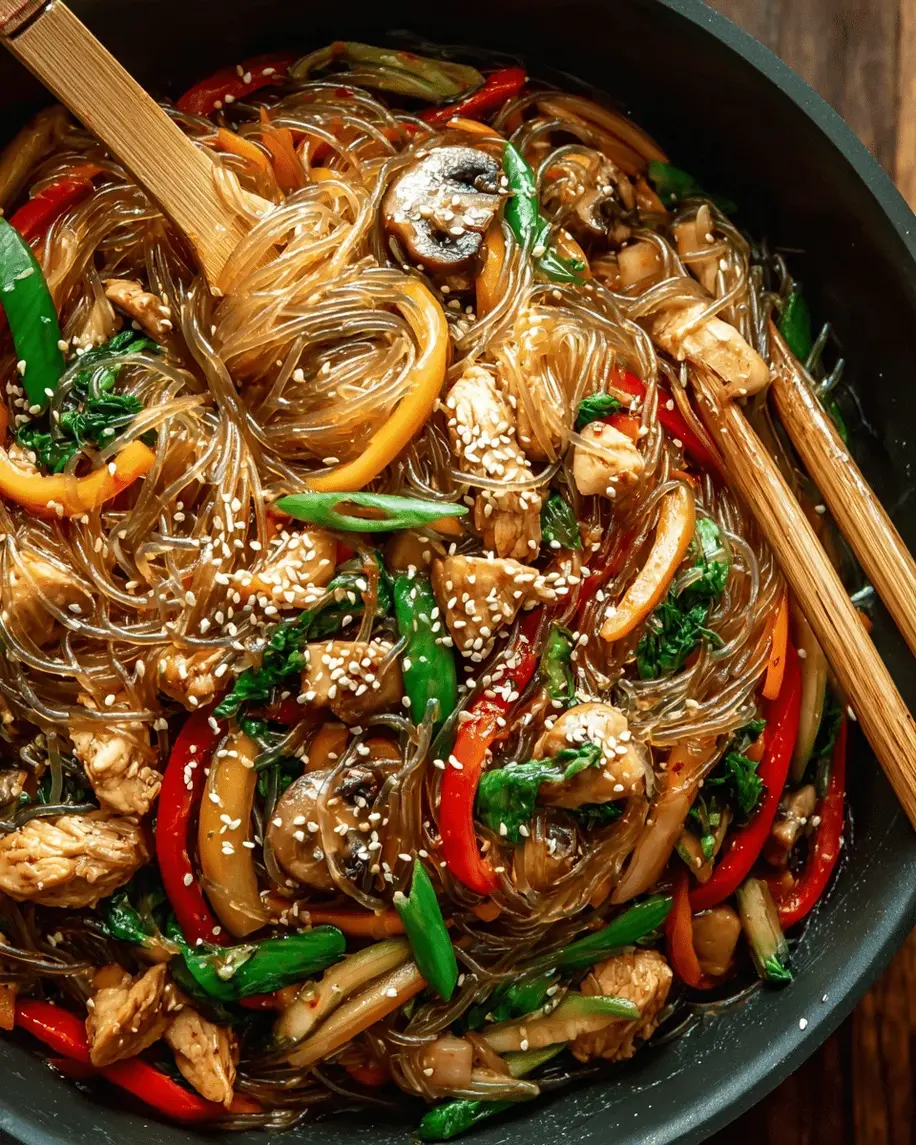
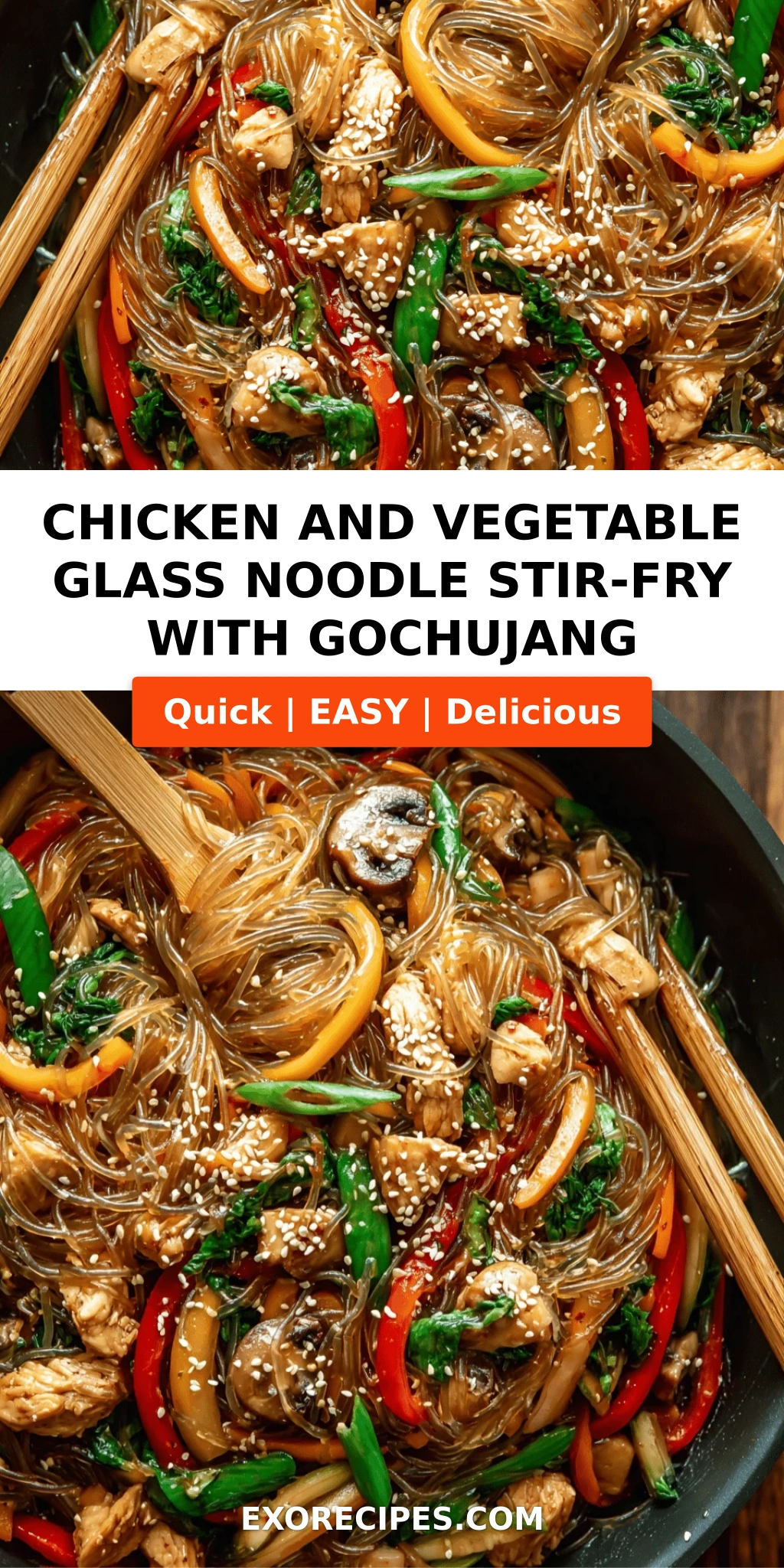
Imagine this: chewy, translucent noodles glistening with a glossy crimson sauce, tender slices of chicken mingling with vibrant orange carrots, red bell pepper, and crisp snow peas. The gochujang brings a fermented complexity — sweet, savory, and subtly spicy — while the sesame oil adds a nutty fragrance that lifts every bite. In my Paris pastry days, I learned the value of balance: each element here plays its part. The noodles soak up just enough sauce without turning mushy, and the vegetables keep their crunch. It’s the kind of dish that smells like a bustling street market and looks like a work of art on the plate.
I’ve tested this recipe dozens of times — from my tiny NYC kitchen to friends’ apartments — to make sure it’s foolproof. The secret? Treat the noodles and the chicken with respect: cook the noodles just until al dente (don’t over‑soak them), and sear the chicken in a screaming‑hot wok for that perfect golden edge. One common mistake is adding the sauce too early, which can make the noodles soggy. I’ll show you the right timing below. And if you’re wondering how to prevent glass noodles from getting mushy, trust me — I’ve got a pro tip for that.
Why This Chicken and Vegetable Glass Noodle Stir-Fry Recipe Is the Best
The Flavor Secret: Gochujang is the star — a Korean chili paste that’s both spicy and sweet, with a fermented depth you can’t get from regular hot sauce. I fell in love with it the way I fell in love with Moroccan chermoula: it’s a powerhouse that transforms simple ingredients. In this recipe, I balance gochujang with honey, soy sauce, garlic, and ginger to create a sauce that clings to every strand of noodle. It’s a twist I call “Korean‑Moroccan fusion”, and it works because both cuisines know how to layer flavor.
Perfected Texture: As a chef trained in Paris, I obsess over texture. Glass noodles (dangmyeon) are naturally slippery and chewy — perfect for stir‑fry. But they can turn into a gummy mess if you cook them wrong. My technique: soak them in hot water (not boiling) for exactly 5‑7 minutes, then rinse under cold water and toss with a tiny bit of sesame oil to keep them separate. That step alone ensures every bite is springy, not sticky.
Foolproof & Fast: This is the kind of dinner I turn to after a long day of recipe testing at my NY kitchen — it takes 25 minutes from start to finish, and even a beginner can pull it off. The prep is simple (thinly slice chicken, julienne a carrot, slice a bell pepper), and the cooking moves fast. You don’t need a wok — a large skillet works fine. And because it’s a one‑dish meal (protein + veg + noodles), cleanup is a breeze. I’ve taught this to friends who thought they couldn’t stir‑fry, and they’ve never looked back.
Gochujang Glass Noodle Recipe Ingredients
Every time I make this easy chicken noodle stir-fry, I head to my local Korean grocery in Flushing, Queens, or order online. The ingredients are simple, but each one is chosen for a reason. I still remember buying my first jar of gochujang from H Mart — the friendly lady at the counter told me to use it “like Korean ketchup,” and she was right. Here’s what you’ll need.
Ingredients List
- 8 oz (225g) glass noodles (dangmyeon)
- 2 boneless, skinless chicken breasts (about 1 lb), thinly sliced
- 2 tablespoons gochujang (Korean chili paste)
- 3 tablespoons soy sauce (use tamari for gluten‑free)
- 2 tablespoons honey or brown sugar
- 2 tablespoons sesame oil
- 2 cloves garlic, minced
- 1 tablespoon grated fresh ginger
- 2 tablespoons vegetable oil (for stir‑frying)
- 1 medium carrot, julienned
- 1 red bell pepper, thinly sliced
- 1 cup snow peas, trimmed
- 4 green onions, sliced into 2‑inch pieces
- 1 tablespoon toasted sesame seeds
- Salt and pepper to taste
Ingredient Spotlight
Gochujang: This fermented Korean chili paste is the soul of the dish. Look for a bright red paste in the Asian section of your grocery store — brands like Sempio or Chung Jung One are reliable. It has a thick consistency and a sweet‑spicy flavor with umami depth. If you can’t find it, you can try mixing 1 tablespoon of miso with 1 teaspoon of sriracha and a pinch of sugar, but the flavor won’t be quite the same. Store it in the fridge; it keeps for months.
Glass Noodles (Dangmyeon): These are made from sweet potato starch and become translucent when cooked. They have a unique chewy, bouncy texture that’s perfect for absorbing sauce without getting mushy. I buy the Korean brand Ottogi. Don’t substitute rice vermicelli — they’re too delicate and will turn to mush.
Sesame Oil: Use toasted (dark) sesame oil — it’s nutty and fragrant. I keep mine in a cool dark cabinet. A little goes a long way, so measure carefully. Toasted sesame seeds for garnish add a final nutty crunch.
| Original Ingredient | Best Substitution | Flavor / Texture Impact |
|---|---|---|
| Gochujang | Miso + sriracha + sugar | Less fermented depth; still tasty |
| Glass noodles | Sweet potato noodles (same) | Identical |
| Sesame oil | Toasted sesame oil (no sub) | Essential for aroma |
| Chicken breast | Tofu (firm, pressed) or mushrooms | Less protein; still satisfying |
| Honey | Brown sugar or maple syrup | Slightly different sweetness |
How to Make Chicken and Vegetable Glass Noodle Stir-Fry — Step-by-Step
Ready to stir‑fry? This spicy Korean noodle recipe comes together in a flash. I’ll walk you through every step with my tested tips, so you get perfect results every time.
Step 1: Prepare the Noodles
Bring a kettle of water to a boil, then pour it over the glass noodles in a heatproof bowl. Let them soak for 5–7 minutes, until soft but still chewy. Drain immediately and rinse under cold water to stop the cooking. Toss with a few drops of sesame oil to prevent sticking. Set aside.
💡 mia’s Pro Tip: Don’t soak longer than 7 minutes! Glass noodles continue to cook when you stir‑fry them later, so starting with al dente noodles is key to avoiding mushiness.
Step 2: Make the Gochujang Sauce
In a small bowl, whisk together gochujang, soy sauce, honey (or brown sugar), sesame oil, minced garlic, and grated fresh ginger until smooth. The sauce will be thick and fragrant. Taste it — you should get a sweet‑spicy‑savory balance. Adjust the gochujang if you want more heat.
Step 3: Season and Sear the Chicken
Thinly slice the chicken breasts into bite‑sized pieces (about ¼‑inch thick). Season with a pinch of salt and pepper. Heat 1 tablespoon vegetable oil in a large wok or skillet over high heat until shimmering. Add the chicken in a single layer (don’t crowd the pan — cook in two batches if needed). Sear for 2–3 minutes per side until golden and cooked through. Transfer to a plate and set aside.
⚠️ Common Mistake to Avoid: Overcrowding the pan! If you add too much chicken at once, it will steam instead of sear, and you won’t get that beautiful golden crust.
Step 4: Stir‑Fry the Vegetables
Add the remaining 1 tablespoon vegetable oil to the hot wok. Add the julienned carrot, sliced bell pepper, snow peas, and green onions. Stir‑fry over high heat for 2–3 minutes, tossing constantly, until the vegetables are crisp‑tender and slightly charred at the edges. They should still have a bright color and a bit of crunch.
Step 5: Combine Everything
Return the cooked chicken to the wok along with any juices that accumulated on the plate. Add the drained noodles and pour the gochujang sauce over everything. Toss vigorously with tongs or a spatula for 1–2 minutes, until the noodles are evenly coated and heated through. The sauce will thicken slightly as it coats the ingredients.
💡 mia’s Pro Tip: Add the sauce just before tossing — don’t let it sit in the pan too long, or it can become too sticky. If the stir‑fry seems dry, add a splash of water (1–2 tablespoons) to loosen the sauce.
Step 6: Garnish and Serve
Transfer to a large serving platter or individual bowls. Sprinkle generously with toasted sesame seeds. Serve immediately while hot — the noodles are best fresh.
⚠️ Common Mistake to Avoid: Don’t let the stir‑fry sit too long after cooking. Glass noodles can absorb sauce and become softer. Serve right away for the perfect texture.
| Step | Action | Duration | Key Visual Cue |
|---|---|---|---|
| 1 | Soak noodles | 5–7 mins | Noodles are pliable but still slightly firm |
| 2 | Sear chicken | 3–4 mins | Golden brown edges, no pink inside |
| 3 | Stir‑fry vegetables | 2–3 mins | Carrots are tender‑crisp, bell peppers still bright |
| 4 | Toss with sauce | 1–2 mins | Noodles evenly coated, sauce glistens |
Serving & Presentation
I love to serve this Chicken and Vegetable Glass Noodle Stir-Fry family‑style, straight from the wok to a big platter. The bright colors — orange carrot, red pepper, green snow peas, and translucent noodles — make it a visual feast. For a beautiful plate, mound the noodles in the center, top with the chicken and vegetables, and sprinkle with sesame seeds and a few extra slices of green onion.
This dish is hearty enough to be a main course, but I often pair it with a simple side of steamed edamame or a crisp cucumber salad with rice vinegar. A dollop of kimchi on the side adds another layer of fermented spice — a trick I picked up from a Korean chef in NYC. For a lighter meal, serve it as a noodle “bowl” with a handful of fresh spinach or arugula on the bottom.
If you’re entertaining, consider turning this into a “build‑your‑own stir‑fry” bar: set out bowls of gochujang sauce, sesame oil, and extra toppings (chopped peanuts, fresh cilantro, sliced chili). Your guests will love customizing their bowls. From my Moroccan table to yours — communal eating is the best kind of eating.
| Pairing Type | Suggestions | Why It Works |
|---|---|---|
| Side Dish | Steamed edamame, cucumber salad, kimchi, pickled radish | Adds freshness, crunch, and contrasting fermented flavor |
| Sauce / Dip | Extra gochujang sauce, sriracha mayo, soy‑sesame dip | Enhances the spicy‑sweet profile |
| Beverage | Korean rice beer (makgeolli), dry Riesling, iced green tea | Cuts the richness and spice |
| Garnish | Toasted sesame seeds, sliced green onion, fresh cilantro, crushed peanuts | Adds texture, color, and fresh flavor contrast |
Make-Ahead, Storage & Reheating
Living in NYC means I’m always juggling deadlines and dinner plans. This stir‑fry is great for meal prep — just follow a few simple rules to keep the noodles from turning into a gluey mass. I often make a double batch on Sunday and pack it for lunches.
| Method | Container | Duration | Reheating Tip |
|---|---|---|---|
| Refrigerator | Airtight container | 3–4 days | Reheat in a hot skillet with 1 tsp water; toss until steaming. Avoid microwave — it can make noodles rubbery. |
| Freezer | Freezer‑safe zip bag, squeeze out air | Up to 1 month | Thaw overnight in fridge. Reheat in a pan with a splash of soy sauce or water. |
| Make-Ahead | Prep ingredients separately | Up to 1 day (components) | Store noodles tossed in oil, chicken cooked, veggies sliced. Stir‑fry fresh when ready. |
When reheating, the key is to revive the sauce’s coating. I add a tiny splash of water or soy sauce to the pan and toss vigorously — the noodles will loosen up and look glossy again. If you’re meal prepping, keep the sauce separate and toss it in only at the reheating stage to avoid soggy noodles. Trust me, I’ve learned this the hard way after a few too‑soggy lunches!
Variations & Easy Swaps
This easy chicken noodle stir-fry is incredibly flexible. Over the years, I’ve adapted it for different diets, seasons, and cravings. Here are my favorite variations — each one tested until it felt just right.
| Variation | Key Change | Best For | Difficulty Impact |
|---|---|---|---|
| Vegetarian Tofu | Replace chicken with 14 oz extra‑firm tofu, pressed and cubed | Meatless Monday, vegan option | Easy — same method |
| Spicy Seafood | Use shrimp or squid instead of chicken | Quick seafood dinner | Easy — shrimp cooks in 2 mins |
| Extra Veggie | Add broccoli florets, bok choy, or mushrooms | Nutrient‑packed, colorful | Easy — adjust stir‑fry time for harder veg |
Vegetarian Tofu Version
For a meatless take, replace chicken with extra‑firm tofu. Press the tofu for 15 minutes to remove excess water, then cube it and sear in a hot pan until golden on all sides. The tofu absorbs the gochujang sauce beautifully. I love this version on busy weeknights when I want something hearty but plant‑based. A sprinkle of sesame seeds and a handful of fresh cilantro make it sing — a nod to the Moroccan habit of finishing dishes with fresh herbs.
Gluten‑Free / Dairy‑Free Version
This recipe is already dairy‑free. To make it gluten‑free, simply swap the soy sauce for tamari or coconut aminos. Check that your gochujang is labeled gluten‑free (most traditional brands are, but some include wheat). The rest of the ingredients are naturally gluten‑free. I’ve tested this with tamari, and the flavor is just as rich — no one will notice the swap.
Seasonal Twist: Autumn Apple
On crisp fall days here in New York, I love adding a julienned apple (like Honeycrisp) along with the vegetables. The apple adds a sweet crunch that pairs beautifully with gochujang’s heat. I picked up this idea at the Union Square farmers market — the vendor suggested it for Korean‑style salads, and I knew it would work in my stir‑fry. Just toss the apple in a little lemon juice to prevent browning, and add it in the last minute of cooking to keep its texture.
How do you prevent glass noodles from getting mushy in a stir-fry?
The biggest secret is to soak the noodles only until they are al dente — about 5–7 minutes in hot (not boiling) water. Then immediately rinse under cold water to stop cooking. Toss them with a little sesame oil to keep them separate. When you add them to the stir‑fry, they only need 1–2 minutes in the sauce. Over‑soaking is the #1 cause of mushy noodles. Also, don’t let them sit in the hot pan too long after combining; serve right away.
What vegetables go best with gochujang in a chicken and glass noodle stir-fry?
Gochujang’s sweet‑spicy flavor pairs beautifully with crunchy, colorful vegetables. I recommend carrots for sweetness, bell peppers for a mild tang, snow peas for crispness, and green onions for a mild bite. You can also add broccoli, bok choy, or mushrooms. The key is to cut them into similar sizes so they cook evenly. Avoid watery vegetables like zucchini, which can make the sauce thin and soggy.
Can I substitute gochujang with another ingredient if I don’t have it?
Yes, but you won’t get the exact same fermented depth. The best substitute is a mix of 1 tablespoon miso paste (for umami) + 1 teaspoon sriracha (for heat) + a pinch of sugar. Another option is to use sambal oelek (chili garlic sauce) blended with a little honey and soy sauce. Neither will taste exactly like gochujang, but both will give you a spicy‑sweet sauce that works well with this dish. If you can find it, gochujang is worth seeking out — it’s a staple in Korean cooking and keeps for months in the fridge.
How long should you cook the chicken and glass noodles together for the best texture?
Once you return the chicken to the wok and add the noodles and sauce, toss everything over high heat for just 1–2 minutes. That’s enough time to coat every strand of noodle and heat everything through without overcooking the noodles. Overcooking at this stage makes the noodles soft and the sauce can become too thick. The chicken is already cooked, so you’re just bringing it back to temperature.
Can I make this dish ahead of time for a party?
You can prep components ahead: cook the noodles (toss with oil), cook the chicken, slice the vegetables, and mix the sauce. Keep them all in separate containers in the fridge. When it’s time to serve, do the final stir‑fry in a hot wok — it takes only 5 minutes. This method gives you fresh, vibrant results without last‑minute stress. I do this all the time for dinner parties!
How do I make this recipe less spicy?
Gochujang has a moderate heat level, but you can adjust it easily. Use only 1 tablespoon of gochujang and balance with an extra tablespoon of soy sauce or a bit more honey. You can also add a splash of rice vinegar to mellow the heat. If you’re serving to kids or spice‑sensitive guests, start with less gochujang and let individuals add extra chili sauce at the table.
Can I use a different type of noodle for this stir-fry?
Glass noodles (dangmyeon) are traditional for their chewy, translucent texture. But if you can’t find them, you can substitute with sweet potato noodles (same thing) or even rice vermicelli. Note that rice vermicelli is more delicate and may break apart with vigorous tossing. For a non‑Asian option, you could use soba noodles or even linguine, but the texture will be quite different — more like a pasta stir‑fry.
Is this recipe gluten‑free? What substitutions do I need?
This recipe can easily be made gluten‑free. Glass noodles are naturally gluten‑free (made from sweet potato starch). The main swap is soy sauce — use tamari or coconut aminos instead. Some brands of gochujang contain wheat, so check the label or buy a certified gluten‑free version. All other ingredients (sesame oil, honey, vegetables, chicken) are naturally gluten‑free.
What’s the best way to reheat leftover glass noodle stir-fry?
I always reheat this dish in a hot skillet or wok, not the microwave. Add a tiny splash of water or low‑sodium soy sauce to the pan, add the leftovers, and toss over high heat for about 1 minute. The steam loosens the noodles and revives the sauce. If you use the microwave, the noodles can become rubbery and the sauce may separate. For best results, eat it fresh – but if you must reheat, the stovetop method works wonders.
Can I add other proteins like beef or shrimp?
Absolutely! Beef (like sirloin or ribeye) works wonderfully — slice it thinly against the grain and sear just like the chicken. Shrimp cook even faster; add them at the very end and cook until pink, about 2 minutes. Tofu and mushrooms are great vegetarian options. The technique remains the same: cook the protein first, remove it, then stir‑fry the vegetables, and finally combine everything with the sauce and noodles.
Share Your Version!
I hope this Chicken and Vegetable Glass Noodle Stir-Fry with Gochujang becomes a fast favorite in your kitchen — it certainly is in mine! If you give it a try, I’d love to hear how it turns out. Leave a star rating and a comment below — let me know if you tried one of the variations, or if you added your own twist. Did you go extra spicy? Add extra veggies? I read every single comment and they make my day.
Tag me on Instagram or Pinterest @exorecipes when you share your photos — nothing makes me happier than seeing my recipes come to life in your homes. And if you’re wondering, “How long should you cook the chicken and glass noodles together for the best texture?” — just remember that quick toss at the end is all it takes. From my NYC kitchen to yours — I hope this recipe brings as much warmth to your table as it does to mine. — mia 🧡
Love This Recipe? Save It to Pinterest!
If you enjoyed this Chicken and Vegetable Glass Noodle Stir-Fry recipe, don’t let it get lost in your browser tabs! 😄 Pin it now so you can find it again anytime — and explore hundreds more tried-and-tested recipes waiting for you on my Pinterest boards.
👉 Follow mia on Pinterest @chefrecipes2
📌 Pin this recipe · 🔁 Re-pin your favorites · 💬 Tag me when you make it — I love seeing your creations!
Chicken and Vegetable Glass Noodle Stir-Fry with Gochujang
- Prep Time: 15 minutes
- Cook Time: 10 minutes
- Total Time: 25 minutes
- Yield: 4 1x
- Method: Main Course
- Cuisine: Korean
Description
A quick and flavorful stir-fry featuring tender chicken, colorful vegetables, and chewy glass noodles tossed in a spicy-sweet gochujang sauce.
Ingredients
- 8 oz (225g) glass noodles (dangmyeon)
- 2 boneless, skinless chicken breasts (about 1 lb), thinly sliced
- 2 tablespoons gochujang (Korean chili paste)
- 3 tablespoons soy sauce
- 2 tablespoons honey or brown sugar
- 2 tablespoons sesame oil
- 2 cloves garlic, minced
- 1 tablespoon grated fresh ginger
- 2 tablespoons vegetable oil (for stir-frying)
- 1 medium carrot, julienned
- 1 red bell pepper, thinly sliced
- 1 cup snow peas, trimmed
- 4 green onions, sliced into 2-inch pieces
- 1 tablespoon toasted sesame seeds
- Salt and pepper to taste
Instructions
- Cook glass noodles according to package directions (usually soak in hot water for 5–7 minutes until soft). Drain and set aside.
- In a small bowl, whisk together gochujang, soy sauce, honey (or brown sugar), sesame oil, minced garlic, and grated ginger to make the sauce.
- Season sliced chicken with a pinch of salt and pepper.
- Heat 1 tablespoon vegetable oil in a large wok or skillet over high heat. Add chicken and stir-fry until cooked through (about 3–4 minutes). Remove chicken from wok and set aside.
- Add remaining 1 tablespoon oil to the wok. Add carrots, bell pepper, snow peas, and green onions. Stir-fry for 2–3 minutes until crisp-tender.
- Return chicken to the wok. Add cooked glass noodles and pour the sauce over everything. Toss well to combine and heat through.
- Serve immediately, garnished with toasted sesame seeds.
Notes
For a vegetarian version, substitute chicken with extra-firm tofu or mushrooms. Adjust gochujang to taste for spice level.
Nutrition
- Calories: 420
- Sugar: 12g
- Fat: 14g
- Carbohydrates: 48g
- Protein: 28g
k">
Tried This Recipe? Leave a Comment!
Did you make this recipe? I’d love to hear how it turned out! Please leave a comment and a rating below. Your feedback helps other home cooks and supports cheerychop.com!
For more delicious inspiration, follow me on Pinterest!
