Table of Contents
Caramelized Onion and Rosemary Artisan Bread Recipe – A Rustic Loaf with Deep Flavor
I still remember the smell of my mother’s kitchen in Morocco every Friday afternoon — warm, yeasty bread emerging from a clay oven, filling the whole house with comfort. That memory followed me to Paris, where I learned the science behind a perfect crust at Le Cordon Bleu, and now it has settled here in my New York kitchen. This caramelized onion and rosemary artisan bread is the marriage of those worlds: the slow, patient caramelization I learned from North African home cooking, the French technique of a long cold fermentation, and the bold, herbaceous kick that makes a loaf unforgettable. It’s the kind of bread that turns a simple soup into a meal and a weekday sandwich into a celebration.
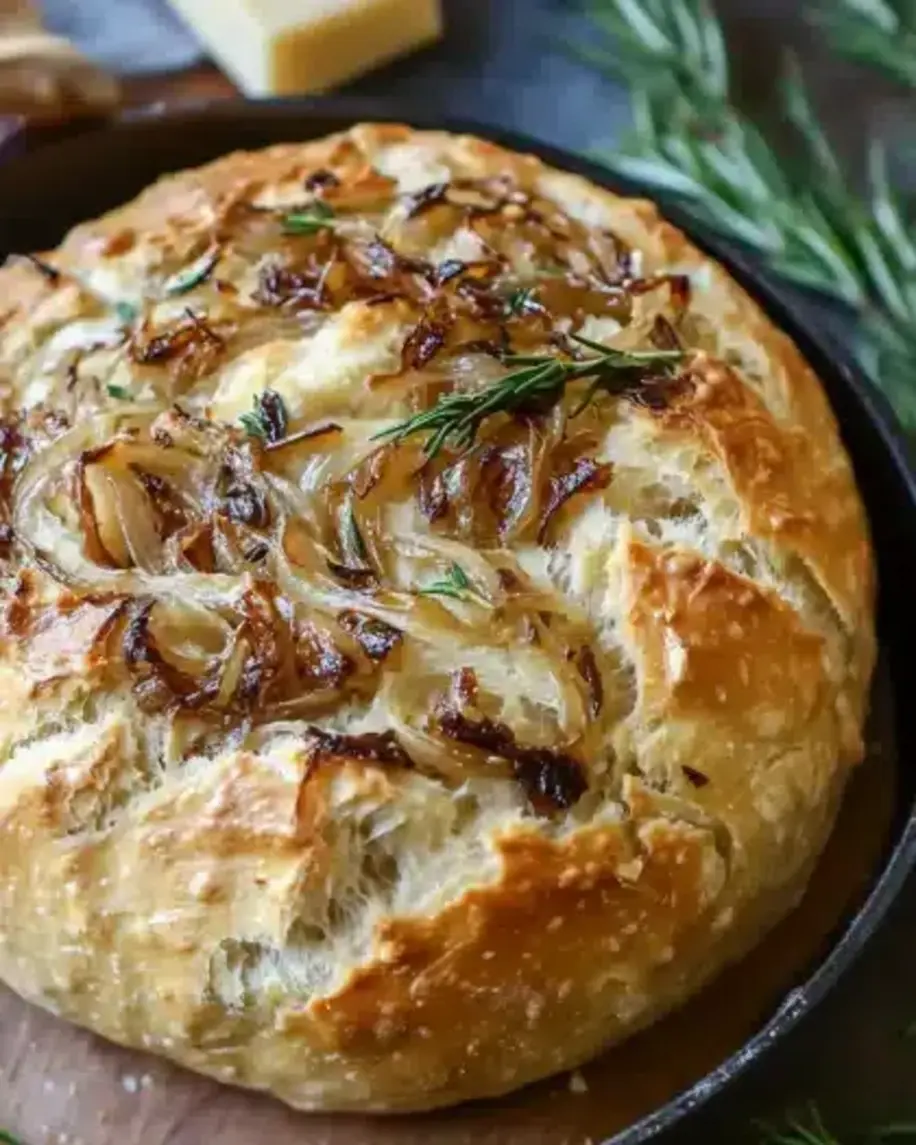
When I pull this loaf out of the oven, the top is a deep, burnished gold, studded with flecks of rosemary. One slice reveals a crumb that is airy yet sturdy — perfect for sopping up olive oil or dragging through a bowl of lentil soup. The onions are sweet and almost jammy, having surrendered their sharpness to a low and slow sizzle. And the rosemary? It whispers through every bite, sometimes surprising you with a sudden piney note. This is the kind of homemade artisan bread that makes you slow down and actually taste each mouthful. And because the dough does most of the work in the fridge overnight, you barely lift a finger.
What sets my version apart is the combination of two small techniques that most home bakers skip. First, I caramelize the onions with a pinch of salt and nothing else — no sugar, no balsamic — until they are deeply golden but never burnt. Second, I let the rosemary artisan bread recipe rest for a full 12 to 18 hours in the refrigerator, which develops a tangy complexity you cannot rush. The result is a loaf that tastes like it came from a Brooklyn bakery, but is made entirely in your own kitchen. And I’m going to show you exactly how to do it, with a few pro tips to avoid the soggy-bottomed, pale-crusted bread I made in my early days.
Why This Caramelized Onion Bread Recipe Is the Best
The Flavor Secret: Caramelizing onions slowly — not quickly over high heat — unlocks their natural sugars without any bitterness. I let mine go for a full 20 minutes, stirring only every few minutes, until they are the color of a copper penny. That depth, paired with fresh rosemary, creates a savory bread that doesn’t need butter to be delicious. Growing up, my mother would add a pinch of saffron to her breads; here, the rosemary takes that aromatic place, blooming in the heat of the oven.
Perfected Texture: The long, cold fermentation (the 12-18 hour rise) does two things: it develops gluten without any kneading, and it allows the yeast to produce subtle sour notes that balance the sweetness of the onions. This is the French technique I learned in Paris — poolish in spirit, but easier. The dough comes together in five minutes, then rests. The result is a crust that shatters when you cut it and an interior that is chewy but not dense. No stand mixer, no muscle.
Foolproof & Fast: Even if you have never shaped a boule in your life, this recipe works. The dough is forgiving — it’s wet and shaggy at first, but after its long rest it becomes silky and easy to shape. The steam baking step (a cup of hot water in a pan) gives you that crackling crust you usually only get from a professional oven. And because you prepare the onion mixture the day before, the active time is barely 30 minutes. This is the bread I bake when I have guests coming and want to look like a hero without any stress.
Caramelized Onion and Rosemary Artisan Bread Ingredients
Every ingredient in this loaf has a specific job. I buy my onions from the Union Square Greenmarket when they are in season — they are sweeter and more pungent than supermarket ones. The rosemary I prefer fresh from my window box (yes, I grow it even in Manhattan), but dried works in a pinch. And the flour? Simple all-purpose. No bread flour needed. Let me walk you through what you need and why each component matters.
Ingredients List
- 1 tablespoon olive oil (extra virgin for flavor, but any works)
- 2 large onions, thinly sliced (yellow or sweet onions are best)
- 1 teaspoon salt, divided
- 2 teaspoons fresh rosemary, chopped (from about 2 sprigs)
- 3 cups all-purpose flour (spooned and leveled)
- 1/4 teaspoon active dry yeast (yes, just a pinch — long fermentation needs very little)
- 1 1/2 cups warm water (about 105°F – bath temperature)
Ingredient Spotlight
Onions: They are the star. I use yellow onions because they caramelize evenly and have a mild sweetness. Avoid red onions for this bread — they turn bitter when cooked low and slow. Look for firm, heavy onions with tight, papery skins. In a pinch, sweet Vidalia onions work beautifully, but they are higher in water, so you may need to cook them a few minutes longer to evaporate the liquid.
Fresh Rosemary: There is no substitute for the piney, lemony brightness of fresh rosemary. If you only have dried, use 1 teaspoon dried (crumbled) and add it with the flour to prevent it from burning in the pan. Fresh rosemary should be deep green, with no yellowing or browning. Strip the leaves from the woody stem before chopping.
Yeast: Only 1/4 teaspoon. This tiny amount is intentional — it allows the dough to rise slowly, developing flavor. Over-yeasted bread will have a yeasty, beer-like taste and a coarse crumb. I use active dry from a fresh jar; if your yeast is old, proof it in the warm water with a pinch of sugar for 5 minutes to ensure it’s alive.
| Original Ingredient | Best Substitution | Flavor / Texture Impact |
|---|---|---|
| Fresh rosemary | Dried rosemary (1 tsp) | Less aromatic, more subtle; use in dough, not in pan |
| All-purpose flour | Bread flour | Chewier crumb, slightly higher rise |
| Olive oil | Butter or avocado oil | Butter adds richer flavor; avocado oil is neutral |
How to Make Caramelized Onion Rosemary Artisan Bread — Step-by-Step
Making this bread is a two-day process, but most of it is hands-off. You will caramelize the onions, mix a shaggy dough, let it rest overnight, shape it, and bake it with steam. Follow these steps closely, and you’ll have a loaf that rivals any bakery.
Step 1: Caramelize Onions with Rosemary
In a large skillet, heat 1 tablespoon olive oil over medium heat. Add the thinly sliced onions and 1/2 teaspoon salt. Cook, stirring occasionally, for about 20 minutes until the onions are deep golden brown. The salt helps draw out moisture and speeds caramelization. Stir in 2 teaspoons chopped fresh rosemary and cook for 1 minute more, then set aside to cool completely. The mixture should be jammy, not wet; if there is excess liquid, cook it off.
💡 mia’s Pro Tip: Don’t crowd the pan — use a large skillet so the onions have room to steam then brown. If your pan is too small, they will boil instead of caramelize and turn bitter.
Step 2: Mix the Dough
In a large bowl, whisk together 3 cups all-purpose flour, 1/4 teaspoon active dry yeast, and the remaining 1/2 teaspoon salt. Add 1 1/2 cups warm water (about 105°F) and stir with a wooden spoon until a shaggy, sticky dough forms. It will look rough — that’s perfect. Do not knead.
⚠️ Common Mistake to Avoid: Using water that is too hot (above 120°F) will kill the yeast. The dough won’t rise. Use a thermometer or test on your wrist — it should feel like warm bathwater.
Step 3: Fold in Onions and Ferment
Fold the cooled caramelized onion mixture into the dough until evenly distributed. The dough will be sticky and studded with onions. Cover the bowl tightly with plastic wrap and refrigerate for 12-18 hours. The cold slows the yeast, developing deep flavor. The dough will double in size and become bubbly.
💡 mia’s Pro Tip: If you want an even tangier flavor, let it go up to 24 hours. After 48 hours the dough may over-ferment and collapse.
Step 4: Shape the Loaf
Turn the risen dough out onto a generously floured surface. It will be sticky — use a bench scraper or floured hands. Gently shape it into a round boule by folding the edges into the center and turning it seam-side down. Place the loaf on a piece of parchment paper on a baking sheet. Cover with a clean kitchen towel and let rise for 2 hours at room temperature. It should puff up but not double.
⚠️ Common Mistake to Avoid: Over-flouring during shaping can make the bread dense. Use just enough flour so it doesn’t stick; a light dusting is all you need.
Step 5: Preheat Oven and Create Steam
About 30 minutes before baking, preheat your oven to 450°F (232°C). Place a cast-iron skillet or an oven-safe metal pan on the bottom rack to heat. Right before you slide the bread in, carefully pour 1 cup of hot water into the hot skillet — it will sizzle and steam. This steam keeps the crust soft during the first minutes of baking, allowing maximum oven spring, then evaporates to create a crackling crust.
💡 mia’s Pro Tip: For even more steam, spritz the oven walls with water a few times during the first 10 minutes using a spray bottle. Be careful not to hit the light bulb!
Step 6: Bake and Cool
Bake the bread for 30-35 minutes, rotating the pan halfway through, until the crust is deep golden brown and the loaf sounds hollow when tapped on the bottom. Transfer to a wire rack and cool completely — at least 1 hour — before slicing. Cutting too early will give you a gummy interior.
⚠️ Common Mistake to Avoid: Skipping the cooling step. The steam inside needs to redistribute. If you cut into hot bread, it collapses and becomes mushy.
| Step | Action | Duration | Key Visual Cue |
|---|---|---|---|
| 1 | Caramelize onions + rosemary | 20 min | Deep golden brown, jammy texture |
| 2 | Mix dough (flour, yeast, salt, water) | 5 min | Shaggy, sticky, no dry flour |
| 3 | Fold in onions, cold ferment | 12-18 hours | Doubled in size, bubbles visible |
| 4 | Shape into boule, second rise | 2 hours | Puffed, but not doubled; springs back slowly when poked |
| 5 | Preheat with steam pan | 30 min | Oven at 450°F, pan hot |
| 6 | Bake with steam | 30-35 min | Deep golden crust, hollow sound when tapped |
Serving & Presentation
This loaf is so flavorful that it needs very little accompaniment. I love serving it warm, just as is, with a dish of good extra-virgin olive oil and a sprinkle of flaky sea salt — a nod to the Moroccan khobz my mother would tear into at dinner. In Paris, we would serve it alongside a cheese board with a strong Comté and some cornichons. Here in New York, it’s the bread I reach for when I make a grilled cheese with sharp cheddar and caramelized onions — double the onion love! For a truly rustic presentation, place the whole loaf on a wooden board and let guests tear off pieces. The craggy crust is part of the charm.
Pair this bread with hearty soups like lentil or butternut squash, or use it for bruschetta topped with fresh tomatoes and basil. Leftover slices (if there are any) make incredible croutons or breadcrumbs. The rosemary and onion flavor infuses everything it touches.
| Pairing Type | Suggestions | Why It Works |
|---|---|---|
| Side Dish | Tomato soup, lentil soup, French onion soup | The sweet-savory bread complements the acidity of tomatoes and earthiness of lentils |
| Sauce / Dip | Olive oil + balsamic, honey butter, roasted garlic aioli | The robust crumb holds up to bold dips without falling apart |
| Beverage | Light red wine (Pinot Noir), dry rosé, iced herbal tea | Herbal notes match rosemary; acidity cuts through the richness |
| Garnish | Flaky sea salt, fresh rosemary sprig, edible flowers | Enhances visual appeal and adds a final flavor pop |
Make-Ahead, Storage & Reheating
This bread is a dream for advance preparation. The dough can be mixed and fermented in the refrigerator for up to 48 hours, and the baked loaf freezes beautifully. As a busy professional cook in NYC, I often double the dough and bake one loaf immediately, then refrigerate the second batch of dough for later in the week. Here’s how to store and reheat to keep that crust crackling.
| Method | Container | Duration | Reheating Tip |
|---|---|---|---|
| Refrigerator | Wrapped in foil or bread bag | Up to 5 days | Wrap in foil and bake at 350°F for 10 minutes to re-crisp |
| Freezer | Double wrapped in plastic + foil | Up to 3 months | Thaw at room temperature, then reheat at 400°F for 5 minutes |
| Make-Ahead | Dough in bowl covered with plastic | Up to 2 days before shaping/baking | Let dough sit at room temp 30 min before shaping |
The absolute best way to revive this bread is to lightly mist it with water (or run the crust under the tap for a split second) and then place it in a preheated 400°F oven for 5 minutes. The water creates instant steam and restores that shattering crust. Never microwave it — the crust will turn to leather. And if you’re storing the baked loaf, keep it cut-side down on a cutting board at room temperature for the first 24 hours; that keeps the crumb moist and the crust crisp.
Variations & Easy Swaps
Once you master this base savory bread with herbs, the variations are endless. I’ve tested all of these in my NYC kitchen, and each one brings a new personality to the loaf. The table below gives you a quick overview; detailed instructions follow.
| Variation | Key Change | Best For | Difficulty Impact |
|---|---|---|---|
| Cheese-Stuffed | Add 1 cup shredded Gruyère during shaping | A decadent side for stews | Medium (must seal cheese) |
| Olive & Thyme | Replace rosemary with 1 tbsp fresh thyme + 1/2 cup chopped Kalamata olives | Mediterranean pairing | Easy |
| Gluten-Free | Substitute all-purpose with a 1:1 GF flour blend (add 1 tsp xanthan gum if not included) | Guests with gluten sensitivity | Medium (texture changes) |
Cheese-Stuffed Caramelized Onion Bread
After the long ferment, flatten the dough into a rough rectangle, sprinkle 1 cup of shredded Gruyère (or sharp cheddar) over the surface, then roll it up and shape into a boule. The cheese melts into pockets inside the bread, creating little gooey surprises. I learned this trick from a bakery in the 10th arrondissement in Paris — they called it “pain au fromage.” Serve it warm for the full effect.
Gluten-Free Rosemary Artisan Bread
To make this rosemary artisan bread recipe gluten-free, swap the all-purpose flour for a high-quality 1:1 gluten-free flour blend (like King Arthur Measure for Measure). The dough will be wetter, so reduce the water to 1 1/4 cups. Also add 1 teaspoon xanthan gum if your blend doesn’t include it. The texture will be denser and more cake-like, but still delicious. Let the dough rest for only 8 hours at room temperature (not in the fridge) because gluten-free doughs don’t benefit from cold fermentation the same way.
Olive & Thyme Twist
When I find beautiful Castelvetrano olives at the Chelsea Market, I make this variation. Omit the rosemary and add 1 tablespoon fresh thyme leaves and 1/2 cup chopped pitted green olives during the folding stage. The briny olives contrast beautifully with the sweet onions, and the thyme adds an earthy, almost floral note. This version is phenomenal with a glass of crisp white wine and some goat cheese.
How do you caramelize onions for artisan bread without burning them?
The key is low and slow heat. Use medium heat — not high — and be patient. Start with a generous pinch of salt (about 1/2 teaspoon for two onions) which draws out moisture and prevents sticking. Stir every 3-4 minutes, scraping up any brown bits. If the onions start to look dry or catch, add a tablespoon of water and scrape the pan. The total time is about 20 minutes; they should be a deep amber color, not black. For extra insurance, you can deglaze with a splash of water or white wine at the end. Never leave the pan unattended — burnt onions will make the bread bitter.
Can I use dried rosemary instead of fresh in this caramelized onion bread?
Yes, you can substitute dried rosemary, but adjust the amount and method. Dried rosemary is more concentrated, so use 1 teaspoon crumbled dried rosemary for the 2 teaspoons fresh called for. To prevent the dried herb from burning in the hot pan, add it directly to the flour mixture rather than sautéing it with the onions. The flavor will be slightly more subdued and less piney, but still pleasant. If you have fresh rosemary, I always recommend it — the texture of the chopped leaves against the soft crumb is part of the charm.
What is the best way to store caramelized onion and rosemary artisan bread to keep it fresh?
For the first 24 hours, store the bread cut-side down on a wooden cutting board at room temperature, wrapped loosely in a clean kitchen towel. This preserves the crust’s crispness. For longer storage, wrap the entire loaf (or slices) tightly in aluminum foil and place in a zip-top bag, then refrigerate for up to 5 days. The fridge will soften the crust; to revive it, mist the bread with water and reheat in a 400°F oven for 5 minutes. Freezing works beautifully — double-wrap in plastic wrap then foil, and freeze for up to 3 months. Thaw at room temperature, then reheat as above. Never store bread in plastic alone — that creates a soggy crust.
Can I add cheese to this caramelized onion and rosemary artisan bread recipe?
Absolutely — cheese is a fantastic addition. I recommend adding 1 cup of shredded Gruyère, sharp cheddar, or fontina during the shaping step. After the dough has risen, flatten it into a rectangle on a floured surface, sprinkle the cheese evenly, then roll it up and shape into a boule. Make sure the cheese is completely sealed inside, or it will leak onto the baking sheet and burn. The cheese melts into delicious pockets throughout the bread. You can also simply grate parmesan over the top before baking for a cheesy, crisp crust.
Why is my artisan bread dense and not airy?
A dense, heavy loaf usually means one of three things: the dough didn’t ferment long enough, the yeast was dead, or the dough was over-floured during shaping. Make sure your yeast is fresh (proof it if you’re unsure) and that the water temperature is around 105°F — not too hot. The long, cold fermentation (12-18 hours) is essential for developing gluten and air pockets. During shaping, use only enough flour to keep the dough from sticking; too much dry flour will deflate the bubbles and make the bread tough. Finally, ensure your oven is hot enough (450°F) and that you use steam to promote oven spring.
Can I make this bread without the long overnight rise?
Yes, you can shorten the rise, but you’ll lose some depth of flavor and texture. If you’re short on time, let the dough rise at room temperature (about 70°F) for 3-4 hours until doubled, then proceed with shaping and the second rise. The bread will still be good, but it won’t have the same complex, slightly tangy flavor that a long cold fermentation develops. The crust may also be less crackly. If possible, I recommend at least 8 hours in the refrigerator — that’s the sweet spot where flavor really develops without sacrificing too much time.
How do I get a crispy crust on my artisan bread?
The secret to a crackling crust is steam. Place a cast-iron skillet or oven-safe pan on the bottom rack of your oven while it preheats. When you put the bread in, carefully pour 1 cup of hot water into the hot pan — it will create a burst of steam. Keep the oven door closed for the first 20 minutes of baking, then you can remove the steam pan if you like. Alternatively, spray the oven walls with water from a spray bottle right after loading the bread and again after 5 minutes. The steam delays crust formation, allowing the bread to expand fully and develop a thin, shattery crust.
Can I use whole wheat flour instead of all-purpose?
Yes, you can replace up to half of the all-purpose flour with whole wheat flour without significantly changing the texture. Whole wheat absorbs more water, so you’ll need to increase the warm water to 1 3/4 cups. The bread will be denser and have a nuttier flavor that pairs beautifully with caramelized onions and rosemary. If you use 100% whole wheat, the loaf will be much heavier and may not rise as much. I suggest starting with a 50/50 blend — it’s a good compromise between heartiness and a light crumb.
Is it necessary to use a cast-iron skillet for steam?
No, absolutely not. Any oven-safe metal or ceramic pan will work — a cake pan, a pie dish, or even a rimmed baking sheet placed upside down on the bottom rack. The key is that the pan is preheated and that you pour hot water into it right before closing the oven door. Avoid glass pans, as they can shatter from the sudden temperature change. If you don’t have a dedicated pan, you can also toss a few ice cubes onto the bottom of the oven (if it’s electric and self-cleaning, do this carefully to avoid damage).
How do I know when the bread is fully baked?
The most reliable test is to tap the bottom of the loaf — if it sounds hollow, it’s done. You can also check the internal temperature with an instant-read thermometer; it should be 200-210°F. The crust should be a deep golden brown and feel firm. If the bread is pale, it needs more time. If the top is browning too quickly before the inside is baked, tent it loosely with foil for the last 10 minutes. Let it cool completely on a wire rack — at least one hour — before slicing. Cutting too early releases steam and makes the crumb gummy.
Share Your Version!
Now it’s your turn — I can’t wait to see how this artisan bread with caramelized onions turns out in your kitchen! Did you add cheese? Swap the rosemary for thyme? Did that steam trick give you the perfect crust? Leave a star rating and a comment below — your feedback not only helps me, but it also helps other home bakers who are trying this recipe for the first time. And if you share a photo on Instagram or Pinterest, be sure to tag @exorecipes — I love scrolling through and seeing your beautiful loaves. One question I always get: did you let the dough go the full 18 hours, or were you impatient like I sometimes am? Let me know!
From my NYC kitchen to yours — I hope this recipe brings as much warmth to your table as it does to mine. — mia 🧡
Love This Recipe? Save It to Pinterest!
If you enjoyed this Caramelized Onion and Rosemary Artisan Bread Recipe, don’t let it get lost in your browser tabs! 😄 Pin it now so you can find it again anytime — and explore hundreds more tried-and-tested recipes waiting for you on my Pinterest boards.
👉 Follow mia on Pinterest @chefrecipes2
📌 Pin this recipe · 🔁 Re-pin your favorites · 💬 Tag me when you make it — I love seeing your creations!
🍞 Did you make this Caramelized Onion & Rosemary Artisan Bread?
I’d love to hear how it turned out! Leave a star rating ⭐, share a photo, or tag me on social media @exorecipes. Let’s bake together!
Caramelized Onion and Rosemary Artisan Bread Recipe
- Prep Time: 20 minutes
- Cook Time: 35 minutes
- Total Time: 13 hours 55 minutes
- Yield: 1 loaf (8 slices) 1x
- Method: Bread
- Cuisine: American
Description
This artisan bread is studded with sweet caramelized onions and fragrant rosemary, resulting in a rustic, flavorful loaf that’s perfect for sandwiches or as a side.
Ingredients
- 1 tablespoon olive oil
- 2 large onions, thinly sliced
- 1 teaspoon salt, divided
- 2 teaspoons fresh rosemary, chopped
- 3 cups all-purpose flour
- 1/4 teaspoon active dry yeast
- 1 1/2 cups warm water
Instructions
- In a large skillet, heat olive oil over medium heat. Add onions and 1/2 teaspoon salt; cook, stirring occasionally, until caramelized, about 20 minutes. Stir in rosemary and set aside to cool.
- In a large bowl, combine flour, yeast, and remaining 1/2 teaspoon salt. Add warm water and stir until a shaggy dough forms.
- Fold in the caramelized onion mixture until evenly distributed. Cover the bowl with plastic wrap and let rise at room temperature for 12-18 hours.
- Turn the dough out onto a floured surface; shape into a round loaf. Place on a parchment-lined baking sheet, cover with a towel, and let rise for 2 more hours.
- Preheat oven to 450°F (232°C). Place a cast-iron skillet or oven-safe dish on the bottom rack of the oven; add 1 cup of hot water to create steam.
- Bake the bread for 30-35 minutes, until golden brown and hollow when tapped. Cool on a wire rack.
Notes
For extra flavor, try adding a sprinkle of sea salt on top before baking. The dough can also be refrigerated for up to 48 hours after the first rise.
Nutrition
- Calories: 180
- Sugar: 3g
- Fat: 2g
- Carbohydrates: 35g
- Protein: 5g
k">
Tried This Recipe? Leave a Comment!
Did you make this recipe? I’d love to hear how it turned out! Please leave a comment and a rating below. Your feedback helps other home cooks and supports cheerychop.com!
For more delicious inspiration, follow me on Pinterest!
