“`html
Table of Contents
Cajun Seared Scallops: A Flavorful Delight with Creamy Mustard Sauce – Golden Crust, Velvety Sauce
I still remember the first time I brought scallops home from the fish market in my neighborhood — a little spot on the Upper West Side that gets pristine sea scallops flown in daily. I was nervous. In my mother’s kitchen in Morocco, we worked with fish, but scallops were a luxury we rarely saw. Later, at culinary school in Paris, my chef instructor taught me the exact moment a scallop goes from raw to ethereal: that split second when the surface turns a deep golden brown and the center stays translucent and creamy. This Cajun seared scallops recipe is the one I make when I want to impress without spending hours in the kitchen. The creamy mustard sauce is the backbone — it’s French technique at its simplest, brightened with a whisper of Cajun heat that keeps you coming back for one more bite.
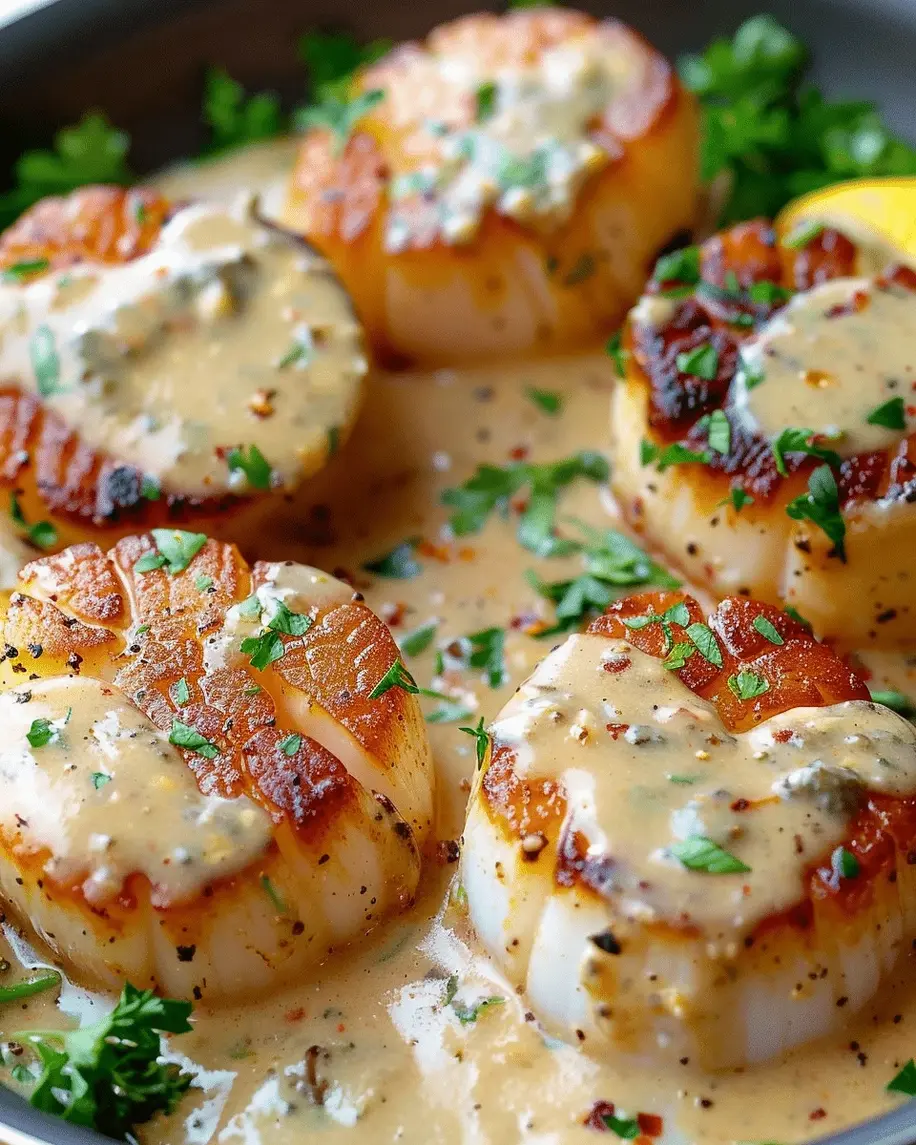
Picture this: a perfectly seared scallop, its crust a patchwork of amber and bronze, resting in a pool of pale golden sauce that’s rich but not heavy. The aroma — warm paprika, garlic, a touch of cayenne — lifts out of the pan and fills your kitchen. The first bite gives you that satisfying crunch, then the scallop practically melts, followed by the sauce: tangy from mustard, creamy from a touch of cream, with a gentle hum of spice that lingers on your tongue. The little flecks of green from fresh parsley or chives add a pop of color and freshness. This is the kind of dish that feels special on a Tuesday night or elegant enough for a dinner party. It’s also naturally gluten-free and comes together in about 25 minutes from start to finish.
What makes my version different? I use a two-stage searing method — a hot cast-iron pan with clarified butter (or ghee) — and I finish the sauce in the same pan to capture all those browned bits. That’s the French technique of déglacage at work. The Cajun seasoning I make myself with smoked paprika, a touch of cayenne, dried oregano, and garlic powder — no fillers, just pure flavor. And the creamy mustard sauce? It’s built on a light cream and broth base, so it coats the scallops without overwhelming them. I’ll share my trick for keeping the sauce from breaking, plus the one mistake that can ruin a scallop’s texture in seconds. If you’ve been looking for an easy scallop dinner recipe that tastes like restaurant quality, this is it.
Why This Cajun Seared Scallops Recipe Is the Best
The Flavor Secret. The combination of Cajun seasoning and creamy mustard sauce is unexpected but perfect. The earthy, smoky heat of the Cajun blend — inspired by the bold spices I fell in love with during my years in New York — is tempered by the tangy, velvety mustard sauce. That sauce is a classic French sauce moutarde that I lightened up just enough so it doesn’t smother the scallops. Every bite has a balance of heat, creaminess, and briny sweetness from the scallops themselves.
Perfected Texture. Scallops are notoriously easy to overcook. In culinary school, we practiced searing scallops for weeks — I must have gone through five pounds in one afternoon. The technique I teach here (pat dry, hot pan, don’t move them, flip once) gives you that coveted golden crust with a tender, almost buttery interior. I also explain why you should never overcrowd the pan, and what to look for to know when they’re ready to flip. No more rubbery scallops.
Foolproof & Fast. This recipe is approachable even if you’ve never cooked scallops before. The ingredient list is short — you probably already have most of the spices and pantry staples. The sauce comes together in the same pan while the scallops rest, so cleanup is minimal. And because everything happens in under half an hour, it’s perfect for a weeknight dinner that still feels like an occasion. I’ve had readers tell me this was their first scallop recipe and they nailed it on the first try. That makes my day every single time.
Cajun Seared Scallops Recipe Ingredients
I source my scallops from the Greenmarket at Union Square when I can — the dry-packed sea scallops from local fishermen are worth every penny. If you’re shopping at a standard grocery store, look for “dry” scallops (not treated with sodium tripolyphosphate), which sear far better than “wet” ones. The rest of the ingredients are pantry staples for me. I buy my smoked paprika from a little spice shop in Chelsea Market, but any brand works as long as it’s fresh — spice that’s been sitting in your cabinet for two years will be flat.
Ingredients List
- 1¼ lbs large sea scallops (about 12–16 scallops, dry-packed preferred)
- 2 tablespoons unsalted butter or clarified butter (ghee)
- 1 tablespoon olive oil (for the sauce base)
- 2 teaspoons Cajun seasoning (store-bought or homemade — see my blend below)
- ½ teaspoon kosher salt (or to taste)
- ¼ teaspoon freshly ground black pepper
- 1 small shallot, finely minced (about 2 tablespoons)
- ½ cup low-sodium chicken broth (or seafood broth)
- ½ cup heavy cream (or half-and-half for a lighter version)
- 2 tablespoons whole-grain Dijon mustard
- 1 tablespoon smooth Dijon mustard
- 1 teaspoon fresh lemon juice (plus lemon wedges for serving)
- 2 tablespoons fresh parsley or chives, chopped (for garnish)
Homemade Cajun Seasoning (makes about 3 tablespoons): 1½ tbsp smoked paprika, 1½ tsp garlic powder, 1½ tsp onion powder, 1 tsp dried oregano, 1 tsp dried thyme, ½ tsp cayenne pepper, ½ tsp freshly ground black pepper, ½ tsp kosher salt. Whisk together and store in an airtight jar.
Ingredient Spotlight
Scallops. The star of the show. Dry-packed sea scallops (also labeled “dry” or “chemical-free”) have not been treated with phosphates, so they brown beautifully and naturally. Wet scallops will release water as they cook, steaming instead of searing, and you’ll end up with pale, tough scallops. If you can only find wet scallops, pat them very dry with paper towels and let them sit uncovered in the fridge for 30 minutes to surface-dry. The size matters: look for “U10” or “U12” scallops — that means under 10 or 12 per pound — which have the best meat-to-crust ratio.
Cajun Seasoning. Not all Cajun blends are created equal. Many store-bought versions are heavy on salt and cayenne and light on the aromatic spices. Making your own takes five minutes and lets you control the heat. My version uses smoked paprika as the base (not regular paprika), which adds a deep, almost bacon-like smokiness. If you’re sensitive to spice, reduce the cayenne to ¼ teaspoon. The seasoning does double duty here: it flavors the scallops directly and also adds a subtle layer to the sauce when we deglaze the pan.
Mustard. I use a combination of whole-grain Dijon and smooth Dijon for texture. The whole-grain gives little pops of mustard seed that burst on your tongue, while the smooth Dijon emulsifies into the cream for a silky finish. If you only have one type, use 1½ tablespoons of smooth Dijon and 1½ tablespoons of whole-grain. The tanginess is essential to cut through the richness of the cream and the heat of the Cajun spices. I prefer a French Dijon — Maille is my go-to, available at most US grocery stores.
Heavy Cream. This is the backbone of the sauce. Heavy cream (35% milk fat) creates a luscious, stable sauce that won’t curdle when you add the acidic mustard and lemon juice. If you want to lighten it, use half-and-half, but reduce the simmer time and add a teaspoon of cornstarch slurry (cornstarch + cold water) to help thicken. For a dairy-free version, full-fat coconut milk works beautifully — the slight sweetness pairs well with the Cajun spices. I tested this with oat cream too, and while it’s thinner, it’s still delicious.
| Original Ingredient | Best Substitution | Flavor / Texture Impact |
|---|---|---|
| Heavy Cream | Half-and-half + 1 tsp cornstarch slurry | Lighter mouthfeel, slightly thinner sauce; slurry helps thicken |
| Cajun Seasoning | Store-bought Cajun blend (check salt level) | May be saltier; adjust added salt. Smoked paprika is key for depth |
| Whole-Grain Dijon | Extra smooth Dijon + ½ tsp mustard seeds (optional) | Slightly less textured but same tangy base |
| Chicken Broth | Seafood broth or vegetable broth | Seafood broth enhances brininess; veg broth keeps it lighter |
How to Make Cajun Seared Scallops — Step-by-Step
Trust me: if you follow these steps, you’ll get that perfect golden crust every time. I’ve organized them so you can work efficiently — the sauce comes together while the scallops rest, and everything happens in one pan. Let’s go.
Step 1: Prepare the Scallops
Remove the small side muscle (the tough, rectangular tag attached to each scallop) — it’s edible but chewy, and it can cause the scallop to curl as it cooks. Rinse the scallops briefly under cold water and pat them extremely dry with paper towels. Place them in a single layer on a plate lined with paper towels, then put another paper towel on top and press gently. Let them sit at room temperature for 10 minutes while you prepare the seasoning. In a small bowl, mix the Cajun seasoning, salt, and pepper. Sprinkle the mixture evenly over both sides of the scallops, pressing lightly to adhere.
💡 mia’s Pro Tip: The drier the scallops, the better the crust. After patting dry, let them sit uncovered in the fridge for 15 minutes if you have extra time. That surface moisture is the enemy of a good sear.
Step 2: Heat the Pan and Sear
Place a large cast-iron skillet or heavy stainless-steel pan over medium-high heat and add the butter (or ghee). Swirl the pan as the butter melts. When the butter is foamy — but not browned — and a drop of water sizzles on contact, carefully place the scallops in the pan in a single layer, making sure they’re not touching. You’ll need to work in batches if your pan is small (about 6–8 scallops per batch). Cook without moving them for 2 to 2½ minutes, until the underside is a deep golden brown. Flip each scallop gently with tongs and cook the second side for 1 to 1½ minutes for medium (translucent center) or 2 minutes for more well-done. Transfer the seared scallops to a plate and tent loosely with foil.
⚠️ Common Mistake to Avoid: Do NOT move the scallops around the pan after you place them. Let them sear undisturbed. Moving them too early will tear the crust and release juices that steam the scallops. Trust the heat and wait for that golden color before flipping.
Step 3: Make the Sauce
Reduce the heat to medium-low. There should be about 1 tablespoon of fat remaining in the pan (if not, add a drizzle of olive oil). Add the minced shallot and sauté for 1 minute, scraping up any browned bits from the bottom of the pan with a wooden spoon — that’s pure flavor. Pour in the chicken broth and bring to a simmer, scraping all those bits (the fond) into the liquid. Let it simmer for 2 minutes until reduced by about half. Whisk in the heavy cream, both mustards, and lemon juice. Stir continuously for 2–3 minutes until the sauce thickens enough to coat the back of a spoon. Taste and add a pinch more salt or a squeeze of lemon if needed.
💡 mia’s Pro Tip: If the sauce looks like it’s starting to separate (tiny dots of fat on the surface), whisk in 1 teaspoon of cold water and remove from heat for 30 seconds. The emulsion will come back together. Also, never let the sauce boil after adding the cream — a gentle simmer is all it needs.
Step 4: Combine and Serve
Return the scallops to the pan, nestling them into the sauce. Let them warm through for about 30 seconds — no longer, or the scallops will overcook. Spoon the sauce over the scallops. Garnish with fresh parsley or chives and serve immediately with lemon wedges on the side. The residual heat will continue cooking the scallops ever so slightly, so pull them off the heat the moment they’re warm.
⚠️ Common Mistake to Avoid: Don’t let the scallops sit in the sauce for more than a minute before serving. They will continue to cook from the heat of the sauce and can quickly go from tender to tough. Have your plates ready and serve immediately.
| Step | Action | Duration | Key Visual Cue |
|---|---|---|---|
| 1 | Prepare & season scallops | 10–15 mins | Scallops are dry to the touch, evenly coated in seasoning |
| 2 | Sear scallops | 3–4 mins total | Deep golden-brown crust on first side, edges are opaque |
| 3 | Make sauce | 5–6 mins | Sauce coats spoon, no visible separation, pale golden |
| 4 | Combine & serve | 30 secs | Scallops glistening with sauce, parsley bright green |
Serving & Presentation
I love serving these scallops over a bed of creamy polenta or simple buttered egg noodles — something that soaks up that gorgeous mustard sauce. In the summer, I’ll plate them on a bright green pea purée or sautéed spinach. My Moroccan side comes out when I add a pinch of harissa or a sprinkle of toasted cumin seeds on top, but that’s optional. For a lighter meal, serve alongside a crisp arugula salad with lemon vinaigrette. The bitterness of the arugula cuts through the richness beautifully.
When I entertain in my NYC apartment, I like to arrange the scallops in a concentric circle on a large warm platter, spoon the sauce over the center, and garnish with micro greens or edible flowers if I’m feeling fancy. It’s a showstopper. Pair it with a chilled glass of Sauvignon Blanc or a lightly oaked Chardonnay — the acidity and citrus notes complement the creamy sauce and the spice. Or, if you’re like me and love a cocktail, a spicy margarita with a salt rim is a phenomenal match.
| Pairing Type | Suggestions | Why It Works |
|---|---|---|
| Side Dish | Creamy polenta, buttered egg noodles, sautéed spinach, pea purée | Neutral base soaks up sauce; creamy textures mirror the sauce |
| Sauce / Dip | Extra mustard sauce (make 1½x), lemon aioli, harissa yogurt | Additional tang or heat for dipping crusty bread |
| Beverage | Sauvignon Blanc, unoaked Chardonnay, spicy margarita | Acidity and citrus cut through richness and heat |
| Garnish | Fresh parsley/chives, micro greens, lemon zest, edible flowers | Adds freshness, color contrast, and brightens each bite |
Make-Ahead, Storage & Reheating
I know life gets busy — even for a food blogger in New York! This recipe is best enjoyed fresh, but you can prep a few components ahead to make weeknight cooking a breeze. Here’s what I do: I make the Cajun seasoning blend up to 2 weeks in advance, and I often cook the sauce base (without the cream) a day ahead and refrigerate it. Scallops themselves should ideally be cooked just before serving, but I’ll give you the best methods for leftovers too.
| Method | Container | Duration | Reheating Tip |
|---|---|---|---|
| Refrigerator | Airtight container (scallops & sauce separate) | Up to 2 days | Reheat sauce gently in a pan, add scallops for 30 secs only |
| Freezer | Freezer-safe container (sauce only — scallops don’t freeze well) | Up to 2 months | Thaw overnight in fridge; reheat and add freshly seared scallops |
| Make-Ahead | Sauce base (broth + shallot, no cream) in jar | Up to 3 days in advance | Add cream and mustard when reheating; sear scallops fresh |
If you do have leftover cooked scallops, the gentlest way to reheat is in a low oven (275°F) for about 5 minutes, covered, or in a non-stick pan over very low heat with a splash of water or broth. Microwaving scallops is not recommended — the texture turns rubbery very quickly. I’ve tested it so you don’t have to. The sauce, on the other hand, reheats beautifully on the stovetop over low heat. Just whisk in a splash of broth or water if it’s thickened too much.
Variations & Easy Swaps
One of the wonderful things about this Cajun scallops creamy sauce base is how versatile it is. I’ve made versions inspired by my mother’s Moroccan pantry, my chef training in Paris, and the seasonal produce I find at the Union Square farmers market. Here are three of my favorite variations, each tested in my own kitchen.
| Variation | Key Change | Best For | Difficulty Impact |
|---|---|---|---|
| Moroccan Spiced Scallops | Replace Cajun seasoning with ras el hanout + pinch of saffron | Exotic flavor, special occasions | Same difficulty |
| Dairy-Free Mustard Sauce | Use full-fat coconut milk instead of heavy cream | Dairy-free, paleo, slightly sweet | Same; watch for separation |
| Summer Citrus & Herb | Add orange zest + fresh tarragon to the sauce | Spring/summer, lighter palate | Same difficulty |
Moroccan Spiced Scallops
This is my personal favorite — a nod to my roots. Instead of Cajun seasoning, use 2 teaspoons of good-quality ras el hanout (a Moroccan spice blend with cumin, coriander, cinnamon, ginger, and cardamom). Add a small pinch of saffron threads to the sauce as it simmers. The floral, warm spices pair beautifully with the creamy mustard sauce. I like to finish with toasted slivered almonds and a sprinkle of fresh cilantro. It’s a conversation starter at any dinner party, and it takes the dish in a completely different direction without changing the technique.
Dairy-Free Version
For a dairy-free version that still feels indulgent, substitute the heavy cream with full-fat coconut milk (the kind in a can, not the carton). Use a good-quality brand like Aroy-D or Thai Kitchen. The sauce will be slightly thinner but still luscious, with a subtle coconut sweetness that complements the spicy Cajun seasoning. Add 1 teaspoon of cornstarch mixed with 2 teaspoons of cold water (a slurry) to help thicken. Lemon juice is essential here to brighten the sauce. I tested this version for a friend who is lactose-intolerant, and she said it was the best scallop dish she’d ever had.
Summer Citrus & Herb
In the peak of summer, when I find gorgeous organic lemons and fresh tarragon at the Union Square Greenmarket, I make this brighter version. Add 1 teaspoon of finely grated orange zest to the sauce along with the lemon juice, and stir in 1 tablespoon of fresh chopped tarragon just before serving. The tarragon’s subtle anise flavor and the orange’s sweetness lift the whole dish. I also swap the parsley garnish for fresh chives and edible nasturtium flowers if I have them. It’s the perfect dish for a warm evening on the balcony with a chilled glass of Vermentino.
What is the best way to sear scallops so they get a golden crust without overcooking them?
The secret to a golden crust is all in the preparation and heat. First, buy dry-packed scallops (not treated with sodium tripolyphosphate) — wet scallops release water and steam instead of searing. Pat them extremely dry with paper towels and let them sit at room temperature for 10 minutes before cooking. Use a heavy cast-iron or stainless-steel pan over medium-high heat with clarified butter or ghee, which has a higher smoke point than regular butter. The scallops should sizzle the moment they hit the pan. Leave them completely undisturbed for 2 to 2½ minutes — do not move them, press them, or peek. You’ll see the edges turn opaque and the bottom develop a deep golden color. Flip once and cook for 1 to 1½ minutes more. A perfectly cooked scallop should be golden on both sides and just translucent in the center. If you’re nervous, use an instant-read thermometer: 115–120°F for medium (carryover cooking will bring it to 125°F, which is perfect).
Can I use frozen scallops for Cajun seared scallops, or do they need to be fresh?
Yes, you can absolutely use frozen scallops — I do it all the time during the winter when fresh sea scallops aren’t as readily available. The key is how you thaw them. Transfer the frozen scallops to the refrigerator 24 hours before you plan to cook them. Never thaw them at room temperature or in hot water, as they’ll absorb water and become mushy. Once thawed, pat them very dry with paper towels to remove as much surface moisture as possible. Frozen scallops tend to release more liquid than fresh, so after patting dry, place them on a paper-towel-lined plate and let them sit uncovered in the fridge for 30 minutes to surface-dry. Then season and sear as directed. They may not get quite as deeply golden as pristine fresh scallops, but with the right technique, you’ll still get a beautiful crust. One note: if your frozen scallops are labeled “wet-packed” or “treated,” they’ll be harder to sear well. Look for “dry-packed” or “naturally frozen” on the package.
What can I substitute for heavy cream in the creamy mustard sauce to make it lighter?
You have several excellent options for a lighter sauce. Half-and-half (10–12% milk fat) is the easiest swap — it will still be creamy but noticeably thinner. To compensate, whisk in 1 teaspoon of cornstarch mixed with 2 teaspoons of cold water (a slurry) before simmering to help thicken. Another option is whole milk with a tablespoon of cream cheese or mascarpone whisked in — this adds body without as much fat. For a dairy-free alternative, full-fat canned coconut milk creates a luscious sauce with a subtle tropical sweetness that works surprisingly well with Cajun spices. Oat milk creamer (the barista style) is another option, though it’s thinner. Whichever you choose, remember to simmer the sauce gently — not boil — and add the lemon juice at the very end to prevent any curdling. I tested all of these, and my personal favorite for a lighter sauce is half-and-half with the cornstarch slurry. It keeps the tangy mustard flavor front and center.
How do I balance the spice level of Cajun seasoning when serving with a creamy mustard sauce?
Balancing heat is all about proportion and layering. The creamy mustard sauce naturally tempers spice because the fat in the cream and the tang from the mustard both work to mellow capsaicin. If you’re sensitive to heat, start with 1 teaspoon of Cajun seasoning for the scallops (instead of 2), and make sure your Cajun blend isn’t heavy on cayenne. My homemade recipe uses only ½ teaspoon of cayenne per 3 tablespoons of seasoning — that’s a moderate heat. If you want even less, reduce the cayenne to ¼ teaspoon. For extra insurance, add an extra tablespoon of cream to the sauce or a small drizzle of honey (about ½ teaspoon) to add sweetness that counterbalances heat. Another trick is to serve the scallops with a wedge of lemon or lime — the acidity cuts through the richness and tames any lingering heat. If you accidentally overspice, don’t panic: make a little extra sauce (without seasoning) and stir it in to dilute the heat. The key is to taste as you go and remember that the sauce is your friend here — it exists to complement and balance the spice, not hide from it.
What side dishes go best with Cajun seared scallops?
This dish is versatile, and the sides you choose can really elevate the meal. My top recommendation is creamy polenta — the smooth, buttery cornmeal soaks up the mustard sauce beautifully and provides a neutral base that lets the scallops shine. Buttered egg noodles are another classic option that my French chef training approves of. For a lighter, healthier side, try sautéed spinach with garlic or a bright pea purée (frozen peas blended with a little cream and mint). A simple arugula salad with lemon vinaigrette adds a peppery bite that cuts through the richness. If you want something grain-based, serve the scallops over herbed couscous (a nod to my Moroccan roots) or quinoa. In the summer, I love pairing them with grilled asparagus or roasted cherry tomatoes. The key is to choose sides that are either neutral and creamy (to complement the sauce) or bright and acidic (to contrast with it). Avoid sides that are heavily spiced themselves, as they may compete with the Cajun flavors.
How do I know when scallops are done without cutting them open?
Visual cues are your best friend here. A perfectly cooked scallop will have a deep golden-brown crust on both sides, and the sides (the edges) will be opaque white for about 3–4 millimeters. The center of the scallop should still look slightly translucent — it will finish cooking from residual heat. If the entire scallop is solid white all the way through, it’s likely overcooked. Another reliable method: gently touch the scallop with your finger or the back of a spoon. A raw scallop is very soft and jiggly; a perfectly cooked scallop is firm with a slight spring (like the fleshy part of your palm when you touch thumb to pinky). If it feels hard and dense, it’s overdone. For absolute precision, use an instant-read thermometer inserted sideways into the center — pull the scallop off the heat at 115°F for rare, 120°F for medium (my preference), and 125°F for well-done. Remember that carryover cooking will raise the temperature by about 5°F, so pull them a few degrees before your target.
Can I make the creamy mustard sauce ahead of time?
You can partially make the sauce ahead for convenience. The base — sautéed shallot with chicken broth, reduced — can be made up to 3 days in advance and stored in a covered container in the refrigerator. When you’re ready to serve, simply warm the base over medium heat, then whisk in the cream, mustards, and lemon juice, and simmer gently until thickened. Do not add the cream or mustard during the make-ahead stage, as the sauce may separate or the mustard may lose its pungency upon reheating. If you want to freeze the sauce, freeze only the broth-shallot base (without cream) for up to 2 months. Thaw overnight in the fridge, then proceed with the cream and mustard. The fresh scallops must always be cooked just before serving — they don’t reheat well and are best enjoyed straight from the pan. This make-ahead strategy helps you get a restaurant-quality dinner on the table in about 15 minutes on a busy weeknight.
What wine pairs well with spicy Cajun scallops and creamy mustard sauce?
This dish calls for a wine with good acidity, moderate alcohol, and no heavy oak, because both the spice and the creamy sauce need a refreshing counterpart. My top pick is Sauvignon Blanc from the Loire Valley (Sancerre or Pouilly-Fumé) — its zesty citrus and mineral notes cut through the richness and cool the heat. A New Zealand Sauvignon Blanc works well too, though it’s slightly more tropical. For a white with a bit more body, try an unoaked Chardonnay from Chablis or a dry Vermentino from Sardinia. If you prefer red wine, go with a light, chillable red like a Beaujolais Cru (Morgon or Fleurie) or a Pinot Noir from a cooler region — serve it slightly chilled (like 55°F). Avoid heavy reds like Cabernet Sauvignon or Zinfandel, as the tannins and high alcohol can clash with the spice and make the heat feel more intense. A bone-dry rosé from Provence is another excellent choice. And if you’re not drinking wine, a crisp gin and tonic with a slice of grapefruit or a spicy margarita are both phenomenal pairings.
Share Your Version!
I absolutely love hearing how this recipe turns out in your kitchen — every time someone tells me they made scallops at home for the first time with this recipe and they turned out beautifully, it genuinely makes my week. Did you try the classic Cajun version or one of the variations? Did you add your own twist — maybe extra garlic, a splash of hot sauce, or a different herb? I want to know all about it!
Leave a star rating and a comment below — your feedback helps me create better recipes and also helps other readers know what to expect. If you post a photo on Instagram or Pinterest, tag @exorecipes so I can see your beautiful creation. I share my favorites in my stories every week. And here’s a question for you: what’s the one side dish you think would be perfect with these scallops? I’m always looking for new ideas to test in my NYC kitchen.
From my NYC kitchen to yours — I hope this recipe brings as much warmth to your table as it does to mine. — mia 🧡
Love This Recipe? Save It to Pinterest!
If you enjoyed this Cajun Seared Scallops recipe, don’t let it get lost in your browser tabs! 😄 Pin it now so you can find it again anytime — and explore hundreds more tried-and-tested recipes waiting for you on my Pinterest boards.
👉 Follow mia on Pinterest @exorecipe
📌 Pin this recipe · 🔁 Re-pin your favorites · 💬 Tag me when you make it — I love seeing your creations!
“`
Print
Cajun Seared Scallops: A Flavorful Delight with Creamy Mustard Sauce
Instructions
Tried This Recipe? Leave a Comment!
Did you make this recipe? I’d love to hear how it turned out! Please leave a comment and a rating below. Your feedback helps other home cooks and supports cheerychop.com!
For more delicious inspiration, follow me on Pinterest!
