Table of Contents
Cajun Salmon and Shrimp Recipe – A Bold & Flavorful Seafood Feast in 25 Minutes
Growing up in Morocco, my mother would spend hours layering spices into tagines – cinnamon, turmeric, ginger – each one telling a story. But when I moved to New York City and trained in Paris, I discovered a whole new world of bold flavors, especially Cajun cuisine. This Cajun salmon and shrimp recipe is my love letter to that fiery, smokey Louisiana spirit, elevated with French technique and a one-pan twist that makes it weeknight-friendly. The secret? A deeply aromatic Cajun seafood recipe that starts with a classic spice blend and finishes with a glossy, buttery sauce that clings to every bite.
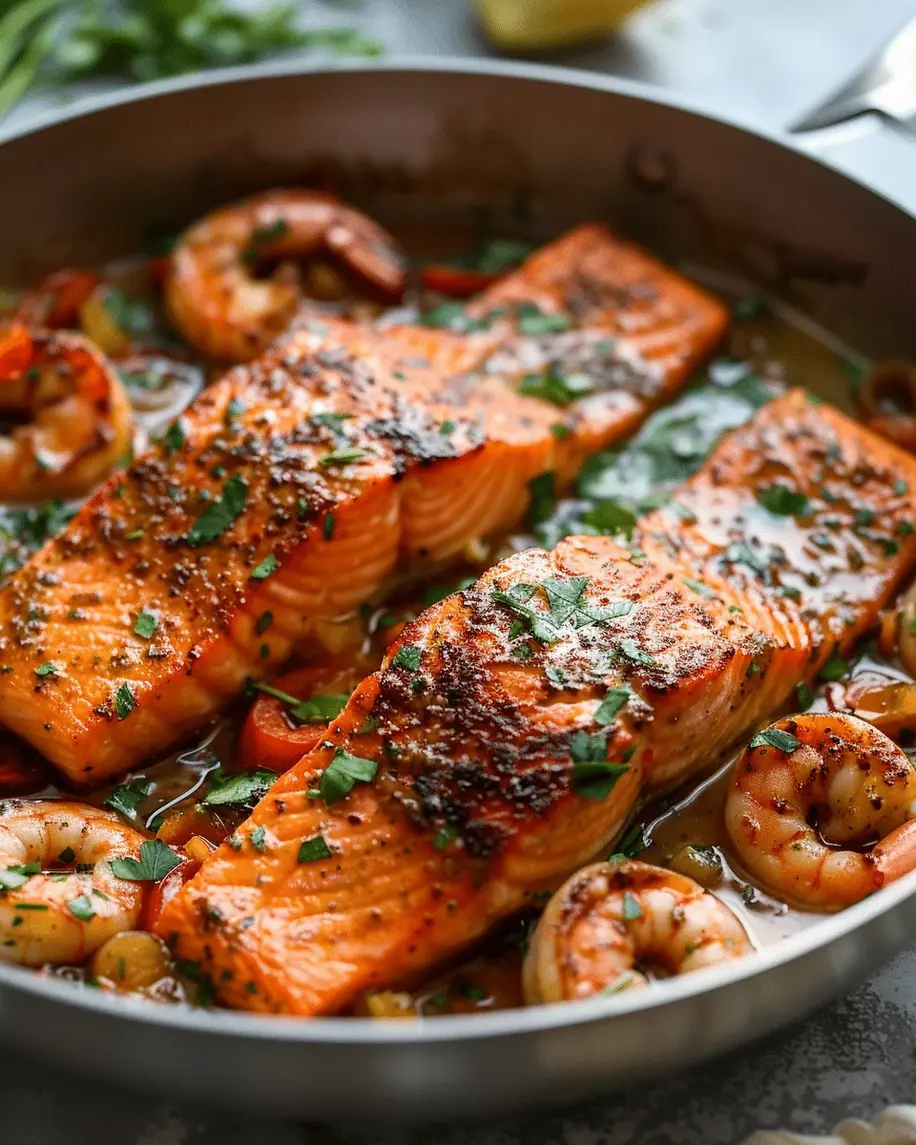
Imagine this: perfectly seared salmon fillets with a crackling, golden crust, giving way to tender, flaky flesh. Plump, sweet shrimp, kissed by the same spice rub, turn pink and juicy in seconds. Then comes the magic – a hit of garlic, a splash of broth and lemon juice, and a generous knob of butter that melts into a silky, slightly spicy pan sauce. The aroma alone will have everyone wandering into the kitchen. I love to serve this over steamed jasmine rice or with crusty bread to soak up every last drop. It’s the kind of dinner that feels fancy but comes together faster than takeout.
I’ve perfected this blackened salmon and shrimp pairing over years in my NYC kitchen – and I’ve learned a few tricks along the way. The key to avoiding overcooked seafood is cooking in batches and using the right skillet. Many home cooks crowd the pan, which steams rather than sears. My version uses a hot cast iron or stainless steel skillet, gives the salmon a head start, then finishes everything in the same pan. One common mistake is using pre-ground Cajun seasoning with too much salt; I recommend a no-salt-added blend so you control the sodium. Trust me – this one-pan Cajun salmon dinner will become your new go-to.
Why This Cajun Salmon & Shrimp Recipe Is the Best
The Flavor Secret
The heart of this spicy seafood dinner is my homemade-style Cajun rub – a balanced blend of smoked paprika, garlic, onion, and a whisper of cayenne. Growing up in Morocco, I learned that heat must be balanced with sweetness and depth. I use smoked paprika for an almost bacon-like smokiness, and a touch of brown sugar (optional) to round out the heat. This rub is versatile enough for any seafood, but it truly sings with salmon and shrimp.
Perfected Texture
French culinary school taught me the art of the perfect sear – and it applies beautifully here. I cook the salmon skin-side down first, pressing gently to ensure even contact. This creates an ultra-crispy skin that contrasts with the tender fish. The shrimp cook in the same pan, picking up those browned bits (the fond) that add layer after layer of flavor. The final sauce deglazes the pan, lifting all that goodness into a silky, emulsified butter sauce.
Foolproof & Fast
This is the definition of a quick, high-impact meal. From fridge to table in 25 minutes, with only one pan to wash. It’s easy enough for a busy Tuesday but impressive enough for guests. And because the seafood is naturally low in carbs, it fits perfectly into keto or gluten-free lifestyles. I’ve tested it dozens of times, and the timing below guarantees moist, never-dry results.
Cajun Seafood Recipe Ingredients
Whenever I walk through the seafood aisle at the Union Square Greenmarket, I feel the same excitement I felt as a girl in Morocco’s fish souk. For this recipe, I pick up fresh wild salmon and Gulf shrimp when available. The rest is pantry staples – a reminder that bold flavor doesn’t require exotic ingredients.
Ingredients List
- 4 (6 oz) salmon fillets, skin on or off
- 1 lb large shrimp, peeled and deveined
- 2 tablespoons Cajun seasoning (no-salt-added preferred)
- 1 teaspoon garlic powder
- 1 teaspoon onion powder
- 1/2 teaspoon smoked paprika
- 1/4 teaspoon cayenne pepper (optional, for extra heat)
- Salt and black pepper to taste
- 3 tablespoons olive oil, divided
- 3 tablespoons unsalted butter
- 4 cloves garlic, minced
- 1/4 cup chicken or seafood broth
- 2 tablespoons fresh lemon juice
- 2 tablespoons chopped fresh parsley
- Lemon wedges for serving
Ingredient Spotlight
Salmon: Look for fillets about 1 inch thick for even cooking. Wild salmon (sockeye or coho) has a richer flavor; farmed Atlantic is milder and more affordable. If using frozen, thaw completely and pat very dry. Substitution: trout or arctic char work beautifully.
Shrimp: Large (16–20 count) or jumbo shrimp give the best bite. Deveining is essential – I use a tiny paring knife and a trick from Paris: run the knife along the back and lift the vein in one motion. Frozen raw shrimp are fine; defrost in the fridge overnight or under cold running water.
Cajun seasoning: Not all blends are equal. I recommend a low-salt mix so you control the salt. My favorite is from a spice shop in the East Village – smoky, with a touch of oregano and thyme. You can make your own: combine 2 tsp paprika, 1 tsp garlic powder, 1 tsp onion powder, 1/2 tsp cayenne, 1/2 tsp dried thyme, 1/2 tsp dried oregano, 1/4 tsp black pepper, and 1/4 tsp salt.
Butter and broth: Unsalted butter lets you manage salt. Chicken broth is fine; seafood broth adds extra ocean flavor. Deglazing with broth is a classic French technique that transforms pan drippings into gold.
| Original Ingredient | Best Substitution | Flavor / Texture Impact |
|---|---|---|
| Salmon fillets | Trout or arctic char | Similar flaky texture, slightly milder |
| Large shrimp | Scallops or cubed white fish (cod) | Scallops are sweeter; cod is firmer, less sweet |
| Cajun seasoning (store-bought) | Homemade mix (see above) | Less salt, more customizable heat |
| Unsalted butter | Ghee or dairy-free butter | Ghee has higher smoke point; dairy-free changes richness |
How to Make Cajun Salmon & Shrimp – Step-by-Step
Don’t be intimidated by the idea of cooking two types of seafood at once! With a little organization and my chef-tested steps, you’ll turn out a restaurant-quality meal effortlessly.
Step 1: Prepare the Seasoning
Pat the salmon and shrimp dry with paper towels. In a small bowl, mix the Cajun seasoning, garlic powder, onion powder, smoked paprika, cayenne (if using), salt, and pepper.
💡 mia’s Pro Tip: Drying the seafood thoroughly is essential – moisture is the enemy of a good sear. Use several paper towels and press gently.
Step 2: Season the Seafood
Sprinkle the seasoning mixture evenly over both sides of the salmon fillets and the shrimp. Set aside.
⚠️ Common Mistake to Avoid: Don’t season too early (more than 15 minutes ahead) – salt will draw out moisture and make the fish wet. Season just before cooking.
Step 3: Sear the Salmon
Heat 2 tablespoons of olive oil in a large skillet over medium-high heat. Place the salmon fillets skin-side down (if skin-on) and cook for 4-5 minutes, until the skin is crispy and golden. Flip and cook for another 3-4 minutes, until the salmon is cooked through and flakes easily. Remove salmon to a plate and tent with foil.
💡 mia’s Pro Tip: To test doneness, press the side of the fillet with your finger – it should feel firm but still give a little. Or use an instant-read thermometer: 125°F for medium-rare, 135°F for well-done.
Step 4: Cook the Shrimp
In the same skillet, add the remaining 1 tablespoon olive oil. Add the shrimp in a single layer and cook for 2-3 minutes per side, until pink and opaque. Remove shrimp to the plate with the salmon.
⚠️ Common Mistake to Avoid: Overcrowding the pan – cook the shrimp in a single layer. If you have more than 1 lb, do it in batches so they sear instead of steam.
Step 5: Make the Cajun Butter Sauce
Reduce the heat to medium-low. Add the butter to the skillet. Once melted, add the minced garlic and sauté for about 30 seconds, until fragrant. Pour in the broth and lemon juice, scraping up any browned bits from the bottom of the pan. Let the sauce simmer for 1-2 minutes until slightly thickened.
💡 mia’s Pro Tip: Use a wooden spatula to scrape up the fond – those bits are pure flavor. If the sauce seems too thin, simmer another minute; if too thick, add a splash more broth.
Step 6: Combine and Serve
Return the salmon and shrimp to the skillet, spooning the sauce over them. Sprinkle with fresh parsley. Serve immediately with lemon wedges on the side.
💡 mia’s Pro Tip: For an extra touch, squeeze a lemon wedge over each serving just before eating – the acidity brightens all the bold flavors.
| Step | Action | Duration | Key Visual Cue |
|---|---|---|---|
| 1 | Mix seasoning, pat dry seafood | 5 min | Even spice coating, no wet spots |
| 2 | Sear salmon | 8–9 min | Golden crisp skin, fish flakes easily |
| 3 | Cook shrimp | 4–6 min | Pink and curled slightly |
| 4 | Make sauce | 2–3 min | Butter melted, sauce slightly thicker |
| 5 | Combine and serve | 1 min | Evenly coated, parsley garnish |
Serving & Presentation
When I plate this at home, I love to create a beautiful contrast: a bed of creamy white grits or jasmine rice, the salmon and shrimp nestled on top, and the sauce spooned generously around. A final sprinkle of fresh parsley and a few lemon wedges make it pop. In Paris, we learned to plate with intention – every component has a place and a purpose.
This dish is incredibly versatile. Serve it with garlic butter pasta for a decadent twist, or keep it light with a crisp green salad and avocado. For a Moroccan-inspired touch, I sometimes add a pinch of harissa to the sauce – it adds a whole new depth of smoky heat.
| Pairing Type | Suggestions | Why It Works |
|---|---|---|
| Side Dish | Steamed jasmine rice, garlic butter pasta, crusty bread | Soaks up the rich, spicy butter sauce |
| Sauce / Dip | Extra lemon wedges, remoulade, or a drizzle of honey | Lemon cuts richness; honey balances heat |
| Beverage | Cold beer (lager or IPA), Sauvignon Blanc, iced tea | Crisp, acidic drinks complement spicy seafood |
| Garnish | Fresh parsley, sliced green onions, micro greens | Adds freshness and visual appeal |
Make-Ahead, Storage & Reheating
Between recipe testing and my busy NYC schedule, I often prep components ahead. The spice rub can be mixed days in advance, and the seafood can be seasoned the morning of. Leftovers are a gift – but you need to reheat them carefully to avoid rubbery texture.
| Method | Container | Duration | Reheating Tip |
|---|---|---|---|
| Refrigerator | Airtight container | Up to 2 days | Reheat in a skillet over low heat with a splash of broth or water |
| Freezer | Freezer-safe bag (separate sauce) | Up to 1 month | Thaw overnight in fridge; reheat gently in skillet |
| Make-Ahead | Season seafood, store separately | Up to 8 hours | Cook directly from fridge, add 1-2 minutes to cook time |
My best trick for reviving leftover seafood: place it in a cold skillet with a tablespoon of butter and a bit of lemon juice, then warm over medium-low heat, basting gently. The butter rehydrates the proteins and brings back the succulence. Never microwave – it will turn your beautiful seafood into rubber.
Variations & Easy Swaps
| Variation | Key Change | Best For | Difficulty Impact |
|---|---|---|---|
| Creamy Cajun Pasta | Add 1/2 cup heavy cream after broth; serve over linguine | Those who love creamy pasta dinners | Easy |
| Dairy-Free / Paleo | Use ghee or avocado oil; replace butter with coconut cream or extra oil | Dairy-free or paleo lifestyles | Easy |
| Smoky Harissa Version | Add 1-2 tsp harissa paste with the butter; reduce cayenne to 1/8 tsp | Adventurous palates, North African twist | Easy |
Creamy Cajun Pasta
This is when I channel my Paris bistro training – after deglazing the pan with broth, stir in 1/2 cup heavy cream and let it simmer until slightly thickened. Toss in cooked linguine or fettuccine, then add the seafood back. The creamy sauce clings to every strand, making it a luxurious one-pan meal. A sprinkle of Parmesan on top wouldn’t be authentic Cajun, but it’s delicious!
Dairy-Free / Paleo
For my dairy-free readers, simple swaps work beautifully: use ghee or avocado oil for cooking the salmon and shrimp (ghee has a high smoke point and a nutty flavor). For the sauce, replace butter with a combination of 2 tablespoons more olive oil and 1 tablespoon full-fat coconut cream (a trick I learned from a Moroccan chef in Paris). The coconut adds a subtle sweetness that complements the Cajun spices. Serve with cauliflower rice for a paleo-friendly meal.
Smoky Harissa Version
This is my personal favorite nod to my heritage. Stir 1 to 2 teaspoons of harissa paste (I get mine from a Middle Eastern market in Astoria, Queens) into the butter before adding the garlic. The harissa adds a smoky, slightly floral heat that pairs perfectly with the Cajun seasoning. Reduce the cayenne to 1/8 teaspoon to keep the heat balanced. I like to finish with a drizzle of good olive oil and fresh cilantro instead of parsley.
What is the best way to season the Cajun salmon and shrimp for maximum flavor?
The secret to maximum flavor lies in a dry rub that coats every surface. Start with a high-quality Cajun seasoning that has a good balance of paprika, garlic, onion, and herbs – avoid blends with too much salt. Pat the seafood completely dry first, then sprinkle the rub generously on both sides and gently press it in. Let it sit for 5–10 minutes at room temperature to absorb. For an even deeper flavor, you can marinate in the fridge for up to 30 minutes, but any longer and the salt will start to cure the flesh, altering the texture.
Can I use frozen shrimp and salmon for this Cajun seafood recipe?
Absolutely! Frozen seafood is a convenient and often very high-quality option. The key is thorough thawing and drying. Thaw shrimp and salmon in the refrigerator overnight, or place them in a sealed bag and submerge in cold water for 30–40 minutes. Once thawed, pat the seafood extremely dry with paper towels – moisture is the enemy of a good sear. If you skip drying, the seafood will steam instead of sear, and you’ll lose that beautiful crust. I often use frozen wild salmon from my local Whole Foods with excellent results.
How long should I cook the salmon and shrimp to keep them from overcooking?
For salmon fillets about 1 inch thick, cook 4–5 minutes on the first side (skin-side down) and 3–4 minutes after flipping. The salmon is done when it flakes easily and the internal temperature reaches 125°F for medium-rare or 135°F for well-done. Shrimp cook much faster – 2–3 minutes per side. They’re ready when they turn opaque and curl into a loose “C” shape. If they curl into a tight “O”, they’re overdone. I always cook the salmon first, then shrimp, so each gets the perfect timing.
What side dishes pair well with Cajun salmon and shrimp?
This dish is wonderfully versatile. For a classic Southern-style meal, serve with creamy stone-ground grits or fluffy buttermilk biscuits. For a lighter option, a simple arugula salad with lemon vinaigrette or roasted asparagus works beautifully. I also love pairing it with garlic butter pasta or steamed jasmine rice to soak up all that spicy sauce. If you’re feeling indulgent, crusty sourdough bread for dipping is always a hit. The key is choosing sides that are neutral or slightly acidic to balance the bold Cajun spice.
Can I make this Cajun salmon and shrimp recipe ahead of time?
Yes, but with some smart strategies. The spice rub can be mixed up to a week ahead and stored in an airtight container. You can season the seafood up to 8 hours in advance – just keep it covered in the fridge. For the entire dish, it’s best cooked fresh because seafood doesn’t reheat as well as other proteins. However, leftovers can be stored in the fridge for up to 2 days. To reheat, warm gently in a skillet with a splash of broth or butter over low heat – never use the microwave, which will toughen the fish and shrimp.
What type of pan is best for cooking blackened salmon and shrimp?
I strongly recommend a heavy-bottomed skillet like cast iron or stainless steel. Cast iron retains heat beautifully and gives an incredible sear – it’s what I use in my NYC kitchen. A well-seasoned cast iron pan also adds a subtle depth of flavor over time. Stainless steel works just as well if you preheat it properly (the water bead test: a drop of water should dance on the surface). Avoid non-stick pans if possible, because they don’t get hot enough for a proper crust and won’t develop the fond needed for the sauce.
How can I reduce the spice level if I’m sensitive to heat?
No problem at all! This recipe is easy to customize. Simply omit the cayenne pepper entirely – that’s the main source of heat. Use a mild Cajun seasoning (many store-bought blends are quite mild) or make your own with extra paprika and very little cayenne. You can also serve the dish with a cooling element like a dollop of sour cream, Greek yogurt, or a side of creamy coleslaw. A squeeze of fresh lemon juice at the end also helps mellow the heat by adding brightness. The base flavor is still incredibly flavorful without the burn.
Can I use only salmon or only shrimp for this recipe?
Absolutely – this recipe works beautifully with just one protein. If using only salmon, simply increase the amount to 6 fillets (or adjust to your needs) and cook them in two batches if needed to avoid overcrowding. For shrimp only, use 2 pounds of large shrimp and cook in batches. The sauce amounts can stay the same, but you might want to add a little extra garlic or a splash more broth to compensate. I’ve made a “shrimp-only” version for quick lunches many times – it’s ready in under 10 minutes!
What should I do if my sauce is too thin or too thick?
If the sauce is too thin after simmering, continue cooking for another minute or two to reduce it further. You can also stir in a teaspoon of cold butter at the end (off heat) to help emulsify and thicken it – this is a classic French technique called “monter au beurre.” If the sauce is too thick, simply add a splash of broth or water and stir until it reaches your desired consistency. Remember that the sauce will continue to thicken slightly as it cools, so aim for a consistency that coats the back of a spoon.
Is this Cajun salmon and shrimp recipe gluten-free?
Yes, this recipe is naturally gluten-free! None of the ingredients contain gluten – the Cajun seasoning, spices, seafood, butter, broth, and lemon juice are all gluten-free. Just be sure to check your store-bought Cajun seasoning label, as some blends may contain anti-caking agents with gluten (though it’s rare). Also, if you’re serving with side dishes, choose gluten-free options like rice, quinoa, or corn tortillas. I often serve it over a bed of sautéed spinach or roasted sweet potatoes for a completely gluten-free, low-carb meal.
Share Your Version!
I’d love to hear how this Cajun salmon and shrimp recipe turns out in your kitchen! Did you add a personal twist? Did the smoky aroma fill your home like it does mine? Drop a star rating below and leave a comment – your feedback helps other home cooks discover the joy of this one-pan seafood feast.
Snap a photo of your creation and tag me on Instagram or Pinterest using @exorecipes – I can’t wait to see your beautiful plates! And if you have a question about a specific ingredient swap or technique, ask away in the comments. From my NYC kitchen to yours — I hope this recipe brings as much warmth to your table as it does to mine. — mia 🧡
Love This Recipe? Save It to Pinterest!
If you enjoyed this Cajun Salmon and Shrimp recipe, don’t let it get lost in your browser tabs! 😄 Pin it now so you can find it again anytime — and explore hundreds more tried-and-tested recipes waiting for you on my Pinterest boards.
👉 Follow mia on Pinterest @exorecipe
📌 Pin this recipe · 🔁 Re-pin your favorites · 💬 Tag me when you make it — I love seeing your creations!
Cajun Salmon and Shrimp Recipe A Bold and Flavorful Seafood Feast
- Prep Time: 10 minutes
- Cook Time: 15 minutes
- Total Time: 25 minutes
- Yield: 4 1x
- Method: Main Course
- Cuisine: Cajun
Description
This Cajun Salmon and Shrimp recipe is a bold and flavorful seafood feast, featuring perfectly seasoned salmon fillets and succulent shrimp pan-seared in a spicy Cajun butter sauce. Ready in under 30 minutes, it’s an easy yet impressive dinner that pairs beautifully with rice, pasta, or crusty bread.
Ingredients
- 4 (6 oz) salmon fillets, skin on or off
- 1 lb large shrimp, peeled and deveined
- 2 tablespoons Cajun seasoning
- 1 teaspoon garlic powder
- 1 teaspoon onion powder
- 1/2 teaspoon smoked paprika
- 1/4 teaspoon cayenne pepper (optional, for extra heat)
- Salt and black pepper to taste
- 3 tablespoons olive oil, divided
- 3 tablespoons unsalted butter
- 4 cloves garlic, minced
- 1/4 cup chicken or seafood broth
- 2 tablespoons fresh lemon juice
- 2 tablespoons chopped fresh parsley
- Lemon wedges for serving
Instructions
- Pat the salmon and shrimp dry with paper towels. In a small bowl, mix the Cajun seasoning, garlic powder, onion powder, smoked paprika, cayenne (if using), salt, and pepper.
- Sprinkle the seasoning mixture evenly over both sides of the salmon fillets and the shrimp. Set aside.
- Heat 2 tablespoons of olive oil in a large skillet over medium-high heat. Place the salmon fillets skin-side down (if skin-on) and cook for 4-5 minutes, until the skin is crispy and golden. Flip and cook for another 3-4 minutes, until the salmon is cooked through and flakes easily. Remove salmon to a plate and tent with foil.
- In the same skillet, add the remaining 1 tablespoon olive oil. Add the shrimp in a single layer and cook for 2-3 minutes per side, until pink and opaque. Remove shrimp to the plate with the salmon.
- Reduce the heat to medium-low. Add the butter to the skillet. Once melted, add the minced garlic and sauté for about 30 seconds, until fragrant.
- Pour in the broth and lemon juice, scraping up any browned bits from the bottom of the pan. Let the sauce simmer for 1-2 minutes until slightly thickened.
- Return the salmon and shrimp to the skillet, spooning the sauce over them. Sprinkle with fresh parsley.
- Serve immediately with lemon wedges on the side.
Notes
For best results, use fresh salmon and shrimp. Adjust the cayenne pepper to your preferred spice level. This dish pairs well with steamed rice, garlic butter pasta, or crusty bread to soak up the sauce. Leftovers can be stored in an airtight container in the refrigerator for up to 2 days.
Nutrition
- Calories: 520
- Sugar: 1g
- Fat: 32g
- Carbohydrates: 4g
- Protein: 48g
Tried This Recipe? Leave a Comment!
Did you make this recipe? I’d love to hear how it turned out! Please leave a comment and a rating below. Your feedback helps other home cooks and supports cheerychop.com!
For more delicious inspiration, follow me on Pinterest!
