“`html
Table of Contents
Butternut Squash & Spinach Lasagna: A Comforting, Creamy Twist on a Classic Favorite – Rich Béchamel Meets Roasted Squash for the Ultimate Fall Comfort Food
The first time I made this butternut squash spinach lasagna, I was standing in my tiny NYC kitchen, the smell of roasted squash drifting through the apartment, and I thought of my mother’s kitchen in Morocco. She used to layer vegetables in slow-cooked tagines, building flavor one patient step at a time. That same layered thinking is what makes this creamy butternut squash lasagna so special — it’s a vegetarian lasagna recipe that feels both familiar and fresh, a fall comfort food lasagna that wraps you in warmth from the very first bite. I trained at Le Cordon Bleu in Paris, where I learned the precision of a proper béchamel, and that technique is the backbone of this dish.
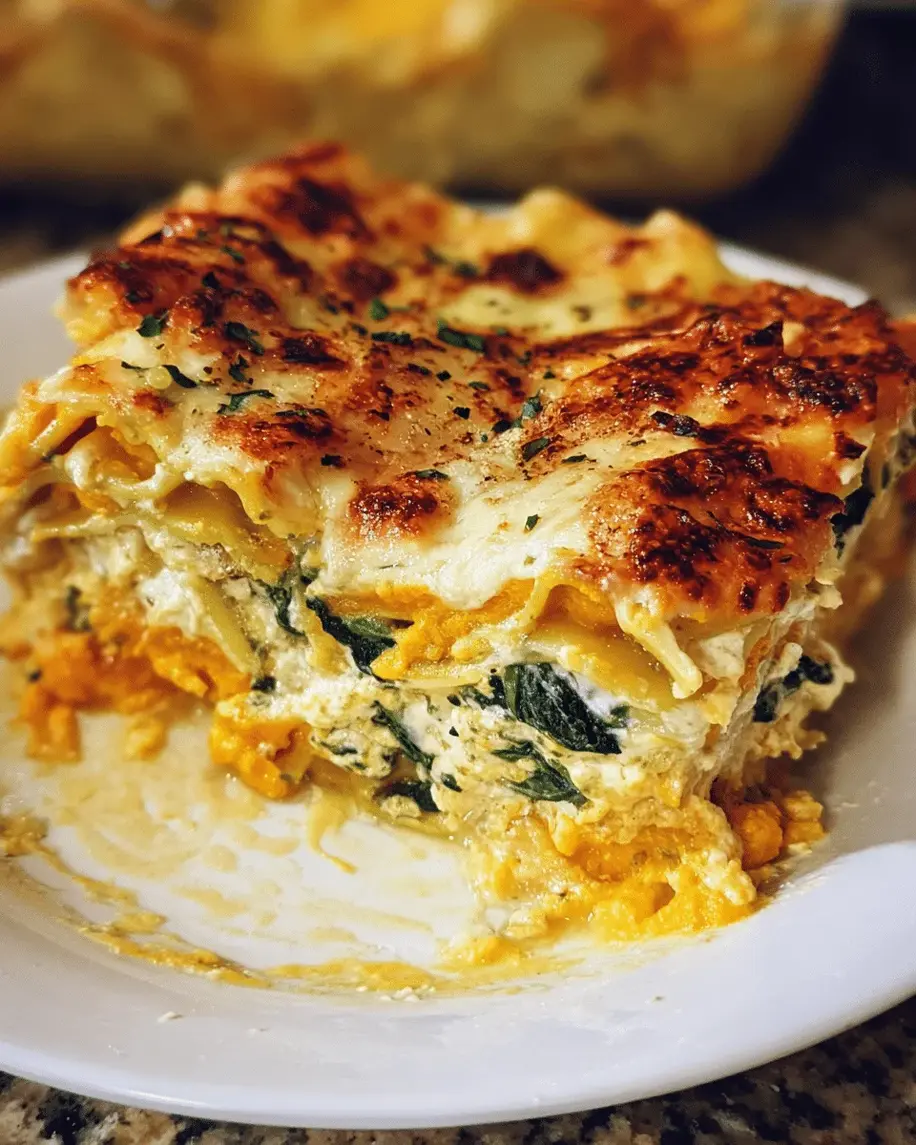
Picture this: tender no-boil lasagna noodles cradling a velvety white sauce, interwoven with sweet, caramelized roasted butternut squash and earthy spinach. Each forkful gives you a little bit of everything — the slight bite of al dente pasta, the creamy richness of Parmesan béchamel, the comforting sweetness of the squash, and the freshness of spinach brightened with a whisper of nutmeg. A golden, bubbly cheese crust forms on top, and when you cut into it, steam rises with that irresistible aroma of sage and garlic. This spinach lasagna with white sauce is exactly the kind of dish you want on a chilly October evening when all you crave is something hearty and soul-warming.
What sets this creamy butternut squash lasagna apart from other vegetarian lasagna recipes is the double treatment of the squash — first roasting to concentrate its sweetness, then layering it into the lasagna where it practically melts into the béchamel. I also add a trick I learned in Paris: a touch of nutmeg in the spinach and a generous hand with the Parmesan in the sauce. One common mistake people make is not roasting the squash long enough — undercooked squash releases water into the lasagna and makes it soggy. But with my tested method, you’ll get a perfectly structured, never-watery lasagna every time. 💡 mia’s Pro Tip: Always roast the squash until the edges are deeply caramelized — that’s where the flavor lives.
Why This Butternut Squash & Spinach Lasagna Recipe Is the Best
The Flavor Secret: Growing up in Morocco, I learned that the best dishes come from coaxing natural sweetness out of ingredients. Roasting the butternut squash at 400°F until it’s lightly caramelized transforms its flavor from simply sweet to almost butterscotch-like. That roasted depth pairs beautifully with the creamy béchamel — a classic French sauce that I learned to perfect in Paris. The key is a slow whisk and a patient hand. This isn’t just another butternut squash spinach lasagna; it’s one where every layer has been thoughtfully developed.
Perfected Texture: I’ve tested this recipe more times than I can count, and the biggest challenge was always texture. Too much moisture and the noodles turn to mush; too little and the lasagna feels dry. The solution? Roasting the squash until it’s tender but not watery, wilting the spinach completely before layering, and using a béchamel that’s thick enough to coat a spoon but loose enough to hydrate no-boil noodles. The result is a lasagna that holds its shape beautifully when sliced, with distinct, recognizable layers.
Foolproof & Fast: Despite its elegant presentation, this is a surprisingly approachable vegetarian lasagna recipe. No-boil noodles save you a pot to wash, and the béchamel comes together in about 10 minutes. I’ve designed the steps so that even a beginner can follow along without stress. I’ve also included my best tips for make-ahead preparation — perfect for busy weeknights or when you’re hosting a fall dinner party. This fall comfort food lasagna truly delivers on every level.
Butternut Squash Spinach Lasagna Ingredients
I source my butternut squash from the Union Square Greenmarket in the fall — the variety of shapes and sizes always makes me smile. The vibrancy of a well-chosen squash reminds me of the markets in Marrakech, where every vegetable tells a story. For this creamy butternut squash lasagna, freshness matters, but I’ll also share smart shortcuts that work beautifully.
Ingredients List
- 1 large butternut squash (about 2 lbs), peeled, seeded, and cut into 1/2-inch cubes
- 2 tablespoons olive oil
- Salt and black pepper, to taste
- 1 tablespoon unsalted butter
- 2 cloves garlic, minced
- 1 shallot, finely chopped
- 8 oz fresh spinach
- 1/4 teaspoon nutmeg
- 1/2 cup heavy cream
- 1/2 cup vegetable or chicken broth
- 2 cups whole milk
- 3 tablespoons all-purpose flour
- 3 tablespoons unsalted butter (for béchamel)
- 1 cup grated Parmesan cheese
- 1 cup shredded mozzarella cheese
- 1/2 cup ricotta cheese
- 9 lasagna noodles (no-boil or regular, cooked if needed)
- Fresh sage leaves (for garnish, optional)
Ingredient Spotlight
Butternut Squash: This is the star of our butternut squash spinach lasagna. Look for a squash that feels heavy for its size with a matte, beige skin — glossy skin often means it was picked too early. One medium squash (about 2 pounds) yields roughly 4 cups of cubed squash. If you’re short on time, pre-cubed squash from the grocery store works well; just make sure the pieces are uniform in size so they roast evenly.
Fresh Spinach: I prefer fresh spinach over frozen for this spinach lasagna with white sauce because it has a brighter flavor and better texture after cooking. One 8-ounce bag of fresh spinach wilts down to about 1 cup, which is the perfect amount for layering. You can substitute kale if you like — just remove the tough stems and cook it a few minutes longer until tender.
Parmesan Cheese: A good-quality Parmesan (the real stuff, not the green can) makes a huge difference in the béchamel. It adds umami depth and a salty, nutty character that ties the whole dish together. I grate mine fresh from a wedge — pre-grated Parmesan often contains anti-caking agents that prevent smooth melting.
No-Boil Lasagna Noodles: These are a game-changer for a creamy butternut squash lasagna. They absorb moisture from the béchamel and the vegetables as they bake, becoming perfectly tender without the need for pre-cooking. If you use regular noodles, cook them 2 minutes less than the package directions say so they don’t become mushy during baking.
| Original Ingredient | Best Substitution | Flavor / Texture Impact |
|---|---|---|
| Butternut Squash | Frozen butternut squash (thawed & drained) | Slightly softer texture; less caramelization — pat dry before roasting |
| Fresh Spinach | Frozen spinach (thawed & squeezed dry) | More concentrated flavor; use 1/2 the volume — wring out excess water thoroughly |
| Ricotta Cheese | Full-fat cottage cheese (blended smooth) | Creamier, slightly tangier — blend until silky for best texture |
| Whole Milk | 2% milk + 1 tbsp extra butter in béchamel | Slightly thinner sauce — compensate with extra butter for richness |
| Heavy Cream | Half-and-half (not as rich, but works) | Less decadent; sauce will be thinner — add 1 extra tbsp flour to béchamel |
How to Make Butternut Squash & Spinach Lasagna — Step-by-Step
Trust me, this is easier than it looks. I’ve broken down every step with my personal tips and the exact visual cues you’re looking for. Follow along, and you’ll have a stunning creamy butternut squash lasagna on the table.
Step 1: Roast the Squash
Preheat your oven to 400°F (200°C). Toss the cubed butternut squash with olive oil, salt, and pepper. Spread them in a single layer on a baking sheet — crowded pieces steam instead of roast. Bake for 25 to 30 minutes, flipping halfway through, until the squash is tender when pierced with a fork and the edges are golden brown and lightly caramelized. Set aside to cool slightly while you prepare the other components.
💡 mia’s Pro Tip: Don’t skip the flipping! Even browning means every piece contributes that sweet, nutty flavor that makes this butternut squash spinach lasagna so memorable.
Step 2: Cook the Spinach
In a large skillet, melt 1 tablespoon of butter over medium heat. Add the minced garlic and chopped shallot, cooking until fragrant — about 2 minutes. Add the fresh spinach in handfuls, stirring as it wilts. This takes 3 to 4 minutes total. Season with 1/4 teaspoon nutmeg, salt, and pepper. The nutmeg is non-negotiable here — it enhances both the spinach and the squash beautifully. Transfer the cooked spinach to a bowl and set aside.
⚠️ Common Mistake to Avoid: Not squeezing out excess moisture from the spinach. After cooking, let it cool for a minute, then press gently with a spoon to release any liquid. This prevents a watery lasagna.
Step 3: Make the Béchamel
In the same skillet (or a medium saucepan), melt 3 tablespoons of butter over medium heat. Whisk in 3 tablespoons of all-purpose flour and cook for 1 to 2 minutes, stirring constantly, until the mixture turns a pale golden color — this is your roux. Gradually whisk in the milk, heavy cream, and broth, pouring slowly and whisking continuously to prevent lumps. Bring to a gentle simmer, still whisking, and cook for about 5 minutes until the sauce thickens enough to coat the back of a spoon. Stir in 1/2 cup of grated Parmesan until melted, then season with salt and pepper.
💡 mia’s Pro Tip: For an extra-smooth béchamel for your spinach lasagna with white sauce, warm the milk before adding it to the roux. A warm liquid incorporates more easily and reduces the chance of lumps.
Step 4: Assemble the Lasagna
Reduce the oven temperature to 375°F (190°C). Spread a thin layer of béchamel on the bottom of a 9×13-inch baking dish — this prevents the noodles from sticking. Layer 3 lasagna noodles (no-boil or regular), then half of the roasted butternut squash, half of the cooked spinach mixture, dollops of ricotta cheese, and a third of the remaining béchamel. Sprinkle with mozzarella. Repeat with another layer: noodles, remaining squash, remaining spinach, remaining ricotta, and another third of béchamel and mozzarella. Top with the final layer of noodles, the remaining béchamel, the remaining Parmesan, and the remaining mozzarella.
⚠️ Common Mistake to Avoid: Skipping the bottom layer of béchamel. This is essential for no-boil noodles — it gives them the moisture they need to soften properly during baking.
Step 5: Bake and Rest
Cover the dish tightly with foil and bake for 25 minutes at 375°F. Remove the foil and bake for another 15 to 20 minutes, until the top is bubbly and golden brown. The cheese should be melted and the edges slightly caramelized. Let the lasagna rest for at least 10 minutes — this is crucial for clean slices. Garnish with fresh sage leaves if desired.
💡 mia’s Pro Tip: The resting period allows the béchamel to set and the layers to settle. If you cut into it too soon, the lasagna will slide apart. Patience pays off with this fall comfort food lasagna!
| Step | Action | Duration | Key Visual Cue |
|---|---|---|---|
| 1 | Roast squash | 25-30 min | Tender with caramelized edges |
| 2 | Cook spinach | 3-4 min | Fully wilted, no standing liquid |
| 3 | Make béchamel | 8-10 min | Coats spoon, smooth and glossy |
| 4 | Assemble | 10-15 min | Even layers, fully covered noodles |
| 5 | Bake (covered) | 25 min | Steaming, noodles softened |
| 6 | Bake (uncovered) | 15-20 min | Golden, bubbly crust |
| 7 | Rest | 10 min | Set and firm when sliced |
Serving & Presentation
This butternut squash spinach lasagna is a showstopper, so give it the presentation it deserves. After the 10-minute rest, use a sharp chef’s knife to cut clean squares — wipe the blade between cuts for the neatest slices. Lift each portion with a wide spatula, making sure to capture all the layers. A small sprinkle of fresh sage leaves or a few toasted pine nuts on top adds visual appeal and a subtle earthy crunch.
In my Moroccan home, we often served hearty vegetable dishes with a side of crusty bread and a simple salad of tomatoes and cucumbers. For this creamy butternut squash lasagna, I love pairing it with a bright, lemony arugula salad dressed with olive oil and shaved Parmesan. The peppery greens cut through the richness of the béchamel beautifully. A glass of dry white wine — like a Sauvignon Blanc or a Pinot Grigio — completes the meal.
When I serve this at dinner parties in my NYC apartment, I always get the same reaction: people go back for seconds, and they can’t believe it’s a vegetarian lasagna recipe. The secret is in the layers — the visual contrast of the green spinach, the golden squash, and the creamy white sauce makes every plate look like it came from a restaurant kitchen.
| Pairing Type | Suggestions | Why It Works |
|---|---|---|
| Side Dish | Arugula salad with lemon vinaigrette, roasted Brussels sprouts, garlic bread | Bright, acidic sides balance the creamy richness of the lasagna |
| Sauce / Dip | Extra warm béchamel on the side, chili flakes in olive oil | Adds moisture and a touch of heat if desired |
| Beverage | Sauvignon Blanc, Pinot Grigio, dry cider, sparkling water with lemon | Crisp, acidic drinks cut through the fat and cleanse the palate |
| Garnish | Fresh sage leaves, toasted pine nuts, shaved Parmesan, fresh thyme | Adds color, texture, and aromatic freshness |
Make-Ahead, Storage & Reheating
One of the things I love most about this butternut squash spinach lasagna is how well it works for meal prep. As a busy food blogger in NYC, I’m always looking for recipes that taste even better the next day — and this one absolutely does. The flavors meld together overnight, making it a perfect make-ahead dish for weeknight dinners or holiday gatherings.
| Method | Container | Duration | Reheating Tip |
|---|---|---|---|
| Refrigerator | Airtight container or covered baking dish | Up to 5 days | Reheat individual slices in a 350°F oven for 10-12 min, or in the microwave for 2-3 min |
| Freezer | Freezer-safe dish, tightly wrapped with foil and plastic wrap | Up to 3 months | Thaw overnight in the fridge, then reheat covered at 350°F for 20-25 min |
| Make-Ahead | Assemble in baking dish, cover, refrigerate unbaked | Up to 24 hours in advance | Add 5-10 minutes to covered baking time if starting from cold |
When reheating, the key is to avoid drying out the lasagna. If using the oven, cover the dish with foil and add a splash of milk or broth to the edge of the dish before reheating — this creates steam that keeps the noodles and béchamel moist. My favorite way to reheat a single slice is in a small skillet with a lid, over low heat, with a tablespoon of water added to the pan. The steam gently warms it through without making the noodles mushy. This creamy butternut squash lasagna is truly a gift that keeps on giving.
Variations & Easy Swaps
Over the years, I’ve experimented with many versions of this butternut squash spinach lasagna, and I’m excited to share three of my favorite variations. Whether you’re looking for a gluten-free option, a seasonal twist, or a flavor adventure with a Moroccan influence, there’s a version here for you.
| Variation | Key Change | Best For | Difficulty Impact |
|---|---|---|---|
| Moroccan Spiced | Add saffron and cinnamon to béchamel; use kale instead of spinach | Aromatic, North African flavor lovers | Same — easy substitution |
| Gluten-Free | Use gluten-free lasagna noodles and gluten-free flour in béchamel | Gluten-sensitive guests | Slightly trickier — watch béchamel thickness |
| Winter Squash Medley | Replace half the butternut with roasted delicata or acorn squash | Farmers market bounty, varied flavor | Same — just adjust roasting time if needed |
Moroccan Spiced Variation
This variation is close to my heart — it brings the flavors of my childhood into the lasagna. Add a pinch of saffron threads (crushed and steeped in 2 tablespoons of warm broth) to the béchamel along with 1/4 teaspoon of ground cinnamon. Replace the spinach with kale for a heartier green, and top the finished lasagna with toasted almonds instead of pine nuts. The saffron adds a floral, honey-like note, while cinnamon brings warmth that pairs beautifully with the roasted squash. This vegetarian lasagna recipe is a beautiful fusion of Italian technique and Moroccan soul.
Gluten-Free & Dairy-Free Variation
For a gluten-free butternut squash spinach lasagna, use certified gluten-free lasagna noodles (I like the brown rice ones) and substitute the all-purpose flour in the béchamel with a 1:1 gluten-free flour blend or sweet rice flour. For a dairy-free version, use unsweetened oat milk or cashew milk in the béchamel, replace the butter with a high-quality vegan butter, and use dairy-free mozzarella and Parmesan alternatives. The texture will be slightly less creamy, but the flavor still shines. I’ve tested this for my friends with dietary restrictions, and it’s always a hit.
Winter Squash Medley Variation
When I visit the Union Square Greenmarket in late fall, I can’t resist picking up a mix of winter squashes. For this variation, replace half the butternut squash with cubed delicata squash (skin left on — it’s edible!) or acorn squash. The different textures and sweetness levels create a more complex flavor profile. Roast each squash variety separately since they may cook at different rates. This version of the creamy butternut squash lasagna becomes a celebration of the season’s best.
Can I use frozen butternut squash instead of fresh in this lasagna?
Yes, you can use frozen butternut squash, but there’s an important caveat: frozen squash has a higher water content than fresh, so it won’t caramelize as beautifully during roasting. To get the best results with frozen squash, thaw it completely in the refrigerator overnight, then spread the pieces on a clean kitchen towel or paper towels and pat them very dry. Toss with olive oil, salt, and pepper, and spread in a single layer on a baking sheet. Roast at 425°F (instead of 400°F) for 20-25 minutes — the higher heat helps evaporate excess moisture. The texture will be slightly softer than fresh-roasted squash, but the flavor will still be delicious in your butternut squash spinach lasagna. Just be extra careful to drain any liquid before layering.
Do I need to cook the butternut squash before layering it in the lasagna?
Yes, absolutely — this is one of the most important steps for a successful creamy butternut squash lasagna. Raw butternut squash is too hard and dense to soften properly during the lasagna’s baking time (about 40-45 minutes total). If you add raw squash, you’ll end up with crunchy, undercooked pieces that ruin the texture of the dish. Roasting the squash before layering serves two purposes: it tenderizes the squash completely, and it concentrates the natural sugars through caramelization, giving you that sweet, nutty flavor that makes this dish so special. I recommend roasting at 400°F for 25-30 minutes until the edges are golden. You can also steam or sauté the squash in a covered pan with a little broth for about 15 minutes if you’re short on time, but roasting delivers the best flavor.
What can I substitute for ricotta cheese in a butternut squash and spinach lasagna?
If you don’t have ricotta on hand or want a lighter option, there are several excellent substitutes that work beautifully in this butternut squash spinach lasagna. The best alternative is full-fat cottage cheese — simply blend it in a food processor until smooth, and it becomes almost indistinguishable from ricotta in texture. Use the same amount (1/2 cup). Another great option is mascarpone cheese, which is richer and creamier than ricotta and adds a luxurious silkiness to the layers. For a dairy-free substitute, blend silken tofu with a tablespoon of nutritional yeast, a squeeze of lemon juice, and a pinch of salt — this gives you a creamy, protein-rich layer that mimics the texture of ricotta. All of these options will work well in your vegetarian lasagna recipe.
How do I prevent this butternut squash and spinach lasagna from becoming watery?
A watery lasagna is one of the most common problems home cooks face, and I’ve developed several foolproof strategies to prevent it in this creamy butternut squash lasagna. First, roast the squash until it’s tender and lightly caramelized — this drives off excess moisture and concentrates flavor. Second, after cooking the spinach, let it cool for a minute, then press it gently in a colander or against the side of the skillet with a spoon to release any liquid. Third, make sure your béchamel is thick enough — it should coat the back of a spoon and hold a line when you run your finger through it on the spoon. Fourth, use no-boil noodles (they absorb just the right amount of moisture) and don’t overcook them. Finally, let the lasagna rest for at least 10 minutes after baking — this allows the sauce to thicken and set, so you get clean slices instead of a soupy mess.
Can I make this butternut squash spinach lasagna ahead of time and refrigerate it before baking?
Yes, this spinach lasagna with white sauce is an excellent make-ahead dish! You can assemble the entire lasagna up to 24 hours in advance, cover it tightly with plastic wrap or foil, and store it in the refrigerator. In fact, the flavors meld together beautifully overnight, often resulting in an even more delicious lasagna the next day. When you’re ready to bake, remove the dish from the refrigerator and let it sit at room temperature for about 20 minutes while the oven preheats. Bake covered with foil at 375°F for 30 minutes (instead of 25, since it’s starting from cold), then uncover and bake for another 15-20 minutes until golden and bubbly. You may need to add 5-10 extra minutes of covered baking time overall. Just check that the center is hot and the noodles are tender before serving.
Is this butternut squash and spinach lasagna suitable for freezing?
Absolutely — this fall comfort food lasagna freezes exceptionally well! You can freeze it either baked or unbaked. To freeze unbaked, assemble the lasagna in a freezer-safe baking dish (use a metal or foil pan for best results), cool it completely, then wrap it tightly with a layer of plastic wrap followed by a layer of aluminum foil. Freeze for up to 3 months. To bake from frozen, remove the plastic wrap, cover with foil, and bake at 375°F for about 60-70 minutes (covered), then uncover and bake for another 15-20 minutes until hot and bubbly. If freezing a baked lasagna, let it cool completely, wrap tightly, and freeze. Thaw overnight in the refrigerator and reheat covered at 350°F for 20-25 minutes. The creamy béchamel may be slightly thinner after freezing, but the flavor remains wonderful.
What type of lasagna noodles work best for this recipe — no-boil or regular?
I’ve tested both types extensively for this creamy butternut squash lasagna, and I recommend no-boil (oven-ready) noodles for the best results. No-boil noodles are designed to absorb moisture from the béchamel and vegetables during baking, which helps create a perfectly structured lasagna with tender, evenly cooked noodles. They also save you time and cleanup since you don’t need to boil them beforehand. If you prefer to use regular lasagna noodles, cook them according to the package directions but reduce the cooking time by 2 minutes — they’ll finish cooking in the oven. Drain them well and lay them flat on a kitchen towel to prevent sticking. Either type works well, but no-boil noodles are the most convenient and reliable choice for this butternut squash spinach lasagna.
Can I substitute kale for spinach in this lasagna?
Yes, kale is an excellent substitute for spinach in this vegetarian lasagna recipe, and it’s actually my go-to swap when I want a heartier texture. Lacinato kale (also called Tuscan or dinosaur kale) works best because its flat leaves are tender and easy to work with. To use kale, remove the tough stems and chop the leaves into bite-sized pieces. You’ll need about 8 ounces of kale, which is roughly one large bunch. Cook it in the same way as the spinach — sauté garlic and shallot in butter, then add the kale in batches, cooking for 5-7 minutes until wilted and tender (kale takes slightly longer than spinach). Season with nutmeg, salt, and pepper the same way. The kale adds a slightly earthier, more robust flavor that pairs beautifully with the sweet roasted squash in this butternut squash spinach lasagna.
How many layers should this butternut squash lasagna have?
This creamy butternut squash lasagna is built with three layers of noodles, which is the ideal number for a 9×13-inch baking dish. The structure goes like this: a thin layer of béchamel on the bottom, then noodles, then half the roasted squash, half the spinach mixture, dollops of ricotta, a third of the remaining béchamel, and mozzarella. Repeat for the second layer. The final layer is noodles, the last third of béchamel, Parmesan, and mozzarella. Three layers give you a lasagna that’s tall enough to be impressive but not so thick that it’s difficult to cook evenly. Each slice has a beautiful cross-section with all the flavors represented in every bite. The ratio of filling to pasta is perfectly balanced — enough to be satisfying without overwhelming the delicate noodles.
What can I serve with this butternut squash and spinach lasagna for a complete meal?
This fall comfort food lasagna is hearty enough to stand on its own, but the right sides can elevate it into a truly memorable meal. I love serving it with a bright, acidic salad — my go-to is arugula tossed with lemon juice, extra-virgin olive oil, shaved Parmesan, and toasted walnuts. The peppery arugula and tangy lemon cut through the richness of the béchamel beautifully. For a vegetable side, try roasted broccoli or broccolini with garlic and chili flakes, or simply steamed green beans with a pat of butter. A crusty loaf of sourdough or ciabatta bread is perfect for sopping up any extra sauce on the plate. For wine, a dry Sauvignon Blanc or a light Pinot Grigio complements the creamy, nutty flavors without overpowering them. And if you’re serving this for a holiday dinner, a side of roasted carrots with honey and thyme makes a gorgeous, colorful addition.
Share Your Version!
I absolutely love hearing from you — there’s nothing that makes me happier than knowing one of my recipes has found its way into your kitchen. If you make this butternut squash spinach lasagna, please leave a star rating and a comment below telling me how it turned out. Did you try one of the variations? Did you add your own twist? Your feedback helps other home cooks discover and fall in love with this dish too.
And if you’re on Pinterest or Instagram, snap a photo of your creamy butternut squash lasagna and tag me @exorecipes — I feature my favorites in my stories every week! I’d especially love to see your take on the Moroccan spiced variation or any creative swaps you made. From my NYC kitchen to yours — I hope this recipe brings as much warmth to your table as it does to mine. — mia 🧡
Love This Recipe? Save It to Pinterest!
If you enjoyed this Butternut Squash & Spinach Lasagna recipe, don’t let it get lost in your browser tabs! 😄 Pin it now so you can find it again anytime — and explore hundreds more tried-and-tested recipes waiting for you on my Pinterest boards.
👉 Follow mia on Pinterest @exorecipe
📌 Pin this recipe · 🔁 Re-pin your favorites · 💬 Tag me when you make it — I love seeing your creations!
⭐ Did you make this recipe? I’d love to hear from you!
Leave a star rating below, share your photo on Instagram with #exorecipes, or tell me which variation you tried. Your feedback makes my day!
👇 Scroll down to rate and comment — I read every single one. — mia 🧡
“`
Print
Butternut Squash & Spinach Lasagna: A Comforting, Creamy Twist on a Classic Favorite
- Prep Time: 30 minutes
- Cook Time: 1 hour 10 minutes
- Total Time: 1 hour 40 minutes
- Yield: 8 servings 1x
- Method: Main Course
- Cuisine: Italian-American
Description
This creamy, comforting butternut squash and spinach lasagna is a delightful twist on the classic. Layers of tender pasta, roasted squash, fresh spinach, and a rich béchamel sauce create a hearty, flavorful dish perfect for fall.
Ingredients
- 1 large butternut squash (about 2 lbs), peeled, seeded, and cut into 1/2-inch cubes
- 2 tablespoons olive oil
- Salt and black pepper, to taste
- 1 tablespoon unsalted butter
- 2 cloves garlic, minced
- 1 shallot, finely chopped
- 8 oz fresh spinach
- 1/4 teaspoon nutmeg
- 1/2 cup heavy cream
- 1/2 cup vegetable or chicken broth
- 2 cups whole milk
- 3 tablespoons all-purpose flour
- 3 tablespoons unsalted butter (for béchamel)
- 1 cup grated Parmesan cheese
- 1 cup shredded mozzarella cheese
- 1/2 cup ricotta cheese
- 9 lasagna noodles (no-boil or regular, cooked if needed)
- Fresh sage leaves (for garnish, optional)
Instructions
- Preheat the oven to 400°F (200°C).
- Toss the butternut squash cubes with olive oil, salt, and pepper. Spread on a baking sheet and roast for 25-30 minutes, until tender and lightly caramelized. Set aside.
- In a large skillet, melt 1 tablespoon butter over medium heat. Add the garlic and shallot, cooking until fragrant, about 2 minutes.
- Add the fresh spinach and cook until wilted, about 3-4 minutes. Season with nutmeg, salt, and pepper. Transfer to a bowl and set aside.
- In the same skillet (or a saucepan), make the béchamel: Melt 3 tablespoons butter over medium heat. Whisk in the flour and cook for 1-2 minutes until golden. Gradually whisk in the milk, cream, and broth. Bring to a simmer, stirring constantly until thickened, about 5 minutes. Stir in 1/2 cup Parmesan cheese and season with salt and pepper.
- Reduce the oven temperature to 375°F (190°C).
- Assemble the lasagna: Spread a thin layer of béchamel on the bottom of a 9×13-inch baking dish. Layer 3 lasagna noodles, then half of the butternut squash, half of the spinach mixture, dollops of ricotta, and a third of the remaining béchamel. Sprinkle with mozzarella.
- Repeat with another layer: noodles, remaining squash, remaining spinach, remaining ricotta, and another third of béchamel and mozzarella.
- Top with the final layer of noodles, remaining béchamel, remaining Parmesan, and mozzarella.
- Cover with foil and bake for 25 minutes. Remove foil and bake for another 15-20 minutes, until bubbly and golden.
- Let rest for 10 minutes before slicing. Garnish with fresh sage if desired.
Notes
For a quicker version, use pre-cubed butternut squash from the store. No-boil noodles work perfectly; just ensure enough béchamel to soften them. You can substitute kale for spinach if desired.
Nutrition
- Calories: 450
- Sugar: 8g
- Fat: 24g
- Carbohydrates: 42g
- Protein: 18g

Tried This Recipe? Leave a Comment!
Did you make this recipe? I’d love to hear how it turned out! Please leave a comment and a rating below. Your feedback helps other home cooks and supports cheerychop.com!
