Table of Contents
Butternut Squash and Orzo Salad: A Hearty and Flavorful Fall Delight – Roasted Squash Meets Tender Orzo in a Zesty Lemon Vinaigrette
Growing up in Morocco, my mother’s kitchen was a symphony of slow-cooked tagines, fragrant cumin, and sweet roasted vegetables that filled every corner of our home with warmth. When I moved to New York City after my classical training in Paris, I carried those aromas with me — but I also fell hard for the farmers market bounty that defines autumn here in the Northeast. This butternut squash orzo salad is the recipe I turn to when I want something that tastes like fall on a plate but still feels light enough for a weekday lunch. It’s a hearty orzo salad that brings together the caramelized sweetness of roasted squash with the bright tang of feta and the freshest lemon vinaigrette I know. Every time I make it, I think of October afternoons at the Union Square Greenmarket, with bins of squash stacked high and the first chill in the air.
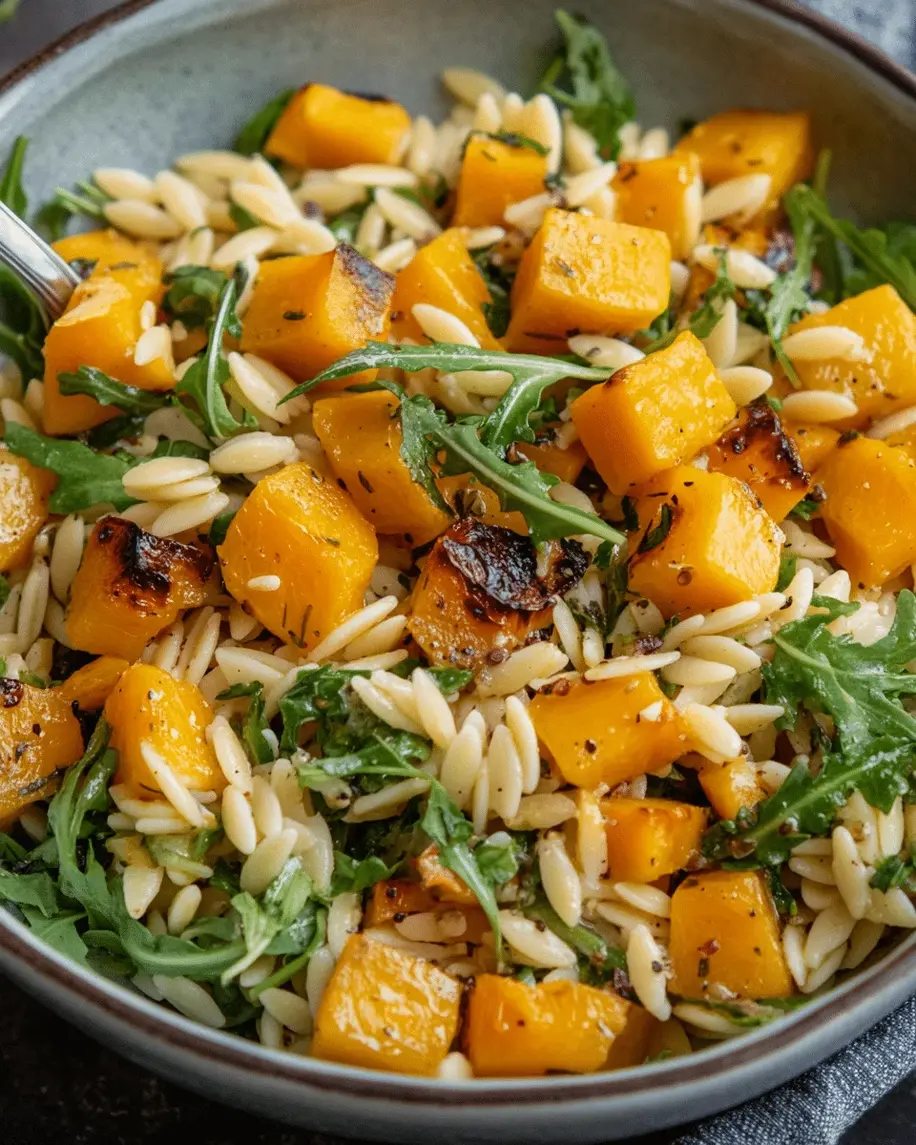
Let me paint you a picture: each bite of this autumn side dish gives you a tender piece of butternut squash that’s been roasted until its edges are golden and jammy, tangled up with al dente orzo that’s been rinsed under cold water to keep every grain separate and perfect. The baby spinach adds a mild, earthy freshness, while the dried cranberries bring little bursts of tart sweetness that pop against the salty crumbles of feta. And the dressing — oh, the dressing. It’s a simple lemon vinaigrette with a whisper of honey and a touch of Dijon that ties everything together with this bright, clean finish. It’s the kind of fall salad recipe that makes you want to eat it straight from the bowl, standing over the counter, because it’s just that good.
What I love most about this recipe is how it reflects my journey — the French techniques I learned in Paris (like perfectly emulsifying a vinaigrette and roasting squash at just the right temperature) meet the bold, generous flavors of my Moroccan childhood, all filtered through the lens of a busy New York cook who needs dinner on the table fast. My version is foolproof, intentionally flexible, and built to travel well. Whether you’re looking for a hearty orzo salad that works as a side dish for Thanksgiving or a main course you can pack for lunch all week, this one delivers. I’ll also share my best trick for keeping the orzo from getting mushy and the one mistake most home cooks make when roasting butternut squash — trust me, it makes all the difference.
Why This Butternut Squash and Orzo Salad Recipe Is the Best
The Flavor Secret: The real magic in this butternut squash orzo salad comes from roasting the squash at 400°F until the natural sugars caramelize into deep, golden-brown edges. That sweetness is balanced by the tangy feta and a lemon vinaigrette that I make with a touch of honey and a good pinch of salt — the same balance of sweet and savory I learned from watching my mother season tagines in Morocco. Every component pulls its weight, and nothing gets lost.
Perfected Texture: I trained in Parisian kitchens where texture was everything, and this salad respects that principle. The orzo is cooked to al dente and rinsed under cold water to stop the cooking immediately — no mushy pasta here. The roasted squash is tender but not falling apart, the spinach stays crisp because we dress the salad gently, and the pumpkin seeds add a nutty crunch that keeps every forkful interesting.
Foolproof & Fast: With just 15 minutes of active prep, this fall salad recipe is perfect for both weeknights and special occasions. You can roast the squash and cook the orzo at the same time, then toss everything together in one bowl. It’s forgiving, endlessly adaptable, and works as a side dish or a main. Even if you’ve never cooked butternut squash before, my step-by-step instructions will walk you through every detail so you feel confident in the kitchen.
Butternut Squash Orzo Salad Ingredients
I picked up most of these ingredients at my local farmers market in Brooklyn last weekend — the squash was still dusted with soil, and the baby spinach was so fresh it practically sparkled. Back in Morocco, my mother would have used a similar combination of roasted vegetables and fresh herbs, though she’d probably add a pinch of cinnamon to the squash. Here in NYC, I keep things bright and simple, letting each ingredient speak for itself.
Ingredients List
- For the Salad:
- 1 medium butternut squash, peeled, seeded, and diced into 1/2-inch cubes (about 4 cups)
- 2 tablespoons olive oil
- 1 teaspoon salt
- 1/2 teaspoon black pepper
- 1 cup uncooked orzo pasta
- 4 cups baby spinach or arugula
- 1/2 cup crumbled feta cheese
- 1/4 cup dried cranberries
- 1/4 cup toasted pumpkin seeds
- For the Lemon Vinaigrette:
- 1/4 cup extra-virgin olive oil
- 2 tablespoons fresh lemon juice (from about 1 lemon)
- 1 tablespoon honey or maple syrup
- 1 clove garlic, minced
- 1/2 teaspoon Dijon mustard
- Salt and pepper to taste
Ingredient Spotlight
Butternut Squash: This is the star of the dish. Look for a squash that feels heavy for its size with a matte, beige skin — no shiny patches, which can indicate it was picked too early. The neck (the straight part) is easier to peel and has fewer seeds, so I often buy pre-cut cubes from the store when I’m in a hurry. One medium squash yields about 4 cups of diced cubes. If you can’t find butternut, try delicata squash (no need to peel) or kabocha squash for a sweeter, creamier result.
Orzo Pasta: Orzo is a rice-shaped pasta that absorbs dressing beautifully and gives this hearty orzo salad its satisfying chew. I use regular semolina orzo, but whole wheat orzo works well too — just increase the cooking time by about 2 minutes. If you’re gluten-free, you can substitute with chickpea or rice-based orzo; the texture will be slightly softer but still delicious. Never use long-grain rice as a substitute, as it won’t hold up the same way.
Feta Cheese: I prefer a block of feta packed in brine rather than pre-crumbled feta, which can be dry and less flavorful. Sheep’s milk feta from Greece has a creamy, tangy quality that stands up beautifully to the sweet roasted squash. If you’re dairy-free, a plant-based feta or even crumbled goat cheese (if you tolerate dairy) works wonderfully. For a vegan option, try a marinated tofu feta — it’s surprisingly good.
Lemon Vinaigrette: This dressing is the backbone of the salad. I use fresh lemon juice only — bottled juice has a flat, metallic taste that won’t brighten the dish the same way. The honey balances the acidity, and the Dijon mustard helps emulsify the oil and lemon juice so the dressing clings to every grain of orzo. If you’re out of honey, maple syrup or agave are perfect swaps. I sometimes add a pinch of sumac or za’atar when I’m feeling nostalgic for North African flavors.
Dried Cranberries & Pumpkin Seeds: These two ingredients add sweetness and crunch, creating little pockets of texture that make every bite different. I toast the pumpkin seeds in a dry skillet over medium heat for 2-3 minutes until they start to pop and smell nutty — this takes them from good to great. Feel free to swap dried cranberries for dried cherries, chopped dried apricots, or even golden raisins.
| Original Ingredient | Best Substitution | Flavor / Texture Impact |
|---|---|---|
| Butternut Squash | Delicata or Kabocha Squash | Sweeter, creamier; no peeling needed for delicata |
| Orzo Pasta | Pearl Couscous or Farro | Chewier, nuttier; farro adds more fiber |
| Feta Cheese | Goat Cheese or Vegan Feta | Goat cheese is tangier and creamier; vegan feta is milder |
| Dried Cranberries | Dried Cherries or Golden Raisins | Cherries are slightly more tart; raisins are sweeter and plumper |
| Pumpkin Seeds | Sunflower Seeds or Chopped Pecans | Sunflower seeds are milder; pecans add rich, buttery crunch |
How to Make Butternut Squash and Orzo Salad — Step-by-Step
This recipe comes together in four simple steps, and I promise you — if you follow these instructions, you’ll end up with a restaurant-quality fall salad recipe that looks as good as it tastes. The key is working in parallel: get the squash in the oven, start the orzo on the stovetop, and whisk the dressing while both cook. Let’s go!
Step 1: Roast the Butternut Squash
Preheat your oven to 400°F (200°C) and line a large baking sheet with parchment paper for easy cleanup. In a large bowl, toss the diced butternut squash with 2 tablespoons olive oil, 1 teaspoon salt, and 1/2 teaspoon black pepper until every cube is evenly coated. Spread the squash in a single layer on the prepared baking sheet — crowding the pan will cause the squash to steam instead of roast, so give each piece a little breathing room. Roast for 25-30 minutes, flipping the pieces halfway through with a spatula, until the squash is tender when pierced with a fork and the edges are caramelized to a deep golden brown. Let it cool on the baking sheet for about 10 minutes while you prepare the other components.
💡 mia’s Pro Tip: For extra caramelization, don’t flip the squash too early. Let it sit undisturbed for the first 15 minutes so the bottom edges can develop a nice crust. When you flip, they’ll release easily from the parchment. If you’re using a metal pan without parchment, make sure it’s well-oiled to prevent sticking.
Step 2: Cook the Orzo
While the squash roasts, bring a large pot of generously salted water to a rolling boil — I use about 1 tablespoon of salt per 4 quarts of water, which seasons the pasta from the inside out. Add 1 cup of uncooked orzo and cook according to the package directions until al dente, typically 8-10 minutes. Taste a piece to be sure: it should be tender but still have a slight resistance at the center. Drain the orzo in a fine-mesh sieve and immediately rinse it under cold running water for about 30 seconds to stop the cooking and remove excess starch. Shake the sieve well to drain off as much water as possible, then transfer the orzo to a large bowl.
⚠️ Common Mistake to Avoid: Don’t overcook the orzo! Because orzo is so small, it goes from perfectly al dente to mushy in less than a minute. Set a timer and start testing at the 7-minute mark. Also, be sure to rinse it with cold water after draining — this is the single most important step for keeping your hearty orzo salad from turning into a gluey mess.
Step 3: Make the Lemon Vinaigrette
In a small jar with a tight-fitting lid, combine 1/4 cup extra-virgin olive oil, 2 tablespoons fresh lemon juice, 1 tablespoon honey (or maple syrup), 1 minced garlic clove, 1/2 teaspoon Dijon mustard, and a pinch of salt and pepper. Screw on the lid and shake vigorously for about 20 seconds until the dressing is thick, pale, and fully emulsified. Taste and adjust the seasoning — I usually add a tiny pinch more salt to balance the acidity. If you don’t have a jar, you can whisk everything together in a small bowl, but the jar method is faster and guarantees a perfect emulsion every time.
💡 mia’s Pro Tip: If you want a creamier vinaigrette, add the garlic as a paste. Just smash the clove with the flat side of your knife, sprinkle with a pinch of salt, and scrape the blade across it until it forms a smooth paste. This releases the garlic’s essential oils and keeps the dressing from having harsh raw-garlic chunks.
Step 4: Assemble the Salad
In your largest salad bowl, combine the cooked orzo, roasted butternut squash, 4 cups of baby spinach (or arugula), 1/2 cup crumbled feta cheese, 1/4 cup dried cranberries, and 1/4 cup toasted pumpkin seeds. Drizzle the lemon vinaigrette over the top — start with about three-quarters of the dressing, toss gently with two large spoons or your hands (if you don’t mind getting a little messy), then add more dressing if needed. The goal is to coat everything evenly without overdressing. Serve immediately at room temperature, or refrigerate for later. The flavors actually get better after about an hour as the orzo absorbs the dressing.
⚠️ Common Mistake to Avoid: Don’t add all the dressing at once! It’s much easier to add more than to fix an overdressed salad. And whatever you do, don’t toss the salad while the squash is still hot — it will wilt the spinach instantly. Let the squash cool to just warm before assembling. If you’re serving this as a cold salad, chill all the components before mixing.
| Step | Action | Duration | Key Visual Cue |
|---|---|---|---|
| 1 | Roast Butternut Squash | 25–30 mins | Edges are deep golden brown, fork-tender |
| 2 | Cook Orzo | 8–10 mins | Al dente — tender but with a slight chew at the center |
| 3 | Make Vinaigrette | 5 mins | Thick, pale, and fully emulsified |
| 4 | Assemble Salad | 5 mins | All ingredients evenly coated, spinach still perky |
Serving & Presentation
This butternut squash orzo salad is beautiful in its simplicity. I like to serve it on a large, shallow platter so every colorful component is visible — the golden squash, the bright green spinach, the creamy white feta, and the ruby-red cranberries all scattered like confetti. For a main-course portion, pile it high on individual plates and top with an extra sprinkle of pumpkin seeds and a few cracks of black pepper. If you’re serving it as an autumn side dish, a generous scoop alongside roasted chicken or grilled salmon is pure perfection. I also love adding a handful of fresh pomegranate seeds in place of the cranberries when they’re in season — it adds a jewel-like pop that makes the dish feel extra special for holiday gatherings.
In my NYC kitchen, I often serve this salad alongside a simple roasted chicken or a piece of flaky white fish. The bright lemon vinaigrette cuts through the richness of the protein, and the hearty orzo and squash make it a complete meal. For a vegetarian spread, pair it with a warm lentil soup or a chickpea tagine — the Moroccan influence comes through beautifully. And don’t forget a crusty baguette to soak up any extra dressing left in the bottom of the bowl.
| Pairing Type | Suggestions | Why It Works |
|---|---|---|
| Side Dish | Roasted chicken, grilled salmon, seared pork chops | The bright, tangy salad balances the richness of roasted meats |
| Sauce / Dip | Extra lemon vinaigrette, tahini sauce, yogurt | Adds creaminess and another layer of flavor |
| Beverage | Dry Riesling, Sauvignon Blanc, apple cider spritzer | Crisp, acidic drinks mirror the lemon vinaigrette beautifully |
| Garnish | Fresh mint, pomegranate arils, extra pumpkin seeds | Adds freshness, color, and texture contrast |
Make-Ahead, Storage & Reheating
As a busy NYC food blogger who’s always juggling recipe testing and editing, I rely on make-ahead meals that actually taste better the next day. This hearty orzo salad is one of my favorite meal-prep recipes because the orzo absorbs the lemon vinaigrette overnight, making every bite more flavorful. I often make a big batch on Sunday and portion it out for lunches throughout the week. Just remember to keep the dressing separate until you’re ready to eat if you want to keep the greens perfectly crisp.
| Method | Container | Duration | Reheating Tip |
|---|---|---|---|
| Refrigerator | Airtight container | Up to 3 days | Serve cold or let sit at room temp 15 mins; add fresh spinach if needed |
| Freezer | Freezer-safe container (without greens) | Up to 1 month | Thaw overnight in fridge; add fresh greens and dressing after thawing |
| Make-Ahead | Store components separately | Up to 2 days in advance | Combine squash, orzo, cranberries, seeds; add greens and dressing just before serving |
One thing I’ve learned from years of meal-prepping in my tiny NYC kitchen: if you’re making this salad ahead for a party, assemble everything except the spinach and dressing, and store it in a large bowl covered with plastic wrap. When you’re ready to serve, add the spinach, drizzle the dressing, and toss. This way, the greens stay vibrant and the orzo hasn’t soaked up all the dressing overnight. If you do end up with leftovers that have already been dressed, don’t worry — the flavors meld beautifully, and a splash of fresh lemon juice before serving brings it right back to life.
Variations & Easy Swaps
One of the things I love most about this fall salad recipe is how endlessly adaptable it is. Whether you’re feeding a crowd with different dietary needs or just want to play with new flavors, these variations will keep things exciting in your kitchen all season long.
| Variation | Key Change | Best For | Difficulty Impact |
|---|---|---|---|
| Moroccan Spiced | Add 1 tsp cumin + ½ tsp cinnamon to squash before roasting | Adding warm, earthy depth for cold-weather meals | Easy (no extra steps) |
| Protein-Packed | Add 1 cup cooked chickpeas + ½ cup grilled chicken | A complete one-bowl dinner main course | Easy (just add pre-cooked protein) |
| Warm Winter Salad | Skip the spinach; serve squash and orzo warm over arugula | Cozy, comforting winter lunch or side | Easy (slight timing adjustment) |
Moroccan Spiced Variation
This is my personal favorite — the one that takes me straight back to my mother’s kitchen in Marrakech. Before roasting the butternut squash, toss the cubes with 1 teaspoon of ground cumin and ½ teaspoon of ground cinnamon along with the olive oil, salt, and pepper. The cumin adds a warm, earthy note that complements the sweetness of the squash, while the cinnamon brings a subtle aromatic complexity that’ll make your whole kitchen smell like a Moroccan spice market. Finish the salad with a handful of fresh mint leaves instead of (or in addition to) the pumpkin seeds, and you’ll have a fall salad recipe that’s truly unforgettable.
Gluten-Free / Dairy-Free Variation
To make this hearty orzo salad gluten-free, swap the orzo for a good-quality gluten-free rice or chickpea orzo. I’ve tested several brands, and my favorite is the chickpea-based version from Banza — it holds its shape beautifully and has a slightly nutty flavor that pairs perfectly with the roasted squash. For the dairy-free version, simply omit the feta or use a plant-based feta alternative. I recommend the brand Violife for a creamy, tangy substitute that crumbles just like the real thing. If you’re avoiding both gluten and dairy, this salad is still incredibly satisfying — the roasted squash and pumpkin seeds provide plenty of texture and richness on their own.
Protein-Packed Main Course Variation
When I want this salad to be a full dinner, I add a can of drained and rinsed chickpeas along with the orzo, plus some shredded rotisserie chicken or leftover grilled salmon. The chickpeas double down on the hearty, nutty vibe, and the protein turns this from a side dish into a meal that’ll keep you full for hours. I also sometimes swap the lemon vinaigrette for a creamy tahini dressing (2 tablespoons tahini, 2 tablespoons lemon juice, 1 tablespoon maple syrup, and enough water to thin) for a richer, more substantial feel. This version has become my go-to for busy weeknights when I need dinner on the table in 15 minutes flat.
How do you prevent the orzo from getting mushy in a butternut squash salad?
The best way to prevent mushy orzo in any pasta salad — including this hearty orzo salad — is to cook it to al dente and rinse it immediately under cold water after draining. Start testing the orzo at the 7-minute mark by fishing out a piece and biting into it. It should be tender but still have a small white dot at the center and a firm chew. Drain it right away, then run cold water over it in the colander for about 30 seconds. This stops the carryover cooking instantly and washes away the excess starch that would otherwise make the pasta sticky. After rinsing, shake the colander well to remove as much water as possible before adding the orzo to the salad bowl.
Can you use a different type of pasta instead of orzo in this salad?
Absolutely! Orzo is traditional in this fall salad recipe because its small, rice-like shape catches the dressing and blends seamlessly with the squash, but you can absolutely swap it for another pasta. My top three substitutes are: pearl couscous (also called Israeli couscous), which has a similar size but a chewier, more satisfying texture; farro, which adds a nutty flavor and extra fiber; or small shells, which hold the vinaigrette beautifully inside each curve. If you’re using a larger pasta like farro or shells, you may want to chop the roasted squash into slightly smaller pieces so everything fits nicely on the fork. Just keep in mind that different pasta shapes have different cooking times, so always check the package and cook to al dente.
Do you need to roast the butternut squash before adding it to the orzo salad?
Yes — roasting is absolutely essential for this recipe, and here’s why. Roasting the butternut squash at 400°F caramelizes its natural sugars, concentrating the sweetness and giving you those beautiful golden-brown edges that make this salad so delicious. If you were to add raw squash to the salad, it would be hard, bland, and watery — completely different from the tender, jammy cubes we’re aiming for. You can steam or sauté the squash in a pinch, but roasting gives the best flavor and texture. If you’re really short on time, you can buy pre-roasted butternut squash from the grocery store (often sold in the prepared produce section), though the flavor won’t be quite as deep as homemade.
What is the best way to store leftover butternut squash and orzo salad?
The best way to store leftovers is in an airtight container in the refrigerator, where the salad will keep for up to 3 days. If you know you’ll have leftovers, I recommend storing the dressing separately from the salad and only adding it to the portion you’re eating. This keeps the greens from wilting and the orzo from absorbing all the dressing overnight, which can make the salad soggy. If your leftovers are already dressed, don’t worry — they’ll still be delicious, and a squeeze of fresh lemon juice before serving can help revive the flavor. I don’t recommend freezing this salad because the spinach and feta won’t thaw well, but you can freeze the roasted squash and cooked orzo separately if you’re planning ahead.
Can I make butternut squash and orzo salad ahead of time for a party?
Yes, this hearty orzo salad is an excellent make-ahead dish for parties, potlucks, and holiday gatherings. The key is to store the components separately. Up to 2 days in advance, you can roast the squash, cook the orzo, make the vinaigrette, and toast the pumpkin seeds — keep each in its own container in the fridge. On the day of your event, simply combine the squash, orzo, feta, cranberries, and pumpkin seeds in a large serving bowl, add the baby spinach, and toss with the dressing just before serving. This approach guarantees that the greens stay crisp and the orzo doesn’t get mushy. The flavors actually meld beautifully after about an hour at room temperature, so this salad is perfect for buffet-style entertaining.
What protein can I add to butternut squash orzo salad to make it a main dish?
This butternut squash orzo salad is incredibly flexible when it comes to adding protein for a complete main course. My favorite additions are: shredded rotisserie chicken (just pull the meat off a store-bought chicken and toss it in), grilled salmon or seared shrimp for a seafood twist, or a can of drained and rinsed chickpeas for a vegetarian option. If you want to keep it warm and cozy, try adding crumbled cooked Italian sausage or sliced grilled steak. For a plant-based protein boost, I love adding crispy tofu cubes or a generous scoop of cooked lentils. Any of these additions will turn this fall salad recipe into a satisfying one-bowl dinner that’s perfect for busy weeknights.
Is butternut squash orzo salad served warm or cold?
This is one of the best things about this hearty orzo salad — it’s delicious at any temperature! I typically serve it at room temperature, which allows the flavors to fully develop and the dressing to coat everything evenly. It’s also wonderful served cold straight from the fridge, especially on a warm fall day when you want something refreshing. If you prefer a warm salad, you can skip the cold-water rinse on the orzo and toss it with the roasted squash while both are still warm — just be sure to let the squash cool for about 10 minutes so the spinach doesn’t wilt immediately. My personal preference is to let the assembled salad rest for 15-20 minutes at room temperature before serving, which gives the orzo time to absorb the lemon vinaigrette.
What can I use instead of feta cheese in this salad?
If you don’t have feta or want to try something different, there are several excellent substitutes. Goat cheese is my top pick — it’s tangy and creamy, and it crumbles just like feta while adding a slightly more luxurious texture. For a dairy-free option, a good-quality vegan feta (like the one from Violife) works beautifully and has a similar salty, tangy profile. If you’re not avoiding dairy but just don’t have feta on hand, try crumbled cotija cheese (which is saltier and firmer) or even shaved Parmesan for a nutty, salty touch. In a pinch, you can omit the cheese altogether and add an extra tablespoon of nutritional yeast to the dressing for a cheesy, umami flavor without any dairy at all.
How do you cut a butternut squash for roasting?
Cutting a butternut squash can feel intimidating, but with the right technique it’s very straightforward. First, use a sharp chef’s knife — this is non-negotiable. Slice off both ends of the squash so it sits flat on your cutting board. Use a vegetable peeler or a sharp knife to remove the skin, working from top to bottom. Cut the squash crosswise at the point where the narrow neck meets the round bulb. Slice the neck into 1/2-inch thick rounds, then cut each round into 1/2-inch cubes. For the bulb section, cut it in half lengthwise, scoop out the seeds with a spoon, and cut the flesh into similarly sized cubes. Keeping the cubes uniform (about 1/2-inch) ensures even roasting. If you’re short on time, many grocery stores sell pre-cut butternut squash cubes in the produce section.
Can I use frozen butternut squash for this orzo salad?
You can use frozen butternut squash in a pinch, but you’ll need to adjust your approach for the best results. Frozen squash contains more water than fresh, so it tends to steam rather than caramelize in the oven. To get around this, thaw the frozen squash completely in the refrigerator overnight, then pat it very dry with paper towels or a clean kitchen towel to remove as much moisture as possible. Toss it with olive oil, salt, and pepper, and roast at 425°F (25°F higher than fresh) for about 30-35 minutes, flipping once, until the edges are lightly browned and the squash is tender. The texture won’t be quite as caramelized as fresh, but it will still be delicious in this hearty orzo salad. I recommend using fresh squash when it’s in season (fall and winter) and frozen as a convenient alternative the rest of the year.
Share Your Version!
I absolutely love hearing how this butternut squash orzo salad turns out in your kitchen. Did you try the Moroccan spiced variation? Add chickpeas for extra protein? Or maybe you discovered a new favorite substitution? Drop a star rating and a comment below — your feedback helps other home cooks discover new ideas and encourages me to keep sharing recipes from my heart. And if you share a photo on Instagram or Pinterest, please tag me @exorecipes so I can see your beautiful creation and share it with our community.
One question I’d love for you to answer: what’s your favorite way to add protein to this hearty orzo salad? I’m always looking for new ideas, and the best inspiration comes from you.
From my NYC kitchen to yours — I hope this recipe brings as much warmth to your table as it does to mine. — mia 🧡
Love This Recipe? Save It to Pinterest!
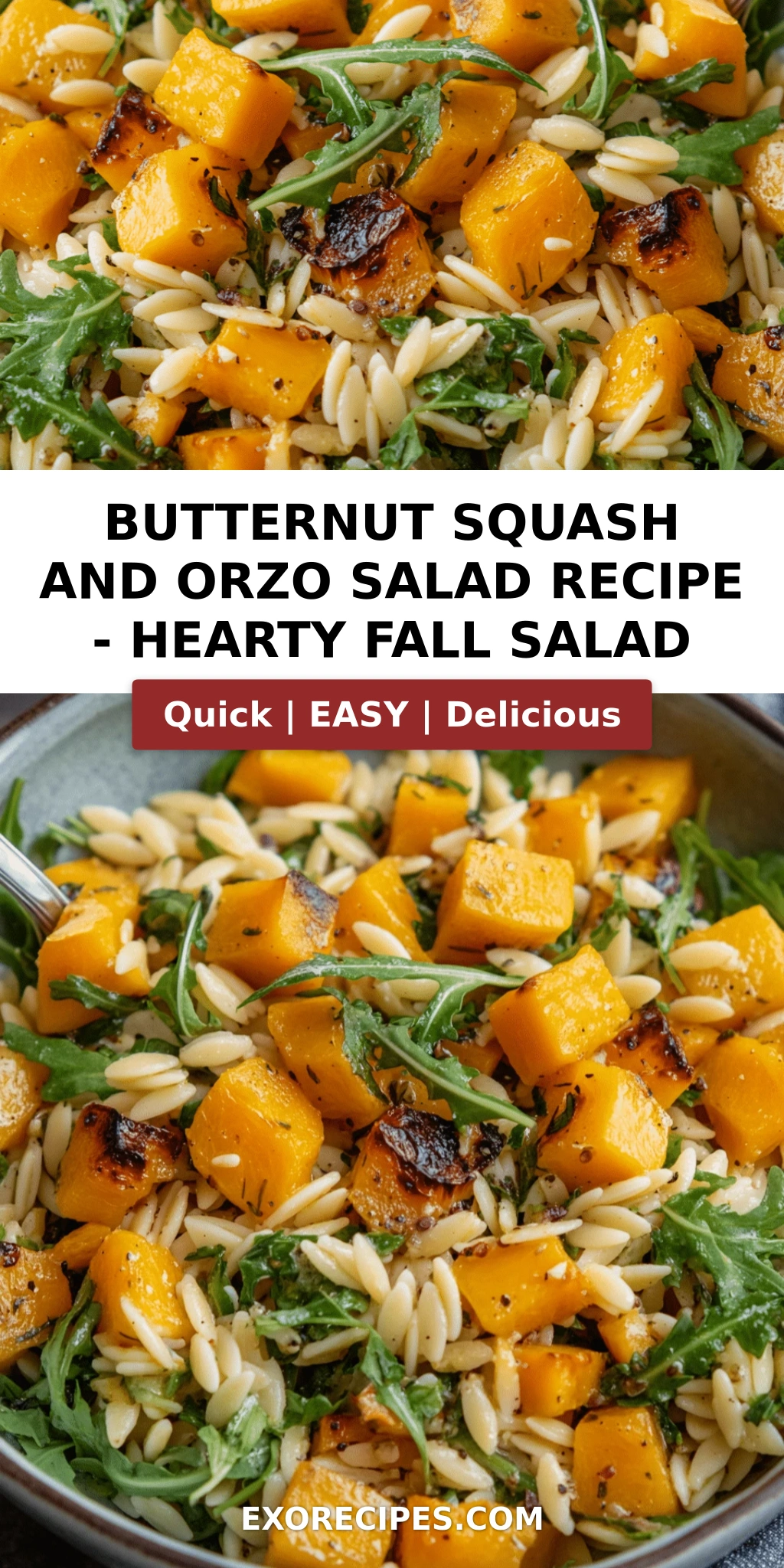
If you enjoyed this Butternut Squash and Orzo Salad recipe, don’t let it get lost in your browser tabs! 😄 Pin it now so you can find it again anytime — and explore hundreds more tried-and-tested recipes waiting for you on my Pinterest boards.
👉 Follow mia on Pinterest @exorecipe
📌 Pin this recipe · 🔁 Re-pin your favorites · 💬 Tag me when you make it — I love seeing your creations!
Butternut Squash and Orzo Salad: A Hearty and Flavorful Fall Delight
- Prep Time: 15 minutes
- Cook Time: 30 minutes
- Total Time: 45 minutes
- Yield: 6 1x
- Method: Salad
- Cuisine: American
Description
A hearty and flavorful fall salad featuring roasted butternut squash, tender orzo pasta, tangy feta cheese, and a zesty lemon vinaigrette.
Ingredients
- For the Salad:
- 1 medium butternut squash, peeled, seeded, and diced into 1/2-inch cubes
- 2 tablespoons olive oil
- 1 teaspoon salt
- 1/2 teaspoon black pepper
- 1 cup uncooked orzo pasta
- 4 cups baby spinach or arugula
- 1/2 cup crumbled feta cheese
- 1/4 cup dried cranberries
- 1/4 cup toasted pumpkin seeds
- For the Lemon Vinaigrette:
- 1/4 cup extra-virgin olive oil
- 2 tablespoons fresh lemon juice
- 1 tablespoon honey or maple syrup
- 1 clove garlic, minced
- 1/2 teaspoon Dijon mustard
- Salt and pepper to taste
Instructions
- Preheat oven to 400°F (200°C). Line a baking sheet with parchment paper.
- In a large bowl, toss the butternut squash cubes with olive oil, salt, and pepper. Spread in a single layer on the prepared baking sheet.
- Roast for 25-30 minutes, until tender and lightly caramelized, flipping halfway through. Let cool slightly.
- Meanwhile, cook the orzo according to package directions in salted boiling water until al dente. Drain and rinse under cold water to stop cooking.
- In a small jar or bowl, combine all vinaigrette ingredients: olive oil, lemon juice, honey, garlic, Dijon mustard, salt, and pepper. Shake or whisk until emulsified.
- In a large salad bowl, combine the cooked orzo, roasted butternut squash, baby spinach, feta cheese, dried cranberries, and pumpkin seeds.
- Drizzle the lemon vinaigrette over the salad and toss gently to combine. Serve immediately or refrigerate for later.
Notes
This salad can be made ahead and stored in the refrigerator for up to 3 days. Add the dressing just before serving to keep the greens crisp.
Nutrition
- Calories: 380
- Sugar: 12 g
- Fat: 18 g
- Carbohydrates: 45 g
- Protein: 10 g
Tried This Recipe? Leave a Comment!
Did you make this recipe? I’d love to hear how it turned out! Please leave a comment and a rating below. Your feedback helps other home cooks and supports cheerychop.com!
For more delicious inspiration, follow me on Pinterest!
