Table of Contents
Braised Pomegranate Short Ribs: A Sweet and Savory Delight – A Moroccan-French Fusion Classic
I still remember the first time I tasted pomegranate molasses — I was standing in my mother’s kitchen in Marrakech, watching her drizzle it over lamb tagine. The way that deep, tangy-sweet syrup melted into the savory broth felt like alchemy. Years later, after training at Le Cordon Bleu in Paris and learning the foundations of French braising, I knew I had to bring those two worlds together. This braised pomegranate short ribs recipe is the result — a dish that honors the slow-cooked tenderness of a classic French daube while singing with the warm, fruit-forward soul of North Africa. The pomegranate molasses isn’t just a garnish here; it’s the backbone of the sauce, wrapping each rib in a glossy, sweet-tart coat that balances beautifully with the rich beef.
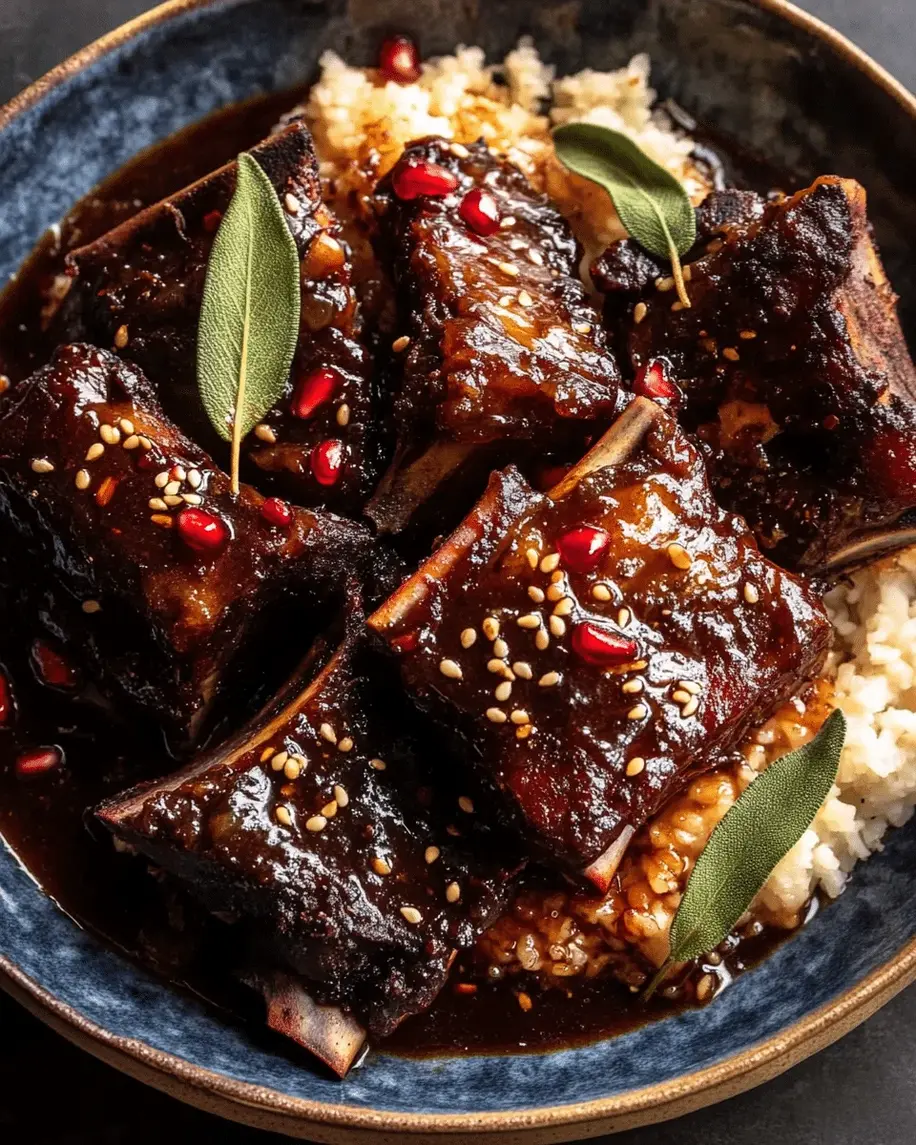
Imagine this: you pull the lid off your Dutch oven, and a cloud of cinnamon, thyme, and caramelized pomegranate steam rises up. The short ribs are fall-apart tender, the meat clinging to the bone in silky strands. The sauce — a deep, burnished ruby — is layered with cumin, smoked paprika, and a whisper of red wine. A shower of fresh pomegranate arils adds a pop of brightness, and a sprinkle of parsley brings it all back to earth. Every bite is a conversation between sweet and savory, with the pomegranate molasses providing that unmistakable fruity tang that cuts through the richness of the beef. It’s the kind of meal that makes you want to light a candle, pour a glass of bold red, and take your time.
I’ve tested this short ribs with pomegranate recipe more times than I can count — tweaking the acid balance, perfecting the braise temperature, and finding the right cut of beef that yields the most butter-soft result. What I’m sharing with you today is my definitive version: a sweet and savory short ribs dish that’s approachable for a Sunday cook yet impressive enough for company. I’ll walk you through every step, from searing to resting, and I’ve included a few of my most trusted tricks along the way. One common mistake home cooks make is skipping the browning step — but I promise you, that deep crust is where the flavor lives. Let’s get started!
Why This Braised Pomegranate Short Ribs Recipe Is the Best
The Flavor Secret: The real magic in this braised pomegranate short ribs recipe lies in the double hit of pomegranate — both the juice and the molasses. The juice adds a fruity brightness during the braise, while the molasses brings concentrated sweetness and a tangy depth that stands up to the beef. Growing up in Morocco, we used pomegranate molasses in everything from salads to tagines, and I learned early on that a little acidity can transform a braise. My French training taught me the importance of layering flavors, and this recipe does exactly that: the molasses is added both during cooking and as a final glaze, giving the sauce a complexity that keeps you coming back for another bite.
Perfected Texture: Getting short ribs to that fall-apart tenderness is all about time and temperature. I braise these low and slow at 325°F for two and a half hours, which allows the collagen to break down into gelatin without drying out the meat. The ribs are seared first in batches — never crowding the pan — so each one gets a deep, caramelized crust. I also add a small amount of tomato paste with the aromatics, a trick I picked up in Paris, which adds umami and helps the sauce develop a velvety body. The result is meat that pulls cleanly away from the bone with the gentlest prod of a fork.
Foolproof & Fast: Despite its elegant finish, this pomegranate molasses short ribs recipe is remarkably forgiving. Most of the cooking time is hands-off, happening in the oven while you go about your day. The ingredient list is straightforward — no hard-to-find spices, just pantry staples and a bottle of pomegranate molasses you can find at any well-stocked grocery store or online. I’ve designed the steps so even a beginner cook can nail it on the first try. And because the dish tastes even better the next day, it’s perfect for make-ahead entertaining. You get maximum flavor with minimum last-minute stress.
Braised Pomegranate Short Ribs Recipe Ingredients
I love sourcing ingredients for this dish. I pick up my short ribs from the Union Square farmers market in NYC — the pasture-raised beef has so much more flavor. The pomegranate molasses I usually get from a Middle Eastern grocer on Atlantic Avenue in Brooklyn, but these days most Whole Foods carry it too. When I close my eyes, I can still smell my mother’s spice drawer in Morocco — cumin, cinnamon, paprika — and I’ve carried those same spices into my New York kitchen. Every ingredient here has a purpose, and together they create something truly memorable.
Ingredients List
- 4 lbs bone-in beef short ribs (English cut, about 8 pieces)
- 2 tbsp olive oil
- 1 large yellow onion, diced
- 4 cloves garlic, minced
- 2 medium carrots, diced
- 2 celery stalks, diced
- 2 tbsp tomato paste
- 1 cup pomegranate juice (100% juice, no added sugar)
- 1/4 cup pomegranate molasses, plus more for drizzling
- 1 cup dry red wine (such as Cabernet Sauvignon or Merlot)
- 2 cups beef broth, low-sodium
- 2 sprigs fresh rosemary
- 4 sprigs fresh thyme
- 2 bay leaves
- 1 cinnamon stick
- 1 tsp ground cumin
- 1 tsp smoked paprika
- 1/2 tsp ground allspice (optional, but traditional in Moroccan cooking)
- Kosher salt and freshly ground black pepper, to taste
- Fresh pomegranate arils, for garnish (from 1 pomegranate)
- 2 tbsp fresh parsley, chopped, for garnish
Ingredient Spotlight
Pomegranate Molasses: This is the heart and soul of the dish. It’s a concentrated syrup made from reduced pomegranate juice, with a sweet-tart flavor that’s irreplaceable. Look for it in the international aisle of your grocery store or at Middle Eastern markets. My favorite brand is Cortas, but any thick, dark syrup will work. If you can’t find it, you can make your own by simmering 2 cups of pomegranate juice with 2 tablespoons of sugar and 1 tablespoon of lemon juice until reduced by half — about 20 minutes. Store-bought is perfectly fine though, and saves time.
Beef Short Ribs: English-cut short ribs (cut between the bones) are ideal for braising because they have a high meat-to-bone ratio and plenty of marbling. Look for ribs that are evenly thick — about 2 to 3 inches — so they cook at the same rate. If you can only find flanken-cut ribs (cut across the bone), they’ll work too, but reduce the braising time by about 30 minutes since they’re thinner. Always choose ribs with deep red color and visible white fat marbling — that fat is what keeps the meat moist during the long cook.
Pomegranate Juice: Use 100% pomegranate juice, not a juice blend. The pure juice gives the braise a tangy fruitiness that balances the richness of the beef. My go-to is POM Wonderful, but any brand with no added sugar works. If you’re in a pinch, you can substitute with equal parts cranberry juice (unsweetened) and a splash of lemon juice, though the flavor will be slightly less complex. The pomegranate juice helps tenderize the meat as it cooks, so don’t skip it!
| Original Ingredient | Best Substitution | Flavor / Texture Impact |
|---|---|---|
| Pomegranate Molasses | Homemade reduction: 2 cups pomegranate juice + 2 tbsp sugar + 1 tbsp lemon juice, simmered until syrupy | Slightly thinner consistency, a bit brighter in acidity; still delicious but less complex depth |
| Pomegranate Juice | Unsweetened cranberry juice + 1 tbsp lemon juice | More tart, less fruity-sweet; sauce will be slightly lighter in color and flavor |
| Red Wine | Extra beef broth + 1 tbsp balsamic vinegar (for acidity) | Less complex, slightly more savory; balsamic adds a touch of sweetness and depth |
| Cinnamon Stick | 1/2 tsp ground cinnamon (added with other spices) | Still warm and aromatic, but can be slightly more powdery in texture; easier to find |
| Smoked Paprika | Sweet paprika + a pinch of liquid smoke | Similar color, slightly less smoky depth; liquid smoke adds a hint of campfire flavor |
How to Make Braised Pomegranate Short Ribs — Step-by-Step
Don’t let the long ingredient list fool you — this braised beef ribs recipe comes together with simple, deliberate steps. I’ve broken it down so you can follow along easily. Trust the process, and you’ll be rewarded with the most tender, flavor-packed short ribs you’ve ever made.
Step 1: Season and Sear the Ribs
Pat the short ribs dry with paper towels — this is crucial for a good sear. Season generously on all sides with kosher salt and black pepper. Heat 2 tablespoons of olive oil in a large Dutch oven over medium-high heat until shimmering. Working in batches (don’t crowd the pan!), sear the ribs for 3–4 minutes per side, until a deep mahogany crust forms. This builds the foundation of flavor for the entire dish. Transfer the seared ribs to a plate and set aside.
💡 mia’s Pro Tip: For the best crust, make sure the ribs are very dry before seasoning. Moisture is the enemy of browning! I like to let the ribs sit uncovered on a wire rack in the fridge for 30 minutes before searing — it dries the surface beautifully.
Step 2: Sauté the Aromatics
Reduce the heat to medium. In the same pot, add the diced onion, carrots, and celery. Cook for 5–6 minutes, stirring occasionally, until the vegetables are softened and lightly golden. Add the minced garlic, tomato paste, cumin, smoked paprika, and allspice (if using). Stir constantly for 1 minute until the tomato paste darkens and the spices become fragrant. This step deepens the savory backbone of the sauce.
⚠️ Common Mistake to Avoid: Don’t rush the sauté! If the garlic or tomato paste burns, it will turn bitter. Keep the heat at medium and stir frequently. You want the vegetables to be tender and the paste to turn a rusty red — not brown or black.
Step 3: Deglaze and Build the Braising Liquid
Pour in the red wine and pomegranate juice, using a wooden spoon to scrape up any browned bits from the bottom of the pot — that’s pure flavor. Let the liquid come to a boil and cook for 3–4 minutes, until reduced slightly. Stir in the beef broth and 1/4 cup of pomegranate molasses. Add the rosemary sprigs, thyme sprigs, bay leaves, and the cinnamon stick. Bring the mixture to a gentle simmer.
💡 mia’s Pro Tip: Reserve a tablespoon of pomegranate molasses for drizzling over the finished dish. Adding it at the end gives a bright, tangy pop that contrasts with the deep braised flavors. It’s a little trick I learned from a pastry chef in Paris — finishing sweet sauces with a touch of the same ingredient at the end adds lift.
Step 4: Braise in the Oven
Preheat your oven to 325°F. Return the seared short ribs to the pot, nestling them into the liquid so they’re mostly submerged — the tops should be slightly exposed. Place a lid on the pot and transfer it to the oven. Braise for 2 hours and 15 minutes to 2 hours and 30 minutes, until the meat is fork-tender and pulling away from the bone. Check at the 2-hour mark — if a fork slides in with no resistance, they’re ready.
⚠️ Common Mistake to Avoid: Don’t let the braising liquid boil! A gentle simmer (small bubbles around the edges) is what you want. If the liquid boils aggressively, the meat will become tough and dry. The oven at 325°F with the lid on creates the perfect gentle braise environment. After braising, let the ribs rest in the liquid for 15 minutes before serving.
Step 5: Rest and Serve
Remove the pot from the oven and let it sit, covered, for 15 minutes. This resting period allows the meat to reabsorb some of the braising liquid, making it even more succulent. Carefully transfer the short ribs to a serving platter. Discard the herb sprigs, bay leaves, and cinnamon stick. Skim any excess fat from the surface of the sauce with a spoon — or use a fat separator for precision. You can also refrigerate the sauce for an hour and scrape off the solidified fat. Spoon the glossy sauce over the ribs, drizzle with the reserved pomegranate molasses, and garnish with fresh pomegranate arils and chopped parsley.
💡 mia’s Pro Tip: For an extra-luxurious sauce, stir in a tablespoon of cold butter at the end, off the heat. It adds a silky sheen and rounds out the acidity of the pomegranate. This is a classic French finishing technique that makes the sauce feel velvety on the tongue.
| Step | Action | Duration | Key Visual Cue |
|---|---|---|---|
| 1 | Season & sear ribs | 12–16 min | Deep mahogany crust on all sides |
| 2 | Sauté aromatics | 6–8 min | Vegetables softened and lightly golden |
| 3 | Deglaze & build liquid | 5–7 min | Liquid reduced slightly, fragrant with spices |
| 4 | Braise in oven | 2 hr 15 min – 2 hr 30 min | Fork slides in with no resistance, meat pulls from bone |
| 5 | Rest & serve | 15 min rest | Glossy sauce, bright garnish |
Serving & Presentation
When I serve these short ribs with pomegranate, I like to plate them on a large, warm platter — family-style, the way we do in Morocco. Spoon the rich sauce over each rib, letting it pool around the base. Scatter fresh pomegranate arils generously over the top — they add a jewel-like pop of color and a burst of tart sweetness that cuts through the richness. A sprinkle of fresh parsley and a final drizzle of that reserved pomegranate molasses finishes the dish with elegance. The contrast of the dark, glossy meat against the bright red arils is absolutely stunning.
For sides, I reach for something that can soak up every drop of that sauce. Creamy mashed potatoes are a classic choice — the velvety texture is a perfect match. Fluffy couscous, a nod to my North African roots, is another favorite; I often toss it with toasted almonds and a pinch of cinnamon. For a lighter option, a simple arugula salad with lemon vinaigrette cuts through the richness beautifully. And don’t forget a crusty baguette or sourdough for sopping up the sauce — that’s non-negotiable in my NYC kitchen!
This dish is made for gatherings. When I host friends in my Brooklyn apartment, I set the Dutch oven right on the table with a stack of warm plates and let everyone help themselves. It’s the kind of meal that invites conversation, second helpings, and happy sighs. Light a few candles, open a bottle of red, and enjoy the moment — this is food meant to be savored slowly.
| Pairing Type | Suggestions | Why It Works |
|---|---|---|
| Side Dish | Creamy mashed potatoes, fluffy couscous, or roasted root vegetables | Soaks up the rich pomegranate sauce; adds creamy or earthy contrast |
| Sauce / Dip | Extra braising liquid, a dollop of labneh or Greek yogurt | Labneh adds tangy creaminess that balances the sweet-tart sauce |
| Beverage | Full-bodied red wine (Zinfandel, Syrah, or Côtes du Rhône) | Bold reds stand up to the rich beef and fruity pomegranate notes |
| Garnish | Fresh pomegranate arils, chopped parsley, a drizzle of pomegranate molasses | Adds brightness, color, and a pop of fresh tartness |
Make-Ahead, Storage & Reheating
One of the best things about this braised pomegranate short ribs recipe is how beautifully it rewards make-ahead cooking. In fact, I often make it a day or two before I plan to serve it — the flavors meld and deepen in the fridge, and the meat becomes even more tender. On busy NYC weeks, I’ll braise a batch on Sunday, then reheat it midweek for a dinner that tastes like I spent all day cooking. Here’s everything you need to know about storing and reheating.
| Method | Container | Duration | Reheating Tip |
|---|---|---|---|
| Refrigerator | Airtight container, ribs submerged in sauce | Up to 4 days | Reheat gently in a covered pot on the stove over low heat, adding a splash of broth if needed |
| Freezer | Freezer-safe container or zip-top bag, remove as much air as possible | Up to 3 months | Thaw overnight in the fridge, then reheat in a covered pot at 325°F for 20–25 minutes |
| Make-Ahead | Prepare through Step 4, cool, and refrigerate | 1–2 days in advance | Skim fat, reheat gently, then finish with fresh garnish and molasses drizzle before serving |
When reheating, the key is to be gentle. The meat is already perfectly tender, and aggressive heat can dry it out. I like to reheat the ribs in their sauce in a covered pot on the stove over low heat, turning them once or twice, until warmed through — about 15–20 minutes. If the sauce has thickened too much, stir in a few tablespoons of beef broth or water to loosen it. Avoid the microwave for reheating, as it can make the meat tough and heat unevenly. And always, always add the fresh pomegranate arils and parsley after reheating — their brightness is best when fresh.
One more thing: the sauce will likely have a layer of solidified fat on top after refrigeration. This is actually a gift — it acts as a protective seal. Before reheating, simply scrape off the fat with a spoon and discard. You’ll be left with a cleaner, more vibrant sauce that lets the pomegranate flavor shine. I often make this dish a day ahead just so I can remove the fat easily — it’s a little trick that makes a big difference.
Variations & Easy Swaps
I love that this pomegranate molasses short ribs recipe is so adaptable. Over the years, I’ve played with different flavor profiles and dietary needs, and each variation has brought something new to the table. Whether you’re cooking for a crowd with different preferences or just want to try something new, here are my favorite ways to switch it up.
| Variation | Key Change | Best For | Difficulty Impact |
|---|---|---|---|
| Moroccan Spice Blend (Ras el Hanout) | Replace cumin, paprika, and allspice with 2 tbsp ras el hanout | Aromatic, complex North African flavor | Same difficulty |
| Gluten-Free | Use gluten-free beef broth and skip flour-based thickening; the sauce naturally thickens from collagen | Celiac or gluten-sensitive guests | Same difficulty |
| Dairy-Free | Skip the butter finish and use a drizzle of extra pomegranate molasses instead | Dairy-free or lactose-intolerant guests | Same difficulty |
| Instant Pot / Pressure Cooker | Sear using sauté function, then pressure cook on high for 45 minutes with natural release | Weeknight dinner when time is short | Easier (faster) |
| Spicy Harissa Twist | Add 1–2 tbsp harissa paste with the tomato paste | Heat lovers who want a smoky-spicy kick | Same difficulty |
Moroccan Spice Blend (Ras el Hanout)
Ras el hanout, which means “head of the shop” in Arabic, is the signature spice blend of Moroccan cuisine. It typically includes cumin, coriander, cinnamon, ginger, cardamom, nutmeg, and sometimes saffron or rose petals. Substituting it for the individual spices in this recipe adds a whole new layer of floral warmth and complexity. I buy mine from a spice shop in NYC’s Chelsea Market, but you can find good quality blends online or at Middle Eastern grocers. The dish will taste distinctly Moroccan — deeply aromatic and slightly sweet. Use 2 tablespoons in place of the cumin, paprika, and allspice, and add it at the same time as the tomato paste.
Gluten-Free and Dairy-Free Adaptations
This recipe is naturally gluten-free if you use a gluten-free beef broth — most standard broths are, but always check the label. The sauce thickens beautifully from the collagen in the short ribs, so you don’t need any flour or cornstarch. For a dairy-free version, simply skip the butter finish in Step 5. Instead, drizzle a little extra pomegranate molasses over the finished dish for a bright, tangy finish that mimics the richness of butter without any dairy. I’ve tested both versions extensively, and the sauce is still luscious and velvety without the butter. Serve with crusty gluten-free bread or roasted potatoes to soak up every drop.
Spicy Harissa Twist
For those who love heat, adding harissa is a game-changer. Harissa is a North African chili paste made from roasted red peppers, serrano peppers, garlic, and spices like caraway and coriander. I stir in 1 to 2 tablespoons with the tomato paste in Step 2 — it adds a smoky, spicy depth that pairs beautifully with the sweet pomegranate molasses. The heat level is adjustable; start with 1 tablespoon and taste the sauce before adding more. I like using Mina brand harissa, which is widely available in US supermarkets. This version is phenomenal served over couscous with a dollop of cooling yogurt.
What is the best cut of beef for braised short ribs in a pomegranate sauce?
The best cut for this braised pomegranate short ribs recipe is English-cut bone-in beef short ribs. These are cut between the bones, giving you individual ribs that are about 2 to 3 inches thick with a generous amount of meat and marbling. The bone adds flavor to the braising liquid, and the intramuscular fat melts during the long cook, keeping the meat incredibly tender. Flanken-cut short ribs (cut across the bone) can be used in a pinch, but they’re thinner and cook faster, so you’ll need to reduce the braising time by about 30 minutes. Look for ribs with deep red color and visible white fat streaks — that fat is your friend. I always buy pasture-raised beef when I can find it; the flavor is noticeably richer and the meat responds beautifully to slow braising.
Can I substitute pomegranate juice with something else in this short rib recipe?
Yes, you can substitute pomegranate juice in this recipe, though the flavor will shift slightly. The best substitute is unsweetened cranberry juice mixed with a tablespoon of fresh lemon juice — it provides a similar tartness and deep red color. Another option is tart cherry juice, which adds a fruity sweetness that pairs well with the beef. If you use cranberry or cherry juice, look for 100% juice with no added sugar to avoid making the dish too sweet. I’ve also tested this with a combination of equal parts orange juice and a splash of balsamic vinegar, which works well in a pinch. The pomegranate juice adds a unique floral-tart note that’s hard to replicate exactly, but any of these substitutions will still give you a delicious, well-balanced braised short ribs dish.
How long should I braise pomegranate short ribs for the most tender result?
For the most tender result, braise your pomegranate short ribs at 325°F for 2 hours and 15 minutes to 2 hours and 30 minutes. The exact time depends on the thickness of your ribs and your oven, so start checking at the 2-hour mark. The meat is done when a fork slides into the thickest part with no resistance and the meat begins to pull away from the bone. The key is to maintain a gentle simmer — small bubbles around the edges of the pot — not a rolling boil, which can toughen the meat. If you’re using a Dutch oven with a tight-fitting lid, the oven environment keeps the heat even and consistent. Let the ribs rest in the braising liquid for 15 minutes after cooking — this allows the meat to reabsorb some moisture and become even more succulent.
What sides pair well with sweet and savory braised pomegranate short ribs?
Braised pomegranate short ribs are rich and saucy, so the best sides are those that can soak up the delicious braising liquid. Creamy mashed potatoes are a classic choice — their buttery texture is a perfect match for the tender meat. Fluffy couscous is another favorite, especially if you toss it with toasted almonds and a pinch of cinnamon for a nod to North African flavors. For something lighter, I love a simple arugula salad with lemon vinaigrette; the peppery greens and bright acid cut through the richness. Roasted root vegetables like carrots, parsnips, and sweet potatoes are also wonderful, as their natural sweetness echoes the pomegranate. And don’t forget crusty bread — a good sourdough or baguette for sopping up every last drop of that glossy, tangy sauce is absolutely essential.
Where can I buy pomegranate molasses for this recipe?
Pomegranate molasses is widely available these days. I buy mine from Middle Eastern grocers or specialty food stores, but you can also find it in the international aisle of many well-stocked grocery stores like Whole Foods, Wegmans, or Kroger. Look for brands like Cortas or Al Wady, which are reliable and have the right balance of sweetness and tang. You can also order it online from Amazon or from Middle Eastern food retailers. If you’re in a city with a vibrant food scene, check out local Mediterranean markets — they often carry high-quality bottles at a better price. And as I mentioned in the recipe, you can make your own by simmering pomegranate juice with sugar and lemon juice until it reduces to a syrupy consistency, about 20 minutes.
Can I make braised pomegranate short ribs in a slow cooker?
Absolutely, you can make this recipe in a slow cooker. After searing the ribs and sautéing the aromatics on the stovetop, transfer everything to your slow cooker. Add the liquids and spices, then cook on low for 7 to 8 hours or on high for 4 to 5 hours. The low-and-slow method works beautifully — the meat becomes incredibly tender and the flavors meld together. One tip: because slow cookers don’t allow for evaporation, the sauce may be thinner. To thicken it, transfer the liquid to a saucepan after cooking and simmer on the stovetop for 10–15 minutes until it reduces to a glossy, velvety consistency. You can also stir in a tablespoon of tomato paste or a pat of butter to enrich the sauce. The result is just as delicious as the oven-braised version.
How do I remove excess fat from the braising liquid?
Removing excess fat from the braising liquid is easy. The most straightforward method is to let the liquid cool — either at room temperature for about 30 minutes or in the refrigerator for an hour. The fat will rise to the surface and solidify, forming a whitish layer that you can simply scrape off with a spoon. If you’re short on time, you can use a fat separator (a measuring cup with a spout that pours from the bottom) to pour off the liquid while leaving the fat behind. Another quick trick is to drag a few paper towels across the surface of the warm liquid to absorb the fat — just be careful not to soak up too much sauce. I prefer the refrigeration method because it’s thorough and yields a clean, silky sauce that lets the pomegranate flavor shine.
Can I use boneless short ribs for this recipe?
Yes, boneless short ribs work well in this recipe, though there are a few differences to keep in mind. Boneless short ribs cook slightly faster than bone-in because the bone conducts heat and adds a bit of insulation. Start checking for doneness at around 1 hour and 45 minutes — the meat should be fork-tender. Boneless ribs also tend to be leaner, so the sauce may have slightly less body from rendered collagen. To compensate, I recommend adding an extra spoonful of tomato paste and using a good-quality, collagen-rich beef broth. The flavor will still be fantastic, and boneless ribs are easier to portion and serve. If you use boneless, look for ribs that are well-marbled and about 2 inches thick for the best texture.
What wine pairs best with braised pomegranate short ribs?
A full-bodied red wine is the perfect companion to these braised pomegranate short ribs. I recommend a Zinfandel, Syrah, or a Côtes du Rhône — these wines have enough structure and fruitiness to stand up to the rich beef and the sweet-tart pomegranate sauce. A Zinfandel with its jammy blackberry notes complements the pomegranate beautifully. If you prefer something more Old World, a Châteauneuf-du-Pape or a good Rioja Reserva works wonderfully. For a more budget-friendly option, a Malbec from Argentina offers bold fruit and soft tannins that pair well with the dish. And don’t forget — the wine you use in the braise should be one you’d happily drink. I always use a red that I enjoy, and I save a glass for myself while I cook!
How do I store and reheat leftover braised pomegranate short ribs?
Storing and reheating leftover braised pomegranate short ribs is simple. Let the dish cool completely, then transfer the ribs and sauce to an airtight container. Refrigerate for up to 4 days, or freeze for up to 3 months. When you’re ready to reheat, the best method is on the stovetop: place the ribs and sauce in a covered pot over low heat, turning the ribs occasionally, until warmed through — about 15 to 20 minutes. If the sauce has thickened too much, stir in a splash of beef broth or water. Avoid the microwave, as it can make the meat tough and heat unevenly. The flavors actually deepen and improve after a day or two in the fridge, so leftovers are a treat. Just add fresh pomegranate arils and parsley after reheating for that bright, fresh finish.
Share Your Version!
I can’t wait to hear how your braised pomegranate short ribs turn out! Did you stick with the classic version, or did you try one of the variations — maybe the harissa twist or the ras el hanout spice blend? Drop a comment below and let me know what you think. If you made a substitution that worked beautifully, share it with the community — we all learn from each other in the kitchen. And if you have any questions along the way, ask away. I read every comment and I’m here to help you nail this dish.
If you loved this recipe, I’d be so grateful if you left a star rating — it helps other home cooks find this sweet and savory short ribs dish. And when you make it, snap a photo and tag me on Pinterest or Instagram @exorecipes. I absolutely love seeing your creations in my feed. There’s nothing that makes me happier than knowing one of my recipes is bringing warmth and joy to your table. Happy cooking, friends!
From my NYC kitchen to yours — I hope this recipe brings as much warmth to your table as it does to mine. — mia 🧡
Love This Recipe? Save It to Pinterest!
If you enjoyed this Braised Pomegranate Short Ribs recipe, don’t let it get lost in your browser tabs! 😄 Pin it now so you can find it again anytime — and explore hundreds more tried-and-tested recipes waiting for you on my Pinterest boards.
👉 Follow mia on Pinterest @exorecipe
📌 Pin this recipe · 🔁 Re-pin your favorites · 💬 Tag me when you make it — I love seeing your creations!
I’d love to hear from you!
Did you make this recipe? What did you think? Share your experience in the comments below — your feedback makes this community special!
⭐ Leave a rating · 💬 Share a tip · 📸 Tag a photo @exorecipes
Braised Pomegranate Short Ribs: A Sweet and Savory Delight
Instructions
Tried This Recipe? Leave a Comment!
Did you make this recipe? I’d love to hear how it turned out! Please leave a comment and a rating below. Your feedback helps other home cooks and supports cheerychop.com!
For more delicious inspiration, follow me on Pinterest!
