Table of Contents
Blueberry Lemon Donut Holes Recipe – Baked, Fresh, and Filled
Growing up in Morocco, my mother would make tiny sesame-scented doughnuts called sfenj for Friday mornings. We’d dip them in honey and watch the steam rise. Years later, at culinary school in Paris, I learned to transform that same love for fried dough into elegant pastries—but these blueberry lemon donut holes are my New York twist: baked, not fried, filled with tangy lemon curd and finished with a bright citrus glaze. This easy blueberry cake donut holes recipe brings together the best of my worlds: the warmth of home, the precision of French pastry, and the bold flavors of my adopted city.
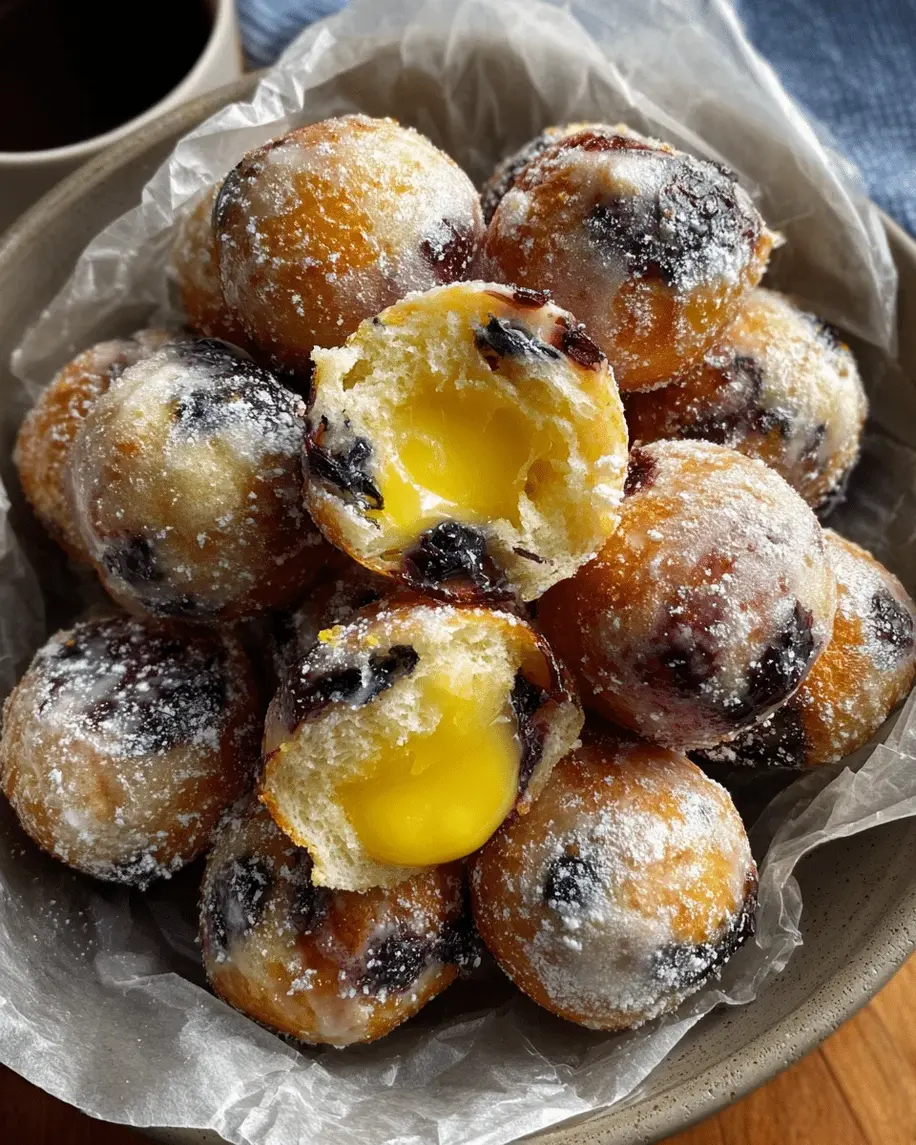
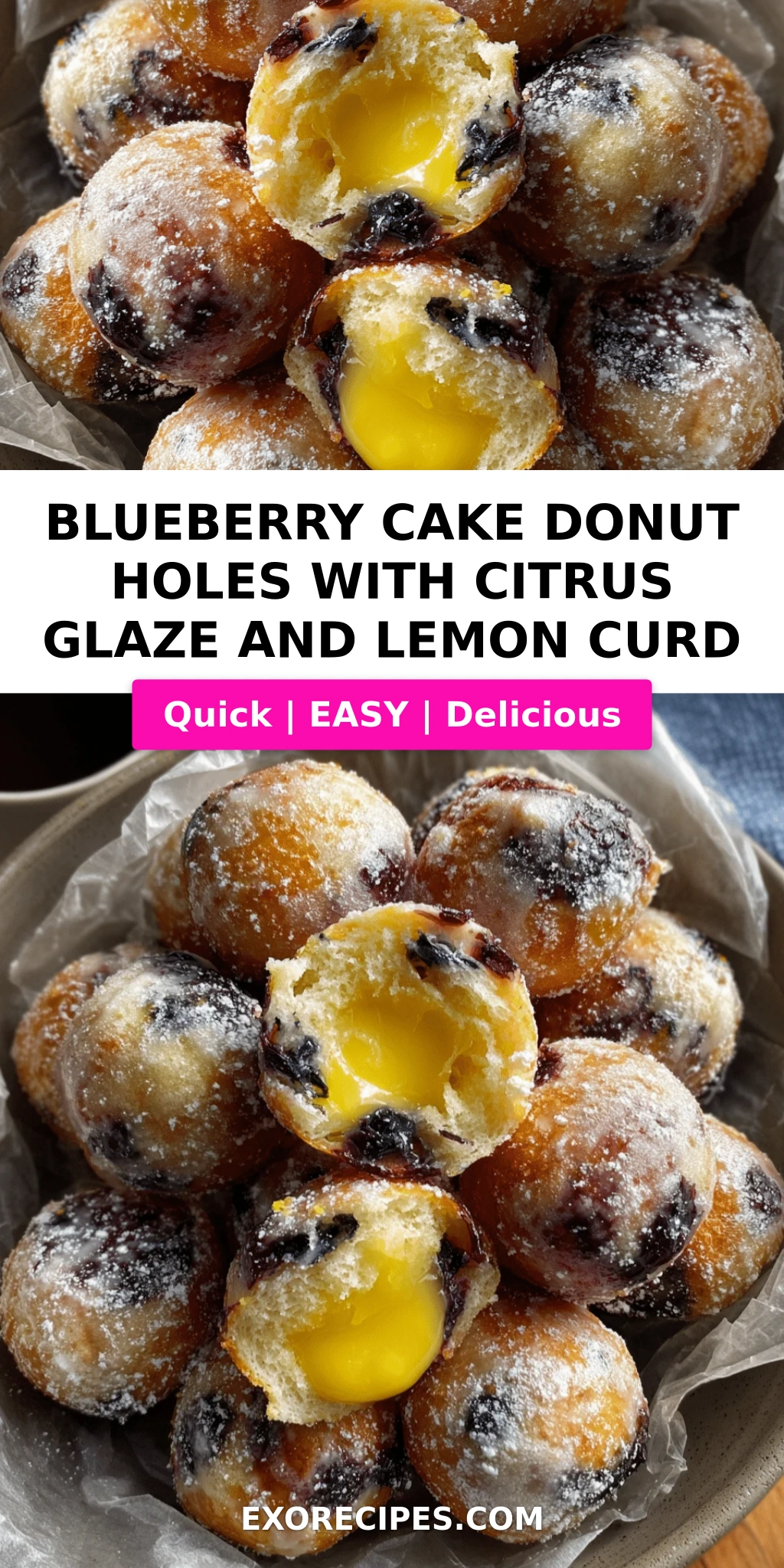
Imagine biting into a tender, cakey golden sphere studded with juicy blueberries, only to be met with a burst of silky lemon curd in the center. The citrus glaze—made with fresh orange and lemon juice—adds a glossy, zesty finish that cuts through the richness. A whisper of cinnamon and nutmeg in the batter keeps everything cozy. The scent alone will pull everyone into the kitchen.
I’ve tested this recipe dozens of times to make sure it’s foolproof for home bakers. The secret? A high‑ratio of buttermilk for tenderness, plus a gentle hand when folding blueberries to avoid streaks. I’ll also share my best tip for filling donut holes without leaks—something I learned the hard way at my first pastry station in Paris. Plus, a caution about overmixing that can turn your donut holes tough. Trust me, after one batch, you’ll never buy store‑bought again.
Why This Blueberry Cake Donut Holes Recipe Is the Best
The Flavor Secret – Most blueberry donut holes taste one‑note sweet. I layer brightness from two citrus fruits in the glaze and add a tangy lemon curd filling. The buttermilk in the batter enhances the blueberry flavor and creates a tender crumb. It’s a balanced bite that keeps you reaching for “just one more.”
Perfected Texture – Baking instead of frying gives you a light, fluffy interior without grease. The trick is to not overmix the batter and to measure your flour correctly (spoon and level!). The little bit of cornstarch in the blueberries (if using frozen) helps prevent them from sinking. I also add a touch of nutmeg—a classic French baker’s secret for warmth.
Foolproof & Fast – From start to finish, these are ready in about 30 minutes. No yeast, no deep‑frying, no complicated equipment. Even if you’ve never made donut holes before, my step‑by‑step instructions and pro tips will guide you to success. Your family will think you spent hours.
Blueberry Lemon Donut Holes Recipe Ingredients
On weekend mornings, I walk to the Union Square farmers market and grab a pint of fat blueberries from New Jersey. The citrus I pick up at the corner bodega—always organic for the zest. And the buttermilk? I keep a carton in the fridge at all times, because it’s the secret to so many of my baked goods. These simple, quality ingredients come together to create something truly special.
Ingredients List
- For the Donut Holes:
- 1 1/2 cups all-purpose flour (spooned and leveled)
- 1/2 cup granulated sugar
- 1 1/2 teaspoons baking powder
- 1/4 teaspoon baking soda
- 1/2 teaspoon salt
- 1/2 teaspoon ground cinnamon
- 1/4 teaspoon ground nutmeg
- 1/2 cup buttermilk (or 1/2 cup milk + 1/2 tablespoon lemon juice, let sit 5 minutes)
- 1 large egg
- 2 tablespoons unsalted butter, melted
- 1 teaspoon vanilla extract
- 1 cup fresh or frozen blueberries (do not thaw)
- For the Lemon Curd Filling:
- 1/2 cup lemon curd (store-bought or homemade)
- For the Citrus Glaze:
- 1 cup powdered sugar
- 2 tablespoons fresh orange juice
- 1 tablespoon fresh lemon juice
- 1 teaspoon orange zest
- 1/2 teaspoon lemon zest
Ingredient Spotlight
Blueberries – Fresh or frozen both work. If using frozen, add them directly to the batter without thawing to prevent blue streaks. Wild blueberries are sweeter and smaller, but regular ones are fine. At the farmers market, look for firm, dusty‑blue berries.
Buttermilk – This is the key to tender cake donut holes. The acid reacts with the baking soda and powder to create lift and a soft crumb. No buttermilk? Make a quick substitute: 1/2 cup milk plus 1/2 tablespoon lemon juice, stirred and left for 5 minutes.
Lemon Curd – I love a good store‑bought curd (like Bonne Maman), but homemade is simple. You can make it ahead. The tangy curd balances the sweet cake and glaze. If you don’t have lemon curd, you can substitute with a thick lemon jam or even a citrusy pastry cream.
Citrus for Glaze – Fresh orange juice and lemon juice create a bright, not‑too‑sweet glaze. Orange zest adds an aromatic note. Use a microplane for the zest—it makes a difference. Don’t use bottled juice; the fresh flavor is essential.
| Original Ingredient | Best Substitution | Flavor / Texture Impact |
|---|---|---|
| Buttermilk | Milk + lemon juice (1/2 cup milk + 1/2 tbsp lemon juice, rest 5 min) | Slightly less tang, still tender; add 1/4 tsp extra baking powder if needed. |
| All-purpose flour | White whole wheat flour (use 1 cup + 2 tbsp) | Denser, nuttier; add 1 extra tablespoon of buttermilk. |
| Fresh blueberries | Frozen blueberries (no thawing) | Slightly more moisture; bake 1 minute longer; color may leach slightly. |
| Lemon curd | Lemon jam or thick lemon marmalade | Less creamy but still bright and sweet; strain if has chunks. |
How to Make Blueberry Cake Donut Holes with Citrus Glaze – Step-by-Step
Trust me, you’ll be done before you know it. Here’s how to make the best homemade lemon curd donuts that are baked, not fried, and bursting with flavor.
Step 1: Prepare the Oven and Pan
Preheat your oven to 375°F (190°C). Grease a mini donut hole pan well with butter or nonstick spray. If you don’t have a mini pan, line a baking sheet with parchment paper—you’ll pipe the batter into small mounds later. I use a silicone mini donut hole pan for easy release.
💡 mia’s Pro Tip: If using a metal pan, grease every cavity thoroughly, even if it’s nonstick. A light dusting of flour over the butter helps the donut holes pop out perfectly.
Step 2: Mix Dry Ingredients
In a large bowl, whisk together the flour, sugar, baking powder, baking soda, salt, cinnamon, and nutmeg. Whisking aerates the flour and ensures even distribution of leaveners and spices. Set aside.
⚠️ Common Mistake to Avoid: Don’t skip the nutmeg. A little warmth from nutmeg makes the blueberry flavor pop. Use fresh grated if you have it.
Step 3: Combine Wet Ingredients
In a separate bowl, whisk together buttermilk, egg, melted butter, and vanilla until smooth. Make sure the melted butter isn’t hot—you don’t want to cook the egg. A fork works fine for whisking.
💡 mia’s Pro Tip: Warm the buttermilk slightly (not hot) if it’s cold from the fridge. This helps the batter come together without lumps.
Step 4: Fold in Blueberries
Pour the wet mixture into the dry ingredients. Stir with a spatula just until no streaks of flour remain—a few lumps are okay. Then gently fold in the blueberries with a few quick strokes. Overmixing develops gluten and makes the donut holes tough. If using frozen blueberries, add them frozen; they’ll distribute more evenly.
⚠️ Common Mistake to Avoid: Do not overmix! Stop as soon as the flour is incorporated. Overmixed batter leads to dense, hockey‑puck donut holes. I know because I’ve made that mistake too many times.
Step 5: Fill and Bake
Spoon the batter into the prepared pan, filling each cavity about 2/3 full. For a piping method (if using parchment), transfer batter to a zip‑top bag, snip a corner, and pipe small rounds about 1 inch wide. Bake for 10–12 minutes, until golden brown and a toothpick inserted into a donut hole comes out clean (no wet batter). Let cool in the pan for 5 minutes, then transfer to a wire rack to cool completely before filling.
💡 mia’s Pro Tip: If you don’t have a donut hole pan, pipe the batter onto a parchment‑lined baking sheet in small rounds about 1.5 inches apart. They’ll spread slightly into perfect domes. Bake time stays the same.
Step 6: Inject Lemon Curd
Once the donut holes are completely cool, prepare your piping setup. Fill a small piping bag or a plastic zip‑top bag with the lemon curd. Snip a tiny tip, or use a Bismarck piping tip (long and thin). Insert the tip into the side of each donut hole and squeeze gently until you feel resistance—that means the curd is filling the center. Don’t overfill or it will leak.
⚠️ Common Mistake to Avoid: The number one mistake is overfilling. Squeeze only about 1/2 to 1 teaspoon per donut hole. If you see curd oozing out the hole, you’ve put too much. Wipe it off before glazing.
Step 7: Make Citrus Glaze
In a medium bowl, whisk together powdered sugar, orange juice, lemon juice, orange zest, and lemon zest until smooth. The glaze should be thick but pourable—if too thick, add a few more drops of orange juice; if too thin, add more powdered sugar. Use immediately.
💡 mia’s Pro Tip: For a glossy glaze that stays soft, add 1 teaspoon of light corn syrup or golden syrup. It prevents the glaze from hardening into a rock‑hard shell and adds a beautiful sheen.
Step 8: Glaze and Set
Dip the top of each filled donut hole into the glaze, letting excess drip back into the bowl. Place on a wire rack set over a baking sheet to catch drips. Allow the glaze to set for about 10–15 minutes before serving. The glaze will firm up slightly but remain tender.
⚠️ Common Mistake to Avoid: Don’t glaze while the donut holes are still warm or the glaze will melt and become runny. Wait until they are completely cool.
| Step | Action | Duration | Key Visual Cue |
|---|---|---|---|
| 1 | Preheat oven and grease pan | 5 min | Butter melts evenly |
| 2–4 | Mix dry, wet, combine | 10 min | Batter thick, no flour streaks |
| 5 | Fill and bake | 10–12 min | Golden brown, toothpick clean |
| 6 | Inject lemon curd | 5 min | Slight resistance felt |
| 7 | Make glaze | 2 min | Smooth, glossy |
| 8 | Glaze and set | 10–15 min | Glaze sets but not hard |
Serving & Presentation
These blueberry cake donut holes with citrus glaze and lemon curd filling are a showstopper on any brunch table. Arrange them on a large wooden board or a white platter. I like to sprinkle a little extra orange zest over the glazed tops and add a few fresh blueberries around for color. For a Moroccan‑French twist, serve them alongside a small bowl of warm honey to drizzle—just like my mom’s sfenj.
Pair them with a cup of strong coffee, a frothy latte, or a glass of cold milk. They’re also fantastic with a scoop of vanilla ice cream for dessert. In NYC, I often bring a batch to Sunday brunch potlucks—they disappear faster than anything else on the table.
| Pairing Type | Suggestions | Why It Works |
|---|---|---|
| Side Dish | Fresh fruit salad, yogurt parfait, or crispy bacon | Fruit adds freshness; bacon adds salty crunch |
| Sauce / Dip | Honey, maple syrup, extra lemon curd, or chocolate sauce | Enhances sweetness or tang, depending on mood |
| Beverage | Coffee, espresso, chai latte, iced tea, or sparkling water with lemon | Coffee cuts sweetness; tea complements citrus |
| Garnish | Fresh mint leaves, edible flowers, lemon slices, extra zest | Adds color and aromatic freshness |
Make-Ahead, Storage & Reheating
As a busy NYC blogger, I’m all about making life easier. These donut holes are perfect for prepping ahead—you can bake and freeze them, then glaze on the day you serve. Here’s my go‑to storage plan to keep them tasting fresh.
| Method | Container | Duration | Reheating Tip |
|---|---|---|---|
| Refrigerator | Airtight container in a single layer | Up to 3 days | Microwave 10–15 seconds or warm in 300°F oven for 5 minutes |
| Freezer | Freezer‑safe bag or container, separated by parchment | Up to 2 months | Thaw at room temp 30 min, then reheat in 350°F oven for 5 min; glaze after reheating |
| Make-Ahead | Bake, cool, do not fill or glaze; store in airtight container | Up to 2 days in fridge | Fill and glaze just before serving for best texture |
If you’re reheating refrigerated donut holes, pop them in a 300°F oven for 5 minutes—they’ll taste almost fresh‑baked. For glazed donut holes, avoid the microwave; it makes the glaze sticky. Instead, warm them in a low oven or eat them at room temperature. I actually prefer them after a few hours: the glaze sets a bit and the flavors meld beautifully.
Variations & Easy Swaps
This recipe is like a blank canvas. Here are three delicious ways to switch it up, depending on what’s in season or what you’re craving.
| Variation | Key Change | Best For | Difficulty Impact |
|---|---|---|---|
| Raspberry Rose | Replace blueberries with raspberries; add 1/2 tsp rose water to batter; top with pink glaze | Romantic brunch or Mother’s Day | Easy (same technique) |
| Gluten‑Free | Use 1:1 gluten‑free flour blend (with xanthan gum); add 1 extra tbsp buttermilk | Gluten‑free households | Easy, but check baking time |
| Chocolate Ganache | Skip citrus glaze; dip in dark chocolate ganache (1/2 cup cream + 4 oz dark chocolate) | Decadent dessert | Easy (ganache requires double boiler) |
Raspberry Rose Variation
For a floral twist, replace blueberries with an equal amount of fresh raspberries. Add 1/2 teaspoon of rose water to the wet ingredients. For the glaze, use only lemon juice (omit orange juice) and add a drop of pink food coloring. This variation reminds me of the rose‑infused pastries I had in Paris. The raspberry seeds add a nice texture, and the rose aroma is subtle but romantic.
Gluten‑Free Version
I’ve tested this with a good 1:1 gluten‑free flour blend (like King Arthur Measure for Measure) and it works perfectly. Add 1 extra tablespoon of buttermilk to compensate for the extra absorption. Bake for 11–13 minutes, checking at the 11‑minute mark. The texture is slightly more delicate, so handle gently when filling. They’ll still be wonderfully tender and flavorful.
Chocolate Ganache Donut Holes
If you’re a chocolate lover, skip the citrus glaze and dip the filled donut holes in a silky dark chocolate ganache. Heat 1/2 cup heavy cream until simmering, pour over 4 ounces of chopped dark chocolate (70%), let sit 2 minutes, then stir until smooth. Dip the tops and sprinkle with sea salt. I love this version in winter—it’s rich, comforting, and pairs beautifully with the lemon curd filling.
Can I use frozen blueberries instead of fresh for blueberry cake donut holes?
Absolutely, frozen blueberries work wonderfully in this easy blueberry cake donut holes recipe. In fact, I often use frozen ones when fresh blueberries aren’t in season. The key is to add them directly to the batter while they’re still frozen—do not thaw them first. Thawing releases extra moisture and will streak your batter with blue, making the donut holes look gray. Frozen berries also help keep the batter cold, which can slightly improve the rise. Expect your baking time to be on the longer side (around 12 minutes) because the berries lower the batter temperature. Otherwise, the flavor and texture remain delicious.
What is the best way to fill donut holes with lemon curd without them leaking?
The key is using the right piping tip and technique. I use a long Bismarck or éclair tip—it’s thin and long enough to reach the center without creating a large hole. Insert the tip about halfway into the side of the donut hole, then squeeze gently. You’ll feel slight resistance as the curd fills the interior. Stop as soon as you feel that resistance; that’s your signal it’s full. Generally 1/2 to 1 teaspoon per donut hole is enough. If you overfill, curd will ooze out when you remove the tip. Have a paper towel ready to wipe any excess before glazing. Also, make sure your donut holes are completely cool before filling—warm ones are softer and more likely to split.
How do you make a citrus glaze that stays glossy and doesn’t harden too quickly?
The secret is adding a small amount of fat or syrup to the glaze. I like to stir in 1 teaspoon of light corn syrup or golden syrup along with the powdered sugar and citrus juices. This simple addition keeps the glaze flexible and glossy, preventing it from setting into a rock‑hard shell. Another trick: use freshly squeezed orange and lemon juice—bottled juice lacks the natural oils that help the glaze stay smooth. Whisk the glaze until it’s completely smooth and use it immediately. If it thickens as you work, you can thin it with a drop more juice. Avoid making the glaze too thick; a thinner glaze will set with a beautiful, shiny finish.
Can I bake blueberry cake donut holes instead of frying them?
Yes, and I strongly recommend it! Baking is much easier, less messy, and healthier than deep‑frying. This blueberry lemon donut holes recipe is designed for the oven. You’ll get tender, cakey donut holes with a golden exterior and no grease. The texture is slightly different from fried—more like a mini muffin in shape—but the flavor is every bit as good. A mini donut hole pan gives you the classic shape, but you can also pipe the batter onto a parchment‑lined baking sheet. If you want a crispier exterior, you can lightly brush the baked donut holes with melted butter and return them to the oven for 1–2 minutes. No one will miss the fryer.
Can I make the lemon curd from scratch for these donut holes?
Absolutely, homemade lemon curd takes these donut holes to the next level. My Parisian chef taught me that the best curd is made with egg yolks, sugar, fresh lemon juice, and butter. Cook it over a double boiler until thickened (about 10 minutes), then strain for a silky finish. If you’re short on time, a high‑quality store‑bought curd like Bonne Maman works beautifully. I use it often when I’m testing recipes late at night! The key either way is to use a curd that’s thick enough to hold its shape when injected. If your curd is too thin, you can simmer it for a few minutes to reduce it, or add a cornstarch slurry.
How do I prevent blueberries from sinking to the bottom of the donut holes?
This is a common issue with fruit‑studded baked goods. The trick is to toss the blueberries in a tablespoon of the flour mixture before folding them into the batter. The flour coating helps suspend the berries evenly. Also, make sure your batter is thick enough—if it’s too thin, the berries will sink. This batter is on the thicker side, similar to muffin batter. When you fill the pan, try to distribute the berries among the cavities rather than dumping all the batter at once. Finally, don’t overmix after adding the blueberries; gentle folds preserve the batter’s structure.
Can I use a different fruit instead of blueberries?
Definitely. This recipe is very adaptable to other berries or even chopped stone fruit. Raspberries, blackberries, or diced strawberries work well. For stone fruit like peaches or nectarines, chop them small (1/4‑inch dice) and pat dry to remove excess moisture. If you use raspberries, expect a slightly more tart flavor and tiny seeds in the texture. You can also use dried blueberries or cranberries, but rehydrate them first in warm water for 10 minutes and drain. The baking time may vary slightly depending on the fruit’s moisture content—check for doneness with a toothpick.
How should I store leftover blueberry cake donut holes?
Store leftover donut holes in an airtight container in the refrigerator for up to three days. I recommend layering them with parchment paper so the glaze doesn’t stick. For best results, keep the glazed donut holes in a single layer if possible. If you plan to serve them later and want that fresh‑from‑the‑oven taste, reheat refrigerated donut holes in a 300°F oven for 5 minutes—this warms the cake and softens the glaze without melting it. Freezing is also an option: freeze unglazed and unfilled donut holes for up to two months, then thaw, fill, and glaze before serving. I often stash a batch in the freezer for unexpected guests.
Can I make these donut holes dairy‑free?
Yes, you can easily adapt this easy blueberry cake donut holes recipe to be dairy‑free. Replace the buttermilk with a dairy‑free buttermilk alternative: mix 1/2 cup unsweetened almond milk or oat milk with 1/2 tablespoon lemon juice and let it sit for 5 minutes. Use a neutral‑tasting dairy‑free butter (like Earth Balance) melted in place of regular butter. The texture will be slightly less tender but still delicious. For the glaze, use a dairy‑free milk or extra citrus juice instead of buttermilk—there’s no butter in the glaze, so it’s already dairy‑free. The lemon curd is typically dairy‑free (check labels; homemade uses butter, but you can use dairy‑free butter).
Why did my donut holes turn out dense and heavy?
Dense donut holes are usually the result of overmixing the batter or using too much flour. When you mix the wet and dry ingredients, stir just until the flour disappears—a few small lumps are fine. Overmixing develops gluten, which makes the cake tough and heavy. Another common culprit is incorrectly measured flour. Always spoon the flour into your measuring cup and level it off with a knife; scooping directly from the bag can pack in up to 20% more flour. Also, check that your baking powder and baking soda are fresh—expired leaveners won’t give proper rise. Finally, don’t overfill the pan; the batter needs room to expand.
Share Your Version!
I’d love to see how your blueberry lemon donut holes turn out! Did you try a different fruit? Did you make the glaze from scratch? Drop a comment below with a star rating—it helps other readers know what to expect. Tag me on Instagram or Pinterest @exorecipes so I can see your beautiful creations. If you have any questions about filling, glazing, or customizing, ask away in the comments. I personally answer every question within 24 hours.
From my NYC kitchen to yours — I hope this recipe brings as much warmth to your table as it does to mine. — mia 🧡
Love This Recipe? Save It to Pinterest!
If you enjoyed this Blueberry Cake Donut Holes with Citrus Glaze & Lemon Curd Filling recipe, don’t let it get lost in your browser tabs! 😄 Pin it now so you can find it again anytime — and explore hundreds more tried-and-tested recipes waiting for you on my Pinterest boards.
👉 Follow mia on Pinterest @exorecipe
📌 Pin this recipe · 🔁 Re-pin your favorites · 💬 Tag me when you make it — I love seeing your creations!
Blueberry Cake Donut Holes with Citrus Glaze & Lemon Curd Filling
- Prep Time: 20 minutes
- Cook Time: 12 minutes
- Total Time: 32 minutes
- Yield: 24 donut holes 1x
- Method: Dessert
- Cuisine: American
Description
These blueberry cake donut holes are filled with tangy lemon curd and topped with a bright citrus glaze. They’re perfect for brunch or a sweet treat.
Ingredients
- For the Donut Holes:
- 1 1/2 cups all-purpose flour
- 1/2 cup granulated sugar
- 1 1/2 teaspoons baking powder
- 1/4 teaspoon baking soda
- 1/2 teaspoon salt
- 1/2 teaspoon ground cinnamon
- 1/4 teaspoon ground nutmeg
- 1/2 cup buttermilk
- 1 large egg
- 2 tablespoons unsalted butter, melted
- 1 teaspoon vanilla extract
- 1 cup fresh or frozen blueberries
- For the Lemon Curd Filling:
- 1/2 cup lemon curd (store-bought or homemade)
- For the Citrus Glaze:
- 1 cup powdered sugar
- 2 tablespoons fresh orange juice
- 1 tablespoon fresh lemon juice
- 1 teaspoon orange zest
- 1/2 teaspoon lemon zest
Instructions
- 1. Preheat oven to 375°F (190°C). Grease a mini donut hole pan or line a baking sheet with parchment paper.
- 2. In a large bowl, whisk together flour, sugar, baking powder, baking soda, salt, cinnamon, and nutmeg.
- 3. In a separate bowl, whisk together buttermilk, egg, melted butter, and vanilla.
- 4. Pour wet ingredients into dry ingredients and stir until just combined. Fold in blueberries gently.
- 5. Spoon batter into prepared pan, filling each cavity about 2/3 full. Bake for 10-12 minutes or until golden and a toothpick inserted comes out clean. Let cool completely.
- 6. Once cooled, use a small piping tip to inject lemon curd into the center of each donut hole.
- 7. For the glaze: Whisk together powdered sugar, orange juice, lemon juice, orange zest, and lemon zest until smooth.
- 8. Dip the top of each donut hole into the glaze, letting excess drip off. Place on a wire rack to set.
Notes
If you don’t have a donut hole pan, you can pipe the batter onto a parchment-lined baking sheet in small rounds. Adjust baking time accordingly.
Nutrition
- Calories: 120
- Sugar: 14g
- Fat: 3g
- Carbohydrates: 22g
- Protein: 2g
Tried This Recipe? Leave a Comment!
Did you make this recipe? I’d love to hear how it turned out! Please leave a comment and a rating below. Your feedback helps other home cooks and supports cheerychop.com!
For more delicious inspiration, follow me on Pinterest!
