Table of Contents
Belgian-Style Slow-Cooked Beef Stew: A Hearty and Flemish Classic with a Chef’s Touch
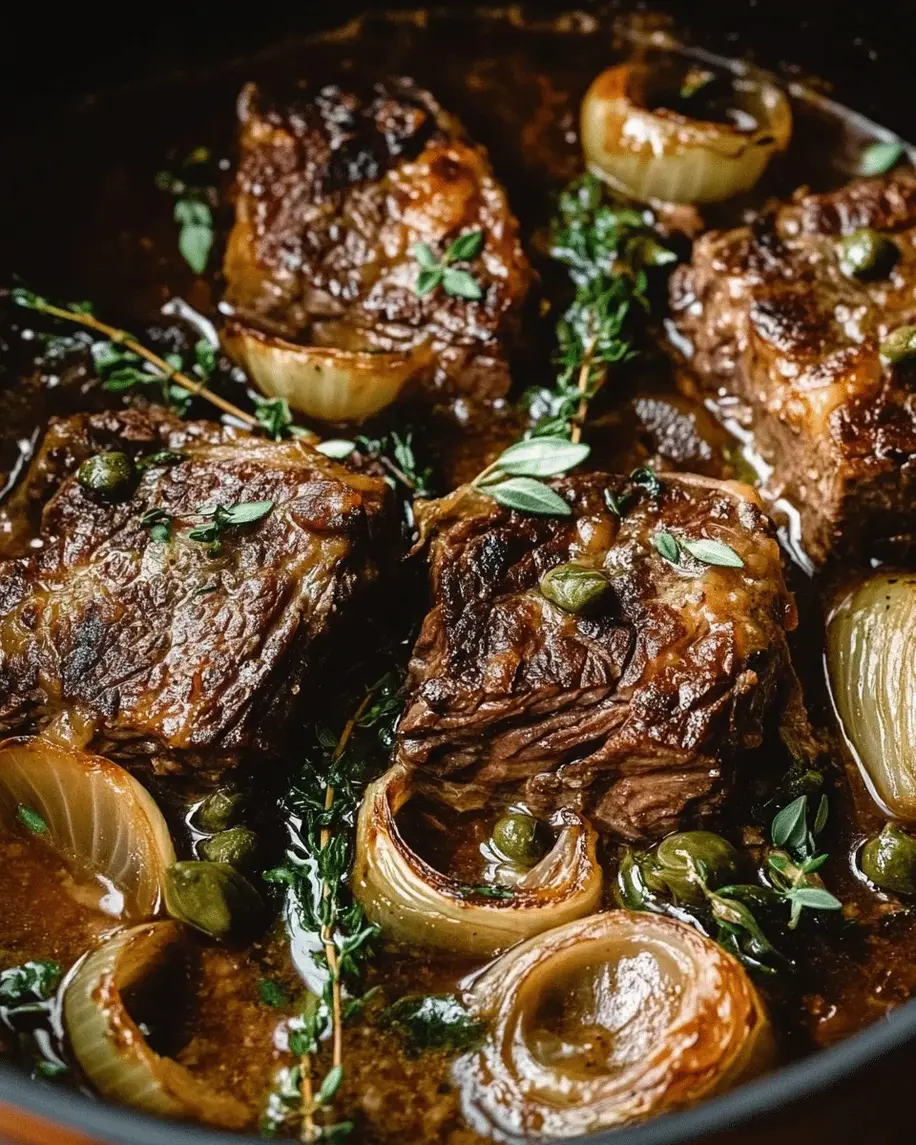
Growing up in Morocco, my mother’s tagines taught me the art of patience—low, slow cooking that transforms humble ingredients into liquid gold. Years later, at Le Cordon Bleu in Paris, I learned the precision of French braising. And now in my New York City kitchen, I bring those worlds together in this Belgian beef stew recipe—a carbonnade flamande that is unapologetically rich, deeply savory, and made unforgettable with a final touch of butter, mustard, and vinegar. This slow-cooked beef stew is the kind of meal that fills your home with the scent of caramelized onions and malted ale, a hug in a bowl on a chilly evening.
The first spoonful hits you with layers: tender chunks of beef that have surrendered to hours of gentle simmering, a broth that’s simultaneously sweet from brown sugar and tangy from Belgian ale, and a velvety finish from that secret pat of butter stirred in at the end. The aroma alone—think toasted bread, thyme, and a hint of dark fruit—will have your family hovering by the stove. This isn’t just any Flemish beef stew; it’s the version I’ve perfected over a decade of testing, balancing the boldness of European beer with the wisdom of North African spice (a whisper of cinnamon, if you’re feeling adventurous).
What makes this hearty European stew truly special is the technique: browning the beef in batches to build a crust, deglazing with the ale to capture every bit of fond, and then the final enrichment that butter, vinegar, and mustard bring—a trick I picked up from a Brussels grandmother I met at a farmers market here in NYC. This recipe is foolproof for beginners, yet layered enough to impress seasoned cooks. And if you’ve ever wondered how to get that luscious, restaurant-quality texture at home, the answer lies in a single pro tip: don’t rush the browning. Let’s dive in.
Why This Belgian Beef Stew Recipe Is the Best
The Flavor Secret: Most stews rely on a single layer of flavor. My version builds complexity with a three-step deglazing—first the ale for malty depth, then beef broth for umami, and finally a butter-mustard-vinegar finish that brightens and tightens the sauce. That last addition is a classic French liaison, and it’s the reason this stew tastes like it’s been simmering all day—even if you’ve only cooked it for two hours.
Perfected Texture: Beef chuck is the star here—its marbling melts during the long simmer, leaving fork-tender pieces that still hold their shape. The trick is to brown the beef in small batches so it sears, not steams. I also flour the chuck lightly before browning, which helps thicken the broth naturally. The result is a silky, supple stew that clings to every spoonful.
Foolproof & Fast: Unlike overnight braises, this carbonnade flamande is ready in just over two hours—perfect for a Sunday supper or a weeknight indulgence. The steps are straightforward: brown, sauté, deglaze, simmer. Even if you’re new to slow cooking, the visual cues (golden beef, softened onions, bubbling sauce) make it nearly impossible to mess up. Plus, the stew tastes even better the next day, which makes it a dream for meal prep.
Belgian Beef Stew Recipe Ingredients
Every Saturday morning, I walk through the Union Square Greenmarket, picking up fresh thyme from the herb stand and a chuck roast from the butcher who remembers my name. This recipe calls for straightforward, supermarket-friendly ingredients—but choosing wisely makes all the difference. Here’s what you need.
Ingredients List
- 2 lbs beef chuck, cut into 2-inch cubes
- ¼ cup all-purpose flour
- 2 tablespoons vegetable oil
- 2 medium onions, sliced
- 4 cloves garlic, minced
- 2 tablespoons tomato paste
- 1 (12 oz) bottle Belgian-style ale (e.g., Chimay, Duvel, or similar)
- 2 cups beef broth
- 1 tablespoon brown sugar
- 2 bay leaves
- 4 sprigs fresh thyme
- 2 tablespoons unsalted butter
- 1 tablespoon red wine vinegar
- 1 tablespoon Dijon mustard
- Salt and freshly ground black pepper to taste
- Chopped fresh parsley for garnish
Ingredient Spotlight
Beef chuck: This is the gold standard for slow-cooked stews. The abundant connective tissue breaks down into gelatin, giving the broth body. Look for well-marbled chuck with deep red color. If you can’t find chuck, beef brisket or bottom round work—but you’ll need to simmer a bit longer. Avoid lean cuts like sirloin; they dry out.
Belgian-style ale: The soul of this dish. A dubbel or tripel like Chimay adds fruity esters and a rich malt backbone. If you can’t find Belgian ale, substitute a dark ale or porter (not stout, which can be bitter). The test: the beer should smell sweet and complex, not burnt or hoppy. In a pinch, use a non-alcoholic dark ale—the flavor will be slightly simpler but still lovely.
Tomato paste: This small addition adds depth and a whisper of acidity that balances the beer’s sweetness. I always use double-concentrated tomato paste from a tube—it’s more intense and won’t leave half a can in the fridge. No tube? Use 1 tablespoon of tomato paste plus a pinch of sugar.
Butter, vinegar & mustard: This trio is the “magic finish” that transforms an ordinary stew into a chef’s dish. The butter enriches, the vinegar brightens, and the mustard adds a subtle kick. Don’t skip it—this is the trick I learned from a Belgian cook in Paris, and it’s what makes the sauce glossy and balanced.
| Original Ingredient | Best Substitution | Flavor / Texture Impact |
|---|---|---|
| Beef chuck | Beef brisket | Slightly richer, but may need extra 30 min simmer |
| Belgian ale | Dark ale or non-alcoholic dark ale | Less complex, slightly sweeter; still delicious |
| Tomato paste | 1 tbsp tomato paste + pinch sugar | Slightly less deep; sugar balances acidity |
| Dijon mustard | Yellow mustard + pinch cayenne | Milder heat, less tang; cayenne adds warmth |
How to Make Belgian Beef Stew — Step-by-Step
Good things come to those who braise—here’s exactly how to nail this slow-cooked beef stew every time.
Step 1: Prep and Brown the Beef
Pat the beef cubes dry with paper towels. Season generously with salt and pepper. In a large bowl, toss the beef with the flour until lightly coated. Heat the oil in a Dutch oven over medium-high heat. Add the beef in a single layer—don’t crowd the pot; do it in batches. Brown each piece on all sides, about 4 minutes total per batch. Transfer to a plate.
💡 mia’s Pro Tip: The flour not only helps thicken the stew, it also creates a beautiful crust. Don’t skip drying the beef—moisture prevents browning.
Step 2: Sauté the Aromatics
Reduce heat to medium. Add the sliced onions and cook, stirring occasionally, until softened and lightly browned, about 8 minutes. Add the garlic and cook for 1 minute, until fragrant. Then stir in the tomato paste and cook for 2 minutes, stirring constantly—this caramelizes the paste and deepens the flavor.
⚠️ Common Mistake to Avoid: Burnt garlic. Keep the heat medium-low when cooking garlic; it can turn bitter quickly.
Step 3: Deglaze and Simmer
Pour in the ale and use a wooden spoon to scrape up any browned bits from the bottom of the pot. Boil for 2 minutes to cook off the raw alcohol. Return the beef to the pot. Add the beef broth, brown sugar, bay leaves, and thyme sprigs. Bring to a boil, then reduce heat to low. Cover and simmer for 1½ to 2 hours, stirring occasionally, until the beef is fork-tender.
💡 mia’s Pro Tip: For even more depth, add a cinnamon stick and a strip of orange peel during simmering. It’s a Moroccan twist that pairs beautifully with the beer.
Step 4: Finish with the Magic Trio
In a small bowl, combine the butter, red wine vinegar, and Dijon mustard. Stir this mixture into the stew off the heat. Season with additional salt and pepper to taste. Let the stew rest for 5 minutes to allow the flavors to meld. Serve hot, garnished with fresh parsley.
⚠️ Common Mistake to Avoid: Adding the butter mixture while the stew is still at a rolling boil—this can cause the butter to separate. Stir it in gently over low heat or off the heat.
| Step | Action | Duration | Key Visual Cue |
|---|---|---|---|
| 1 | Brown beef | 4 min per batch | Deep golden crust |
| 2 | Sauté onions & garlic | 8 min onions, 1 min garlic | Onions translucent, edges brown |
| 3 | Deglaze & simmer | 1½–2 hours | Beef tender, broth thickened |
| 4 | Finish with butter mixture | 1 minute | Glossy sauce, aromatic |
Serving & Presentation
In my NYC kitchen, I love serving this stew in deep, wide bowls so the sauce can pool around the sides. The classic Belgian way is with crusty bread to soak up every drop, but mashed potatoes are a close second—their creaminess balances the rich broth. A side of steamed green beans or a simple salad with a sharp vinaigrette cuts through the richness beautifully.
For a touch of nostalgia, I sometimes top the stew with a spoonful of harissa—a nod to my Moroccan roots—for a gentle heat. Garnish with fresh parsley and a few thyme leaves. If you’re feeling fancy, a dollop of crème fraîche or sour cream adds a lovely tang.
| Pairing Type | Suggestions | Why It Works |
|---|---|---|
| Side Dish | Crusty bread, mashed potatoes, buttered egg noodles | Absorb the rich sauce; add texture contrast |
| Sauce / Dip | Dijon mustard, horseradish cream, harissa | Adds heat or tang to cut through richness |
| Beverage | Belgian dubbel, brown ale, dark lager, full-bodied red wine (e.g., Côtes du Rhône) | Complements malty, sweet-savory notes |
| Garnish | Fresh parsley, thyme sprigs, crispy fried onions, crumbled bacon | Adds color, texture, and extra flavor |
Make-Ahead, Storage & Reheating
This stew is a meal-prepper’s dream. I often make a double batch on Sunday and enjoy it throughout the week—the flavors only deepen. Here’s how to store and reheat it safely.
| Method | Container | Duration | Reheating Tip |
|---|---|---|---|
| Refrigerator | Airtight container | Up to 4 days | Reheat gently on stovetop over medium-low, adding a splash of broth if needed. |
| Freezer | Freezer-safe zip-top bag or rigid container | Up to 3 months | Thaw overnight in the fridge, then reheat gently. The butter may separate slightly; whisk back in. |
| Make-Ahead | Same as refrigerator | 1–2 days in advance | Add the butter mixture just before serving for freshest flavor. |
💡 mia’s Pro Tip: If you freeze the stew, skip the butter-vinegar-mustard finish. Add it fresh after thawing and reheating—it makes a world of difference.
Variations & Easy Swaps
This recipe is incredibly adaptable. Here are three of my favorite ways to switch it up.
| Variation | Key Change | Best For | Difficulty Impact |
|---|---|---|---|
| Moroccan Spiced | Add 1 tsp cumin, 1 tsp paprika, and 1 cinnamon stick | Aromatic, exotic twist | Easy |
| Gluten-Free | Replace flour with 2 tbsp cornstarch slurry (cornstarch + cold water) | Celiac/gluten sensitivity | Easy |
| Beer-Free / Alcohol-Free | Use non-alcoholic dark ale + 1 tbsp malt vinegar | Alcohol-free lifestyle | Easy |
Moroccan Spiced Variation
This is my personal favorite. While the stew simmers, add a teaspoon of ground cumin, a teaspoon of sweet paprika, and a whole cinnamon stick. The cumin and paprika echo my childhood in Morocco, while the cinnamon bridges the beer’s sweetness with North African warmth. Serve with couscous instead of bread for a complete fusion.
Gluten-Free Variation
Skip the flour dredge. Instead, after the stew has simmered and the beef is tender, whisk together 2 tablespoons of cornstarch with 2 tablespoons of cold water until smooth. Stir the slurry into the simmering stew and cook for 2–3 minutes until thickened. The texture remains velvety, and the flavor is unchanged. Use tamari if broth needs a soy sauce boost.
Beer-Free Variation
For those who avoid alcohol, substitute the Belgian ale with an equal amount of non-alcoholic dark ale (like Brooklyn Brewery’s Special Effects). To mimic the slight tang, add a teaspoon of malt vinegar or apple cider vinegar along with the broth. The result is milder but still deeply satisfying—perfect for a family dinner.
What is the best cut of beef to use for Belgian-style slow-cooked beef stew?
Beef chuck is the absolute best choice for this carbonnade flamande. It comes from the shoulder area, which means it has plenty of connective tissue and marbling. During the long, slow simmer, that collagen breaks down into gelatin, making the broth silky and the beef fork-tender. Other good options include brisket or bottom round, but avoid lean cuts like sirloin or top round—they will dry out and become tough. Always look for well-marbled chuck with bright red color for the most flavorful results.
Can I make Belgian beef stew without beer, and what can I substitute for it?
Yes, you can definitely make this stew without beer. The best substitute is a non-alcoholic dark ale, which provides similar malty sweetness and depth without the alcohol. If you don’t have that, use a combination of beef broth and a splash of apple cider vinegar or red wine vinegar to mimic the acidity, plus a teaspoon of brown sugar for sweetness. Another option is to use a dark porter or stout, but be aware that these can be more bitter—balance with a little extra brown sugar. The final butter-mustard finish helps compensate for any missing complexity.
How long should I slow cook Belgian beef stew for the most tender results?
For the most tender Belgian beef stew, you want to simmer it for between 1½ to 2 hours at a gentle low heat. The exact time depends on the size of your beef cubes and the specific cut. Start checking at 1 hour 15 minutes—when a fork slides into the meat with very little resistance, it’s ready. Don’t let it boil, or the meat will become stringy. If you prefer a very soft, almost fall-apart texture, aim for the full 2 hours. Remember that the stew will continue to tenderize slightly as it rests. A slow cooker on low for 6–7 hours is also a great option.
What is traditionally served with Belgian-style beef stew for a complete meal?
Traditionally, carbonnade flamande is served with crusty bread for soaking up the rich sauce, or with a side of French fries (frites) which is a classic Belgian pairing—fries and stew are a national comfort food. In many Belgian homes, it’s also served with mashed potatoes or boiled potatoes tossed in butter. For vegetables, steamed green beans, braised endive, or a simple salad with a sharp vinaigrette are all excellent choices. The stew is hearty enough on its own, but these sides make it a complete, satisfying meal. A Belgian ale or dark lager is the perfect beverage pairing.
Can I add vegetables like carrots or mushrooms to this stew?
Absolutely! While the classic Belgian version is quite simple (onions and beef), adding vegetables is a wonderful way to make it more substantial. I recommend adding 2–3 carrots, peeled and cut into 1-inch chunks, along with the beef broth. If you want mushrooms, add 8 ounces of halved cremini or button mushrooms during the last 30 minutes of simmering so they don’t become mushy. To keep the stew balanced, don’t overload with too many veggies—the star is still the beef and the sauce. The vegetables will absorb the flavors beautifully.
Why does my Belgian beef stew turn out dry or tough?
Dry or tough stew is usually a result of using the wrong cut of beef or cooking it at too high a temperature. Always choose a well-marbled cut like chuck or brisket—lean meat simply doesn’t have the fat to keep moist. Also, ensure that the stew is simmering gently (not boiling) and that the pot is covered for most of the cooking. If the liquid evaporates too quickly, add a little more broth or water. Finally, be patient: tough meat needs time for the connective tissue to break down. If it’s still tough after 1½ hours, give it another 20–30 minutes.
Can I make this Belgian beef stew in a slow cooker or Instant Pot?
Yes, both methods work well. For a slow cooker, follow the recipe up to the deglazing step (after adding the ale), then transfer everything to the slow cooker. Cook on low for 6–8 hours or on high for 4–5 hours. Add the butter-mustard-vinegar mixture at the end. For an Instant Pot, use the sauté function for browning and deglazing, then pressure cook on high for 35 minutes with natural release for 10 minutes. Finish with the butter mixture. The stovetop version gives the best depth, but the convenience is hard to beat.
How can I thicken my Belgian beef stew if it’s too thin?
If your stew is thinner than you’d like, there are a few easy fixes. First, remove the lid and let it simmer uncovered for 10–15 minutes to reduce and concentrate the sauce. Alternatively, make a cornstarch slurry by whisking 1 tablespoon of cornstarch with 2 tablespoons of cold water, then stir it into the simmering stew and cook for 2–3 minutes until thickened. Another option is to mash a few of the cooked beef pieces against the side of the pot to release their starch (if you floured the beef). Avoid adding raw flour directly—it can form lumps.
Can I freeze Belgian beef stew? How should I do it?
Yes, this stew freezes beautifully. For best results, cool the stew completely before freezing—divide it into portions in freezer-safe bags or containers. Leave a little headspace for expansion. I recommend not adding the butter-vinegar-mustard finish before freezing; add it fresh after thawing and reheating for the best texture and brightness. Frozen stew keeps well for up to 3 months. To reheat, thaw overnight in the refrigerator, then warm gently on the stovetop over medium-low heat. Add a splash of broth if it seems thick.
What kind of beer should I use for the most authentic Belgian flavor?
For the most authentic flavor, use a Belgian dubbel or tripel ale. Chimay Red (dubbel) or Duvel (golden strong ale) are excellent choices—they offer fruity esters, a rich malt backbone, and a pleasant bitterness that balances the sweetness of the onions and sugar. You can also use a Belgian lambic if you want a sour twist, but I recommend sticking with a dubbel for a classic carbonnade. Avoid heavily hopped IPAs, which will make the stew bitter. A dark ale from a craft brewery that mimics Belgian styles works beautifully as well.
Share Your Version!
I’d love to see how this Belgian-style slow-cooked beef stew turns out in your kitchen! Did you try the Moroccan spice twist? Or maybe you added mushrooms and carrots? Leave a star rating and a comment below—I read every single one. Tag a photo on Instagram or Pinterest with @exorecipes and let’s get a conversation going about the best way to make a carbonnade flamande at home.
One question for you: what’s your favorite side dish to serve with this stew? I’m always looking for new ideas to test in my NYC kitchen. Drop your answer in the comments!
From my NYC kitchen to yours — I hope this recipe brings as much warmth to your table as it does to mine. — mia 🧡
Love This Recipe? Save It to Pinterest!
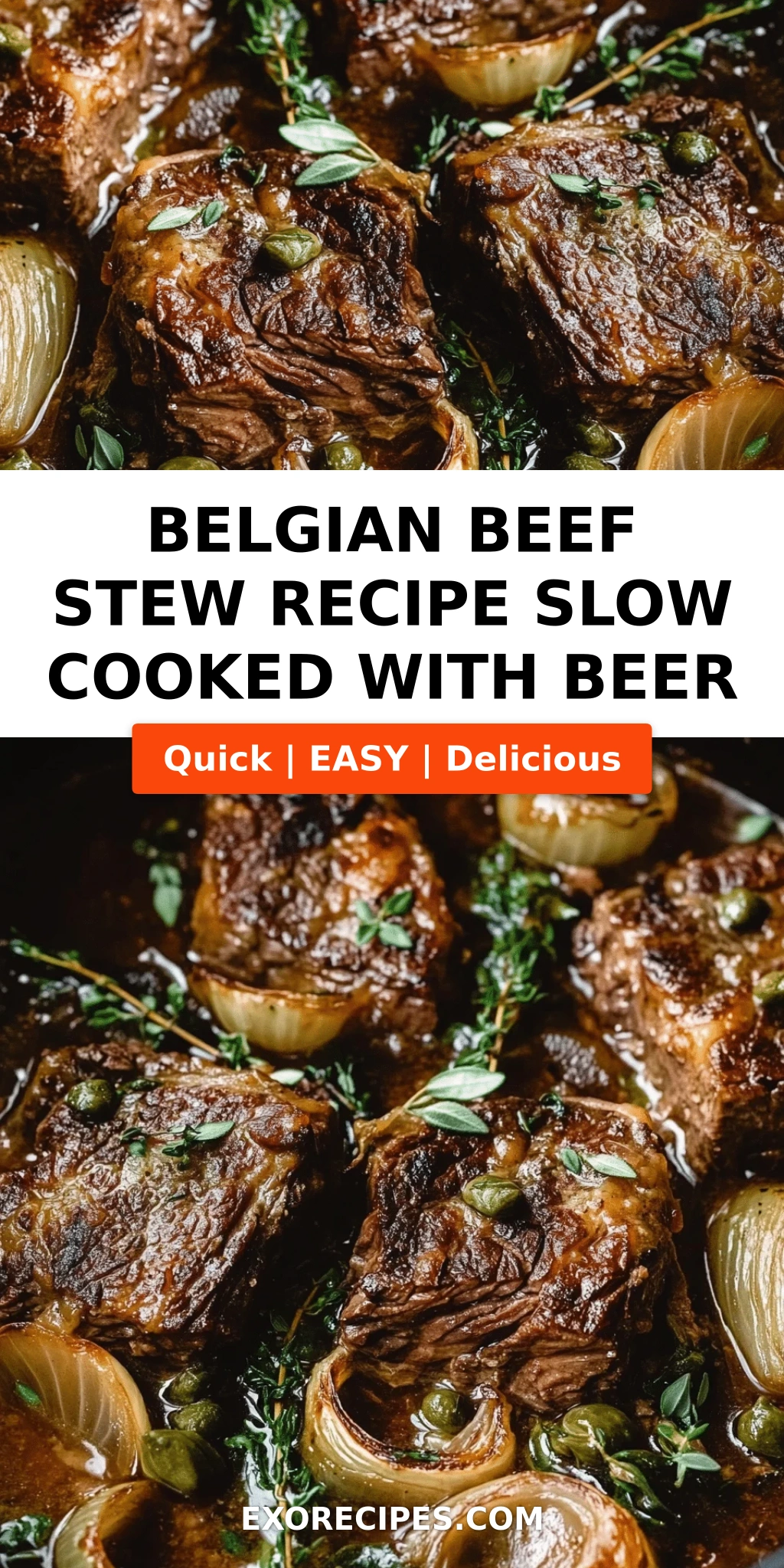
If you enjoyed this Belgian-Style Slow-Cooked Beef Stew recipe, don’t let it get lost in your browser tabs! 😄 Pin it now so you can find it again anytime — and explore hundreds more tried-and-tested recipes waiting for you on my Pinterest boards.
👉 Follow mia on Pinterest @exorecipes
📌 Pin this recipe · 🔁 Re-pin your favorites · 💬 Tag me when you make it — I love seeing your creations!
Did you make this recipe? Let me know in the comments below! ⭐
Belgian-Style Slow-Cooked Beef Stew: A Hearty and Flavorful Classic
- Prep Time: 20 minutes
- Cook Time: 2 hours
- Total Time: 2 hours 20 minutes
- Yield: 6 1x
- Method: Main Course
- Cuisine: Belgian
Description
A classic Belgian beef stew, slowly simmered with beer and aromatic vegetables until tender and deeply flavorful.
Ingredients
- 2 lbs beef chuck, cut into 2-inch cubes
- 1/4 cup all-purpose flour
- 2 tablespoons vegetable oil
- 2 medium onions, sliced
- 4 cloves garlic, minced
- 2 tablespoons tomato paste
- 1 (12 oz) bottle Belgian-style ale (e.g., Chimay, Duvel, or similar)
- 2 cups beef broth
- 1 tablespoon brown sugar
- 2 bay leaves
- 4 sprigs fresh thyme
- 2 tablespoons unsalted butter
- 1 tablespoon red wine vinegar
- 1 tablespoon Dijon mustard
- Salt and freshly ground black pepper to taste
- Chopped fresh parsley for garnish
Instructions
- 1. Pat the beef cubes dry with paper towels. Season generously with salt and pepper. Dredge the beef in the flour, shaking off excess.
- 2. In a large Dutch oven or heavy pot, heat the oil over medium-high heat. Brown the beef in batches, turning to brown on all sides. Transfer to a plate.
- 3. Reduce heat to medium. Add the sliced onions and cook, stirring occasionally, until softened and lightly browned, about 8 minutes. Add the garlic and cook for 1 minute.
- 4. Stir in the tomato paste and cook for 2 minutes, stirring constantly.
- 5. Pour in the ale and use a wooden spoon to scrape up any browned bits from the bottom of the pot. Boil for 2 minutes.
- 6. Return the beef to the pot. Add the beef broth, brown sugar, bay leaves, and thyme sprigs. Bring to a boil, then reduce heat to low. Cover and simmer for 1 ½ to 2 hours, or until the beef is tender.
- 7. In a small bowl, combine the butter, red wine vinegar, and Dijon mustard. Stir this mixture into the stew. Season with additional salt and pepper to taste.
- 8. Serve hot, garnished with fresh parsley. Pairs well with crusty bread, mashed potatoes, or steamed vegetables.
Notes
For an even richer flavor, use a dark Belgian ale or a lambic. The stew tastes even better the next day. Refrigerate overnight and reheat gently.
Nutrition
- Calories: 480 kcal
- Sugar: 6 g
- Fat: 26 g
- Carbohydrates: 18 g
- Protein: 40 g
k">
Tried This Recipe? Leave a Comment!
Did you make this recipe? I’d love to hear how it turned out! Please leave a comment and a rating below. Your feedback helps other home cooks and supports cheerychop.com!
For more delicious inspiration, follow me on Pinterest!
