Table of Contents
Beef Stir Fry with Vegetables in Savory Sauce – Quick & Easy Weeknight Dinner
I still remember the first time I made a proper stir-fry. It was in my tiny Parisian apartment, fresh out of culinary school, and I was trying to recreate the vibrant flavors I’d fallen in love with at a little Vietnamese bistro near the Tuileries. That dish taught me the magic of high heat and a well-balanced sauce. This beef stir fry with vegetables in a savory sauce is my weeknight homage to that lesson—fast, forgiving, and deeply satisfying. Whether you’re a seasoned cook or just starting out, this beef and vegetable stir fry recipe will become a staple in your kitchen.
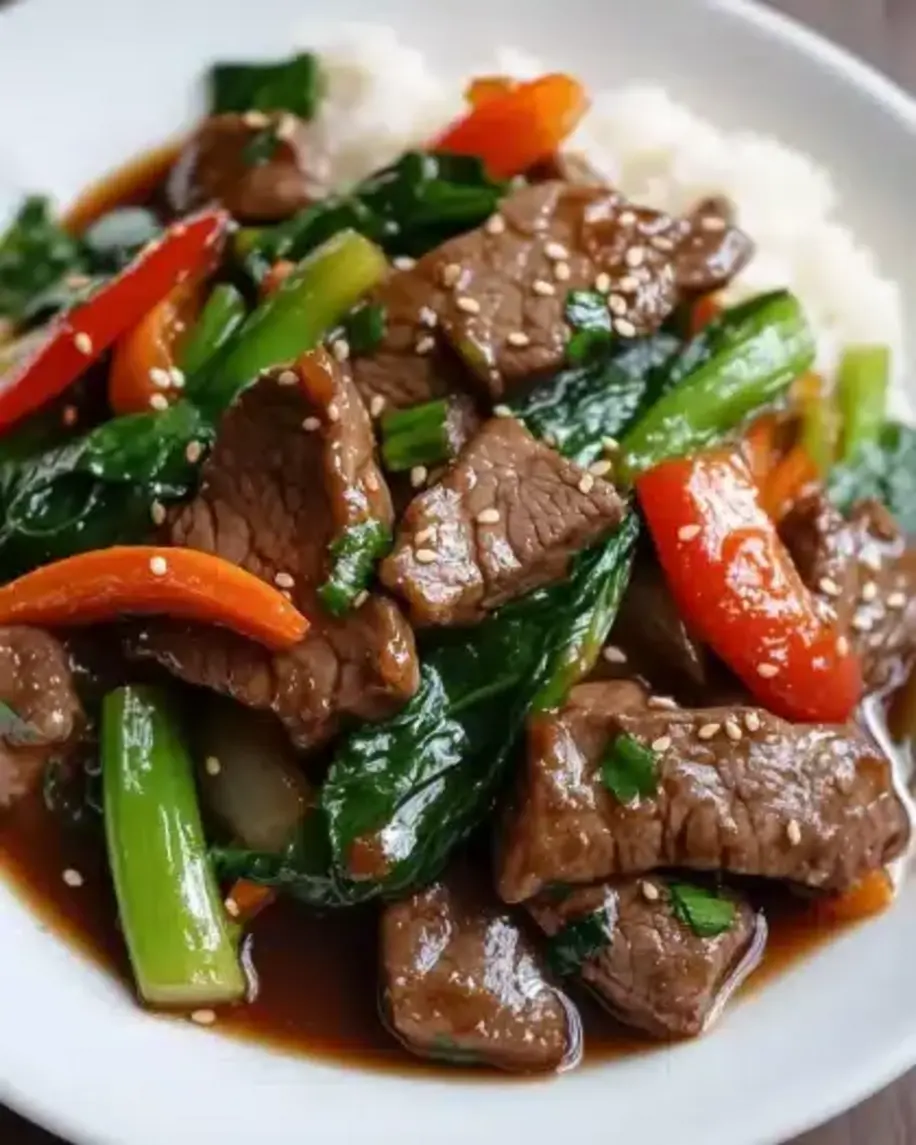
Imagine tender strips of flank steak, caramelized at the edges, mingling with crisp-tender bell peppers, onion, and broccoli—all coated in a glossy, savory sauce that hits every note: salty from soy sauce, a touch of sweetness from brown sugar, and a whisper of sesame oil. The aroma of ginger and garlic blooming in hot oil is pure comfort. This isn’t just a quick meal; it’s a bowl of warmth that brings together the best of Asian flavors in a way that feels both authentic and approachable.
My version of this easy beef stir fry comes from years of testing—I’ve made it for harried weeknights, for impromptu dinner guests, and even for my mother when she visited from Morocco. The secret? A simple marinade that tenderizes the beef, and a sauce that’s perfectly balanced so it clings to every bite. I’ll show you the one technique that ensures your beef stays tender and your vegetables never turn mushy. Plus, I’ll share the #1 mistake home cooks make (hint: it’s about crowding the pan). Let’s get started on the best quick beef stir fry dinner you’ll ever make.
Why This Beef Stir Fry Recipe Is the Best
Flavor Secret: The savory sauce is my star. Drawing from my French training in sauce-making, I’ve built layers: the soy base, oyster sauce for umami depth, a hint of sesame oil for nuttiness, and just enough brown sugar to round it all out. This isn’t a one-note sauce; it’s a symphony that makes every mouthful exciting.
Perfected Texture: The key is in the beef preparation. I learned at Le Cordon Bleu that a quick cornstarch slurry marinade seals in moisture and creates a velvety coating when seared at high heat. Paired with the tender-crisp vegetables (never overcooked!), every bite has a satisfying contrast.
Foolproof & Fast: This recipe is built for success even on your busiest nights. With just 10 minutes of active cooking, you’ll have a restaurant-quality meal. I’ve streamlined every step—no complicated techniques, no hard-to-find ingredients. Trust me, if you can slice a bell pepper, you can nail this beef stir fry with vegetables.
Beef Stir Fry with Vegetables Ingredients
When I shop for this recipe, I head straight to the farmers market near Union Square for the freshest bell peppers and broccoli. But even a standard supermarket run works beautifully—this dish is incredibly forgiving. The ingredients list is simple, but each one plays a crucial role. Let’s break it down.
Ingredients List
- 1 lb flank steak, thinly sliced against the grain
- 2 tablespoons soy sauce (for marinade)
- 1 tablespoon cornstarch (for marinade)
- 1 tablespoon vegetable oil (for cooking)
- 1 red bell pepper, sliced
- 1 green bell pepper, sliced
- 1 medium onion, sliced
- 2 cloves garlic, minced
- 1 teaspoon grated ginger
- ½ cup broccoli florets
- ¼ cup beef broth
- 2 tablespoons soy sauce (for sauce)
- 1 tablespoon oyster sauce
- 1 tablespoon brown sugar
- 1 teaspoon sesame oil
- 1 tablespoon cornstarch mixed with 2 tablespoons water (slurry)
- Sesame seeds for garnish
Ingredient Spotlight
Flank Steak: This cut is ideal for stir-fry because of its balanced lean-to-fat ratio and distinct grain. When sliced thinly against the grain, it stays tender. Look for bright red flesh with thin marbling. A great substitute is sirloin, which is slightly more tender but also more expensive.
Soy Sauce: For both marinade and sauce, use a good-quality naturally brewed soy sauce (like Kikkoman). It provides the salty backbone. Low-sodium works fine—adjust salt later.
Oyster Sauce: This thick, dark sauce adds an irresistible savory depth that soy alone can’t match. Look for oyster sauce in the international aisle. If you’re out, you can substitute hoisin sauce for a sweeter take.
Broccoli: I use fresh florets cut into small bite-size pieces so they cook quickly. You can swap in snap peas, snow peas, or even green beans—all work beautifully.
| Original Ingredient | Best Substitution | Flavor / Texture Impact |
|---|---|---|
| Flank steak | Sirloin or skirt steak | Sirloin is more tender; skirt has more flavor. Both need thin slicing. |
| Oyster sauce | Hoisin sauce + dash fish sauce | Sweeter, less briny; still delicious. |
| Beef broth | Chicken broth + mushroom powder | Lighter flavor; mushroom adds umami. |
| Broccoli | Snap peas, snow peas, or green beans | Different crunch; snap peas are sweeter. |
How to Make Beef Stir Fry with Vegetables — Step-by-Step
Follow these simple steps and you’ll have a sizzling, beautiful stir-fry in less time than takeout delivery. The key is to prep everything before you turn on the heat—once you start cooking, it moves fast!
Step 1: Marinate the Beef
In a bowl, combine the thinly sliced flank steak with 2 tablespoons soy sauce and 1 tablespoon cornstarch. Toss well to coat every piece. Let it sit for 10 minutes while you prep the vegetables. This quick marinade tenderizes the beef and helps it brown beautifully.
💡 mia’s Pro Tip: For extra tender results, add a pinch of baking soda to the marinade. It’s a trick I picked up in Paris—just ¼ teaspoon lifts the pH and helps the meat retain moisture.
Step 2: Make the Sauce
In a small bowl, whisk together ¼ cup beef broth, 2 tablespoons soy sauce, 1 tablespoon oyster sauce, 1 tablespoon brown sugar, and 1 teaspoon sesame oil. Set aside. This sauce is the heart of the dish—taste it and adjust the sweetness or saltiness to your liking.
⚠️ Common Mistake to Avoid: Don’t skip the oyster sauce—it’s the secret to that deep savory flavor (umami) that makes the dish taste like it’s been simmering for hours.
Step 3: Sear the Beef
Heat 1 tablespoon vegetable oil in a wok or large skillet over high heat until shimmering. Add the marinated beef in a single layer (work in batches if needed). Stir-fry until browned, about 2–3 minutes. Remove the beef with a slotted spoon and set aside.
💡 mia’s Pro Tip: Don’t crowd the pan! Overcrowding lowers the temperature and steams the beef instead of searing. Do two batches if necessary.
Step 4: Stir-Fry the Vegetables
In the same wok, add the bell peppers, onion, garlic, ginger, and broccoli. Stir-fry over high heat for 2–3 minutes until the vegetables are tender-crisp. The garlic and ginger should be fragrant but not burnt.
⚠️ Common Mistake to Avoid: Overcooking the vegetables. They should retain a slight crunch—think bright colors and a snap when you bite them. If they go limp, you’ve gone too far.
Step 5: Combine Everything
Return the seared beef to the wok. Pour the prepared sauce over the entire mixture. Toss everything quickly to coat evenly. The sauce will start to bubble and cling to the meat and vegetables.
💡 mia’s Pro Tip: Use a fast tossing motion—wok hei (the breath of the wok) adds a smoky char that’s pure magic. If you don’t have a wok, a large stainless steel skillet works well.
Step 6: Thicken the Sauce
Give the cornstarch slurry a quick stir, then pour it into the wok while tossing continuously. Cook for another minute until the sauce thickens and coats everything in a glossy sheen. The dish should look vibrant and luscious.
⚠️ Common Mistake to Avoid: Adding the slurry too quickly or without stirring. It can clump. Always whisk it again just before adding, and pour in a steady stream while tossing.
Step 7: Garnish and Serve
Transfer the stir-fry to a serving platter or divide among bowls. Sprinkle with sesame seeds. Serve immediately over steamed rice or noodles—it waits for no one!
💡 mia’s Pro Tip: For an authentic touch, top with thinly sliced green onions and a drizzle of extra sesame oil just before serving. It adds freshness and aroma.
| Step | Action | Duration | Key Visual Cue |
|---|---|---|---|
| 1 | Marinate beef | 10 minutes | Beef evenly coated, no dry spots |
| 2 | Make sauce | 2 minutes | Smooth, well-combined consistency |
| 3 | Sear beef | 2–3 min | Beef browned, edges caramelized |
| 4 | Stir-fry vegetables | 2–3 min | Vegetables bright, still firm |
| 5 | Combine beef & sauce | 1 min | Sauce coats everything evenly |
| 6 | Thicken with slurry | 1 min | Glossy, thick sauce clings |
| 7 | Garnish & serve | 1 min | Sesame seeds scattered, steam rising |
Serving & Presentation
This beef stir fry with vegetables is a complete meal in itself, but I love to serve it over a bed of fluffy jasmine rice or alongside noodles for a heartier plate. When I’m feeling fancy (and Parisian), I plate it in a shallow bowl and garnish with a few extra sesame seeds, a sprinkle of slivered green onions, and a wedge of lime for a citrusy pop. In my mother’s kitchen in Morocco, we would have served it with crusty bread to soak up every drop of that glorious sauce.
For a true NYC-weeknight vibe, I pair it with a simple cucumber salad dressed with rice vinegar and a sprinkle of chili flakes. The cool crunch balances the warm, savory stir-fry perfectly. And don’t forget the chopsticks—they make the experience more fun!
| Pairing Type | Suggestions | Why It Works |
|---|---|---|
| Side Dish | Steamed jasmine rice, brown rice, or crispy egg noodles | Soaks up sauce, adds texture contrast |
| Sauce / Dip | Extra soy sauce + chili oil, or Japanese mayo | Adds heat or creaminess |
| Beverage | Iced green tea, crisp lager, or dry Riesling | Cuts richness, refreshes palate |
| Garnish | Sesame seeds, sliced green onion, lime wedge, chili flakes | Adds freshness, color, crunch |
Make-Ahead, Storage & Reheating
Living in NYC, I’m all about making life easier. This beef stir fry with vegetables is wonderful for meal prep—the flavors actually deepen overnight! When I pack my lunch, I keep the stir-fry separate from the rice to avoid sogginess. Here’s my tried-and-true storage guide:
| Method | Container | Duration | Reheating Tip |
|---|---|---|---|
| Refrigerator | Airtight container | 3–4 days | Reheat in a hot skillet for 1–2 minutes, add splash of water to refresh sauce |
| Freezer | Freezer-safe bag or container | Up to 2 months | Thaw overnight in fridge; reheat on stovetop over medium heat, covered |
| Make-Ahead | Prep vegetables and sauce up to 2 days in advance | 2 days before cooking | Store sliced beef and marinade separately; toss just before cooking |
A quick note on reheating: the microwave will work in a pinch, but for the best texture, I always bring it back to life in a hot pan. The sauce will thicken slightly, so add a tablespoon of water or beef broth to loosen it up and bring back that glossy finish. Your beef and vegetable stir fry recipe will taste almost as good as fresh!
One more thing: if you’re meal prepping, consider undercooking the vegetables slightly so they stay crisp after reheating. That’s a little trick I use when I pack lunches for my busy NYC work weeks.
Variations & Easy Swaps
This savory stir fry sauce recipe is a fantastic canvas for creativity. Whether you’re catering to dietary needs or just want to play with flavors, here are my favorite twists—each one tested in my own kitchen.
| Variation | Key Change | Best For | Difficulty Impact |
|---|---|---|---|
| Spicy Szechuan Style | Add 1 tbsp chili bean paste + 1 tsp Szechuan peppercorns | Heat lovers; bold flavor | Easy (add extra spices) |
| Gluten-Free | Use tamari instead of soy sauce; ensure oyster sauce is GF | Gluten-sensitive diets | No change in difficulty |
| Vegetarian Tofu Stir Fry | Replace beef with 1 lb extra-firm tofu, pressed and cubed | Meatless Monday | Easy (tofu needs gentle handling) |
Spicy Szechuan Style
For a fiery twist that pays homage to the bold flavors of Chinese street food, I add a tablespoon of chili bean paste (doubanjiang) and a teaspoon of toasted Szechuan peppercorns when I stir-fry the aromatics. The numbing heat of the peppercorns combined with the deep, fermented chili paste transforms this easy beef stir fry into something utterly addictive. Sprinkle with crushed peanuts for extra crunch.
Gluten-Free Option
Going gluten-free is simple: swap the regular soy sauce with tamari (which is gluten-free) and check your oyster sauce—many brands are gluten-free, but Lee Kum Kee makes a certified GF version. The flavor profile stays remarkably close; tamari is a bit richer, which I actually prefer. Serve with rice noodles or quinoa for a complete GF meal.
Sweet and Sour Twist
Inspired by the farmers market in NYC, I sometimes swap half the beef broth with pineapple juice and add one cup of pineapple chunks at the end. The sweetness of the pineapple contrasts beautifully with the savory sauce. Reduce the brown sugar by half to balance the natural sweetness. This variation is a huge hit with kids and brings a sunny tropical feel to the dish.
What is the best cut of beef to use for a vegetable stir fry?
For a truly tender stir-fry, flank steak is my top recommendation. Its long fibers make it perfect for slicing thinly against the grain, which guarantees tenderness. Sirloin steak is a close second—it’s a bit more tender but also pricier. Skirt steak works too, especially if you like a beefier flavor. Avoid tougher cuts like chuck or round unless you’re willing to marinate for hours or use a meat tenderizer. The key is always to slice against the grain and keep the slices thin—about ⅛ inch thick—so they cook in seconds.
How do you make the savory sauce for beef stir fry from scratch?
Making a savory stir-fry sauce from scratch is incredibly simple and far more flavorful than any bottled version. In a small bowl, combine ¼ cup beef broth, 2 tablespoons soy sauce, 1 tablespoon oyster sauce, 1 tablespoon brown sugar, and 1 teaspoon sesame oil. Whisk until the sugar dissolves. That’s your base! For extra depth, I sometimes add a teaspoon of minced garlic or a pinch of white pepper. The cornstarch slurry (1 tablespoon cornstarch mixed with 2 tablespoons water) is added at the end to thicken the sauce into a glossy, clingy coating. Adjust the sweetness and saltiness to your taste—I like a balance that’s savory with a hint of sweetness.
Should you cook the beef or vegetables first in a stir fry?
Always cook the beef first, then the vegetables. Here’s why: beef needs high heat for a short time to develop a good sear without overcooking. If you cook the vegetables first, the pan cools down, and when you add the beef, it will steam rather than brown. I sear the beef in batches, set it aside, then stir-fry the vegetables in the same hot pan. Finally, I return the beef to the wok along with the sauce to warm everything together. This ensures the beef stays tender and the vegetables stay crisp—a perfect texture contrast.
What vegetables go best with beef stir fry in a savory sauce?
The beauty of this beef stir fry with vegetables is that you can adapt it based on what’s in season or your fridge. Classic choices include bell peppers (red, green, or both), onions, broccoli florets, and snap peas. They all cook quickly and hold their texture. I also love adding carrots sliced into thin rounds, bok choy, or mushrooms for an earthy note. In winter, I use cabbage wedges and a handful of snow peas. The key is to cut everything into uniform sizes so they cook evenly. Avoid watery vegetables like zucchini unless you sauté them separately.
Can I use frozen vegetables for this beef stir fry?
Yes, frozen vegetables can work in a pinch, but they’ll release more water, which can make the sauce thinner and the vegetables less crisp. To avoid this, thaw them completely and pat them dry with paper towels before stir-frying. I recommend using frozen broccoli florets or stir-fry blends that don’t include water-heavy ingredients like frozen green beans. Fresh vegetables always yield the best texture, but if you’re in a hurry, frozen is a fine shortcut—just adjust the cornstarch slurry quantity to thicken the sauce if needed.
How do I prevent my beef from becoming tough in stir fry?
Tough beef usually comes from two mistakes: cutting with the grain or overcooking. To keep it tender, always slice flank steak or sirloin against the grain into thin strips. The marinade is also crucial—the cornstarch and soy mixture helps lock in moisture. A little baking soda in the marinade (¼ teaspoon per pound) is a professional secret that tenderizes even tougher cuts. Finally, don’t overcook the beef; it should only take 2–3 minutes over high heat. Once it’s browned, remove it immediately. When you return it to the wok at the end, just warm it through—no more than 1 minute.
What can I use instead of oyster sauce in stir fry?
If you’re out of oyster sauce, the best substitute is hoisin sauce mixed with a splash of fish sauce or soy sauce. Hoisin is sweeter and thicker, so it will add a slightly different flavor profile, but it still brings umami and body. Another option is mushroom-based “oyster sauce” (great for vegetarians). You can also make a simple substitute by combining 2 tablespoons soy sauce with 1 tablespoon brown sugar and a drop of sesame oil. It won’t be exactly the same, but it will still be delicious. In a pinch, I’ve even used dark soy sauce (which adds color) plus a bit of molasses.
Do I need a wok to make beef stir fry?
No, a wok is not essential—a large skillet or sauté pan works beautifully. The key is to use a pan that can get very hot and has enough surface area to avoid overcrowding. A cast-iron skillet or stainless steel pan are excellent choices because they retain heat well. A wok’s shape makes tossing easier, but you can achieve the same results with a flat-bottomed pan. Just make sure to preheat the pan until it’s smoking hot before adding oil, and work in batches if necessary. I’ve made this beef and vegetable stir fry recipe in a regular frying pan countless times with fantastic results.
How can I make this beef stir fry dairy-free?
This recipe is naturally dairy-free—none of the ingredients contain dairy. Beef broth, soy sauce, oyster sauce, and sesame oil are all dairy-free. Just double-check the label on your oyster sauce (some brands may add traces, but most are fine). For a completely dairy-free meal, serve with steamed rice or rice noodles and avoid using butter in any substitutes. This makes it perfect for those on a dairy-free or Paleo diet (if you skip the sugar or use coconut sugar).
What type of rice goes best with beef stir fry?
Steamed jasmine rice is my go-to—it’s fragrant and fluffy, making it the perfect canvas for the savory sauce. Basmati rice also works well but has a stronger flavor. For a healthier option, brown rice adds a nutty taste and extra fiber. If you’re in a hurry, minute rice works, but it’s less fluffy. You can also serve the stir-fry over lo mein noodles, udon noodles, or even with lettuce wraps for a low-carb option. Whatever you choose, make sure it’s ready before you start cooking because the stir-fry comes together in minutes.
Share Your Version!
I hope you love this beef stir fry with vegetables in savory sauce as much as I do. It’s one of those recipes that makes me grateful for the simple joy of cooking—a little heat, a little speed, and a whole lot of flavor. If you try it, please leave a star rating and a comment below. I read every single one, and your feedback helps me create better recipes for you.
Snap a photo of your beautiful stir-fry, share it on Instagram or Pinterest, and tag me @exorecipes so I can see your creation! What’s one twist you added? I can’t wait to hear how you made this dish your own.
From my NYC kitchen to yours — I hope this recipe brings as much warmth to your table as it does to mine. — mia 🧡
Love This Recipe? Save It to Pinterest!
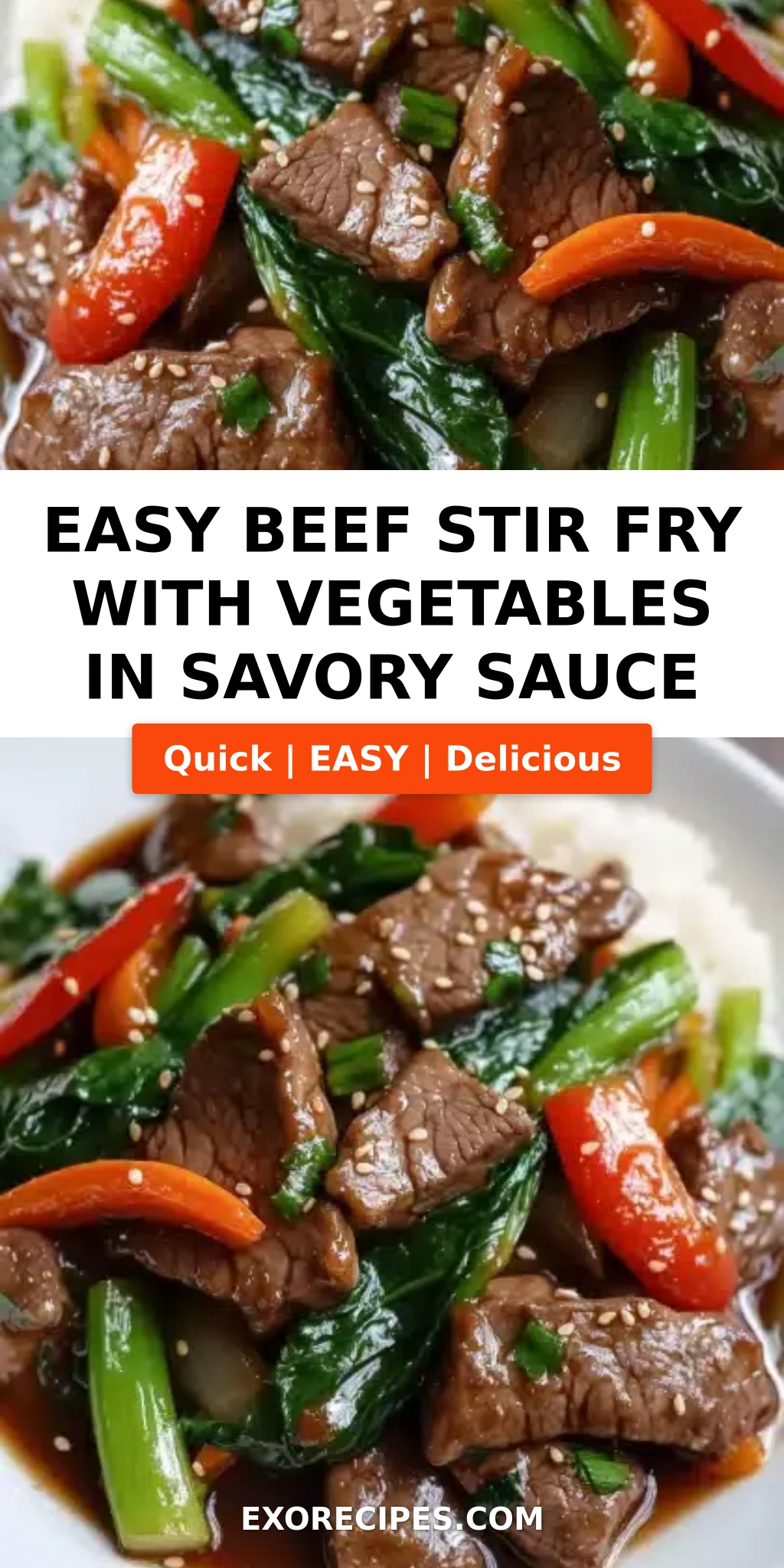
If you enjoyed this Beef Stir Fry with Vegetables in Savory Sauce recipe, don’t let it get lost in your browser tabs! 😄 Pin it now so you can find it again anytime — and explore hundreds more tried-and-tested recipes waiting for you on my Pinterest boards.
Follow mia on Pinterest @exorecipe
📌 Pin this recipe · 🔁 Re-pin your favorites · 💬 Tag me when you make it — I love seeing your creations!
Did you make this recipe? I’d love to hear!
Leave a comment below, give it a star rating, and share your photo on social media with #exorecipes. Your feedback makes this community amazing. — mia 🧡
Beef Stir Fry with Vegetables in Savory Sauce
- Prep Time: 15 minutes
- Cook Time: 10 minutes
- Total Time: 25 minutes
- Yield: 4 1x
- Method: Main Course
- Cuisine: Asian
Description
Quick and easy beef stir fry with colorful vegetables in a flavorful savory sauce, perfect for a weeknight dinner.
Ingredients
- 1 lb flank steak, thinly sliced against the grain
- 2 tablespoons soy sauce
- 1 tablespoon cornstarch
- 1 tablespoon vegetable oil
- 1 red bell pepper, sliced
- 1 green bell pepper, sliced
- 1 medium onion, sliced
- 2 cloves garlic, minced
- 1 teaspoon grated ginger
- 1/2 cup broccoli florets
- 1/4 cup beef broth
- 2 tablespoons soy sauce (for sauce)
- 1 tablespoon oyster sauce
- 1 tablespoon brown sugar
- 1 teaspoon sesame oil
- 1 tablespoon cornstarch mixed with 2 tablespoons water (slurry)
- Sesame seeds for garnish
Instructions
- In a bowl, combine sliced beef with 2 tablespoons soy sauce and 1 tablespoon cornstarch. Toss to coat and let marinate for 10 minutes.
- In a small bowl, whisk together beef broth, 2 tablespoons soy sauce, oyster sauce, brown sugar, and sesame oil. Set aside.
- Heat vegetable oil in a wok or large skillet over high heat. Add beef and stir-fry until browned, about 2-3 minutes. Remove beef and set aside.
- In the same wok, add bell peppers, onion, garlic, ginger, and broccoli. Stir-fry for 2-3 minutes until vegetables are tender-crisp.
- Return beef to the wok. Pour the sauce mixture over and toss to combine.
- Add the cornstarch slurry and stir-fry for another minute until the sauce thickens and coats everything evenly.
- Garnish with sesame seeds and serve immediately over rice or noodles.
Notes
For extra flavor, add a pinch of red pepper flakes. Substitute any vegetables you have on hand, such as snap peas or carrots.
Nutrition
- Calories: 350
- Sugar: 8g
- Fat: 18g
- Carbohydrates: 18g
- Protein: 28g
Tried This Recipe? Leave a Comment!
Did you make this recipe? I’d love to hear how it turned out! Please leave a comment and a rating below. Your feedback helps other home cooks and supports cheerychop.com!
