“`html
Table of Contents
Beef and Peach Skillet: A One-Pan Symphony of Sweet, Savory, and Spicy Flavors – A Bold Summer Dinner in 40 Minutes
I still remember the first time I made this Beef and Peach Skillet Recipe — it was a sweltering August evening in my little NYC walk-up, and I had just come back from the Greenmarket in Union Square with a bag of Suncrest peaches so fragrant they filled the whole apartment. Growing up in Morocco, my mother would often pair dried fruit with lamb — apricots, prunes, raisins — always letting the sweetness soften the richness of the meat. But here in New York, with peak-season peaches begging to be used, I wondered: could the same magic happen with fresh fruit and beef? The answer was a resounding yes. This One-Pan Beef and Peach recipe is exactly that — a quick, boldly flavored dinner that brings together the best of my worlds: the warm spice of North Africa, the precision I learned in Paris, and the unfussy, get-dinner-on-the-table energy of New York.
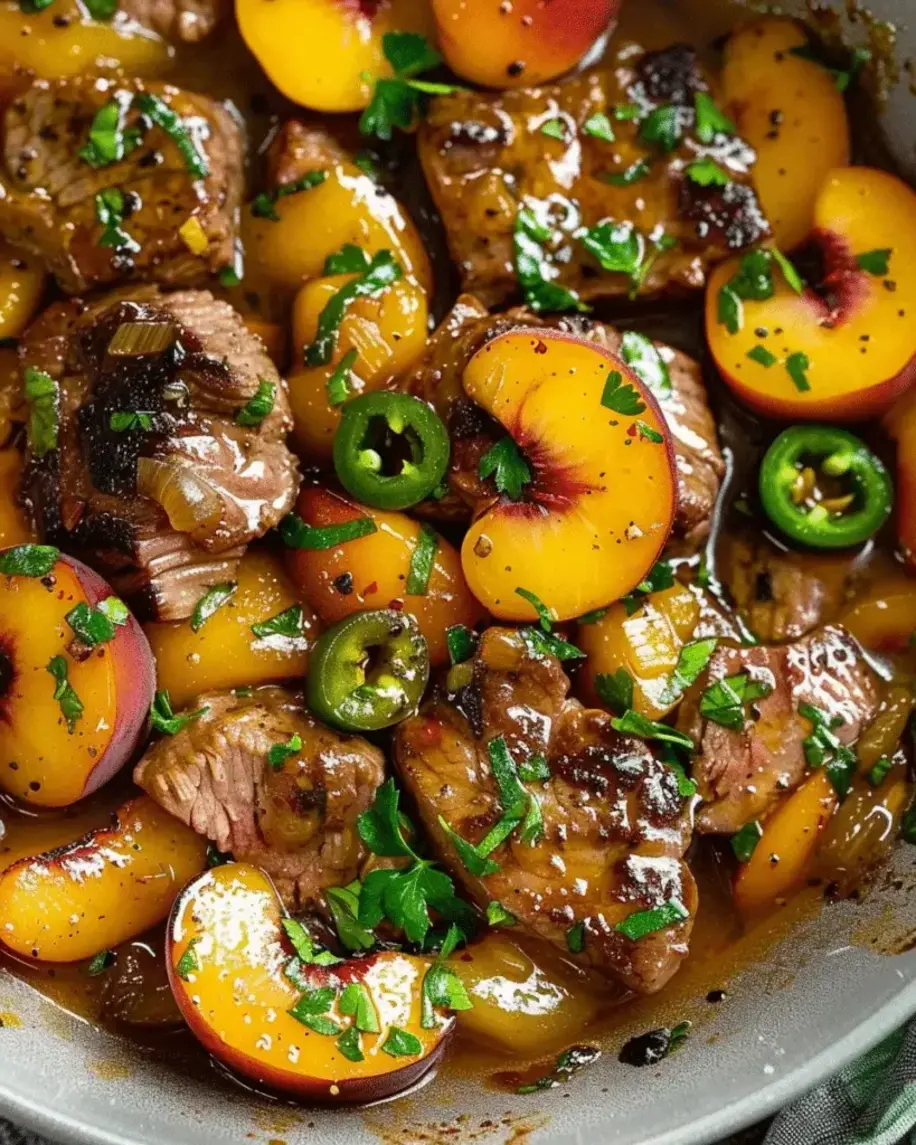
Picture this: tender strips of sirloin, seared until they’re deeply caramelized on the outside, then simmered in a glossy, savory-sweet sauce with ribbons of red onion and bell pepper. Then come the peaches — added at the very end so they warm through but still hold their shape, releasing just enough juice to meld with the honey-soy glaze. A hit of cayenne keeps everything balanced, cutting through the sweetness with a gentle heat that builds as you eat. The aroma alone — smoky paprika, caramelizing fruit, garlic hitting hot oil — will have everyone wandering into the kitchen asking what’s for dinner. It’s the kind of meal that feels special enough for a weekend but easy enough for a Wednesday.
What I love most about this Spicy Beef Skillet Dinner is how it bridges technique and simplicity. I spent years in Paris learning how to layer flavors — how to build a sauce that’s greater than the sum of its parts — and that’s exactly what we’re doing here, but without any fussy steps or hard-to-find ingredients. The key is in the timing: searing the beef in batches (don’t crowd the pan!), letting the peaches stay in thick wedges, and knowing exactly when to pull everything off the heat. In this post, I’ll walk you through every step, share my best tips for keeping the peaches from turning mushy, and show you how to adjust the heat to your liking. Let’s get cooking!
Why This Beef and Peach Skillet Recipe Is the Best
The Flavor Secret. Most one-pan dinners rely on a single flavor profile, but this one plays across the whole spectrum — sweet from the peaches and honey, savory from the soy sauce and seared beef, and a slow-building warmth from smoked paprika and cayenne. That combination isn’t an accident; it’s rooted in the Moroccan tradition of pairing fruit with meat, where the sweetness isn’t just a contrast but a bridge that makes the savory flavors taste deeper. I’ve dialed in the ratios so every bite hits all three notes without any one overpowering the others.
Perfected Texture. The number one question I get about this Sweet and Savory Beef Skillet is: “Don’t the peaches get mushy?” My answer is no — not if you handle them right. I slice them into thick wedges (about ½-inch at the widest point) and add them in the last few minutes of cooking. They warm through, soften slightly at the edges, and release a little juice into the sauce, but they keep their shape and offer a tender bite that contrasts beautifully with the beef. This is a technique I honed in Paris when cooking fruit for savory dishes — treat the fruit with the same respect you’d give a piece of fish, and it will reward you.
Foolproof & Fast. From start to finish, this Peach Beef Dinner comes together in 40 minutes — and most of that time is hands-off, letting the skillet do the work. You don’t need any special equipment (a 12-inch skillet is perfect), and the ingredient list is flexible enough that you can swap in what you have. Whether you’re a confident cook or just starting out, the step-by-step process here is designed to build your skills while getting a gorgeous, crowd-pleasing meal on the table. Every time I teach this recipe in my NYC cooking workshops, people are amazed at how simple it is to create such complex flavor.
Beef and Peach Skillet Recipe Ingredients
I picked up the peaches for this batch at the Union Square Greenmarket, where the farmer told me they were picked just 24 hours earlier. There’s something about using fruit at its absolute peak that makes a dish like this sing — but even supermarket peaches work beautifully when you choose them wisely. Below is everything you’ll need, with a few notes drawn from my years of testing this exact combination.
Ingredients List
- 1½ lbs sirloin steak, thinly sliced against the grain
- 2 ripe but firm peaches, sliced into ½-inch wedges
- 1 medium red onion, thinly sliced
- 3 cloves garlic, minced
- 1 red bell pepper, thinly sliced
- ¼ cup low-sodium soy sauce (or tamari for gluten-free)
- 2 tablespoons honey
- 1 tablespoon rice vinegar
- 1 teaspoon smoked paprika
- ½ teaspoon cayenne pepper (adjust to taste)
- ½ teaspoon black pepper
- ¼ teaspoon salt
- 2 tablespoons olive oil, divided
- Fresh cilantro or mint for garnish
- Sesame seeds for garnish (optional)
- Cooked rice or quinoa for serving
Ingredient Spotlight
Peaches: The star of the show. Look for peaches that yield slightly to gentle pressure at the shoulder but are still firm overall — think “ripe but not soft.” Freestone varieties (like Redhaven or Suncrest) are easiest to slice because the flesh separates cleanly from the pit. If your peaches are a bit underripe, let them sit at room temperature for a day or two. Avoid canned or frozen peaches here — the texture will be too soft for this quick-cooking method.
Sirloin Steak: I call for sirloin because it’s widely available, affordable, and stays tender when sliced thin and cooked quickly. Look for steaks that are about 1 inch thick — this gives you nice slices without any stringiness. If you can, buy a whole sirloin steak and slice it yourself; pre-cut stir-fry beef is often cut too thin and can overcook in seconds. For the best results, pop the steak in the freezer for 15 minutes before slicing — it firms up just enough to make thin, even slices much easier.
Smoked Paprika & Cayenne: This duo is the backbone of the spice profile. The smoked paprika adds a deep, earthy sweetness that complements the peaches, while cayenne brings the heat. I use Spanish smoked paprika (pimentón de la Vera) — it’s worth seeking out for its rich, authentic flavor. If you want a milder dish, reduce the cayenne to ¼ teaspoon or omit it entirely; for more heat, add a pinch of red pepper flakes along with the cayenne.
Soy Sauce & Honey: Together, they create the glossy, clingy sauce that ties everything together. The soy sauce provides umami and saltiness, while honey adds floral sweetness that echoes the peaches. I use low-sodium soy sauce so I can control the salt level — regular soy sauce will work, but reduce the added salt to ⅛ teaspoon. For a deeper flavor, you can substitute half the soy sauce with tamari (gluten-free) or coconut aminos.
| Original Ingredient | Best Substitution | Flavor / Texture Impact |
|---|---|---|
| Sirloin steak | Flank steak or ribeye | Flank is leaner — slice thinner and cook 1 min less. Ribeye is richer — trim excess fat. |
| Fresh peaches | Firm nectarines or mango | Nectarines are very similar. Mango is sweeter — reduce honey by 1 tbsp. |
| Smoked paprika | Sweet paprika + ¼ tsp liquid smoke | Close approximation — liquid smoke adds back the smoky note. |
| Honey | Maple syrup or brown sugar | Maple is less sweet — add an extra ½ tbsp. Brown sugar — dissolve in soy sauce first. |
How to Make Beef and Peach Skillet — Step-by-Step
This process is designed to build flavor in layers, and each step is simple enough that you can do it while dinner conversations happen around you. Let’s get that skillet hot!
Step 1: Season the Beef
Pat the sirloin strips dry with paper towels — this is crucial for good browning. In a medium bowl, toss the beef with ¼ teaspoon salt, ½ teaspoon black pepper, and 1 teaspoon smoked paprika until every strip is evenly coated. Let it sit at room temperature for 10 minutes while you prep the vegetables. This gives the seasoning time to adhere and the meat to lose its chill, which helps it sear instead of steam.
💡 mia’s Pro Tip: Don’t skip the 10-minute rest. If the beef goes into the pan straight from the fridge, the cold meat will lower the pan temperature and cause it to stew rather than sear. Room-temperature meat = better browning = deeper flavor.
Step 2: Sear the Beef
Heat 1 tablespoon of olive oil in a 12-inch skillet over medium-high heat until it shimmers. Add half the beef in a single layer — do not crowd the pan. Let it cook undisturbed for 2 minutes, then flip and cook 1 minute more. The beef should be browned on the outside but still slightly pink in the center. Transfer to a clean plate and repeat with the remaining beef. If the pan looks dry between batches, add a tiny drizzle of oil.
⚠️ Common Mistake to Avoid: Crowding the pan! If you add all the beef at once, the moisture released will steam the meat instead of browning it. Work in two batches — it takes only 3 extra minutes and makes a huge difference in flavor.
Step 3: Sauté the Aromatics
Reduce the heat to medium. Add the remaining 1 tablespoon olive oil, then the sliced red onion and bell pepper. Sauté, stirring occasionally, for 4 minutes until the onion is translucent and the pepper is softened. Add the minced garlic and cook, stirring constantly, for 30 seconds until fragrant. The bottom of the pan should have some browned bits — that’s flavor waiting to be deglazed.
💡 mia’s Pro Tip: If the browned bits on the pan bottom look dark but not burnt, leave them! They’ll dissolve into the sauce and add incredible depth. If they look black, deglaze with a splash of water before proceeding.
Step 4: Build the Sauce
In a small bowl, whisk together ¼ cup soy sauce, 2 tablespoons honey, 1 tablespoon rice vinegar, and ½ teaspoon cayenne pepper. Pour the mixture into the skillet — it will sizzle and steam immediately. Stir with a wooden spoon, scraping up all the browned bits from the bottom. Let the sauce simmer for 1 minute, until it thickens slightly and becomes glossy. The smell at this point is intoxicating — sweet, salty, with a kick.
⚠️ Common Mistake to Avoid: Adding the sauce too early. The vegetables need their 4 minutes of sautéing to soften before the liquid goes in. If you add the sauce too soon, the veggies will steam instead of caramelize, and you’ll lose that sweet, concentrated flavor.
Step 5: Add the Peaches
Return the seared beef to the skillet, along with any juices that accumulated on the plate. Gently add the peach wedges, stirring carefully to coat them with the sauce without breaking them. Let everything simmer together for 2 minutes — just long enough for the peaches to warm through and soften at the edges while the beef finishes cooking. The peaches should still hold their shape.
💡 mia’s Pro Tip: This is the most delicate step. Use a rubber spatula instead of a wooden spoon to stir — it’s gentler on the peaches and won’t accidentally break the wedges. And remember: the peaches will continue to soften from residual heat even after you remove the pan from the stove, so pulling them off while they still have a little bite is exactly right.
Step 6: Simmer and Finish
Remove the skillet from the heat. Taste the sauce and adjust seasoning if needed — a pinch more salt if it tastes flat, a drizzle more honey if it’s too spicy, a splash of rice vinegar if it needs brightness. Sprinkle with fresh cilantro or mint and sesame seeds. Serve immediately over steamed rice or quinoa, spooning extra sauce from the pan over each portion.
⚠️ Common Mistake to Avoid: Overcooking the peaches. Two minutes is the sweet spot. If you let them simmer for 4–5 minutes, they’ll release too much liquid into the sauce and break down into a compote. You want them tender but intact — like a good peach pie filling, not jam.
| Step | Action | Duration | Key Visual Cue |
|---|---|---|---|
| 1 | Season the beef | 10 mins (rest) | Evenly coated, at room temp |
| 2 | Sear the beef | 3 mins per batch | Deep brown crust, pink center |
| 3 | Sauté aromatics | 4.5 mins | Onion translucent, garlic fragrant |
| 4 | Build the sauce | 1 min | Glossy, bubbling, slightly thickened |
| 5 | Add peaches & beef | 2 mins | Peaches warm, edges softening |
| 6 | Finish & garnish | 1 min | Bright herbs, glossy sauce |
Serving & Presentation
When I serve this Beef and Peach Skillet at home, I like to spoon it over a bed of steamed jasmine rice — the grains soak up that glossy sauce beautifully, and the mild flavor lets the beef and peaches shine. For a lighter option, try it over quinoa or couscous (a nod to my Moroccan roots). I always finish with a generous sprinkle of fresh herbs — cilantro for brightness, mint for a cooling note — and a scattering of sesame seeds for a little crunch. A wedge of lime on the side adds a final squeeze of acidity that cuts through the richness.
This dish is made for sharing, so bring the skillet straight to the table — it’s rustic and inviting, and everyone can spoon out exactly what they want. I love to pair it with a simple cucumber salad (tossed with rice vinegar and a pinch of sugar) or a side of roasted green beans. For drinks, a crisp Sauvignon Blanc or an iced green tea with mint complements the sweet-spicy flavors perfectly. When I’m cooking for myself on a quiet night, I’ll add a dollop of Greek yogurt on top — the cool creaminess against the warm, spiced sauce is absolutely addictive.
| Pairing Type | Suggestions | Why It Works |
|---|---|---|
| Side Dish | Jasmine rice, quinoa, or couscous | Neutral base soaks up sauce without competing |
| Sauce / Dip | Greek yogurt or labneh + lime zest | Cool, tangy contrast to sweet-spicy glaze |
| Beverage | Sauvignon Blanc, iced green tea, or lime seltzer | Acidity and fizz cut through richness |
| Garnish | Cilantro, mint, sesame seeds, lime wedges | Freshness, crunch, and brightness in every bite |
Make-Ahead, Storage & Reheating
This recipe is excellent for meal prep — I often make a double batch on Sunday evenings so I have quick lunches or dinners ready for my busiest NYC weeks. The flavors actually deepen overnight as the sauce continues to meld with the beef and peaches. Just be mindful that the peaches will soften more as they sit, so if you’re planning to make it ahead specifically for texture, slightly undercook the peaches by adding them for only 1 minute instead of 2.
| Method | Container | Duration | Reheating Tip |
|---|---|---|---|
| Refrigerator | Airtight glass container | Up to 4 days | Reheat gently in a covered skillet over medium-low, adding 1 tbsp water to loosen the sauce |
| Freezer | Freezer-safe zip-top bag or container | Up to 2 months | Thaw overnight in the fridge, then reheat slowly in a skillet — the peaches will be softer but still delicious |
| Make-Ahead | Prep beef + sauce separately | 1 day in advance | Cook beef and sauce, cool, refrigerate. Slice peaches fresh and add during final reheating. |
My favorite way to reheat leftovers is in a wide skillet over medium-low heat with a splash of water or chicken broth. Cover the pan and let it steam gently for 3–4 minutes, then uncover and let the sauce thicken for 1 minute. The microwave works in a pinch, but the peaches tend to become mushy — so if you have 5 minutes, the stovetop is worth it. I also love repurposing leftovers the next day: pile the beef and peaches onto warm tortillas with a little crumbled feta and hot sauce for an incredible taco night spin.
Variations & Easy Swaps
| Variation | Key Change | Best For | Difficulty Impact |
|---|---|---|---|
| Moroccan Spice Route | Add 1 tsp ras el hanout, swap honey for apricot jam | Adventurous palates, North African flavors | Easy — no new techniques |
| Gluten-Free & Dairy-Free | Use tamari instead of soy sauce, serve with quinoa | Gluten-free or dairy-free diets | Easy — simple swap |
| Summer Berry Twist | Replace peaches with 1 cup fresh blackberries + 1 diced apple | Late summer, berry season | Easy — adjust sweetness |
Moroccan Spice Route Variation
This variation is a direct nod to my childhood kitchen in Marrakech. Add 1 teaspoon of ras el hanout (a North African spice blend with cinnamon, cumin, coriander, and cardamom) along with the smoked paprika in Step 1. Swap the honey for 2 tablespoons of apricot jam — it melts into the sauce and adds a fruitier, more complex sweetness that pairs beautifully with the peaches. The result tastes like something you’d find in a medina market: warm, exotic, and deeply comforting. I sometimes add a pinch of saffron threads soaked in 1 tablespoon of warm water for an extra layer of luxury — it’s not traditional with peaches, but the floral notes are magical.
Gluten-Free & Dairy-Free Version
This is the simplest swap and one I use frequently when cooking for friends with dietary restrictions. Replace the soy sauce with tamari (certified gluten-free) or coconut aminos (which is slightly sweeter — reduce the honey to 1½ tablespoons). The rest of the recipe is naturally dairy-free. Serve over quinoa or rice noodles for a complete meal that everyone can enjoy. I’ve tested this version dozens of times, and the flavor is just as bold — the tamari actually has a cleaner, less salty taste that lets the fruit and spice come through even more. One note: coconut aminos are thinner, so let the sauce simmer an extra 30 seconds to thicken properly.
Summer Berry Twist
When peaches aren’t in season, or when I find myself at the farmers market with a pint of blackberries that look too good to pass up, I use this variation. Replace the peaches with 1 cup of fresh blackberries and 1 small apple (Honeycrisp or Fuji), diced into ½-inch cubes. The apple provides the structure that the berries lack, while the blackberries break down slightly into the sauce, creating a deep, jammy color and a tartness that balances the honey beautifully. Add a sprig of fresh thyme to the sauce while it simmers — the earthy notes tie everything together. This version is especially good in early fall when you’re craving summer flavors but the peaches are gone.
What is the best way to slice peaches for a beef and peach skillet to prevent them from turning mushy?
The best way to slice peaches for this Beef and Peach Skillet Recipe is to cut them into ½-inch-thick wedges — not slices, not chunks. Start by cutting the peach in half along the seam, twist to separate, and remove the pit. Then cut each half into 3 or 4 wedges, depending on the size of the peach. The key is keeping them thick enough that they hold their shape during the brief cooking time. I also recommend using peaches that are ripe but still firm — they should yield slightly to gentle pressure but not feel soft or squishy. If your peaches are very ripe, add them to the skillet for only 1 minute instead of 2, and remove the pan from the heat immediately. The residual heat will continue to soften them gently without turning them into compote. Another trick I learned in Paris: toss the peach wedges with a teaspoon of rice vinegar before adding them to the pan — the acidity helps the fruit hold its structure.
Can I use a different cut of beef for this one-pan skillet recipe if I don’t have sirloin?
Absolutely — this One-Pan Beef and Peach recipe is forgiving with different cuts. Flank steak is my first choice as a substitute: it’s leaner than sirloin, so slice it slightly thinner (about ¼-inch thick) and cook it for 1 minute less per side to keep it tender. Ribeye works beautifully too — it’s richer and more marbled, which adds even more flavor to the sauce. Just trim any excess fat before slicing, and cook it exactly as you would sirloin. For a budget-friendly option, top round or tri-tip are good choices; they’re tougher cuts, so slice them very thin against the grain and consider marinating them for 30 minutes in 2 tablespoons of soy sauce and 1 tablespoon of rice vinegar before cooking. Avoid pre-cut “stir-fry” beef from the grocery store — it’s often cut from random scraps and cooks unevenly. Whatever cut you choose, the golden rule is the same: slice against the grain, pat dry, and sear in batches for the best texture.
What spices pair best with beef and peaches to balance the sweet and savory flavors?
For a Sweet and Savory Beef Skillet like this one, I rely on a few key spices that bridge the gap between sweet fruit and savory meat. Smoked paprika is non-negotiable — it adds an earthy, slightly sweet smokiness that echoes the peaches’ natural character. Cayenne pepper brings the heat, but it’s important to use just enough to feel a gentle warmth without overpowering the fruit. Black pepper adds a sharp, aromatic note that cuts through the richness. If you want to explore further, ground coriander (1 teaspoon) adds a citrusy, floral undertone that pairs beautifully with peaches, and a pinch of cinnamon (¼ teaspoon) can deepen the sweetness in a way that feels warm and unexpected — just be careful not to overdo it, or it’ll read as dessert. For a Moroccan-inspired twist, add 1 teaspoon of ras el hanout, which already contains cinnamon, cumin, and cardamom. The key is to let the fruit and beef remain the stars — the spices should accent, not dominate.
How long should I cook the beef in a beef and peach skillet to keep it tender without overcooking the peaches?
The timing for this Spicy Beef Skillet Dinner is carefully designed so that both the beef and the peaches are at their best. The beef is cooked in two stages: first, a quick sear in batches — 2 minutes per side for sirloin — which develops a deep brown crust while leaving the center slightly undercooked. Then, after the sauce is built and the aromatics are softened, the beef returns to the skillet for just 2 minutes of simmering alongside the peaches. That brief final cook brings the beef to medium-rare while the peaches warm through. The total cook time for the beef is about 7 minutes (searing + simmering), and the peaches are in the pan for only the last 2 minutes. If you prefer your beef more well-done, slice it slightly thinner and cook it for 1 extra minute during the sear, but keep the peach time at 2 minutes maximum. The most important visual cue: the peaches should look glossy and just starting to soften at the edges, but still hold their shape when you stir.
Can I use frozen peaches for this Peach Beef Dinner recipe?
I’ve tested this Peach Beef Dinner with frozen peaches, and while it works in a pinch, I recommend fresh peaches for the best texture. Frozen peaches release significantly more water as they thaw and cook, which can thin out the sauce and make the peaches turn mushy very quickly. If you need to use frozen peaches, here’s how to make it work: thaw them in the refrigerator overnight, then drain them thoroughly on paper towels and pat them as dry as possible. Add them to the skillet in the last 1 minute of cooking instead of 2, and be prepared for a slightly looser sauce — you can thicken it by letting it simmer uncovered for an extra minute before adding the peaches. Also, frozen peaches tend to be sweeter than fresh (they’re often flash-ripened), so you may want to reduce the honey to 1½ tablespoons. The flavor will still be delicious, but the peaches won’t have the same tender-yet-firm bite that fresh ones provide.
What should I serve with this One-Pan Beef and Peach skillet for a complete meal?
This One-Pan Beef and Peach recipe is hearty enough to stand alone, but I always serve it with something to soak up the glorious sauce. Steamed jasmine rice is my go-to — its subtle floral fragrance complements the peaches without overpowering them. For a lighter option, try quinoa or cauliflower rice (if you’re watching carbs). A simple cucumber salad — sliced cucumber tossed with rice vinegar, a pinch of sugar, and sesame oil — adds a cool, refreshing crunch that balances the warm spices. I also love a side of roasted asparagus or green beans tossed with olive oil and salt. For a Moroccan-inspired spread, serve the skillet alongside warm flatbread and a bowl of labneh or Greek yogurt with a drizzle of olive oil and za’atar. The cool, tangy yogurt is incredible against the sweet-spicy glaze. And don’t forget a lime wedge on each plate — that final squeeze of acidity brightens every component.
Can I make this Beef and Peach Skillet Recipe ahead of time for a dinner party?
Yes, and it’s a great strategy for stress-free entertaining! I often do the prep work a day in advance: slice the beef and season it (store covered in the fridge), slice the peaches (toss with a teaspoon of rice vinegar to prevent browning, store in an airtight container), and whisk together the sauce ingredients. When you’re ready to serve, the actual cooking takes just about 15 minutes. If you want to cook the entire dish ahead, prepare it through Step 5, but stop 1 minute earlier than the recipe suggests — the peaches should be just barely warmed. Cool the skillet completely, then transfer to an airtight container and refrigerate for up to 2 days. To reheat, gently warm the mixture in a covered skillet over medium-low heat with 1 tablespoon of water or broth, stirring occasionally, until heated through (about 5-6 minutes). The peaches will be softer than the day you made them, but the flavor will be even richer. Garnish with fresh herbs right before serving to bring back that bright, fresh note.
Is this Spicy Beef Skillet Dinner suitable for meal prep?
Absolutely — this Spicy Beef Skillet Dinner is one of my favorite meal prep recipes because the flavors actually improve overnight. The sauce continues to meld with the beef and peaches, creating an even deeper, more complex taste. For meal prep, portion the cooked dish into individual glass containers with the rice or quinoa on the side (store separately to keep the grains from absorbing too much sauce and becoming soggy). It will keep well in the refrigerator for up to 4 days. The one thing to be mindful of is the peaches — they will soften more with each day, so if texture is your priority, I recommend slightly undercooking the peaches (just 1 minute instead of 2) when making it for meal prep. If you’re prepping for the freezer, leave the peaches out entirely and add fresh ones when you reheat — just thaw the beef and sauce base, then reheat in a skillet and add sliced fresh peaches for the last 2 minutes. This way you get the best of both worlds: make-ahead convenience with fresh fruit texture.
Share Your Version!
I absolutely love hearing how you make this recipe your own. Did you try the Moroccan Spice Route variation with ras el hanout? Or maybe you took the Summer Berry Twist and ran with it using whatever fruit looked best at your local market? Leave a star rating and a comment below to let me know how it turned out — your feedback helps other home cooks discover new ways to enjoy this dish, and I read every single comment. If you’re on Instagram or Pinterest, snap a photo of your Beef and Peach Skillet and tag @exorecipes — I feature my favorite reader recreations on my stories every week!
And here’s a question I’d love for you to answer in the comments: what’s the most unexpected ingredient combination you’ve ever tried in a one-pan dinner, and did it work? I’m always looking for new inspiration, and this community has taught me so many delicious surprises over the years. From my NYC kitchen to yours — I hope this recipe brings as much warmth to your table as it does to mine. — mia 🧡
Love This Recipe? Save It to Pinterest!
If you enjoyed this Beef and Peach Skillet Recipe, don’t let it get lost in your browser tabs! 😄 Pin it now so you can find it again anytime — and explore hundreds more tried-and-tested recipes waiting for you on my Pinterest boards.
👉 Follow mia on Pinterest @chefrecipes2
📌 Pin this recipe · 🔁 Re-pin your favorites · 💬 Tag me when you make it — I love seeing your creations!
💬 Share Your Take!
Tried this recipe? Drop a ⭐ star rating and tell us about your experience in the comments — we’d love to feature your version!
“`
Print
Beef and Peach Skillet: A One-Pan Symphony of Sweet, Savory, and Spicy Flavors
Instructions
Tried This Recipe? Leave a Comment!
Did you make this recipe? I’d love to hear how it turned out! Please leave a comment and a rating below. Your feedback helps other home cooks and supports cheerychop.com!
For more delicious inspiration, follow me on Pinterest!
