Table of Contents
Balsamic Glazed Chicken Salad – A Mediterranean Twist on America’s Favorite Salad
I still remember the first time I made a truly great balsamic glazed chicken salad. It was a hot summer afternoon in my tiny Manhattan kitchen, and I was missing the bright, tangy flavors of my mother’s Moroccan table. She’d always balance sweet and sour so perfectly — a drizzle of honey over roasted vegetables, a splash of vinegar in her tagines. That memory inspired this Balsamic Glazed Chicken Salad. I wanted something fresh, protein-packed, and bursting with personality, something that could hold its own as a main course. This healthy chicken salad has become a total weeknight hero in my house, ready in just 30 minutes and endlessly adaptable.
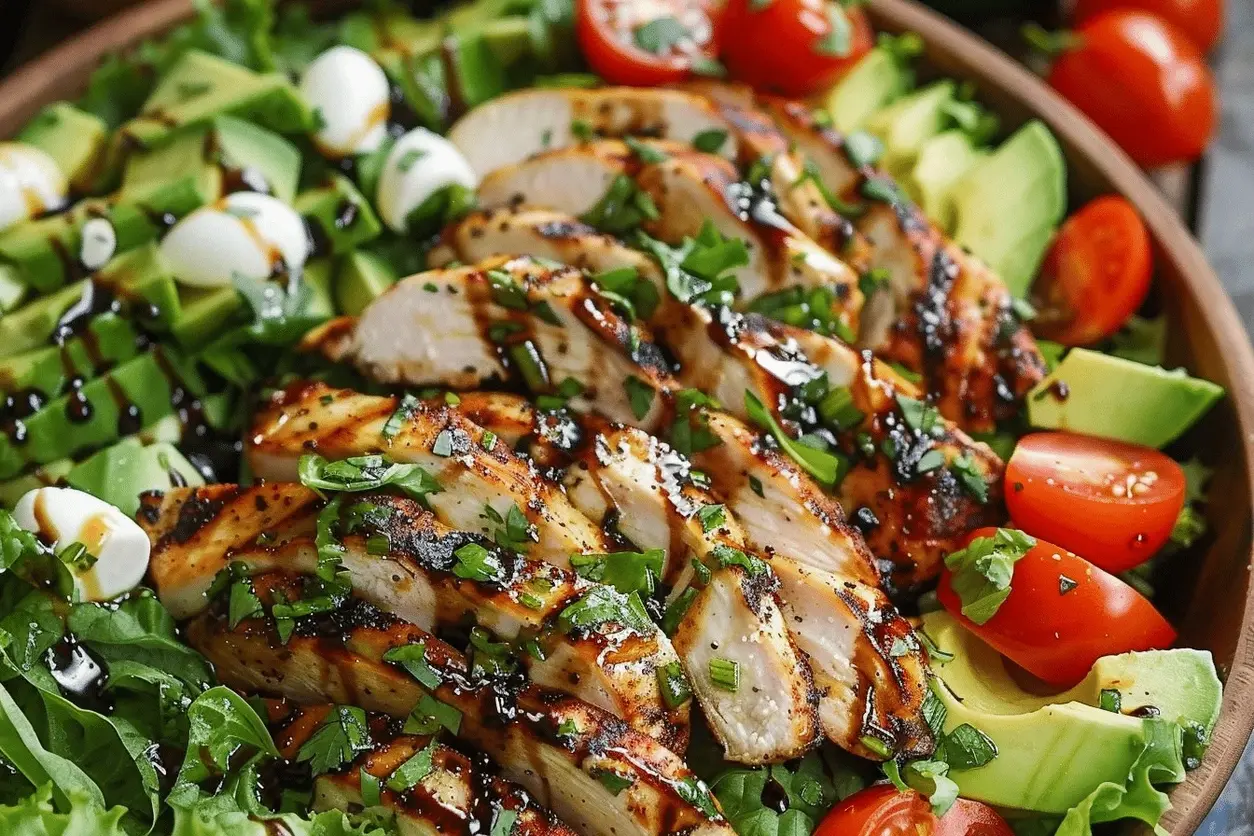
Imagine tender, juicy chicken breasts lacquered with a glossy balsamic glaze — sweet from honey, sharp from vinegar, and aromatic from garlic. Sliced thin over a bed of crisp mixed greens, blushing cherry tomatoes, paper-thin red onion rings, and tangy crumbles of feta cheese. Then a handful of toasted almonds adds that nutty crunch. And the dressing? A classic balsamic vinaigrette with Dijon mustard and just a hint of honey, whisked together until creamy and emulsified. The first forkful hits every note: sweet, salty, tangy, and fresh. It’s all the best parts of a bistro salad, made right in your own kitchen.
What makes my version special is that I treat the chicken like a star, not an afterthought. I learned to build flavor in layers during my time at Le Cordon Bleu in Paris — a good marinade is your best friend. I also dial in the glaze so it caramelizes beautifully without burning. Many home cooks either under-cook chicken (making it rubbery) or overcook it (drying it out). My tested technique gives you a perfectly cooked, glistening piece of chicken every time. And if you’re short on time, I’ll share a shortcut that still delivers incredible flavor. 💡 mia’s Pro Tip: Always pat the chicken dry before marinating — it helps the glaze cling better.
Why This Balsamic Glazed Chicken Salad Recipe Is the Best
The Flavor Secret — The magic begins with a balsamic marinade that doubles as a glaze. Instead of just brushing on sauce at the end, I marinate the chicken for at least 30 minutes (longer if you have time) so the flavors penetrate deep. The honey catches in the hot pan, creating a sticky, caramelized crust that’s pure gold. Growing up in Morocco, I learned that a balance of acid and sweet is the foundation of so many great dishes — this recipe honors that tradition with French precision.
Perfected Texture — I cook the chicken over medium-high heat in a cast-iron skillet, exactly 6–7 minutes per side, until the internal temperature hits 165°F. Then — don’t skip this — I let it rest for 5 minutes before slicing. That resting time allows the juices to redistribute, making each bite moist and tender. The almonds are toasted just until golden, which adds a satisfying crunch that contrasts with the soft greens and juicy tomatoes.
Foolproof & Fast — Even if you’re a beginner, this recipe won’t let you down. The ingredient list is short (just pantry staples), the dressing comes together in under 2 minutes, and the assembly is as simple as tossing and topping. I’ve made this for busy weeknights, meal-prep Sundays, and even for company — it always impresses. And because it’s a one-dish meal with protein, healthy fats, and veggies, it fits perfectly into a balanced lifestyle.
Balsamic Glazed Chicken Salad Ingredients
I love shopping for these ingredients at the Union Square Greenmarket in NYC — the heirloom tomatoes in summer are unforgettable, and the local honey is always a revelation. But every ingredient here is easy to find at your regular grocery store. Let me walk you through what you need and why it matters.
Ingredients List
- For the chicken:
- 4 boneless skinless chicken breasts (about 1½ pounds)
- ½ cup balsamic vinegar
- 2 tablespoons honey
- 2 cloves garlic, minced
- 1 tablespoon olive oil
- Salt and pepper to taste
- For the salad:
- 6 cups mixed salad greens (I use a spring mix)
- 1 pint cherry tomatoes, halved
- ½ red onion, thinly sliced
- ½ cup crumbled feta cheese
- ¼ cup sliced almonds, toasted
- For the dressing:
- ¼ cup balsamic vinegar
- 2 tablespoons extra-virgin olive oil
- 1 tablespoon Dijon mustard
- 1 teaspoon honey
- Salt and pepper to taste
Ingredient Spotlight
Balsamic Vinegar — This is the star of the show. Use a good-quality balsamic (not the cheapest bottle) for a rich, slightly sweet flavor without being too acidic. I buy one from Modena when I can. If you only have standard balsamic, you can reduce it by simmering for a few minutes to concentrate the flavor.
Honey — I use wildflower honey from the farmers market, but any runny honey works. Honey not only sweetens the glaze but also helps it caramelize on the chicken. For a vegan option, substitute with maple syrup or agave, but note the flavor will be different (maple adds a woodsy note).
Feta Cheese — I prefer block feta packed in brine for its creamy, tangy taste. Pre-crumbled feta often has additatives and less moisture. Crumble it yourself for the best texture. If you’re dairy-free, try a vegan feta (the almond-based ones are great) or just skip it and add extra avocado for creaminess.
Mixed Salad Greens — I use a mix of baby spinach, arugula, and romaine for variety. Spinach holds up well to dressing, arugula adds peppery kick, and romaine gives crunch. Avoid delicate greens like butter lettuce that will wilt.
| Original Ingredient | Best Substitution | Flavor / Texture Impact |
|---|---|---|
| Balsamic vinegar (marinade) | Red wine vinegar + 1 tsp sugar | Less sweet, more acidic; add sugar to balance |
| Honey | Maple syrup or agave nectar | Maple adds a subtle woody flavor; agave is neutral but thinner |
| Feta cheese | Goat cheese or dairy-free feta | Goat cheese is creamier and tangier; vegan feta is softer |
| Sliced almonds | Pecans or walnuts | Pecans are sweeter; walnuts are more bitter — toast both |
How to Make Balsamic Glazed Chicken Salad — Step-by-Step
Making this salad is easier than you think — you’ll feel like a pro after the first try. Follow these five steps and you’ll have a stunning dinner in 30 minutes.
Step 1: Marinate the Chicken
In a medium bowl, whisk together ½ cup balsamic vinegar, 2 tablespoons honey, 2 minced garlic cloves, 1 tablespoon olive oil, and a generous pinch of salt and pepper. Add the chicken breasts and turn to coat thoroughly. Cover and refrigerate for at least 30 minutes — or up to 4 hours for deeper flavor. The acid in the vinegar helps tenderize the meat, while the honey caramelizes beautifully during cooking.
💡 mia’s Pro Tip: If you’re in a rush, use a resealable bag instead of a bowl — it coats the chicken more evenly and takes up less space in the fridge.
Step 2: Cook the Chicken
Heat a large skillet (I love cast iron for this) over medium-high heat. Remove chicken from the marinade, letting excess drip off. Cook for 6–7 minutes per side, until the internal temperature reaches 165°F. The glaze will darken and caramelize — that’s what you want. Transfer chicken to a cutting board and let rest for 5 minutes. Resting is non-negotiable; it keeps the juices locked in. Then slice against the grain into thin strips.
⚠️ Common Mistake to Avoid: Don’t crowd the pan — cook chicken in batches if needed. Overcrowding steams the chicken instead of searing it, and you’ll lose that beautiful glaze.
Step 3: Make the Dressing
While the chicken rests, whisk together ¼ cup balsamic vinegar, 2 tablespoons extra-virgin olive oil, 1 tablespoon Dijon mustard, 1 teaspoon honey, and a pinch of salt and pepper. Whisk vigorously until the dressing is emulsified and looks creamy. Dijon acts as a natural emulsifier, so you don’t even need a blender. Taste and adjust — a little extra honey or vinegar depending on your preference.
💡 mia’s Pro Tip: If you want a thicker, more salad-bar-style dressing, add 1 teaspoon of mayonnaise — it stabilizes the emulsion beautifully and adds a touch of richness.
Step 4: Assemble the Salad
In a large mixing bowl, combine 6 cups mixed greens, halved cherry tomatoes, thinly sliced red onion, crumbled feta cheese, and toasted sliced almonds. Drizzle the dressing over the top and toss gently until everything is evenly coated. Toss with your hands for the most delicate handling — you don’t want to bruise the greens.
⚠️ Common Mistake to Avoid: Don’t add all the dressing at once — start with about three-quarters, toss, then add more if needed. Salad isn’t a soup; you want the greens lightly glistening, not sitting in a pool.
Step 5: Top and Serve
Divide the dressed salad among 4 plates or bowls. Fan the sliced balsamic-glazed chicken on top of each serving. If you want extra visual appeal, drizzle a little of the leftover pan juices (or extra balsamic glaze) over the chicken. Serve immediately — this salad is at its peak right after assembly.
| Step | Action | Duration | Key Visual Cue |
|---|---|---|---|
| 1 | Marinate chicken | 30+ min | Chicken fully coated, no dry spots |
| 2 | Cook chicken | 12–14 min | Golden brown crust, internal temp 165°F |
| 3 | Make dressing | 2 min | Emulsified, creamy, no separation |
| 4 | Assemble salad | 5 min | Greens evenly dressed, not drenched |
| 5 | Top & serve | 1 min | Chicken fanned neatly, everything fresh |
Serving & Presentation
This balsamic glazed chicken salad is a meal in itself, but you can make it extra special with a few finishing touches. I like to serve it in wide, shallow bowls to show off the colors — the deep red of the tomatoes, the bright green of the arugula, the white crumbles of feta, and the mahogany stripes on the chicken. A final crack of black pepper and a sprinkle of flaky sea salt elevates everything.
For a heartier version, serve alongside a slice of crusty sourdough or a warm baguette — that tangy bread pairs perfectly with the balsamic dressing. Sometimes I add a handful of avocado cubes for extra creaminess (hello, healthy fats!). If you’re serving this for a dinner party, consider adding grilled peaches or figs when in season — a nod to both my Moroccan and French culinary influences.
And don’t forget the wine! A crisp Sauvignon Blanc or a light Pinot Noir complement the tangy vinaigrette without overpowering the chicken. For a non-alcoholic option, try sparkling water with a splash of pomegranate juice and a sprig of mint.
| Pairing Type | Suggestions | Why It Works |
|---|---|---|
| Side Dish | Crusty sourdough, roasted potatoes, quinoa | Bread soaks up dressing; potatoes add heartiness; quinoa adds protein |
| Sauce / Dip | Extra balsamic glaze, tzatziki, lemon aioli | Glaze intensifies flavor; tzatziki cools; aioli adds richness |
| Beverage | Sauvignon Blanc, Pinot Noir, mint pomegranate spritz | Wine cuts acid; spritz is refreshing and festive |
| Garnish | Fresh basil, mint, flaky sea salt, edible flowers | Herbs brighten; salt finishes; flowers impress |
Make-Ahead, Storage & Reheating
I know how busy life gets — that’s why I often prep components of this balsamic glazed chicken salad ahead of time. The chicken can be cooked and sliced up to 2 days in advance. The dressing keeps for a week in the fridge. But the greens? Dress them only at the last minute to keep them crisp. Here’s my full guide to storing and reheating everything perfectly.
| Method | Container | Duration | Reheating Tip |
|---|---|---|---|
| Refrigerator | Airtight container (separate – chicken, greens, dressing) | Up to 2 days | Reheat chicken in a dry skillet over medium heat 2–3 min per side; do not microwave greens. |
| Freezer | Freezer-safe bag for cooked chicken only; greens and dressing not recommended | Up to 3 months | Thaw overnight in fridge; reheat in skillet with a splash of water to steam back moisture. |
| Make-Ahead | Store each component separately | Chicken & dressing: up to 2 days; greens: wash/dry day of | Assemble just before serving — toss greens with dressing last. |
My favorite trick: I prep the chicken and dressing on Sunday, then during the week I wash and dry my greens, toss them with the dressing, and reheat the chicken in a dry skillet while I slice tomatoes. Dinner is on the table in under 10 minutes. If you’re meal-prepping, portion the dressed salad into individual containers, but keep the chicken separate and warm it up before adding — cold chicken on a cold salad is fine, but I find the contrast of warm chicken on cool greens much more satisfying.
Variations & Easy Swaps
| Variation | Key Change | Best For | Difficulty Impact |
|---|---|---|---|
| Mediterranean Delight | Add olives, cucumber, and pepperoncini; swap feta for goat cheese | Mediterranean flavor lovers, summer meals | Easy – just extra chopping |
| Gluten-Free & Dairy-Free | Omit feta; use dairy-free feta or avocado; ensure dressing ingredients are GF | Gluten-free, dairy-free, paleo | Easy – simple swaps |
| Summer Berry Boost | Add fresh strawberries or blueberries; use poppy seeds in dressing | Sweet-savory fans, berry season | Easy – no cook change |
Mediterranean Delight
This variation brings a taste of the Mediterranean coast to your bowl. Add sliced cucumber, Kalamata olives, and a few pepperoncini for heat. Swap the feta for a creamy goat cheese and use a handful of fresh oregano instead of basil. The briny olives and tangy goat cheese pairs beautifully with the balsamic glaze — it reminds me of a salad I had at a tiny place in Nice. Everything stays quick; you just need to chop a few extra veggies.
Gluten-Free & Dairy-Free
This version is naturally gluten-free if you check the mustard and vinegar labels (cheap balsamic can have caramel color, but pure balsamic is GF). Omit the feta and replace it with a generous scoop of diced avocado for creaminess. Alternatively, try a dairy-free feta made from almonds — it crumbles just like the real thing. The dressing is already dairy-free. I’ve made this for many friends with dietary restrictions and it never feels like a compromise.
Summer Berry Boost
When sweet local berries hit the NYC farmers market, I add them to this salad without hesitation. Halved strawberries or whole blueberries introduce bursts of juicy sweetness that play off the balsamic glaze. Add a teaspoon of poppy seeds to the dressing for a classic summer touch. This version is so beautiful that it doubles as a centerpiece for brunch. Just be gentle when tossing so the berries don’t break apart.
What is the best way to cook chicken for a balsamic glazed chicken salad?
The best method is to cook the marinated chicken in a hot skillet (cast iron is ideal) over medium-high heat. This gives you a beautiful caramelized crust while keeping the inside juicy. Grill also works wonderfully — the high heat creates those appealing grill marks and adds a smoky dimension. Cook 6–7 minutes per side until the internal temperature reaches 165°F. Always let the chicken rest for 5 minutes before slicing; this redistributes the juices so every bite is moist. Avoid boiling or poaching, as those methods wash away the glaze and lead to bland, waterlogged meat.
Can I use a different vinegar to make the glaze for balsamic glazed chicken salad?
Yes, you can substitute the balsamic vinegar in the glaze with other vinegars, but the flavor profile will change. Red wine vinegar is the closest alternative — it’s less sweet and more acidic, so you’ll need to add extra honey (or a pinch of sugar) to balance. Apple cider vinegar adds a fruity tang that pairs nicely with the feta and almonds. White balsamic (or white wine vinegar) will give a milder, less complex flavor. I’ve tried all of these, and my top recommendation is to use a balsamic reduction if you want that rich, syrupy consistency without the full acidity.
How many calories are in a balsamic glazed chicken salad?
A typical serving of this balsamic glazed chicken salad (about one-quarter of the recipe) contains approximately 380 calories. The breakdown includes 38 grams of protein, 16 grams of fat, 18 grams of carbohydrates, and 12 grams of sugar (mostly from the honey and natural sugars in tomatoes). If you’re watching your calorie intake, you can reduce the fat by using less oil in the dressing (swap 1 tablespoon for water or vinegar) and omitting the almonds. The chicken remains high in protein and very filling, making this a satisfying meal for around 300–350 calories if you adjust the toppings.
What type of greens go best with balsamic glazed chicken salad?
I recommend a mix of baby spinach, arugula, and romaine hearts. Spinach is sturdy and holds up well to the dressing without wilting too quickly. Arugula adds a peppery kick that complements the sweet balsamic glaze. Romaine provides crunch and structure. Avoid delicate greens like butter lettuce or mesclun that will become soggy within minutes. If you want a more nutrient-dense base, use kale (massaged with a little olive oil to soften) — it’s fantastic for meal prep because it stays crisp for days. Always wash and thoroughly dry your greens before dressing; wet greens dilute the vinaigrette.
Can I make balsamic glazed chicken salad ahead of time?
Absolutely, but you need to store components separately for the best results. Cook the chicken and let it cool completely, then refrigerate in an airtight container for up to 2 days. Make the dressing and store it in a jar in the fridge for up to a week. Wash and dry the greens thoroughly (use a salad spinner) and keep them in a sealed bag with a paper towel to absorb moisture. When you’re ready to eat, slice the chicken, reheat it briefly in a skillet, toss the greens with the dressing, and assemble. This method keeps the greens crisp and the chicken juicy — never dress the salad ahead of time or it will become soggy.
What can I use instead of feta cheese in balsamic glazed chicken salad?
If you’re out of feta or want a different flavor, here are three excellent substitutions. Goat cheese (chèvre) is the closest in tanginess and creaminess — just crumble it similarly. Fresh mozzarella pearls add a mild, milky richness that’s lovely with the balsamic. For a dairy-free option, use diced avocado (which adds creaminess and healthy fats) or a dairy-free feta made from almonds or tofu. I’ve tested all of these, and each brings its own character. Goat cheese makes the salad more luxurious, while avocado keeps it light and fresh. Avoid pre-shredded cheese blends — they contain anti-caking agents and won’t melt or crumble well.
Is balsamic glazed chicken salad healthy?
Yes, this salad is a nutrient-packed, balanced meal. It provides lean protein from the chicken, healthy fats from olive oil and almonds, vitamins and fiber from the greens and vegetables, and calcium from feta cheese. One serving contains 38 grams of protein, which supports muscle health and keeps you full for hours. The balsamic vinegar has antioxidants and may help with blood sugar regulation. To make it even healthier, you can reduce the honey in the marinade and dressing, use a low-sugar balsamic glaze, or swap the almonds for sunflower seeds for fewer calories. Overall, this is a whole-food, low-carb, high-protein meal that fits many dietary patterns.
How do I prevent the balsamic glaze from burning on the chicken?
The sugar in honey (and the vinegar) can burn if the heat is too high or if you cook the chicken too long. Here’s my technique: First, pat the chicken dry after marinating — excess liquid will cause steaming, not searing. Second, use a clean, hot skillet with a little oil, but not smoking hot. Cook at medium-high heat, not high. Watch the chicken closely: when the bottom is deeply browned after about 6 minutes, flip it. If you see black spots forming, reduce the heat. The glaze should be dark amber, not black. If you’re using a grill, oil the grates well and keep the lid closed to avoid flare-ups. Always let the chicken rest on a clean plate — the residual heat finishes cooking without burning.
Can I use chicken thighs instead of breasts?
Absolutely! Chicken thighs are actually more forgiving because they have more fat, so they stay juicy even if you overcook them slightly. Boneless, skinless thighs work best. Follow the same marinade and cooking instructions, but thighs may cook a little faster (about 5–6 minutes per side). The internal temperature should still reach 165°F. Thighs are often more affordable and have richer flavor, which pairs beautifully with the balsamic glaze. If using skin-on thighs, cook skin-side down first until crispy, then flip and cook through. The skin adds extra crunch, but it will make the salad a bit less light — your call!
What can I serve with balsamic glazed chicken salad to make it a full meal?
This salad is already a complete meal with protein, vegetables, and healthy fats. But if you want to round it out further, consider a simple side of crusty bread (sourdough or baguette) to soak up any extra dressing, or a cup of roasted butternut squash soup for a cozy fall pairing. For extra carbs, serve with a side of quinoa or farro tossed with olive oil and lemon. If you’re hosting, start with an antipasto platter (olives, prosciutto, roasted peppers) and end with a light dessert like berries with whipped cream. The key is to keep sides simple so the balsamic glazed chicken salad stays the star of the plate.
Share Your Version!
I love seeing how you make this balsamic glazed chicken salad your own. Did you add a special ingredient? Swap in another cheese? Make it for a family dinner or a quick lunch? Leave a star rating and a comment below — your feedback helps other readers and inspires me too! Snap a photo of your creation and share it on Instagram or Pinterest with the tag @exorecipes — I personally look at every single one and feature my favorites on my stories. And if you have a question about any step, just ask. I read every comment and answer as soon as I can. From my NYC kitchen to yours — I hope this recipe brings as much warmth to your table as it does to mine. — mia 🧡
Love This Recipe? Save It to Pinterest!
If you enjoyed this Balsamic Glazed Chicken Salad recipe, don’t let it get lost in your browser tabs! 😄 Pin it now so you can find it again anytime — and explore hundreds more tried-and-tested recipes waiting for you on my Pinterest boards.
👉 Follow mia on Pinterest @exorecipes
📌 Pin this recipe · 🔁 Re-pin your favorites · 💬 Tag me when you make it — I love seeing your creations!
Balsamic Glazed Chicken Salad
- Prep Time: 15 minutes
- Cook Time: 15 minutes
- Total Time: 30 minutes
- Yield: 4 1x
- Method: Main Course
- Cuisine: American
Description
A fresh and flavorful salad topped with tender balsamic glazed chicken, ripe tomatoes, and crumbled feta cheese, drizzled with a tangy balsamic vinaigrette.
Ingredients
- For the chicken:
- 4 boneless skinless chicken breasts
- 1/2 cup balsamic vinegar
- 2 tablespoons honey
- 2 cloves garlic, minced
- 1 tablespoon olive oil
- Salt and pepper to taste
- For the salad:
- 6 cups mixed salad greens
- 1 pint cherry tomatoes, halved
- 1/2 red onion, thinly sliced
- 1/2 cup crumbled feta cheese
- 1/4 cup sliced almonds, toasted
- For the dressing:
- 1/4 cup balsamic vinegar
- 2 tablespoons extra-virgin olive oil
- 1 tablespoon Dijon mustard
- 1 teaspoon honey
- Salt and pepper to taste
Instructions
- Marinate the chicken: In a bowl, whisk together 1/2 cup balsamic vinegar, honey, garlic, olive oil, salt, and pepper. Add chicken, coat well, and refrigerate for at least 30 minutes.
- Cook the chicken: Heat a grill or skillet over medium-high heat. Cook chicken 6-7 minutes per side until internal temperature reaches 165°F. Let rest 5 minutes, then slice.
- Make the dressing: In a small bowl, whisk together 1/4 cup balsamic vinegar, olive oil, Dijon mustard, honey, salt, and pepper until emulsified.
- Assemble the salad: In a large bowl, combine salad greens, tomatoes, red onion, feta cheese, and almonds. Toss with dressing.
- Top with sliced chicken and serve immediately.
Notes
For a lighter version, use a sugar-free balsamic glaze and reduce honey in the marinade. This salad is best served fresh, but leftovers can be stored separately for up to 1 day.
Nutrition
- Calories: 380
- Sugar: 12 g
- Fat: 16 g
- Carbohydrates: 18 g
- Protein: 38 g
Tried This Recipe? Leave a Comment!
Did you make this recipe? I’d love to hear how it turned out! Please leave a comment and a rating below. Your feedback helps other home cooks and supports cheerychop.com!
For more delicious inspiration, follow me on Pinterest!
