“`html
Table of Contents
Baked Spinach and Artichoke Orzo Pasta – The Creamiest One-Skillet Comfort Casserole
Every time I make this Baked Spinach and Artichoke Orzo Pasta, I’m transported back to my mother’s tiny kitchen in Marrakech, where she would patiently teach me how to layer flavors — starting with a simple soffritto of onions and garlic, then adding handfuls of fresh greens until they wilted into the sauce. That same patient layering is the soul of this dish, except I’ve traded the Moroccan tagine for a well-worn cast-iron skillet here in my New York City apartment. This creamy orzo pasta recipe is my weeknight love letter to that memory, reimagined with Italian-inspired ingredients and finished with a golden, bubbly cheese crust that would make my Parisian pastry chef instructors proud.
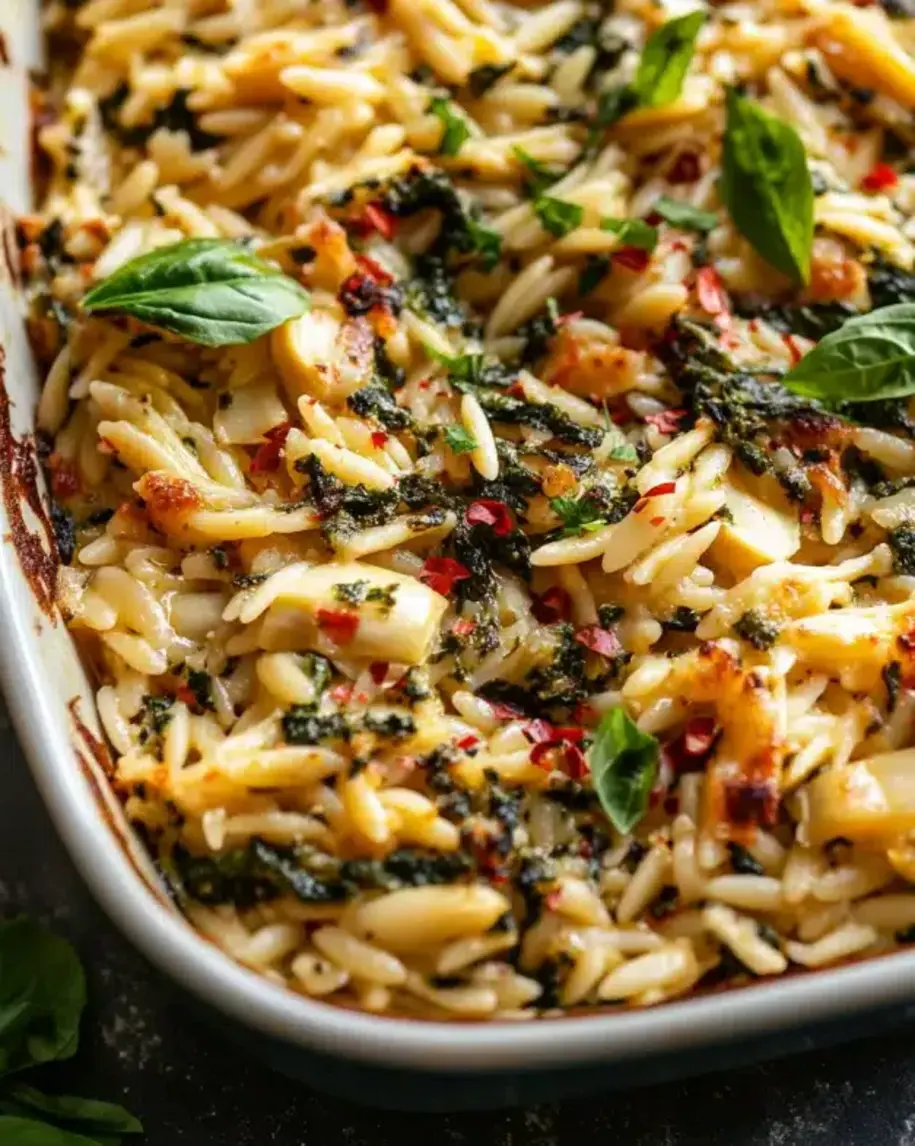
The first time I tested this baked pasta with spinach and artichoke, I knew I had stumbled onto something special. The orzo absorbs the broth and milk as it simmers, releasing starch that naturally thickens the sauce into a velvety blanket. Then come the folds of cream cheese and sour cream, which add tang and richness, while mozzarella pulls into those glorious, stretchy ribbons. The artichoke hearts break apart ever so slightly, tucking into the crevices of the pasta, and the spinach melts into the background, lending color and earthiness without overpowering. When it emerges from the oven, the top is speckled with golden Parmesan crust — that unmistakable sign that dinner is ready.
I’ve developed this easy orzo casserole after dozens of test batches, balancing the creaminess so it’s luxurious but not heavy. My version skips the canned cream-of-something soups and builds flavor from scratch — a technique I learned in culinary school in Paris. The one-skillet method (yes, you can bake it in the same pan!) saves you cleanup without sacrificing that oven-kissed top. In this post, I’ll share my test-kitchen secrets: how to keep the orzo al dente, why you should never skip the cream cheese, and the most common mistake even experienced home cooks make with baked pasta dishes.
Why This Baked Spinach and Artichoke Orzo Pasta Recipe Is the Best
The Flavor Secret — I start with a classic French mirepoix (onion and garlic) but finish with a Moroccan touch: a pinch of red pepper flakes that adds warmth without heat. That little spark amplifies the sweetness of the artichokes and cuts through the richness of the three-cheese blend. It’s the kind of subtle layering you’d expect from a chef who trained in Paris but whose roots run deep in North African home cooking.
Perfected Texture — The trick I teach my private cooking students is to cook the orzo only until al dente before baking, because it will continue to absorb liquid in the oven. I also finish the stovetop portion with the cream cheese stirred in off the heat — this prevents it from breaking and keeps the sauce silky-smooth. The result is a baked pasta that’s creamy but not gummy, with each orzo grain distinct and tender.
Foolproof & Fast — From stovetop to table in 45 minutes, this recipe is designed for busy Tuesday nights when you want something that tastes like you spent hours in the kitchen. The ingredients are all standard grocery-store finds — no chasing down specialty items. And because everything comes together in one oven-safe skillet (or a baking dish), cleanup is almost as satisfying as that first bite.
Spinach Artichoke Orzo Bake Ingredients
On Saturday mornings, I walk to the Union Square Greenmarket with my canvas tote, grabbing the freshest spinach I can find. There’s something grounding about choosing each ingredient with intention — a habit I picked up from my mother, who would send me to the souk with a list and a few dirhams. For this baked spinach and artichoke orzo pasta, every ingredient plays a specific role, so I want to walk you through my favorites and the substitutions that actually work.
Ingredients List
- 1 tablespoon olive oil
- 1 small onion, diced
- 3 cloves garlic, minced
- 1 (14 oz) can artichoke hearts, drained and chopped
- 5 oz fresh spinach
- 1 cup orzo pasta
- 1 cup chicken or vegetable broth
- 1 cup milk (whole milk recommended)
- 4 oz cream cheese, softened
- 1/2 cup sour cream
- 1 cup shredded mozzarella cheese
- 1/2 cup grated Parmesan cheese
- Salt and pepper to taste
- 1/4 teaspoon red pepper flakes (optional — but I never skip it!)
Ingredient Spotlight
Orzo — This rice-shaped pasta is the star of the show. I use De Cecco or Barilla for consistent results. Its small size cooks quickly and releases just enough starch to thicken the sauce naturally. Substitute with ditalini, stelline, or even broken spaghetti in a pinch — but adjust liquid slightly as cook times vary.
Artichoke Hearts — I prefer canned or jarred artichoke hearts packed in water (not marinated in oil, which can overpower the dish). Look for firm, pale-green quarters and give them a rough chop so every bite has a piece. Frozen artichoke hearts work too — thaw and pat dry before using.
Cream Cheese — This is my secret weapon for creaminess without heaviness. Use full-fat cream cheese, softened to room temperature so it blends into the hot pasta smoothly. Low-fat versions will work but may curdle slightly, so I don’t recommend them for this recipe.
Spinach — Fresh baby spinach is ideal because it wilts quickly and has a milder flavor. If you only have frozen spinach, thaw it completely and squeeze out every drop of water before adding — otherwise your casserole will be watery.
Cheese Blend — The mozzarella gives stretch, the Parmesan adds salty umami and that golden crust, and the sour cream contributes tang. Pre-shredded cheese works in a pinch, but I always grate my own Parmesan for better melt and flavor — a habit from my Paris days that I can’t break.
| Original Ingredient | Best Substitution | Flavor / Texture Impact |
|---|---|---|
| Orzo pasta | Ditalini or stelline | Slightly different shape, similar cook time; texture is nearly identical |
| Artichoke hearts (canned) | Frozen artichoke hearts, thawed and patted dry | Slightly softer texture, still delicious; no flavor difference |
| Fresh spinach | Frozen spinach (thawed and squeezed dry) | More concentrated flavor, but need extra squeezing; texture less vibrant |
| Whole milk | Half-and-half or 2% milk | Richer with half-and-half, slightly thinner with 2%; both work well |
| Cream cheese | Neufchâtel (low-fat cream cheese) | Slightly less creamy, may curdle if overheated; use full-fat for best results |
How to Make Baked Spinach and Artichoke Orzo Pasta — Step-by-Step
Trust me when I say this is one of those rare recipes that looks and tastes like you fussed, but the process is almost meditative in its simplicity. I’ve broken it down into clear steps so you can follow along without stress — just the way I teach in my NYC cooking workshops.
Step 1: Sauté the Aromatics
Heat olive oil in a large oven-safe skillet over medium heat. Add the diced onion and cook until translucent, about 3–4 minutes, stirring occasionally. Add the minced garlic and cook for 1 minute more until fragrant. This slow sizzle builds the flavor base — don’t rush it.
💡 mia’s Pro Tip: Use a 12-inch cast-iron or stainless steel skillet that can go directly into the oven. If your skillet isn’t oven-safe, you’ll transfer to a baking dish in Step 6 — no big deal, just one extra dish to wash.
⚠️ Common Mistake to Avoid: Don’t let the garlic brown! Burnt garlic turns bitter. Keep the heat at medium and stir constantly once garlic is added.
Step 2: Wilt Spinach and Artichokes
Stir in the chopped artichoke hearts and the fresh spinach. Cook for about 2 minutes, tossing gently, until the spinach has wilted and the artichokes are warmed through. The volume of spinach will reduce dramatically — that’s exactly what you want.
💡 mia’s Pro Tip: If your skillet seems crowded with spinach, add it in two batches. The first handful will wilt down quickly, making room for the rest.
Step 3: Cook the Orzo
Add the orzo, broth, and milk. Bring the mixture to a gentle simmer, then reduce the heat to medium-low. Cook for 8–10 minutes, stirring occasionally, until the orzo is tender and about 80% of the liquid has been absorbed. The mixture should still look saucy — not dry.
⚠️ Common Mistake to Avoid: Stirring too infrequently can cause the orzo to stick to the bottom. Use a wooden spoon and scrape the bottom every minute or so.
Step 4: Add the Creamy Goodness
Remove the skillet from the heat. Stir in the softened cream cheese, sour cream, mozzarella, Parmesan, salt, pepper, and red pepper flakes (if using). Stir until everything is melted and well combined. The sauce will look wonderfully rich and cohesive.
💡 mia’s Pro Tip: Cut the cream cheese into small cubes before adding — it will melt faster and blend more evenly. Always stir off the heat to prevent the dairy from breaking.
Step 5: Bake to Golden Perfection
If your skillet is oven-safe, simply transfer it to the oven. Otherwise, pour the mixture into a greased 9×9-inch baking dish. Bake uncovered at 375°F for 15–20 minutes, until the top is bubbly and golden in spots. Let it rest for 5 minutes before serving — this allows the sauce to settle.
⚠️ Common Mistake to Avoid: Over-baking can dry out the orzo. Check at 15 minutes — the top should be golden but the center should still jiggle slightly.
💡 mia’s Pro Tip: For an extra-golden crust, switch the oven to broil for the last 1–2 minutes. Watch it closely — the line between golden and burnt is very thin!
| Step | Action | Duration | Key Visual Cue |
|---|---|---|---|
| 1 | Sauté onion and garlic | 4–5 minutes | Onion is translucent, garlic is fragrant |
| 2 | Wilt spinach and artichokes | 2 minutes | Spinach is fully wilted, vibrant green |
| 3 | Cook orzo in broth and milk | 8–10 minutes | Orzo is tender, liquid is mostly absorbed |
| 4 | Stir in cheeses and seasonings | Off heat, 2 minutes | Cheeses are fully melted, sauce is creamy |
| 5 | Bake | 15–20 minutes | Top is bubbly and golden |
Serving & Presentation
This baked spinach and artichoke orzo pasta is a full meal in itself, but how you serve it can elevate it from a cozy weeknight dinner to something worthy of a dinner party. I like to scoop generous portions into wide, shallow bowls — the kind you’d find at a rustic trattoria in Rome. A final shower of freshly grated Parmesan adds a salty, crystalline finish, and a twist of black pepper across the top gives a subtle visual contrast.
For a touch of brightness that cuts through the richness, I often add a squeeze of lemon juice and a few torn basil leaves right before serving — a trick I picked up from a seafood vendor at the Grand Épicerie in Paris. The acidity wakes up every bite. If I’m serving this as a main course, I pair it with a simple arugula salad dressed with lemon vinaigrette. As a side dish, it’s spectacular alongside roasted chicken or seared salmon.
When I’m feeding my NYC friends who appreciate bold flavors, I sometimes set out a small dish of harissa on the side — a nod to my Moroccan roots. A tiny spoonful stirred into the pasta adds a smoky, spicy depth that’s completely unexpected and absolutely delicious.
| Pairing Type | Suggestions | Why It Works |
|---|---|---|
| Side Dish | Arugula salad with lemon vinaigrette, roasted broccoli, or garlic bread | Acidic greens cut through the creaminess; bread soaks up every drop of sauce |
| Sauce / Dip | Extra lemon wedges, harissa paste, or red pepper flakes | Acidity and heat balance the rich cheese sauce |
| Beverage | Crisp Sauvignon Blanc, unoaked Chardonnay, or sparkling water with lemon | Bright, acidic wines complement the creamy, cheesy pasta |
| Garnish | Fresh basil, parsley, or chives; extra Parmesan; lemon zest | Fresh herbs add color and freshness; lemon zest brightens the dish |
Make-Ahead, Storage & Reheating
Between recipe development, teaching cooking classes, and exploring every farmers market in the five boroughs, my schedule is relentless. That’s why I designed this creamy orzo pasta recipe to be as forgiving as it is delicious. You can prep it entirely ahead, store it, and reheat it without losing any of that luscious texture — as long as you follow a few key guidelines I’ve learned through trial and error.
| Method | Container | Duration | Reheating Tip |
|---|---|---|---|
| Refrigerator | Airtight container or covered baking dish | Up to 4 days | Reheat in a 350°F oven for 15 minutes, covered, then 5 minutes uncovered. Add a splash of milk if dry. |
| Freezer | Freezer-safe container or zip-top bag | Up to 2 months | Thaw overnight in fridge. Reheat in 350°F oven, covered, for 20 minutes. Stir halfway through. |
| Make-Ahead | Assemble in baking dish, cover, refrigerate | Up to 24 hours before baking | Bake straight from fridge at 375°F for 25 minutes — add 5 minutes to the bake time. |
One thing I always tell my students: if you’re reheating a single portion, the microwave works in a pinch, but the oven or toaster oven delivers far superior texture. Microwave on medium power in 30-second bursts, stirring in between, and add a tiny splash of milk or broth to bring back the creaminess. The orzo will absorb more liquid as it sits, so a little extra moisture helps restore that just-baked feel.
I also love making a double batch and freezing half in individual portions for those evenings when I get home late from a cooking class. Just thaw, reheat, and dinner is ready faster than takeout delivery — and infinitely more satisfying.
Variations & Easy Swaps
Over the years, I’ve adapted this baked spinach and artichoke orzo pasta for friends with dietary needs, for seasonal cravings, and for those moments when I want to experiment with a new spice blend. Here are my three favorite variations — each one tested multiple times in my NYC kitchen.
| Variation | Key Change | Best For | Difficulty Impact |
|---|---|---|---|
| Moroccan Spiced | Add 1 tsp cumin, 1/2 tsp smoked paprika, 1/4 tsp cinnamon | Bold flavor lovers | Easy — just stir in spices with the garlic |
| Gluten-Free / Dairy-Free | Use gluten-free orzo + vegan cream cheese and mozzarella-style shreds | Dietary restrictions | Easy — substitutions are direct swaps |
| Chicken & Artichoke | Add 2 cups shredded cooked chicken | Extra protein | Easy — stir in before baking |
Moroccan Spiced Variation
This is my personal favorite — a tribute to my mother’s kitchen. When you add cumin, smoked paprika, and a whisper of cinnamon along with the garlic, the entire dish transforms. The cumin brings earthiness, the paprika adds a subtle smokiness, and the cinnamon — just a pinch — rounds out the acidity of the artichokes in a way that feels both warming and surprising. I serve this version with a dollop of yogurt on top and a scattering of fresh cilantro. It’s the kind of fusion that reflects who I am: Moroccan roots, French training, NYC energy.
Gluten-Free / Dairy-Free Variation
One of my closest cooking students has celiac disease and a dairy sensitivity, so I developed this version just for her. Use a high-quality gluten-free orzo — I like the one from Delallo or Barilla. For the dairy components, swap in vegan cream cheese (Miyoko’s or Kite Hill work beautifully) and dairy-free mozzarella shreds. The texture will be slightly less stretchy but still wonderfully creamy. Add an extra tablespoon of nutritional yeast to the Parmesan step for that umami depth. I’ve tested this three times, and every version was a hit.
Chicken & Artichoke Variation
When I’m teaching my “Weeknight Warriors” class in my NYC kitchen, this is the version I demo most often. Simply stir in two cups of shredded rotisserie chicken right before transferring to the baking dish. The chicken adds heartiness that turns this side dish into a mains-worthy meal. I like to use a rotisserie chicken from the market — it’s time-saving and adds a subtle smokiness from the roasted skin. This variation also freezes beautifully, so I often make a double batch for busy weeks.
Can I use frozen spinach and artichokes for baked spinach and artichoke orzo pasta?
Yes, you absolutely can use frozen spinach and artichokes in this baked spinach and artichoke orzo pasta — and I often do during the winter months when fresh produce isn’t at its peak. For frozen spinach, thaw it completely and squeeze it in a clean kitchen towel to remove as much moisture as possible before adding it to the skillet. If you skip the squeezing, your casserole will turn watery and the sauce won’t be creamy. For frozen artichoke hearts, thaw them in a colander, pat them dry, and chop them the same way you would canned ones. The texture will be slightly softer, but the flavor is still excellent. I recommend adding both at the same step as the fresh versions, and you may need to cook an extra minute or two to evaporate any remaining moisture.
What is the best type of cheese to use in baked spinach and artichoke orzo pasta?
For the best flavor and texture in this creamy orzo pasta recipe, I recommend a three-cheese blend: mozzarella, Parmesan, and cream cheese (plus sour cream for tang). Full-fat mozzarella gives you that glorious stretch when you pull up a forkful. Parmesan brings salty, nutty depth and forms that golden-brown crust on top during baking. Cream cheese is the secret ingredient — it melts into the sauce and gives it a luxurious, velvety body that mozzarella alone can’t achieve. I use block-style cream cheese, softened to room temperature, not the spreadable kind in a tub. Sour cream adds a subtle tang that balances the richness. For a sharper flavor, you can substitute half the mozzarella with provolone or fontina. Avoid pre-shredded cheese blends labeled “Italian mix” — they often contain anti-caking agents that prevent smooth melting.
How do I prevent the orzo from getting mushy in this baked pasta dish?
This is one of the most common questions I get from my cooking students, and the answer comes down to two things: cooking time and liquid ratio. First, cook the orzo on the stovetop for only 8–10 minutes — it should be al dente, meaning it has a slight bite to it. It will continue to cook in the oven, absorbing more liquid as it bakes. If you cook it fully on the stovetop, it will become mushy by the time it comes out of the oven. Second, use the right liquid-to-pasta ratio: 1 cup of orzo to 2 cups of liquid (broth + milk combined). Stir occasionally while it simmers to prevent the orzo from clumping and to ensure even cooking. Finally, don’t over-bake — 15–20 minutes at 375°F is plenty. The top should be bubbly and golden, but the center should still look creamy, not dry. Let it rest for 5 minutes before serving, and the orzo will absorb any remaining liquid without becoming waterlogged.
Can I make baked spinach and artichoke orzo pasta ahead of time and reheat it?
Yes, this easy orzo casserole is incredibly make-ahead friendly — in fact, I often prepare it a day ahead for dinner parties because the flavors have time to meld. To make ahead, assemble the entire dish up to the baking step, cover it tightly with foil, and refrigerate for up to 24 hours. When you’re ready to bake, add about 5 extra minutes to the baking time since you’re starting from cold. To reheat leftovers, the oven method works best: place the casserole in a 350°F oven, covered, for 15 minutes, then uncover for 5 minutes to re-crisp the top. If the pasta seems dry after refrigeration, stir in a splash of milk or broth before reheating. The microwave works in a pinch — use medium power in 30-second bursts, stirring between each. You can also freeze the baked casserole for up to 2 months. Thaw overnight in the refrigerator, then reheat in a 350°F oven for 20 minutes, covered. I regularly make a double batch just to have freezer portions ready for busy weeks.
Can I add protein like chicken or sausage to this baked orzo?
Absolutely! Adding protein is one of my favorite ways to turn this baked pasta with spinach and artichoke into a complete one-dish meal. For chicken, stir in 2 cups of shredded rotisserie chicken (or leftover grilled chicken) right before transferring the mixture to the baking dish. The chicken warms through during baking without drying out. For Italian sausage, cook 1/2 pound of casings-removed sausage in the skillet before adding the onions, breaking it up with a wooden spoon, then proceed with the recipe as written — the rendered fat from the sausage adds incredible flavor. For a seafood twist, fold in 1/2 pound of peeled cooked shrimp during the last 5 minutes of baking. If you’re adding protein, you might want to increase the seasoning slightly to balance the extra bulk. The beauty of this recipe is its flexibility — it welcomes almost any addition.
What can I use instead of artichoke hearts in this pasta bake?
If you’re not a fan of artichokes or simply can’t find them, you have several delicious alternatives. Diced roasted red peppers add sweetness and a pop of color — use about 1 cup. Sun-dried tomatoes (rehydrated if not in oil, then chopped) bring intense umami and chewiness; start with 1/2 cup because their flavor is concentrated. Sautéed mushrooms, especially cremini or baby bellas, add an earthy, meaty texture that pairs beautifully with the creamy sauce — cook them with the onions until golden. For a green vegetable swap, try 1 cup of thawed frozen peas added in the last few minutes of baking, or 1 cup of chopped asparagus (blanched for 1 minute first). Each substitution will change the character of the dish slightly, but all will keep it delicious. I’ve tested every one of these in my kitchen, and they all work beautifully.
Is this recipe vegetarian? How can I make it vegan?
Yes, this recipe is naturally vegetarian when you use vegetable broth instead of chicken broth — which is my default recommendation anyway because it lets the spinach and artichoke flavors shine. To make it vegan, you’ll need to replace several ingredients. Use vegan cream cheese (Miyoko’s or Kite Hill are my favorites), vegan sour cream (Tofutti or Kite Hill), and dairy-free mozzarella-style shreds. For the Parmesan, use 3 tablespoons of nutritional yeast stirred into the sauce — it provides that savory, cheesy umami. Full-fat oat milk or unsweetened cashew milk work best as the milk substitute. I’ve tested this vegan version multiple times for my NYC students who follow plant-based diets, and the key is to not over-bake it because vegan cheeses can become rubbery. Bake for 15 minutes at 375°F and check for doneness. The texture will be slightly less stretchy than the dairy version but still incredibly creamy and satisfying.
Can I use a different pasta shape instead of orzo?
Yes, you can substitute other small pasta shapes for orzo in this baked spinach and artichoke orzo pasta recipe, though you’ll need to adjust the cooking time slightly. Ditalini, stelline, pastina, or small shells all work well because they have a similar cooking time and shape. If you’re using a slightly larger shape like elbow macaroni or mini farfalle, cook it on the stovetop for 2–3 minutes longer before baking, and consider adding an extra 2 tablespoons of broth since larger pasta absorbs more liquid. The key is to cook the pasta to al dente on the stovetop because it will continue cooking in the oven. Avoid using long pasta like spaghetti or fettuccine — the proportions won’t work, and the texture will be off. I’ve tested this with ditalini many times, and the results are nearly identical to orzo, just with a slightly different visual appeal.
How do I get a golden, bubbly top on my baked orzo?
That golden, bubbly crust is what makes this dish so irresistible, and achieving it is simpler than you might think. First, make sure you’re using enough shredded mozzarella and grated Parmesan — about 1 cup of mozzarella and 1/2 cup of Parmesan. The Parmesan is especially important because it browns beautifully and creates that crisp, nutty crust. Second, bake uncovered — never cover the dish, or you’ll trap steam and end up with a soggy top. Third, bake at 375°F for 15–20 minutes, then switch the oven to broil for the last 1–2 minutes. Watch it like a hawk during broiling because it can go from golden to burnt in seconds. I recommend positioning the rack about 6 inches from the broiler element for even browning. If you see the edges browning too quickly but the center is still pale, rotate the dish halfway through baking. That golden crust is the sign that your dish is ready to come out of the oven and onto the dinner table.
What should I serve with baked spinach and artichoke orzo pasta?
This creamy orzo pasta recipe is versatile enough to serve as either a main course or a side dish. As a main course, I love pairing it with a simple arugula salad tossed with lemon vinaigrette (the peppery greens and bright acidity cut through the richness beautifully) and crusty bread to soak up every last bit of sauce. As a side dish, it’s spectacular alongside roasted chicken, grilled salmon, seared pork chops, or a simple lemon-herb fish. For a vegetable-forward pairing, try roasted asparagus, sautéed green beans, or a crisp cucumber-tomato salad. If you’re serving a crowd, this pairs wonderfully with a lighter white wine like Sauvignon Blanc or an unoaked Chardonnay — the acidity complements the creamy cheese sauce. For a truly comforting meal, serve it with a side of garlic bread and a simple tomato salad. I also love setting out extras like lemon wedges, red pepper flakes, and fresh herbs so everyone can customize their bowl.
Share Your Version!
Now it’s your turn to bring this baked spinach and artichoke orzo pasta into your kitchen — and I would genuinely love to hear how it turns out for you. Did you try the classic version, or did you add your own twist? Maybe you stirred in some leftover chicken, swapped in gluten-free pasta, or added a pinch of that Moroccan spice blend? Every variation tells a story, and I want to celebrate yours.
Drop a star rating and a comment below — I read every single one, and your feedback helps me create better recipes for this community. If you share a photo on Instagram or Pinterest, tag me @exorecipes so I can see your creation. And here’s a question I’d love you to answer: What’s one ingredient you always add to your pasta bakes that makes them uniquely yours? I’m always looking for new ideas, and your answer might just inspire my next recipe.
From my NYC kitchen to yours — I hope this recipe brings as much warmth to your table as it does to mine. — mia 🧡
Love This Recipe? Save It to Pinterest!
If you enjoyed this Baked Spinach and Artichoke Orzo Pasta recipe, don’t let it get lost in your browser tabs! 😄 Pin it now so you can find it again anytime — and explore hundreds more tried-and-tested recipes waiting for you on my Pinterest boards.
👉 Follow mia on Pinterest @exorecipe
📌 Pin this recipe · 🔁 Re-pin your favorites · 💬 Tag me when you make it — I love seeing your creations!
“`
Print
Baked Spinach and Artichoke Orzo Pasta
- Prep Time: 15 minutes
- Cook Time: 30 minutes
- Total Time: 45 minutes
- Yield: 4 1x
- Method: Main Course
- Cuisine: American-Italian
Description
A creamy, cheesy baked orzo pasta loaded with spinach and artichoke hearts, perfect as a main or side dish.
Ingredients
- 1 tablespoon olive oil
- 1 small onion, diced
- 3 cloves garlic, minced
- 1 (14 oz) can artichoke hearts, drained and chopped
- 5 oz fresh spinach
- 1 cup orzo pasta
- 1 cup chicken or vegetable broth
- 1 cup milk
- 4 oz cream cheese, softened
- 1/2 cup sour cream
- 1 cup shredded mozzarella cheese
- 1/2 cup grated Parmesan cheese
- Salt and pepper to taste
- 1/4 teaspoon red pepper flakes (optional)
Instructions
- Preheat oven to 375°F (190°C).
- In a large oven-safe skillet, heat olive oil over medium heat. Add onion and cook until softened, about 3-4 minutes. Add garlic and cook 1 minute more.
- Stir in artichoke hearts and spinach; cook until spinach wilts, about 2 minutes.
- Add orzo, broth, and milk. Bring to a simmer, then reduce heat and cook for 8-10 minutes, stirring occasionally, until orzo is tender and liquid is mostly absorbed.
- Remove from heat. Stir in cream cheese, sour cream, mozzarella, Parmesan, salt, pepper, and red pepper flakes if using.
- Transfer the mixture to a baking dish if not using an oven-safe skillet. Bake uncovered for 15-20 minutes, until bubbly and golden on top.
- Let cool for 5 minutes before serving. Garnish with extra Parmesan if desired.
Notes
For a vegetarian version, use vegetable broth. You can also add cooked chicken or sausage for extra protein.
Nutrition
- Calories: 485
- Sugar: 6g
- Fat: 28g
- Carbohydrates: 42g
- Protein: 18g
Tried This Recipe? Leave a Comment!
Did you make this recipe? I’d love to hear how it turned out! Please leave a comment and a rating below. Your feedback helps other home cooks and supports cheerychop.com!
For more delicious inspiration, follow me on Pinterest!
