Table of Contents
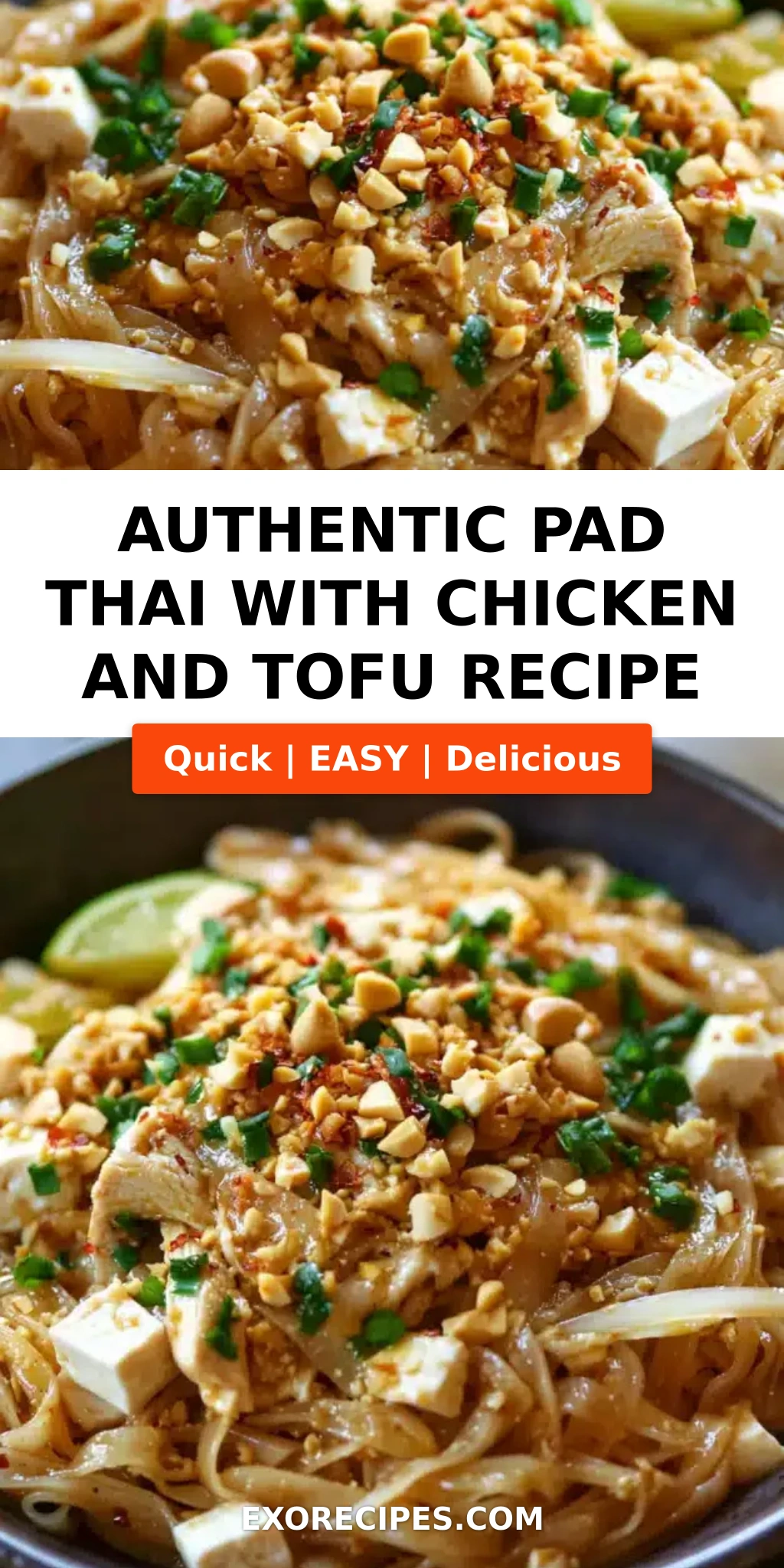
Authentic Pad Thai with Chicken and Tofu – A Flavorful Thai Classic You Can Make at Home — Tamarind-Infused Perfection
I still remember the first time I tasted real Pad Thai — it was at a bustling street stall in Bangkok’s Khao San Road, and the moment those tamarind-coated noodles hit my tongue, I was hooked. But it wasn’t until I started developing my own Authentic Pad Thai with Chicken and Tofu recipe that I truly understood how to bring that same vibrant, sweet-sour balance into a home kitchen. Born in Morocco, trained in Paris, and now cooking every day in New York City, I’ve never stopped chasing flavors that transport you. And this homemade Pad Thai recipe? It’s one of the most transportive dishes in my rotation.
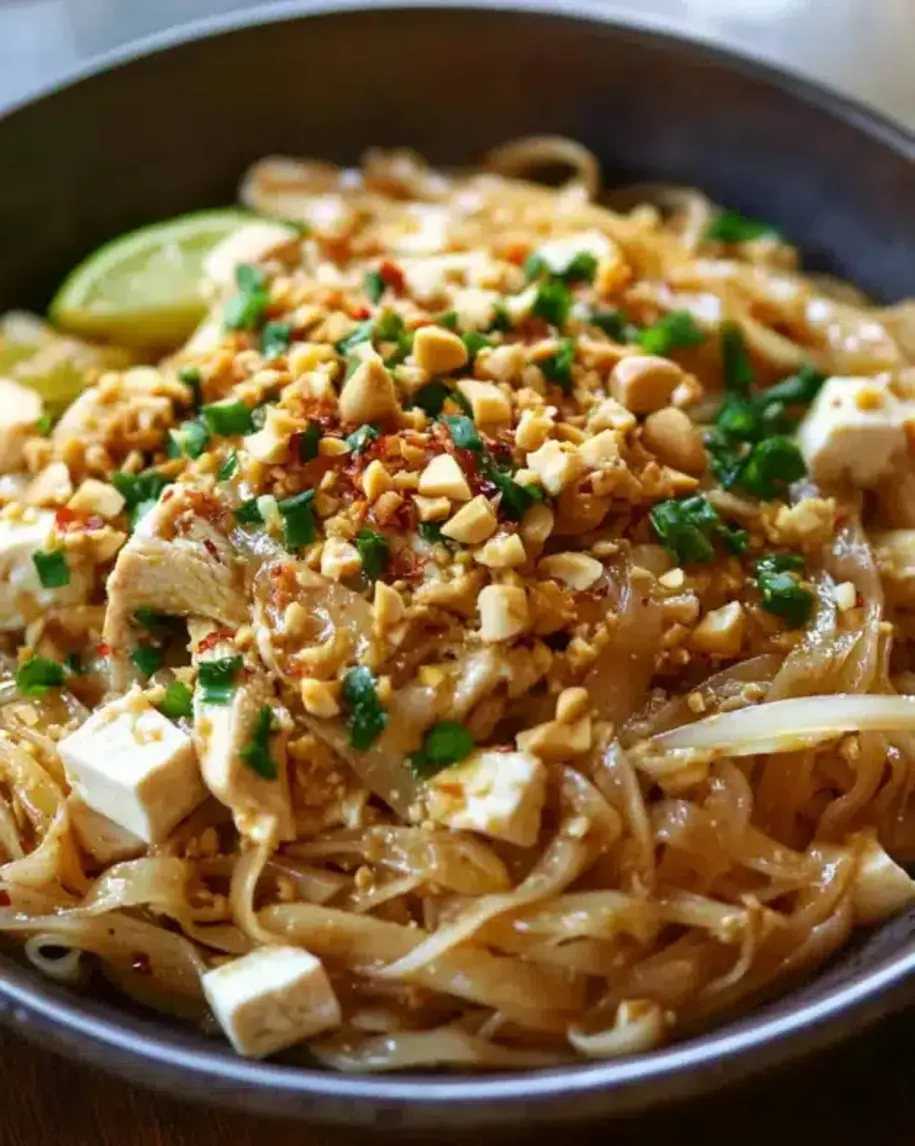
The magic of this chicken tofu Pad Thai lies in the sauce — a deeply savory, tangy, and slightly sweet blend built on tamarind paste, fish sauce, and palm sugar. The rice noodles soak up every drop while staying tender and never mushy. Add tender slices of chicken, crispy-edged tofu, and a final shower of crushed peanuts, cilantro, and lime, and you’ve got a bowl that’s as beautiful as it is delicious. The aromas alone — garlic hitting hot oil, eggs scrambling at the edge of the wok, the whisper of chili — will have everyone gathering in your kitchen.
What makes my version different? I combine two proteins for texture and depth, I soak my noodles just right (not too soft, not too firm), and I finish with a trick I learned from a street food vendor in Chiang Mai: a quick high-heat toss that coaxes out a hint of smoky char without a wok burner. 💡 mia’s Pro Tip: Use a well-seasoned cast-iron skillet if you don’t have a wok — it retains heat beautifully and gives you the closest thing to that street-side sear. Avoid overcrowding the pan, or the noodles will steam instead of fry.
Why This Authentic Pad Thai with Chicken and Tofu Recipe Is the Best
The Flavor Secret. The soul of any great Pad Thai is the sauce — and my tamarind-forward blend is the real deal. I use tamarind paste (not concentrate from a bottle with additives), fish sauce for umami depth, and palm sugar for a gentle caramel sweetness. This isn’t a ketchup-based shortcut; it’s the authentic balance of sweet, sour, salty, and savory that defines Authentic Pad Thai with Chicken and Tofu. My Parisian chef training taught me to layer flavors one at a time, and that approach makes every ingredient sing.
Perfected Texture. The biggest challenge with homemade Pad Thai is getting the noodles right — they can turn gluey or clump together. I’ve tested this easy Pad Thai method dozens of times, and the key is a warm-water soak (not boiling) followed by a quick toss in the hot wok with just enough sauce to coat. The chicken stays juicy, the tofu develops a golden crust, and every bite has a slight chew with no sogginess. My mother’s couscous technique taught me patience with soaking grains; here, that same patience gives you perfect noodles.
Foolproof & Fast. This Thai noodle recipe comes together in 45 minutes flat — 30 minutes of hands-off soaking and just 15 minutes of active cooking. Even on a busy weeknight in my NYC apartment, I can have this on the table before takeout could arrive. The ingredient list is straightforward, and the steps are designed to build confidence. Whether you’re a seasoned cook or making Pad Thai for the first time, you’ll get a restaurant-quality result.
Authentic Pad Thai with Chicken and Tofu Ingredients
When I shop for these ingredients, I head to the Asian market on Mulberry Street in Manhattan’s Chinatown — the scent of dried mushrooms and fish sauce instantly takes me back to the spice souks of Marrakech. The key is choosing pantry staples that deliver maximum flavor without any fuss. Here’s everything you’ll need for this homemade Pad Thai recipe.
Ingredients List
- 8 oz flat rice noodles (Pad Thai noodles)
- 2 tablespoons tamarind paste
- 2 tablespoons fish sauce
- 2 tablespoons palm sugar (or brown sugar)
- 1 tablespoon soy sauce
- 1 tablespoon rice vinegar
- 2 tablespoons vegetable oil
- 2 boneless skinless chicken breasts (thinly sliced)
- 7 oz extra-firm tofu (cut into small cubes)
- 2 cloves garlic (minced)
- 2 eggs
- 1 cup bean sprouts
- 3 green onions (sliced)
- 1/4 cup roasted peanuts (crushed)
- Lime wedges (for serving)
- Fresh cilantro (chopped, for garnish)
- Dried red chili flakes (to taste)
Ingredient Spotlight
Tamarind Paste. This is the backbone of your Pad Thai sauce. Look for a block or jar of pure tamarind paste in the international aisle or at an Asian grocer. It has a tangy, slightly sweet flavor with notes of dried fruit. To use it, soak a small piece in warm water for 10 minutes then press through a sieve, or just buy the prepared paste. Substitution: In a pinch, mix 2 tablespoons lime juice + 1 tablespoon brown sugar per 1 tablespoon tamarind paste.
Rice Noodles (Pad Thai Noodles). These are flat, medium-wide noodles made from rice flour and water. They should be soaked — never boiled — to achieve that signature chewy-tender texture. I use the “Oriental Kitchen” brand from my local market, but any brand labeled “Pad Thai” works. Substitution: Wide rice vermicelli or even thin rice sticks can work, but the texture will be slightly different.
Fish Sauce. This fermented anchovy-based liquid adds an irreplaceable savory depth. It smells strong but mellows beautifully in the hot wok. I recommend Red Boat or Three Crabs brand for clean, balanced flavor. Substitution: Soy sauce or coconut aminos for a vegetarian version, though you’ll lose some umami complexity.
Palm Sugar. Made from the sap of palm trees, this unrefined sugar has a mellow caramel flavor that’s less sweet than white sugar. It’s sold in solid discs or jars. Substitution: Light brown sugar or coconut sugar — use the same amount and dissolve it well.
Extra-Firm Tofu. For crispy tofu that holds its shape, always choose extra-firm and press it for at least 15 minutes to remove excess water. I buy mine from the local HMart in Koreatown. Substitution: Firm tofu works but will be less crispy; you can also use shrimp for a seafood twist.
| Original Ingredient | Best Substitution | Flavor / Texture Impact |
|---|---|---|
| Tamarind Paste | Lime juice + brown sugar (2:1 ratio) | Brighter acidity, less fruity depth |
| Fish Sauce | Soy sauce + splash of lime | Less umami, but still savory |
| Palm Sugar | Light brown sugar | Slightly more molasses flavor, still good |
| Rice Noodles | Wide rice vermicelli | Thinner, less chewy texture |
| Extra-Firm Tofu | Firm tofu or shrimp | Less crispy; shrimp adds sweetness |
How to Make Authentic Pad Thai with Chicken and Tofu — Step-by-Step
Making Authentic Pad Thai with Chicken and Tofu at home is easier than you think — just follow these steps and watch your kitchen transform into a Thai street-food stall.
Step 1: Soak the Noodles
Place the rice noodles in a large bowl and cover with warm water (not boiling — just warm to the touch). Let them soak for 30 minutes until they’re pliable but still firm. Drain well and set aside.
💡 mia’s Pro Tip: If you’re short on time, soak in hot tap water for 20 minutes — but never boil them before stir-frying, or they’ll turn mushy.
Step 2: Make the Sauce
In a small bowl, whisk together the tamarind paste, fish sauce, palm sugar (crushed or finely chopped), soy sauce, and rice vinegar. Stir until the sugar is mostly dissolved. Set the sauce aside.
⚠️ Common Mistake to Avoid: Don’t skip dissolving the sugar — if any sugar crystals remain, they’ll burn in the hot wok and create bitter spots.
Step 3: Cook the Chicken
Heat 1 tablespoon of vegetable oil in a large wok or heavy skillet over high heat. Add the sliced chicken and cook without stirring for 1 minute to get a nice sear, then stir-fry for 3–4 minutes until golden and cooked through. Remove to a plate.
💡 mia’s Pro Tip: Slice the chicken against the grain into thin strips — about 1/4 inch thick — so it cooks quickly and stays tender.
Step 4: Crisp the Tofu
Add the remaining 1 tablespoon of oil to the wok. Add the cubed tofu and cook over high heat, turning occasionally, for 3–4 minutes until all sides are golden and crisp. Remove and set aside with the chicken.
⚠️ Common Mistake to Avoid: Don’t crowd the tofu — give each cube space so it browns instead of steaming. If needed, cook in two batches.
Step 5: Scramble the Eggs
Add the minced garlic to the wok and stir for 30 seconds until fragrant. Push the garlic to one side. Crack the eggs directly into the cleared space and scramble them with a spatula until just set but still soft.
💡 mia’s Pro Tip: Keeping the eggs slightly undercooked at this stage ensures they stay silky when tossed with the noodles later.
Step 6: Toss Everything Together
Add the drained noodles, cooked chicken, crispy tofu, and the tamarind sauce to the wok. Toss everything together over high heat for 2–3 minutes until the noodles are evenly coated, tender, and slightly charred in spots.
⚠️ Common Mistake to Avoid: Over-tossing can break the noodles. Use a gentle lifting-and-folding motion with tongs or a spatula.
Step 7: Add Sprouts and Green Onions
Add the bean sprouts and sliced green onions. Toss for another minute — the sprouts should still have some crunch. Remove from heat immediately.
💡 mia’s Pro Tip: Reserve a handful of fresh bean sprouts for garnish — the contrast between raw-crunchy and cooked-tender is delightful.
Step 8: Serve and Garnish
Divide the Pad Thai among four plates. Top each with crushed peanuts, fresh cilantro, a generous squeeze of lime, and a sprinkle of dried red chili flakes. Serve immediately while the noodles are still hot.
⚠️ Common Mistake to Avoid: Don’t skip the lime — its acidity brightens all the flavors and balances the sweetness of the sauce.
| Step | Action | Duration | Key Visual Cue |
|---|---|---|---|
| 1 | Soak noodles | 30 min | Pliable but not mushy |
| 2 | Make sauce | 2 min | Sugar dissolved, smooth |
| 3 | Cook chicken | 4–5 min | Golden brown, cooked through |
| 4 | Crisp tofu | 3–4 min | Golden all sides |
| 5 | Scramble eggs | 1 min | Just set, still soft |
| 6 | Toss noodles | 2–3 min | Coated, tender, slight char |
| 7 | Add sprouts/onions | 1 min | Sprouts still crunchy |
| 8 | Serve & garnish | Immediate | Topped with peanuts, lime, chili |
Serving & Presentation
When I serve this chicken tofu Pad Thai, I like to bring the whole wok to the table and let everyone plate their own — it feels communal and celebratory, like the family meals I grew up with in Morocco. Start with a warm bowl, pile the noodles high, and finish with a generous pinch of crushed peanuts and a few cilantro sprigs. A lime wedge on the side is essential — a bright squeeze right before eating wakes up all the flavors.
For a complete meal, I love pairing this with a crisp cucumber salad dressed with rice vinegar and a touch of chili, or alongside fresh spring rolls with peanut dipping sauce. In my NYC apartment, I’ll sometimes add a handful of fresh Thai basil on top if I have it — its anise-like perfume is a showstopper. And if you’re serving a crowd, double the recipe and use your largest skillet or wok.
💡 mia’s Pro Tip: For an extra layer of texture, sprinkle a few extra raw bean sprouts and a pinch of crushed red chili on top right before serving. The contrast of warm noodles and cool, crunchy sprouts is pure magic.
| Pairing Type | Suggestions | Why It Works |
|---|---|---|
| Side Dish | Cucumber salad, fresh spring rolls, satay skewers | Cool, fresh contrast to the rich noodles |
| Sauce / Dip | Extra tamarind sauce, sriracha, peanut sauce | Adds heat, creaminess, or tang |
| Beverage | Thai iced tea, cold lager, sparkling lime water | Cuts richness, refreshes the palate |
| Garnish | Crushed peanuts, cilantro, lime wedge, chili flakes, Thai basil | Adds crunch, aroma, citrus, and heat |
Make-Ahead, Storage & Reheating
In my busy NYC life, I often prep components of this easy Pad Thai on Sunday so I can have dinner on the table in 10 minutes on a weeknight. The sauce can be made up to a week ahead, and the noodles can be soaked and drained a day in advance. But the fully assembled dish is best enjoyed fresh — though leftovers reheat beautifully with the right technique.
| Method | Container | Duration | Reheating Tip |
|---|---|---|---|
| Refrigerator | Airtight container | 3–4 days | Reheat in a hot skillet with a splash of water to rehydrate noodles |
| Freezer | Freezer-safe bag or container | 2 months | Thaw in fridge overnight, then stir-fry with a little oil and sauce |
| Make-Ahead | Sauce in jar, noodles soaked & dried | Sauce: 1 week; Noodles: 1 day | Cook everything fresh — just combine prepped components |
To reheat leftovers, I never use the microwave — it makes the noodles rubbery. Instead, I heat a nonstick skillet over medium-high heat, add a teaspoon of oil, and stir-fry the Pad Thai for 2–3 minutes with a tablespoon of water or extra tamarind sauce. The steam loosens the noodles and brings back their tender texture. Garnish with fresh peanuts and lime just before serving.
Variations & Easy Swaps
One of the things I love most about this Thai noodle recipe is how adaptable it is. Whether you’re cooking for a dietary need or just wanting to experiment, these variations will keep your Pad Thai exciting every time.
| Variation | Key Change | Best For | Difficulty Impact |
|---|---|---|---|
| Vegetarian Pad Thai | Omit chicken, double the tofu, use soy sauce instead of fish sauce | Meatless Monday, plant-based diets | Same difficulty |
| Shrimp Pad Thai | Replace chicken with 8 oz peeled shrimp, cook 2 min per side | Seafood lovers | Same difficulty |
| Spicy Drunken Noodle Style | Add 2 fresh Thai chilies, extra garlic, and a splash of dark soy sauce | Heat seekers | Same difficulty |
Vegetarian Pad Thai
For a fully plant-based version of this homemade Pad Thai recipe, simply omit the chicken and use twice the amount of extra-firm tofu. Replace fish sauce with soy sauce or tamari, and add a teaspoon of miso paste to the sauce for extra umami. I like to add sliced shiitake mushrooms for a meaty texture — a trick I learned from a Buddhist temple in Chiang Mai. The result is deeply savory and completely satisfying.
Shrimp Pad Thai
If you’re a seafood lover, swap the chicken for 8 ounces of large shrimp, peeled and deveined. Cook them in the hot oil for just 2 minutes per side until pink and curled — they cook very quickly. Remove them before scrambling the eggs, then add them back with the noodles. The natural sweetness of shrimp pairs beautifully with the tamarind sauce. This is actually the most common version you’ll find on the streets of Bangkok.
Spicy Drunken Noodle Style Pad Thai
For a fiery twist that nods to Thailand’s infamous drunken noodles (pad kee mao), add 2 thinly sliced fresh Thai bird’s eye chilies along with the garlic, and use a splash of dark soy sauce for a deeper color and richer flavor. A handful of Thai basil leaves stirred in at the end adds a licorice-like punch. This version is not for the faint of heart — but if you love heat, it’s unforgettable.
💡 mia’s Pro Tip: Whichever variation you choose, always taste the sauce before adding it to the noodles — adjust the tamarind/sugar balance to your liking. Everyone’s perfect Pad Thai is a little different.
What is the best way to get the smoky flavor in authentic Pad Thai when cooking at home?
Getting that coveted smoky “wok hei” flavor at home is absolutely possible, even without a restaurant-style wok burner. The key is to use a very high heat and a heavy pan — preferably a cast-iron skillet or a carbon steel wok — and to work in small batches so the pan doesn’t cool down. Let the noodles sit undisturbed for about 30 seconds after adding them to the pan, then toss. That brief contact with the hot surface creates tiny caramelized spots that taste smoky. You can also add a few drops of toasted sesame oil at the end for a hint of smokiness. In my NYC kitchen, I use a 12-inch cast-iron skillet and preheat it for a full 3 minutes before adding oil — that’s my trick for near-restaurant-quality char at home.
Can I use only chicken or only tofu in this Pad Thai recipe instead of both?
Absolutely — this chicken tofu Pad Thai recipe is designed to be flexible. If you want to use only chicken, simply omit the tofu and add an extra 4 ounces of chicken (about one more breast). If you prefer only tofu, skip the chicken and double the tofu to 14 ounces, pressing and cubing it the same way. The cooking times remain the same for both proteins. I often make a tofu-only version for my vegetarian friends, and it’s just as satisfying. Just be sure to season whichever protein you use with a pinch of salt and pepper before cooking — it makes a difference in the final dish.
How do I keep the rice noodles from sticking together or turning mushy when making Pad Thai?
This is the number one challenge home cooks face, and I’ve got you covered. First, always soak your rice noodles in warm water — never boiling water — for 30 minutes until they’re pliable but still firm. Drain them thoroughly and toss them with a teaspoon of oil to prevent sticking. Second, don’t overcook them in the wok: they only need 2–3 minutes of stir-frying with the sauce. Third, make sure your pan is hot enough — if the heat is too low, the noodles will absorb too much liquid and turn mushy. If they do start to stick, add a tablespoon of water or extra sauce to loosen them. These techniques come straight from my years of testing easy Pad Thai recipes in my own kitchen.
What is a good substitute for tamarind paste in authentic Pad Thai with chicken and tofu?
If you don’t have tamarind paste, the best substitute is a mixture of lime juice and brown sugar — use 2 tablespoons of lime juice plus 1 tablespoon of brown sugar for every 1 tablespoon of tamarind paste called for. This gives you the sour-sweet balance that’s essential to Authentic Pad Thai with Chicken and Tofu. Another option is Worcestershire sauce mixed with a splash of lemon juice, though the flavor profile shifts slightly. I’ve also used pomegranate molasses in a pinch — it’s tangy and fruity, and it works surprisingly well. Tamarind paste is widely available in Asian grocery stores and online, so I do recommend seeking it out for the most authentic result.
Can I make this Pad Thai recipe gluten-free?
Yes, this Thai noodle recipe is naturally gluten-free with a few simple swaps. Rice noodles are already gluten-free. Replace the soy sauce with tamari or coconut aminos, and check that your fish sauce is labeled gluten-free (most brands are, but some contain wheat). The remaining ingredients — tamarind paste, palm sugar, rice vinegar, vegetables, and proteins — are all naturally gluten-free. I’ve tested this version many times for friends with celiac disease, and the flavor is just as vibrant. Just be sure to use a clean wok or pan to avoid cross-contamination if you’re cooking for someone with a severe gluten allergy.
How do I press tofu properly for crispy Pad Thai tofu?
Pressing tofu is essential for achieving those golden, crispy cubes that make this chicken tofu Pad Thai so texturally satisfying. Start with extra-firm tofu, then wrap the block in a clean kitchen towel or several layers of paper towels. Place it on a plate, put a heavy skillet or cast-iron pan on top, and let it sit for 15–20 minutes. You’ll see liquid being released — that’s what you want to remove. After pressing, cut the tofu into 1/2-inch cubes and pat them completely dry with paper towels. The drier the tofu, the crispier it gets in the hot oil. This technique ensures your tofu doesn’t steam in the pan and instead develops a beautiful golden crust.
What type of pan is best for making Pad Thai at home?
For the best results with this homemade Pad Thai recipe, use a 12-inch carbon steel wok or a large cast-iron skillet. Both retain heat exceptionally well and allow you to achieve the high-temperature sear that gives Pad Thai its signature texture. A nonstick skillet can work, but you won’t get the same caramelization. If you’re using a wok, make sure it’s well-seasoned and preheat it over high heat for at least 2 minutes before adding oil. In my NYC kitchen, I rely on my carbon steel wok for the most authentic results — it’s lightweight enough to toss noodles easily and develops a natural nonstick patina over time.
Can I add vegetables to this Pad Thai recipe?
Absolutely — vegetables are a wonderful addition to this Authentic Pad Thai with Chicken and Tofu. I recommend adding 1/2 cup of shredded carrots, a handful of snow peas, or thinly sliced bell peppers along with the bean sprouts. If you add heartier vegetables like broccoli or carrots, stir-fry them first for 2 minutes before adding the noodles. For softer vegetables like zucchini or mushrooms, add them with the sprouts. I love tossing in a handful of fresh Thai basil or mint leaves at the very end for an aromatic lift. Vegetables not only add color and nutrition but also make the dish more substantial — perfect for a complete one-wok meal.
How do I make Pad Thai less sweet or more sour to my taste?
Balancing the sweet-sour profile of Pad Thai is personal, and I encourage you to adjust it to your preference. For a less sweet Pad Thai, reduce the palm sugar to 1 tablespoon and add an extra teaspoon of rice vinegar. For a more sour version (which I personally love), increase the tamarind paste by another tablespoon and add a squeeze of fresh lime juice at the end. The beauty of this easy Pad Thai recipe is that the sauce is made separately and can be tasted before it goes into the wok. I always recommend mixing the sauce, dipping a clean spoon in, and adjusting the tamarind and sugar until it hits that perfect sweet-tart note for you. Your taste buds are the best guide.
What can I use instead of fish sauce to make this recipe vegetarian?
For a vegetarian or vegan Thai noodle recipe, the best substitute for fish sauce is a combination of soy sauce (or tamari) and a small amount of seaweed or mushroom broth powder for umami. Mix 2 tablespoons of soy sauce with 1 teaspoon of lime juice and 1/2 teaspoon of miso paste — that gives you the savory depth you’re looking for. Coconut aminos are another option, though they’re sweeter than fish sauce. I’ve also used a splash of vegetable broth with a pinch of kelp powder, which adds a briny note. The key is to include an umami-rich component to replace what fish sauce brings. Taste and adjust as you go — your Pad Thai can be every bit as delicious without fish sauce.
Share Your Version!
I’d love to hear how your Authentic Pad Thai with Chicken and Tofu turns out! Did you stick with the classic version or try one of the variations? Did you add extra chili for heat or pile on the bean sprouts for crunch? Leave a star rating and a comment below — your feedback helps other home cooks discover their new favorite recipe.
And if you’re on social media, snap a photo of your beautiful bowl of Pad Thai and share it with me. Tag @exorecipes on Instagram or Pinterest — I personally read every tag and love seeing your creations. One question I get asked often: did the smoky char technique work in your pan? Let me know in the comments!
From my NYC kitchen to yours — I hope this recipe brings as much warmth to your table as it does to mine. — mia 🧡
Love This Recipe? Save It to Pinterest!
If you enjoyed this Authentic Pad Thai with Chicken and Tofu recipe, don’t let it get lost in your browser tabs! 😄 Pin it now so you can find it again anytime — and explore hundreds more tried-and-tested recipes waiting for you on my Pinterest boards.
👉 Follow mia on Pinterest @chefrecipes2
📌 Pin this recipe · 🔁 Re-pin your favorites · 💬 Tag me when you make it — I love seeing your creations!
⭐️ Made This Recipe? Share Your Experience!
I’d love to know how your Authentic Pad Thai with Chicken and Tofu turned out! Did you add extra chili? Swap the protein? Tell me in the comments below and leave a star rating — your feedback helps our community cook better every day. 👩🍳💬
Authentic Pad Thai with Chicken and Tofu A Flavorful Thai Classic You Can Make at Home
- Prep Time: 30 minutes
- Cook Time: 15 minutes
- Total Time: 45 minutes
- Yield: 4 1x
- Method: Main Course
- Cuisine: Thai
Description
This authentic Pad Thai with chicken and tofu is a classic Thai street food dish that’s sweet, savory, and tangy, made with rice noodles, protein, and a flavorful tamarind-based sauce.
Ingredients
- 8 oz flat rice noodles (Pad Thai noodles)
- 2 tablespoons tamarind paste
- 2 tablespoons fish sauce
- 2 tablespoons palm sugar (or brown sugar)
- 1 tablespoon soy sauce
- 1 tablespoon rice vinegar
- 2 tablespoons vegetable oil
- 2 boneless skinless chicken breasts (thinly sliced)
- 7 oz extra-firm tofu (cut into small cubes)
- 2 cloves garlic (minced)
- 2 eggs
- 1 cup bean sprouts
- 3 green onions (sliced)
- 1/4 cup roasted peanuts (crushed)
- Lime wedges (for serving)
- Fresh cilantro (chopped, for garnish)
- Dried red chili flakes (to taste)
Instructions
- Soak rice noodles in warm water for 30 minutes until softened. Drain and set aside.
- In a small bowl, whisk together tamarind paste, fish sauce, palm sugar, soy sauce, and rice vinegar. Set aside.
- Heat 1 tablespoon oil in a large wok or skillet over high heat. Add chicken and cook until golden and cooked through, about 4-5 minutes. Remove and set aside.
- Add remaining 1 tablespoon oil to the wok. Add tofu and cook until crispy, about 3-4 minutes. Remove and set aside.
- Add garlic to the wok and stir for 30 seconds. Push to one side and crack the eggs into the wok. Scramble until just set.
- Add the drained noodles, chicken, tofu, and tamarind sauce. Toss everything together for 2-3 minutes until noodles are coated and tender.
- Add bean sprouts and green onions. Toss for another minute.
- Serve immediately, topped with crushed peanuts, cilantro, lime wedges, and chili flakes.
Notes
For a vegetarian version, omit chicken and use extra tofu. Adjust tamarind paste and sugar to balance sweet and sour flavors.
Nutrition
- Calories: 540
- Sugar: 12g
- Fat: 22g
- Carbohydrates: 58g
- Protein: 32g
k">
Tried This Recipe? Leave a Comment!
Did you make this recipe? I’d love to hear how it turned out! Please leave a comment and a rating below. Your feedback helps other home cooks and supports cheerychop.com!
For more delicious inspiration, follow me on Pinterest!
