Table of Contents
Yellow Chicken Curry Recipe – Easy & Authentic Thai Dish!
Introduction
Did you know that Thai curry consumption has increased by over 40% globally in the last decade, becoming a staple comfort food? This surge is no surprise, as the rich, aromatic blend of spices and creamy coconut milk offers a uniquely satisfying experience. Who doesn’t love a rich, flavorful curry? This Yellow Chicken Curry is not only delicious but also an authentic Thai dish that’s surprisingly easy to make at home! Packed with savory spices, tender chicken, and creamy coconut milk, it’s a perfect meal for those who love a comforting, warm, and slightly spicy dish. Using traditional Thai ingredients like Chaokoh coconut milk and authentic curry paste makes all the difference in bringing out the rich, tropical flavors that make this curry a must-try. In this guide, we’ll walk you through every step to create a restaurant-quality dish in your own kitchen, demystifying the process and ensuring you achieve that perfect balance of sweet, salty, and spicy that defines authentic Thai cuisine.
Ingredients List
Gathering the right ingredients is the first step to an authentic Yellow Chicken Curry. Here’s what you’ll need, with notes on substitutions and sensory descriptions to help you choose the best components.
- 1.5 lbs (680g) boneless, skinless chicken thighs – Cut into bite-sized pieces. Thighs are recommended for their juicy, tender texture and higher fat content, which prevents drying out during simmering. Substitution: Chicken breast (cook for less time), firm tofu, or shrimp.
- 3-4 tbsp yellow curry paste – The heart of the dish. Look for authentic Thai brands like Maesri or Mae Ploy for a vibrant, aromatic paste with a complex blend of lemongrass, galangal, and turmeric. Substitution: Red or green curry paste for a different heat and flavor profile.
- 2 cans (13.5 oz each) Chaokoh coconut milk – Full-fat is essential for that luxuriously creamy, rich mouthfeel and authentic tropical sweetness. Chaokoh is prized for its consistent quality and lack of additives. Substitution: Light coconut milk (less creamy) or other full-fat brands.
- 1 large yellow onion, sliced – Adds a sweet, caramelized base note.
- 2 medium potatoes, cubed – Use waxy potatoes like Yukon Gold that hold their shape and soak up the curry sauce beautifully.
- 1 large carrot, sliced – Provides a subtle sweetness and vibrant color.
- 1 red bell pepper, sliced – Adds a crisp texture and a touch of sweetness to balance the spice.
- 2 tbsp fish sauce – The umami backbone. It should smell pungent but taste savory and complex. Substitution: Soy sauce or tamari (for a different, less funky saltiness).
- 1 tbsp palm sugar (or brown sugar) – Palm sugar offers a caramel-like, mellow sweetness that is traditional. Substitution: Light brown sugar.
- 1 tbsp vegetable oil – For sautéing.
- Fresh aromatics: 3 kaffir lime leaves (torn), 1 stalk lemongrass (bruised), and a handful of Thai basil leaves. These are non-negotiable for the authentic floral, citrusy fragrance.
- Garnish: Fresh cilantro and a squeeze of lime juice just before serving.
Timing
This Yellow Chicken Curry comes together in under an hour, making it a fantastic weeknight option. Compared to many curry recipes that require lengthy marinating or complex spice toasting, this streamlined version focuses on efficient prep and layered cooking to build maximum flavor quickly. The 20-minute prep involves simple chopping, while the 30-minute active cooking time allows the sauce to reduce and the chicken to become fork-tender. It’s significantly faster than the average from-scratch curry recipe, which can take 75+ minutes, without sacrificing any depth of flavor.
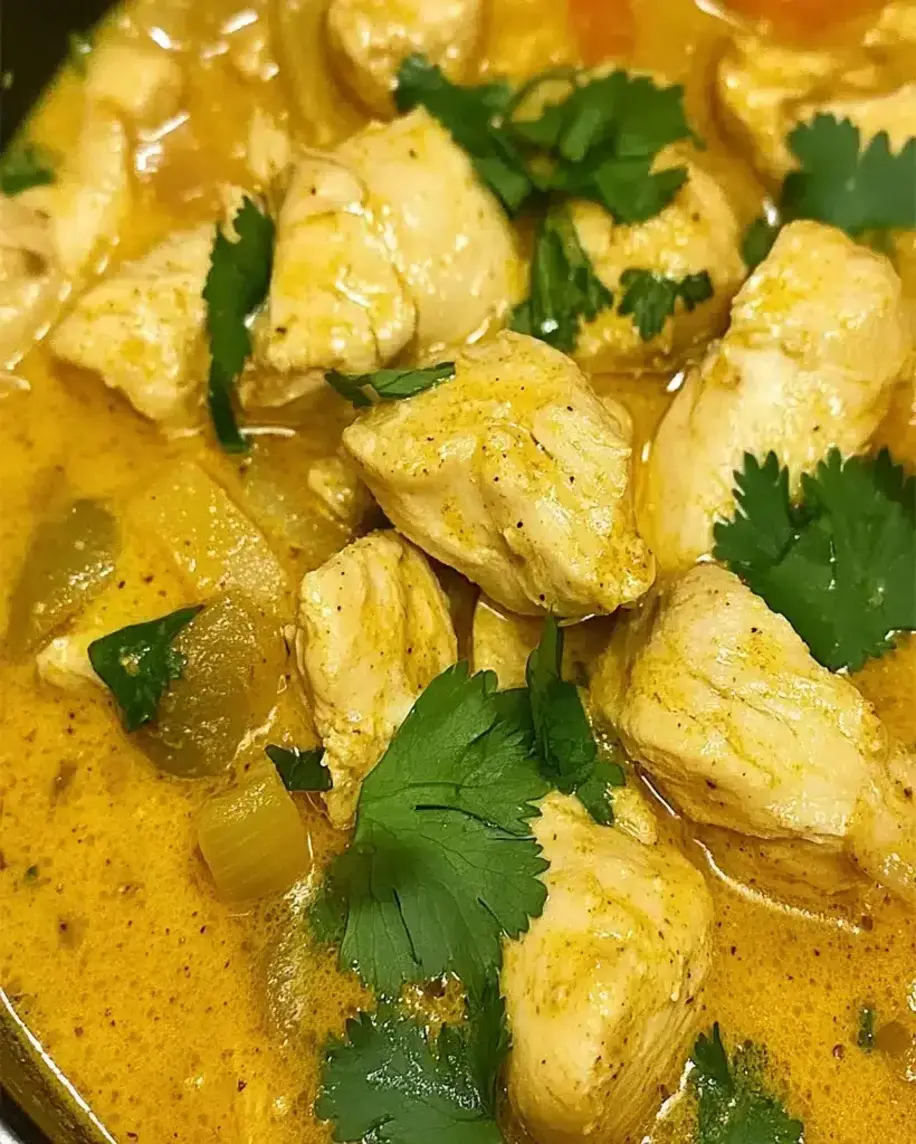
Golden, aromatic, and ready in under an hour—this Yellow Chicken Curry brings the taste of Thailand to your table.
Step-by-Step Instructions
Step 1: Prepare Your Ingredients
This “mise en place” step is crucial for a smooth cooking experience. Cut your chicken into uniform, 1-inch pieces to ensure even cooking. Slice the onion, cube the potatoes, slice the carrot and bell pepper. Bruise the lemongrass stalk with the back of your knife to release its oils, and tear the kaffir lime leaves. Having everything measured and within arm’s reach will make the cooking process feel like a joyful dance rather than a frantic scramble.
Step 2: Sauté the Aromatics
Heat the vegetable oil in a large pot or wok over medium heat. Add the sliced onion and sauté for 3-4 minutes until it becomes translucent and fragrant. Now, add the yellow curry paste. This is where the magic starts—cook the paste with the onions for 1-2 minutes, stirring constantly. You’ll notice the oil start to separate slightly from the paste, and the incredible aroma of lemongrass, galangal, and spices will fill your kitchen. This step “awakens” the paste, deepening its flavor and ensuring it’s evenly distributed throughout the curry.
Step 3: Cook the Sauce
Pour in about one-third of one can of coconut milk (the thick, creamy part that often separates to the top). Stir well to combine it with the curry paste, creating a thick, fragrant paste. Let this simmer for 2-3 minutes, allowing the fat in the coconut milk to fry the curry paste gently, which intensifies the flavor. Then, add the remaining coconut milk, fish sauce, and palm sugar. Stir until the sugar dissolves. Add the bruised lemongrass stalk and torn kaffir lime leaves. Bring the mixture to a gentle simmer.
Step 4: Add Chicken and Vegetables
Carefully add the cubed potatoes and sliced carrots to the simmering sauce. These harder vegetables need a head start. Let them cook for about 8 minutes, partially covered, until they begin to soften. Then, add the chicken pieces and red bell pepper. Stir to ensure everything is submerged in the creamy sauce. The chicken will cook through in about 10-12 minutes at a steady, low simmer.
Step 5: Simmer and Finish
Once the chicken is cooked through and the potatoes are tender (test with a fork), it’s time for the final touches. Remove the pot from the heat. Fish out the lemongrass stalk and discard it. Stir in the fresh Thai basil leaves—they will wilt slightly from the residual heat, releasing their anise-like fragrance. Taste the curry and adjust seasoning if needed; you might want an extra splash of fish sauce for saltiness or a pinch more sugar to balance the heat. Serve immediately, garnished generously with fresh cilantro and a hearty squeeze of lime juice to brighten all the flavors.
Nutritional Information
The following nutritional estimate is for one serving (approximately 1.5 cups of curry), based on a recipe yielding 6 servings. Values are approximate and can vary based on specific ingredients and brands used.
Healthier Alternatives
You can easily adapt this Yellow Chicken Curry to fit various dietary preferences without losing its soul-satisfying essence.
- Lower Fat: Use “light” coconut milk. For even more creaminess without the fat, blend 1/4 cup of raw cashews with 1 cup of water until smooth and add it to the sauce.
- Lower Carb / Keto-Friendly: Omit the potatoes and carrots. Increase the quantity of chicken and add low-carb vegetables like cauliflower florets, zucchini, and mushrooms. Use a sugar substitute like monk fruit or erythritol in place of palm sugar.
- Plant-Based / Vegan: Replace chicken with extra-firm tofu (pressed and cubed) or chickpeas. Substitute fish sauce with soy sauce or a vegan “fish” sauce. Ensure your curry paste is vegan (some contain shrimp paste).
- Reduced Sodium: Use a low-sodium soy sauce instead of fish sauce and be mindful of the salt content in your curry paste brand. You can boost flavor with extra fresh herbs and lime juice at the end.
Serving Suggestions
This curry is a complete meal in a bowl, but the right accompaniments elevate it to a feast.
- Jasmine Rice: The classic pairing. The fragrant, slightly sticky rice is perfect for soaking up every last drop of the creamy sauce.
- Rice Noodles: For a change, serve the curry over a bed of soft rice noodles for a comforting, noodle-soup-style dish.
- Fresh Side Salad: A simple salad of cucumber, red onion, and cherry tomatoes with a lime-vinegar dressing cuts through the richness and refreshes the palate.
- Condiments: Set out small bowls of extra fish sauce, sliced Thai chilies in vinegar, and more lime wedges so everyone can customize their bowl to their preferred level of salty, sour, and spicy.
Common Mistakes
Avoid these pitfalls to ensure your curry is perfect every time.
- Not Cooking the Curry Paste: Adding the paste directly to the liquid without frying it first results in a raw, one-dimensional flavor. Always sauté it in oil or coconut cream.
- Overcooking the Chicken: Adding chicken too early or boiling the curry vigorously will make the chicken tough and dry. Add it after the harder vegetables have started to soften and maintain a gentle simmer.
- Using Low-Fat Coconut Milk: This often leads to a watery, less flavorful sauce. Full-fat coconut milk provides the necessary body and richness.
- Skipping the Fresh Herbs & Lime: The final garnish of basil, cilantro, and lime juice isn’t just decorative. These elements add crucial fresh, bright, and aromatic notes that balance the rich
