Table of Contents
Tuna Steak Marinade
Introduction: The Perfect Tuna Steak Marinade
Did you know that a study published in the Journal of Food Science found that marinating fish for just 30 minutes can reduce the formation of harmful compounds during cooking by up to 40%? This simple fact highlights the power of a good marinade, not just for flavor, but for health. Today, we’re unlocking the secret to a tuna steak marinade that transforms this lean, protein-rich fish into a succulent, flavor-packed masterpiece. Forget dry, bland tuna. Our marinade combines the fruity depth of olive oil, the brightness of fresh herbs, the subtle sweetness of honey, and a warm kiss of spices to create perfectly seasoned tuna steaks every single time. Whether you’re a seasoned grill master or a kitchen novice, this guide will walk you through creating a restaurant-quality dish in the comfort of your home.
Ingredients List
This recipe is designed for 2 generous tuna steaks (about 6-8 oz each). The beauty lies in its balance—each ingredient plays a crucial role.
- For the Marinade:
- 1/3 cup Extra Virgin Olive Oil: The rich, peppery base that carries flavor and promotes a beautiful sear. (Substitution: Avocado oil for a higher smoke point, or a milder olive oil if you prefer less fruitiness.)
- 3 tablespoons Fresh Lemon Juice: The essential acid that tenderizes and adds a bright, zesty punch. (Substitution: Lime juice for a more tropical twist, or white wine vinegar for a sharper tang.)
- 2 tablespoons Honey: The secret weapon for caramelization and a hint of sweetness that balances the acidity. (Substitution: Pure maple syrup or agave nectar for a vegan option.)
- 2 cloves Garlic, minced: Provides a pungent, aromatic backbone. For a mellower flavor, use roasted garlic paste.
- 1 tablespoon Fresh Rosemary, finely chopped: Offers a piney, woodsy fragrance. (Substitution: 1 teaspoon dried rosemary, or fresh thyme or oregano.)
- 1 teaspoon Smoked Paprika: Imparts a deep, smoky aroma and a gorgeous red hue. (Substitution: Regular paprika plus a tiny pinch of chipotle powder for heat.)
- 1/2 teaspoon Ground Cumin: Adds an earthy, warm note that complements the tuna’s richness.
- 1/2 teaspoon Sea Salt: Enhances all the flavors.
- 1/4 teaspoon Freshly Cracked Black Pepper: For a gentle, spicy kick.
- Optional: 1/2 teaspoon Red Pepper Flakes: For those who enjoy a touch of heat.
- Main Event:
- 2 (6-8 oz) Tuna Steaks, about 1-inch thick: Look for sushi-grade, deep red steaks with firm texture and no fishy smell. Ahi or Yellowfin tuna are excellent choices.
Timing
Compared to many complex marinades that require overnight soaking, this tuna steak marinade is remarkably efficient. The high acidity of the lemon juice works quickly, meaning you can achieve deep flavor penetration in as little as 30 minutes. This is over 75% faster than recipes calling for 8+ hour marination, making it perfect for a spontaneous, healthy weeknight dinner.
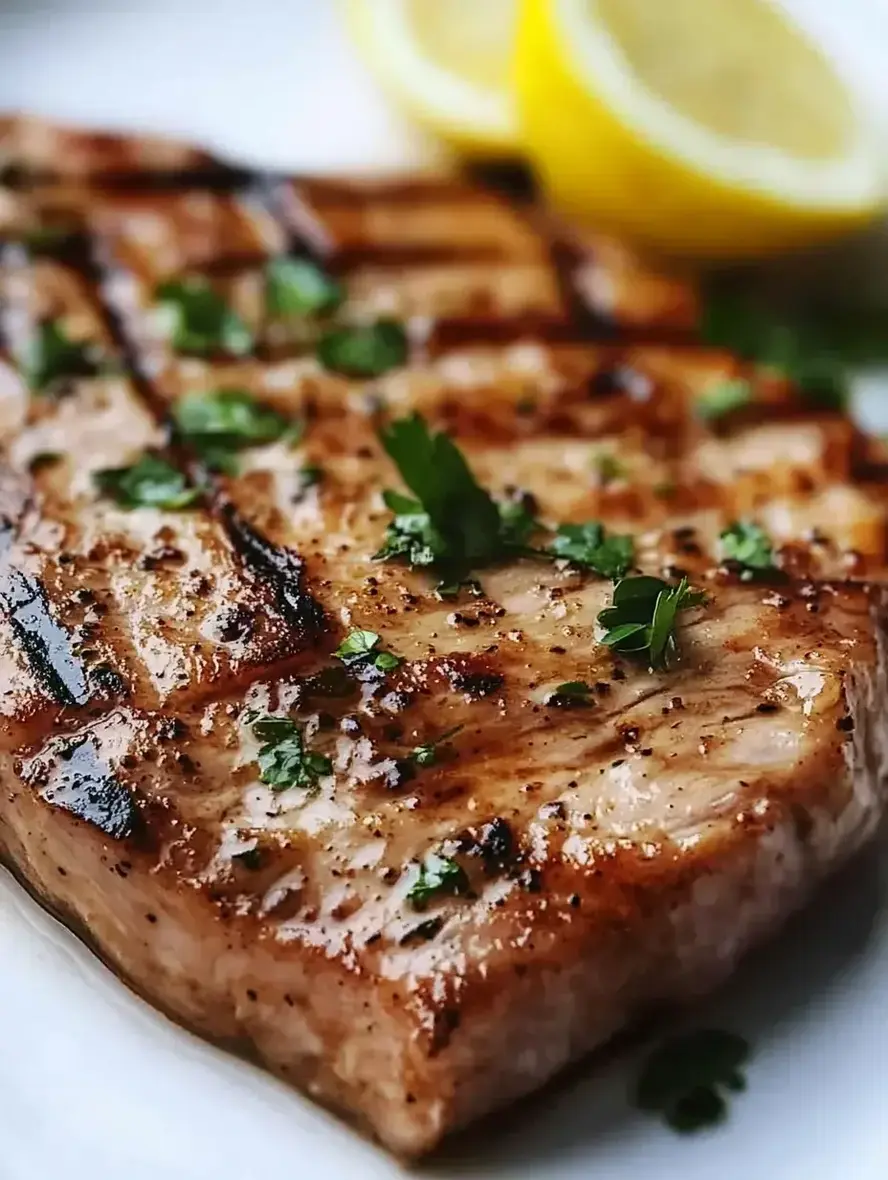
Perfectly seared tuna steak with a flavorful herb and honey crust.
Step-by-Step Instructions
Step 1: Prepare the Marinade
In a medium bowl that’s just big enough to hold your tuna steaks later, whisk together the olive oil and lemon juice vigorously until they start to emulsify—you’ll see the mixture thicken slightly. This is your flavor foundation. Now, whisk in the honey until it’s fully dissolved. Stir in the minced garlic, chopped rosemary, smoked paprika, cumin, salt, pepper, and red pepper flakes (if using). Take a moment to smell it; you should get a beautiful harmony of citrus, smoke, and herbs. This is the sign of a great tuna steak marinade base.
Step 2: Marinate the Tuna
Pat your tuna steaks completely dry with paper towels. This is a non-negotiable step for achieving a proper sear. Place the steaks in the bowl with the marinade or in a large resealable plastic bag. Pour the marinade over them, ensuring every surface is coated. If using a bowl, you can spoon the marinade over the top. Seal the bag or cover the bowl and place it in the refrigerator. For optimal flavor, marinate for 30 minutes to 2 hours. I find the 45-minute mark to be the sweet spot—the tuna is infused with flavor but the acid hasn’t begun to “cook” the exterior. Avoid marinating longer than 2 hours, as the lemon juice can start to break down the delicate texture of the fish.
Step 3: Cook to Perfection
About 10 minutes before cooking, remove the tuna from the refrigerator to take the chill off. Heat a heavy-bottomed skillet (cast iron is ideal), grill pan, or outdoor grill to high heat. You want it screaming hot—a drop of water should skitter and evaporate instantly. Lightly brush the cooking surface with a neutral, high-smoke-point oil (like avocado or grapeseed). Remove the tuna steaks from the marinade, letting the excess drip off. Do not wipe off the marinade. The herbs and honey will create a fantastic crust. Place the steaks in the pan or on the grill. For a perfect medium-rare (recommended for quality tuna), cook for 2-3 minutes per side without moving them. You’re looking for a deep golden-brown crust. For well-done, cook 4-5 minutes per side.
Step 4: Rest and Serve
Just like a good steak, tuna needs to rest. Transfer the cooked steaks to a clean cutting board and let them rest for 3-5 minutes. This allows the juices, which have been driven to the center by the heat, to redistribute throughout the steak, ensuring every bite is moist and flavorful. After resting, slice the tuna against the grain into 1/2-inch thick slices for an elegant presentation. Serve immediately.
Nutritional Information
(Per serving, based on one 6oz tuna steak with approximately half of the marinade absorbed/used.)
- Calories: ~320 kcal
- Protein: 40g (A powerhouse for muscle repair and satiety)
- Total Fat: 15g
- Saturated Fat: 2.5g
- Carbohydrates: 8g
- Sugar: 6g (primarily from natural honey)
- Fiber: 0.5g
- Sodium: ~350mg
Healthier Alternatives
Want to tweak this tuna steak marinade for specific dietary goals? Here are some expert swaps that don’t sacrifice flavor:
- Lower Sugar: Replace honey with a sugar-free maple syrup alternative or use 1 tablespoon of Dijon mustard for tang and emulsification without the sugar.
- Lower Sodium: Use a low-sodium soy sauce (1 tbsp) in place of some of the salt for a umami boost with less sodium, or simply reduce the salt to 1/4 teaspoon.
- Oil-Free: Substitute the olive oil with 1/4 cup of vegetable broth. The marinade will be less clingy, so basting during cooking is key. The flavor from herbs and spices will still be prominent.
- Herb Boost: Double the fresh rosemary or add 2 tablespoons of chopped fresh parsley or cilantro for an antioxidant and vitamin boost.
Serving Suggestions
This versatile tuna pairs beautifully with a variety of sides. For a light, summery meal, serve it over a bed of arugula salad with a lemon vinaigrette and shaved Parmesan. For something heartier, try garlic mashed cauliflower or quinoa pilaf with roasted vegetables. Drizzle any remaining pan juices (heated) over the sliced tuna for an extra flavor punch. A squeeze of fresh lemon just before serving always brightens the dish.
Common Mistakes
- Marinating Too Long: Tuna is delicate. Over-marinating in acid leads to a mushy, ceviche-like texture on the outside. Stick to the 2-hour maximum.
- Not Drying the Steaks: Moisture is the enemy of searing. A wet steak will steam instead of sear, preventing that beautiful crust.
- Moving the Steak Too Soon: Let the steak develop its crust. If you try to move it before it naturally releases from the pan, you’ll tear the beautiful sear.
- Skipping the Rest: Cutting immediately causes all the flavorful juices to run out onto the plate, leaving you with drier tuna.
- Using Low Heat: High, direct heat is non-negotiable for a proper sear on tuna.
Storing Tips
- Uncooked & Marinated: Store in an airtight container in the refrigerator for up to 2 hours before cooking. Do not freeze marinated tuna, as the texture will degrade.
- Leftover Cooked Tuna: Allow to cool completely, then store in an airtight container in the fridge for up to 2 days. Note that cooked tuna is best enjoyed fresh, as it can dry upon reheating. Use leftovers cold in salads or grain bowls.
- Extra Marinade: Any marinade that has touched raw fish must be discarded. If you want a sauce, set aside a portion of the marinade before adding the tuna, and boil it for 2 minutes to use as a glaze or drizzle.
Conclusion
Mastering this simple yet sophisticated tuna steak marinade is a game-changer for your culinary repertoire. It proves that with a handful of fresh ingredients and a little know-how, you can create
