Table of Contents
Sweet Coconut Rice Cake (Filipino Sticky Rice)
Introduction
Did you know that rice-based desserts are a cornerstone of celebrations across Southeast Asia, with the Filipino Sweet Coconut Rice Cake being a beloved staple during fiestas and family gatherings? This classic Filipino dessert, known for its irresistible chewy texture and rich coconut flavor, is more than just a treat—it’s a cultural experience. In this comprehensive guide, we’ll dive deep into creating the perfect Sweet Coconut Rice Cake, also called “Biko” or “Sinukmani” in some regions, combining sweet sticky rice with creamy coconut milk and caramel-like brown sugar, all crowned with golden, crispy coconut curds. Whether you’re a seasoned home cook or trying Filipino cuisine for the first time, this recipe will guide you to a dessert that’s authentically delicious and surprisingly simple to master.
Ingredients List
Gathering the right ingredients is the first step to success. Here’s what you’ll need for this authentic Sweet Coconut Rice Cake. I’ve included sensory notes and substitutions to help you adapt based on availability.
- For the Sticky Rice Base:
- 2 cups glutinous rice (malagkit) – The star ingredient. This short-grain rice has a high starch content that creates the signature chewy, sticky texture. Do not substitute with regular rice. Look for grains that are opaque and pearly white.
- 2 ½ cups water – For soaking and cooking the rice to perfect tenderness.
- 1 (13.5 oz) can coconut milk – Use full-fat for maximum creaminess and rich flavor. The fat content is essential for the sauce’s luxurious mouthfeel.
- 1 ½ cups dark brown sugar – This gives the cake its deep caramel color and molasses-like sweetness. Substitution: You can use muscovado sugar for an even richer, almost smoky flavor, or light brown sugar for a milder taste.
- ½ teaspoon salt – A crucial pinch to balance the sweetness and enhance all the other flavors.
- For the Golden Coconut Curds (Latik):
- 1 (13.5 oz) can coconut cream – This is thicker than coconut milk and has a higher fat content, which is necessary for rendering out the oil and creating the solid curds. Substitution: If unavailable, refrigerate 2 cans of full-fat coconut milk overnight and scoop out the solidified cream from the top.
- 2 tablespoons granulated sugar – A little sugar helps the curds caramelize to a beautiful golden brown.
Timing
While many traditional recipes can be time-consuming due to lengthy soaking, our method is optimized for efficiency without sacrificing quality. Here’s the breakdown:
20 minutes
50 minutes
1 hour 10 minutes
8-10 people
Compared to the average recipe that requires overnight soaking, our quick-soak method for the glutinous rice cuts down inactive time significantly. The active cooking time is focused and rewarding, leading to a dessert that’s ready in just over an hour.
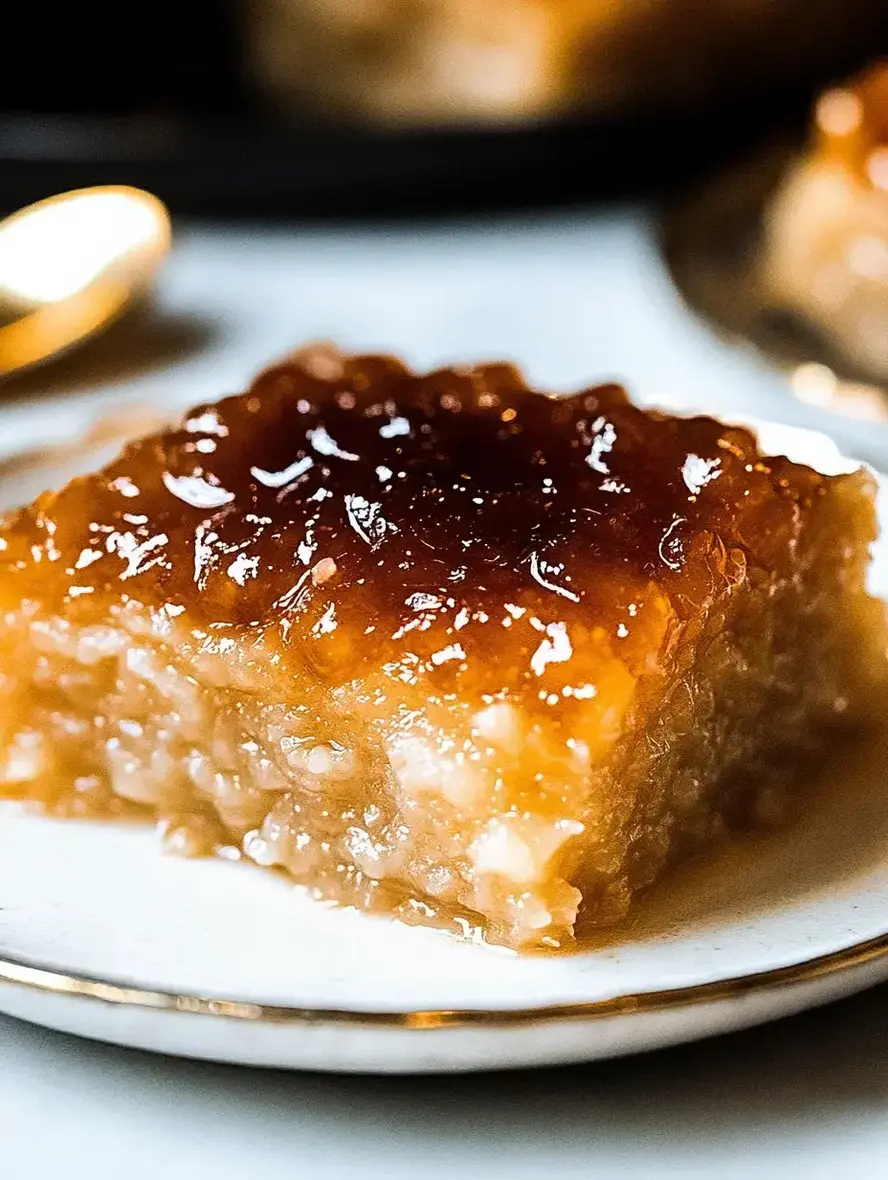
A beautifully presented Sweet Coconut Rice Cake, showcasing the glossy, caramelized rice and golden coconut curds on top.
Step-by-Step Instructions
Step 1: Prepare the Sticky Rice
Rinse the 2 cups of glutinous rice under cold water in a fine-mesh strainer until the water runs clear. This removes excess surface starch and prevents gumminess. Transfer the rinsed rice to a medium saucepan. Add the 2 ½ cups of water and let it soak for just 20 minutes—this quick soak hydrates the grains for even cooking. After soaking, bring the pot to a boil over high heat. Once boiling, immediately reduce the heat to the lowest setting, cover with a tight-fitting lid, and simmer for 15 minutes. Do not peek! Let the steam work its magic. After 15 minutes, turn off the heat and let the rice sit, covered, for another 10 minutes to finish steaming. Fluff it gently with a fork; it should be fully cooked, tender, and sticky.
Step 2: Make the Coconut Sauce
While the rice is steaming, start the coconut sauce. In a separate, larger wide pan or wok (you’ll combine everything here later), combine the entire can of coconut milk, dark brown sugar, and salt. Cook this over medium heat, stirring constantly with a wooden spoon, until the sugar is completely dissolved and the mixture is smooth and begins to simmer gently. You’ll notice the aroma transforming from simply sweet to a deep, caramelized coconut fragrance.
Step 3: Cook the Sauce and Combine
Once the sauce is simmering, carefully add the cooked sticky rice to the pan. This is the moment it all comes together! Gently fold the rice into the coconut sauce, ensuring every grain is coated. Reduce the heat to medium-low. Continue to cook, stirring frequently to prevent sticking on the bottom, for 15-20 minutes. You are looking for the mixture to thicken significantly. The sauce will reduce and coat the rice, turning into a glossy, thick, caramel-like glaze. The rice will absorb the flavors and become even stickier. When you drag your spoon through the middle of the pan and the mixture holds its path for a second before slowly filling in, it’s ready.
Step 4: Prepare the Coconut Curds (Latik)
While the rice mixture is cooking, make the latik. In a small, heavy-bottomed skillet, combine the coconut cream and granulated sugar. Cook over medium heat, stirring occasionally. It will first bubble and look like coconut milk. Keep cooking. After about 15-20 minutes, the liquid will evaporate, the oil will separate, and the solid milk proteins will start to fry in their own oil. Stir more frequently now as these solids (the curds) turn from white to a light golden brown. Once they are a deep golden color and crispy, immediately remove from heat and strain through a fine-mesh sieve, reserving the fragrant coconut oil for other uses if desired. Spread the crispy latik on a paper towel to cool.
Step 5: Assemble and Serve
Transfer the thickened sweet coconut rice mixture to a serving platter or a 9×9 inch pan lightly greased with coconut oil. Use a spatula or the back of a spoon to press it into an even layer. While still warm, generously sprinkle the golden coconut curds all over the top, pressing them in slightly so they adhere. Let the cake cool for at least 30 minutes to set slightly—it will be easier to slice. Serve at room temperature or slightly warm for the best texture and flavor.
Nutritional Information
The following nutritional estimate is for one serving (based on 10 servings). This is a rich, celebratory dessert.
- Calories: ~380 kcal
- Total Fat: 18g (Saturated Fat: 16g)
- Cholesterol: 0mg
- Sodium: 130mg
- Total Carbohydrates: 55g (Dietary Fiber: 1g, Sugars: 28g)
- Protein: 4g
Healthier Alternatives
You can enjoy this Filipino classic with some mindful tweaks that preserve its soul-satisfying essence.
- Sugar Swap: Replace dark brown sugar with coconut sugar. It has a lower glycemic index and adds a similar caramel note, though the color will be lighter.
- Reduce Fat: Use “light” coconut milk for the sauce. The texture will be slightly less rich but still delicious. For the latik, this swap won’t work as you need the high fat content.
- Portion Control: Serve smaller squares as part of a fruit platter with fresh mango slices or berries to add fiber and vitamins, making the dessert more balanced.
- Skip the Latik: For a significant calorie reduction, omit the coconut curd topping and simply garnish with a sprinkle of toasted desiccated coconut for crunch and flavor.
Serving Suggestions
- Classic Style: Serve slightly warm or at room temperature in small squares or scoops. The contrast of the cool, creamy topping with the warm cake is divine.
- With Coffee or Tea: This sweet cake pairs perfectly with a strong black coffee or unsweetened tea to cut through the richness.
- Festive Presentation: For parties, line a baking tray with banana leaves before adding the rice mixture for an authentic aromatic touch and beautiful presentation.
- A La Mode: Take it to the next level by serving a small piece with a scoop of vanilla ice cream or mango sorbet.
Common Mistakes
- Using the Wrong Rice: This is the #1 error. Only glutinous (sweet) rice will give you the proper sticky, chewy texture. Jasmine or basmati will not work.
- Over-stirring the Rice: When combining the rice with the sauce, fold gently. Vigorous stirring can break the grains and turn the mixture mushy.
- Rushing the Latik: Cooking the coconut cream over too high heat will burn the solids before they properly render and crisp up. Patience and medium heat are key.
- Not Cooking the Sauce Long Enough: If you don’t cook the rice-sauce mixture until it’s very thick, the final cake will be too soft and won’t hold its shape when sliced. Look for that “path” test described in Step 3.
- Skipping the Salt: Salt is not optional. Without it, the dessert will taste one-dimensionally sweet and cloying.
Storing Tips
- Room Temperature: If consuming within 24 hours, you can leave the cake covered on the counter. The high sugar content acts as a preservative.
- Refrigeration: For longer storage, place in an airtight container and refrigerate for up to 5 days. The texture will become firmer.
- Reheating: To restore softness, microwave individual portions for 15-20 seconds or steam lightly. You can also reheat a larger piece in a covered pan over very low heat with a tablespoon of water.
- Freezing: This cake freezes surprisingly well. Wrap individual portions tightly in plastic wrap and then in foil. Freeze for up to 2 months. Thaw in the refrigerator overnight and reheat
