Table of Contents
Roasted Vegetable Winter Salad
Introduction
Did you know that over 70% of people report eating fewer salads during the colder months, citing a craving for warm, comforting foods? This is precisely why this Roasted Vegetable Winter Salad is a game-changer. It bridges the gap between the hearty, satisfying meals we crave in winter and the fresh, nutrient-dense benefits of a salad. By tossing warm, caramelized root vegetables over a bed of crisp greens and topping them with creamy feta and aromatic herbs, this dish is designed to convert even the most stubborn salad skeptics. It’s a symphony of textures and flavors—sweet roasted squash, earthy beets, and tangy cheese—that proves a salad can be the main event, especially in winter.
Ingredients List
Gather these fresh, vibrant ingredients. The key is in the variety of colors and textures for the ultimate winter salad experience.
- For the Roasted Vegetables:
- 1 medium sweet potato (peeled and cubed) – Provides a creamy, sweet base with a gorgeous orange hue.
- 2 medium carrots (cut into coins) – Adds earthy sweetness and a satisfying crunch.
- 1 small red beet (peeled and cubed) – Imparts a deep, earthy flavor and stunning ruby color. Substitution: Golden beets for a milder, less staining option.
- 1/2 small red onion (cut into wedges) – Roasts into sweet, tender petals.
- 3 tbsp olive oil – For crispy, golden edges.
- 1 tsp dried thyme – A classic winter herb. Substitution: 1 tbsp fresh rosemary, chopped.
- 1/2 tsp smoked paprika – Adds a subtle, warm smokiness.
- Salt and black pepper to taste.
- For the Salad Base & Toppings:
- 5 oz mixed hearty greens (like kale, spinach, or arugula) – Kale holds up beautifully to warm toppings. Substitution: Chopped romaine for more crunch.
- 1/2 cup crumbled feta cheese – Salty, creamy, and tangy. Substitution: Goat cheese for a sharper tang or vegan feta.
- 1/4 cup toasted pecans or walnuts – For essential crunch and nutty richness.
- 2 tbsp fresh parsley or dill (chopped) – A bright, fresh finish.
- For the Simple Lemon-Herb Dressing:
- 3 tbsp extra virgin olive oil
- Juice of 1 lemon (about 2 tbsp) – Fresh, bright acidity.
- 1 tsp Dijon mustard – For emulsification and a slight kick.
- 1 small garlic clove (minced)
- 1 tsp honey or maple syrup – Balances the acidity. Substitution: Agave nectar.
- Salt and pepper to taste.
Timing
While the total time is around 55 minutes, the active prep is only 20 minutes. The oven does most of the work, freeing you up. Compared to the average winter stew that simmers for hours, this hearty salad delivers deep, roasted flavor in under an hour, making it a perfect weeknight-friendly option that doesn’t sacrifice comfort.
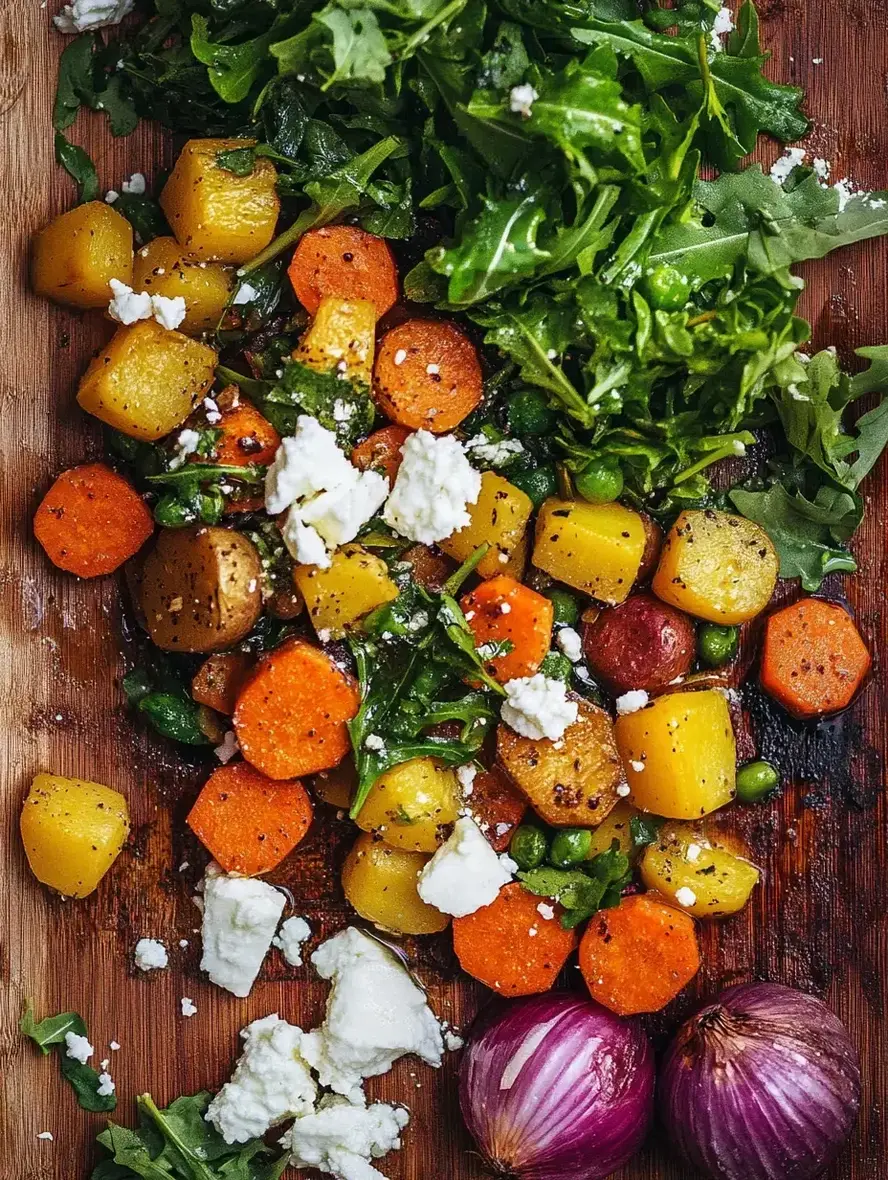
A vibrant bowl of warm roasted root vegetables over fresh greens, topped with feta and herbs.
Step-by-Step Instructions
Step 1: Prep the Vegetables
Preheat your oven to 425°F (220°C). This high heat is crucial for achieving caramelization. While it heats, peel and chop all your root vegetables. I aim for 1-inch cubes for the sweet potato and beet, and 1/2-inch thick coins for the carrots. The goal is uniform size so everything cooks evenly. Toss the chopped sweet potato, carrots, beet, and red onion wedges into a large mixing bowl. Pro Tip: If you’re using beets, you can toss them in a separate small bowl with a teaspoon of oil first to minimize color bleeding onto the other veggies, though I love the pink hue it gives the onions!
Step 2: Season and Roast
Drizzle the 3 tablespoons of olive oil over the vegetables. Sprinkle with the dried thyme, smoked paprika, a generous pinch of salt, and several grinds of black pepper. Now, get your hands in there! Toss everything thoroughly until every piece is glistening and evenly coated with oil and spices. Spread the vegetables in a single layer on a large, rimmed baking sheet lined with parchment paper. This single layer is non-negotiable—crowding leads to steaming, not roasting. Roast for 30-35 minutes, tossing halfway through, until the vegetables are tender and have beautiful, crispy browned edges.
Step 3: Prepare the Dressing
While the vegetables roast, whisk together your simple, zesty dressing. In a small bowl or jar, combine the 3 tbsp extra virgin olive oil, lemon juice, Dijon mustard, minced garlic, and honey. Season with a pinch of salt and pepper. Whisk vigorously or shake the jar until the mixture is fully emulsified—creamy and unified. Taste and adjust: want more tang? Add lemon. More sweetness? A drizzle more honey. Set aside.
Step 4: Assemble the Winter Salad
Place your hearty greens in a large, shallow serving bowl or divide among individual plates. Take the roasted vegetables straight from the oven—their warmth will slightly wilt the greens in the most delightful way. Scatter the warm vegetables over the greens. Immediately drizzle with about half of the dressing. Top generously with the crumbled feta cheese, toasted nuts, and a shower of fresh chopped herbs. Serve immediately, passing the remaining dressing at the table.
Nutritional Information
This nutritional estimate is for one serving (approximately 1/4 of the recipe).
- Calories: ~380 kcal
- Total Fat: 28g (Saturated Fat: 6g)
- Carbohydrates: 28g (Dietary Fiber: 6g | Sugars: 12g)
- Protein: 8g
- Key Micronutrients: Excellent source of Vitamin A (from sweet potatoes & carrots), Vitamin C, Iron, and Calcium.
Healthier Alternatives
- Lower-Fat Option: Reduce olive oil to 2 tbsp for roasting and use an oil spray. Swap feta for a sprinkle of nutritional yeast for a cheesy, umami flavor without the fat.
- Lower-Carb/Keto-Friendly: Increase the volume of non-starchy vegetables. Swap sweet potato and beet for more cauliflower, broccoli, and radishes. Use a sugar-free sweetener like monk fruit in the dressing.
- Vegan & Dairy-Free: Omit the feta or use a high-quality vegan feta or crumbled tofu marinated in lemon and salt. Ensure the dressing uses maple syrup instead of honey.
- Nut-Free: Replace toasted nuts with roasted chickpeas or sunflower seeds for that essential crunch.
Serving Suggestions
- As a Main Course: This salad is substantial enough on its own. For extra protein, add a grilled chicken breast, pan-seared salmon, or a can of drained and rinsed chickpeas tossed in the seasoning before roasting.
- As a Side Dish: Pairs beautifully with a simple roasted chicken, a hearty lentil soup, or a crusty loaf of whole-grain bread for dipping.
- For a Crowd: Set up a “winter salad bar.” Keep the roasted vegetables warm in a slow cooker, and let guests build their own bowls with greens, toppings, and dressings.
Common Mistakes
- Overcrowding the Pan: This is the #1 reason vegetables steam instead of roast. Use two pans if necessary to ensure a single layer.
- Underseasoning the Vegetables: Don’t be shy with salt and pepper before roasting; it brings out the natural sugars.
- Using Delicate Greens: Avoid soft greens like butter lettuce. They will wilt into mush. Stick with kale, spinach, or sturdy romaine.
- Adding Dressing Too Early: If you’re not serving immediately, dress individual portions. Adding dressing to the whole salad ahead of time will make it soggy.
Storing Tips
- Leftovers: Store components separately for best results. Keep roasted vegetables in an airtight container in the fridge for up to 4 days. Store dressing in a jar for up to a week. Assemble fresh portions as needed.
- Reheating: Reheat roasted vegetables in a skillet over medium heat or in a 350°F oven for 10 minutes to restore crispness. Avoid the microwave, which can make them soggy.
- Freezing: You can freeze the cooled, roasted vegetables in a single layer on a baking sheet before transferring to a freezer bag for up to 3 months. Thaw and reheat in the oven. Do not freeze the assembled salad.
Conclusion
This Roasted Vegetable Winter Salad is more than just a recipe; it’s a strategy for enjoying vibrant, healthy food all season long. It successfully tackles the winter craving for warmth and heartiness while delivering a powerhouse of nutrients and color. The contrast of sweet, warm vegetables with cool, crisp greens and creamy, salty feta is a combination that truly pleases every palate. I encourage you to make it your own—swap in your favorite roots, try a different cheese, or add a protein. Once you try it, you’ll see why it’s the perfect tool for converting salad skeptics.
Did this recipe win over a salad skeptic in your life? I’d love to hear your story! Share your creations, substitutions, and questions in the comments below. Don’t forget to tag @exorecipes on social media so we can celebrate your delicious winter bowl together!
