Table of Contents
Orange Croissant Breakfast Bake
Introduction
Did you know that over 65% of people consider a warm, comforting breakfast the key to a perfect weekend? If you’re searching for a brunch showstopper that combines buttery indulgence with a burst of citrus sunshine, you’ve found it. This Orange Croissant Breakfast Bake is more than just a recipe; it’s a sensory experience designed to elevate your mornings. Imagine flaky, golden croissants soaked in a creamy, vanilla-kissed custard, infused with the bright, aromatic zest of fresh oranges. The result is a dish with a luxuriously soft, almost pudding-like center and irresistibly crisp, caramelized edges. It’s the ultimate cozy morning treat that feels both refreshing and decadently indulgent, proving that the best brunches are often the simplest to assemble.
Ingredients List
Gather these simple ingredients for a dish that sings with flavor. Using high-quality components makes a noticeable difference in the final bake.
- 6 large day-old croissants (about 1 lb): Stale croissants absorb the custard better without falling apart, giving you that perfect custardy texture. Substitution: Brioche or challah bread, cut into 1-inch cubes.
- 4 large eggs: The backbone of our rich custard, providing structure and a golden color.
- 1 ½ cups whole milk: For a luscious, creamy base. Substitution: 2% milk works, but the custard will be slightly less rich. For extra decadence, use half-and-half.
- 1 cup heavy cream: This is the secret to the luxurious, velvety mouthfeel. Substitution: For a lighter version, use an additional 1 cup of whole milk.
- ¾ cup granulated sugar: Sweetens the custard and helps create those beautiful caramelized edges.
- Zest of 2 large oranges (about 2 tablespoons): This is where the magic happens! The vibrant, aromatic oils in the zest provide the intense citrus flavor without adding liquid. Use organic oranges if possible.
- ⅓ cup fresh orange juice: Amplifies the orange flavor and adds a subtle tang. Freshly squeezed is highly recommended over bottled.
- 2 teaspoons pure vanilla extract: Adds a warm, fragrant depth that complements the citrus perfectly.
- ¼ teaspoon salt: A crucial ingredient that balances all the sweetness and enhances every other flavor.
- For the topping (optional but recommended):
- Powdered sugar for dusting
- Fresh orange segments or slices
- A dollop of whipped cream or a drizzle of maple syrup
Timing
15 minutes
45-50 minutes
60-65 minutes (plus optional 30-min soak)
Compared to many elaborate breakfast casseroles that require overnight soaking, this Orange Croissant Bake is remarkably quick from bowl to table. The active prep time is under 20 minutes, making it a fantastic last-minute option for weekend guests. The baking time is standard, but the optional 30-minute soak for the croissants (while the oven preheats) can lead to an even more integrated, custard-soaked interior. This efficient timeline means you can enjoy a gourmet-feeling brunch with minimal fuss.
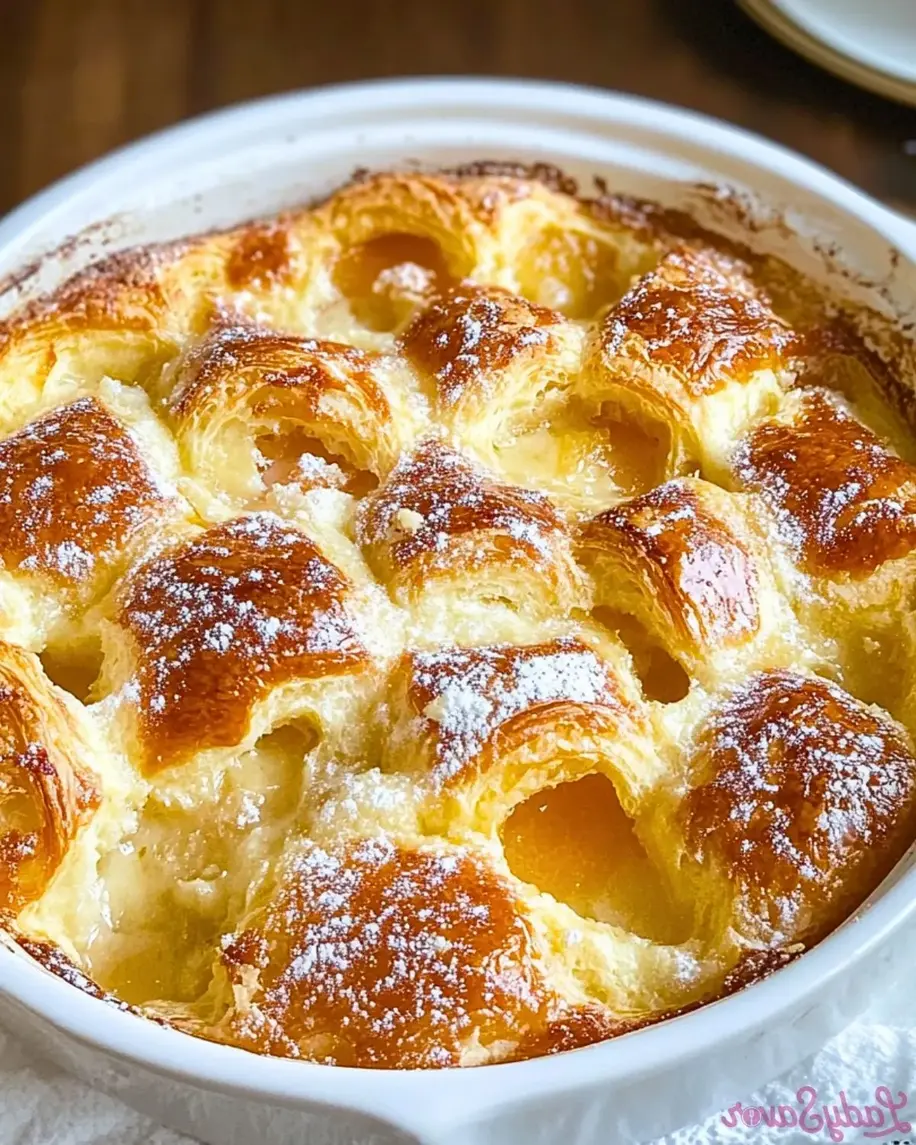
Our Orange Croissant Breakfast Bake, fresh from the oven and ready to delight.
Step-by-Step Instructions
Step 1: Prepare the Croissants
Start by preheating your oven to 350°F (175°C). Lightly grease a 9×13 inch baking dish with butter or non-stick spray. Take your day-old croissants and tear them into large, rustic chunks—about 1.5 to 2 inches in size. Tearing, rather than cutting, creates more nooks and crannies for the custard to cling to, resulting in a better texture. Evenly distribute the croissant pieces in the prepared baking dish. If you have a few extra minutes, let them sit out on the counter to dry slightly further while you make the custard.
Step 2: Make the Orange Custard
In a large mixing bowl, whisk the 4 eggs vigorously until they are well beaten and slightly frothy. This initial aeration helps create a lighter custard. Add the granulated sugar and salt, and whisk for another minute until the mixture is pale and the sugar begins to dissolve. Slowly pour in the whole milk and heavy cream while continuously whisking to ensure everything combines smoothly. Now, add the star flavors: the fresh orange zest, orange juice, and vanilla extract. Whisk everything together until you have a beautifully fragrant, homogenous liquid. Take a moment to smell it—the bright citrus aroma is your first taste of the final dish!
Step 3: Assemble and Soak
Carefully and slowly pour the orange custard mixture over the croissant pieces in the baking dish. Using a spatula or your hands, gently press the croissants down into the custard to ensure every piece gets thoroughly soaked. You want them saturated but not completely submerged and mushy. For the best results, let the dish sit for 15-30 minutes at room temperature. This allows the croissants to drink up the custard, leading to a more uniform texture after baking. If you’re in a hurry, you can bake it immediately, but the soak is a game-changer for custard integration.
Step 4: Bake to Perfection
Place the baking dish on the center rack of your preheated oven. Bake for 45 to 50 minutes. You’re looking for a specific visual cue: the top should be a deep, golden brown with some crisp edges, and the center should be set but still have a slight jiggle (it will firm up as it cools). If the top is browning too quickly, you can loosely tent it with aluminum foil for the last 10-15 minutes of baking. The smell filling your kitchen will be absolutely divine—a mix of buttery pastry, caramelized sugar, and sweet orange.
Step 5: Serve and Garnish
Remove the bake from the oven and let it rest for 5-10 minutes. This rest period allows the custard to finish setting, making it easier to slice and serve. Just before serving, dust the top generously with powdered sugar using a fine-mesh sieve. Garnish with fresh orange segments or thin slices for a pop of color and extra freshness. Serve warm, offering whipped cream or a small pitcher of maple syrup on the side for those who want an extra touch of sweetness.
Nutritional Information
The following nutritional estimate is for one serving (based on 8 servings per bake). Please note that values can vary based on specific ingredients and portion sizes.
- Calories: ~420 kcal
- Total Fat: 24g
- Saturated Fat: 14g
- Cholesterol: 165mg
- Sodium: 320mg
- Total Carbohydrates: 42g
- Dietary Fiber: 1g
- Sugars: 25g
- Protein: 9g
Healthier Alternatives
Love the flavor but want a lighter version? These simple swaps maintain the spirit of the dish while adjusting the nutritional profile:
- Croissants: Use whole-grain croissants or a hearty whole-wheat brioche for added fiber.
- Dairy: Substitute the whole milk and heavy cream with unsweetened almond milk or oat milk. For the cream, try using light coconut milk for richness without the dairy fat.
- Sugar: Reduce the granulated sugar to ½ cup and consider using coconut sugar or a monk fruit blend for a lower glycemic index. The orange zest provides so much flavor that you can often get away with less sugar.
- Eggs: For a slightly lighter option, use 2 whole eggs and 4 egg whites.
- Topping: Skip the powdered sugar and top with a dollop of Greek yogurt sweetened with a touch of honey and extra orange zest.
Serving Suggestions
This bake is incredibly versatile and can anchor any meal from a casual family breakfast to an elegant holiday brunch.
- Classic Brunch Spread: Pair it with crispy bacon or savory breakfast sausages to balance the sweetness. A simple arugula salad with a lemon vinaigrette adds a refreshing, peppery contrast.
- Holiday Breakfast: Serve alongside a quiche Lorraine and a fruit platter for a complete and impressive buffet.
- As a Dessert: Serve it warm in bowls with a scoop of vanilla bean ice cream or a bourbon-caramel sauce for a stunning dessert.
- Beverage Pairings: A glass of cold, freshly squeezed orange juice, a mimosa, a hot cup of coffee, or a citrus-infused black tea all complement the flavors beautifully.
Common Mistakes
Avoid these pitfalls to ensure your breakfast bake turns out perfectly every time.
- Using Fresh, Soft Croissants: This is the #1 mistake. Very fresh croissants will turn to mush in the custard. Day-old or slightly stale pastries hold their structure better and absorb liquid more effectively.
- Overmixing the Custard: Whisk until just combined. Over-whisking can incorporate too much air, leading to a foamy, less creamy texture.
- Skipping the Resting Soak: While you can bake immediately, not allowing the croissants to soak for at least 15 minutes often results in dry patches within the bake.
- Overbaking: The bake is done when the center is set but still jiggly, not rock solid. It continues to cook from residual heat as it cools. Overbaking leads to a rubbery custard.
- Using Bottled Orange Juice: The flavor of fresh-squeezed juice is brighter and less processed-tasting. Bottled juice can have a flat or metallic note.
Storing Tips
This dish is best served fresh, but leftovers can still be delicious with proper storage.
- Refrigeration:
