Table of Contents
Lamb Ragu with Pappardelle
Introduction
Did you know that a slow-cooked lamb ragu can contain up to 50% more depth of flavor than a quick 30-minute sauce? This is the heart of our recipe today. If you’re craving a pasta dish that feels like a warm embrace, a rich, slow-cooked lamb ragu served over thick, silky pappardelle is the ultimate comfort food. Forget takeout—this homemade version is engineered to be better than restaurant quality, transforming simple ingredients into a complex, soul-satisfying meal through the magic of patience and low heat. The tender, shredded lamb melds with a robust tomato and red wine sauce, creating a texture and taste that simply can’t be rushed. Let’s dive into how you can create this culinary masterpiece in your own kitchen.
Ingredients List
Gathering high-quality ingredients is the first step to an unforgettable lamb ragu. Here’s what you’ll need, complete with sensory notes and smart substitutions.
- For the Lamb Ragu:
- 2 lbs (900g) lamb shoulder, cut into 1-inch chunks (bone-in for more flavor, or boneless for ease). Substitution: Beef chuck or short ribs work beautifully for a different but equally rich profile.
- 2 tbsp olive oil – Use a good, fruity extra virgin olive oil for the best aromatic start.
- 1 large yellow onion, finely diced. It should smell sweet and pungent when raw.
- 2 medium carrots, finely diced (for a subtle sweetness and vibrant orange flecks in the finished sauce).
- 2 celery stalks, finely diced (adds a crucial earthy, savory backbone).
- 4 garlic cloves, minced. They should be firm and fragrant.
- 1/2 cup dry red wine (like a Chianti or Cabernet Sauvignon). Substitution: Use beef or lamb stock for an alcohol-free version, but the wine adds a wonderful tangy complexity.
- 1 (28-oz) can crushed San Marzano tomatoes. Their bright red color and low acidity are key. Substitution: High-quality passata or tomato puree.
- 2 tbsp tomato paste – for concentrated umami and a deeper red hue.
- 2 cups beef or lamb stock, preferably homemade or low-sodium.
- 2 sprigs fresh rosemary (woody and pine-like) and 3 sprigs fresh thyme (lemony and subtle). Substitution: 1 tsp each dried, but fresh is superior.
- 1 bay leaf – it should be whole and aromatic, not crumbled.
- Salt and freshly cracked black pepper to taste.
- For Serving:
- 1 lb (450g) dried pappardelle pasta. Look for thick, wide ribbons with a slightly rough texture to hold the sauce. Substitution: Tagliatelle, fettuccine, or even a sturdy rigatoni.
- Freshly grated Pecorino Romano or Parmigiano-Reggiano cheese for serving (salty, nutty, and essential).
- Fresh parsley, finely chopped (for a pop of green color and fresh flavor).
Timing
Great ragu isn’t fast food; it’s a labor of love. While the active prep time is standard, the extended cook time is what sets this recipe apart from average 45-minute pasta sauces, delivering unparalleled tenderness and flavor fusion.
25 minutes
3 hours 15 minutes
3 hours 40 minutes
This investment yields 6 generous servings, making it perfect for a special family dinner or entertaining guests.
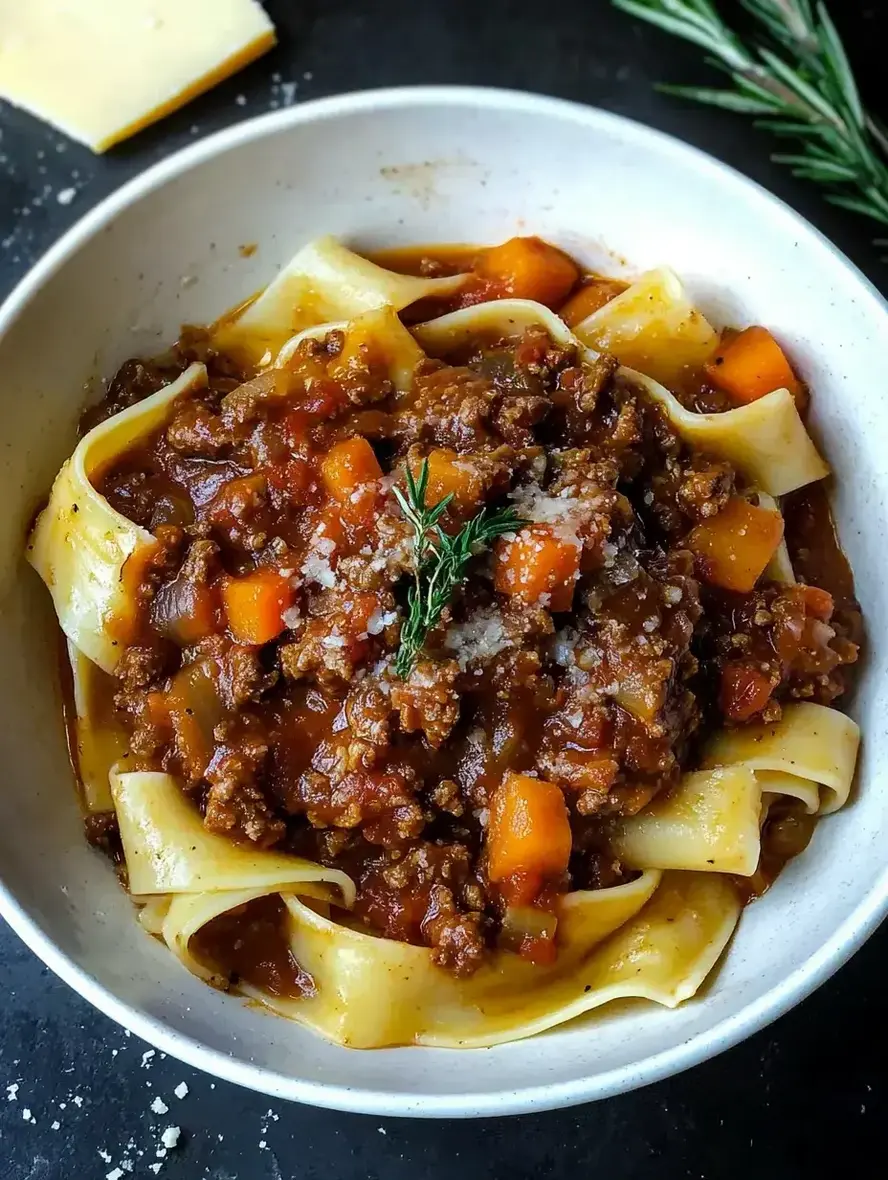
A rich, slow-cooked lamb ragu, perfectly coating wide ribbons of pappardelle pasta.
Step-by-Step Instructions
Step 1: Prepare the Lamb
Pat your lamb shoulder chunks completely dry with paper towels. This is non-negotiable—dry meat sears beautifully, while wet meat steams. Generously season all over with salt and pepper. In a large, heavy-bottomed Dutch oven or pot, heat the olive oil over medium-high heat until shimmering. Working in batches to avoid crowding, add the lamb and sear for 3-4 minutes per side until you achieve a deep, caramel-brown crust. This fond (the browned bits on the bottom of the pot) is pure flavor gold. Transfer the seared lamb to a plate and set aside.
Step 2: Build the Flavor Base
In the same pot with the lamb drippings, reduce the heat to medium. Add the diced onion, carrots, and celery (this trio is your soffritto). Cook, stirring occasionally, for 8-10 minutes until the vegetables have softened and the onions are translucent. They should smell incredibly sweet and savory. Add the minced garlic and cook for just one more minute until fragrant—be careful not to let it burn. Stir in the tomato paste and cook for another 2 minutes, allowing it to coat the vegetables and deepen in color.
Step 3: Cook the Sauce
Pour in the red wine to deglaze the pot, using a wooden spoon to scrape up all those delicious browned bits from the bottom. Let it simmer for 3-4 minutes until the wine has reduced by about half and the alcohol smell has cooked off. Now, return the seared lamb and any accumulated juices to the pot. Add the crushed tomatoes, beef stock, rosemary, thyme, and bay leaf. Give everything a good stir. Bring the mixture to a very gentle simmer, then immediately reduce the heat to low. Cover the pot with the lid slightly ajar. Let it cook, with just the occasional bubble breaking the surface, for a minimum of 2.5 to 3 hours. The lamb should be fork-tender and practically falling apart. In the final 30 minutes, remove the lid to allow the sauce to reduce and thicken slightly. Discard the herb sprigs and bay leaf. Use two forks to shred any large chunks of lamb directly in the pot. Taste and adjust seasoning with salt and pepper.
Step 4: Cook the Pasta
About 20 minutes before your ragu is finished, bring a large pot of generously salted water to a rolling boil. Add the pappardelle and cook according to package instructions until al dente—usually 1-2 minutes less than the suggested time. Reserve about 1 cup of the starchy pasta water before draining. Do not rinse the pasta.
Step 5: Serve and Enjoy
Add the drained pappardelle directly to the pot with the finished lamb ragu. Gently toss everything together, adding a splash of the reserved pasta water if needed to help the sauce cling to every ribbon of pasta. The starch in the water creates a silky, emulsified sauce that coats perfectly. Divide among warm bowls, and finish with a generous shower of freshly grated cheese and a sprinkle of chopped parsley.
Nutritional Information
The following estimates are for one serving (including pasta), based on 6 servings per recipe. Values are approximate.
- Calories: ~680 kcal
- Protein: 42g
- Carbohydrates: 65g
- Dietary Fiber: 6g
- Sugars: 9g
- Fat: 28g (Saturated Fat: 10g)
- Sodium: ~850mg (varies with stock and cheese used)
Healthier Alternatives
You can lighten this dish without sacrificing its soulful character. Try these swaps:
- Leaner Meat: Use lamb leg meat instead of shoulder for less fat, though it may be slightly less tender. You can also use a 50/50 mix of ground lamb and lean ground turkey.
- Boost Veggies: Add a finely diced zucchini or a handful of chopped mushrooms to the soffritto to increase fiber and volume.
- Whole Grain Pasta: Swap regular pappardelle for a whole wheat or legume-based version. The hearty sauce stands up well to their nutty flavor.
- Reduce Sodium: Use no-salt-added canned tomatoes and a homemade, unsalted stock. You control the salt entirely.
- Lighter Garnish: Opt for a modest sprinkle of a strong, aged cheese (so you use less) or a dollop of creamy ricotta instead of a heavy grating.
Serving Suggestions
This rich ragu is a complete meal, but a few thoughtful accompaniments can elevate the experience:
- Bread: A crusty loaf of ciabatta or sourdough is mandatory for mopping up every last bit of sauce.
- Salad: A simple arugula salad with a lemon vinaigrette provides a bright, peppery contrast to the rich pasta.
- Wine Pairing: Serve with the same dry red wine used in the sauce—a Chianti Classico or a bold Sangiovese. For a white option, a full-bodied Chardonnay can work wonderfully.
- For a Crowd: Present the ragu in the Dutch oven at the table for a family-style feast. Let everyone serve themselves for a cozy, interactive meal.
Common Mistakes
- Skipping the Sear: Not browning the lamb adequately robs the sauce of foundational flavor. Be patient and get good color.
- Rushing the Simmer: Cooking the ragu at too high a heat or for too short a time results in tough meat and a thin, acidic sauce. Low and slow is the law.
- Overcooking the Pasta: Pappardelle cooked to mush will disintegrate under the weight of the sauce. Always aim for al dente.
- Not Using Pasta Water: That
