Table of Contents
Korean Chicken Bao
Introduction
Did you know that searches for “Korean chicken bao” have surged by over 150% in the past year, according to Google Trends? This explosion in popularity isn’t surprising—it’s the perfect fusion of soft, pillowy comfort and explosive, crave-worthy flavor. Today, we’re diving deep into the art of creating the ultimate crowd-pleasing party appetizer: soft steamed bao buns filled with crispy fried chicken tossed in a sweet-spicy Korean sauce. This recipe is designed not just to guide you, but to empower you with detailed make-ahead tips that will transform your next gathering. Imagine biting into a warm, cloud-like bun that gives way to a crunchy, juicy piece of chicken coated in a glossy, sticky sauce that balances heat, sweetness, and tang in every bite. Let’s make that a reality.
Ingredients List
Gather these ingredients for a complete flavor and texture experience. I’ve included sensory notes and substitutions to ensure success no matter your pantry situation.
For the Steamed Bao Buns:
- All-purpose flour (2 cups): The foundation for a soft, slightly chewy texture. For a lighter, airier bun, you can substitute with cake flour.
- Instant yeast (1 tsp): The magic leavener that creates those signature air pockets. Ensure it’s fresh for the best rise.
- Sugar (2 tbsp) & Baking powder (1 tsp): Sugar feeds the yeast and adds a hint of sweetness, while baking powder gives a final lift for that perfect dome.
- Milk & Water (½ cup each, lukewarm): Creates a tender crumb. For a dairy-free version, use all water or a plant-based milk like oat milk.
- Vegetable oil (1 tbsp): Keeps the dough supple and prevents sticking.
For the Korean Chicken & Sauce:
- Boneless, skinless chicken thighs (1.5 lbs): Thighs are my go-to for their inherent juiciness and flavor that stands up to frying. For a leaner option, use chicken breast, but be vigilant not to overcook.
- Buttermilk (1 cup): The secret to ultra-tender chicken with a subtle tang. No buttermilk? Mix 1 cup milk with 1 tbsp lemon juice or vinegar and let it sit for 5 minutes.
- Gochujang (¼ cup): The heart of the sauce—a fermented Korean chili paste with deep, savory, spicy, and slightly sweet notes. This is non-negotiable for authentic flavor.
- Gochugaru (1 tbsp): Korean chili flakes that add a vibrant red color and a different layer of heat than the paste. Can sub with crushed red pepper flakes in a pinch.
- Honey (3 tbsp) & Soy sauce (2 tbsp): For the signature sweet-salty balance. Use maple syrup for a vegan sweetener.
- Rice vinegar (1 tbsp) & Toasted sesame oil (1 tsp): The vinegar cuts through the richness, and the sesame oil adds a nutty, aromatic finish.
- Garlic & Ginger (3 cloves & 1-inch knob, minced): Fresh is best here for a pungent, aromatic base.
- Cornstarch & All-purpose flour (for coating): The cornstarch is key for an incredibly crispy, almost glass-like crust on the chicken.
For Garnish:
- Thinly sliced scallions (green parts)
- Toasted sesame seeds
- Quick-pickled cucumbers or carrots (optional but highly recommended for crunch and acidity)
Timing
Compared to many bao recipes that require multiple proofing stages over hours, this streamlined version delivers fantastic results in just over an hour. The active cooking time is efficient, and the make-ahead tips below allow you to break the work into manageable stages, making it perfect for entertaining without last-minute stress.
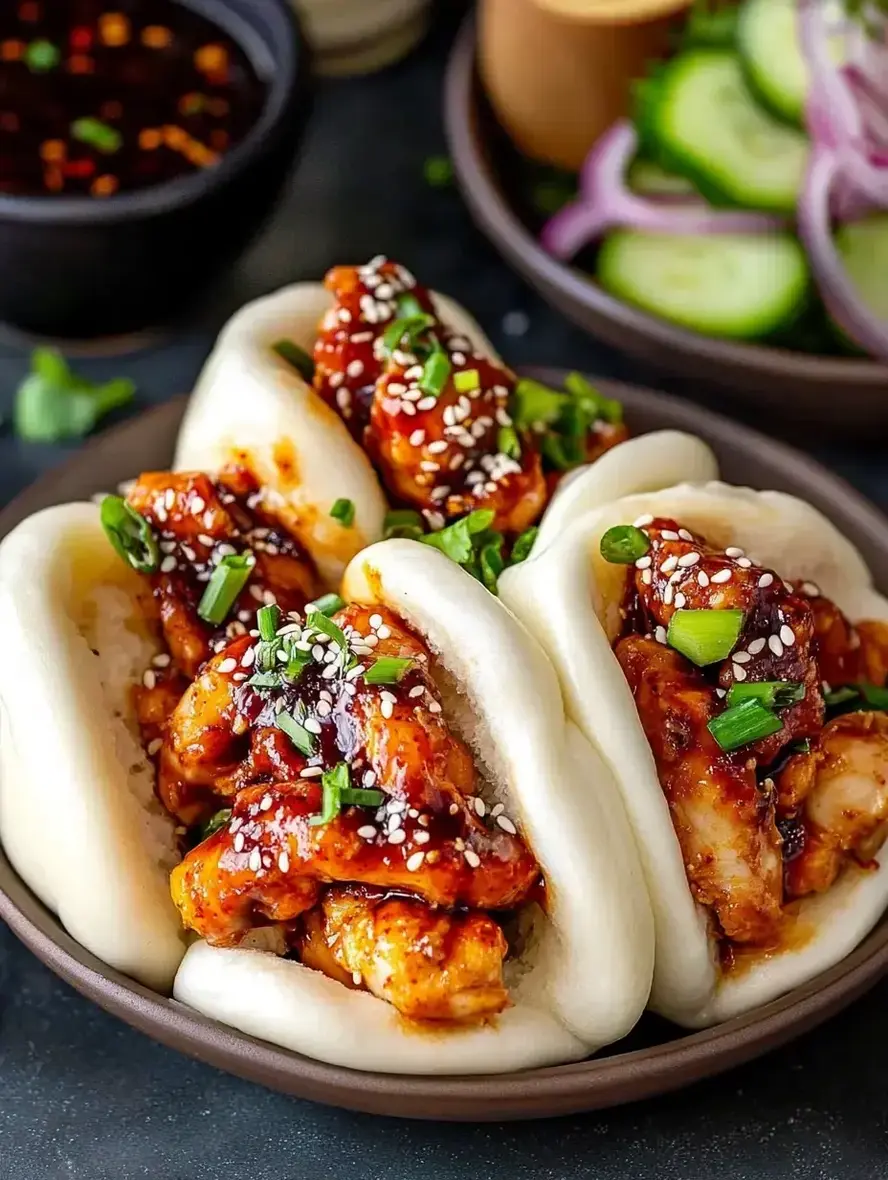
Soft, steamed bao buns cradling crispy Korean fried chicken—a perfect bite of texture and flavor.
Step-by-Step Instructions
Step 1: Prepare the Bao Dough
In a large bowl, whisk together the flour, instant yeast, sugar, and baking powder. Create a well in the center and pour in the lukewarm milk-water mixture and the vegetable oil. Using a wooden spoon or your hands, mix until a shaggy dough forms. Turn it out onto a lightly floured surface and knead for 8-10 minutes. You’re looking for a smooth, elastic dough that springs back slowly when poked. Place the dough in a lightly oiled bowl, cover with a damp cloth or plastic wrap, and let it rest in a warm, draft-free spot for 30 minutes. It won’t double in size like bread dough, but it will become noticeably puffy.
Step 2: Make the Korean Chicken
While the dough rests, cut the chicken thighs into 1-inch bite-sized pieces. Place them in a bowl and cover with the buttermilk, ensuring each piece is coated. Let them marinate for at least 20 minutes (or up to overnight in the fridge). In a separate shallow dish, prepare your dredge by whisking together ¾ cup all-purpose flour and ¼ cup cornstarch with a generous pinch of salt and pepper. When ready to fry, heat about 2 inches of neutral oil (like canola or vegetable) in a heavy-bottomed pot or Dutch oven to 350°F (175°C). Shake excess buttermilk off each chicken piece, dredge thoroughly in the flour mixture, and carefully lower into the hot oil. Fry in batches for 4-5 minutes until golden brown, crispy, and cooked through. Drain on a wire rack set over a baking sheet—this keeps them crispy.
Step 3: Cook the Sauce
In a small saucepan, combine the gochujang, honey, soy sauce, rice vinegar, minced garlic, and minced ginger. Whisk over medium-low heat until smooth and bubbling gently. Let it simmer for 2-3 minutes to allow the flavors to meld and the sauce to thicken slightly. Remove from heat and stir in the toasted sesame oil. The sauce should be glossy and coat the back of a spoon. Pro Tip: For a smoother sauce, you can blend it briefly with an immersion blender after cooking.
Step 4: Steam the Buns
After the dough has rested, punch it down and divide it into 10-12 equal pieces. Roll each piece into a smooth ball, then use a rolling pin to flatten into a 3-4 inch oval. Lightly brush the top of each oval with a touch of oil and fold it in half. Place each bun on a small square of parchment paper. Set up your steamer (bamboo or metal) over boiling water. Steam the buns in batches, ensuring they aren’t touching, for 10-12 minutes. They will puff up beautifully. Keep them covered with a cloth after steaming to stay soft.
Step 5: Assemble and Serve
In a large bowl, toss the crispy fried chicken pieces with the warm Korean sauce until evenly and generously coated. Gently pry open a steamed bao bun. Layer in a few pieces of the saucy chicken, top with sliced scallions, a sprinkle of sesame seeds, and a few slices of quick-pickled cucumber. Serve immediately while the buns are soft and warm and the chicken is still crispy.
Nutritional Information
The following is an approximate nutritional breakdown for one serving (one filled bao bun).
- Calories: 320 kcal
- Carbohydrates: 38g
- Protein: 18g
- Fat: 12g
- Saturated Fat: 2g
- Fiber: 2g
- Sugar: 9g
- Sodium: 480mg
Healthier Alternatives
You can enjoy this iconic flavor profile with some clever, nutrition-friendly swaps that don’t sacrifice taste:
- Air Fryer Chicken: Skip the deep fry. After marinating and dredging, spray the chicken pieces lightly with oil and air fry at 400°F for 12-15 minutes, shaking halfway, until crispy. Toss in the sauce as usual.
- Whole-Wheat Bao Buns: Substitute half of the all-purpose flour with whole-wheat flour for added fiber and a nuttier flavor. The texture will be slightly denser but still delicious.
- Sauce Sweetener Swap: Replace the honey with a monk fruit sweetener or reduce the amount by half and add a touch of grated apple for natural sweetness and moisture.
- Load Up on Veggies: Bulk out your filling with shredded cabbage, julienned bell peppers, or extra pickled vegetables to increase volume, fiber, and nutrients per bite.
Serving Suggestions
While these Korean chicken bao are stars on their own, they shine even brighter as part of a curated spread. Serve them as the main appetizer at a game-day party or a casual dinner. Pair them with a light, refreshing Korean cucumber salad (Oi Muchim) or a simple ginger-scallion noodle salad to balance the richness. For drinks, a crisp lager, a fizzy soju cocktail, or even a sparkling ginger lemonade are perfect companions to cut through the spice and refresh the palate.
Common Mistakes
- Overproofing the Dough: Bao dough doesn’t need a long rise. Overproofing leads to a sour taste and a collapsed, dense texture after steaming.
- Crowding the Fryer: Adding too much chicken at once drops the oil temperature drastically, resulting in greasy, soggy chicken. Fry in small, consistent batches.
- Saucing Too Early: Tossing the crispy chicken in the sauce more than 5 minutes before serving will cause the crust to soften. Always sauce right before assembly.
- Using Cold Dough: When dividing and shaping your buns, ensure the dough is at room temperature. Cold dough is harder to shape and won’t steam as evenly.
Storing Tips
The true power of this recipe lies in its make-ahead potential.
- Bao Buns: Steamed buns can
