Table of Contents
Homer Simpson Donuts
Introduction
Did you know that the average American consumes over 31 donuts per year? That’s a lot of sugary goodness, but none are more iconic than the ones that make Homer Simpson’s eyes bulge with desire. What is it about those light, fluffy yeast donuts covered in pink glaze and sprinkles that captures our collective imagination? This recipe is your ticket to recreating that iconic Springfield treat right in your own kitchen. Forget the store-bought versions; we’re diving deep into the art of the perfect yeast-raised donut, achieving that signature cloud-like texture and the vibrant pink finish that Homer would gladly trade his couch for. Get ready to make donuts that are not just a snack, but a piece of pop culture you can eat.
Ingredients
For the best Homer Simpson donuts, quality ingredients are key. Here’s what you’ll need, with notes on substitutions and the sensory magic they bring.
For the Donut Dough:
- Whole Milk (1 cup, warmed to 110°F): Creates a tender, rich crumb. The warmth activates the yeast. Substitution: Unsweetened almond or oat milk for a dairy-free version, though the richness will be slightly different.
- Active Dry Yeast (2 ¼ teaspoons / 1 packet): The workhorse for that essential airy, fluffy rise. You should smell a faint, earthy aroma when activated.
- Granulated Sugar (⅓ cup): Feeds the yeast and adds sweetness. You’ll see the mixture become frothy and active.
- Large Eggs (2, room temperature): Bind the dough and contribute to a golden-brown color and soft texture.
- Unsalted Butter (6 tablespoons, melted & cooled): Provides incredible flavor and a melt-in-your-mouth quality. You can use salted butter, but reduce added salt by ¼ teaspoon.
- Pure Vanilla Extract (2 teaspoons): The aromatic backbone. Smell its sweet, floral notes as you add it.
- All-Purpose Flour (4 ½ – 5 cups): The structure. Start with 4 ½ cups and add more as needed until the dough is tacky but not sticky.
- Salt (1 teaspoon): Balances the sweetness and strengthens the gluten.
- Nutmeg (¼ teaspoon, freshly grated if possible): The secret whisper of warmth that makes these donuts taste classic and complex.
For Frying & Finishing:
- Vegetable or Canola Oil (for frying, about 2 quarts): A neutral oil with a high smoke point ensures a crisp exterior without greasiness.
- Granulated Sugar (for coating, optional): For a classic sugar-dusted donut variation.
For the Pink Glaze:
- Powdered Sugar (3 cups, sifted): Creates a smooth, crackly glaze. Sifting is non-negotiable for lump-free perfection.
- Whole Milk or Heavy Cream (⅓ – ½ cup): Thins the glaze. Heavy cream makes it richer and whiter. You’ll adjust to a thick but pourable consistency.
- Pure Vanilla Extract (1 teaspoon): Adds flavor depth to the sweet glaze.
- Pinch of Salt: Cuts the overwhelming sweetness.
- Pink Food Coloring (gel or liquid, to preference): Gel coloring gives a vibrant, Homer-worthy pink without thinning the glaze.
- Rainbow Sprinkles (jimmies, not nonpareils): Jimmies (the cylindrical sprinkles) adhere better and give that authentic bakery look.
Timing
30 minutes
(Active hands-on work)
1 hour 30 minutes
(Mostly hands-off)
15 minutes
(Per batch)
2 hours 15 minutes
(Worth every second!)
Compared to average cake donut recipes that take about an hour total, this yeast-based method requires more patience for rising. This extended fermentation is the non-negotiable secret to developing complex flavor and that signature airy, web-like interior structure that defines a true Homer Simpson donut. Plan accordingly for a weekend treat—the result is exponentially better.
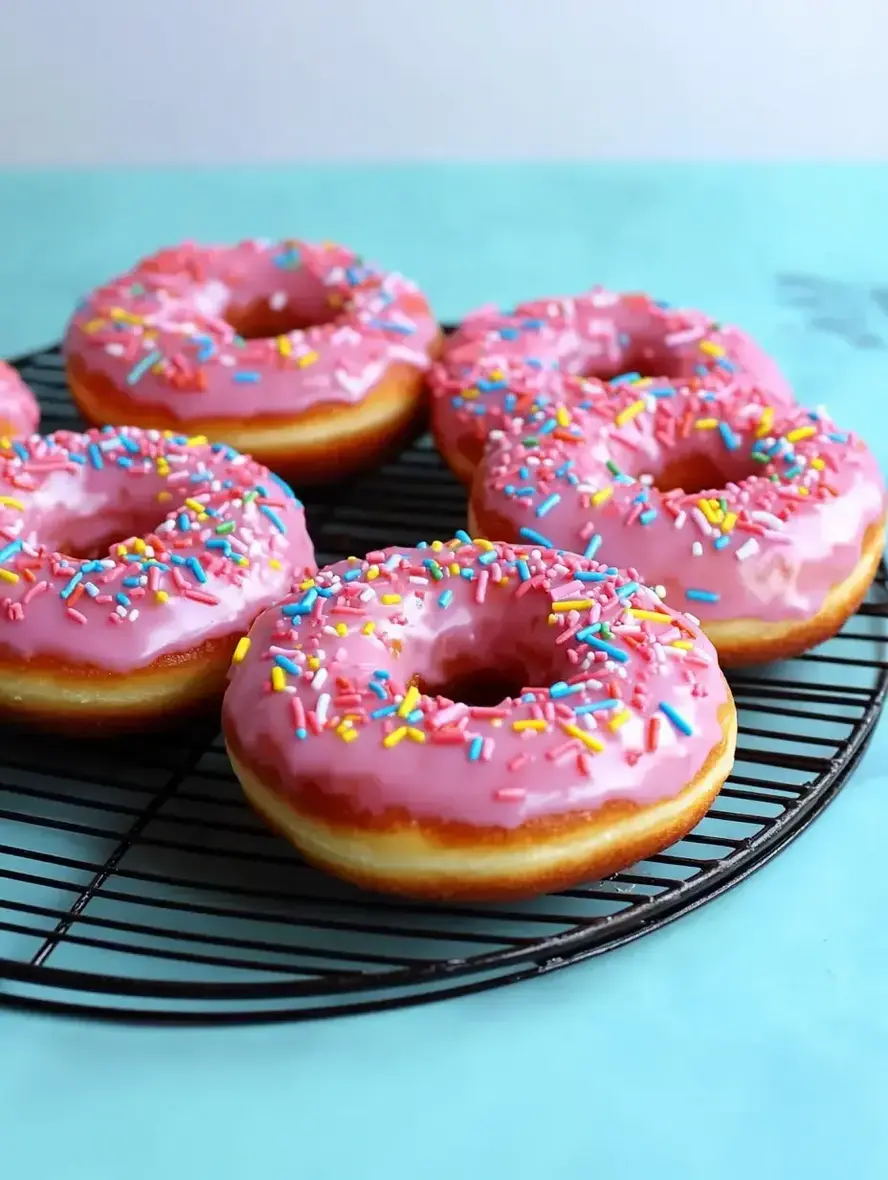
A batch of perfect Homer Simpson donuts, freshly glazed and sprinkled, ready to satisfy any craving.
Step-by-Step Instructions
Step 1: Activate the Yeast
In the bowl of your stand mixer, combine the warmed milk (110°F is perfect—too hot will kill the yeast), the packet of active dry yeast, and a tablespoon of the granulated sugar. Give it a gentle stir and let it sit for 5-10 minutes. You’re waiting for a foamy, creamy layer to form on top, which is your visual cue that the yeast is alive and hungry. This step is your foundation; if it doesn’t foam, start over with fresh yeast.
Step 2: Make the Dough
Once your yeast is frothy, add the remaining sugar, eggs, cooled melted butter, and vanilla extract. Attach the paddle attachment and mix on low just until combined. Switch to the dough hook. In a separate bowl, whisk together 4 ½ cups of flour, the salt, and nutmeg. With the mixer on low, gradually add the flour mixture to the wet ingredients. Let the dough hook knead for 5-7 minutes. The dough should clear the sides of the bowl but remain slightly tacky to the touch. If it’s very sticky, add the remaining flour 1-2 tablespoons at a time. You want a soft, pliable dough.
Step 3: First Rise
Lightly oil a large bowl. Shape your dough into a ball, place it in the bowl, and turn it once to coat in oil. Cover the bowl tightly with plastic wrap or a damp kitchen towel. Place it in a warm, draft-free spot (like an oven with just the light on). Let it rise until doubled in size, about 1 hour. This slow rise is where flavor develops. You can test it by gently pressing a finger into the dough; if the indentation remains, it’s ready.
Step 4: Shape the Donuts
Punch down the risen dough to release the air. Turn it out onto a lightly floured surface. Roll it out to about ½-inch thickness. Using a 3-inch round cutter, cut out your donuts. Use a 1-inch cutter for the centers (save those for donut holes!). Gather the scraps, re-roll gently, and cut more donuts. Place the shaped donuts and holes on parchment-lined baking sheets, leaving about 2 inches between them for expansion.
Step 5: Second Rise
Cover the baking sheets loosely with kitchen towels and let the donuts rise again in a warm place for 30-45 minutes. They should look puffy and almost doubled. This second, shorter rise is crucial for achieving that ultimate light texture.
Step 6: Fry to Golden Perfection
While the donuts rise, pour oil into a heavy-bottomed pot or Dutch oven to a depth of about 3 inches. Heat over medium heat to 350°F – 365°F. Use a thermometer for accuracy; the right temperature is key. Too hot, and they’ll burn outside while staying raw inside; too cool, and they’ll absorb oil and become greasy. Carefully add 2-3 donuts at a time, frying for about 60-90 seconds per side until they’re a deep, golden brown. Use a spider strainer or slotted spoon to flip and remove them. Drain on a wire rack set over a baking sheet. Let cool completely before glazing.
Step 7: Make the Pink Glaze
In a medium bowl, whisk together the sifted powdered sugar, vanilla, and a pinch of salt. Gradually whisk in the milk or cream, starting with ⅓ cup, until you have a thick but pourable glaze. It should coat the back of a spoon. Add your pink food coloring a drop at a time (gel is more potent) until you achieve Homer’s signature vibrant pink hue.
Step 8: Glaze and Decorate
Place your wire rack of cooled donuts over a clean baking sheet to catch drips. One at a time, dip the top of each donut into the pink glaze, letting the excess drip back into the bowl. Immediately, while the glaze is wet, shower the top with rainbow sprinkles. Return to the rack to let the glaze set, which will take about 20-30 minutes.
Nutritional Information
Estimated per donut (glazed, without sprinkles):
- Calories: 320 kcal
- Carbohydrates: 48g
- Protein: 5g
- Fat: 12g (Saturated Fat: 5g)
- Sugar: 25g
- Fiber: 1g
Note: These are estimates. Actual values can vary based on specific ingredients and size.
Healthier Alternatives
Want to enjoy the spirit of Springfield with a slightly lighter touch? Try these swaps without sacrificing all the joy:
- Baking vs. Frying: For a significant calorie reduction, bake the risen donuts at 375°F for 10-12 minutes until golden. They’ll be more like brioche buns than classic donuts, but still delicious.
- Glaze Makeover: Mix 1 cup of powdered sugar with 2 tablespoons of plain Greek yogurt and a splash of vanilla and milk. Add a drop of pink coloring. It’s tangier, with a protein boost.
- Whole Wheat Flour: Substitute up to half of the all-purpose flour with whole wheat pastry flour for added fiber and a nuttier flavor.
