Table of Contents
Chicken Teriyaki Noodles – Quick, Flavorful & Irresistible!
Introduction
Did you know that noodle dishes are among the top 10 most searched-for weeknight dinners globally? If you’re craving a meal that’s both lightning-fast and packed with deep, savory-sweet flavor, you’ve landed in the perfect spot. Welcome, noodle lovers! If you’re a fan of savory, tangy, and slightly sweet dishes, this Chicken Teriyaki Noodles recipe is perfect for you. Not only is it incredibly flavorful, but it’s also packed with healthy ingredients, making it an ideal choice for a quick and satisfying meal. Whether you’re familiar with Asian cuisine or just discovering it, this noodle dish combines all the comforts of home cooking with the delights of Japanese teriyaki flavors. This recipe is your ticket to a restaurant-quality dinner that comes together faster than you can order takeout, proving that delicious, wholesome food doesn’t have to be complicated.
Ingredients List
Gathering fresh, quality ingredients is the first step to unlocking the magic of this dish. Here’s what you’ll need, complete with sensory notes and easy swaps.
- For the Chicken & Marinade:
- 1 lb (450g) boneless, skinless chicken breasts or thighs, cut into bite-sized pieces. (Thighs offer a richer, juicier flavor, while breasts are leaner.)
- 3 tablespoons low-sodium soy sauce – the salty, umami backbone.
- 1 tablespoon rice vinegar – for a subtle tang that brightens the chicken.
- 1 teaspoon grated fresh ginger – that warm, spicy kick. (Substitute: ¼ teaspoon ground ginger.)
- 1 teaspoon minced garlic – aromatic and essential.
- For the Teriyaki Sauce:
- ½ cup low-sodium soy sauce
- ¼ cup honey or brown sugar – for that signature glossy sweetness. (Honey gives a floral note; brown sugar adds a deeper molasses flavor.)
- 2 tablespoons mirin – a sweet rice wine. (Substitute: 1 tbsp rice vinegar + 1 tsp sugar.)
- 1 tablespoon rice vinegar
- 2 teaspoons freshly grated ginger
- 2 cloves garlic, minced
- 1 tablespoon cornstarch mixed with 2 tablespoons cold water – the slurry that creates a luxuriously thick, clingy sauce.
- For the Noodles & Veggies:
- 8 oz (225g) dried udon, soba, or lo mein noodles. (Udon are chewy and thick; soba are nutty and buckwheat-based.)
- 1 tablespoon sesame or vegetable oil for stir-frying.
- 1 red bell pepper, thinly sliced – adds a crisp sweetness and vibrant color.
- 1 large carrot, julienned – for earthy sweetness and crunch.
- 1 cup broccoli florets – fresh and green. (Substitute: snap peas or sugar snap peas.)
- ½ medium onion, thinly sliced.
- For Garnish:
- Sesame seeds, toasted
- Thinly sliced green onions
- Red pepper flakes (optional, for heat)
Timing
Efficiency is key for a weeknight win. This recipe is designed to be streamlined, beating the average noodle dish prep time by at least 15 minutes.
15 minutes
20 minutes
35 minutes
Pro Tip: While the chicken marinates (even just 10 minutes helps!), you can prep all your veggies and mix the sauce, making the actual cooking process a breeze. Most comparable recipes clock in around 50 minutes total, so you’re saving precious time without sacrificing flavor.
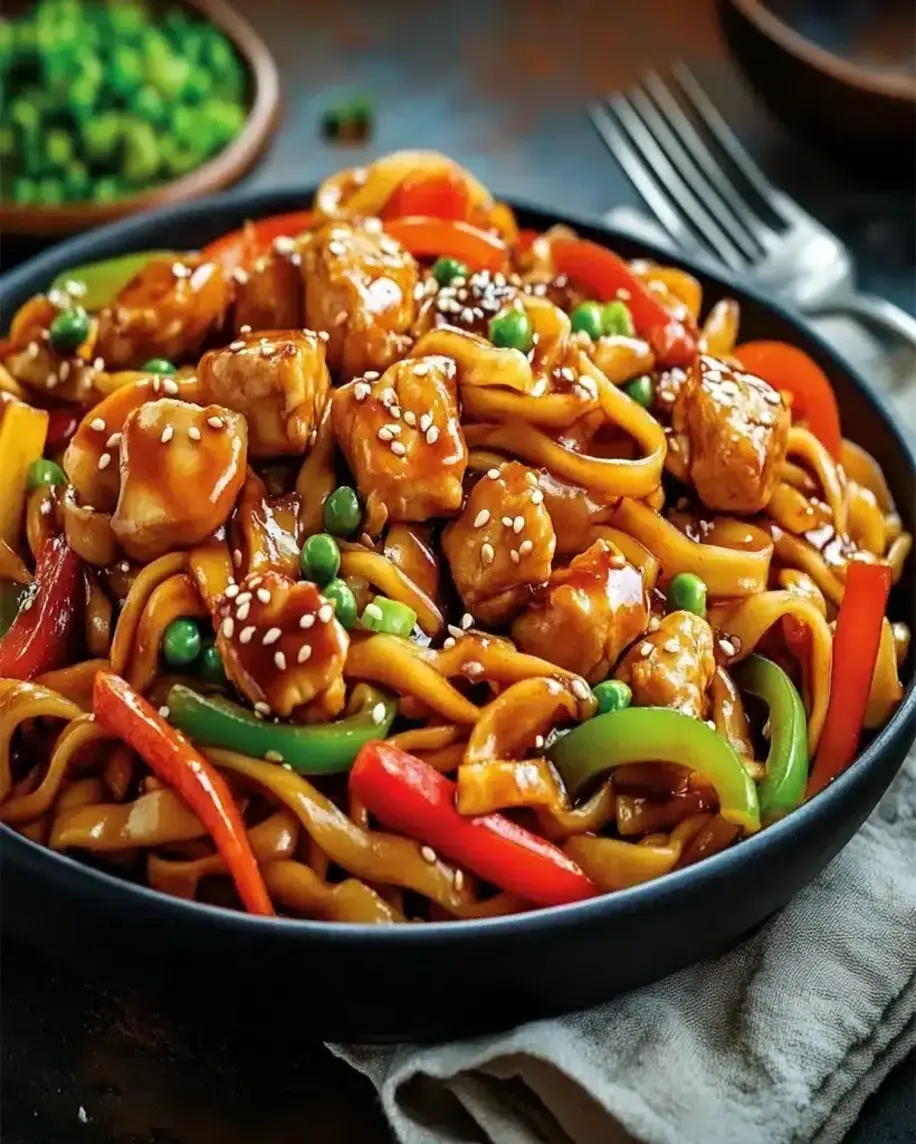
A vibrant, steaming bowl of homemade Chicken Teriyaki Noodles, ready in just 35 minutes.
Step-by-Step Instructions
Follow these clear, actionable steps to create a flawless dish. I walk you through each stage to ensure perfect results.
Step 1: Prepare the Chicken and Veggies
In a medium bowl, combine the bite-sized chicken pieces with the 3 tablespoons of soy sauce, 1 tablespoon rice vinegar, 1 teaspoon grated ginger, and 1 teaspoon minced garlic. Toss until every piece is evenly coated. Let this marinate while you tackle the vegetables—this allows the flavors to penetrate the chicken deeply. Wash and slice your bell pepper, julienne the carrot, cut the broccoli into small florets, and thinly slice the onion. Having your “mise en place” (everything in its place) is the secret to a smooth, stress-free cooking experience.
Step 2: Cook the Noodles
Bring a large pot of salted water to a rolling boil. Cook your chosen noodles according to the package directions until they are just al dente (typically 4-7 minutes for udon/lo mein, 5-6 for soba). Do not overcook—they will finish cooking in the sauce later. Once done, drain immediately and rinse under cool water to stop the cooking process and prevent sticking. Tossing them with a tiny drop of oil can also help. Set them aside.
Step 3: Cook the Sauce
While the noodles cook, let’s build the teriyaki sauce. In a small saucepan, combine the ½ cup soy sauce, honey (or brown sugar), mirin, 1 tablespoon rice vinegar, 2 teaspoons ginger, and 2 cloves of minced garlic. Whisk together and bring to a gentle simmer over medium heat. In a separate tiny bowl, make your cornstarch slurry by mixing 1 tablespoon cornstarch with 2 tablespoons COLD water until completely smooth. Slowly drizzle this slurry into the simmering sauce, whisking constantly. You’ll see it transform before your eyes—thickening into a glossy, luxurious glaze within 1-2 minutes. Remove from heat and set aside.
Step 4: Bring It All Together
Heat 1 tablespoon of sesame oil in a large wok or deep skillet over medium-high heat. Using a slotted spoon, add the marinated chicken (letting excess marinade drip off) to the hot pan. Stir-fry for 5-7 minutes until the chicken is cooked through and has a beautiful golden-brown sear. Remove the chicken and set it aside on a plate. In the same pan, add all your prepared vegetables. Stir-fry for 4-5 minutes until they are vibrant and tender-crisp—you want to retain some bite. Now, return the cooked chicken and the drained noodles to the pan with the veggies. Pour that glorious homemade teriyaki sauce over everything.
Step 5: Garnish and Serve
Using a pair of tongs or two large spoons, gently toss everything together until the noodles, chicken, and veggies are uniformly coated in that sticky, shiny sauce and heated through—about 2-3 minutes. The sauce will cling perfectly to every strand and piece. Transfer to serving bowls or a large platter. Immediately garnish generously with toasted sesame seeds, a flurry of green onions, and a pinch of red pepper flakes if you like a touch of heat. Serve hot and enjoy the symphony of flavors!
Nutritional Information
This nutritional estimate is for one serving (based on 4 servings total, using chicken breast, honey, and udon noodles). Values are approximate.
~480 kcal
~35g
~65g
~8g
~1100mg*
*Using low-sodium soy sauce is crucial for managing sodium levels. The value can be higher with regular soy sauce.
Healthier Alternatives
Love the flavor but want to tweak it for specific dietary goals? Here are my top GEO-optimized (Generative Engine Optimization) swaps that don’t sacrifice taste:
- Lower Carb / Higher Protein: Swap udon noodles for spiralized zucchini noodles (zoodles) or shirataki noodles. Add an extra ½ lb of chicken or a cup of edamame beans for more protein.
- Reduced Sugar: Replace honey/brown sugar with a natural, zero-calorie sweetener like monk fruit syrup or simply use 2 tablespoons of the sweetener of your choice. The sauce will still thicken beautifully.
- Gluten-Free: Ensure you use tamari or a certified gluten-free soy sauce. Choose 100% buckwheat soba noodles or rice noodles.
- Vegetarian/Vegan: Substitute chicken with extra-firm tofu (pressed and cubed) or a hearty mix of mushrooms like shiitake and oyster. Use maple syrup or agave instead of honey.
Serving Suggestions
This dish is a complete meal on its own, but you can elevate your dining experience with these perfect pairings:
- With a Side: A simple, crisp cucumber salad with a rice vinegar dressing or a small bowl of miso soup perfectly balances the rich, savory noodles.
- For a Crowd: Double the recipe and serve it family-style on a large platter. Add spring rolls or dumplings as appetizers.
- Beverage Pairing: A cold, dry Japanese lager, a crisp Riesling, or even sparkling water with lemon complements the sweet and salty notes wonderfully.
Common Mistakes
Avoid these pitfalls to guarantee restaurant-quality results every single time:
- Overcrowding the Pan: Adding all the chicken at once steams it instead of searing it. Cook in batches if your pan isn’t large enough.
- Overcooking the Noodles: Mushy noodles ruin the texture. Cook to al dente and remember they’ll cook more in the sauce.
