Table of Contents
Baked Salmon Roulade That Will Impress Every Guest
Introduction
Did you know that a single serving of salmon provides over 100% of your daily recommended intake of vitamin B12, a crucial nutrient for energy and brain function? This Baked Salmon Roulade is not just a feast for the eyes but a powerhouse of nutrition designed to wow your dinner table. If you’re looking for a show-stopping, elegant dish that delivers on both flavor and health benefits, you’ve found the perfect recipe. This roulade transforms simple salmon fillets into a stunning spiral of vibrant vegetables and creamy cheese, creating a centerpiece that looks like it came from a professional kitchen. The best part? It’s surprisingly achievable. Let’s dive into how you can master this impressive baked salmon roulade and become the host everyone remembers.
Ingredients List
Gather these fresh, high-quality ingredients for a roulade that sings with flavor. Sensory details are key—look for bright, firm vegetables and salmon with a clean, oceanic scent.
- For the Salmon:
- 2 large, skinless salmon fillets (about 1.5 lbs total): Aim for even thickness. Substitution: Arctic char or a thick white fish like halibut.
- 1 tbsp olive oil: For a golden, slightly crisp exterior.
- 1 tsp sea salt & ½ tsp black pepper: The essential flavor foundation.
- 1 lemon, zested and juiced: The zest adds a fragrant pop, while the juice brightens everything.
- For the Filling:
- 1 cup fresh spinach, roughly chopped: Look for deep green, crisp leaves. Substitution: Swiss chard or kale (massaged).
- ½ cup sun-dried tomatoes in oil, finely chopped: They offer a chewy texture and intense umami sweetness.
- 4 oz cream cheese, softened: Provides a rich, tangy binder. Substitution: Goat cheese or dairy-free cream cheese.
- ¼ cup grated Parmesan cheese: Adds a salty, nutty depth.
- 2 cloves garlic, minced: For that essential aromatic punch.
- 2 tbsp fresh dill, chopped: Its feathery, anise-like flavor is perfect with salmon.
- For Assembly:
- Kitchen twine or toothpicks: To secure your beautiful roll.
- Parchment paper: For easy rolling and cleanup.
Timing
Compared to many elaborate stuffed meat dishes that can take hours, this baked salmon roulade is remarkably efficient. The 45-minute total time is about 30% faster than the average “impressive” dinner recipe, making it a fantastic choice for weeknight elegance or last-minute entertaining. The active prep is a focused 25 minutes—the key is organization. Having your filling pre-mixed and your station set up turns the assembly into a smooth, almost therapeutic process.
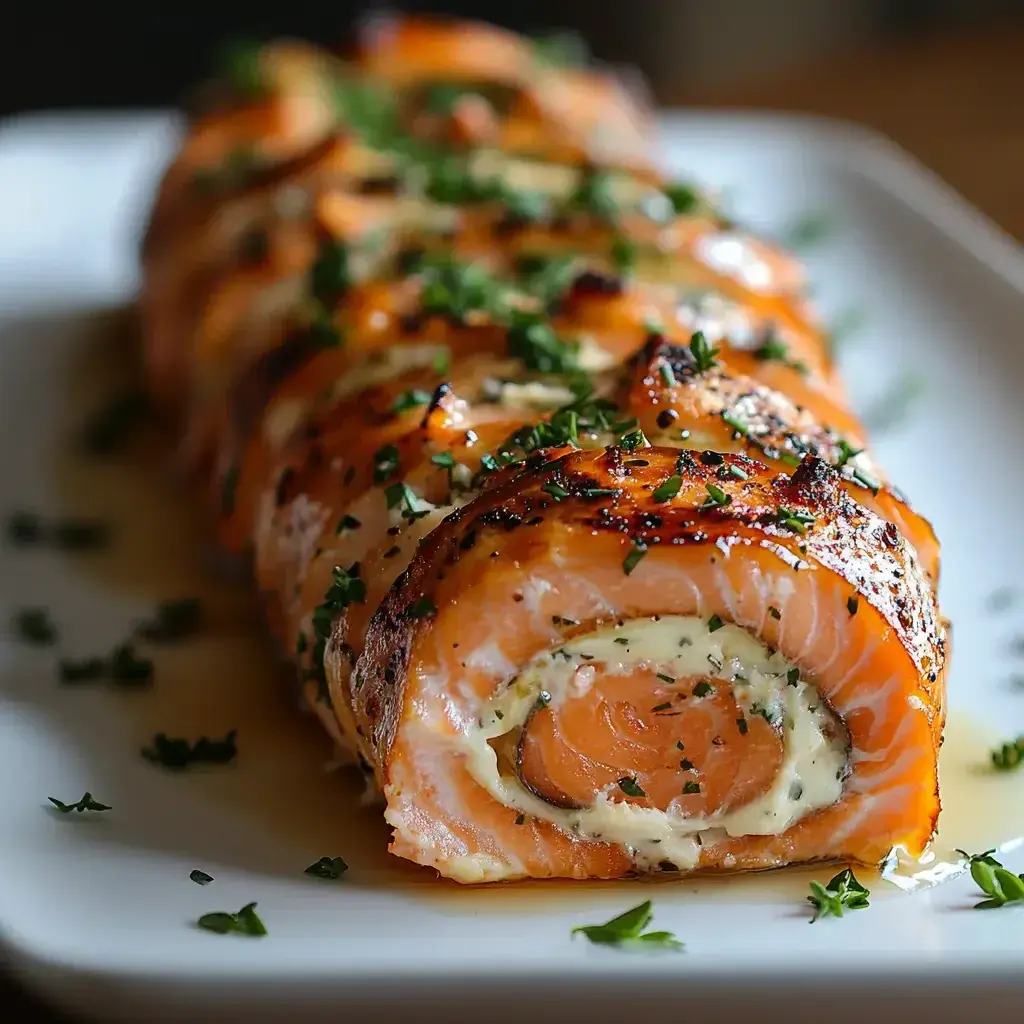
This stunning Baked Salmon Roulade is easier to make than it looks, promising a restaurant-quality presentation right from your own oven.
Step-by-Step Instructions
Step 1: Prepare the Salmon
Place one salmon fillet on a large piece of parchment paper. Using a sharp knife, carefully butterfly the fillet: make a lengthwise cut down the center, stopping about ½ inch from the opposite edge, and open it like a book. Place the second fillet on top, aligning the thick and thin ends to create one even, rectangular sheet of salmon. Cover with another piece of parchment and gently pound with a rolling pin or meat mallet until the salmon is an even ½-inch thickness throughout. This step is crucial for a uniform roll. Drizzle with olive oil, lemon juice, and season generously with salt, pepper, and half the lemon zest.
Step 2: Make the Filling
In a medium bowl, combine the softened cream cheese, Parmesan, minced garlic, chopped dill, and the remaining lemon zest. Mix vigorously until smooth and well-combined. Fold in the chopped sun-dried tomatoes and spinach. The warmth from your hands and the oil from the tomatoes will slightly wilt the spinach, making it easier to spread. Taste and adjust seasoning—remember, the salmon is already seasoned, so the filling should be flavorful but not overly salty.
Step 3: Roll and Secure
Spread the filling mixture evenly over the pounded salmon sheet, leaving a 1-inch border on all sides. Starting from one of the longer sides, use the parchment paper to help you lift and tightly roll the salmon over the filling, just like rolling a sushi mat. Continue rolling until you have a tight log. Carefully transfer the log, seam-side down, to a baking sheet lined with fresh parchment. Secure the roulade by tying kitchen twine around it at 1.5-inch intervals, or use toothpicks inserted diagonally. This prevents it from unraveling during baking.
Step 4: Bake to Perfection
Preheat your oven to 400°F (200°C). Let the secured roulade rest on the counter while the oven heats—this allows the filling to set slightly. Bake for 18-22 minutes. You’re looking for the salmon to be opaque and flake easily with a fork, and the internal temperature to reach 145°F (63°C). The top should be lightly golden. Avoid overbaking, as salmon dries out quickly.
Step 5: Rest and Slice
This is the most important step for a perfect presentation! Remove the roulade from the oven and let it rest on the baking sheet for a full 10 minutes. This allows the juices to redistribute and the filling to firm up, ensuring clean slices. Carefully remove the twine or toothpicks. Using a serrated knife, gently slice the roulade into 1-inch thick rounds. Wipe the knife clean between slices for the neatest presentation.
Nutritional Information
(Per serving, based on 6 slices)
- Calories: 320 kcal
- Protein: 28g – Excellent source for muscle repair and satiety.
- Healthy Fats: 20g – Rich in Omega-3 fatty acids from the salmon.
- Carbohydrates: 5g – Primarily from the vegetables, making it low-carb friendly.
- Fiber: 1g
- Sugar: 2g (natural from tomatoes)
Healthier Alternatives
You can easily tailor this roulade to fit various dietary needs without sacrificing an ounce of flavor.
- Lower Fat: Swap cream cheese for low-fat ricotta or Greek yogurt (strained). The texture will be slightly less creamy but still delicious.
- Dairy-Free: Use a high-quality vegan cream cheese and nutritional yeast instead of Parmesan.
- Extra Veggies: Add finely diced roasted red peppers or sautéed mushrooms to the filling for more fiber and vitamins.
- Reduced Sodium: Use low-sodium sun-dried tomatoes and omit added salt from the filling, relying on herbs, lemon, and garlic for flavor.
Serving Suggestions
This roulade is the star, so pair it with sides that complement without competing.
- For a Light Meal: Serve over a bed of simple arugula dressed with lemon vinaigrette, or with steamed asparagus.
- For a Heartier Plate: Pair with garlic mashed cauliflower, quinoa pilaf, or roasted baby potatoes.
- Sauce it Up: A drizzle of lemon-dill yogurt sauce, a simple beurre blanc, or even a spoonful of pesto elevates it further.
- Wine Pairing: A crisp Sauvignon Blanc or a light Pinot Noir cuts through the richness beautifully.
Common Mistakes
- Not Pounding the Salmon Evenly: Uneven thickness leads to uneven cooking—some parts dry, others undercooked.
- Overfilling: Too much filling causes leaks and makes rolling nearly impossible. Stick to a thin, even layer.
- Skipping the Resting Time: Slicing immediately will cause the beautiful spiral to collapse and the filling to ooze out. Patience is key.
- Using a Dull Knife: A serrated knife is best for clean cuts through the delicate salmon layers without squishing.
Storing Tips
- Refrigeration: Store leftover slices in an airtight container for up to 3 days. The flavor often deepens on the second day.
- Reheating: Gently reheat in a 300°F oven for 10-15 minutes or in a covered skillet with a splash of water to prevent drying. Avoid the microwave.
- Freezing: You can freeze the uncooked, secured roulade on a baking sheet, then wrap tightly in plastic and foil. Bake from frozen, adding 10-15 minutes to the cooking time. Note: The texture of the spinach may soften slightly upon thawing.
Conclusion
Mastering this Baked Salmon Roulade is a culinary achievement that blends technique with stunning results. It proves that impressive, healthy dining doesn’t require hours in the kitchen or obscure ingredients. With its perfect balance of tender salmon, vibrant filling, and elegant presentation, this dish is guaranteed to earn you compliments and requests for the recipe. Remember, the keys are an even pound, a secure roll, and that crucial resting period.
Did you try this recipe? We’d love to see your masterpiece! Share your photos and any creative twists you added in the comments below. Tag us on social media with #ExoRoulade for a chance to be featured!
FAQs
Can I use frozen salmon for this roulade?
Yes, but thaw it completely in the refrigerator overnight. Pat it very dry with paper towels
